LZLJ(000568)

Search documents
16只白酒股下跌 贵州茅台1418.22元/股收盘
Bei Jing Shang Bao· 2025-12-08 09:43
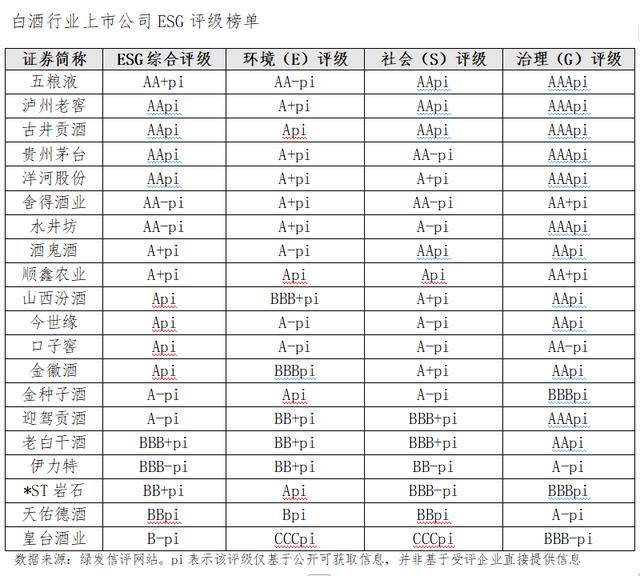
Core Viewpoint - The liquor sector, particularly the baijiu market, is experiencing a downturn, with predictions of stabilization and recovery in sales and prices by mid-2026, despite current pessimism reflected in stock valuations [1] Market Performance - On December 8, the Shanghai Composite Index closed at 3924.08 points, up 0.54% - The baijiu sector index closed at 2226.32 points, down 0.33%, with 16 out of 20 baijiu stocks declining - Notable declines include Luzhou Laojiao down 2.31%, Kweichow Moutai down 0.82%, and Wuliangye down 1.47% [1][1][1] Stock Prices - Kweichow Moutai closed at 1418.22 CNY per share, down 0.82% - Wuliangye closed at 113.27 CNY per share, down 1.47% - Shanxi Fenjiu closed at 180.15 CNY per share, down 1.04% - Luzhou Laojiao closed at 125.38 CNY per share, down 2.31% - Yanghe Brewery closed at 62.75 CNY per share, down 0.18% [1][1][1] Future Outlook - CITIC Securities forecasts a potential stabilization in the baijiu sector's sales, prices, and expectations by Q1 or Q3 of 2026, with a recovery in listed companies' performance expected by Q2 2026 - The current price-to-earnings ratio (TTM) for the baijiu sector is approximately 20 times, indicating it is at a long-term bottom reflecting significant pessimistic expectations - Since 2024, shareholder returns for leading baijiu companies have been steadily increasing, with dividend rates generally above 65%, enhancing investment safety margins [1][1][1]





白酒板块12月8日跌1%,泸州老窖领跌,主力资金净流出17.88亿元
Zheng Xing Xing Ye Ri Bao· 2025-12-08 09:04
Core Insights - The liquor sector experienced a decline of 1.0% on December 8, with Luzhou Laojiao leading the drop [1][2] - The Shanghai Composite Index closed at 3924.08, up 0.54%, while the Shenzhen Component Index closed at 13329.99, up 1.39% [1] Liquor Sector Performance - Luzhou Laojiao's stock price fell by 2.31% to 125.38, with a trading volume of 117,400 shares and a transaction value of 1.482 billion yuan [2] - Wuliangye and Gujing Gongjiu also saw declines of 1.47% and 1.35%, respectively, with transaction values of 3.157 billion yuan and 279 million yuan [2] - The overall net outflow of main funds from the liquor sector was 1.788 billion yuan, while retail investors saw a net inflow of 926 million yuan [2][3] Fund Flow Analysis - Main funds showed a negative net inflow for several companies, including ST Yanshi and Jinhui Liquor, with net outflows of 1.29 million yuan and 3.21 million yuan, respectively [3] - Retail investors contributed positively to the net inflow for companies like Yilite and Tianyoude Liquor, with net inflows of 3.97 million yuan and 3.42 million yuan, respectively [3] - The overall trend indicates a shift in investor sentiment, with retail investors more active in the market compared to institutional investors [2][3]


绿发信评发布白酒上市公司ESG主动评级结果:五粮液领跑,山西汾酒被拉开差距
Sou Hu Cai Jing· 2025-12-08 05:55
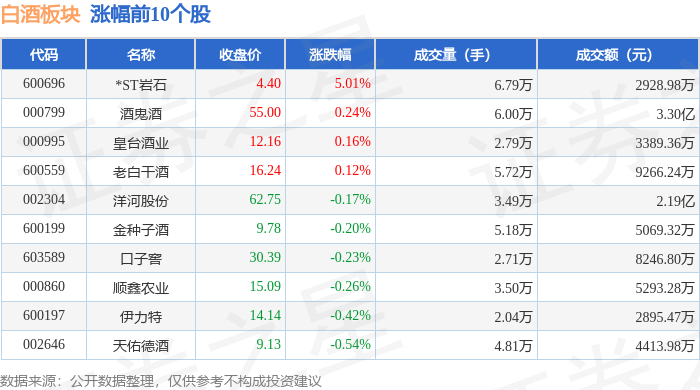
Core Viewpoint - The ESG ratings of leading Chinese liquor companies indicate a significant gap between top-tier firms and their mid-tier counterparts, highlighting the need for improved sustainability practices across the industry [1][6]. Environmental (E) Summary - The average ESG score for the top five liquor companies is 77.78, significantly higher than the industry average of 68.84, with Wuliangye receiving the highest rating of AA+pi [1]. - Environmental ratings for the top five companies range from AA-pi to BBB+pi, with Wuliangye leading in environmental disclosures and performance [1][2]. - Companies like Moutai and Luzhou Laojiao have established unique water resource management practices, while Shanxi Fenjiu lags behind in environmental performance metrics [2]. Social (S) Summary - The social ratings for the top five liquor companies are generally strong, ranging from AApi to A+pi, with notable performances in charity, product quality, and supply chain management [3]. - Wuliangye has implemented a comprehensive quality traceability system across its supply chain, while Luzhou Laojiao excels in employee development and training [3]. Governance (G) Summary - Four of the five leading companies received AAApi governance ratings, indicating robust ESG management frameworks and strong financial performance [4]. - Shanxi Fenjiu's governance rating is lower, necessitating improvements in its ESG management system and ethical standards [4]. - The overall performance of other liquor companies varies significantly, with some achieving ratings comparable to top firms, while others face challenges in governance and financial stability [4][5]. Industry Insights - The liquor industry is witnessing a widening gap in ESG performance between leading and mid-tier companies, necessitating a shift towards better sustainability practices [6]. - Key areas for improvement include enhancing environmental disclosures, setting clear sustainability goals, and strengthening governance frameworks to mitigate risks [6].
周观点:年底关注渠道反馈,餐供龙头率先复苏-20251207
GOLDEN SUN SECURITIES· 2025-12-07 08:24
Investment Rating - The report maintains an "Increase" rating for the food and beverage industry, indicating a positive outlook for selected stocks and sectors within the industry [4]. Core Insights - The white liquor sector is showing signs of recovery, with Shanxi Fenjiu focusing on national expansion, youth engagement, and internationalization strategies for 2026. The company is optimizing inventory and enhancing market capacity, which is expected to support growth [2]. - In the beverage sector, companies like Nongfu Spring are planning to strengthen their water and tea product lines while introducing new products. The beer segment is diversifying with new flavors to cater to changing consumer preferences [3]. - The report highlights the potential for growth in consumer staples, with companies like Three Squirrels expanding into a full-category strategy and Mengniu Dairy leading in deep processing innovations [7]. Summary by Sections White Liquor - Shanxi Fenjiu's 2026 marketing strategy focuses on nationalization, youth engagement, and precise consumer service. The company is targeting key markets and optimizing inventory to enhance growth potential [2]. - The white liquor industry is characterized by bottoming out in sales, clearing financial reports, and low expectations, suggesting a favorable environment for quality asset allocation [2]. Beer and Beverage - The beer sector is witnessing the launch of new products like Jin Xing Beer’s winter flavor, reflecting a shift in consumption patterns towards home and outdoor settings [3]. - Nongfu Spring's strategy for 2026 includes strengthening its core water products and expanding its tea offerings, indicating a focus on product diversification and market penetration [3]. Consumer Staples - Three Squirrels is advancing its full-category strategy with the opening of flagship stores, emphasizing community engagement and a wide range of products [7]. - Mengniu Dairy is enhancing its product line with deep processing innovations, which are expected to drive demand and improve the utilization of raw milk [7]. - The frozen food sector is recovering, with companies like Anjuke benefiting from new product launches and channel optimizations, indicating a positive market response [7].

食品饮料行业周报:高端酒批价回落,关注需求承接-20251206
Shenwan Hongyuan Securities· 2025-12-06 15:19
Investment Rating - The report maintains a "Buy" rating for quality companies in the food and beverage sector, particularly in the liquor segment [4][9]. Core Insights - The report indicates that major liquor companies have experienced significant revenue declines year-on-year, with high-end liquor prices continuing to drop as the market seeks a balance between volume and price. It anticipates a double-digit decline in sales for Q1 2026, with a potential stabilization in Q2 and a fundamental turnaround in Q3 2026 as inventory clears and demand recovers [4][9]. - The report highlights that if the fundamentals improve as expected, the end of 2026 to 2027 could see a dual boost in valuation and performance for quality companies, marking a strategic allocation period for long-term investors [4][9]. - The report emphasizes a systemic opportunity in mass consumer goods, with a focus on CPI as a core observation indicator. It predicts a gradual improvement in food CPI throughout the year, driven by structural demand improvements and a shift in competitive strategies from price to quality [4][9]. Summary by Sections 1. Weekly Perspective on Food and Beverage - The food and beverage sector saw a decline of 1.90% last week, with liquor down 2.59%, underperforming the market by 2.27 percentage points. The top gainers included companies like Anji Food and Haixin Food, while the biggest losers were ST Yanshan and Yantang Dairy [8]. 2. Market Performance by Sector - The report notes that the average price of Moutai has dropped to 1545 RMB per bottle, a decrease of 25 RMB week-on-week, while the price for Wuliangye remains stable at approximately 825 RMB. The decline in Moutai prices is attributed to increased shipments by distributors to meet annual targets amid weak seasonal demand [10][12]. 3. Industry Matters - The report suggests focusing on the restaurant supply chain, particularly in condiments and frozen foods, with recommendations for companies like Anji Food and Qianhe Flavoring. It anticipates continued improvement in operational performance for these companies as the restaurant sector recovers [11][12]. 4. Valuation Table - As of December 5, 2025, the food and beverage sector has a dynamic PE of 20.19x, with a premium rate of 24%, while the liquor segment has a dynamic PE of 18.87x, with a premium rate of 16% [32].


华泰证券-必选消费行业2026年度策略:冬藏伺机,春归可期
Sou Hu Cai Jing· 2025-12-06 03:13
Core Insights - The report from Huatai Securities indicates that the essential consumer sector has entered a favorable left-side layout window, with expectations for a mild recovery in consumption in the second half of 2026 due to stabilizing real estate prices, increased policy stimulus, and the recovery of household balance sheets [1][2]. Industry Overview - The essential consumer sector is currently at historical low valuation levels and public fund allocation ratios, providing a high safety margin and potential upside for investors [1][2]. - Some sub-industries are showing signs of bottoming out, with leading companies shifting focus from price wars to product innovation and adapting to channel changes [1][2][6]. - Structural changes such as the rebalancing of raw milk cycles, recovery in restaurant demand, and stricter regulations on zero additives are optimizing the competitive landscape of the industry [1][2]. Investment Recommendations - The report recommends four categories of stocks: 1. Cyclical high-upside stocks, including Gujing Gongjiu, Luzhou Laojiao, China Resources Beer, Qingdao Beer, Haitian Flavoring, Anjuke Food, and Qianhe Flavoring [2][7]. 2. Companies at fundamental turning points, such as Mengniu Dairy and Master Kong [2][7]. 3. High-dividend blue-chip leaders like Yili and Shuanghui Development [2][7]. 4. Small but promising growth stocks, including Ximai Food, Baoli Food, and Yanjinpuzi [2][7]. Market Trends - The report emphasizes a three-stage market strategy from expectation recovery to performance realization for 2026 [2]. - The essential consumer sector is expected to see a gradual improvement in retail sales growth, projected to reach 4.8% in 2026 [25]. - The consumer confidence index has shown some recovery but remains in a low range, indicating cautious consumer sentiment [26]. Sub-Industry Insights - Specific sub-industries are highlighted: 1. Frozen food is showing signs of bottoming out, with expectations for a reduction in price wars in 2026 [6][10]. 2. The dairy sector is anticipated to see a rebalancing of the raw milk cycle, enhancing domestic substitution logic [6][10]. 3. The beer industry is expected to maintain profit resilience due to rational competition and a diminishing demand dividend [6][10]. 4. Traditional condiment leaders are actively adjusting strategies to capture market share [6][10]. Conclusion - The essential consumer sector is positioned for a potential recovery, with various sub-industries adapting to market changes and focusing on innovation and strategic adjustments to enhance competitiveness [1][2][6].





酒价内参12月6日价格发布 市场强劲反弹多款名酒价格回升
Xin Lang Cai Jing· 2025-12-06 01:18
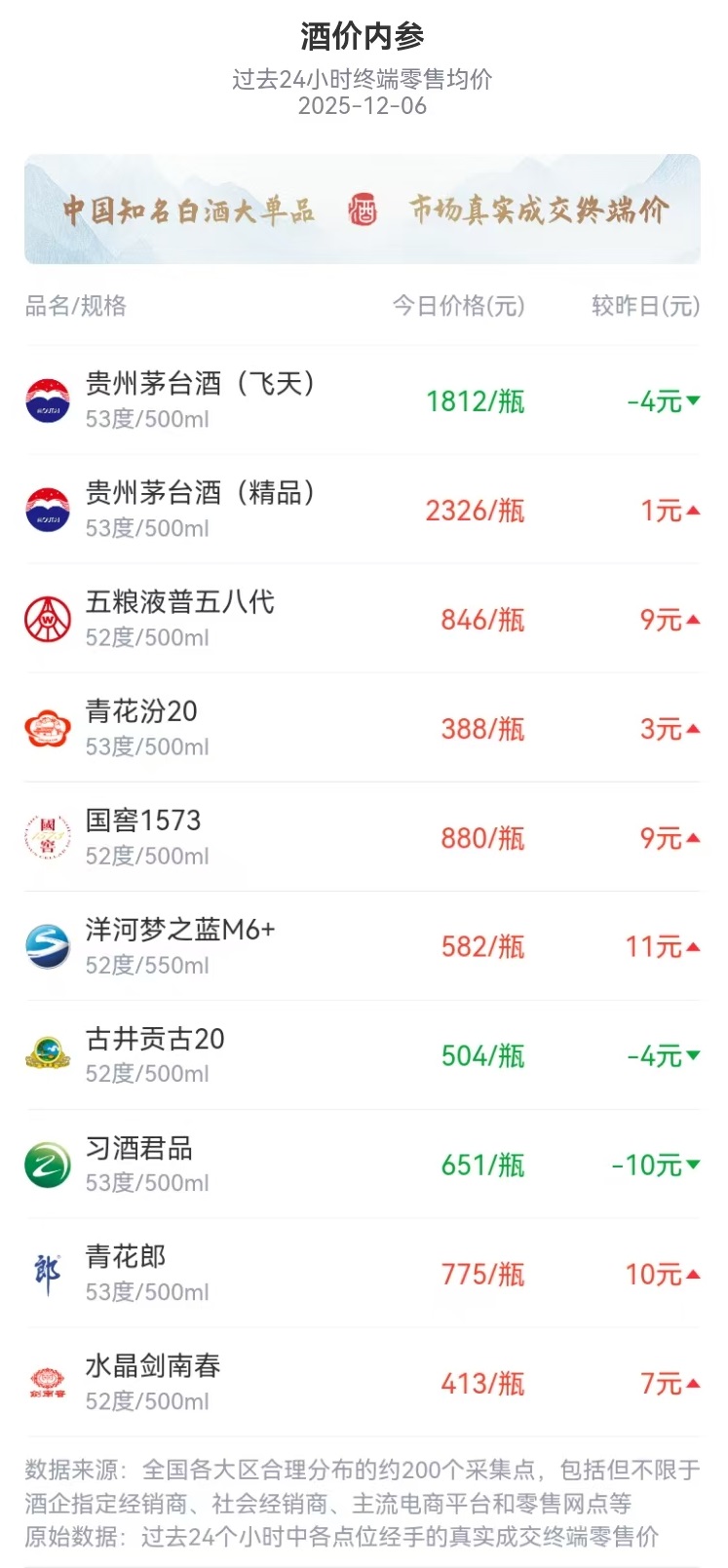
Core Viewpoint - The white liquor market has shown a strong rebound in retail prices for the top ten products, ending a period of continuous decline, with the total price for a packaged set of these products reaching 9177 yuan, an increase of 32 yuan from the previous day, indicating a return to an upward trend in the market [1]. Price Trends - The overall market is experiencing a broad increase, with most products stabilizing and recovering in price [1]. - Yanghe Dream Blue M6+ leads the market with an increase of 11 yuan per bottle [1]. - Qinghua Lang continues its strong performance with a price increase of 10 yuan per bottle, reaching a recent high [1]. - The prices of Wuliangye Pu 58th generation and Guojiao 1573 have rebounded by 9 yuan per bottle each [1]. - Other notable price increases include Shuijing Jian Nan Chun up by 7 yuan and Qinghua Fen 20 up by 3 yuan [1]. - The only products showing a decline are Xijiu Junpin, which fell by 10 yuan per bottle, and Gujing Gong Gu 20 and Feitian Moutai, which decreased by 4 yuan per bottle [1][3][4]. Data Sources - The price data is sourced from approximately 200 collection points across various regions, including designated distributors, social distributors, mainstream e-commerce platforms, and retail outlets, ensuring an objective and traceable representation of the market [1][4].
前11月易方达消费行业股票基金牛市没赚钱?规模169亿
Zhong Guo Jing Ji Wang· 2025-12-05 12:11
Group 1 - The core point of the article highlights that among 970 ordinary equity funds, only 29 funds experienced a decline in value, including the E Fund Consumer Industry Stock managed by renowned fund manager Xiao Nan, which saw a decrease of 0.14% in return for the first 11 months of 2025 [1][2] - The E Fund Consumer Industry Stock primarily invests in the consumer sector, with a significant portion of its top ten holdings being in the liquor industry, including major stocks like Kweichow Moutai, Shanxi Fenjiu, and Wuliangye [1] - As of December 4, 2025, the cumulative return of the E Fund Consumer Industry Stock since its inception on August 20, 2010, is 254.2%, with a total asset size of 16.949 billion yuan as of the end of the third quarter of this year [1][2]




12月5日深证国企股东回报(970064)指数涨1.95%,成份股电投能源(002128)领涨
Sou Hu Cai Jing· 2025-12-05 11:27
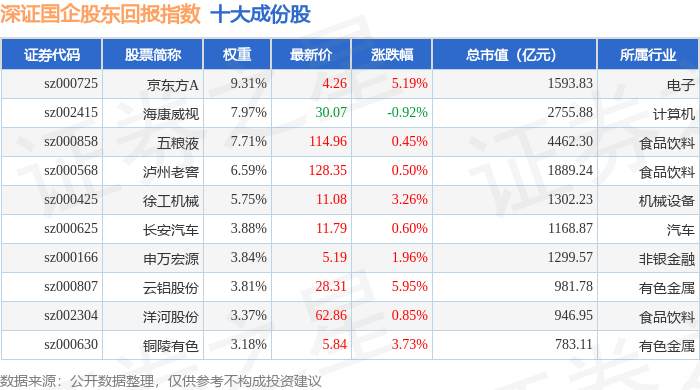
Core Viewpoint - The Shenzhen State-Owned Enterprises Shareholder Return Index (970064) closed at 1668.3 points on December 5, with a 1.95% increase and a trading volume of 32.01 billion yuan, indicating positive market sentiment towards state-owned enterprises [1]. Group 1: Index Performance - The index saw 43 constituent stocks rise, with Electric Power Investment leading at a 6.96% increase, while 6 stocks declined, with China Merchants Shekou leading the decline at 1.91% [1]. - The top ten constituent stocks of the index include BOE Technology Group (9.31% weight, 4.26 yuan, 5.19% increase) and Huatai Securities (3.84% weight, 5.19 yuan, 1.96% increase) [1]. Group 2: Capital Flow - The net inflow of main funds into the index's constituent stocks totaled 1.242 billion yuan, while retail investors experienced a net outflow of 365 million yuan [3]. - Major stocks like BOE Technology Group had a net inflow of 901 million yuan, while other stocks like Tongling Nonferrous Metals saw a net inflow of 205 million yuan [3]. Group 3: Index Adjustments - Recent adjustments to the index included the addition of 10 new stocks and the removal of 10 stocks, reflecting changes in market dynamics [4]. - New additions include Zhongmi Holdings (total market value 7.349 billion yuan) and Gujing Gongjiu (total market value 87.906 billion yuan), while removals include Xinyu Media and Yanghe Brewery [4].




酒行业周度市场观察-20251205
Ai Rui Zi Xun· 2025-12-05 06:27
Investment Rating - The report indicates a long-term investment value in the high-end liquor industry, particularly for leading brands like Moutai and Wuliangye, despite short-term challenges [4]. Core Insights - The high-end liquor sector is facing short-term challenges but maintains a strong investment logic due to brand moat, high gross margins (85%+), and stable cash flow [4]. - The report highlights the need for liquor companies to balance online and offline strategies, especially in the context of the growing trend of instant retail [4][6]. - The domestic wine industry is experiencing a "bumper harvest but no profit" situation, primarily due to supply-demand imbalances and competition from imported wines [6]. Industry Trends - High-end liquor industry re-evaluation: The core logic remains unchanged despite short-term challenges, with leading companies still showing long-term investment potential [4]. - Instant retail's impact on the liquor industry: Instant retail is rapidly penetrating the market, but the response from manufacturers is mixed due to high costs and low order volumes [4][6]. - The "liquor+" strategy is emerging, integrating liquor with various cultural and lifestyle elements to enhance consumer engagement and brand value [6]. - The domestic wine industry faces significant challenges, including supply-demand imbalances and high production costs, necessitating a shift towards consumer value and brand differentiation [6]. Top Brand News - Young consumers are shifting their purchasing criteria from "value for money" to "emotional value," with brands like Qingdao White Beer successfully tapping into this trend [13]. - Xijiu is promoting a lifestyle approach through its "Xijiu+" strategy, integrating liquor with local culinary experiences to enhance consumer connection [13][26]. - Jian Nan Chun achieved significant sales during the Double Eleven shopping festival, showcasing the effectiveness of its cultural branding and e-commerce strategies [24].