WLY(000858)

Search documents
茅台失速,五粮液腰斩,洋河溃败!白酒业怎么了?
Sou Hu Cai Jing· 2025-11-05 16:30
Core Viewpoint - The Chinese liquor industry is experiencing a significant downturn, marked by a battle for inventory reduction and financial pressure, with major companies reporting substantial declines in revenue and profit [1][2]. Industry Overview - In the first three quarters of 2025, 20 A-share liquor companies reported a total revenue of 320.23 billion yuan, a year-on-year decrease of 5.83%, and a net profit of 122.77 billion yuan, down 6.76% [2]. - Only Kweichow Moutai and Shanxi Fenjiu managed to maintain growth, while the remaining 18 companies experienced declines [3]. Quarterly Performance - The third quarter of 2025 was particularly harsh, with companies like Shui Jing Fang and Guo Jiao reporting revenue drops of 58.91% and 51.65% respectively [4]. - Luzhou Laojiao and Kweichow Moutai also faced significant profit declines, with Moutai's revenue growth slowing to 0.56% in Q3, a stark contrast to previous quarters [6][7]. Historical Context - This marks the first major performance decline in five years for the liquor industry, with the number of companies experiencing revenue drops increasing from 2 in 2021 to 7 in 2024 [5]. - The trend of declining profits is evident, with 90% of liquor companies reporting a year-on-year decrease in net profit for the first three quarters of 2025 [6]. Inventory Crisis - The industry is facing a severe inventory crisis, with total inventory for 20 listed liquor companies reaching 176.69 billion yuan by Q3 2025, an increase of 11% year-on-year [14]. - Companies like Kweichow Moutai hold the largest inventory, nearing 56 billion yuan, while others like Yanghe and Wuliangye also report significant inventory levels [14]. Financial Strain - The financial strain is evident as companies reduce their contract liabilities significantly, with Kweichow Moutai's contract liabilities dropping by 19% to 7.75 billion yuan [17]. - Many smaller liquor companies are facing survival challenges, with some unable to cover their interest-bearing debts [20]. Market Dynamics - The price reduction of Moutai has diminished the price advantage of Wuliangye, leading to a rapid decline in its performance [8]. - Shanxi Fenjiu, despite revenue growth, saw its net profit decline for the first time since 2015, indicating market saturation challenges [9]. Sales Strategies - Companies are increasingly resorting to credit sales to manage inventory, with Kweichow Moutai leading this shift by relaxing its cash payment policies [19]. - The overall market is expected to face prolonged challenges as inventory digestion may take several years due to the current oversupply situation [15].





茶酒融合:“微醺经济”的双向奔赴
Nan Fang Nong Cun Bao· 2025-11-05 15:12
Core Viewpoint - The integration of tea and alcohol is emerging as a significant trend in the beverage industry, driven by the demand for "micro-drunk" experiences among younger consumers, leading to innovative product offerings and cross-industry collaborations [5][6][46]. Group 1: Industry Trends - The Guizhou Provincial Department of Commerce has issued a draft guideline to promote the transition from "selling alcohol" to "selling lifestyle," emphasizing the integration of alcohol and tea products to expand cross-industry consumption markets [2][3]. - The trend of alcohol and tea fusion is not new, with both alcohol and tea companies seeking growth opportunities through innovative product combinations [5][6]. - The younger demographic is increasingly becoming the main consumer group for alcohol, prompting companies to innovate beyond traditional high-alcohol products to attract this audience [8][49]. Group 2: Product Innovations - Major alcohol brands are launching lower-alcohol or non-alcoholic products to cater to younger consumers, with examples including Moutai's introduction of over ten youth-oriented products at a recent trade fair [12][18]. - The collaboration between Luckin Coffee and Moutai to launch the "Sauce Aroma Latte" achieved remarkable sales, with over 5.42 million cups sold on the first day, generating over 100 million yuan in revenue [28][30]. - New tea drinks incorporating alcohol, such as "Drunken Steps" by Tea Baidao and "Lychee Ice Brew" by Grandpa's Tea, have also gained popularity, indicating a growing acceptance of alcohol-infused beverages [32][39]. Group 3: Market Dynamics - The market for low-alcohol beverages is expanding, with data showing that fruit wine accounts for 38% of instant retail channels, growing at 72% annually, while tea and alcohol combinations account for 25%, growing at 65% [54][55]. - Health consciousness among consumers is influencing the beverage market, with a significant percentage of consumers expressing concerns about the health impacts of traditional tea drinks, leading to a demand for healthier options [60][61]. - The fusion of tea and alcohol is seen as a strategic move to address the challenges faced by both industries, allowing them to meet consumer demands for "micro-drunk" experiences while ensuring health considerations are met [63].



五粮液集团董事长曾从钦调研山西市场 共同与经销商深耕消费终端
Sou Hu Cai Jing· 2025-11-05 14:13
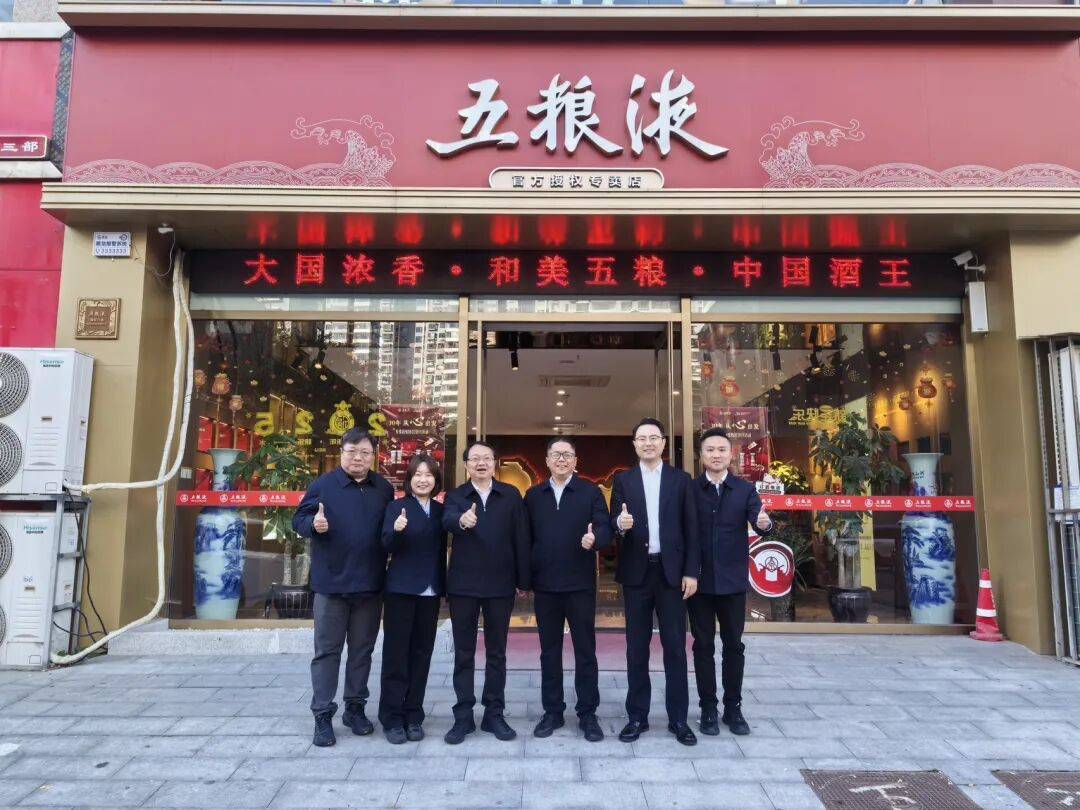
Core Insights - The chairman of Wuliangye Group, Zeng Congqin, led a market research trip to Taiyuan focusing on "deepening the terminal market and empowering distributor development" [1][3] Group 1: Market Research Activities - The research involved visiting specialty stores and core distributors, as well as discussions with distributor teams to understand market conditions and gather feedback [1][3] - Zeng Congqin examined product displays, promotional activities, and consumer service processes during visits to key distributors in Taiyuan [3] Group 2: Market Challenges and Opportunities - Despite facing short-term market challenges, Zeng emphasized that this adjustment period is a critical opportunity for growth, highlighting the value differentiation within the industry [6] - The company aims to shift focus from "product transportation" to "consumer service" to strengthen market foundations during this adjustment phase [6] Group 3: Strategic Initiatives - Wuliangye plans to optimize its product layout in the Shanxi market to meet new demands for lower-alcohol and scenario-based consumption [6] - The company will enhance support for distributors and work collaboratively to strengthen consumer cultivation and brand experience, thereby improving long-term market competitiveness [6]
八年携手共进 五粮液站位进博舞台续写和美新篇
Xin Hua Cai Jing· 2025-11-05 13:07
Core Viewpoint - The eighth China International Import Expo (CIIE) showcases China's commitment to openness and cooperation, with Wuliangye participating as a key partner, emphasizing the brand's cultural heritage and modern relevance [1][3]. Group 1: Event Overview - The CIIE serves as a significant platform for global economic engagement with China, highlighting the importance of mutual benefits in international trade [1]. - Wuliangye has been a consistent participant in the CIIE for eight years, aligning its brand philosophy with the expo's theme of "harmonious coexistence" [1][3]. Group 2: Wuliangye's Presentation - Wuliangye's upgraded cultural experience center features an immersive design that blends traditional and modern elements, symbolizing the brand's journey from Yibin to the world [1][2]. - The exhibition includes a narrative of Wuliangye's history and product experiences, showcasing its ancient brewing wisdom through interactive displays [2]. Group 3: Interactive Engagement - The event features themed interactive activities, such as "Five Moves of Youth," which engage attendees through fun quizzes and tasting sessions, promoting a vibrant atmosphere [3]. - Wuliangye continues to innovate with its cultural products, including the "He Mei Wu Zhou" series, which integrates diverse cultural elements to promote harmony and friendship across borders [3]. Group 4: Industry Context - The ongoing CIIE amidst global economic challenges reflects the vitality of the Chinese market and reinforces the consensus on free trade and mutual benefit [3]. - Wuliangye exemplifies a national brand's role in fostering international trade cooperation and cultural exchange through its participation in the CIIE [3].
多家酒企Q3营利双降,四川龙头也难逃下滑
3 6 Ke· 2025-11-05 12:40
Core Insights - The announcement of salary cuts at Xuanjiu, a prominent regional liquor company, has raised eyebrows in the industry, especially given its recent strong performance in sales and profits [2][3] - The liquor industry is currently undergoing a significant adjustment period, with many companies emphasizing cost reduction and efficiency improvements [5][6] Company Summary - Xuanjiu, based in Anhui Province, reported a sales revenue of 1.8 billion yuan in 2023, a 23% increase year-on-year, and a profit of 314 million yuan, up 16% [2] - The company plans to reduce employee salaries by 10% starting October 1, 2025, which has led to mixed reactions among staff [1][3] - The chairman of Xuanjiu indicated that high-end product sales are expected to grow over 40% in 2024, with tax contributions reaching a historical high of 512 million yuan [2] Industry Summary - The liquor industry is experiencing a downturn, with a reported 18.09% decline in revenue and a 22.10% drop in net profit among 19 listed liquor companies in Q3 2025 [5][6] - Major players like Wuliangye have seen significant revenue declines, with a 52.66% drop in Q3 revenue [6] - The overall market is characterized by an oversupply, leading to reduced consumption in drinking and gifting scenarios, prompting many companies to adopt cost-cutting measures [5][7] - The industry is expected to remain in a bottoming phase, with cautious forecasts for recovery in 2026 [7][8]

五粮液参加博鳌亚洲论坛秋季理事会以责任担当贡献“和美”智慧
Xin Lang Cai Jing· 2025-11-05 12:07
Group 1 - The Boao Forum for Asia's autumn council meeting and academic conference was held in Chengdu on November 5-6, emphasizing cooperation and win-win development in the Asia-Pacific region [1][3] - Wuliangye, as a long-term partner of the Boao Forum, aligns its "harmonious beauty" value proposition with the forum's principles of openness, inclusiveness, unity, and mutual benefit [3] - The meeting featured leaders and experts from the Asia-Pacific region and globally, discussing regional economic integration and sustainable development [3] Group 2 - Wuliangye's participation in the forum serves as a practical example of its strategy to engage in international high-end platforms and global governance [3] - The company has consistently showcased its brand at international events such as the World Expo, APEC, and the China International Import Expo, highlighting the role of Chinese national brands in promoting cultural exchange [3]

外资A股最新持仓曝光
Di Yi Cai Jing· 2025-11-05 11:55
Group 1 - The A-share market has significantly rebounded since the third quarter, with active trading and foreign capital continuing to buy aggressively [2][3] - Major industry leaders such as Kweichow Moutai, Ping An of China, and Wuliangye have attracted over 80 foreign institutional investors each, indicating strong foreign interest [2][3] - As of the end of September, the top three foreign-held A-shares by market value are CATL, Kweichow Moutai, and Midea Group, with values of 265.66 billion, 88.14 billion, and 71.65 billion respectively [2][3] Group 2 - Foreign investment is particularly focused on industry leaders, "Chinese state-owned enterprises," and bank stocks, with major banks holding significant foreign shares [3][4] - As of September 30, 2023, 68 foreign institutions held shares in China Shipbuilding, a 40% increase from the end of June [4][5] - The number of foreign investors in several A-share companies has increased, including Kweichow Moutai, BYD, and Yangtze Power [4] Group 3 - Foreign investors have shown a preference for certain stocks, with UBS significantly increasing its stake in RuiNeng Technology, becoming the third-largest shareholder [5][6] - UBS held 1.1464 million shares of RuiNeng Technology as of September 30, representing a 130.2% increase from the previous quarter [6] - Other major foreign investors in RuiNeng Technology include Goldman Sachs, JPMorgan, and Merrill Lynch, all newly entering the top ten shareholders [5][6] Group 4 - The overall outlook for the A-share market remains positive, with expectations of continued recovery in earnings and strong inflows of capital [9][10] - UBS forecasts a 6% year-on-year growth in total A-share earnings by 2025, driven by sectors like technology and non-financial industries [9][10] - Goldman Sachs predicts a 30% increase in major stock indices by the end of 2027, indicating a potential long-term bull market for A-shares [10][11]






五粮液参加博鳌亚洲论坛秋季理事会 以责任担当贡献“和美”智慧
Xin Hua Cai Jing· 2025-11-05 11:52
Group 1 - The Boao Forum for Asia Autumn Council Meeting and Academic Conference was held in Chengdu on November 5-6, aiming to inject new momentum into win-win development in the Asia-Pacific region [1] - Leaders and experts from the Asia-Pacific region and globally gathered to discuss major topics such as regional economic integration, sustainable growth, and inclusive development [1] - Wuliangye Group's Chairman, Zeng Congqin, emphasized the forum's commitment to multilateralism and its contributions to regional consensus and global challenges [1] Group 2 - This year marks the seventh year of collaboration between Wuliangye and the Boao Forum, aligning Wuliangye's "harmonious beauty" value proposition with the forum's principles of openness, inclusiveness, and mutual benefit [2] - Wuliangye aims to deepen cultural exchanges through its products and participate in international dialogues and academic discussions to promote understanding among different civilizations [2] - Wuliangye's active participation in high-profile international events showcases the role of Chinese national brands in promoting global economic cooperation and cultural exchange [2]
外资A股最新持仓曝光
第一财经· 2025-11-05 11:45
Core Viewpoint - The A-share market has shown significant recovery since the third quarter, with active trading and continued foreign investment, particularly in industry leaders and state-owned enterprises [3][5][14]. Group 1: Foreign Investment Trends - As of the end of September, major industry leaders such as Kweichow Moutai, China Ping An, and Wuliangye attracted over 80 foreign institutional investors each [6][5]. - The top three foreign-held A-shares by market value are CATL (265.66 billion), Kweichow Moutai (88.14 billion), and Midea Group (71.65 billion) [6][5]. - Foreign investment in "Chinese state-owned enterprises" has increased, with China Shipbuilding attracting 68 foreign investors, a rise of over 40% from the end of the first half [7][5]. Group 2: Sector Preferences - Foreign investors favor industry leaders, state-owned enterprises, and bank stocks, with seven of the top ten foreign-held A-shares being banks [6][5]. - Notable bank stocks include Nanjing Bank (2.36 billion shares held by 32 foreign investors) and Ningbo Bank (1.60 billion shares held by 42 foreign investors) [6][5]. Group 3: Individual Stock Movements - UBS significantly increased its stake in RuiNeng Technology, becoming the third-largest shareholder, while Goldman Sachs, JPMorgan, and Merrill Lynch entered the top ten shareholders [9][10]. - RuiNeng Technology's stock price has surged over 40% since mid-October, despite a 32.73% decline in net profit year-on-year [12][10]. Group 4: Market Outlook - UBS analysts remain optimistic about the medium-term outlook for the A-share market, citing a 12% year-on-year profit growth for all A-shares in the third quarter [15][14]. - Goldman Sachs predicts a 30% increase in major stock indices by the end of 2027, indicating a potential long-term bull market for A-shares [16][14].






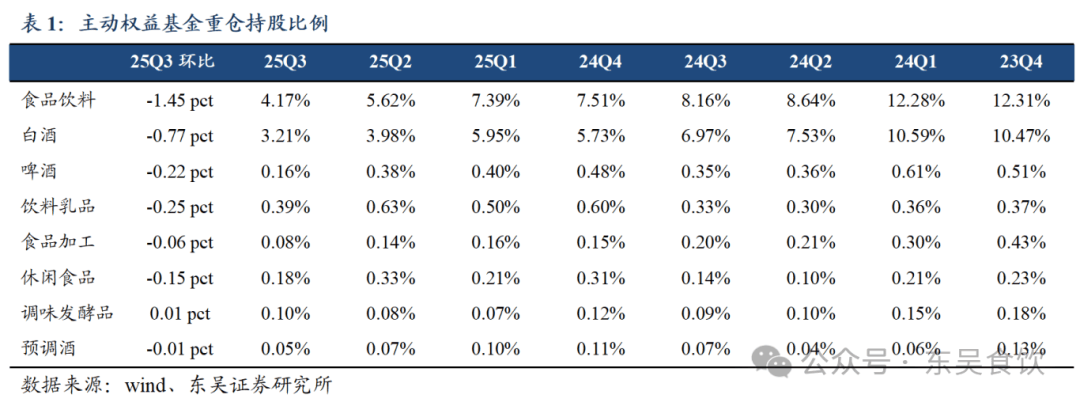
基金经理减仓白酒?不,其实是加仓
Sou Hu Cai Jing· 2025-11-05 10:51
Core Viewpoint - The active funds have continued to reduce their holdings in the liquor sector during the third quarter, influenced by the underperformance of liquor stocks compared to broader indices, leading to a passive decline in their proportion within public fund holdings [2][4]. Group 1: Fund Holdings and Changes - In the third quarter, the number of liquor stocks held by active funds slightly increased from 325 million shares to 328 million shares, indicating no large-scale sell-off [4][6]. - The total number of liquor stocks held by active funds decreased significantly from 501 million shares to 325 million shares in the second quarter, a reduction of 35% [4]. - The total market value of liquor stocks held by active funds in the third quarter was approximately 6.90 billion yuan, with a slight increase in holdings compared to the previous quarter [7]. Group 2: Performance of Liquor Stocks - The China Securities Liquor Index rose by 7.75% in the third quarter, underperforming the CSI 300 Index by 10 percentage points and the "Equity Mixed Fund Index" by 18 percentage points [2]. - The proportion of liquor stocks in the public fund holdings decreased due to their underperformance relative to other sectors [2]. Group 3: Fund Managers' Strategies - Fund manager He Shuai significantly increased his positions in Kweichow Moutai and Luzhou Laojiao, which became part of the top ten holdings in his fund, accounting for a total of 11.4% [9]. - Fund manager Li Xiaoxing also increased his holdings in Luzhou Laojiao and Wuliangye, citing the attractive dividend yield and potential for recovery in consumer stocks [11]. - Fund manager Nie Shilin increased his holdings in Kweichow Moutai by 77% and in Shanxi Fenjiu by 96%, indicating a strong bullish stance on high-end liquor [13]. Group 4: Market Sentiment and Future Outlook - Some fund managers expressed a cautious outlook, suggesting that the domestic consumption and real estate sectors remain under pressure, with a focus on observing policy changes affecting consumer demand [14]. - Fund managers like Zhang Feng have shifted their focus to higher dividend yield sectors, indicating a strategic pivot towards food and beverage stocks, including liquor, due to their potential for recovery [19]. Group 5: Redemption and Fund Flows - The consumer-focused active funds experienced significant redemptions, with total shares dropping from 74.5 billion to 65.5 billion, reflecting a net redemption of 12% [25]. - In contrast, the total shares of ordinary stock and mixed funds saw only a 5% net redemption, highlighting the challenges faced by consumer-focused funds [26].