WLY(000858)

Search documents
五粮液放大招,以“官方补贴”夺回渠道话语权
Xin Lang Cai Jing· 2025-12-12 09:13
Core Viewpoint - The introduction of the "official subsidy" policy by Wuliangye aims to stabilize the market by reducing the invoice price for distributors while maintaining the factory price, thereby alleviating the financial pressure on distributors and enhancing their profit margins [1][3][10]. Summary by Sections Policy Implementation - The official factory price of the eighth generation Wuliangye remains unchanged at 1019 yuan per bottle, allowing the invoice price to drop to 900 yuan through subsidies, effectively reducing the purchase cost for distributors by 119 yuan per bottle [1][3][17]. - Additional incentives such as terminal scanning rebates and sales completion rewards are provided to distributors to stimulate end-consumer demand and improve sales performance [3][4][17]. Market Context - The policy is seen as a "de facto price reduction" for the first time in ten years, addressing the issue of price inversion in the market where the circulation price had fallen to around 850 yuan, significantly below the factory price [5][18][20]. - The average inventory cycle for distributors has increased to a warning level of 2-3 months, indicating a pressing need for intervention [20]. Strategic Implications - This initiative is not merely a price war but a strategic response to the challenges faced in the industry, providing a model for channel transformation that can be emulated across the white liquor sector [19][28]. - The subsidy policy is designed to activate channel dynamics and restructure the pricing system, reinforcing Wuliangye's market position and channel authority amidst declining revenues and profits [11][28][30]. Industry Insights - Wuliangye's approach offers three key lessons for the industry: replacing direct price cuts with policy subsidies to maintain brand value, utilizing digital tools for transparent channel management, and adopting a direct distribution model to strengthen connections between manufacturers and end-users [31][32]. - The company's comprehensive strategy, including the suspension of traditional supply channels and the cleaning of non-compliant e-commerce stores, aims to rebuild its channel ecosystem and restore distributor confidence [14][32].



五粮液,曲线降价
2 1 Shi Ji Jing Ji Bao Dao· 2025-12-12 07:37
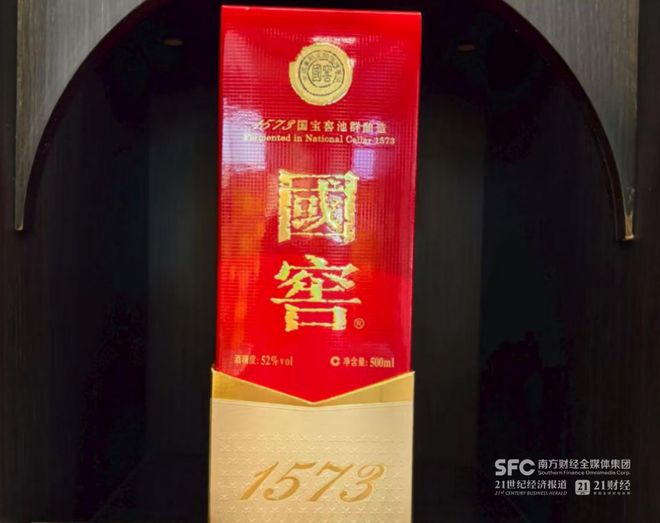
Core Viewpoint - The recent price adjustment by Wuliangye has sparked industry speculation about whether other high-end liquor brands, particularly Guojiao 1573, will follow suit in adjusting their prices [1][2]. Group 1: Market Dynamics - Wuliangye and Guojiao 1573 have historically maintained a close price relationship, often adjusting their prices in tandem, with the price difference typically within a few dozen yuan [4][11]. - The competitive landscape has evolved, with Guojiao 1573 expected to adopt a follow-up strategy similar to Wuliangye, potentially offering more channel subsidies instead of directly adjusting factory prices [2][5]. - The current market environment shows a downward trend in prices for many high-end liquor brands, with only a few maintaining prices above the thousand yuan mark [7][18]. Group 2: Pricing Strategies - Wuliangye's pricing strategy has included a cycle of price increases followed by temporary reductions through channel subsidies, with the factory price of its eighth-generation product reaching 1,019 yuan [14][9]. - Guojiao 1573 has previously faced challenges when it attempted to maintain higher prices than Wuliangye, leading to a decline in market share, which has influenced its current pricing strategy [10][17]. - The ongoing adjustment period has seen Guojiao 1573 initially raise its price to 980 yuan, surpassing both Wuliangye and Moutai, but it remains to be seen if it will follow Wuliangye's lead in further price adjustments [16][15]. Group 3: Competitive Positioning - The market share dynamics indicate that Moutai holds approximately 50% of the high-end liquor market, while Wuliangye captures around 30%, with other brands holding less than 10% [18]. - Guojiao 1573 has diversified its product offerings, with both high and low alcohol content products contributing significantly to its revenue, which is projected to exceed 20 billion yuan in 2024 [20][21]. - The competitive landscape has intensified with the emergence of new players, making pricing strategies more critical for maintaining market position [22][24].

五粮液,曲线降价
21世纪经济报道· 2025-12-12 06:46
Core Viewpoint - The article discusses the recent price adjustment strategies of high-end liquor brands, particularly focusing on Wuliangye and Guojiao 1573, and the competitive dynamics in the premium liquor market following Wuliangye's price changes [1][3][5]. Group 1: Market Dynamics - Wuliangye has been leading the high-end liquor market, with Guojiao 1573 closely following, and both brands often adjust their prices in tandem [1][3]. - The competition has intensified, with Guojiao 1573 expected to adopt a follow-up strategy similar to Wuliangye, potentially using channel subsidies to effectively lower prices without officially changing the factory price [1][3][9]. - The price gap between Guojiao 1573 and Wuliangye has been narrowing, with Guojiao 1573's price sometimes exceeding Wuliangye's [3][9]. Group 2: Pricing Strategies - Wuliangye's pricing strategy has included initial price increases followed by indirect price reductions through channel incentives, leading to a complex pricing environment [7][9]. - Guojiao 1573 has historically followed Wuliangye's pricing moves, but its management has indicated a more cautious approach this time, reflecting on past experiences where aggressive pricing led to market share losses [8][10]. - The current market environment is characterized by a need for strategic pricing adjustments, as both brands face declining demand and the challenge of maintaining market share [10][12]. Group 3: Product Focus and Revenue Contribution - Wuliangye's revenue is heavily reliant on its flagship product, contributing 50%-60% to its overall income, while Guojiao 1573 has diversified its offerings, with significant contributions from both high and low alcohol content products [13][14]. - Guojiao 1573's revenue contribution from high-end products has increased significantly, indicating a successful strategy in expanding its market presence [13][14]. - The competitive landscape has evolved, with new players entering the market, making pricing strategies more critical for maintaining brand positioning [14][15].

五粮液通过中期利润分红方案,共计派发超100亿元
Xin Lang Cai Jing· 2025-12-12 04:21
Core Viewpoint - Wuliangye announced a cash dividend distribution plan for 2025, approving a payout of 25.78 yuan per 10 shares, totaling 10 billion yuan, with no bonus shares or capital reserve conversion [1][2] Group 1: Dividend Distribution Details - The total share capital of Wuliangye is 3.882 billion shares, and the cash dividend will be distributed to all shareholders registered by the close of trading on December 17, 2025 [1][2] - The dividend distribution date is set for December 18, 2025, which is the ex-dividend date [1]
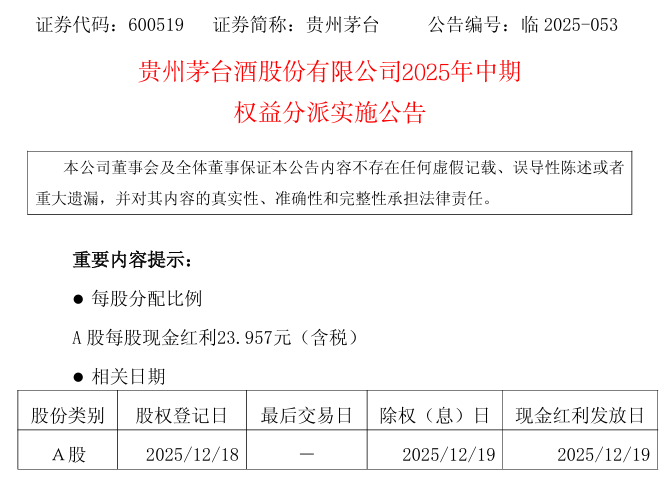
两大白酒巨头合计派发中期红利约400亿元,消费ETF嘉实(512600)聚焦消费复苏行情
Xin Lang Cai Jing· 2025-12-12 03:45
Group 1 - The liquor industry experienced a surge, with the major consumption index rising by 0.35% and key stocks like Gujing Gongjiu and Meihua Biotech increasing by over 1% [1] - The National Retail Innovation Development Conference highlighted the retail sector's crucial role in boosting consumption and expanding domestic demand, which is essential for economic recovery [1] - Major liquor companies, Kweichow Moutai and Wuliangye, announced interim dividend distributions totaling approximately 40 billion yuan, with payments scheduled for December 18 and 19 [1] Group 2 - As of November 28, 2025, the top ten stocks in the major consumption index accounted for 68.82% of the index, with liquor being the largest sector, representing over 39% of the index weight [2] - The consumption ETF managed by Harvest (512600) tracks the major consumption index, which includes leading companies across various sectors, emphasizing the importance of liquor in the consumer market [2] Group 3 - Investors can also consider the consumption ETF linked fund (009180) to capitalize on the consumption recovery trend [3]

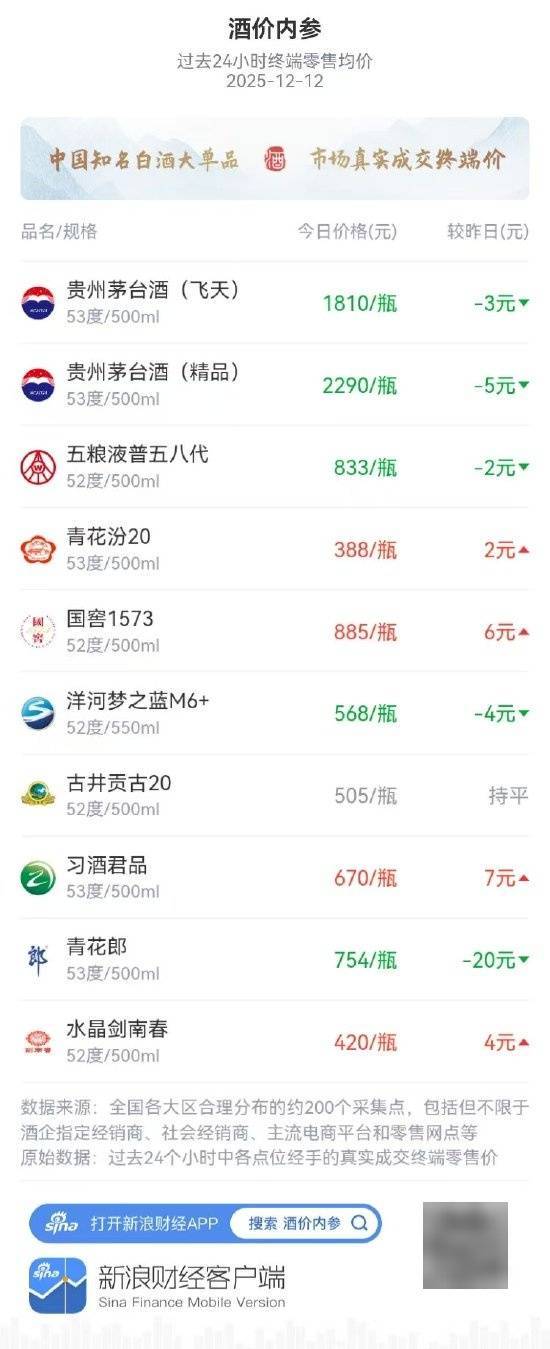
酒价内参12月12日价格发布,水晶剑南春上涨4元
Sou Hu Cai Jing· 2025-12-12 03:44
Group 1 - The core viewpoint of the articles indicates a continued decline in the retail prices of major Chinese liquor brands, with the average price of the top ten products dropping to 9123 yuan, a decrease of 15 yuan from the previous day, reflecting a weak market overall but with notable internal structural differentiation [1][2] - The data collected from approximately 200 sampling points across various regions ensures an objective and traceable representation of the market prices for well-known liquors [1] - Specific brands show significant price variations, with Qinghua Lang leading the decline at 20 yuan per bottle, while Xijiu Junpin and Guojiao 1573 saw increases of 7 yuan and 6 yuan respectively, indicating a mixed performance among brands [1][2] Group 2 - On December 10, a meeting took place between the Vice President of the Central Radio and Television Station and the Chairman of Moutai Group, where the Chairman emphasized the need to consolidate market advantages amidst ongoing industry adjustments [2] - The strategic focus of Moutai has shifted from merely pursuing price benchmarks to actively competing for market share in a contracting market, marking a new phase in their approach to industry challenges [2]



五粮液出招“调价”,国窖们跟不跟?
2 1 Shi Ji Jing Ji Bao Dao· 2025-12-12 03:29
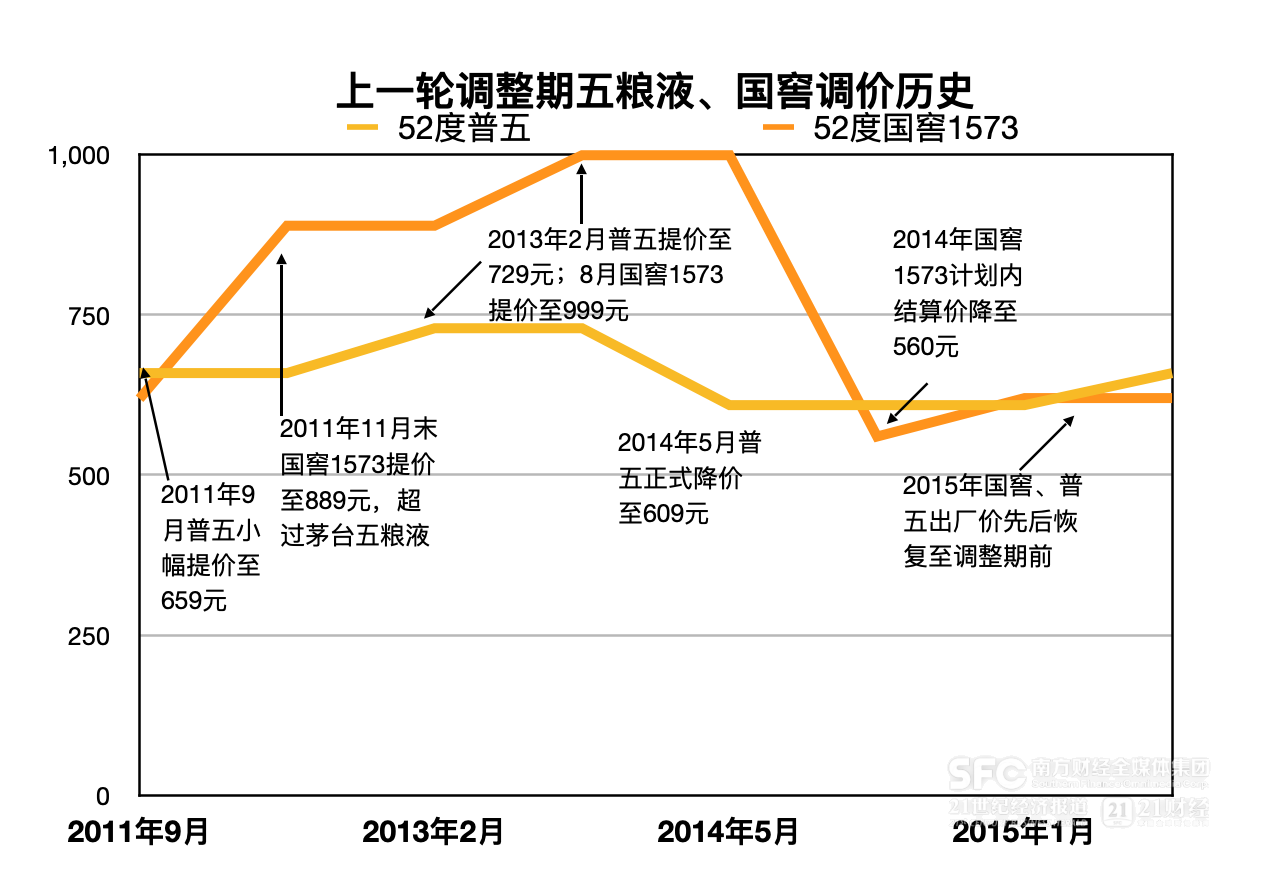
Core Viewpoint - The recent price adjustment news from Wuliangye has sparked industry speculation about whether other high-end liquor brands will follow suit, particularly focusing on the competitive dynamics between Wuliangye, Guojiao 1573, and other brands in the premium liquor market [1][3][4]. Group 1: Market Dynamics - Wuliangye, Guojiao 1573, and Moutai are the top three players in the high-end liquor market, with Wuliangye and Guojiao 1573 often adjusting their strategies in tandem due to their similar pricing and market positioning [2][4]. - The competition has intensified, with Guojiao 1573's pricing strategy closely mirroring that of Wuliangye, often resulting in a price difference of only a few dozen yuan between the two brands [4][11]. - The current market environment shows a trend of price adjustments, with Wuliangye leading the way by increasing channel subsidies to effectively lower the cost for distributors without officially changing the factory price [13][15]. Group 2: Historical Context - The current price adjustment cycle resembles previous cycles, where both Wuliangye and Guojiao 1573 have engaged in back-and-forth pricing strategies, including price increases followed by temporary reductions [9][10][12]. - Historical data indicates that Guojiao 1573 has previously faced challenges when maintaining higher prices than Wuliangye, leading to a significant drop in market share during past adjustment periods [10][11]. Group 3: Strategic Responses - Guojiao 1573 is expected to adopt a follow-up strategy similar to Wuliangye's, potentially using indirect methods such as increased subsidies to maintain competitiveness without directly lowering factory prices [4][15]. - The strategic focus of both companies has diverged, with Wuliangye prioritizing volume sales while Guojiao 1573 has the flexibility to leverage both high and low alcohol content products to enhance market presence [18][20]. - The competitive landscape has evolved, with new entrants like Langjiu and Moutai 1935 gaining market share, complicating the pricing strategies for established brands [22][23].
ETF盘中资讯|白酒逆市猛攻,酒鬼酒飙涨超5%!食品ETF(515710)涨超1%,机构高呼底部逻辑清晰!
Sou Hu Cai Jing· 2025-12-12 02:26
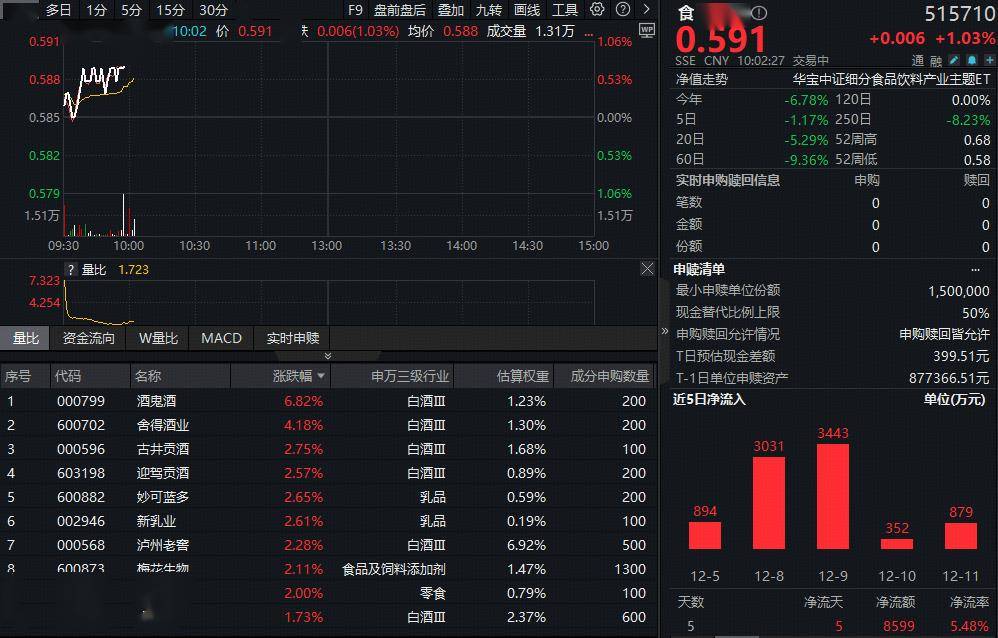
Group 1 - The food and beverage sector experienced a rise in the market, with the food ETF (515710) increasing by 1.03% as of the report time [1] - Notable stocks in the liquor segment saw significant gains, with brands like JiuGuiJiu rising over 6%, and SheDe JiuYe increasing over 4% [1] - Major liquor brands such as Moutai and Wuliangye also showed strong performance, contributing to the overall positive trend in the sector [1] Group 2 - Analysis indicates that the slight decline in liquor prices year-on-year should be viewed as a rational adjustment by the industry to manage inventory and stabilize channel pricing, paving the way for future healthy development [3] - The current valuation of the food and beverage sector is at a historical low, suggesting a favorable time for investment, with the food ETF's price-to-earnings ratio at 19.97, positioned in the lower 4.71% of the past decade [3] - Citic Securities highlights that while Moutai's price drop may temporarily suppress sector performance, potential policy catalysts in December could enhance consumption, making high-quality assets like liquor appealing for investment [3] Group 3 - The consumer market has shown signs of slowing growth due to high base effects and reduced subsidies, with a need for time to recover domestic demand [4] - Looking ahead to 2026, opportunities may arise from supply-side optimization, new product categories, and policies aimed at boosting consumption [4] - The food ETF (515710) is recommended for investors, as it tracks a diversified index with significant allocations to leading liquor brands and other beverage sectors [4]


重要会议定调扩内需!食品饮料ETF天弘(159736)连续3日“吸金”近4000万元,重仓股贵州茅台、五粮液豪掷400亿分红
Xin Lang Cai Jing· 2025-12-12 02:05
Group 1 - The central economic work conference emphasized the importance of domestic demand and initiated actions to boost consumption, including plans for increasing residents' income and optimizing policies to enhance service consumption potential [2] - The food and beverage ETF Tianhong (159736) has seen significant inflows, with a total of 38.69 million yuan in net inflows over three days, indicating strong investor interest in the sector [1] - Major Chinese liquor companies, Kweichow Moutai and Wuliangye, announced substantial mid-term cash dividends totaling 400 billion yuan, reflecting their strong financial performance and commitment to returning value to shareholders [3] Group 2 - The food and beverage ETF Tianhong (159736) allocates approximately 60% of its portfolio to leading high-end and mid-range liquor stocks, with the top ten holdings including major brands like Moutai and Wuliangye [1] - The central economic work conference's focus on enhancing domestic consumption and investment is expected to positively impact the consumer goods sector, particularly in the context of policies aimed at promoting service consumption [2][3] - The announcements of cash dividends by Kweichow Moutai and Wuliangye are indicative of the robust profitability in the liquor industry, which is likely to attract further investment interest [3]
两大巨头,同日官宣!
Sou Hu Cai Jing· 2025-12-12 01:42
Group 1 - The company announced a mid-term profit distribution plan for 2025, approving a cash dividend of 25.78 yuan per 10 shares, totaling approximately 10.01 billion yuan (including tax) [2][6] - The record date for shareholders is set for December 17, 2025, with the ex-dividend date on December 18, 2025 [2][6] - The distribution will not include stock dividends or capital reserve transfers to increase share capital [2][6] Group 2 - The company's total share capital is 3,881,608,005 shares, which serves as the basis for the dividend distribution [6] - The board of directors was authorized by the shareholders' meeting held on June 20, 2025, to formulate and implement the mid-term dividend plan [6]