TLC(002466)

Search documents
智利投资打水漂 天齐锂业急抽身
BambooWorks· 2026-02-11 09:30
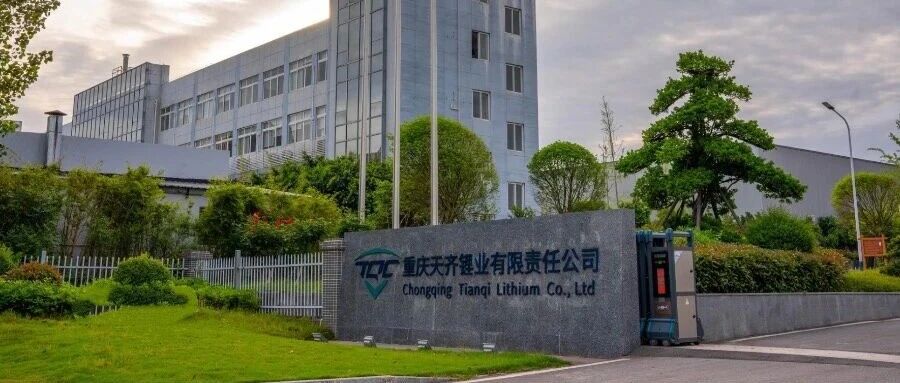
在智利法院败诉后,天齐锂业宣布出售 SQM 部分持股,主动调整资本结构,为下一个锂业周期做准备 ▶ 拥有世界最大锂盐滩的SQM,在该国政策下逐步被收归国有, 天齐锂业向法院申诉未果 ▶ 公司同时宣布配股及发行可转换债券,集资约58亿港元 Image Key takeaways: 公司估算,目前SQM的1.25%股权价值约2.06亿美元。若按天齐当年入股成本比例计算,该部分原始投资额约2.16亿美元,意味可能出 现轻微账面损失。公司指,此举对盘活公司存量资产,提高公司资产流动性等将起到积极作用。 大规模配股集资 时间拉回2018年, 天齐锂业 股份有限公司(9696.HK; 002466.SZ)斥资约41亿美元买入智利化工矿业公司Sociedad Química y Minera de Chile S.A.(SQM)近24%股权时,市场普遍认为,这是一场对全球锂资源上游的关键押注。 智利锂开采量占全球三成,是世界第二大,其中,SQM在全球锂化学品市占率超过两成。全球每五辆电动车,就有一辆的碳酸锂来自 他们。旗下拥有的阿塔卡马盐滩(Salar de Atacama)锂矿场,是全世界最大的锂盐滩,可开采面积达820 ...


钨长单价格再度大涨!有色金属ETF天弘(159157)标的指数飙涨3%,换手率同标的第一
Ge Long Hui· 2026-02-11 03:38
Group 1 - The non-ferrous metal sector is leading the market, with companies like Zhongtung High-tech, Xiamen Tungsten, and Northern Rare Earth seeing significant stock price increases of 7.98%, 6.72%, and 6.34% respectively, contributing to a nearly 3% rise in the Tianhong Non-ferrous Metal ETF (159157) [1] - The Tianhong Non-ferrous Metal ETF has attracted substantial capital inflow, with a total of 890 million shares purchased in a single day and a cumulative net inflow of 614 million yuan over three days, indicating strong investor interest [1] - The ETF covers a wide range of sectors including copper, aluminum, gold, and rare earths, allowing it to capture various market cycles effectively [1] Group 2 - On February 10, prices for mainstream rare earth products such as praseodymium and neodymium oxides have risen due to tight supply conditions and strong demand from downstream buyers [2] - The non-ferrous sector is expected to perform well in 2025, with companies like Zijin Mining and Luoyang Molybdenum projected to see net profit increases of over 60% and 50% respectively, while Shenghe Resources and Huayu Mining are expected to see even higher profit growth [2] - Following price adjustments by tungsten companies, Zhangyuan Tungsten has also raised its long-term procurement prices for black and white tungsten concentrates by 28.1% [2] - The U.S. has initiated a $12 billion strategic metal reserve plan, and the Non-ferrous Metals Industry Association has suggested commercial interest subsidies for copper and copper concentrates to enhance resource value [2]



锂电产业链历史不会重演,但会押韵
Zhong Guo Neng Yuan Wang· 2026-02-10 01:01
Core Viewpoint - The lithium battery supply chain has experienced significant price increases from 2020 to 2022, driven by strong demand and a smooth transmission of price hikes across the industry [2][3]. Group 1: Price Trends - Electrolyte prices started at 70,000 CNY/ton in September 2020, rising to 100,000 CNY/ton by the end of the year, and reaching a peak of 580,000 CNY/ton in February 2022, with long-term contract prices stabilizing between 200,000 to 300,000 CNY/ton [2][3]. - Iron lithium cathode prices, including phosphoric acid iron and processing fees, doubled in 2021, peaking at over 40,000 CNY/ton by the end of that year [2][3]. - Anode prices began to rise in Q3 2021 due to graphite production constraints, increasing from 12,000 CNY/ton to a high of 25,000 to 28,000 CNY/ton by Q2 2022 [2][3]. Group 2: Supply Chain Dynamics - Lithium carbonate prices rebounded from a low of 40,000 CNY/ton at the end of 2020 to 50,000 CNY/ton in early 2021, and surged to 300,000 CNY/ton by the end of 2021, eventually reaching 520,000 CNY/ton by February 2022 [2][3]. - The battery sector has effectively transmitted raw material price increases, with battery prices rising by 1 cent/wh in Q1 2021 and accelerating to 2-3 cents/wh in Q1 and Q2 of 2022, reaching over 1 CNY/wh [2][3]. Group 3: Future Outlook - Current market conditions resemble Q4 2020, with expectations for continued price increases due to strong demand and low profitability levels compared to previous years [3]. - The industry's expansion willingness is significantly lower than in 2021, with limited new supply expected by 2026, suggesting a more stable price environment [3]. - The anticipated price increases are not expected to be as dramatic as in 2021, with supply-demand tightness projected to be lower, particularly for hexafluorophosphate and lithium carbonate [3]. Group 4: Investment Recommendations - The current valuation of leading companies is considered reasonable, with expected industry growth of 20% in 2027, suggesting potential for investment in the battery sector, including companies like CATL, Yiwei Lithium Energy, and others [4]. - Material leaders such as Keda Lithium and others are also highlighted as strong investment opportunities, alongside companies in the lithium carbonate sector [4]. - The solid-state battery sector is recommended for investment, particularly with catalysts expected to materialize in Q4 2025 [4].




有色金属ETF基金(516650)开盘涨1.90%,重仓股紫金矿业涨3.50%,洛阳钼业涨2.14%
Xin Lang Cai Jing· 2026-02-09 12:53
Group 1 - The core viewpoint of the article highlights the performance of the Non-ferrous Metals ETF Fund (516650), which opened with a gain of 1.90% at 2.145 yuan [1] - Major holdings in the Non-ferrous Metals ETF include Zijin Mining, which rose by 3.50%, and other companies such as Luoyang Molybdenum, Northern Rare Earth, and Huayou Cobalt, which also experienced gains [1] - The fund's performance benchmark is the CSI Sub-Industry Non-ferrous Metals Theme Index return, managed by Huaxia Fund Management Co., with a return of 110.83% since its inception on June 9, 2021, and a 4.15% return over the past month [1]

有色ETF鹏华(159880)开盘涨2.06%,重仓股紫金矿业涨3.50%,洛阳钼业涨2.14%
Xin Lang Cai Jing· 2026-02-09 12:19
Group 1 - The core point of the article highlights the performance of the Penghua Nonferrous ETF (159880), which opened with a gain of 2.06% at 2.233 yuan [1] - Major holdings in the ETF include Zijin Mining, which rose by 3.50%, and other companies such as Luoyang Molybdenum (2.14%), Northern Rare Earth (2.97%), and Huayou Cobalt (1.49%) [1] - The ETF's performance benchmark is the National Index of Nonferrous Metals Industry, managed by Penghua Fund Management Co., Ltd., with a return of 118.94% since its inception on March 8, 2021, and a 5.03% return over the past month [1]
天齐锂业配股发债抛资产筹资或超70亿 不缺钱却大规模“屯粮”意欲何为?
Xin Lang Zheng Quan· 2026-02-09 09:56
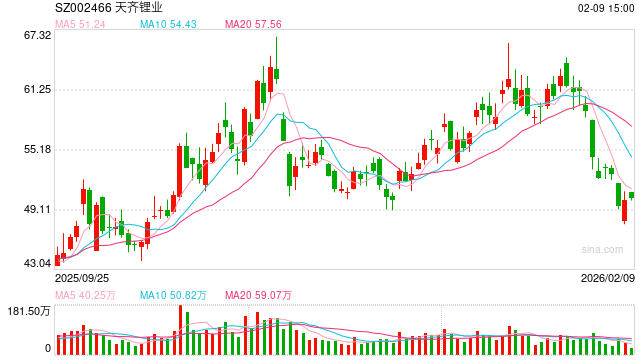
热点栏目 自选股 数据中心 行情中心 资金流向 模拟交易 客户端 炒股就看金麒麟分析师研报,权威,专业,及时,全面,助您挖掘潜力主题机会! 出品:新浪财经上市公司研究院 作者:昊 近日,天齐锂业宣布配售新H股及发行可转换公司债券,同时拟出售中创新航和SQM部分股权。通过上述资本运作,天齐锂业募资和套现合计或将超过70亿 元。 事实上,从目前财务指标看,天齐锂业资金和债务压力并不大。考虑到天齐锂业表示筹资将继续锂资源并购,同时碳酸锂价格近一年出现大涨,是否将进 行"高抛低吸"值得关注。 2024年4月,二代掌门人蒋安琪接班,推行"夯实上游、做强中游、渗透下游"的长期战略。然而,蒋安琪上任后却立即叫停澳大利亚奎纳纳二期氢氧化锂项 目,并全额计提14.84亿元减值准备,此次又出售下游电池头部厂商中创新航股权。 不仅如此,天齐锂业研发投入长期大幅低于赣锋锂业,与后者积极布局锂电全产业链形成鲜明对比,公司或仍在延续豪赌上游资源的老路。 配股发债再卖关键资产 筹资超70亿或"高抛低吸"? 2月3日晚,天齐锂业发布公告,公司拟按每股45.05港元的价格,向独立投资者配售6505万股新H股,同时发行本金总额26亿元的可转换公 ...
有色金属:关注企稳后的布局机会
GUOTAI HAITONG SECURITIES· 2026-02-09 05:15
Investment Rating - The report assigns an "Overweight" rating for the non-ferrous metals industry [4] Core Insights - The report emphasizes the importance of macroeconomic factors such as monetary policy, macro expectations, geopolitical dynamics, and supply disruptions in influencing metal price trends [2] - The report highlights the need to focus on investment opportunities following stabilization in the market [8] Summary by Sections 1. Industry and Stock Performance - The non-ferrous metals sector experienced a decline of 8.51% last week, underperforming major indices [14][16] 2. Metal Prices and Inventory - Copper prices decreased by 3.45% to 100,100 CNY/ton, while aluminum prices fell by 5.07% to 23,315 CNY/ton [24] - SHFE gold prices dropped by 8.92% to 1,090.12 CNY/gram, while COMEX gold rose by 5.13% to 4,988.60 USD/ounce [26] - SHFE silver prices decreased by 37.17% to 18,799 CNY/kg, with COMEX silver down by 1.28% to 77.53 USD/ounce [26] 3. Macro Data Tracking - The report tracks key macroeconomic indicators, including the U.S. CPI and PCE, which show a year-on-year increase of 2.7% and 2.79%, respectively [29][30] - China's CPI and PPI for December were reported at 0.8% and -1.9%, respectively [30] 4. Precious Metals: Low Inventory Disturbances - The report notes that low inventory levels continue to disrupt precious metal prices, with significant fluctuations observed in both gold and silver markets [52][53] 5. Copper: Price Fluctuations - The report indicates that copper prices are expected to fluctuate, with supply-side adjustments and demand dynamics playing crucial roles [65][72] 6. Aluminum: Price Adjustments - Aluminum prices are under pressure due to macroeconomic sentiment and seasonal demand fluctuations, with a noted decrease in processing rates [10][80] 7. Energy Metals: Strong Demand - The report highlights robust demand for energy metals, particularly lithium, despite some price pressures due to macroeconomic factors [89][92] 8. Rare Earths: Price Trends - Prices for rare earth elements, particularly praseodymium and neodymium oxides, continue to rise, supported by tight supply conditions [11]



1月智利发运超预期,盘面大幅下跌
Dong Zheng Qi Huo· 2026-02-08 15:20
1. Report Industry Investment Rating - The rating for lithium carbonate is "Oscillating" [4] 2. Core Viewpoints of the Report - The actual fundamentals of lithium carbonate are positive, but the futures market is significantly affected by macro - sentiment and capital flows. After the Spring Festival, the fundamentals are expected to show a simultaneous increase in supply and demand. From March to Q2, lithium carbonate is still expected to experience inventory reduction. After the supply increases in Q3, there may be inventory accumulation, but considering the demand growth, the inventory days are expected to decrease to less than one month. The price center of lithium carbonate may still be significantly higher than before. A bullish strategy is recommended, and investors should look for opportunities to go long at low prices after the trading volume and volatility stabilize [2][16] 3. Summary by Relevant Catalogs 3.1 1 Month Chilean Shipment Exceeded Expectations, and the Futures Market Declined Significantly - **Price Changes**: This week (2/2 - 2/6), lithium salt prices dropped significantly. The closing price of LC2605 decreased by 10.3% week - on - week to 132,900 yuan/ton. The average spot prices of SMM battery - grade and industrial - grade lithium carbonate decreased by 16.2% and 16.6% week - on - week to 134,500 and 131,000 yuan/ton respectively. The price of lithium hydroxide fluctuated accordingly [11] - **Chilean Exports**: In January 2026, Chile exported a total of 25,400 tons of lithium carbonate and lithium hydroxide, a 26% increase month - on - month and an 8% decrease year - on - year. Exports to China were 17,000 tons, a 44.8% increase month - on - month and an 11% decrease year - on - year. In January 2026, Chile shipped 27,800 tons (13,900 tons LCE) of lithium sulfate to China, a 475% increase month - on - month and a 1222% increase year - on - year. This large shipment may be due to pulse shipments considering the Spring Festival [1][12] - **Supply and Demand and Inventory**: According to SMM forecasts, the lithium carbonate production in February is 81,930 tons, a 16% decrease month - on - month. In the demand side, the production schedules of cathodes and cells also decreased in February, but the decline was lower than that of lithium salts. It is expected that lithium carbonate will continue to reduce inventory in February. This week, the total inventory of the SMM lithium carbonate sample decreased by 2019 tons week - on - week [13] - **Terminal Market**: In the power battery sector, in January 2026, the estimated wholesale volume of new energy passenger vehicles by national manufacturers was 900,000 units, a 1% year - on - year increase. Considering the Spring Festival effect in the same period last year, this data is not optimistic. In the energy storage sector, in January 2026, there were 152 energy storage bidding and winning projects. On January 30, the National Development and Reform Commission and the National Energy Administration issued a notice to improve the capacity price mechanism on the power generation side, which is beneficial to the energy storage yield [2][15] 3.2 Weekly Industry News Review - Sigma Lithium resumed the mining operation of the Grota do Cirilo lithium mine on February 3, 2026. This mine is Sigma's only operating asset and the largest lithium mine in Brazil, with an annual production capacity of 270,000 tons of lithium concentrate [17] - Tianqi Lithium plans to dispose of no more than 3,565,970 Class A shares of SQM, accounting for no more than 1.25% of SQM's total shares [17] 3.3 Key High - Frequency Data Monitoring of the Industry Chain 3.3.1 Resource End: The Price Trends of Ore and Salt are Consistent - The report presents data on the average spot price of lithium concentrate and the monthly inventory of lithium ore samples [19][21] 3.3.2 Lithium Salts: The Futures Market Fell from High Levels, and the Basis Fluctuated Significantly - The report shows data on the closing price of the GFEX lithium carbonate main contract, the term structure of GFEX lithium carbonate, domestic weekly lithium carbonate production, SMM weekly lithium carbonate inventory, domestic average spot price of lithium carbonate and the electric - industrial price difference, lithium carbonate basis, domestic average spot price of lithium hydroxide, the price difference between domestic and overseas lithium hydroxide, the price difference between domestic battery - grade lithium hydroxide and lithium carbonate, and the theoretical production profit of lithium salt plants [24][31][34] 3.3.3 Downstream Intermediates: The Production Schedules in February are Good - The report includes data on the monthly production of SMM ternary materials, SMM lithium iron phosphate, the price trend of lithium iron phosphate, the average price of lithium iron phosphate cells (power type), the price trend of ternary materials, the average price of 523 square ternary cells (power type), the price trend of lithium cobalt oxide, and the average price of lithium cobalt oxide cells (consumer type) [48][53][57] 3.3.4 Terminal: Pay Attention to the Negative Feedback in the Industry Chain - The report provides data on China's power battery installation volume and year - on - year growth rate, the monthly installation proportion of China's power batteries, China's new energy vehicle production and sales year - on - year growth rate, and China's new energy vehicle penetration rate [62][66][68]
锂业巨头杀红眼 2026无矿者出局
经济观察报· 2026-02-08 12:53
Core Viewpoint - The ongoing lithium resource battle at the beginning of 2026 will see winners not only among the largest players with the most mines but also among those who can transform resource endowments into sustainable competitive advantages through excellent operations, technological breakthroughs, and strategic collaboration [1] Group 1: Capital Operations and Mergers - In early 2026, major lithium companies initiated a series of capital operations focused on resource control, with Tianqi Lithium announcing a fundraising and asset disposal plan to raise approximately 71 billion yuan [2][6] - Morgan Stanley's report indicated that Tianqi Lithium's fundraising could significantly increase the likelihood of subsequent mergers and acquisitions, despite potential dilution risks exceeding 6% [2] - Shengxin Lithium completed the acquisition of the remaining equity in Huirong Mining for 1.26 billion yuan, fully integrating the Sichuan Muroong lithium mine into its portfolio [3][8] Group 2: Strategic Resource Acquisition - Salt Lake Co. announced the acquisition of a 51% stake in Wenkang Salt Lake for 4.605 billion yuan, enhancing its core resource layout in lithium extraction [3][9] - Shengxin Lithium and Zhongxin Innovation signed a framework agreement for deep cooperation, committing to purchase 200,000 tons of lithium salt products from Shengxin Lithium between 2026 and 2030 [9] Group 3: Market Dynamics and Strategic Logic - The series of financing and acquisition actions reflect a common logic: betting on the "certainty" of resource supply amid the uncertainties of fluctuating lithium prices and geopolitical risks [4] - Tianqi Lithium's strategy emphasizes securing resources to stabilize operations during price downturns and capitalize during peaks, moving away from reliance on price speculation [11][12] - The pursuit of low-cost, high-grade resources is seen as a stabilizing factor during market cycles, with Tianqi Lithium's operations achieving significantly lower cash costs compared to industry averages [12] Group 4: Challenges and Risks - Concerns regarding development costs and efficiency arise as mining depths increase, potentially affecting ore grades and recovery rates [17] - The pressure of rising costs due to stricter environmental regulations and labor costs poses significant challenges to resource development [17] - The complexity of overseas operations, including regulatory and community relationship risks, presents additional uncertainties for companies aiming for global expansion [19]

锂业开年抢矿大战:巨头死磕“确定性”
Jing Ji Guan Cha Wang· 2026-02-08 11:56
Core Viewpoint - The lithium industry is witnessing a series of strategic capital operations by major players to secure resource control amid fluctuating lithium prices and geopolitical risks, indicating a shift towards prioritizing resource certainty for future profitability [2][3][10]. Group 1: Capital Operations and Financing - Tianqi Lithium announced a fundraising and asset disposal plan on February 4, 2026, aiming to raise HKD 58.6 billion (approximately RMB 5.2 billion) through a combination of H-share placement and convertible bonds, alongside the potential disposal of shares in SQM and Zhongxin Innovation, which could yield around RMB 1.9 billion, totaling approximately RMB 7.1 billion [2][5]. - Morgan Stanley's report highlighted that after completing the fundraising, Tianqi Lithium's potential for subsequent mergers and acquisitions would significantly increase, although it also warned of a potential dilution risk exceeding 6% [2][3]. - The capital raised by Tianqi Lithium is intended for project development, optimizing capital expenditures, and acquiring quality lithium assets, particularly during a low point in the industry cycle [5][12]. Group 2: Mergers and Acquisitions - On February 4, 2026, Shengxin Lithium announced the completion of a RMB 1.26 billion acquisition of the remaining stake in Huirong Mining, fully integrating the Sichuan Muro Lithium Mine into its portfolio, which is recognized as one of Asia's largest hard rock lithium deposits [7][8]. - Salt Lake Co. announced on December 30, 2025, its acquisition of a 51% stake in Wenkou Salt Lake for RMB 4.605 billion, enhancing its control over lithium resources and positioning itself among the top domestic lithium salt producers [3][7]. - Shengxin Lithium and Zhongxin Innovation signed a framework agreement for deep cooperation, committing to the procurement of 200,000 tons of lithium salt products from Shengxin Lithium between 2026 and 2030, indicating a strategic alignment in the supply chain [3][8]. Group 3: Industry Trends and Strategic Logic - The current actions of lithium industry leaders reflect a proactive approach to securing resources, as they aim to mitigate uncertainties associated with price fluctuations and geopolitical risks by locking in resource supply [3][10][14]. - The pursuit of high-quality, low-cost lithium resources is seen as essential for maintaining stability during market downturns and capitalizing during peaks, as highlighted by Tianqi Lithium's operational strategies [11][12]. - The overarching strategy among these companies is to convert the uncertainties of resource acquisition into tangible, controllable assets through capital investments, thereby ensuring future profitability [10][14].