
CHACHA FOOD CO.,LTD(002557)

Search documents
洽洽食品前三季度净利下滑七成,66岁董事长理陈先保去年薪酬145万元
Sou Hu Cai Jing· 2025-10-25 11:42
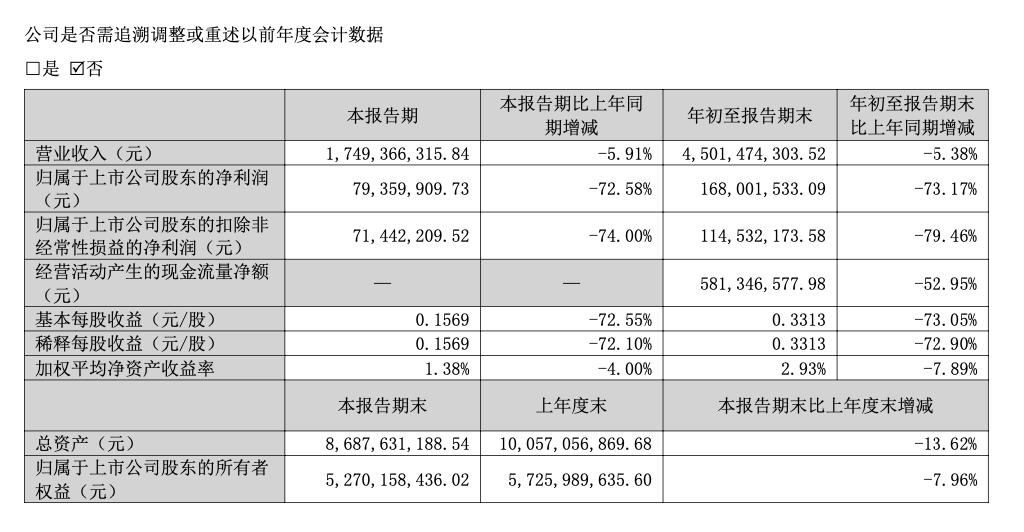
瑞财经 刘治颖 10月23日,洽洽食品(SZ002557)发布2025年三季度报告。 洽洽食品表示,该投资公司聚焦休闲食品产业链投资,在提升公司资金的财务收益的同时,与合作伙伴共担风险、共享收益;同时,通过整合产业链优质 资源,充分发挥协同效应,实现战略共赢。 据瑞财社查阅,洽洽食品董事长兼总经理陈先保现年66岁,研究生学历。 陈先保,1959年5月生,研究生学历。2008年6月-2011年7月任合肥华泰集团董事长、总经理;洽洽食品董事长;2011年7月-2013年1月任合肥华泰集团董事 长,洽洽食品董事长、总经理;2013年1月-2015年6月任合肥华泰集团董事长、总经理、洽洽食品董事长;2015年6月至今任洽洽食品董事长、总经理,合肥 华泰集团董事长。 东方财富数据显示,2020年至2024年,陈先保薪酬分别为134.2万元、159.7万元、150.9万元、143.6万元、144.9万元。 2025年前三季度,洽洽食品营业收入为45.01亿元,同比下降5.38%;归母净利润为1.68亿元,同比下降73.17%。其中第三季度营业收入为17.49亿元,同比 下降5.91%;归母净利润为7935.99万元,同比 ...


【洽洽食品(002557.SZ)】积极推新,关注成本走势——2025年三季报点评(叶倩瑜/董博文)
光大证券研究· 2025-10-25 00:04
Core Viewpoint - The company reported a decline in revenue and net profit for the first three quarters of 2025, indicating challenges in maintaining growth and profitability [3]. Group 1: Financial Performance - For Q1-Q3 2025, the company achieved revenue of 4.501 billion yuan, a year-on-year decrease of 5.38%, and a net profit of 168 million yuan, down 73.17% year-on-year [3]. - In Q3 2025 alone, revenue was 1.749 billion yuan, a decrease of 5.91% year-on-year, with a net profit of 79 million yuan, down 72.58% year-on-year [3]. Group 2: Product Performance and Market Strategy - The "All Nuts" series performed well during the Mid-Autumn Festival and National Day, contributing positively to the nut category's revenue, while the sunflower seed category faced pressure due to inventory control measures [4]. - New products, particularly konjac products, showed promising trial sales in Southeast Asia, with plans to expand flavors and enhance the product matrix [4]. Group 3: Cost and Profitability Challenges - The gross margin for Q1-Q3 2025 was 21.94%, with Q3 at 24.52%, reflecting a year-on-year decrease of 8.59 percentage points due to rising raw material costs and promotional activities [5]. - The net profit margin for Q1-Q3 2025 was 3.73%, with Q3 at 4.54%, indicating a significant year-on-year decline of 11.03 percentage points, influenced by reduced revenue scale, increased raw material costs, and higher promotional expenses [5]. Group 4: Future Outlook - The company is optimistic about the performance of new products and expects improvements in terminal sales, with a slight decrease in sunflower seed costs potentially alleviating some cost pressures [6].

大单品策略成效渐显,洽洽食品三季度业绩稳步前进
Bei Jing Shang Bao· 2025-10-24 12:51
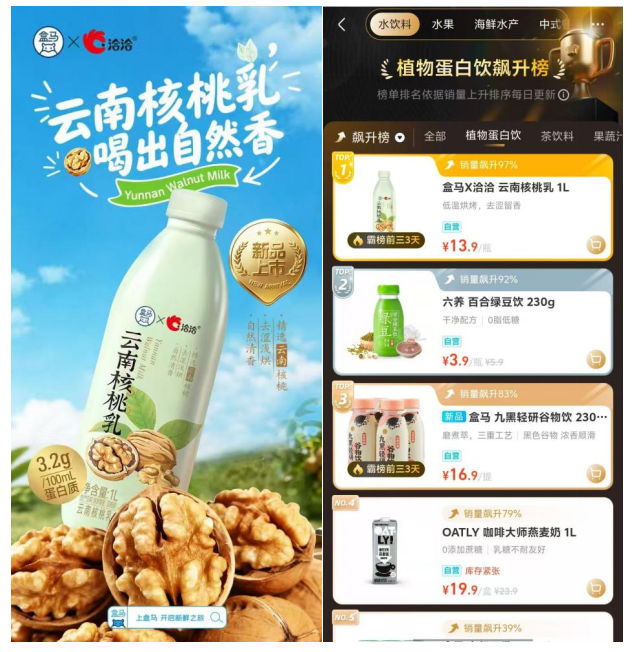
Core Viewpoint - The Chinese snack food industry is undergoing significant transformation driven by consumer upgrades and heightened health awareness, with Qiaqia Food (002557.SZ) demonstrating resilience in its transition strategy while maintaining its core values. Financial Performance - In Q3 2023, Qiaqia achieved a revenue of 1.749 billion yuan and a net profit attributable to shareholders of 79.36 million yuan, with a net profit of 71.44 million yuan after excluding non-recurring gains and losses [1] - As of September 30, 2023, the company reported a total revenue of 4.501 billion yuan and a net profit of 168 million yuan, with a net profit of 115 million yuan after adjustments [1] Product Innovation and Market Strategy - Qiaqia is focusing on new product launches, including konjac, cilantro melon seeds, mixed nuts, organic walnut kernels, and Yunnan walnut milk, which are rapidly growing and establishing new growth drivers [1] - The company has introduced the "Konjac Princess - Konjac Layered Stomach" as a key product in the healthy snack segment, utilizing traditional techniques and innovative cutting methods to appeal to health-conscious consumers [9][11] - Qiaqia's digital platform now covers 560,000 retail points, with online sales growing over 24% year-on-year, reflecting a shift towards digital management and new retail channels [8] Quality and Production Innovation - Qiaqia maintains a strong focus on its core products, sunflower seeds and nuts, with over 60% of revenue from sunflower seeds in the first half of 2025, showcasing stability in its core business [2] - The company has invested over 1 billion yuan in smart manufacturing, achieving a production efficiency increase of over 30% through advanced technologies like blockchain traceability and multi-material mixed packaging systems [3][4] Brand Development and Consumer Engagement - Qiaqia is enhancing its brand appeal through various consumer engagement initiatives, such as music festivals and competitions, aimed at connecting with younger audiences [4] - The company has adopted a "transparent factory" model, recognized as a national green factory and smart manufacturing pilot, which serves as a unique brand asset [4] Market Expansion and Future Outlook - Qiaqia is targeting Southeast Asia as a key growth area, focusing on markets like Thailand, Indonesia, and Vietnam, while also exploring potential in the Middle East and Europe [15] - The company aims to balance innovation in channels and products with a commitment to quality and corporate culture, positioning itself for sustainable growth in the evolving snack food industry [16]
前三季度营、利双跌,净利润不及10年前,洽洽离“百亿梦”越来越远了
3 6 Ke· 2025-10-24 12:04
Core Viewpoint - The financial performance of Qiaqia Food has significantly declined, with a notable drop in revenue and net profit for the first three quarters of 2025 compared to the previous year, indicating ongoing challenges in the business [1][3]. Financial Performance - For the first nine months of 2025, Qiaqia achieved revenue of 4.501 billion yuan, a decrease of 5.38% year-on-year [2]. - The net profit attributable to shareholders was 168 million yuan, down 73.17% compared to the same period last year [2]. - In Q3 2025, revenue was 1.749 billion yuan, a decline of 5.91%, with net profit at 79.36 million yuan, a drop of 72.58% [2]. Business Challenges - The core sunflower seed business has shown weak growth, with revenue for this segment only increasing by 2.6% in 2024, while facing a 4.45% decline in H1 2025 due to rising raw material costs [3]. - The surge in raw material prices, particularly due to adverse weather conditions and global commodity price increases, has severely impacted profit margins, leading to a drop in gross margin from 31.88% in 2022 to 19.93% in H1 2025 [3][4]. Strategic Responses - Qiaqia is attempting to manage high raw material costs by reducing inventory, with a 58.42% decrease in inventory from the beginning of the year [4]. - The company is also exploring new business avenues, including expanding its product line to include konjac products and enhancing its marketing strategies to attract younger consumers [5][6]. Investment Initiatives - Qiaqia announced a joint investment with Huatai Group to establish a new investment company focused on the snack food industry, aiming to improve financial returns and share risks [6]. - Despite these efforts, the company faces skepticism regarding whether these financial maneuvers can address the fundamental issues affecting its core product lines [6]. Market Position - Qiaqia still holds over 50% market share in China's 35 billion yuan sunflower seed market, indicating a strong competitive position despite recent performance challenges [7]. - The company's long-term goal of achieving 10 billion yuan in revenue appears increasingly difficult, with significant revenue targets remaining unmet [6][7].
洽洽食品(002557)2025年三季报点评:积极推新 关注成本走势
Xin Lang Cai Jing· 2025-10-24 10:35
Core Insights - Company reported a decline in revenue and net profit for Q1-Q3 2025, with total revenue of 4.501 billion yuan, down 5.38% year-on-year, and net profit of 168 million yuan, down 73.17% year-on-year [1] Revenue Performance - In Q3 2025, the company achieved revenue of 1.749 billion yuan, a decrease of 5.91% year-on-year, and net profit of 79 million yuan, down 72.58% year-on-year [1] - The nut category showed positive sales momentum during the Mid-Autumn Festival and National Day, while the seed category faced pressure due to inventory control measures [2] Product Development and Market Expansion - The company is actively expanding its product matrix, with new products like the "All Nut" series performing well and plans to introduce additional flavors for its konjac products [2] - The company is focusing on channel expansion, with steady growth in new channels and improved sales in existing ones, particularly in the snack wholesale channel and e-commerce [2] Cost and Profitability Analysis - The gross margin for Q1-Q3 2025 was 21.94%, with a slight improvement in Q3 to 24.52%, although year-on-year gross margin decreased by 8.59 percentage points [3] - Increased raw material costs and promotional activities have pressured profitability, leading to a decline in net profit margin [3] Financial Forecast and Valuation - The company has revised its net profit forecasts for 2025-2027 downwards to 390 million, 634 million, and 738 million yuan, reflecting increased cost pressures and marketing expenses [4] - The current stock price corresponds to a price-to-earnings ratio of 28x for 2025, 17x for 2026, and 15x for 2027, with a maintained "buy" rating due to strong product advantages and channel layout [4]
洽洽食品(002557):成本承压,静待改善
Xinda Securities· 2025-10-24 10:02
Investment Rating - The investment rating for the company is "Buy" [3] Core Views - The company reported a revenue of 1.75 billion yuan in Q3 2025, a year-on-year decrease of 5.9%, and a net profit attributable to the parent company of 79 million yuan, down 73% year-on-year [1][3] - The company is facing pressure on costs due to rising raw material prices, particularly for sunflower seeds and nuts, which has impacted profitability [3] - The company is actively exploring new sales channels such as snack wholesale and membership stores to adapt to changing market conditions [3] Financial Summary - Total revenue projections for 2023A, 2024A, 2025E, 2026E, and 2027E are 6.806 billion, 7.131 billion, 6.701 billion, 6.829 billion, and 6.996 billion yuan respectively, with a year-on-year growth rate of -1.1%, 4.8%, -6.0%, 1.9%, and 2.4% [2] - Net profit attributable to the parent company is forecasted to be 803 million, 849 million, 378 million, 665 million, and 780 million yuan for the same years, with year-on-year growth rates of -17.8%, 5.8%, -55.6%, 76.1%, and 17.4% [2] - The gross margin is expected to be 26.8%, 28.8%, 23.8%, 27.2%, and 27.6% for the years 2023A to 2027E [2] - The return on equity (ROE) is projected to be 14.5%, 14.8%, 6.4%, 10.7%, and 11.8% for the same period [2] - Earnings per share (EPS) is estimated at 1.58, 1.68, 0.75, 1.31, and 1.54 yuan for 2023A to 2027E [2] Future Outlook - The company is expected to face revenue pressure in Q4 2025 due to the late timing of the Spring Festival in 2026, but there is potential for recovery in profitability as raw material prices for sunflower seeds are projected to decline [3] - The company anticipates that the gross margin for sunflower seeds may improve in Q4 and the following year, while nut margins may remain under pressure [3] - Revenue forecasts for 2025, 2026, and 2027 are 6.701 billion, 6.829 billion, and 6.996 billion yuan, with net profits of 378 million, 666 million, and 780 million yuan respectively [3]
洽洽食品三季报解读:业绩保持平稳,新品新渠道成关键引擎
Zhong Guo Xin Wen Wang· 2025-10-24 09:56
Core Viewpoint - The snack giant Qiaqia Foods has demonstrated stable performance in its third-quarter report, driven by new product launches and channel expansions [1][2] Financial Performance - In the first three quarters of this year, Qiaqia Foods achieved a revenue of 4.501 billion yuan and a net profit of 168 million yuan. For the third quarter alone, the revenue was 1.749 billion yuan with a net profit of 79.36 million yuan [2] - The company's R&D expenses for the first three quarters reached 62.788 million yuan, marking a significant increase of 33.12% compared to 47.166 million yuan in the same period last year, indicating a commitment to product innovation [2] Product Development - Qiaqia Foods has launched several new products that have shown strong sales potential, including the Yunnan walnut milk, konjac products, and cilantro-flavored sunflower seeds, which have performed well across various platforms [4][6] - The company is focusing on health-oriented and functional upgrades in its product lines, such as the all-nut series that emphasizes 100% pure nuts with no additives, catering to consumer demand for healthier options [6][9] Channel Expansion - The company is actively expanding into new channels such as snack wholesale stores, membership stores, and instant retail, which has led to an increase in direct sales channels [3][8] - Qiaqia Foods has seen a steady increase in sales through its new channels, with significant growth in the snack wholesale channel and improved performance in the Sam's Club channel [8] Brand Development - Qiaqia Foods has been recognized as one of the "Top 500 Asian Brands," with a brand value of 56.872 billion yuan, and is enhancing its brand image through various consumer engagement activities [11][13] - The company has established a strong supply chain and brand effect, which are crucial for maintaining its competitive edge in the fast-moving consumer goods industry [13]
洽洽食品前三季度:新品成长性增强,新渠道稳步提升
Guan Cha Zhe Wang· 2025-10-24 09:00
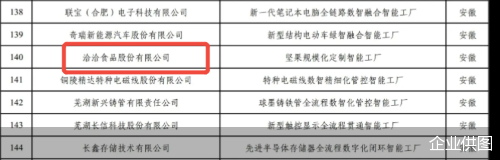
Core Viewpoint - Qiaqia Food Co., Ltd. is undergoing transformation amidst industry adjustments and channel changes, focusing on new product launches and channel development to drive growth [1][8]. Financial Performance - In the first three quarters, Qiaqia Food reported revenue of 4.5 billion yuan and a net profit attributable to shareholders of 168 million yuan [1]. New Product Development - Qiaqia Food has launched several innovative product lines, including the "Qiaqia Mountain Wild Series Seeds" and "Qiaqia Ice Cream with Seed Kernels," showcasing strong market potential [3][4][10]. - The company emphasizes the importance of innovation, allowing for failures but not for a lack of innovation [3]. Market Response - The newly launched products, particularly the konjac series, have shown strong sales performance, with konjac products ranking second in sales on Qiaqia's Douyin flagship store [4][7]. - The company is responding to consumer interest by continuously introducing new konjac products [4]. Channel Expansion - Qiaqia Food is actively exploring new sales channels, including e-commerce and membership stores, to diversify its revenue streams [8][9]. - In the first half of 2025, the company reported a 24.79% year-on-year increase in revenue from e-commerce channels, which accounted for 16.38% of total revenue [8]. Brand Recognition - Qiaqia Food's brand value has significantly increased, reaching 56.872 billion yuan, marking its third consecutive inclusion in the Asia Brand 500 list [13][15]. - The company has received multiple awards, including recognition as a "Foreigners' Favorite Chinese Brand" [15]. Strategic Initiatives - Qiaqia Food plans to establish an investment company focused on the leisure food industry, aiming to enhance financial returns and share risks with partners [12]. - The company is committed to optimizing its supply chain and cost management to improve operational efficiency [17].
洽洽食品(002557):积极推新,关注成本走势:——洽洽食品(002557.SZ)2025年三季报点评
EBSCN· 2025-10-24 08:02
Investment Rating - The report maintains a "Buy" rating for the company [4][6]. Core Views - The company reported a revenue of 4.501 billion yuan for the first three quarters of 2025, a year-on-year decrease of 5.38%, and a net profit attributable to the parent company of 168 million yuan, down 73.17% year-on-year [1]. - The company is actively launching new products and focusing on cost trends, with a notable performance in the nut category during the Mid-Autumn Festival and National Day periods [2]. - The increase in raw material costs has pressured profits, with gross margins decreasing significantly [3]. Summary by Sections Financial Performance - For Q3 2025, the company achieved a revenue of 1.749 billion yuan, a decrease of 5.91% year-on-year, and a net profit of 79 million yuan, down 72.58% year-on-year [1]. - The gross margin for Q1-Q3 2025 was 21.94%, while for Q3 it was 24.52%, reflecting a year-on-year decline of 8.59 percentage points [3]. Product and Market Development - The nut product line showed positive sales momentum, while the sunflower seed category faced pressure due to inventory control measures [2]. - New products, including the "All Nuts" series and konjac products, are being introduced to expand the product matrix and enhance market presence [2]. Cost and Expense Analysis - The company faced increased costs due to rising raw material prices and promotional activities, leading to a decline in net profit margins [3]. - The sales expense ratio for Q1-Q3 2025 was 11.33%, reflecting increased investment in market expenses during the new product rollout phase [3]. Profit Forecast and Valuation - The profit forecast for 2025-2027 has been revised downwards, with expected net profits of 390 million yuan, 634 million yuan, and 738 million yuan respectively [4]. - The current stock price corresponds to a price-to-earnings ratio of 28x for 2025, 17x for 2026, and 15x for 2027 [4].
洽洽食品(002557):2025年三季报点评:短期压力加剧,关注新采购季催化
Huachuang Securities· 2025-10-24 06:33
Investment Rating - The report maintains a "Strong Buy" rating for the company with a target price of 28.5 yuan [2][8]. Core Insights - The company reported a revenue of 4.501 billion yuan for the first three quarters of 2025, a year-on-year decrease of 5.38%. The net profit attributable to shareholders was 168 million yuan, down 73.17% year-on-year [2][8]. - In Q3 2025, the company achieved a revenue of 1.749 billion yuan, a decline of 5.91% year-on-year, with a net profit of 79 million yuan, down 72.58% year-on-year [2][8]. - The report highlights that the company is facing short-term pressures due to weak demand and increased competition, but there is potential for improvement as costs are expected to decrease in Q4 [8]. Financial Performance Summary - For 2024A, total revenue is projected at 7.131 billion yuan with a growth rate of 4.8%. The net profit is expected to be 849 million yuan, reflecting a growth rate of 5.8% [4]. - For 2025E, total revenue is forecasted to decline to 6.858 billion yuan, with a significant drop in net profit to 352 million yuan, indicating a year-on-year decrease of 58.6% [4]. - The report anticipates a recovery in 2026E with revenue increasing to 7.327 billion yuan and net profit rebounding to 650 million yuan, representing an 84.8% growth [4]. Market Dynamics - The report notes that the company is experiencing pressure from rising costs and increased competition, particularly in the nut and seed segment, which has maintained positive growth due to stable demand during gifting seasons [8]. - The company is adjusting its strategy by focusing on high-cost performance products and expanding into new sales channels, including membership stores and online platforms [8]. - The report emphasizes the importance of monitoring cost reductions as a catalyst for potential recovery in the company's performance [8].