
BYD(002594)

Search documents
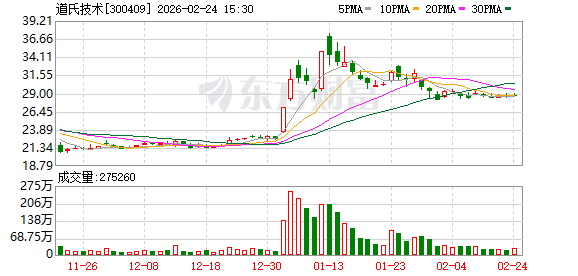
道氏技术:主要客户覆盖了比亚迪股份有限公司等众多锂电行业知名公司
Zheng Quan Ri Bao· 2026-02-24 09:11
Group 1 - The core viewpoint of the article highlights that Daos Technology's carbon materials segment has gained widespread recognition among major clients in the lithium battery industry due to its excellent product quality and strong market reputation [2] - Major clients include well-known companies such as BYD Company Limited and Contemporary Amperex Technology Co., Limited (CATL) [2] - The company's products are well-received in the market, indicating a strong position within the industry [2]




新质生产力专题报告三:全球GWh级量产或在即,从设备端来看固态电池产业链变化和未来演进
Hua Yuan Zheng Quan· 2026-02-24 08:46
Investment Rating - The report indicates a positive outlook for the solid-state battery industry, projecting GWh-level mass production by 2027, driven by collaborative innovation across the entire supply chain [2][6][12]. Core Insights - The solid-state battery industry is rapidly forming a collaborative innovation pattern across "materials, equipment, manufacturing, and applications," with significant advancements expected in materials and processes [6][20]. - Major players like CATL and BYD are expected to dominate the market, focusing on high-end applications in electric vehicles and energy storage [20][21]. - The demand for high-performance batteries is increasing due to the rapid growth of the global electric vehicle market, with solid-state batteries emerging as a strong competitor [20][21]. Summary by Sections Development - Global solid-state batteries are expected to achieve GWh-level mass production by 2027, with a focus on material innovation and process optimization [6][9]. - The supply chain is anticipated to mature over the next 3-5 years, with commercial viability expected around 2030 [9][10]. Process - The electrolyte film formation process is critical, influencing the thickness and ionic conductivity of solid electrolyte membranes [22][23]. - Two main technical routes for semi-solid batteries are identified: one focuses on reducing electrolyte liquid usage, while the other emphasizes in-situ curing processes [22][23]. Equipment - The global solid-state battery equipment market is projected to reach 12 billion yuan by 2026, with significant demand for new equipment such as dry electrode preparation and isostatic pressing [31][32]. - The value share of equipment in the front and middle stages of solid-state battery production is expected to increase significantly compared to traditional liquid batteries, with a combined share of around 80% [32][36]. Key Company Updates - Naconor has successfully delivered high-speed wide-format dry electrode equipment to leading domestic manufacturers, marking a significant milestone in solid-state battery production [4.1][21]. - Lingge Technology has secured contracts for solid-state sulfide systems and is advancing its solid electrolyte pilot line [4.2][26]. - Litong Technology is developing isostatic pressing equipment to enhance the interface density between solid electrodes and solid electrolytes [4.3][41]. - Wuhan Blue Electric is focusing on high-precision testing equipment for solid-state batteries, capable of stable testing under low currents [4.4][30].

1月份特斯拉在欧盟、英国和欧洲自由贸易联盟(EFTA)的市场份额降至0.8%,而比亚迪为1.9%
Xin Lang Cai Jing· 2026-02-24 06:45
Group 1 - Tesla's market share in the EU, UK, and EFTA dropped to 0.8% in January, while BYD's market share was 1.9% [1] - Tesla's battery electric vehicle (BEV) market share stood at 4.3% [1]

沪深300ESGETF南方(560180)涨1.35%,半日成交额65.18万元
Xin Lang Cai Jing· 2026-02-24 06:37
Group 1 - The core point of the article highlights the performance of the HuShen 300 ESG ETF managed by Southern Fund Management, which saw a 1.35% increase in value, reaching 1.198 yuan, with a trading volume of 651,800 yuan as of the midday close on February 24 [1] - The fund's performance benchmark is the HuShen 300 ESG Index return rate, with a return of 18.35% since its establishment on April 13, 2023, and a return of -1.91% over the past month [1] Group 2 - Major holdings in the fund include Kweichow Moutai, which decreased by 0.92%, and other stocks such as Zhongji Xuchuang, which increased by 6.27%, and BYD, which rose by 0.49% [1] - The fund manager is Li Jialiang, and the management company is Southern Fund Management Co., Ltd [1]




2026年中国汽车产业十大趋势:L3级商业化启航,芯片短缺潮或再现
Ju Chao Zi Xun· 2026-02-24 06:36
Core Insights - In 2025, China's automotive industry continues to lead globally in production and sales for the 17th consecutive year, with a significant shift towards electrification and intelligence, as new energy vehicle penetration approaches 50% [2] - The industry is transitioning from "quantitative change" to "qualitative change," with L3 autonomous driving technology entering the market and competition in Robotaxi services beginning [2] Group 1: Sales and Market Trends - In 2025, new car sales in China are projected to reach 34.4 million units, a 9.4% increase year-on-year, with domestic sales at 27.3 million units, remaining stable compared to 2017 [3] - New energy vehicle sales are expected to hit 16.49 million units in 2025, marking a 28.2% increase and a penetration rate of 47.9%, with predictions for 2026 indicating a rise to 19 million units and a penetration rate of 54.68% [3][4] Group 2: Export Trends - In 2023, China exported 5.223 million vehicles, surpassing Japan to become the world's largest automotive exporter, but growth is expected to slow significantly in the following years, with 2026 export growth projected at 4.3% [5] - Notable exporters include Chery Group, with 1.344 million units, and BYD, achieving a 151.34% increase in exports [5] Group 3: Technological Developments - Major Chinese automakers are accelerating the development of solid-state battery technology, with several companies planning to achieve mass production by 2027, despite high costs currently limiting their use to high-end models [6][7] - The commercialization of L3 autonomous driving is set to progress, with the first vehicles receiving licenses by the end of 2025 and plans for regulatory frameworks to be established by 2026 [8] Group 4: Industry Competition - The Robotaxi sector is entering a phase of large-scale competition, with companies like XPeng and Pony.ai expanding their fleets and aiming for significant operational scale by 2026 [9] - The automotive industry is increasingly integrating into the robotics sector, with several companies launching humanoid robots and enhancing their technological capabilities [10][11] Group 5: Luxury Brand Challenges - Luxury brands in China are facing declining sales, with significant drops reported by major German automakers, indicating a structural shift in the market [12] - Domestic high-end models are gaining traction, challenging traditional luxury brands and leading to a reduction in dealership numbers [12] Group 6: Joint Ventures and Localization - Joint venture brands are focusing on deep localization strategies to counter the rise of domestic brands, with plans to enhance their product offerings and R&D capabilities in China [13][14] Group 7: Chip Supply Issues - The automotive industry is facing a new wave of chip shortages, driven by geopolitical factors and rising costs, with predictions of significant production disruptions in 2026 [15] - The domestic chip production rate is expected to rise from 25% in 2025 to 35% in 2026, as companies ramp up local manufacturing efforts [16][17]
欧洲1月新车销量同比下降3.5%,特斯拉销量连续13个月下跌,比亚迪销量飙升165%
Xin Lang Cai Jing· 2026-02-24 06:14
Core Insights - In January, new car sales in Europe experienced a year-on-year decline for the first time since June, influenced by decreased sales in major markets such as Germany, France, Belgium, and Poland [1][5]. Group 1: Sales Performance - Norway saw the most significant decline, with new car registrations in January dropping approximately 76% compared to the same month in 2025 [2][6]. - Overall, new car sales across Europe, including EU member states, the UK, Switzerland, Norway, and Iceland, fell by 3.5% year-on-year to 961,382 vehicles [2][6]. - Gasoline vehicle sales decreased by about 26%, with France experiencing a notable drop of 49% and Germany a decline of 30% [2][6]. - The market share of gasoline vehicles fell from nearly one-third to just over one-fifth [2][6]. Group 2: Electric and Hybrid Vehicles - Sales of pure electric vehicles, plug-in hybrids, and hybrid vehicles increased by approximately 14%, 32%, and 6%, respectively, with their total sales accounting for 69% of new car registrations in January, up from 59% in January 2025 [2][6]. Group 3: Manufacturer Performance - Major manufacturers such as Volkswagen, BMW, Renault, and Toyota saw their registrations decline by 3.8%, 5.7%, 15%, and 13.4%, respectively [2][6]. - In contrast, BYD's registrations surged by 165% [2][6]. - Stellantis and Mercedes reported sales growth of 6.7% and 2.8%, respectively [3][7]. - Tesla continued its downward trend, with sales decreasing by 17% year-on-year, marking the 13th consecutive month of decline [4][8].
太猛了!16家汽车企业2026年销量目标马力全开
Zhong Guo Qi Che Bao Wang· 2026-02-24 06:11
Group 1 - In 2025, China's automobile production and sales both exceeded 34 million units, setting a new historical record [1] - The year 2026 marks the beginning of the "14th Five-Year Plan," with many automotive companies setting ambitious sales targets and clear strategies for growth [1] Group 2 - China FAW aims for a sales target of 3.546 million units in 2026, a year-on-year increase of 7.39% from 2025 [4] - Dongfeng Motor targets 3.25 million units for 2026, with over 30% year-on-year growth, focusing on new energy vehicles and exports [6] - Changan Automobile sets a goal of 3.3 million units for 2026, a 13.3% increase, with a strong emphasis on new energy vehicle sales [8] Group 3 - SAIC Motor's sales target for 2026 is projected between 4.5 million and 5 million units, reflecting a pragmatic approach [10] - BAIC Group aims for 2.2 million units in 2026, with a focus on new energy products and smart technology [12][13] - GAC Group's sales in Q4 2025 reached 537,800 units, showing a significant quarter-on-quarter increase of 25.56% [16] Group 4 - Chery aims for a sales target of 3.2 million units in 2026, a 14.03% increase from 2025, with plans to launch 17 key models [20] - BYD achieved a record of 4.602 million units in 2025 and plans to sell 1.3 million vehicles overseas in 2026, a 24.3% increase [22][23] - Geely targets 3.45 million units for 2026, a 14% increase, with a focus on new energy vehicle launches [25][26] Group 5 - Great Wall Motors sets a target of 1.8 million units for 2026, a 36% increase from 2025, supported by new technology [28][29] - Li Auto aims for 550,000 units in 2026, with a growth plan of approximately 40% [31] - NIO's sales target for 2026 is between 456,000 and 489,000 units, with plans to expand its battery swap station network [33] Group 6 - XPeng Motors targets 550,000 to 600,000 units for 2026, with a growth rate of approximately 28% to 39.7% [36] - Leap Motor aims for a sales target of 1.05 million units in 2026, a 67.5% increase, with plans to launch four new models [38] - Xiaomi Auto sets a target of 550,000 units for 2026, a 34% increase, focusing on technology development and user experience [40] Group 7 - Harmony Smart aims for over 1 million units in 2026, with plans to launch more than 10 new models [43]



China's BYD Opens 2026 With Blockbuster Sales Growth in Europe
WSJ· 2026-02-24 05:43
Core Insights - The auto giant experienced a nearly threefold increase in European sales last month, indicating strong market performance [1] Sales Performance - The significant sales growth is attributed to high demand for electric and hybrid vehicles in Europe [1]

沪深300ESGETF招商(561900)涨1.02%,半日成交额31.26万元
Xin Lang Cai Jing· 2026-02-24 04:47
沪深300ESGETF招商(561900)业绩比较基准为沪深300ESG基准指数收益率,管理人为招商基金管理 有限公司,基金经理为房俊一,成立(2021-07-06)以来回报为-1.65%,近一个月回报为-1.83%。 声明:市场有风险,投资需谨慎。本文基于第三方数据库自动发布,不代表新浪财经观点,任何在本文 出现的信息均只作为参考,不构成个人投资建议。如有出入请以实际公告为准。如有疑问,请联系 biz@staff.sina.com.cn。 2月24日,截止午间收盘,沪深300ESGETF招商(561900)涨1.02%,报0.995元,成交额31.26万元。沪 深300ESGETF招商(561900)重仓股方面,贵州茅台截止午盘跌0.92%,中际旭创涨6.27%,宁德时代 跌0.48%,招商银行涨0.67%,中国平安跌0.75%,美的集团涨1.06%,长江电力涨0.15%,紫金矿业涨 4.16%,兴业银行跌0.43%,比亚迪涨0.49%。 来源:新浪基金∞工作室 ...

资金积极布局港股科技板块回调窗口,恒生科技ETF(513130)年内吸引资金累计净流入超80亿元
Mei Ri Jing Ji Xin Wen· 2026-02-24 04:35
Group 1 - The Hang Seng Technology Index has shown a volatile trend since the Spring Festival, influenced by multiple factors, including concerns over the new Federal Reserve Chairman's potential hawkish policies impacting global risk appetite and the Hong Kong tech sector [1] - Leading internet companies in Hong Kong are aggressively entering the AI application market, resulting in significant growth in monthly active users (MAU) for domestic AI applications, which may enhance the long-term value of the Hang Seng Technology Index and attract capital [1] - The current price-to-earnings ratio (PE) of the Hang Seng Technology Index is 22.18, which is at a historically low level of 23.87% since its inception, indicating potential investment value [1] Group 2 - The Hang Seng Technology ETF (513130), which tracks the Hang Seng Technology Index, has seen a cumulative net inflow of 8.471 billion yuan as of February 13, 2026, making it a strong tool for capital allocation in the Hong Kong tech sector [2] - The top five constituents of the Hang Seng Technology ETF include SMIC, BYD, Alibaba, Xiaomi, and Meituan, all of which have significant technological capabilities and business layouts in cutting-edge fields such as internet, mobile payments, cloud computing, AI, and semiconductors [2] - The fund manager of the Hang Seng Technology ETF, Huatai-PB Fund, is one of the first ETF managers in China and has a strong track record in managing various ETFs, including those focused on broad-based and dividend themes [2]



