
BYD(002594)

Search documents
环球时报社评:“中国品牌”不应成为德方保护主义借口
Xin Lang Cai Jing· 2025-12-22 23:27
Core Viewpoint - The recent political controversies in Germany regarding Chinese electric vehicles reflect an anxiety that contrasts with the country's traditional industrial values of precision, rationality, and openness [1] Group 1: Political Reactions - German Finance Minister Christian Lindner expressed dissatisfaction with Deutsche Bahn's procurement of buses from BYD, advocating for "healthy domestic industry patriotism" and suggesting that Deutsche Bahn should prioritize orders from German or European manufacturers [1] - The German government announced the restoration of electric vehicle purchase subsidies, raising concerns among Deloitte's automotive experts about the potential flow of subsidy funds to China, indicating a tendency to politicize normal market choices [1][2] Group 2: Market Dynamics - Responsible "domestic industry patriotism" should focus on the long-term competitiveness of national industries rather than short-term market share, avoiding the exclusion of foreign products and investments [1] - In a procurement order exceeding 3,000 vehicles, BYD won only about 200 units, which are produced in Hungary, thus qualifying as "European manufacturing" [1] Group 3: Economic Interdependence - Concerns about subsidies benefiting Chinese companies reflect a zero-sum mindset, overlooking the reality of highly integrated modern supply chains, where the sale of an electric vehicle stimulates local economic activities [2] - Cutting off this supply chain could lead to higher transition costs for European consumers and a loss of competitive vitality for local companies, ultimately slowing down industrial upgrades [2] Group 4: Industry Challenges - Viewing external competition as a "survival threat" can obscure the urgency of addressing structural issues within the German automotive industry, which is transitioning from internal combustion engines to electrification and digitalization [3] - Political measures to protect lagging industries may provide temporary comfort but can lead to a loss of vitality for the protected entities [3] Group 5: Future Opportunities - The growth of China's electric vehicle industry is not aimed at undermining European industry but is part of a global response to climate change, creating a public supply that benefits both regions [3] - By 2030, the global shortfall in new energy vehicles is projected to reach 27 million units, indicating strong complementarity between China and Germany in the electric vehicle sector, which could thrive in an open and cooperative environment [4]
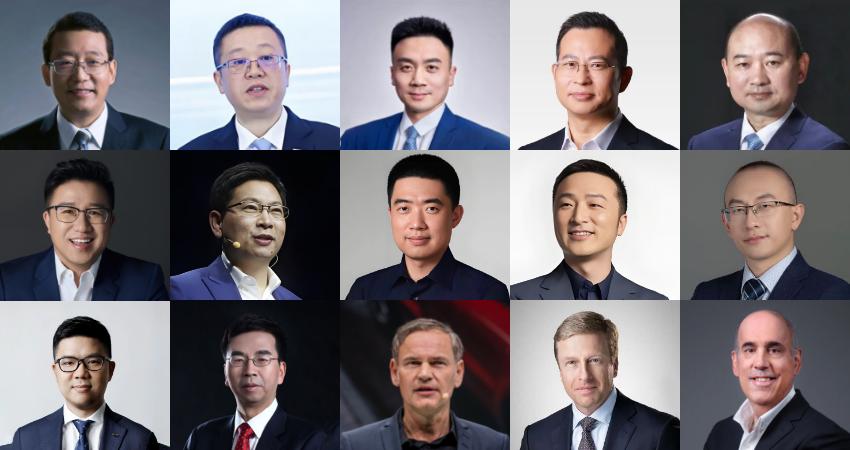
车圈俩月换了6个CEO,29家企业327名高管变动,掀起年终人事巨变
3 6 Ke· 2025-12-22 23:18
Core Insights - The automotive industry is experiencing a significant wave of executive changes, with over 327 high-level personnel adjustments reported in the last two months, including six CEOs [2][3][4] - The restructuring reflects a strategic shift among companies as they prepare for intensified competition in 2026, focusing on leadership renewal, efficiency, and core business enhancement [4][5][6] Group 1: Executive Changes in State-Owned Enterprises - Major state-owned automotive groups such as Dongfeng, Changan, GAC, and BAIC have undergone frequent personnel changes, aiming for younger and more professional decision-making teams [5][6][7] - GAC has appointed its first "post-70s" general manager, indicating a move towards clearer internal responsibilities and optimized decision-making [7] - Dongfeng has brought in external talent to drive its smart transformation, while Changan has filled its long-vacant president position, reflecting a commitment to leadership stability [11][13][15] Group 2: Executive Departures in Private Enterprises - Private automakers like BYD, Geely, and Great Wall have seen significant executive turnover, with key figures leaving amid fierce market competition [17][19] - Chery has emerged as an active talent poacher, recruiting from competitors to enhance its marketing and technology capabilities [19][21] Group 3: New Forces in the Automotive Sector - New energy vehicle companies are making urgent personnel adjustments to tackle pressing challenges, with Li Xiang of Li Auto taking direct control of human resources to streamline operations [22][24] - Xiaomi's automotive division is focusing on sales growth, with top executives taking on additional responsibilities to drive performance [26][28] - XPeng Motors is enhancing its technical capabilities by hiring AI experts, indicating a strategic focus on core technology development [29] Group 4: Changes in Foreign and Joint Venture Brands - Major foreign automotive companies, including GM and Tesla, are undergoing significant executive changes, with GM's software and AI teams experiencing notable turnover [32][34][36] - German luxury brands are also reshuffling their leadership, with key executives transitioning to new roles to align with future strategic goals [38][40][42] Group 5: Supply Chain and Component Manufacturers - The supply chain sector is also witnessing high-frequency personnel changes, with Huawei's Yu Chengdong taking on additional leadership roles to strengthen its market position [46][49] - Traditional component manufacturers like Continental and ZF are focusing on efficiency and business concentration through their leadership adjustments [51][52] Conclusion - The recent wave of personnel changes in the automotive industry signifies a critical reassessment of survival strategies amid the ongoing transition towards electrification and intelligence [53]




德财长“恼火”德国铁路公司买中国巴士,专家:折射德国焦虑其汽车产品竞争力
Huan Qiu Shi Bao· 2025-12-22 23:09
Group 1 - The core issue revolves around the German government's dissatisfaction with Deutsche Bahn's decision to order electric buses from the Chinese company BYD, reflecting concerns over the competitiveness of German automotive products [1][2] - Deutsche Bahn announced its largest bus order to date, totaling over 3,300 vehicles, with a value exceeding 1 billion euros, scheduled for delivery between 2027 and 2032 [1] - The order primarily consists of hybrid and fully electric models, with most buses supplied by the German company MAN, while BYD will provide approximately 200 electric intercity buses produced in Hungary [1] Group 2 - The announcement of this significant order coincides with the EU's relaxation of the "fuel vehicle ban," prompting discussions about the implications for the German automotive industry [2] - German Vice Chancellor and Finance Minister Christian Lindner expressed frustration over the order, emphasizing the need for a "healthy patriotism" in procurement decisions to favor German or European manufacturers [1][2] - Experts indicate that the relaxation of the "fuel vehicle ban" may provide a temporary advantage for European manufacturers, but it could also allow Chinese companies to further enhance their competitive edge in the automotive market [2]
一年收入超1200亿,湖南民营企业之冠,是全省唯一破千亿的民企
Sou Hu Cai Jing· 2025-12-22 17:10
Core Insights - The 2025 Hunan Private Enterprises Top 100 list has been officially released, marking the fifth edition of this ranking, showcasing the stable development and growth of the listed companies over the past year [2] - The overall scale of the top 100 private enterprises has reached new heights, with significant increases in total revenue and total assets compared to the previous year [2] - Manufacturing companies dominate the list, with 50 out of 100 firms, highlighting new materials, new energy, and high-end equipment manufacturing as key growth areas [2] Company Rankings - The top three companies are SANY Group, BYD Auto, and Lens Technology, with SANY Group leading the list with an annual revenue of approximately 124.23 billion yuan [7][8] - BYD Auto ranks second, recognized for its comprehensive layout in the new energy vehicle sector, serving as a model for the transformation of Hunan's automotive industry [7] - Lens Technology, ranked third, has achieved vertical integration capabilities from raw material production to final assembly, establishing long-term strategic partnerships with leading global consumer electronics and smart automotive brands [7] Industry Characteristics - The listed companies are primarily headquartered in cities such as Changsha, Loudi, Zhuzhou, and Hengyang, forming a collaborative development pattern centered around provincial capitals [2] - The manufacturing sector is characterized by high R&D investment, high added value, and high growth potential, representing the future direction of industrial development in Hunan [2] - The top 10 companies include diverse sectors such as high-tech materials, digital smart devices, and supply chain management, indicating a broad spectrum of industry representation [4][6]


2026年汽车出海展望
2025-12-22 15:47
Summary of Key Points from the Conference Call Records Industry Overview - The records focus on the **Chinese automotive industry**, particularly the overseas expansion of Chinese car manufacturers and their strategies for entering various international markets [1][2][3][5][7][8]. Core Insights and Arguments 1. **Profitability Disparity**: Chinese automakers show varied profitability in overseas markets, with an average gross margin of **20.7%** for passenger cars in 2024, compared to **15%** domestically. Companies like BYD, Changan, and Chery maintain high margins through premium and multi-brand strategies, while SAIC and Great Wall face profit declines due to policy impacts [1][13]. 2. **Regional Growth Drivers**: - **Southeast Asia**: Benefiting from ASEAN zero tariffs and subsidies, it is a major growth area. Local production is ramping up with factories established by BYD and Geely in Thailand and Vietnam [1][2][7]. - **Middle East**: High purchasing power and supportive policies for new energy vehicles (NEVs) drive demand for high-end SUVs from Chinese brands [1][2][7]. - **Russia**: The exit of Western brands and government subsidies create significant opportunities for companies like Chery and Great Wall, which are establishing local production [1][2][7]. - **Europe**: Expected to remain a high-margin market, especially for PHEV and BEV segments, with favorable regulatory changes [2][3][5]. 3. **Sales Targets**: - BYD aims for **1.5 to 1.6 million** overseas sales by 2026, focusing on Europe, the Middle East, Latin America, and Southeast Asia [4]. - Chery targets **1.5 to 1.8 million** sales, with a gradual exit from the Russian market [4]. - Great Wall anticipates **800,000** sales, emphasizing high-end and NEV strategies [5]. - Geely aims for **600,000** sales, focusing on Europe and Southeast Asia [5]. - SAIC plans for **1 million** sales, with new factories in Morocco [5]. 4. **Strategic Approaches**: - **Chery**: Implements an embedded localization strategy, adapting products to local regulations and competition [2][11]. - **BYD**: Focuses on vertical integration and local production to address charging infrastructure issues [4][12]. - **Geely**: Utilizes acquisitions to enter international markets while maintaining brand identities [9][11]. - **Great Wall**: Adopts a multi-brand strategy to cater to different regional markets [12]. 5. **Risks and Challenges**: - Regulatory barriers and the need for continuous investment in high-demand regions like Europe and the Middle East [6]. - Competition from Japanese brands in Southeast Asia and potential tariff adjustments [6][8]. - Low penetration rates in South America and the need for market cultivation [6][8]. Other Important Insights - **Chery's Competitive Edge**: Chery has over **3,000** channels and has maintained its position as the top Chinese brand exporter for **22 consecutive years**, with cumulative exports exceeding **5.7 million** vehicles [1][15]. - **Technological Leadership**: Chinese NEV products lead the market by **20%-30%** in hybrid, electric, and smart cockpit technologies compared to European and American counterparts [9]. - **Market Penetration Strategies**: Different companies adopt various strategies based on market conditions, such as Chery's balanced development approach and BYD's focus on high localization rates [11][12]. This summary encapsulates the key points from the conference call records, highlighting the dynamics of the Chinese automotive industry's overseas expansion and the strategies employed by various companies.


比亚迪回应“技术研发人员涨薪”
Xin Jing Bao· 2025-12-22 15:22
新京报记者张冰编辑岳彩周校对柳宝庆 针对"技术研发人员涨薪"传闻,比亚迪(002594)方面12月22日回应称,"情况属实"。不过对于"大部 分涨薪500-1000元、少部分涨薪2000-3000元"等具体信息,比亚迪未作表态。 此前在2024年比亚迪曾发布通知,依据员工的工作业绩和工作表现,进行加薪、晋级和奖金分配。公司 设立了每年两次的薪资调整机会与一次晋升机会,确保员工的付出能够得到及时、公正的回报。 ...
已爆单!外媒叹:这波中国又赶上了
Xin Lang Cai Jing· 2025-12-22 14:17
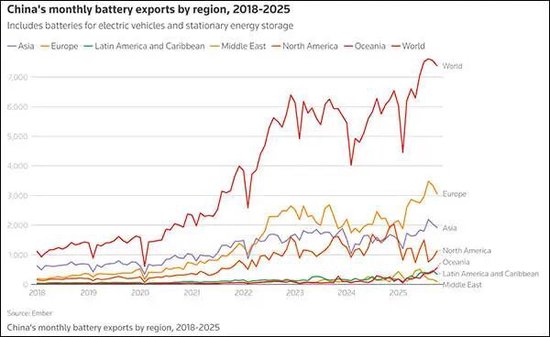
Core Insights - The current surge in China's energy sector, particularly in the energy storage industry, is described as one of the biggest surprises of the year, with leading companies experiencing high demand and full order books [1][8] - The demand surge is attributed to domestic market reforms and international factors such as AI data centers, aging European grids, and the expansion of renewable energy, which have collectively boosted international demand for energy storage [1][8] Domestic Market Dynamics - As of October this year, China has exported over $65 billion worth of energy storage and electric vehicle batteries, with a projected 75% year-on-year increase in global shipments of lithium-ion battery cells from Chinese companies [1][8] - Domestic demand is primarily driven by data centers and renewable energy projects, supported by market reforms and government subsidies [1][8] International Market Trends - UBS has raised its forecast for global battery storage installations by 25% for 2026, while the International Energy Agency expects a 16% year-on-year increase in global battery storage investment this year, reaching $66 billion [2][9] - Chinese companies dominate the core battery cell manufacturing segment, with major suppliers like CATL, Hicharge, and BYD leading the global rankings [2][9] Future Projections - Analysts predict a 40% year-on-year growth in global storage demand by 2026, driven by the increasing needs of data centers in the U.S. due to cloud computing and AI [3][10] - The U.S. market is seen as a key area for Chinese storage manufacturers, currently holding a 20% market share, although there are policy risks for Chinese firms in this market [3][10] Policy and Regulatory Changes - Recent reforms in China's electricity market are changing the economic viability of energy storage, allowing for more competitive pricing models that enhance profitability [5][12] - The Chinese government has set ambitious targets for energy storage capacity, aiming for over 180 GW by 2027, with significant investments expected [6][13]


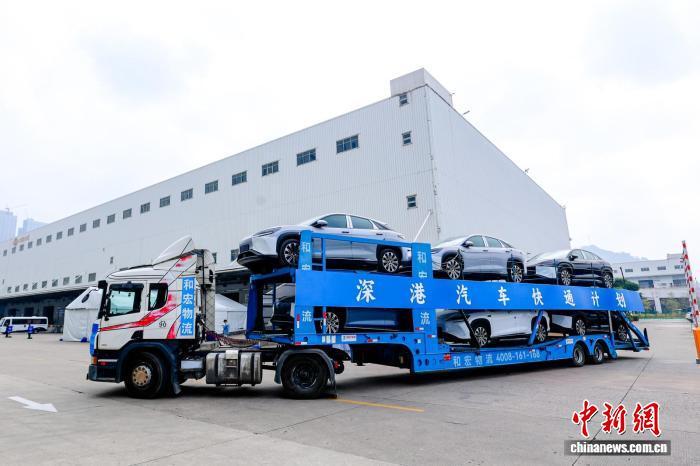
“深港汽车快通计划”在前海综合保税区启动
Zhong Guo Xin Wen Wang· 2025-12-22 12:44
Core Insights - The "Shenzhen-Hong Kong Automotive Fast Track Plan" was launched in the Qianhai Comprehensive Bonded Zone, facilitating the export of domestic new energy vehicles to Hong Kong [1][3] Group 1: Implementation and Benefits - Under the plan, eligible domestic new energy vehicles can apply for pre-import approval and vehicle qualification from Hong Kong customs while still in the Shenzhen special regulatory area, streamlining the export process [3] - This initiative is expected to significantly reduce operational costs for companies and allow Hong Kong residents to access domestic new energy vehicles more quickly [3][4] - The plan is a key project for promoting the Guangdong-Hong Kong-Macao Greater Bay Area development, with customs from both regions collaborating closely to enhance cross-border trade facilitation [3][4] Group 2: Operational Efficiency - Shenzhen customs is providing "point-to-point" services for new energy vehicle exporters, including dedicated personnel for document review and guidance on compliance, which reduces the time required for application processing [4] - The plan is projected to save companies several million yuan annually by cutting down on costs associated with vehicle storage and processing time in Hong Kong, with reports indicating over 70% reduction in vehicle stay duration compared to traditional methods [6]
比亚迪涨薪了,最高或涨4500元
Guo Ji Jin Rong Bao· 2025-12-22 12:25
同时,调薪覆盖范围呈现"全岗位兼顾、核心岗倾斜"特征。 比亚迪(002594)涨工资了。 12月22日,不少标有"比亚迪员工"的网友在脉脉等平台发文称,比亚迪涨薪500元至3000元不等,最高 涨薪4500元。对此,《国际金融报》记者向比亚迪方面求证,其表示涨薪属实,但对于涨薪幅度以及涉 及人员数量并不方便透露。 记者从知情人士处了解到,此次调薪的核心逻辑是"绩优者多得",不同绩效等级对应明确涨幅梯度。多 数绩效达标员工的月薪涨幅集中在1000元左右,表现突出者可达到3200元/月,而少数绩效顶尖的核心 技术人才或管理层,能斩获4500元/月。未获得调薪的员工多为绩效待改进者,部分事业部也存在因业 务调整暂未参与调薪的情况。 截至今年11月,年内比亚迪的累计销量达到418万辆,随着年关将近,若12月单月销量仍保持40万辆朝 上,比亚迪2025年全年销量预计突破460万辆,有望突破曾对外宣布的460万辆全年销量目标。 基层生产岗中,深圳、郑州等基地的普工底薪自2025年4月已上调至2770元(含800元技能津贴),叠加此 次调薪后,综合月薪普遍突破6000元,高强度加班场景下可达9300元;技术研发岗是调薪重点 ...
X @Balaji
Balaji· 2025-12-22 12:03
To be clear: I will always be an Elon supporter, and of course Tesla pioneered modern EV technology, but the Chinese companies in this space are highly competent and not to be underestimated.BYD announced their charger earlier this year, in March: https://t.co/GS3zVqavJk https://t.co/dWAjIttIvBDominic Lee 李梓敬 (@dominictsz):BYD's charging station in China, 400km in 5 minutes!Gasoline what? https://t.co/WgWGc5Nd3q ...
