BYD(002594)

Search documents
3月19-20日常州!2026锂电关键材料及应用市场高峰论坛
鑫椤锂电· 2025-12-24 06:16
2026锂电关键材料及应用市场高峰论坛 会议背景 2026年,锂电行业正以磅礴之势开启新一轮周期性增长浪潮,其特征表现为需求端的强势复苏、全球 化版图的加速扩张、技术路线的颠覆性迭代,形成"量价齐升+技术跃迁"的螺旋式上升格局。 会议主办: 鑫椤资讯 会议时间: 2026年3月19-20日 会议地点: 江苏·常州 会议咨询: 13248122922(微信同) 据鑫椤资讯的预测,2025年全球锂电池产量将达到2250Gwh,2026年的增长率将达到30%,其中储能 领域增速更是有望达到48.3%,呈现出"海内外需求双轮驱动、上下游产业链协同爆发"的盛况。如此爆 发式的市场需求,对电芯及上游四大主材的需求产生了巨大的拉动作用。 然而,从当前有效产能情况来看,电芯及各种材料的远期供应存在着一定的缺口。面对明确的供应缺 口,如何保障稳定、高效的供应链,将成为抓住这轮确定性增长的关键。 -广告- 关注公众号,点击公众号主页右上角" ··· ",设置星标 "⭐" ,关注 鑫椤锂电 资讯~ 会议议题 为把握锂电行业这一轮发展机遇,鑫椤资讯将于 2026年3月19日-20日 (19日报到)举办 2026锂电关键 材料及应用市 ...






中国汽车市场一周行业信息快报——2025年11月第4期
Zhong Guo Zhi Liang Xin Wen Wang· 2025-12-24 06:11
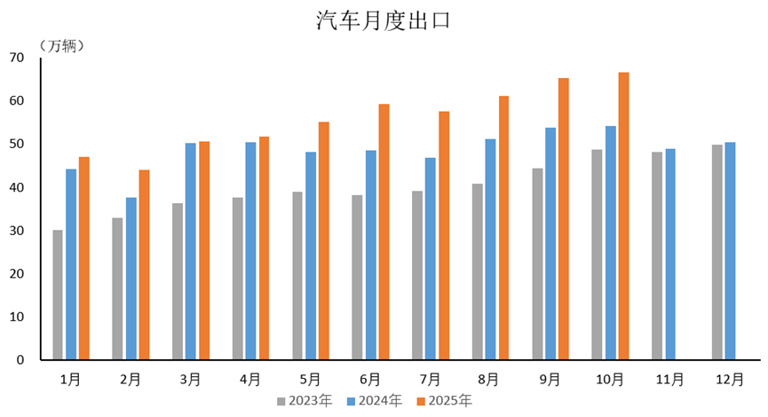
Group 1: Industry Trends - The 2025 Guangzhou Auto Show, as the last A-level auto show of the year, featured 93 global premieres, with smart electric vehicles taking center stage as a new industry trend [1][19] - In October 2025, China's new energy vehicle exports reached 256,000 units, marking a year-on-year increase of 99.9% and a month-on-month increase of 15.4% [2] - Total automobile exports in October 2025 were 666,000 units, reflecting a year-on-year growth of 22.9% [4] Group 2: Company Developments - Xiaopeng Motors plans to launch three super electric range-extended products in Q1 2026, aiming to address user pain points in the range-extended market [6] - GAC Honda is in the process of acquiring 100% of Dongfeng Honda Engine Co., which will allow GAC Honda to have sole control over the engine company [7] - A strategic investment of over 3.6 billion yuan from China FAW Group into Zhuoyue Technology has been announced, with the latter maintaining its independent operational strategy [13][15] Group 3: Technological Advancements - The National Energy Administration reported that as of October 2025, China's electric vehicle charging infrastructure reached 18.645 million units, a year-on-year increase of 54.0% [11] - The market regulatory authority has launched an upgraded automotive chip certification system, marking a significant advancement in establishing a self-controlled quality assurance system for automotive chips in China [10] Group 4: Recognition and Awards - Two prominent figures in the automotive industry, Lian Yubo from BYD and Wu Kai from CATL, have been elected as academicians of the Chinese Academy of Engineering [16]

连续关注L3上路(二)
Guan Cha Zhe Wang· 2025-12-24 05:08
导读:只有在规则逐步清晰、责任逐步明确的前提下,L3级自动驾驶才有可能从一项被寄予厚望的技 术升级,成长为推动中国汽车产业持续向前的重要支点。 (文 / 观察者网 周盛明 编辑 / 高莘) 日前,工业和信息化部批准了两款搭载L3级有条件自动驾驶功能的智能网联汽车产品的准入申请,这 也被视为中国自动驾驶从"测试"迈向"量产"的关键一步。 有分析机构表示,2026年中国L3车型的市场渗透率有望达到1%。也有分析师称,明年中国L3级自动驾 驶车型产量甚至可达百万量级。 在需求放缓、市场竞争加剧的背景下,L3是否能够成为智能电动车"下半场"的新催化剂,正成为外界共 同关注的问题。 中国电动汽车百人会副理事长兼秘书长、车百会理事长张永伟此前就表示:"谁能够在智能化这个发展 阶段建立起优势,谁才能真正实现汽车产业的领先。智能化的标志就是智驾。" 继续推动产业高质量发展 或刺激新一轮汽车消费 目前,全球研究机构对于自动驾驶技术刺激中国汽车消费的潜力均保持乐观。 张永伟此前就表示:"2026年L3及以上自动驾驶乘用车新车渗透率将实现突破,到2030年有望达到 10%。" 而日本第二大证券公司大和证券(Daiwa Securi ...

本田将推出纯电版N-BOX,迎战比亚迪
日经中文网· 2025-12-24 03:26
Core Viewpoint - The N-BOX has maintained its position as the best-selling new car in Japan for three consecutive years, with projected sales of approximately 200,000 units in 2024. The introduction of electric versions by both Honda and BYD is expected to enhance the competitiveness of lightweight EVs in the Japanese market [1][3]. Group 1: N-BOX Sales and Market Position - The N-BOX is projected to achieve sales of around 200,000 units in Japan in 2024, surpassing the Toyota Corolla, and has been the top-selling model for three consecutive years [1][3]. - The N-BOX has accumulated total sales of approximately 3 million units since its first generation was launched in 2011, supported by its spacious interior and affordable price starting from 1.7 million yen [3]. Group 2: Electric Vehicle (EV) Market Dynamics - Honda plans to launch a pure electric version of the N-BOX by the fiscal year 2027, while BYD aims to introduce its lightweight EV in Japan by the summer of 2026, ahead of Honda [1][6]. - The current market share of EVs in Japan is around 2%, which is the lowest among developed countries, indicating significant room for growth [4]. - The lightweight EVs, such as Nissan's "Sakura" and Mitsubishi's "eK Cross EV," are expected to account for over 40% of EV sales in 2024, highlighting the compatibility of lightweight vehicles with urban mobility needs [4]. Group 3: Incentives and Regulations - In Japan, purchasing lightweight EVs comes with subsidies and tax reductions in the second year of ownership, which could accelerate their adoption if prices can be brought down to levels comparable to gasoline vehicles [4].


车企周度订单
数说新能源· 2025-12-24 03:02
Group 1 - The core viewpoint of the article indicates that there has been a decline in weekly orders for BYD, with the latest weekly order figure standing at 71,500 units, showing no change compared to the previous week [1]

锂电材料涨价落地节奏加速,新能车ETF(515700)冲击4连涨
Sou Hu Cai Jing· 2025-12-24 02:57
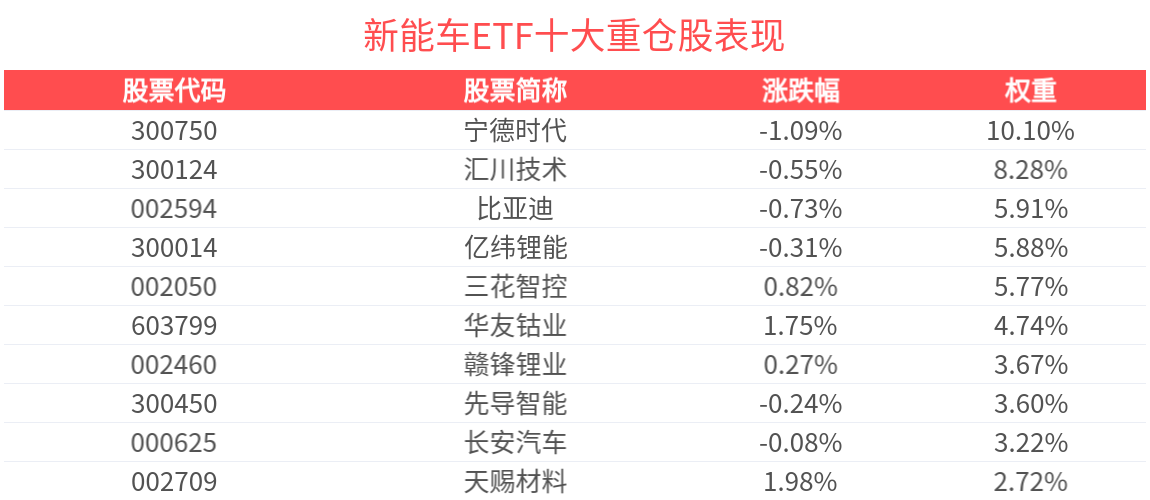
Group 1 - The core material for electrolytes, lithium hexafluorophosphate, has seen a price increase that exceeds market expectations, reaching an average price of 177,250 yuan per ton, which is over a 200% increase since early November [1] - The demand from energy storage and new energy vehicles has triggered a boom in the lithium battery industry chain, marking a turning point in industry prosperity since December 2025, with price increases expected to continue until the second quarter of 2026 due to supply-demand mismatches [1] - As of December 24, 2025, the CSI New Energy Vehicle Industry Index (930997) rose by 0.36%, with notable increases in component stocks such as Weichai Power (8.32%) and Zhongmin Resources (4.77%) [1] Group 2 - The CSI New Energy Vehicle Industry Index closely tracks the performance of 50 listed companies involved in the new energy vehicle sector, including manufacturers of electric vehicles, electric motors, battery equipment, and materials [2] - As of November 28, 2025, the top ten weighted stocks in the CSI New Energy Vehicle Industry Index accounted for 51.96% of the index, with leading companies including CATL, BYD, and Ganfeng Lithium [2]



行走拉美手记丨中巴合作实现绿色梦想——走进比亚迪巴西卡马萨里大型生产基地综合体
Xin Hua Wang· 2025-12-24 02:56
Group 1 - BYD is significantly contributing to Brazil's electric vehicle market, having sold 100,000 electric and hybrid vehicles in the country this year [1] - The BYD production complex in Camaçari is the company's first electric passenger vehicle factory in Latin America and its largest overseas facility, with a total production capacity of 600,000 vehicles upon completion [1] - The first phase of the complex, which includes the assembly plant, has been completed, with the first vehicle rolling off the production line in July and the 14 millionth new energy vehicle produced in October [1] Group 2 - The factory fosters a collaborative environment where Chinese and Brazilian employees work together, enhancing cultural exchange through shared activities such as a football tournament and music events [2] - The workforce has grown from 10 employees in 2013 to nearly 3,000 employees, showcasing the rapid expansion of BYD's operations in Brazil [2] - The factory is set to introduce a second production shift next year, with plans for additional facilities including a welding plant, painting plant, stamping plant, parts factory, battery factory, and R&D center to further boost local employment [3][4] Group 3 - BYD's investment strategy in Brazil focuses on a full industry chain approach, contributing to sustainable development and promoting green initiatives [4]
智驾第一梯队的“新卷王” 比亚迪天神之眼B极限硬核测试
Feng Huang Wang· 2025-12-24 02:53
Core Insights - The article discusses the advancements of BYD's Tian Shen Zhi Yan B driver assistance system, particularly through a rigorous 174-kilometer test that evaluates both efficiency and safety [1][10]. Group 1: Testing Overview - The test route covered 174 kilometers, including various road types and complex scenarios, with the vehicle maintaining assisted driving throughout to assess system performance [1]. - The testing included 100 parking challenges in diverse environments, demonstrating the system's capabilities under extreme conditions [6]. Group 2: Performance Improvements - The Tian Shen Zhi Yan B system showed significant enhancements in prediction, path planning, and traffic efficiency, with smoother dynamic avoidance and decision-making in complex situations [3][4]. - The system successfully reduced the travel time for the 174-kilometer journey to 4 hours, marking it as the fastest vehicle under the testing standards [5]. Group 3: Parking Capabilities - The system excelled in parking tests, accurately identifying parking spaces even in challenging conditions, thus reducing the risk of collisions [7]. - The "兜底" policy, which holds the company responsible for accidents during the parking process, has shifted user perception from hesitation to confidence in using the technology [9]. Group 4: Industry Positioning - BYD's advancements position it among the top tier of autonomous driving technology in China, with a significant data-driven approach supporting continuous improvement [10]. - The company has sold over 2.3 million vehicles equipped with the Tian Shen Zhi Yan system, generating over 150 million kilometers of driving data daily, which feeds back into technology optimization [10].
榜单公布|2025 EDGE AWARDS年度上市公司价值榜正式揭晓
Sou Hu Cai Jing· 2025-12-24 02:38
Group 1 - The core viewpoint emphasizes that listed companies in China are not only the main force behind data growth but also serve as a stabilizing factor in the industry ecosystem, focusing on long-term value and comprehensive governance [2] - In 2025, the capital market aims for steady progress and quality improvement amidst multiple risks, enhancing market resilience and risk resistance, leading to reasonable quantitative growth and effective qualitative enhancement [2] - The market's expectations for listed companies have shifted from short-term performance to long-termism and comprehensive value, including governance structure, stable returns, strategic layout in frontier fields, and deep ESG practices [2] Group 2 - The 2025 T-EDGE Global Dialogue, organized by Titanium Media Group, NextFin.AI, and Barron’s China, highlights the importance of recognizing companies that redefine industry boundaries and emphasizes the core logic of "value investment" [3] - The EDGE AWARDS annual list includes categories such as Most Socially Responsible Company, Best Board Secretary, Most Investment Value Company, and Best Investor Relations Management Company, recognizing outstanding performance in governance, investment value, social responsibility, and investor relations [3][4] Group 3 - Aier Eye Hospital is recognized as a leader in ESG practices, integrating ESG into its core business and governance structure, while actively engaging in public welfare projects to enhance national eye health [5] - Betaini Group focuses on creating a skin health ecosystem and incorporates green development into its strategy, promoting biodiversity and sustainable practices [6] - Kweichow Moutai leads the liquor industry with a brand value of 468.718 billion, actively engaging in ecological protection and social responsibility initiatives [7] - JD Group has created significant employment opportunities and is committed to improving living conditions for its delivery personnel, with plans to invest 22 billion in housing projects [8] - Quantitative Group, listed on the Hong Kong Stock Exchange, leverages AI technology to reshape online consumption and has achieved a compound annual growth rate of 44.59% in revenue from 2022 to 2024 [9] - Seres focuses on new energy vehicles and has established a robust ESG governance framework, with significant growth in revenue and sales projected for 2024 [10] - Shui Jing Fang integrates social responsibility into its corporate strategy, setting clear environmental goals and contributing to community development [11] - China Baoan actively engages in social responsibility through its subsidiaries, contributing to community welfare and healthcare improvements [13] Group 4 - The Best Board Secretary category highlights the importance of effective communication between listed companies and the public, emphasizing the role of board secretaries in enhancing corporate governance [14] - Ren Shunying from Anfu Technology is recognized for her expertise in capital operations and corporate governance, significantly contributing to the company's compliance and investor relations [15] - Xia Ping from Jiahe Intelligent is noted for her effective investor relations management and participation in strategic planning [16] - Li Liangyu from Robotech is acknowledged for his role in maintaining corporate governance and enhancing market recognition [17] - Zhang Wenyu from Tianqi Lithium is recognized for his contributions to market value management and investor relations [18] Group 5 - The Most Investment Value Company category identifies companies with clear business models and significant breakthroughs in technology or policy, indicating strong growth potential [19][20] - Orbbec, a leader in 3D vision technology, has achieved over 70% market share in key sectors and continues to lead industry advancements [20] - BYD maintains its position as a global leader in new energy, with significant growth in overseas markets and a strong investment outlook [21] - Cambrian has entered a critical profitability phase, with substantial revenue growth and a strong market position in AI chips [22] - Hanlan Environment focuses on environmental services and has achieved consistent profit growth, attracting long-term investors [23] - Geely Auto has demonstrated strong financial performance and strategic integration, positioning itself for sustained growth [24] - Kanghong Pharmaceutical emphasizes innovation in drug development and has shown robust revenue growth, indicating long-term investment value [25] - Lens Technology maintains a strong market position with solid cash flow and growth potential in the automotive and consumer electronics sectors [26]



从“内卷”到“印钞”:储能价格战终结背后 一场关乎万亿电力的价值重估
Quan Jing Wang· 2025-12-24 02:20
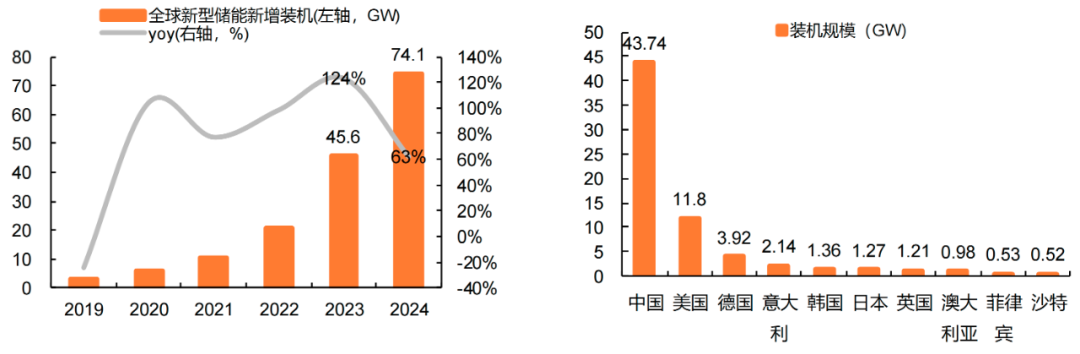
Core Viewpoint - The energy storage industry is experiencing a robust growth phase driven by strong demand both domestically and internationally, with leading battery companies operating at full capacity and battery prices continuing to rise, indicating a shift towards a more profitable and sustainable business model [1] Group 1: Demand Explosion - Global energy storage installations are on the rise, with China being the largest market. In 2024, global new energy storage installations are expected to reach 74 GW, a 62.5% increase year-on-year. China, the US, and Europe will account for 90% of this growth [2] - In 2024, China's new energy storage installations are projected to reach 43.7 GW, a 103% increase year-on-year, marking the first time installations exceed 100 GWh [2] Group 2: Policy Changes - The release of the "136 Document" in February 2025 marks a significant policy shift, ending the controversial "mandatory storage" era and allowing energy storage to operate independently in the electricity market [4] - The "New Energy Storage Scale Construction Action Plan (2025-2027)" aims for a national energy storage capacity of over 180 million kilowatts by 2027, promoting diverse revenue channels for energy storage [4] Group 3: Market Dynamics - In the first half of 2025, new energy storage projects in China added 23.0 GW, with a year-on-year increase of 68% in both power and energy capacity [6] - Local governments are introducing capacity price subsidies, leading to an internal rate of return (IRR) of 6-12% for energy storage projects, significantly boosting bidding and registration volumes [7] Group 4: International Market Trends - In the US, the rapid growth of AI data centers is reshaping energy demand, with projections indicating that by 2030, AI data centers could account for over 20% of electricity demand. This is expected to drive a significant increase in energy storage installations [9] - The European market is also expanding, with expected installations of 20 GWh in 2025, a 131% increase year-on-year, driven by supportive capacity pricing policies [9] Group 5: Price Recovery - The energy storage market is witnessing a price recovery, with the average price of 2-hour storage systems rising by 31% in September 2025. This marks a departure from the previous low-price competition [13][14] - The introduction of capacity pricing and spot markets is expected to enhance the profitability of independent energy storage, leading to sustained demand and price increases [14] Group 6: Conclusion - The growth of the energy storage sector is closely linked to the transition towards renewable energy and the evolving electricity system, positioning it as a critical infrastructure in the AI era [16] - Major players in the industry, including leading battery manufacturers and specialized companies, are being propelled to the forefront of this transformative wave [16][18]