
BYD(002594)

Search documents
China’s Green Energy Stocks Surge as Middle East War Upends Oil Markets
Yahoo Finance· 2026-03-24 09:27
Core Viewpoint - The ongoing conflict in the Middle East has led to a surge in shares of Chinese battery makers and green energy manufacturers, driven by expectations of increased global demand for renewable energy and electric vehicles due to disruptions in oil and gas supply [1][2]. Group 1: Market Impact - Domestic energy sources have gained prominence globally, marking the largest supply disruption in oil market history, with Qatar's LNG supply being significantly affected [2]. - The CSI Green Electricity Index in China has increased by 6% this month, while the CSI New Energy Index has risen by 2%, contrasting with a 6% decline in the Shanghai Composite Index [3]. - Shares of GCL Energy Technology Co Ltd have surged by 57% in one month, with significant gains occurring after the conflict began on February 28 [4]. Group 2: Company Performance - Contemporary Amperex Technology Co Ltd (CATL) has seen a nearly 20% increase in March, while BYD's shares have jumped by 22% and Sungrow's stock has risen by about 19% [4]. - The war has prompted a reevaluation of reliance on gas-powered vehicles, positioning Chinese green energy companies to benefit from a global shift away from fossil fuel dependence [5].




【联合发布】2026年2月新能源汽车三电系统洞察报告
乘联分会· 2026-03-24 08:42
Key Insights - The article discusses the current state and trends in the Chinese electric vehicle (EV) market, highlighting a decline in production and sales due to policy and consumer sentiment impacts, while emphasizing the need for product innovation and policy support to stimulate demand [5][7]. Group 1: Market Performance - In January-February 2026, China's EV production reached 1.604 million units, a year-on-year decrease of 13.7%, with a cumulative penetration rate of 39.9% [5]. - The market is undergoing structural adjustments, with a notable shift towards high-end and intelligent vehicles, but overall sales are declining [7]. - In February 2026, the market shares for different vehicle types were: Cars at 34.0% (down 17.2 percentage points), SUVs at 54.9%, MPVs at 4.7%, trucks at 4.0%, and buses at 2.4% [11]. Group 2: Battery Market Dynamics - In February 2026, the installed capacity of EV batteries was 27.3 GWh, a year-on-year decrease of 19.2%, while the cumulative growth rate for the first two months was 37.4% [17]. - The average battery capacity per vehicle was 62.0 kWh, reflecting a year-on-year increase of 29.2%, with major contributors being Xiaomi, BYD, and Tesla [17]. - In terms of battery cell types, square cells accounted for 97.8%, cylindrical cells for 1.9%, and pouch cells for 0.2% [18]. Group 3: Leading Battery Manufacturers - In February 2026, the top three battery manufacturers held a market share of 76.5%, with the top ten accounting for 95.8%. CATL led with a 52.7% share, followed by BYD and LG [20]. - LG experienced a significant year-on-year growth of 293.7%, driven by increased Tesla sales [20]. Group 4: Drive Motor Supply Chain - In February 2026, the top ten drive motor suppliers accounted for 62.4% of the market, with a decline in supply volume observed across all major players [23]. - The leading supplier, Fudi Power, saw a 55.5% decrease in supply volume, while Tesla's supply remained stable [24]. Group 5: Solid-State Battery Development - Solid-state battery technology is categorized by electrolyte types, including sulfide, oxide, polymer, and composite electrolytes, each with distinct advantages and industrial progress [33][34]. - The core advantages of solid-state batteries include enhanced safety, performance breakthroughs, and adaptability across various applications [35]. - The development of solid-state batteries is expected to progress through three stages: semi-solid state leading from 2024-2026, full solid state breakthroughs from 2027-2030, and cost parity post-2030 [39][40].


【新能源周报】新能源汽车行业信息周报(2026年3月16日-3月22日)
乘联分会· 2026-03-24 08:42
Industry Information - The transportation volume during the Spring Festival in the Qiongzhou Strait reached a record high, with a 61.66% increase in the number of new energy vehicles transported from Haian to Haikou [9] - In January and February 2026, the electricity consumption growth rate for charging and swapping services reached 55.1% [10] - The National Development and Reform Commission launched a new batch of major foreign investment projects with a planned investment of $13.4 billion [11] - The export value of electric vehicles from Shanghai in the first two months of this year increased by 112.6% year-on-year [11] - Chongqing's automotive industry cluster layout and capacity planning revealed that by 2026, the total vehicle production capacity will exceed 4.31 million units [12] - A new 50GWh energy storage battery project with an investment of 10 billion yuan was signed in Suzhou [13] - The first national-level "road and air integrated" testing base in China has officially opened [19] - The first bolt-type battery swapping standard has been released, promoting standardization in the battery swapping industry [19] - The China Charging Alliance reported an increase of 918,000 charging infrastructure units in January and February, a year-on-year increase of 44.8% [20] Policy Information - The Ministry of Industry and Information Technology, the National Development and Reform Commission, and the State Administration for Market Regulation held a meeting to promote the implementation of a 60-day account period commitment and accelerate breakthroughs in autonomous driving technology [14] - The Hainan government released standards for lithium battery recycling, aiming to improve resource utilization efficiency [24][25] - The Jiangsu government plans to support the construction of over 2,500 new public charging guns by the end of 2026, with a focus on high-power charging [38] - The Shenzhen government is piloting a "vehicle-battery separation" insurance model to reduce the insurance burden on new energy vehicle owners [10] - The Chongqing government plans to build 88 supercharging stations along highways by 2025 [38] Company Information - BYD has established 4,597 fast charging stations covering 279 cities [6] - Ideal Auto plans to launch a dual-battery route for all models starting in 2026, utilizing both self-developed and CATL batteries [6] - NIO has delivered its 80,000th ES8 pure electric SUV [6] - Xiaomi's new generation SU7 has been officially launched, featuring 25 safety assistance functions [6] - A new generation of solid-state batteries from EVE Energy has successfully rolled off the production line, accelerating the industrialization process [19]


【快讯】每日快讯(2026年3月24日)
乘联分会· 2026-03-24 08:42
Domestic News - Shenzhen is accelerating the commercialization of intelligent connected vehicles, with plans to establish a unified government supervision platform and explore pilot projects in various transportation scenarios [7] - The China Charging Alliance reported that from January to February 2026, the increase in charging infrastructure reached 918,000 units, a year-on-year increase of 44.8%, with public charging facilities decreasing by 53.8% and private charging facilities increasing by 110.4% [8] - XPeng Motors has established a Robotaxi division to oversee product definition, project integration, research, testing, and operations, with plans to launch passenger demonstration operations in the second half of 2026 [9] - Haima Automobile is working to further reduce the manufacturing and usage costs of hydrogen vehicles, having deployed 50 hydrogen vehicles in Hainan with a total mileage exceeding 2 million kilometers [10] - Li Auto has built over 4,000 supercharging stations and plans to launch its first automatic charging station in Q2 2026, marking the beginning of a "no-sense charging era" [12] - Dongfeng Fengxing showcased its new energy SUV FRIDAY and flagship MPV Xinghai V9 at the Bangkok International Motor Show, targeting local market needs [13] - Alibaba's Qianwen has launched a new ride-hailing feature that allows users to make personalized requests for vehicle selection [14] - Huawei's Qiankun intelligent driving solution has recorded over 50 million uses for its parking-to-parking feature [15] International News - In the U.S., electric vehicle-related search volume increased by approximately 20% following a rise in national average gasoline prices to $3.94 per gallon, the highest in nearly three years [16] - Elon Musk announced plans to build a chip manufacturing center in Austin, Texas, aimed at producing 2nm process chips for Tesla and SpaceX projects [17] - Toyota plans to invest $1 billion in its U.S. factories to enhance production capacity for electric and hybrid vehicles as part of a larger investment strategy [18] - Suzuki announced the full acquisition of solid-state battery company Kanadevia, which specializes in high-density, fast-charging batteries, highlighting Suzuki's strategy to enter the high-performance electric vehicle market [19] Commercial Vehicles - Geely Remote and Hong Kong Polytechnic University have deepened their collaboration in research and development, focusing on methanol-powered commercial vehicles and smart transportation [20] - Tesla's electric semi-truck, the Semi, has officially entered the stage of large-scale delivery, with plans to deliver between 5,000 to 15,000 units in 2026 [22] - BYD showcased its electric commercial vehicles at the Shenzhen International Commercial Vehicle Expo, highlighting its advancements in electric technology [23] - Yuchai's bus engines have been exported to Senegal, enhancing local public transportation efficiency [24]



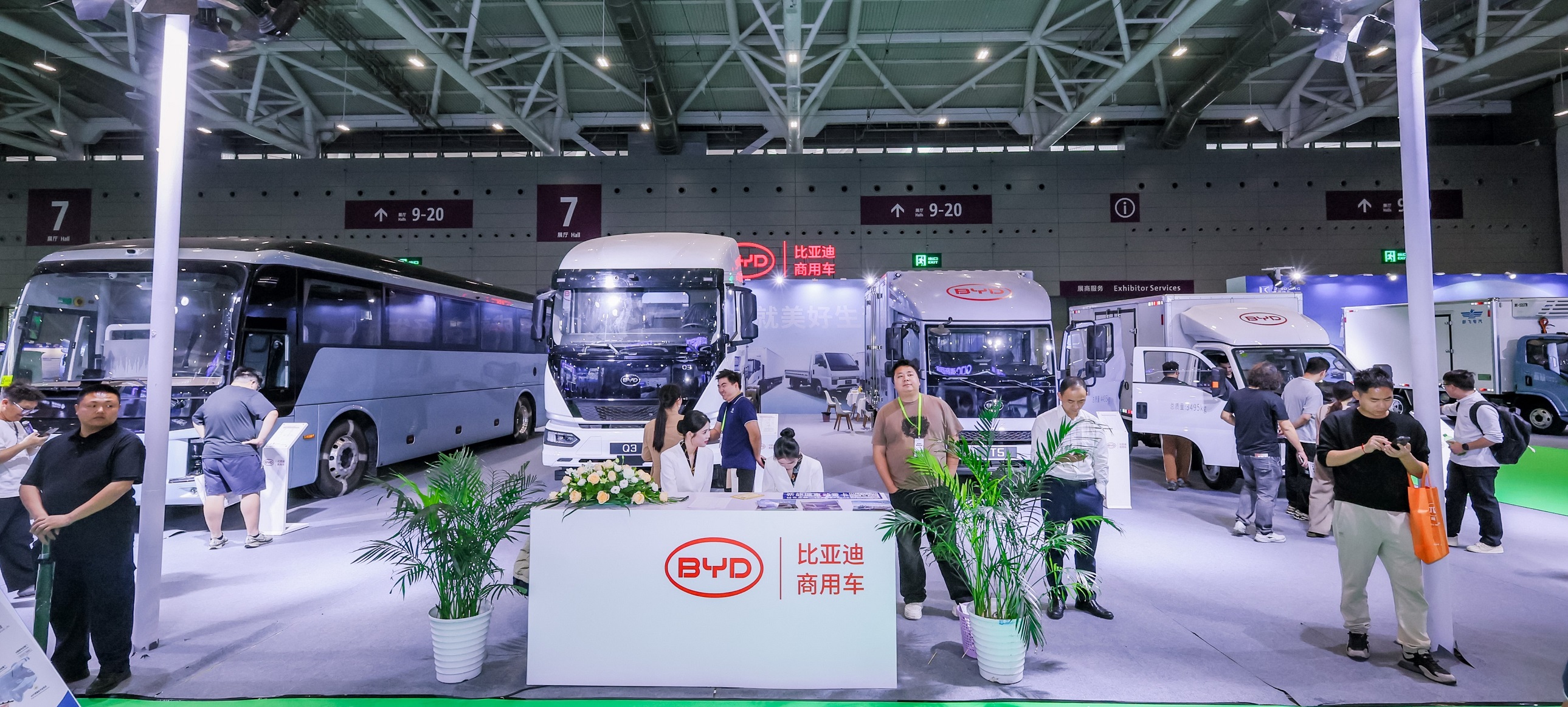
携四款纯电力作参展 比亚迪商用车诠释新能源领军实力
Zhong Guo Qi Che Bao Wang· 2026-03-24 08:29
Core Insights - The article highlights the transition of the new energy commercial vehicle industry from policy-driven to market-driven growth, with BYD leading the global sector through its comprehensive technology in the "three electrics and one core" [1] - BYD showcased four pure electric models at the 2026 Shenzhen International Commercial Vehicle Expo, demonstrating its commitment to innovation and leadership in the new energy commercial vehicle market [1][8] Group 1: Product Highlights - The pure electric sedan truck T4 addresses traditional issues such as safety, high operating costs, and poor urban maneuverability, featuring advanced design and technology for enhanced convenience and safety [3] - The T4 is equipped with a blade battery and a 150kW flat wire motor, providing 204 horsepower and an energy efficiency of "1 kWh per 5.5 km," with a warranty of up to ten years or 800,000 km on key components [3] - The pure electric light truck T5 utilizes blade battery technology and a powerful flat wire motor, achieving significant energy efficiency and operational cost advantages, while also offering hybrid options for diverse transportation needs [4] Group 2: Advanced Features - The pure electric tractor Q3 is designed for high-efficiency operations in short-haul transport, featuring a 452kWh blade battery and a peak power of 410kW, with a range exceeding 260 km [5] - The Q3 includes various comfort and safety features, such as a multi-functional steering wheel and advanced stability systems, enhancing user experience in demanding transport scenarios [5] - The pure electric bus C11 focuses on safety, comfort, and economic efficiency, utilizing advanced battery technology and safety systems to surpass traditional fuel vehicles in performance [7] Group 3: Strategic Vision - BYD's introduction of these four electric models exemplifies its commitment to technological innovation and industry advancement, aiming to meet diverse market demands and enhance product offerings [8] - The company plans to continue its focus on the new energy commercial vehicle sector, leveraging its technological strengths and global presence to drive quality upgrades in the industry [8]
任泽平带你看前沿科技:2026研学计划
泽平宏观· 2026-03-24 08:24
Core Viewpoint - The article emphasizes the importance of practical learning experiences in cutting-edge technology and investment research, highlighting the collaboration between entrepreneurs and leading companies to explore new opportunities in emerging industries [4][13]. Schedule Overview - The schedule for 2025 includes visits to major technology companies and events such as CES, with a focus on AI, robotics, and commercial space [7][8]. - Key events include closed-door investment research meetings on China's AI strength and participation in the Hong Kong Web3 Carnival [8][9]. Learning Experience - Participants will engage in deep explorations of technology companies, gaining insights into strategic decisions, technological challenges, and industry disruption logic through direct dialogues with founders and executives [13][24]. - The program aims to empower entrepreneurs by focusing on three dimensions: cutting-edge technology trends, emerging industry ecosystems, and business model exploration [13]. Past Activities - In 2023, participants visited leading companies such as Huawei and ByteDance, while in 2024, they will explore companies like BYD and Tencent, focusing on themes like artificial intelligence and new energy [24][25]. - The program has a history of facilitating high-end investment research meetings, providing a platform for exploring future technologies and connecting diverse resources [25]. Participant Feedback - Feedback from participants highlights the value of hands-on learning and the opportunity to engage with top-tier companies, enhancing their understanding of market dynamics and investment strategies [42][48]. - Participants express appreciation for the program's focus on practical insights and the cultivation of a long-term investment mindset [48][49].



续航150公里!比亚迪电摩锂电池上市
鑫椤锂电· 2026-03-24 07:31
Core Insights - The article discusses the launch of BYD's new lithium iron phosphate battery series specifically designed for electric motorcycles, named "Riding Fortress," which aims to enhance the electric two-wheeler market with advanced battery technology [1][5]. Market Overview - The article outlines various market segments for 2025, including lithium carbonate, electrolytes, copper foil, lithium cobalt oxide, ternary materials, lithium iron phosphate, manganese lithium, ternary precursors, lithium hexafluorophosphate, iron phosphate, VC additives, sodium-ion batteries, new lithium salts (LIFSI), separators, lithium batteries, aluminum foil, energy storage batteries, energy storage systems, manganese iron phosphate, and anode materials [1]. Product Features - The 76V45Ah battery can achieve a range of 150 kilometers, has a cycle life exceeding 3000 times, a capacity of 3456Wh, and weighs only 25 kilograms [3]. - The battery features a square aluminum shell lithium iron phosphate cell, IPX7 waterproof rating, and supports multiple communication protocols including Bluetooth, 485, and CAN, ensuring safety with a 70A protection board and a 76V10A aluminum charger, priced at 3456 yuan including the charger [5]. Industry Impact - BYD's entry into the electric motorcycle battery market with automotive-grade technology addresses common issues in the two-wheeler battery sector, such as insufficient range, short lifespan, and significant low-temperature degradation, thereby enhancing the overall user experience [5]. - The introduction of long-range and high-durability electric motorcycle batteries is expected to become mainstream in the market [5].

European car sales rise modestly in February, Tesla reverses year-long skid
Reuters· 2026-03-24 05:01
Core Insights - European car sales increased by 1.7% in February, totaling 979,321 vehicles, following a decline in January, with electric vehicle demand contributing to Tesla's growth after a year-long downturn [2][5]. Group 1: Overall Market Performance - Total car registrations in the EU, Britain, and the European Free Trade Association rose to 979,321 vehicles, marking a 1.7% increase [2]. - In the EU alone, car sales increased by 1.4%, reaching 865,437 vehicles sold [6]. Group 2: Electric Vehicle Sales - Two-thirds of the vehicles sold in February were electrified, including battery-electric, plug-in hybrid, and hybrid models [2]. - Registrations of battery electric cars rose by 20.6%, plug-in hybrids by 32.1%, and hybrid electric cars by 10.1%, collectively accounting for 67% of total registrations, up from 58.5% in February 2025 [7]. Group 3: Company-Specific Performance - Tesla's registrations increased by 11.8% year-on-year in February, ending a thirteen-month negative trend, although they remained slightly lower than BYD's sales, which more than doubled compared to the same month in 2025 [5]. - Volkswagen and Stellantis saw sales increases of 2.2% and 9.5%, respectively, while Renault experienced a decline of 14.3% [6].
比亚迪5分钟极速充电,震惊美媒
半导体行业观察· 2026-03-24 03:20
Core Viewpoint - BYD has significantly improved its fast-charging technology, allowing certain electric vehicle batteries to charge from 10% to 70% in five minutes and fully charge in about nine minutes, which could add over 600 miles of range in the time it takes to order a coffee [2] Group 1: Charging Technology - BYD's new fast-charging technology can deliver up to 1500 kW of power, compared to the common 350 kW chargers in the U.S. that take 15 to 25 minutes to charge to 80% [2] - The new Blade battery technology, which utilizes lithium manganese iron phosphate (LMFP), enhances energy density and charging speed [3] - The energy density of BYD's latest battery has improved by 5% compared to the previous year's model, with the Tengshi Z9GT capable of exceeding 620 miles (approximately 1000 kilometers) on a single charge [4] Group 2: Infrastructure and Market Challenges - BYD plans to integrate its new charging stations into the existing infrastructure, simplifying deployment and preventing grid overload by equipping charging stations with energy storage batteries [5] - Despite the impressive charging speed, experts suggest that this advancement may not significantly change the daily lives of most electric vehicle owners, as many can charge at home [6] - The U.S. electric vehicle market faces challenges, including the cancellation of upcoming electric models by Honda and others, and a lack of federal support for electric vehicles, which hinders market growth [6]
科技未来:视觉语言动作- 自动驾驶的下一个 AI 前沿-Future of Tech_ VLA as the next AI frontier in autonomous driving
2026-03-24 01:27
Summary of Key Points from the Conference Call Industry Overview - The focus is on the autonomous driving industry, particularly advancements in AI technologies and their implications for various automakers in Japan and China [1][4][5][12][13]. Core Insights and Arguments Global Autonomous Driving Penetration - Global L2+/L2++ penetration is projected to reach 36% by 2030, up from 15% in 2025, while L3 adoption is expected to be limited due to complexity and regulatory hurdles [1][25][28]. - In China, L2+/L2++ penetration is expected to rise to approximately 70% by 2030, significantly higher than the global average [30][34]. - The US market is anticipated to see L2+/L2++ penetration of around 36% by 2030, supported by consumer acceptance of advanced features [43][47]. Japan's Approach to Autonomous Driving - Japanese automakers are adopting varied strategies for commercialization, with Toyota leading through a 'multi-pathway' approach, combining internal development and partnerships [4][9][12]. - Upcoming models like Toyota's RAV4 and Sony Honda Mobility's Afeela are expected to drive the rollout of software-defined vehicles (SDVs) [8][12]. - The Japanese market is characterized by a cautious approach, prioritizing safety and reliability, with L2+/L2++ penetration projected at 29% by 2030 [48][49]. China's Competitive Landscape - Leading Chinese EV manufacturers such as XPeng and Li Auto are at the forefront of adopting Vision-Language-Action (VLA) models, enhancing user experience and decision-making capabilities [5][13]. - The intense competition among Chinese OEMs is accelerating the development of advanced driver-assistance systems (ADAS), which are becoming essential features in premium EVs [5][13]. - Concerns remain regarding the monetization potential of these technologies and the ability of Chinese OEMs to introduce advanced features in international markets [5][13]. Technological Shifts - The transition from rule-based systems to end-to-end (E2E) architectures is being driven by the need for faster deployment and improved handling of edge cases [2][9]. - VLA models are seen as the next frontier in E2E development, with companies like Waymo leveraging advanced AI to enhance navigation capabilities [3][9]. Additional Important Insights - Traditional auto parts suppliers face challenges as automakers assert more control over software layers, potentially reducing suppliers' revenue from design changes [11]. - Japan's government is promoting SDVs as a national priority, aiming for a 30% penetration target by 2030-2035, which may accelerate strategic initiatives across the sector [12]. - The role of high-definition (HD) maps remains relevant even in E2E systems, as they provide essential localization support and training data for AI models [66][67]. Investment Implications - Ratings for Japanese automakers include Outperform for Suzuki and Toyota, Market-Perform for Honda and Denso, and Underperform for Nissan, Mazda, and Subaru [12][14]. - In China, BYD and Xiaomi are rated as Outperform, while XPeng, NIO, and Li Auto are rated as Market-Perform [14]. This summary encapsulates the key points discussed in the conference call, highlighting the advancements and strategic directions of the autonomous driving industry in Japan and China.