
Muyuan Foods (002714)

Search documents
A股回购规模超1400亿元,真金白银护航市场估值修复|2025中国经济年报
Hua Xia Shi Bao· 2025-12-23 14:15
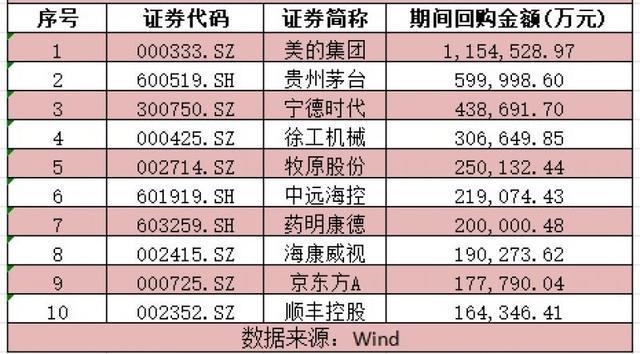
Core Viewpoint - The A-share market has seen a significant wave of stock buybacks in 2025, with nearly 1,500 companies participating, reflecting a robust response to economic recovery and external fluctuations [2][3]. Group 1: Market Overview - As of December 23, the Shanghai Composite Index closed at 3,919.98 points, with a year-to-date increase of 16.95%, peaking above 4,000 points [1]. - The overall market has shown a "shock bottoming and gradual recovery" trend, supported by favorable policies and improved corporate earnings [3]. - The three major indices have all risen this year, with the Shanghai Composite Index, Shenzhen Component Index, and ChiNext Index increasing by 16.95%, 28.37%, and 49.66%, respectively [3]. Group 2: Buyback Activity - Nearly 1,500 companies have initiated stock buybacks this year, with a total repurchase amount exceeding 1,400 billion yuan and over 13 billion shares repurchased [2][3]. - The buyback trend spans various sectors, including consumer, manufacturing, technology, and finance, indicating a comprehensive market support structure [2]. - Companies are increasingly using buybacks to enhance shareholder value and stabilize market expectations [2][3]. Group 3: Leading Companies in Buybacks - The top ten companies by buyback amount include Midea Group (11.55 billion yuan), Kweichow Moutai (5.99 billion yuan), and CATL (4.39 billion yuan) [1][6]. - Notably, Midea Group is the only company with a buyback amount exceeding 10 billion yuan this year [6]. - Companies like JD Display and XCMG Machinery have also made significant contributions to both buyback quantity and amount, showcasing their commitment to shareholder interests [6][7]. Group 4: Industry Participation - The manufacturing, consumer, and information technology sectors have the highest participation rates in buybacks, with leading firms like BOE Technology Group and XCMG Machinery actively repurchasing shares [4][5]. - These companies, backed by stable operating performance and ample cash flow, play a crucial role in stabilizing their stock prices and driving industry valuation recovery [4]. Group 5: Regulatory Support - The ongoing buyback trend is supported by regulatory policies, including the establishment of stock buyback and repurchase loans, which provide low-cost funding for companies [7]. - As of December 23, over 780 companies have disclosed receiving buyback loan support, with total loan amounts reaching over 100 billion yuan [7]. - The combination of these policies encourages companies to shift from passive stabilization to proactive value management [7][8].







欧盟乳品反补贴落地,国产替代有望加速!消费ETF(159928)回调再获近5亿份净申购,昨日吸金近2亿元!
Sou Hu Cai Jing· 2025-12-23 07:06
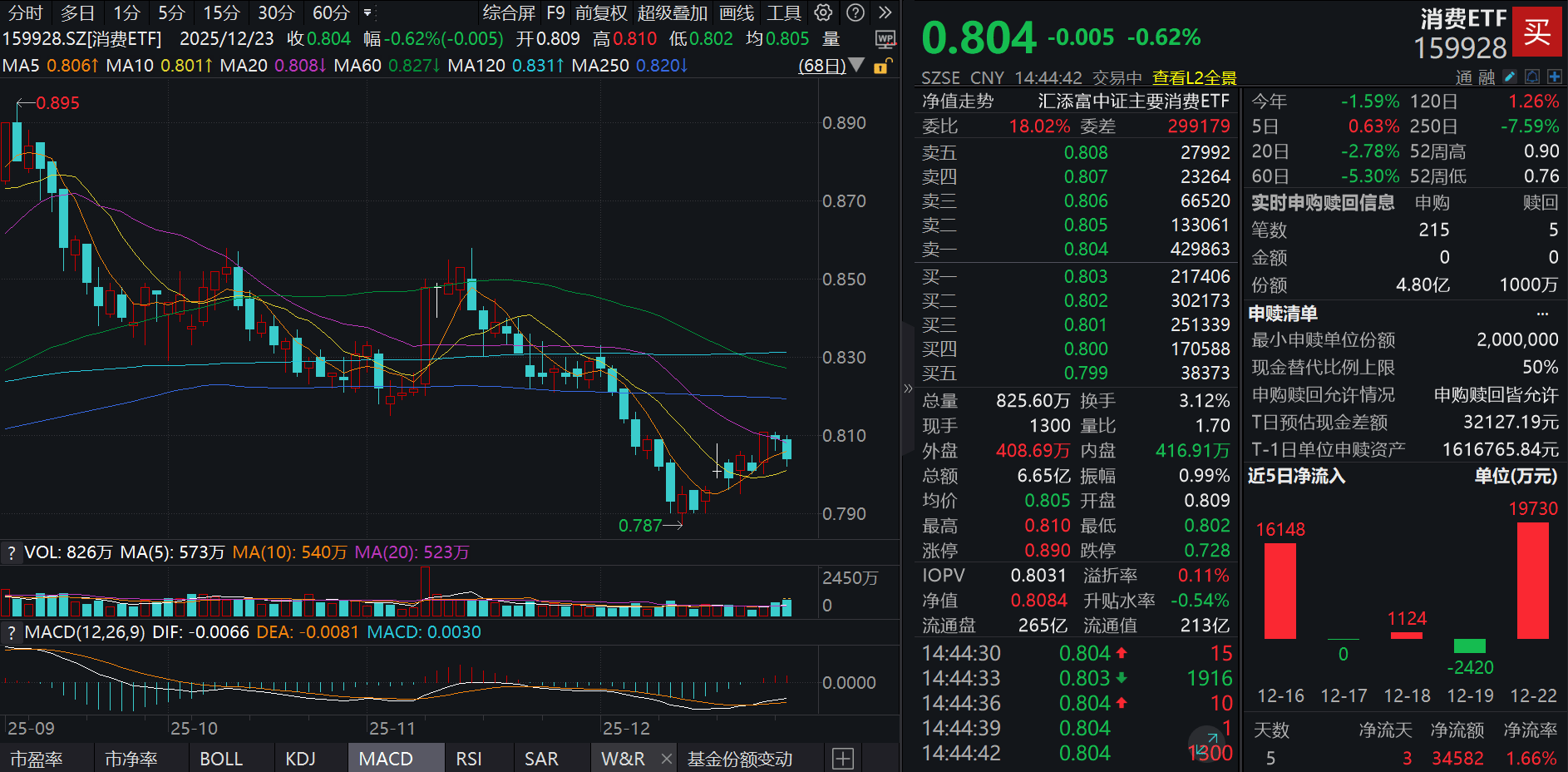
Group 1: Market Performance - A-shares experienced fluctuations and a decline, with the Consumer ETF (159928) dropping by 0.74% and a trading volume exceeding 650 million yuan [1] - The Consumer ETF (159928) has seen a net subscription of over 470 million units during the day, accumulating over 600 million yuan in the last 20 days [1] - As of December 22, the latest scale of the Consumer ETF (159928) exceeded 21.3 billion yuan, leading its peers [1] Group 2: EU Dairy Products Subsidy - The EU has announced a preliminary ruling on dairy products, determining that subsidies exist with a countervailing duty rate ranging from 21.9% to 42.7% [3][7] - Starting December 23, temporary countervailing measures will be implemented on imported dairy products from the EU [3] - The additional countervailing duty is expected to increase import prices, potentially accelerating domestic substitution in the dairy sector [8] Group 3: Domestic Dairy Industry Impact - The countervailing duties are projected to shift the deep processing of dairy products to domestic enterprises, as domestic milk prices are currently lower than international prices [8] - The deep processing sector is anticipated to enhance demand for raw milk, improving the supply-demand balance in the upstream raw milk industry [8] - Domestic dairy companies are actively focusing on deep processing, which is expected to drive demand growth and stabilize the industry [8] Group 4: Consumer Sector Insights - The Consumer ETF (159928) is characterized by its resilience across economic cycles, with the top ten constituent stocks accounting for over 68.55% of its weight [13] - The ETF includes major players such as Yili (10.37%), Kweichow Moutai (9.94%), and Wuliangye (9.50%) [14] - The current valuation of the Consumer ETF (159928) is attractive, with a TTM P/E ratio of 19.4, placing it in the lower 3.13% of the past decade [5] Group 5: Future Consumption Trends - The service consumption sector is expected to grow significantly as China's GDP per capita exceeds $10,000, indicating a shift in consumer spending patterns [11] - Emerging consumer groups, particularly the Z generation and affluent elderly, are likely to drive demand for service-oriented consumption [12] - Investment opportunities in the service sector are anticipated, particularly in areas such as event economy and AI applications [12]




西部证券:猪价持续低迷 建议把握生猪养殖板块布局机会
智通财经网· 2025-12-23 05:48
Group 1 - The core viewpoint of the report indicates that the listed pig companies' slaughter volume in November 2025 reached 18.2581 million heads, representing a year-on-year increase of 26.67% but a month-on-month decrease of 2.96% [1][2] - The cumulative slaughter volume of listed pig companies from January to November 2025 was 176 million heads, with a year-on-year growth of 21.42%, indicating stable growth around 20% [2] - The report suggests seizing investment opportunities in the pig farming sector, focusing on companies with strong growth in slaughter volume and stable operations, recommending Muyuan Foods (002714.SZ), Wens Foodstuff Group (300498.SZ), Tangrenshen (002567.SZ), Huatong Food (002840.SZ), and Juxing Agriculture (603477.SH) [1] Group 2 - The operating revenue of listed pig companies in November 2025 was 22.5556 billion yuan, down 17.03% year-on-year and 4.94% month-on-month [3] - The sales revenue from commodity pigs for leading companies in November was 9.390 billion yuan for Muyuan, 5.199 billion yuan for Wens, and 1.812 billion yuan for New Hope, with year-on-year declines of 20.43%, 14.19%, and 11.61% respectively [3] - The decline in revenue is attributed to a larger decrease in pig prices compared to the increase in slaughter volume, with cumulative revenue from January to November 2025 amounting to 268.644 billion yuan, a slight year-on-year increase of 2.09% [3] Group 3 - The average selling price of pigs in November increased by 1.60% month-on-month but decreased by 30.05% year-on-year [4] - The average selling prices for leading companies were 11.56 yuan/kg for Muyuan, 11.71 yuan/kg for Wens, and 11.54 yuan/kg for New Hope, with year-on-year declines of 28.73%, 29.92%, and 30.02% respectively [4] - The decline in average selling prices is due to ample supply and weak demand during the peak season, with expectations of low prices persisting until the Spring Festival [4] Group 4 - The average weight of pigs slaughtered in November was 105.80 kg per head, showing a month-on-month decrease of 0.35% and a year-on-year decrease of 3.31% [5] - Leading companies reported average weights of 123.04 kg for Muyuan, 101.98 kg for Wens, and 100.17 kg for New Hope, with month-on-month declines and varying year-on-year changes [5] - The decrease in average weight is a result of companies voluntarily reducing slaughter weights in response to market conditions [5]




消费股年末补涨!食品饮料ETF天弘昨日成交额近2500万元,农业ETF天弘近5日累计“吸金”超3100万元
2 1 Shi Ji Jing Ji Bao Dao· 2025-12-23 02:51
Group 1 - The core viewpoint of the article highlights a rebound in the consumer sector, particularly in food and beverage stocks, driven by recent policies aimed at boosting domestic demand and consumption [4] - The China Securities Food and Beverage Index experienced a slight decline of 0.03% at the close, with notable stocks such as Jingliang Holdings and Hongmian Co. reaching their daily limit up [1] - The China Securities Agricultural Index rose by 0.69%, with stocks like Roniu Mountain and Hainan Rubber also hitting their daily limit up [3] Group 2 - The Tianhong Food and Beverage ETF reported a trading volume of nearly 25 million yuan at the close, indicating active market participation [2] - The Tianhong Agricultural ETF saw a trading volume exceeding 32 million yuan, with significant net inflows over the past five trading days, totaling over 31 million yuan [3] - The Tianhong Food and Beverage ETF tracks the China Securities Food and Beverage Index, focusing on leading stocks in high-end and mid-range liquor, as well as other beverage and dairy segments [3] Group 3 - The consumer sector is currently experiencing a strategic opportunity period supported by intensive policy measures, with the food and beverage industry expected to benefit directly from the domestic demand boost [5] - Key trends in the industry include health-oriented and quality-focused consumption, alongside easing cost pressures, which enhance the profitability resilience of leading companies [5] - The consumer sector is showing signs of bottoming out, with policy dividends and fundamental recovery creating a resonant effect, indicating potential investment value [5]


牧原股份:公司会根据实际经营需要,审慎确定具体融资金额
Zheng Quan Ri Bao Wang· 2025-12-22 13:44
Group 1 - The core viewpoint of the article is that Muyuan Foods (002714) is applying for credit limits from financial institutions to prepare for operational development needs, emphasizing that the credit limit does not equate to actual financing amounts [1] - The company will determine specific financing amounts based on actual operational needs and will adopt a more cautious operational strategy in the current market conditions [1] - The priority for the company is to ensure sufficient and safe cash flow while continuing to promote debt reduction efforts [1]
——农林牧渔行业周报:猪价承压,关注去化进程-20251222
Guohai Securities· 2025-12-22 11:03
Investment Rating - The report maintains a "Recommended" rating for the agriculture, forestry, animal husbandry, and fishery industry [1] Core Insights - The swine industry is entering an accelerated phase of capacity reduction, with a focus on positioning at the bottom of the market. Regulatory measures are being reinforced to stabilize pig prices, which are expected to face downward pressure in the short term due to increased market supply [3][15] - The poultry sector shows signs of fundamental improvement, with a focus on the white feather chicken breeding segment and potential price recovery in the future [4][28] - The animal health sector is closely monitoring the clinical trial progress of African swine fever vaccines, which could enhance market conditions for leading companies in the sector [5][38] - The pet industry continues to experience rapid growth, with domestic brands gaining strength and improving profitability [8][60] Summary by Sections Swine Industry - The average price of live pigs is reported at 11.53 CNY/kg, with a slight weekly increase. The number of breeding sows has decreased by 1.1% month-on-month [14][15] - Key investment recommendations include leading companies such as Muyuan Foods and Wens Foodstuffs, with additional attention on Dekang Agriculture and Shennong Group [3][15] Poultry Industry - The white feather chicken breeding segment has seen a total of 107.21 thousand sets updated from January to October 2025, with a balanced import and self-breeding ratio [4][28] - Recommended companies in this sector include San Nong Development and Lihua Shares [4][28] Animal Health - The animal health industry has faced losses for over three months, with expectations of continued low pig prices. The clinical trials for the African swine fever vaccine are a critical step towards commercialization [5][38] - Companies to watch include BioStock, Kexin Biological, and Ruipu Biological [5][38] Planting Industry - Grain prices are fluctuating, with corn prices at 2244 CNY/ton and wheat prices at 2515 CNY/ton. The pig-to-grain ratio is reported at 5.03 [44][48] - Investment suggestions focus on companies with strong positions in genetically modified seeds, such as Suqian Agricultural Development and Longping High-Tech [6][48] Feed Industry - Feed prices are experiencing fluctuations, with pig feed priced at 3.33 CNY/kg and chicken feed at 3.45 CNY/kg. The industry is expected to see increased concentration [49][50] - Recommended companies include Haida Group and He Feng Shares [49][50] Pet Industry - The pet market is projected to reach 300.2 billion CNY in 2024, with a year-on-year growth of 7.5%. The number of pet dogs and cats is also on the rise [59][60] - Recommended companies in the pet food sector include Guibao Pet, Zhongchong Shares, and Petty Shares [59][60]


2026年度中国期货市场投资报告:天气扰动豆系,去化主导生猪
Xin Ji Yuan Qi Huo· 2025-12-22 10:57
Report Industry Investment Rating - Not provided in the given content Core Viewpoints of the Report - In 2026, the global soybean supply is expected to remain loose. The price of US soybeans is still restricted by the global supply, while Brazil's soybean production is at a record - high level and Argentina's supply is sufficient. The implementation of the soybean purchase agreement will be a key factor affecting US soybean exports and price structure. The La Niña phenomenon may affect South American yields, and weather changes need to be monitored [2][77]. - China's soybean imports are expected to reach a new high in 2026, with a "low - first - then - high" supply rhythm. The soybean meal market is expected to continue the pattern of strong supply and weak demand, and the upward price space is limited [2][77]. - The pig production capacity is slowly being reduced. In the first half of 2026, the supply pressure of live pigs remains high, and prices are expected to fluctuate at a low level. The speed of production capacity reduction will be the key to the pig price trend in the second half of the year [2][78]. Summary by Relevant Catalogs 1. Market Review - **2025 Bean Market**: The 2025 bean market was mainly affected by trade relations, domestic soybean arrival rhythm, US soybean producing area weather and export expectations. The prices of domestic and foreign markets showed significant differentiation in March, and the price of US soybeans rebounded at the end of October, driving up the domestic soybean meal price [4]. - **Q1**: The domestic and foreign markets showed an initial differentiation, with the domestic market being stronger. The USDA report was bullish at the beginning of the year, and the price of US soybeans rebounded. The domestic soybean meal price was supported by the pre - Spring Festival stocking demand. The domestic and foreign markets began to diverge at the end of March [6]. - **Q2**: The supply pressure became prominent, and the price was under pressure. The domestic supply pressure increased significantly after May, and the soybean meal price lacked upward momentum. The US soybean market was supported by weather speculation and other factors [6]. - **Q3**: The US soybeans fluctuated in a range, and the domestic market was driven by costs. The price of US soybeans fell below 1000 cents in July and rebounded in August. The domestic soybean meal price was slightly boosted by import costs [6]. - **Q4**: Driven by trade sentiment, the price bottomed out and rebounded. The improvement of Sino - US relations significantly boosted the export expectations of US soybeans, driving up the domestic soybean meal price [7]. - **2025 Pig Market**: The 2025 pig market was affected by factors such as over - capacity, policy expectations, second - fattening sentiment and slaughter rhythm, showing a pattern of fluctuating downward and weak rebound [8][10]. - **Q1**: The demand was strong first and then weak, and the pig price fluctuated weakly. The pig price was relatively strong before the Spring Festival and then fell. The second - fattening and barring sentiment led to a rebound in the pig price in late February [11]. - **Q2**: The policy guidance began to appear, and the price first rose and then fell. The pig price rebounded in April and then fell in May. The second - fattening replenishment enthusiasm increased in June, and the pig price stopped falling and stabilized [11]. - **Q3**: The supply - demand imbalance intensified, and the spot and futures markets diverged. The pig price soared in July due to supply reduction and policy factors, and then fluctuated and fell in August. The futures market moved down in September [12]. - **Q4**: After the National Day, the demand entered the off - season, and the pig price fell sharply and then rebounded slightly. The futures market was under pressure and fluctuated at a low level [12]. 2. International Soybean Market Supply Analysis - **USDA Report**: The global soybean supply continues to be in a loose pattern. In the 2025/26 season, the global soybean production is estimated to be 423 million tons, with the ending inventory increasing by 4 million tons. The inventory - to - consumption ratio has increased both month - on - month and year - on - year [16]. - **US**: The 2025/26 US soybean inventory - to - consumption ratio is 6.74%, and the supply - demand fundamentals have been tightening in recent years. The short - term price has a bottom support, but the upward space is limited by the global supply [17][18]. - **South America**: The production data of South American soybeans remains unchanged in December. Brazil's production is expected to be 175 million tons, and Argentina's is 48.5 million tons. The overall supply remains loose, but South American weather is still a key concern [19]. - **Brazil**: The soybean sowing is coming to an end, and the production is expected to reach a record high. Multiple institutions predict that the 2025/26 production will be between 175 - 178 million tons. In 2025, the export volume reached a record high, and it is expected to continue to rise in 2026. The La Niña phenomenon may pose a threat to the yield [20][21]. - **Argentina**: The sowing progress is accelerating. The Buenos Aires Grain Exchange expects the 2025/26 production to be 48.5 million tons. The export tax has been reduced, and the export is expected to reach a six - year high [23][24]. - **US**: The soybean harvest is basically over, and the production is at a historical high. The weekly export volume has decreased month - on - month, but the cumulative year - on - year increase has continued to expand. The short - term export demand is still strong. The medium - and long - term export situation needs to pay attention to the impact of trade relations on trade flows. The soybean crushing volume in October set a new record, and it is expected to remain at a high level in the short term [27][28]. - **Trade Relations**: The Sino - US trade relations have entered a new stage of "transaction - based management". The stable trade of soybeans has become the balance of bilateral relations, but the structural contradictions have not been resolved. In 2026, trade relations are no longer the main trading line, but short - term disturbances still exist [31][34]. - **La Niña Disturbance**: The probability of a weak La Niña phenomenon in the next three months is 55%. The main impact is on South America, with the risk of reduced production in Argentina being the greatest. The actual weather conditions in South America and the intensity and duration of La Niña are the focus of the market [35][36]. 3. Domestic Soybean Market Supply - Demand Analysis - **Soybean Imports**: In 2025, China's soybean imports are expected to exceed 110 million tons for the first time, showing a "stable - first - then - high" pattern. In 2026, imports are expected to continue to grow, with a "low - first - then - high" rhythm, and the import value growth rate may continue to be lower than the import volume growth rate. The import scale of US soybeans depends on Sino - US trade relations [40][42]. - **Soybean Crushing**: In 2025, the national soybean crushing volume reached a historical high, showing a "low - first - then - high" pattern. The crushing profit showed a "high - first - then - low" and fluctuating downward trend. In 2026, the crushing industry is expected to continue to operate at a high level, but the growth rate will slow down, with a "low - first - then - high" seasonal rhythm [44][45]. - **Soybean Meal Inventory**: In 2025, the soybean meal inventory showed a "tight - first - then - loose" pattern. In 2026, if the arrival is uniform, the soybean meal supply will be slightly looser than in 2025. The inventory may bottom out in March - April and then gradually recover [46]. - **Demand**: In 2025, the trading volume of soybean meal fluctuated greatly. The overall demand for the breeding industry is stable, and the proportion of soybean meal added in feed continues to decline. In 2026, the demand for soybean meal will show the characteristics of "stable total demand and decreasing addition ratio", and the demand growth rate is expected to be lower than the feed production growth rate [48][52]. 4. Pig Market Supply - Demand Analysis - **Supply**: - **Price Decline**: Since 2025, the domestic pig price has been in a downward trend, and the prices of binary sows and piglets have also declined to varying degrees [56]. - **Capacity Regulation**: The Ministry of Agriculture and Rural Affairs has strengthened the regulation of pig production capacity, and listed companies in the pig - breeding industry have actively responded. As of October 2025, the inventory of breeding sows has declined to 39.9 million, and the production capacity reduction has accelerated [57][60]. - **Low Import Willingness**: The domestic pork supply is sufficient, and the import willingness of downstream purchasers and importers is weak. The pork import volume in October 2025 reached the lowest level of the year [66]. - **Profit Loss**: In 2025, the pig - breeding profit changed from profit to loss. In the first half of 2026, the pig supply is expected to be high, and the profit may continue to be under pressure. If the production capacity is significantly reduced in the second half of the year, the price and profit may recover [68]. - **Weakening of Second - Fattening Impact**: In the second half of 2025, policies restricted second - fattening, and leading enterprises responded actively. The influence of second - fattening on pig prices has weakened significantly, and the pig price trend is expected to be smoother in 2026 [69][72]. - **Demand**: In 2025, the pig demand showed typical seasonal characteristics. In the second half of the year, the terminal consumption recovered strongly, but the upward space of pig prices was restricted by the supply. In 2026, the pig market will continue the complex supply - demand game, and the short - term price may face a callback risk, while the medium - and long - term consumption growth space is limited [74][75]. 5. Summary and Outlook - **Soybean Meal**: With a loose global supply and accumulating domestic inventory, the overall upward space is limited. Attention should be paid to marginal variables such as South American weather speculation and the implementation of the Sino - US procurement agreement [77][78]. - **Pigs**: In the first half of the year, the supply pressure remains high, and the price is expected to fluctuate at a low level. Attention can be paid to the rebound opportunities brought by the seasonal consumption recovery, and the process of production capacity reduction and the effect of policy guidance should be closely monitored [78].
农林牧渔行业2026年策略:产业转型升级,静候周期拐点
Dongxing Securities· 2025-12-22 08:20
Investment Summary - The report suggests focusing on three main investment themes for the agricultural sector in 2026: pig farming, feed and animal health, and pet food [4][5][6]. Group 1: Pig Farming - The supply-demand dynamics in the pig farming industry are improving, with a continued oversupply expected to pressure prices in the first half of 2026, leading to ongoing industry losses [4][16][19]. - The structural changes in pig farming post-African swine fever have led to increased scale and a rise in short-term farmers, resulting in narrower price fluctuations and reduced supply-demand conflicts [4][16][49]. - Cost management is crucial for pig farming companies to achieve excess returns and long-term growth, with significant differentiation expected among companies based on cost advantages [4][50][61]. - The report highlights that the valuation of the sector is at a low point, with expectations for recovery in the valuations of leading companies, particularly those with cost advantages like Muyuan Foods [5][61]. Group 2: Feed and Animal Health - The animal health sector is experiencing a weakening of its cyclical attributes, with research and innovation becoming the core focus for long-term growth [6][62][66]. - The feed market is characterized by competition in the domestic market, with an emphasis on cost control and precision management, while international markets present new growth opportunities for leading companies [6][62][66]. - The report recommends companies with strong research capabilities and cost control, such as Pulaike and KQ Bio, for long-term investment [6][62]. Group 3: Pet Food - The pet food market is expected to continue its growth despite short-term disruptions from tariffs, with domestic brands gaining market share [6][7]. - The report emphasizes the importance of adapting to consumer trends towards health and refinement in product offerings, which is likely to enhance market share and profitability for domestic brands [6][7].


农林牧渔周观点(2025.12.15-2025.12.21):猪价低迷产能调减加速,关注上市公司冬虫夏草业务布局-20251222
Shenwan Hongyuan Securities· 2025-12-22 05:23
Investment Rating - The industry investment rating is "Overweight" indicating that the industry is expected to outperform the overall market [4][44]. Core Insights - The report highlights a significant decline in pig prices leading to accelerated capacity reduction in the breeding sector, suggesting a left-side investment opportunity in pig farming [4][5]. - The report emphasizes the potential of the artificial cultivation of Cordyceps sinensis, with a market size exceeding 30 billion, and suggests focusing on companies involved in this sector [4][5]. - The report also notes that the pet food sector is experiencing a positive trend, with a year-on-year increase in online sales [4][5]. Summary by Sections Pig Farming - The report indicates that pig prices are currently fluctuating at a low level, with a national average selling price of 11.41 yuan/kg as of December 21, reflecting a week-on-week decrease of 1.1% [4]. - Breeding farms are facing continuous losses, with average losses per head reaching approximately 101.5 yuan for farms with fewer than 50 sows and 119.8 yuan for larger farms [4][5]. - The report recommends focusing on companies such as Muyuan Foods, Wens Foodstuff, and DeKang Agriculture for potential investment opportunities [4][5]. Pet Food Sector - The pet food industry has shown resilience, with a year-on-year growth of 17% in online sales during October and November, totaling 7.02 billion yuan [4][5]. - Specific companies like GuaiBao Pet and ZhongChong Co. have reported significant growth rates in their sales [4][5]. Chicken Farming - The report notes a rebound in the prices of white feather broilers, with the average selling price for broiler chicks at 3.39 yuan each, reflecting a week-on-week increase of 1.80% [4][5]. - The report suggests that the supply of broilers will remain ample, and it is essential to focus on leading companies in the sector [4][5]. Investment Recommendations - The report recommends a left-side investment strategy in the pig farming sector due to ongoing losses and capacity reduction [4][5]. - It also suggests monitoring the artificial cultivation of Cordyceps and the pet food market for potential investment opportunities [4][5].


农林牧渔行业周报第 43 期:欧盟进口猪肉反倾销落地,继续推荐生猪养殖-20251222
HUAXI Securities· 2025-12-22 05:08
Investment Rating - Industry rating: Recommended [3] Core Views - The report emphasizes the importance of the EU's anti-dumping duties on imported pork, which are expected to alleviate domestic supply pressures and stabilize prices in the pork market. The anti-dumping tax rates range from 4.9% to 19.8% and will take effect from December 17, 2025 [2][12] - The report highlights the ongoing adjustments in the pig breeding capacity, with a noted decrease in the number of breeding sows, which is expected to support price recovery in the pork market [2][12] - The report suggests that the commercialization of genetically modified seeds will accelerate, enhancing self-sufficiency in key crop varieties and benefiting companies in the seed industry [11] Summary by Sections Planting Industry Chain - The Ministry of Agriculture and Rural Affairs has initiated inspections to ensure the safety of seeds for the upcoming spring and summer planting seasons, focusing on key crops such as corn, rice, soybeans, cotton, and vegetables [11] - The report identifies companies like Beidahuang and Suqian Agricultural Development as beneficiaries in the planting sector, while companies with significant advantages in the seed industry include Dabeinong and Longping High-Tech [11] Pig Breeding - The average price of live pigs is reported at 11.64 CNY/kg, with a week-on-week increase of 1.45%. The total number of breeding sows is 39.9 million, reflecting a decrease of 1.1% month-on-month and 2.1% year-on-year [2][12] - The report recommends focusing on companies with significant cost improvements and high future output elasticity, including Li Hua Co., Muyuan Foods, and WH Group in the breeding sector, and Haida Group in the feed sector [2][12] Key Agricultural Product Data Tracking - Corn: The average price is 2351.76 CNY/ton, with a week-on-week decrease of 0.26% [25] - Wheat: The average price is 2517.30 CNY/ton, with a week-on-week increase of 0.04% [28] - Soybeans: The average price is 4014.74 CNY/ton, remaining stable week-on-week [40] - Cotton: The average price is 14950.00 CNY/ton, with a week-on-week increase of 0.67% [44] Feed and Vitamin Prices - The average price of pig feed is 2.62 CNY/kg, with no change week-on-week. The average price of chicken feed is 3.5 CNY/kg, reflecting a week-on-week increase of 0.29% [51][53]


