CATL(300750)

Search documents
CATL a Nadace Ellen Macarthurové vytyčily v průlomové bílé knize směr pro cirkulární baterie do elektromobilů
Prnewswire· 2026-01-25 03:28
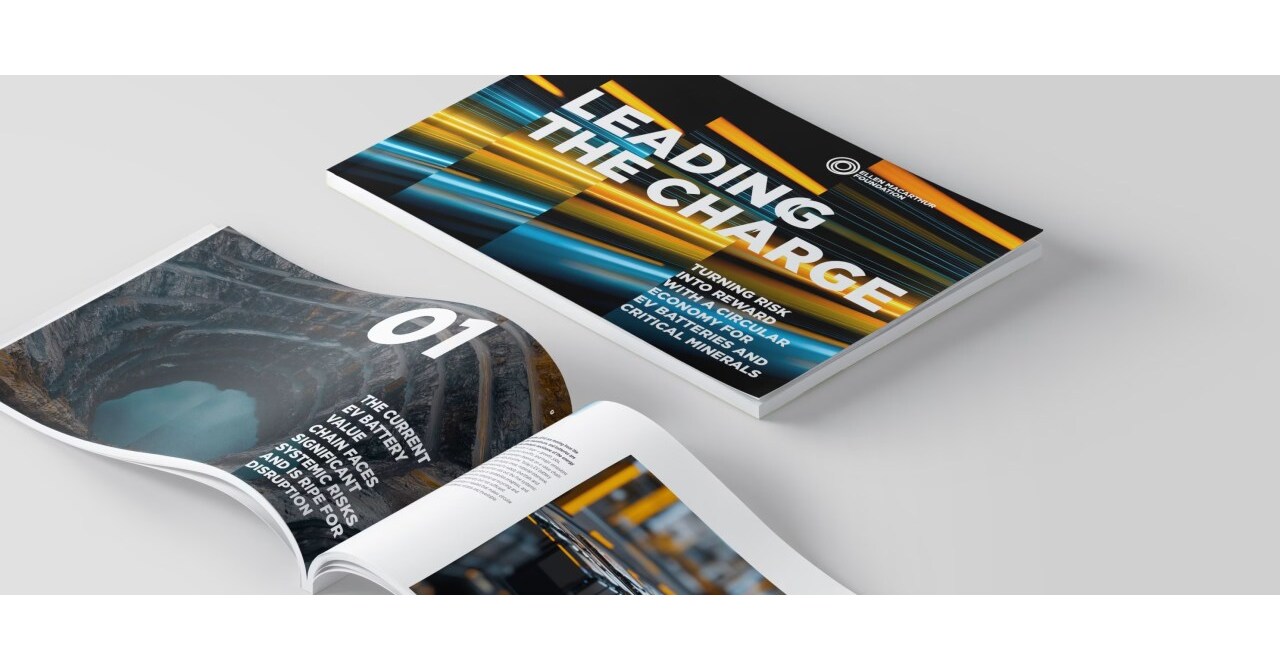
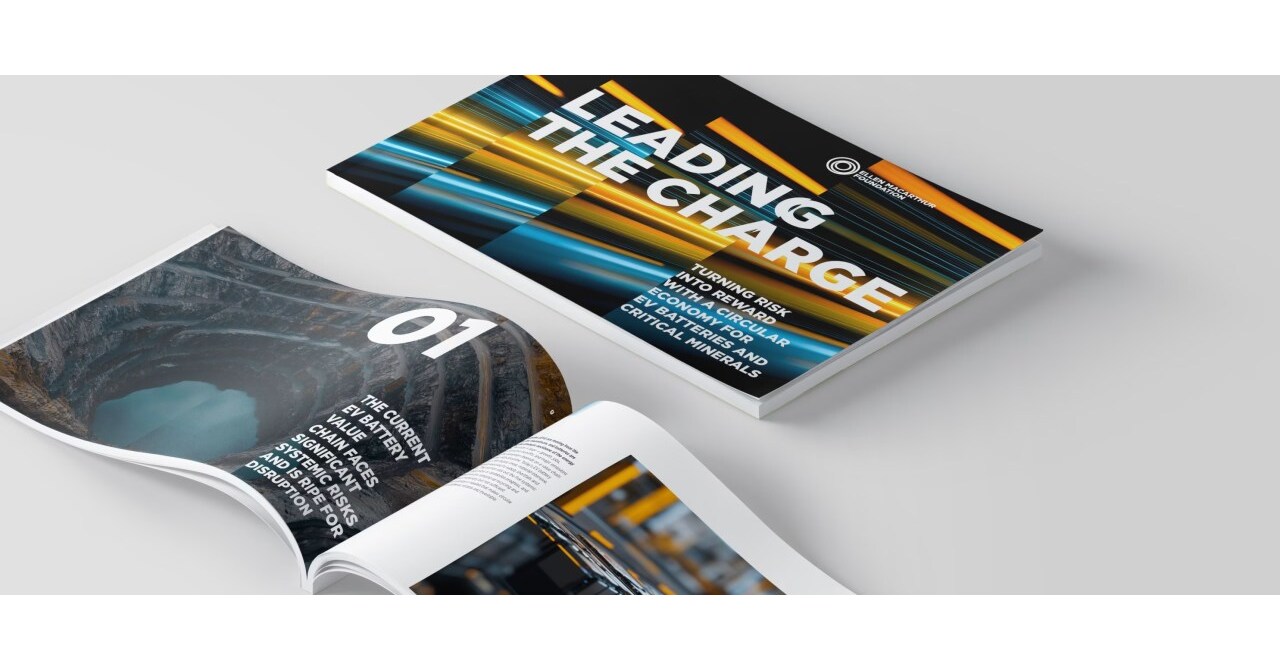
Core Insights - The article discusses a white paper released by the Ellen MacArthur Foundation during the World Economic Forum 2026, which presents an integrated and actionable plan for a circular economy in electric vehicle (EV) batteries and critical minerals, marking a significant milestone in collaboration between CATL and the foundation [1][2]. Group 1: Circular Economy Framework - The report outlines a clear, industry-backed direction for designing, using, recycling, and reusing EV batteries to maximize their value and reduce systemic risks across the value chain [2]. - CATL, as a founding strategic partner of the Critical Minerals Mission, has closely collaborated with the foundation and other industry stakeholders to translate circular economy principles into practical, actionable measures based on real operational experiences [2][3]. - The roadmap supports CATL's global commitment to circular energy, aiming to decouple battery production growth from the extraction of new raw materials [2][3]. Group 2: Environmental and Economic Benefits - The circular battery system for EVs is expected to bring opportunities in environmental sustainability, economic growth, product innovation, and broader value creation [2]. - By keeping batteries and their critical minerals in use for multiple life cycles, the demand for newly mined materials decreases, emissions are reduced, and the integration of renewable energy sources is supported [2][3]. - Economic value is enhanced through improved material efficiency, reduced waste, and operational costs, while new revenue sources are created [2][3]. Group 3: Implementation and Practices - CATL has already implemented these systemic practices across all its operations, managing batteries as centrally managed assets to increase utilization, enable planned maintenance, and ensure predictable returns at the end of their life cycle [4]. - The company operates over 1,000 battery swapping stations for passenger vehicles and more than 300 for commercial vehicles, supported by a growing ecosystem of over 100 partners [4][5]. - CATL's recycling operations achieve a recycling rate of 99.6% for nickel, cobalt, and manganese, and 96.5% for lithium, with processing capacity expanding to 270,000 tons per year [5]. Group 4: Strategic Recommendations - The white paper identifies five interconnected measures necessary for maintaining high material value in batteries and enhancing system resilience [3][7]. - These measures include designing batteries with a focus on circular economy principles, reassessing battery service within optimized energy mobility systems, expanding circular business models treating batteries as long-term assets, building and co-financing regional circular infrastructure, and enabling circular operational systems through data, standards, and policies [7]. Group 5: Future Directions - CATL emphasizes the need to expand circular battery systems across regions, industries, and applications, adapting to various market conditions [8]. - The agenda is a foundational aspect of CATL's journey towards carbon neutrality, following its achievement of carbon neutrality in all battery manufacturing plants and aiming for carbon neutrality across the entire value chain by 2035 [8].


CATL und die Ellen Macarthur Foundation geben mit wegweisendem Whitepaper die Richtung für kreislauffähige EV-Batterien vor
Prnewswire· 2026-01-25 03:22
Core Insights - The article discusses a whitepaper released by the Ellen MacArthur Foundation at the World Economic Forum 2026, which presents an integrated, actionable roadmap for a circular economy in EV batteries and critical minerals [1][2] Group 1: Circular Economy Roadmap - The whitepaper outlines a clear, industry-oriented direction for constructing, using, recovering, and recycling EV batteries to maximize their value and reduce systemic risks across the value chain [2] - It emphasizes the collaboration between CATL and the Foundation, translating circular economy principles into practical measures based on real operational experiences [3] Group 2: Environmental and Economic Opportunities - A circular EV battery system can provide significant opportunities in environmental, economic, product development, and overall value creation by reducing the need for newly mined materials, lowering emissions, and promoting renewable energy integration [4] - The economic value is enhanced through improved material efficiency, reduced waste and operating costs, and the creation of new revenue streams, while also strengthening supply chain resilience [4] Group 3: Key Measures for Circularity - The whitepaper identifies five interconnected actions necessary to maintain battery materials in high-quality use and strengthen system resilience [5] - CATL is already implementing these measures at a system level across its operations, managing batteries as centrally controlled assets to increase utilization and ensure predictable returns at the end of their lifecycle [5][6] Group 4: Recycling and Emission Reduction - CATL's recycling activities achieve recovery rates of 99.6% for nickel, cobalt, and manganese, and 96.5% for lithium, with processing capacity expanded to 270,000 tons per year [6] - The company is also utilizing alternative chemicals like sodium-ion batteries and reducing lifecycle carbon emissions per kilowatt-hour by up to 60%, enhancing circular performance in mobility, exchange, and energy storage [6] Group 5: Strategic Goals and Future Collaboration - The report marks a significant milestone in the collaboration between CATL and the Foundation to accelerate the circular economy for critical minerals, with a focus on reviewing these approaches in real environments [9] - CATL aims for CO2 neutrality in all its battery plants and targets CO2 neutrality across its entire value chain by 2035, aligning with the broader agenda for sustainable energy transition [8][9]
CATL et la Fondation Ellen Macarthur définissent l'orientation des batteries circulaires pour les VE en publiant un livre blanc qui fait date
Prnewswire· 2026-01-25 03:20
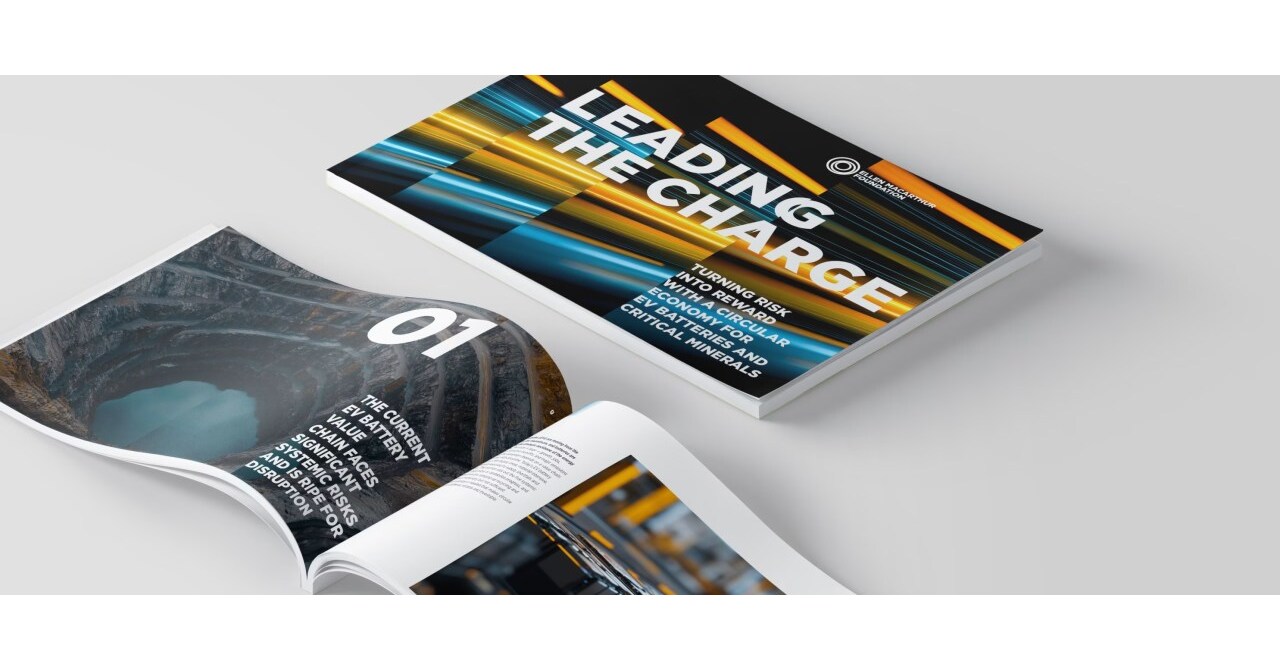
Core Viewpoint - The launch of the white paper by the Ellen MacArthur Foundation at the 2026 World Economic Forum outlines a comprehensive roadmap for a circular economy in electric vehicle (EV) batteries and critical minerals, emphasizing the collaboration between CATL and the Foundation [1][10]. Group 1: Industry Collaboration and Contributions - The report was developed with input from over 30 leading organizations in the EV battery ecosystem, including CATL, DHL, Volvo, and JLR, as well as research institutes and NGOs, providing a clear industry-based direction for battery design, usage, recovery, and reintegration [2]. - CATL, as a founding strategic partner of the Foundation's Critical Minerals Mission, has worked closely with the Foundation and industry peers to translate circular economy principles into practical, deployable actions based on operational experience [3]. Group 2: Environmental and Economic Benefits - A circular battery system for EVs can offer significant opportunities in environmental, economic, product, and value creation areas by maintaining the use of batteries and their essential minerals throughout their lifecycle, thereby reducing the demand for newly extracted materials and emissions [4]. - The circular approach enhances economic value by improving material efficiency, reducing waste and operating costs, and creating new revenue streams while strengthening supply chain resilience and distributing economic benefits more equitably across regions [4]. Group 3: Key Actions for Circular Battery Systems - The white paper identifies five interdependent actions necessary to maintain high-value battery material usage and enhance system resilience, including designing batteries for circularity, rethinking battery maintenance, scaling circular business models, investing in regional circular infrastructure, and enabling circular operations through data and policies [5][7]. - CATL is already implementing these measures at a system-wide scale, managing batteries as centralized assets to increase usage and ensure predictable returns at the end of their lifecycle, operating over 1,000 passenger vehicle battery swap stations and more than 300 commercial vehicle swap stations [5][6]. Group 4: Future Directions and Goals - The report marks a significant step towards a global circular economy for batteries, with a call for scaling circular battery systems across regions, industries, and applications, from electric vehicles to energy storage [9]. - CATL aims to achieve carbon neutrality across all its battery factories and the entire value chain by 2035, aligning its agenda with the broader energy transition goals [9].
喜娜AI速递:昨夜今晨财经热点要闻|2026年1月25日
Sou Hu Cai Jing· 2026-01-24 22:22
Group 1 - Foreign public funds are focusing on China's technology sector, with several products achieving over 50% net value growth in 2025, indicating significant investment opportunities in high-end manufacturing and AI [2] - The U.S. Treasury bonds are facing sell-offs from multiple countries, including India, which has reduced its holdings to a five-year low, raising concerns about the U.S. fiscal situation and investor confidence in dollar assets [2] - Zhongji Xuchuang has become the top holding stock for public funds, indicating a shift in industry allocation towards non-ferrous metals and communications, while reducing exposure to electronics and pharmaceuticals [2] Group 2 - Silver prices have surpassed $100 per ounce, and gold is nearing $5000 per ounce, driven by geopolitical uncertainties and expectations of interest rate cuts by the Federal Reserve, leading to increased demand for precious metals [3] - The investment in power grids is expected to boost the electricity sector, with a significant investment plan of 4 trillion yuan by the State Grid, benefiting companies like China Xidian, which has seen its stock price rise over 75% this year [3] - Several A-share companies, including Xinqianglian and Yongchuang Intelligent, have announced substantial profit increases, with Xinqianglian projecting a net profit growth of 1093.07% - 1307.21% due to a recovery in the wind power sector [3] Group 3 - Public funds have adjusted their holdings in response to market conditions, with a preference for technology stocks and increased allocations in sectors like non-ferrous metals and chemicals [4] - Elon Musk introduced the concept of a "prosperity" era at the Davos Forum, predicting that robots and AI will drive explosive economic growth, while highlighting electricity as a key development constraint [5] - The probability of Rick Riedel being elected as the new Federal Reserve Chairman has risen to 54%, with his focus on labor markets and interest rate cuts attracting attention [5] - Jing Sheng Co. plans to acquire 100% of Zhun Intelligent for 857 million yuan to enhance its semiconductor industry chain, indicating strategic growth through acquisitions [5]


2025Q4基金持仓分析:Q4基金动向:增配AI基建与价值股
GUOTAI HAITONG SECURITIES· 2026-01-24 15:20
Group 1 - In Q4 2025, active equity funds significantly reduced their holdings in A-shares and Hong Kong stocks, while increasing allocations in cyclical and financial value stocks, with consensus on increasing positions in non-ferrous metals and non-bank financials [5][8] - The allocation to technology showed internal differentiation, with AI hardware infrastructure being favored, while TMT, pharmaceuticals, and military industries were reduced [5][8] - The overall market capitalization of active equity funds decreased by 195.65 billion to 3.38 trillion, with stock positions dropping to 84.2%, indicating a shift towards lower valuation and improving cyclical and financial sectors [5][8] Group 2 - The industry allocation saw a comprehensive increase in cyclical financials, with significant increases in non-ferrous metals, communications, non-bank financials, machinery, and basic chemicals, while media, electronics, new energy, pharmaceuticals, and military industries were reduced [5][28] - The allocation to communication equipment was notably increased, driven by AI infrastructure investments, while most technology sectors experienced significant reductions [5][28] - In the consumer sector, essential consumption was reduced, particularly in liquor and feed, while leisure food saw a notable increase [5][28] Group 3 - In the Hong Kong market, active funds significantly reduced their allocations, with a market capitalization decrease of 86 billion to 295.2 billion, and the allocation ratio dropping to 15.6% [5][28] - The funds increased their positions in cyclical and financial sectors, such as insurance, oil, airlines, and non-ferrous metals, while reducing positions in internet and semiconductor leaders [5][28] - The issuance of funds is expected to reach an inflection point, supporting further market growth, with a high percentage of funds achieving positive returns over various time frames [5][28]




重仓股的此消彼长:在加速变化的世界里 投资未来
Shang Hai Zheng Quan Bao· 2026-01-24 14:03
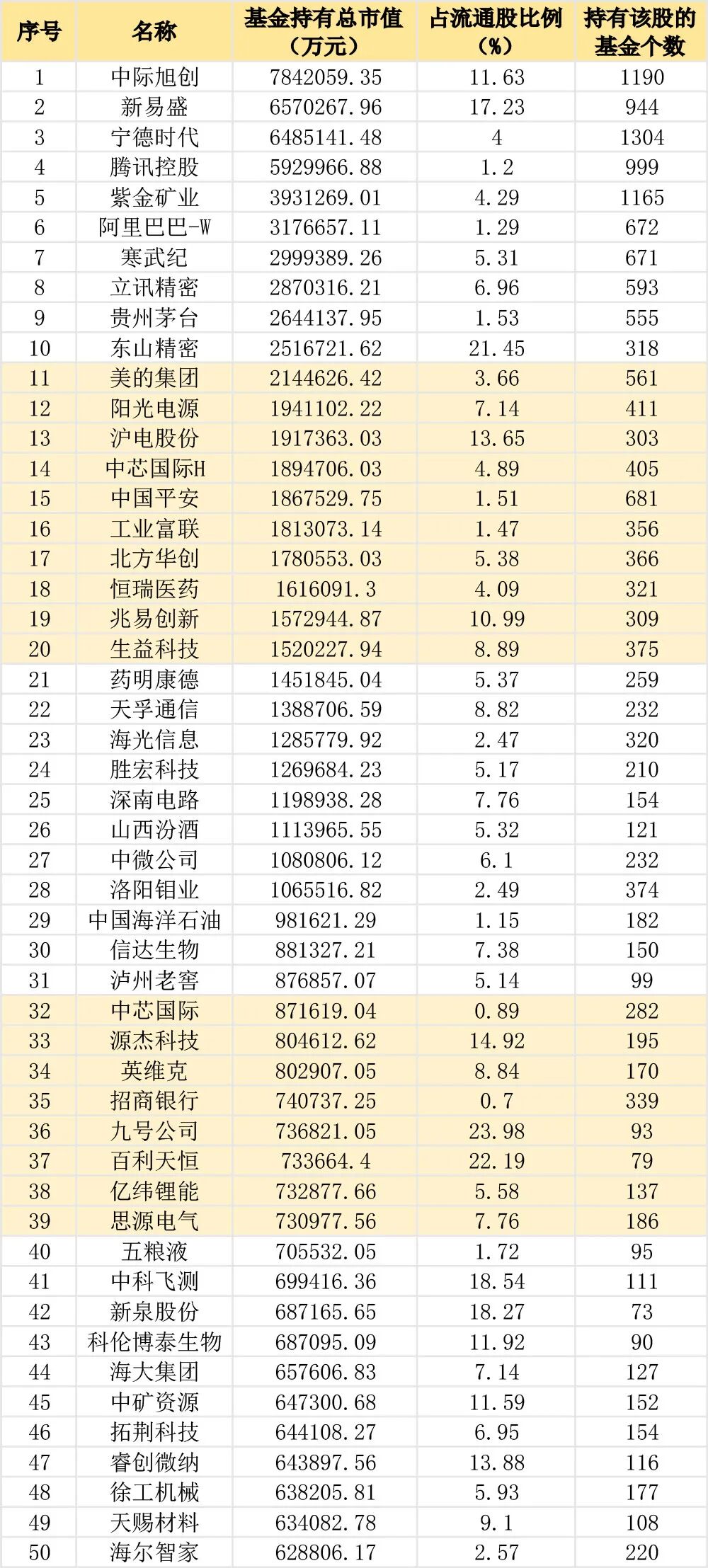
Group 1 - The core focus of the article is the significant shift in public fund holdings towards AI-related stocks, with Zhongji Xuchuang and Xinyi Sheng emerging as the top two holdings, reflecting a broader trend of investment in technology and innovation [1][2][13] - By the end of 2025, the top five holdings in public funds include several AI-related companies, indicating a strong preference for technology stocks over traditional sectors [2][5] - The article highlights the decline of traditional consumer and pharmaceutical stocks, with Kweichow Moutai dropping to the ninth position among top holdings, showcasing a shift in investor sentiment [5][6] Group 2 - The report indicates that 18 out of the top 50 public fund holdings are in the information technology sector, underscoring the dominance of tech stocks in current investment strategies [2][4] - The rise of AI stocks is contrasted with the fading popularity of traditional sectors, as only 11 consumer and pharmaceutical companies remain in the top holdings, reflecting a significant industry transformation [5][6] - The article emphasizes that the changes in fund holdings are indicative of deeper economic and industry shifts, moving from traditional growth models to innovation-driven growth [6][7][17] Group 3 - Zhongji Xuchuang's rise to the top position among public fund holdings signifies the transition of AI from a conceptual phase to a core industry driver, marking a new economic cycle centered around AI [13][14] - The article discusses the necessity for fund managers to adapt to the evolving landscape, where understanding industry trends and technological advancements is crucial for investment success [16][17] - The investment community is increasingly recognizing AI as a critical area for future growth, with fund managers acknowledging the importance of engaging with AI technologies in their portfolios [15][16]


2025年四季报公募基金十大重仓股持仓分析
Huachuang Securities· 2026-01-24 12:42
Market Performance - Since October 2025, major indices have shown upward volatility, with the CSI 2000, CSI 500, and National CSI 2000 all achieving over 10% gains, while the Shanghai Composite Index has repeatedly surpassed 4000 points, reaching recent highs[1] - The top five performing sectors in Q4 2025 were non-ferrous metals (33.48%), national defense and military industry (28.59%), oil and petrochemicals (25.94%), basic chemicals (18.59%), and building materials (18.01%)[1] Fund Establishment and Positioning - A total of 100 new actively managed equity funds were established in Q4 2025, with a total share of 604.71 billion[2] - The average stock positions of various types of actively managed equity funds decreased compared to Q3 2025, with mixed equity funds averaging 88.69% (down 1.05%) and ordinary stock funds at 90.52% (down 0.52%)[3][31] Industry Distribution - The sectors with increased holdings of over 10 billion included non-ferrous metals, communication, basic chemicals, and non-bank financials, while sectors with decreased holdings included pharmaceuticals, computers, electronics, power equipment and new energy, and media[4] - The top five heavy-weight sectors for actively managed equity funds in Q4 were electronics (22.89%), communication (11.14%), power equipment and new energy (9.29%), pharmaceuticals (8.1%), and non-ferrous metals (8.09%) with notable increases in non-ferrous metals (up 2.08%) and communication[4][47] Individual Stock Analysis - The top five stocks with the largest increases in holdings were Zhongji Xuchuang, Dongshan Precision, China Ping An, Xinyi Technology, and Shengyi Technology[5] - The largest reductions in holdings were seen in Industrial Fulian, Yiwei Lithium Energy, Ningde Times, Luxshare Precision, and Focus Media[5] Billion Fund Holdings - As of January 22, 2026, there were 31 funds with over 10 billion in assets, a decrease of 3 from the previous quarter, with significant changes in holdings for companies like Shengyi Technology and Zhongji Xuchuang[6] Hong Kong Stock Holdings - The top three Hong Kong stocks held by funds in Q4 2025 were Tencent Holdings, Alibaba-W, and SMIC, each with a market value exceeding 18 billion, but all saw reductions of over 10 billion compared to the previous quarter[7]
宁德时代:与闽运集团达成战略合作
Xin Lang Cai Jing· 2026-01-24 11:35
Core Insights - Fujian Provincial Automobile Transportation Group Co., Ltd. and Contemporary Amperex Technology Co., Limited (CATL) have signed a strategic cooperation framework agreement in Ningde, Fujian [1] - The collaboration will focus on key areas such as vehicle aftermarket services, urban-level battery swapping network construction, and vehicle-to-grid interaction technology [1] - The partnership aims to build a sustainable industrial ecosystem, promote the deep integration of new energy technology with urban public transportation systems, and contribute to optimizing urban energy structure and achieving "dual carbon" goals [1] Group 1 - The strategic cooperation agreement was signed in Ningde, Fujian [1] - The focus areas of the collaboration include vehicle aftermarket services and urban battery swapping networks [1] - The partnership aims to contribute to the green transformation of public transportation [1]
长江新能源产业混合型A:2025年第四季度利润1224.32万元 净值增长率10.18%
Sou Hu Cai Jing· 2026-01-24 08:44
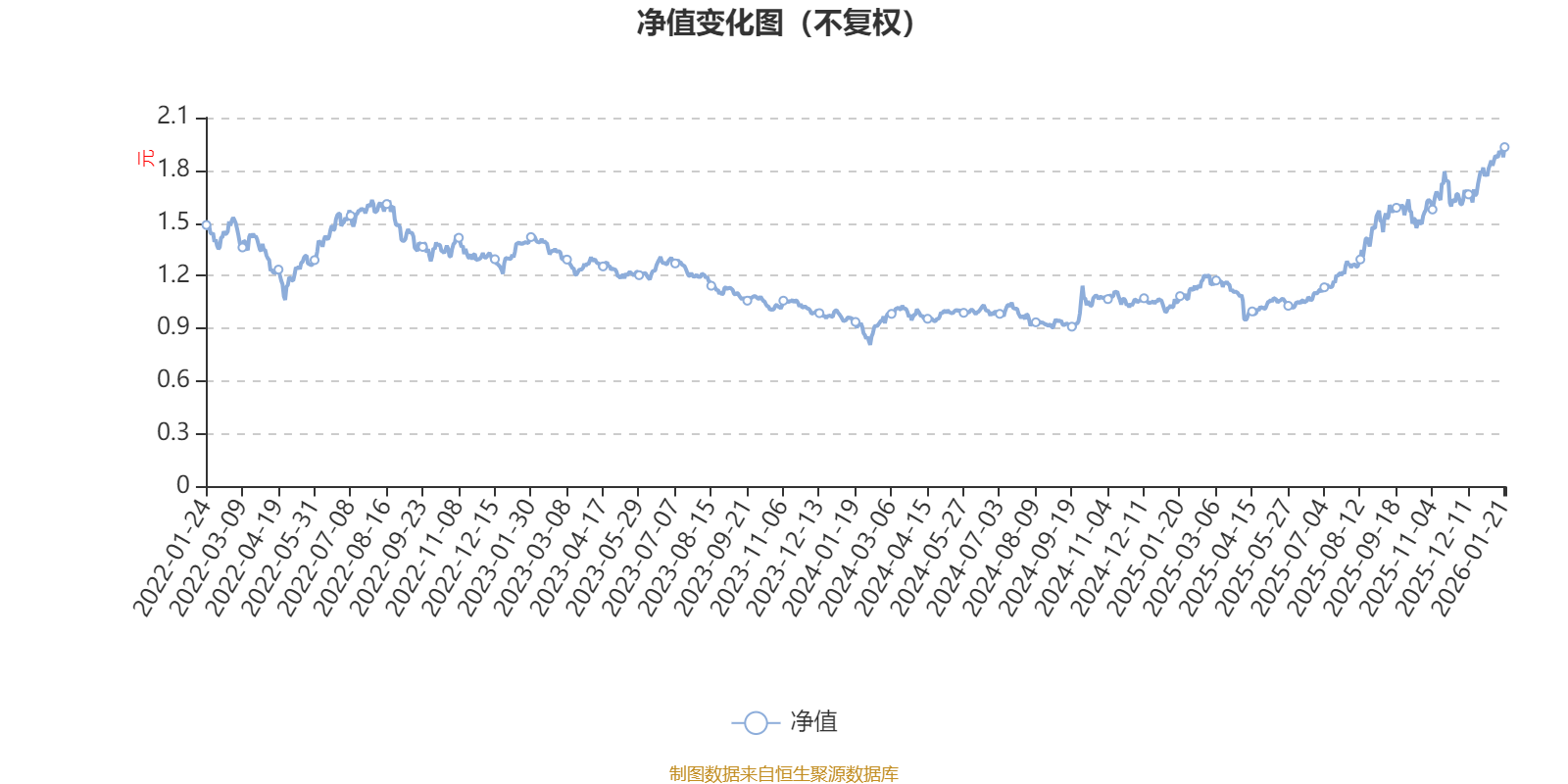
Core Insights - The AI Fund Changjiang New Energy Industry Mixed A (011446) reported a profit of 12.24 million yuan for Q4 2025, with a weighted average profit per fund share of 0.1594 yuan. The fund's net value growth rate for the reporting period was 10.18%, and the fund size reached 123 million yuan by the end of Q4 2025 [2][13]. Fund Performance - As of January 21, the fund's unit net value was 1.932 yuan. Over the past year, the fund achieved a cumulative growth rate of 76.8%, outperforming its peers [2]. - The fund's performance over different time frames includes a 27.27% growth rate over the past three months, ranking 7 out of 621 comparable funds, and a 59.78% growth rate over the past six months, ranking 27 out of 621 [3]. Investment Strategy - The fund focuses on the new energy industry and its upstream and downstream sectors, seeking opportunities in supply-demand reversals and technological advancements within the industry. The management plans to continue tracking and identifying investment opportunities in these areas [2]. Risk Metrics - The fund's Sharpe ratio over the past three years is 0.6629, ranking 173 out of 526 comparable funds [7]. - The maximum drawdown over the past three years was 43.48%, with the largest single-quarter drawdown occurring in Q2 2022 at 21.13% [9]. Portfolio Composition - As of December 31, the fund's average stock position over the past three years was 78.37%, compared to the industry average of 85.83%. The fund reached its highest stock position of 86.26% at the end of 2021 and its lowest of 72.55% by the end of Q3 2024 [12]. - The top ten holdings of the fund include Tianqi Lithium, Huayou Cobalt, CATL, Tianhua New Energy, Yongxing Materials, China National Materials, Liyuanheng, Guoci Materials, Sifang Co., and Keda Technology [16].



出货量刚过3万吨,磷酸锰铁锂迎数十倍扩产潮
高工锂电· 2026-01-24 07:50
Core Viewpoint - The LMFP (Lithium Manganese Iron Phosphate) market is poised for explosive growth in 2025, with a projected shipment increase of 275% year-on-year, despite current production capacity exceeding actual demand. The expansion efforts by leading companies indicate a strong belief in the material's potential [2][11]. Group 1: Market Dynamics and Growth - In 2025, the domestic LMFP shipment volume is expected to exceed 30,000 tons, marking a significant increase from previous years, driven by technological advancements and performance improvements [2][11]. - Major companies like Hunan YN and others are investing heavily in LMFP production, with plans to significantly increase capacity, indicating confidence in future demand [1][10]. - The LMFP market is projected to reach 80,000 tons by 2026, with expectations of further growth to 500,000 tons by 2030, translating to a market size exceeding 20 billion yuan [11][14]. Group 2: Technological Advancements - Companies have made significant breakthroughs in LMFP technology, addressing previous performance limitations such as low density and poor cycle life, which have historically hindered its adoption [4][5]. - Innovations like the second-generation LMFP battery from Guoxuan High-Tech have improved energy density and charging capabilities, enhancing the battery's appeal for electric vehicles [5][6]. - The introduction of new manufacturing processes, such as solid-phase synthesis, has improved the material's conductivity and stability, further supporting its commercialization [5][6]. Group 3: Application and Market Penetration - LMFP batteries are now being utilized in various applications, including passenger and commercial vehicles, with significant adoption rates in the light vehicle sector [6][7]. - The low-temperature performance of LMFP batteries allows for broader application, particularly in colder climates, enhancing their competitiveness in the market [9][10]. - Companies like EVE Energy and Guoxuan High-Tech are successfully integrating LMFP materials into their product lines, indicating a shift towards more advanced battery technologies [7][9]. Group 4: Cost and Supply Chain Considerations - The cost advantages of LMFP, due to the abundance of manganese compared to nickel and cobalt, allow for a 10%-15% reduction in battery costs when mixed with high-nickel materials [10][15]. - The rapid expansion of LMFP production capabilities, with over 30 companies involved, is creating a competitive landscape that benefits downstream battery manufacturers [10][15]. - The supply chain for manganese is becoming increasingly critical, as demand for LMFP rises, necessitating strategic partnerships for resource acquisition [17].