CATL(300750)

Search documents
公募基金仓位再均衡,周期行业配置上行
Guolian Minsheng Securities· 2026-01-25 11:05
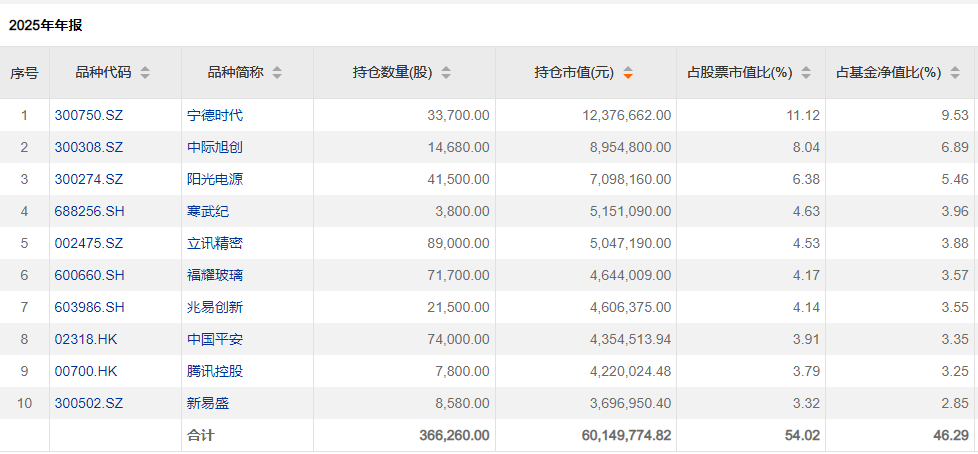
1. Report Industry Investment Rating - Not provided in the content 2. Core Viewpoints of the Report - Overall, the positions of public funds decreased, and the concentration remained stable. The positions of public funds decreased slightly, the concentration of heavy - holding stocks was relatively stable, and the profit - making effect of heavy - weight stocks was average. The allocation of the GEM increased, the allocation of the main board decreased, and the allocation of the STAR Market was stable. The allocation of Hong Kong stocks fell back to around 16% [4]. - In terms of scale, the scale and share of public funds contracted again. In the fourth quarter, the management scale and share of funds both declined, with the share contraction reaching around 10%. All funds of different scales switched from mandatory consumption and TMT to cyclical industries [4]. - At the industry level, TMT was overall under - allocated, with the under - allocation ratios of electronics, computer, and media exceeding 1%. The allocation of the communication industry continued to increase, but the number of shares held in leading targets was reduced. The cyclical industry as a whole rose rapidly, with obvious over - allocation in non - ferrous metals and chemicals, and the positions of public funds began to re - balance. The allocation ratios of non - banking and machinery also increased significantly [5]. 3. Summary According to the Directory 3.1 Position Decrease and Stable Concentration - In the fourth quarter of 2025, funds reduced their positions in the main board and the STAR Market and increased their positions in the GEM. Compared with the third quarter of 2025, the heavy - position allocation ratio of the main board decreased by 1.41 percentage points to 65.40%, and the GEM increased by 1.71 percentage points to 20.85% [18]. - The proportion of Hong Kong stock positions decreased. The overall stock market value ratio of four types of active stock - type funds decreased slightly. The proportion of stocks in the total fund asset value decreased to 84.22% month - on - month, the proportion of bonds increased to 4.17% month - on - month, and the cash ratio increased [24]. - The concentration of fund positions was relatively stable, and the profit - making effect of heavy - holding individual stocks was average. The average return of the top ten heavy - holding stocks in the third quarter in the fourth quarter of 2025 reached 2.0%, slightly outperforming the - 1.1% of the common stock - type fund index. The top 50 shareholding concentration of funds in the fourth quarter of 2025 reached 43.7% [25][27]. - The allocation of leading companies increased slightly. In the fourth quarter of 2025, the proportion of positions held by funds in first - tier/second - and third - tier leading companies increased by 1.34 and 0.66 percentage points respectively compared with the third quarter of 2025, reaching 26.96% and 15.86%. Overall, the concentration of leading companies increased, and the allocation of both first - tier and second - and third - tier leading companies rebounded. In terms of industries, funds mainly increased their positions in leading companies in the communication, non - banking, and non - ferrous industries in the fourth quarter, and mainly reduced their positions in leading companies in the power - new, pharmaceutical, and electronics industries [30]. 3.2 Contraction of Public Fund Scale and Share - The overall management scale and share of public funds contracted synchronously. The scale of funds of all sizes was declining, and the share of funds of all sizes was also contracting. The direction of position adjustment of large and small public funds was relatively consistent, and all funds of different sizes switched from mandatory consumption and TMT to raw materials, with large differences in optional consumption and manufacturing [71][76][84]. 3.3 Reduction in Manufacturing, Consumption, and Technology, and Increase in Cyclical Industries - In the fourth quarter, funds significantly increased their positions in raw materials and finance and reduced their positions in information technology and medicine. The allocation of the raw material sector increased by 3.6%, the allocation of the financial sector increased by 1.1%, the allocation of the information technology sector decreased by - 3.0%, and the allocation of the pharmaceutical sector decreased by - 1.6% [34]. - In terms of the heavy - position allocation ratio, the heavy - position allocation ratios of non - ferrous metals, communication, chemicals, and non - banking increased the most in the fourth quarter. In contrast, the ratios of computer, medicine, electronics, and media decreased the most. In terms of the over - allocation ratio, the over - allocation ratios of electronics, communication, non - ferrous metals, and power - new were the highest in the fourth quarter. Banks, non - banking, public utilities, and computers were significantly under - allocated [35]. - At the secondary industry level, the heavy - position allocation ratios of communication equipment, industrial metals, insurance, and rare metals increased significantly in the fourth quarter. The heavy - position allocation ratios of computer equipment, new - energy power systems, chemical pharmaceuticals, cultural entertainment, and semiconductors decreased significantly [57][61]. 3.4 Sector - by - Sector Configuration Details - **Metal Sector**: The upstream heavy - position allocation ratio of the metal sector increased overall. The allocation ratio of coal increased by 0.04 percentage points to 0.32% in the fourth quarter, the allocation ratio of petroleum and petrochemicals increased by 0.22 percentage points to 0.67%, the allocation ratio of non - ferrous metals increased by 2.11 percentage points to 8.13%, and the allocation ratio of steel increased by 0.15 percentage points to 0.53% [93][97]. - **Power - New Sector**: The heavy - position allocation ratio of the power - new sector decreased. The allocation ratio of the power equipment and new - energy sector decreased by 0.88 percentage points to 9.29% in the fourth quarter [122]. - **National Defense and Military Industry Sector**: The heavy - position allocation ratio of the national defense and military industry sector decreased. The allocation ratio of the national defense and military industry decreased by 0.37 percentage points to 2.14% in the fourth quarter [122]. - **Machinery and Equipment Sector**: The heavy - position allocation ratio of the machinery and equipment sector increased. The allocation ratio of machinery increased by 0.51 percentage points to 6.25% in the fourth quarter [126]. - **Food and Beverage Sector**: The heavy - position allocation ratio of the food and beverage sector decreased. The allocation ratio of the food and beverage sector decreased by 0.45 percentage points to 4.37% in the fourth quarter [160]. - **Home Appliance Sector**: The heavy - position allocation ratio of the home appliance sector increased. The allocation ratio of home appliances increased by 0.08 percentage points to 2.4% in the fourth quarter [160]. - **Medical and Healthcare Sector**: The heavy - position allocation ratio of the medical and healthcare sector decreased. The allocation ratio of medicine decreased by 1.63 percentage points to 8.12% in the fourth quarter [164]. - **Automobile Sector**: The heavy - position allocation ratio of the automobile sector decreased. The allocation ratio of the automobile sector decreased by 0.12 percentage points to 4.27% in the fourth quarter [164]. - **Finance + Real Estate Sector**: The overall allocation ratio of finance increased. The allocation ratio of banks increased by 0.04 percentage points to 1.88% in the fourth quarter, the allocation ratio of real estate decreased by 0.31 percentage points to 0.27%, the allocation ratio of non - banking financial increased by 1.03 percentage points to 2.52%, and the allocation ratio of comprehensive finance decreased by 0 percentage points to 0% [169][173]. - **TMT Sector**: The overall allocation ratio of TMT decreased significantly, and only the allocation ratio of communication increased. The allocation ratio of electronics decreased by 1.27 percentage points to 22.8% in the fourth quarter, the allocation ratio of computer decreased by 1.71 percentage points to 2.75%, the allocation ratio of communication increased by 1.86 percentage points to 11.06%, and the allocation ratio of media decreased by 1.14 percentage points to 1.35% [196][199]. - **Hong Kong Stock Sector**: The allocation ratio of Hong Kong stocks decreased. The allocation ratio of Hong Kong stocks fell back to around 16% [4].


宁德时代落子北京;湖南裕能单季净利暴涨500%;璞泰来业绩预喜;五粮液储能项目第二次开标;天华新能港股IPO;刚果(金)向美提供矿产清单
起点锂电· 2026-01-25 11:00
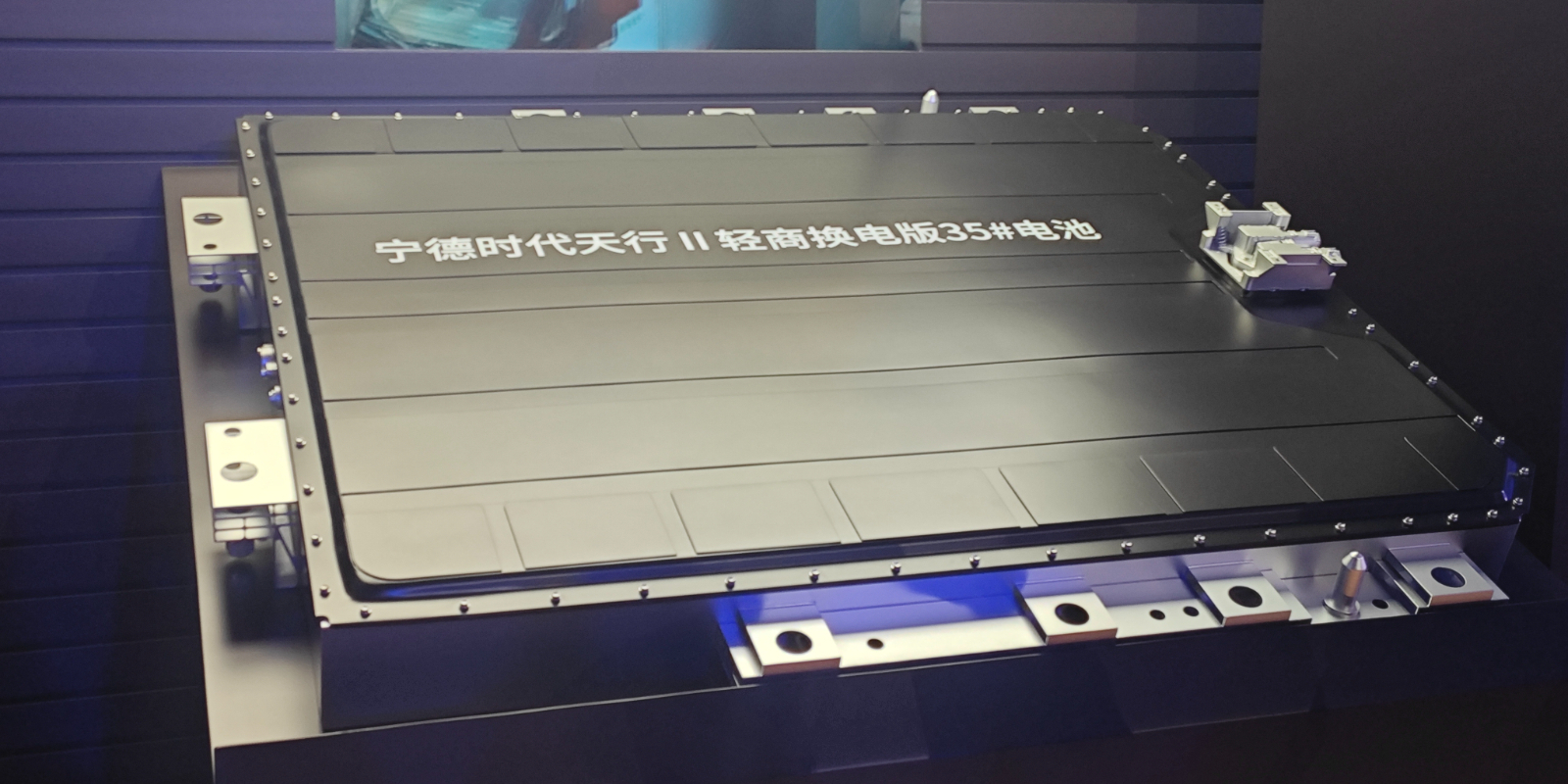
Group 1 - CATL launched the "Tianxing II" light commercial series solution, introducing the first intelligent battery management application for the light commercial vehicle industry, aiming to break the standardization bottleneck and promote customized operations in the new energy light commercial vehicle sector [3] - CATL is rapidly advancing the construction of a 15GWh battery factory in Beijing with an investment of 4 billion yuan, indicating imminent project implementation [5] - CATL, along with partners, established Beijing Times Power Battery Co., Ltd. with a registered capital of 1 billion yuan, where CATL holds a 51% stake responsible for the factory's construction and operation [6] Group 2 - Penghui Energy expects to turn a profit in 2025 with a projected net profit of 170 million to 230 million yuan, driven by increased sales orders and revenue growth [7] - The second phase of the Xiamen Times project is set to produce 30GWh of battery cells, with construction expected to be completed by Q2 of this year [8] - The Chongqing project by Ruipu Lanjun-Saike Technology aims for an initial capacity of 12GWh, with total investment of 10 billion yuan and expected annual output value of 26 billion yuan upon full production [9] Group 3 - EVE Energy was recognized as the world's first cylindrical battery lighthouse factory, achieving certification for its advanced manufacturing and digital solutions [10][11] - Portugal signed six investment agreements totaling 30.77 billion euros, with four projects related to battery materials and electric vehicles, aimed at promoting energy transition [12] - Xiamen New Energy and Quan Feng Holdings signed a strategic cooperation memorandum to focus on lithium battery technology innovations [13] Group 4 - The Xiangdong lithium battery project in Hebei has been publicly accepted, with a total investment of 1.35 billion yuan and plans for a production capacity of 4GW [14] - Trina Solar signed two major projects, including a 250 MW/1 GWh energy storage project in Italy and a supply contract for battery storage systems in Latin America totaling 1.203 GWh [15][16] - Tianhua New Energy is planning an IPO in Hong Kong to enhance its international strategy and financing capabilities [18] Group 5 - Tianqi Lithium is expanding its lithium hexafluorophosphate project with an investment of 300 million yuan, increasing production capacity from 150,000 tons to 280,000 tons [19] - Hunan Youneng expects a significant increase in net profit for 2025, projecting a rise of 93.75% to 135.87% year-on-year [20] - Purtai's net profit for 2025 is expected to increase by 93.18% to 101.58%, driven by strong demand in the energy storage market [21] Group 6 - Rontgen High-Tech's production capacity for its core product has been fully sold out in Q1 2026, prompting the company to seek financing for new production lines [22] - The Democratic Republic of Congo submitted a shortlist of state-owned mineral assets to the U.S. for evaluation, including various mining projects [23] - Wanhua Chemical is advancing two lithium battery material projects with a total production capacity of 85,000 tons of lithium iron phosphate [24] Group 7 - Hunan Youneng is increasing its production capacity through a stock issuance, raising up to 4.788 billion yuan for new projects [25] - Lichi Intelligent passed the IPO review for its listing on the Growth Enterprise Market [27] - Efei Laser signed a 158 million yuan contract for lithium battery equipment, which is expected to positively impact future financial performance [30]

锂电产业链双周报(2026年1月第2期):宁德时代发布轻商钠电池,固态电池有望应用于太空场景
Guoxin Securities· 2026-01-25 10:45
Investment Rating - The investment rating for the lithium battery industry is "Outperform the Market" (maintained) [1] Core Insights - The lithium battery industry is experiencing a price increase in lithium salts, with carbonate lithium prices reaching 171,000 yuan per ton, up by 31,000 yuan compared to two weeks ago [2] - Major companies in the lithium battery sector are recommended for investment, including CATL, Yiwei Lithium Energy, and others, due to favorable demand and low valuations [2] - Solid-state battery technology is advancing, with various companies announcing projects and collaborations to enhance production capabilities and applications [4][10] Industry Dynamics - Lithium battery prices are on the rise, with significant increases in the prices of ternary cathodes and lithium iron phosphate cathodes, while other components remain stable [2] - The domestic sales of new energy vehicles reached 1,649.1 million units in 2025, a year-on-year increase of 28% [4] - In Europe, new energy vehicle sales in December 2025 reached 324,000 units, a 39% increase year-on-year [4] Company Developments - CATL has launched a sodium battery solution for light commercial vehicles, capable of operating in extreme temperatures [10] - Yiwei Lithium Energy has begun supplying battery products for commercial aerospace applications, indicating a diversification into high-reliability sectors [13] - A strategic cooperation agreement was signed between Enli Power and Enjie, focusing on solid-state battery materials [10] Market Trends - The lithium battery sector saw a 4.4% decline in stock prices over the past two weeks, while battery chemical and specialized equipment sectors experienced increases of 4.1% and 8.3%, respectively [8] - The market is witnessing significant fluctuations in stock prices among key players, with notable increases for companies like Hunan Youneng and Purtai [8] Material Prices - The price of lithium carbonate has increased by 22.1% in the last two weeks, reflecting a broader trend of rising raw material costs in the lithium battery supply chain [16] - The price of lithium iron phosphate has also seen a significant increase of 15.5% recently, indicating strong demand for this material [16]
电力设备行业周报:太空光伏为产业链带来新机遇,宁德时代推出天行II方案
GOLDEN SUN SECURITIES· 2026-01-25 10:24
证券研究报告 | 行业周报 gszqdatemark 2026 01 25 年 月 日 电力设备 太空光伏为产业链带来新机遇,宁德时代推出天行 II 方案 光伏:电池组件价格上涨,太空光伏为产业链带来新机遇。据安泰科,本周多晶硅 n 型 复投料成交价格区间为 5.0-6.3 万元/吨,成交均价为 5.92 万元/吨,环比持平。据 InfoLink,本周 N 型电池片价格如下:183N、210RN 与 210N 均价本周上升至每瓦 0.42 元人民币,183N、210RN 与 210N 价格区间皆为每瓦 0.40-0.43 元人民币。银价飙涨 带动组件成本上升,1 月 21 日,上海期交所白银价格突破 23,000 元人民币/公斤,组 件厂不堪成本堆栈被迫推升报价上涨,当前中国分布式组件报价往每瓦 0.8-0.88 元人 民币价格报价,实际成交价格落在每瓦 0.7-0.8 元人民币不等。近日马斯克在达沃斯世 界经济论坛上宣布:SpaceX 与特斯拉将在三年内于美国实现每年合计 200GW 的太阳 能制造产能。其中,SpaceX 的 40GW 产能将主要适配太空光伏需求,为计划中每年部 署的约 100 万颗太阳能 ...
宁德时代推出“超混电池”,三元与铁锂从对立走向融合?
Jing Ji Guan Cha Wang· 2026-01-25 10:01
Core Viewpoint - CATL has launched the "Tianxing II Light Commercial All-Scenario Customization Solution" along with the "Battery Manager" Tianxing version, featuring the first light commercial super-mixed chemical system battery, which integrates ternary lithium and lithium iron phosphate materials [2][3]. Group 1: Product Features - The Tianxing II Light Commercial Long-Endurance Battery has a single pack capacity of 253 kWh, the largest in the light commercial sector, enabling a real-world range of 800 kilometers [5]. - The battery's warranty has been extended to 10 years or 1 million kilometers, incorporating self-healing lithium anode materials and self-repairing electrolyte technology to enhance battery lifespan [5]. - The super-mixed battery technology aims to overcome the energy density limitations of lithium iron phosphate while avoiding the high costs associated with pure ternary lithium batteries [3][4]. Group 2: Market Context and Strategy - The demand for longer range in electric vehicles is increasing, with projections indicating that by 2025, some extended-range models will feature batteries exceeding 60 kWh, and by 2026, several models, including the Leap D series, will reach around 80 kWh [3]. - CATL plans to first introduce the super-mixed battery in the commercial vehicle sector, as longer distances in intercity delivery require more economical solutions [4]. - The large-scale commercialization of the super-mixed battery is expected to begin in April 2026, marking a significant milestone for the technology [4][6]. Group 3: Technological Innovation - The development of the super-mixed battery involves complex technical challenges, including interface issues between ternary and lithium iron phosphate materials, voltage platform concerns, and electrolyte oxidation-reduction problems [3]. - This innovation complements CATL's previous "dual-core battery" approach, which focuses on the strategic arrangement of different chemical systems to achieve performance synergy [3][4]. - The emergence of super-mixed batteries provides a new developmental perspective for the power battery industry, allowing for the collaborative use of ternary lithium and lithium iron phosphate within the same cell [5].
太空光伏为产业链带来新机遇,宁德时代推出天行II方案
GOLDEN SUN SECURITIES· 2026-01-25 08:33
Investment Rating - The report maintains an "Overweight" rating for the power equipment sector [6] Core Insights - The report highlights new opportunities in the photovoltaic industry driven by space solar power initiatives and rising prices of battery components [1][17] - It emphasizes the importance of supply-side reforms and technological advancements in creating long-term growth opportunities within the industry [1][19] - The report identifies key companies to watch in various segments, including supply chain price increases, new technology growth, and perovskite solar cell developments [1][19][21] Summary by Sections Photovoltaics - The price of multi-crystalline silicon n-type raw materials remains stable, with an average transaction price of 59,200 RMB per ton [17] - N-type battery cell prices have increased to 0.42 RMB per watt, with a price range of 0.40-0.43 RMB per watt [17] - The report notes that rising silver prices have led to increased component costs, with distributed component prices now ranging from 0.70 to 0.80 RMB per watt [17] - SpaceX and Tesla plan to achieve a combined solar manufacturing capacity of 200GW annually in the U.S. within three years, with 40GW dedicated to space solar power [1][18] - Key companies to focus on include Tongwei Co., GCL-Poly, LONGi Green Energy, JA Solar, and Trina Solar for supply-side reform opportunities [1][19] Wind Power & Grid - The Netherlands will launch a 1GW offshore wind project tender in September 2026, with a subsidy budget of approximately 32.45 billion RMB [19][20] - Turkey plans to initiate its first offshore wind tender by the end of 2026, aiming for 5GW of installed capacity by 2035 [19][20] - Southern Power Grid has set a fixed asset investment of 180 billion RMB for 2026, focusing on new power system construction and strategic emerging industries [20] - Companies to watch include Goldwind, Yunda, Mingyang Smart Energy, and Sany Heavy Energy in the wind turbine sector [20] Hydrogen Energy - A ceremony for the operation of 300 hydrogen fuel heavy trucks was recently held, showcasing advancements in hydrogen energy technology [3][21] - The trucks are equipped with a 130kW fuel cell system and can achieve a range of over 600 kilometers [3][21] - Key companies in this sector include Shuangliang Energy, Huadian Heavy Industry, and Shenghui Technology [3][21] Energy Storage - The report forecasts that new energy storage installations in China will reach 58.6GW/175.3GWh in 2025, a year-on-year increase of 38%/60% [4][22] - The average bid price for 2-hour energy storage systems is projected to be 0.55 RMB/Wh in 2025, down 16.9% from 2024 [4][22] - Companies to focus on include Sungrow Power, Canadian Solar, and Kehua Data for large-scale energy storage opportunities [4][22] New Energy Vehicles - CATL launched the "Tianxing II" series solutions for light commercial vehicles, including the industry's first intelligent battery management application [5][27] - The solutions cater to various scenarios, including high-frequency urban distribution and extreme temperature conditions [5][27] - Key companies in the battery sector include CATL, Penghui Energy, and Guoxuan High-Tech [5][29]




公募基金25年Q4配置分析:公募基金四季报是否会影响我们对市场和板块的判断?
广发香港· 2026-01-25 08:28
Core Conclusions - The current fund allocation numbers reflect the results of economic transformation, with a notable shift in the channels through which residents are entering the market, particularly among high-net-worth individuals [12][19] - The allocation towards "new productive forces" indicates a structural shift in the economy, with changes in heavy holdings reflecting different stages of economic dividends [23][29] Asset and Sector Allocation - Fund positions have decreased, with ongoing redemption pressures; net inflows for various fund types were approximately 1200 billion CNY in Q4, down from over 2600 billion CNY in Q3 [12][15] - Active equity funds are experiencing a "return of capital redemption" pressure, with 2563 out of 6471 existing active equity funds exceeding their 2020-2022 high points, representing about 40% of the total [15][19] Industry Allocation - There is a rotation within the technology sector, with increased allocations to non-ferrous metals, non-bank financials, and chemicals, while reductions were seen in electronics, pharmaceuticals, and media [5][51] - The semiconductor and lithium battery materials sectors are highlighted as key areas for increased investment, alongside insurance and chemicals, driven by positive economic expectations [58][65] Individual Stock Allocation - The concentration of holdings has decreased, indicating a diversification in investment strategies among funds [40] Fixed Income Plus Fund Allocation Analysis - "Fixed income plus" funds are becoming a significant source of incremental growth, with a preference for sectors such as non-ferrous metals, non-bank financials, and utilities, reflecting a focus on economic cycle-related and dividend-paying industries [58][65]




锂电产业链双周报(2026年1月第2期):宁德时代发布轻商钠电池,固态电池有望应用于太空场景-20260125
Guoxin Securities· 2026-01-25 07:54
Investment Rating - The investment rating for the lithium battery industry is "Outperform the Market" (maintained) [1] Core Insights - The lithium salt prices have risen, with lithium carbonate priced at 171,000 yuan/ton, an increase of 31,000 yuan/ton compared to two weeks ago [2] - The report highlights the acceleration of solid-state battery industrialization, with various companies announcing significant projects and collaborations [4] - Demand for lithium batteries is expected to remain strong, with several leading companies identified as potential investment opportunities [2] Industry Dynamics - Lithium salt prices have increased, with the current price of lithium carbonate at 171,000 yuan/ton, up 31,000 yuan/ton from two weeks ago [2] - The prices of ternary cathodes and lithium iron phosphate cathodes have also risen, while the prices of anodes, separators, and electrolytes remain stable [2] - The report notes that the price of square ternary power cells has increased by 0.057 yuan/Wh compared to two weeks ago [2] Investment Recommendations - The report suggests focusing on leading companies in the lithium battery industry with low valuations amid strong demand, including CATL, Yiwei Lithium Energy, and others [2] - It also highlights companies leading in the low-altitude economy and robotics sectors, as well as those involved in solid-state and sodium battery materials [2] Solid-State Battery Developments - The solid-state battery industry is advancing, with several companies announcing new projects and collaborations [4] - CATL has released a sodium battery solution for light commercial vehicles, capable of operating at -30°C [4] - Various companies are entering partnerships to enhance solid-state battery technology and production capabilities [10] Market Performance - The lithium battery sector has seen a decline of 4.4% in the past two weeks, while the battery chemicals sector increased by 4.1% [8] - Key individual stocks have shown varied performance, with CATL down 1.5% and Hunan Youneng up 11.2% [8] New Energy Vehicle Data - In December 2025, domestic new energy vehicle sales reached 1.71 million units, a year-on-year increase of 7% [4] - The penetration rate of new energy vehicles in the domestic market reached 52.3%, up 6.5 percentage points year-on-year [4] Charging Infrastructure - As of December 2025, the total number of public charging piles in China reached 4.717 million, with a total power of approximately 17,967 MW [24] - The utilization rate of public charging piles was approximately 6.96%, showing a slight decrease year-on-year [24]

外资巨头,深挖中国科技股
Shang Hai Zheng Quan Bao· 2026-01-25 05:34
Group 1 - The core viewpoint of the articles indicates that foreign public funds are optimistic about the Chinese stock market, particularly in the technology sector, which is expected to undergo a historical value reassessment by 2026, potentially generating excess returns [1][7][10] - Since 2025, the A-share market has shown resilience, with the Shanghai Composite Index stabilizing around 4100 points, and several foreign public fund products have reported significant performance, with net value increases exceeding 50% for multiple funds [3][8] - Foreign public funds have focused their investments on high-quality technology assets, with notable holdings in leading Chinese tech companies such as Tencent, Zhongji Xuchuang, and Han's Laser [3][4][5] Group 2 - Fund managers from various foreign public funds have expressed a commitment to maintaining a high equity position, focusing on growth-oriented investment opportunities in sectors like high-end manufacturing, electric vehicles, and AI technology [5][6] - The outlook for the A-share market in 2026 is positive, with fund managers highlighting the significant allocation value of Chinese stocks compared to RMB bonds, suggesting a continued overweight in equities [8][10] - There is a consensus among fund managers that high-quality technology assets are likely to continue yielding excess returns, with a focus on sectors benefiting from innovation and structural changes in the economy [9][10]




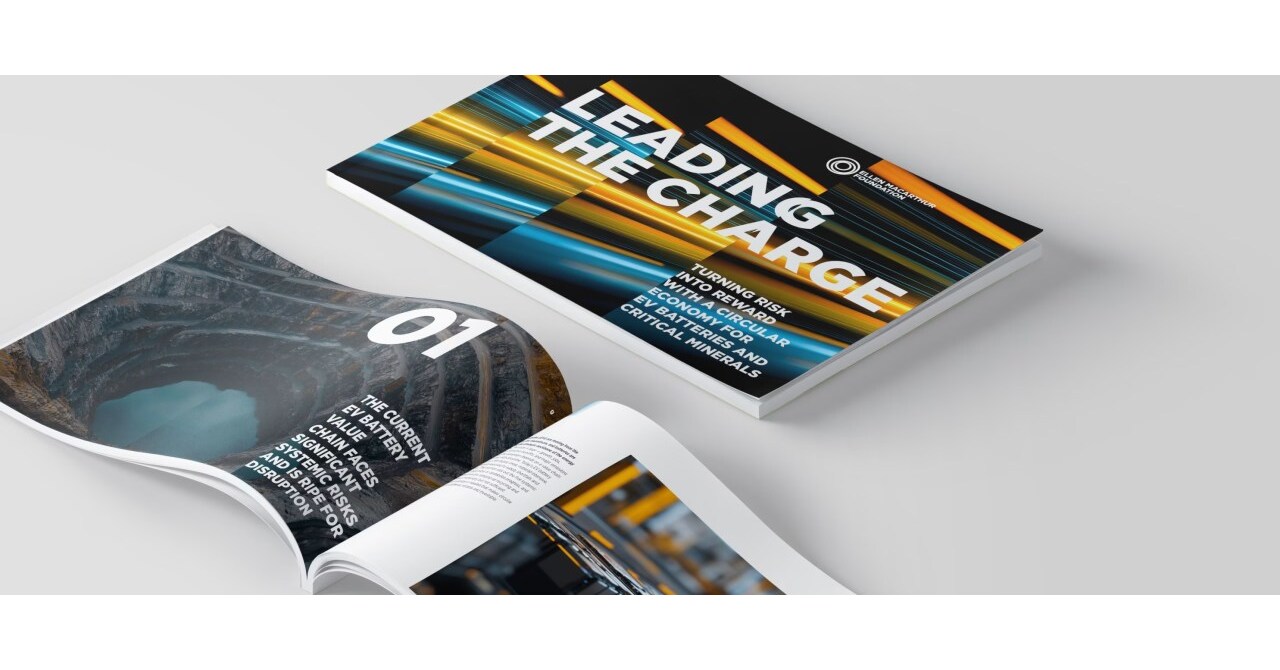
CATL и Ellen Macarthur Foundation установили направление для циркулярных батарей электромобилей с помощью знакового технического документа
Prnewswire· 2026-01-25 03:29
Group 1 - The core viewpoint of the articles revolves around CATL's commitment to sustainability and innovation in the battery industry, as highlighted by its collaboration with the Ellen MacArthur Foundation [1][2] - CATL aims to achieve significant advancements in battery technology and sustainability by 2035, focusing on circular economy principles [2] - The company has reported a remarkable 99.6% recycling rate for its batteries, showcasing its dedication to environmental responsibility [1] Group 2 - CATL's partnerships with major companies such as DHL and Volvo JLR are aimed at enhancing its market position and expanding its influence in the electric vehicle sector [1] - The company is set to increase its production capacity significantly, with plans to produce 1,000 GWh of batteries by 2030, reflecting its growth strategy [1] - CATL's market share in the battery industry has seen a substantial increase, with a reported growth from 96.5% to 270,000 units, indicating strong demand for its products [1]