
LI AUTO(LI)

Search documents
“一体式压铸”维修性差?理想汽车负责人回应
Feng Huang Wang· 2025-12-17 09:32
Group 1 - The head of material technology at Li Auto, Ji Chaochao, responded to concerns about the repairability of integrated die-casting structures, stating that these structures are designed with multiple layers of protection during collisions [1] - In low-speed collisions, typically only the crash beam may be damaged, which can be easily replaced, while higher energy collisions may damage the energy-absorbing box and longitudinal beams, which can also be replaced as a whole [1] - The design of integrated die-casting structures aims to efficiently absorb energy within an appropriate deformation range, and the claim that minor collisions would necessitate a complete vehicle replacement is unfounded [1] Group 2 - International car manufacturers, such as Volvo with its EX90 model, are utilizing integrated die-casting technology, indicating a growing acceptance of this method in the industry [2] - The primary reason for not using integrated die-casting in many domestic vehicles is cost rather than repairability, with lower-cost vehicles typically opting for steel bodies due to their affordability [2] - Some domestic brands in the price range of 200,000 to 400,000 yuan also avoid integrated die-casting, which reflects a "hidden cost advantage" in their manufacturing choices [2]

首批L3准入亮相:自动驾驶进入“有条件上路”阶段
Tai Mei Ti A P P· 2025-12-17 09:26
Core Insights - The issuance of L3 autonomous driving licenses in China is more frequent than expected, with several companies like Changan and BAIC receiving approval, indicating a competitive "license race" [2] - The conditions for the first batch of approved vehicles reveal a controlled testing environment, emphasizing a cautious approach to technology deployment and risk management [2][4] - China's path to L3 autonomous driving is distinct from Germany and the U.S., focusing on a gradual, controlled policy experiment over three years [2][3][6] Regulatory Framework - The regulatory journey began in November 2022 with the Ministry of Industry and Information Technology (MIIT) proposing a management framework for L3/L4 vehicles to address the "responsibility vacuum" in the industry [3] - 2023 marked a breakthrough year for testing licenses, with various companies obtaining approvals, establishing a dual-track testing model [3][6] - The approval process culminated in December 2025, with a comprehensive framework for conditional L3 vehicle production licenses [3][6] Testing Conditions - The approved vehicles, such as Changan's SL03 and BAIC's Alpha S, are restricted to specific routes and speed limits, highlighting a focus on controlled operational environments [4][5] - The vehicles are not sold directly to consumers but operated by designated companies, indicating a shift in responsibility from individual users to operators [4][5] Industry Implications - The conditions for L3 licenses signal a shift from hardware-centric competition to a focus on scenario-specific engineering capabilities and cost control [7][8] - The competition among automakers is now defined by their ability to adapt to specific driving conditions rather than merely enhancing hardware specifications [7][8] Business Model Evolution - The "car company + operating company" model serves as a buffer to explore service pricing and user acceptance within a controlled environment [9] - This model allows for the testing of autonomous driving services while gathering valuable data to inform future pricing strategies [9] Challenges Ahead - The transition to a service-oriented model faces challenges, including balancing technical costs with user value and addressing consumer perceptions regarding subscription services [10] - The long-term commercial viability of L3 technology will depend on expanding operational scenarios, clarifying legal responsibilities, and shifting consumer mindsets [10] Strategic Positioning - China's approach to L3 licensing is part of a broader strategy to establish a domestic supply chain for autonomous driving technologies, reducing reliance on foreign components [11] - The testing of L3 vehicles in controlled environments aims to generate data that can inform future standards and practices in the global automotive industry [11] Future Outlook - The issuance of L3 licenses marks the beginning of a longer journey for automakers, who must now navigate the complexities of expanding their operational scope and transitioning to service providers [12]



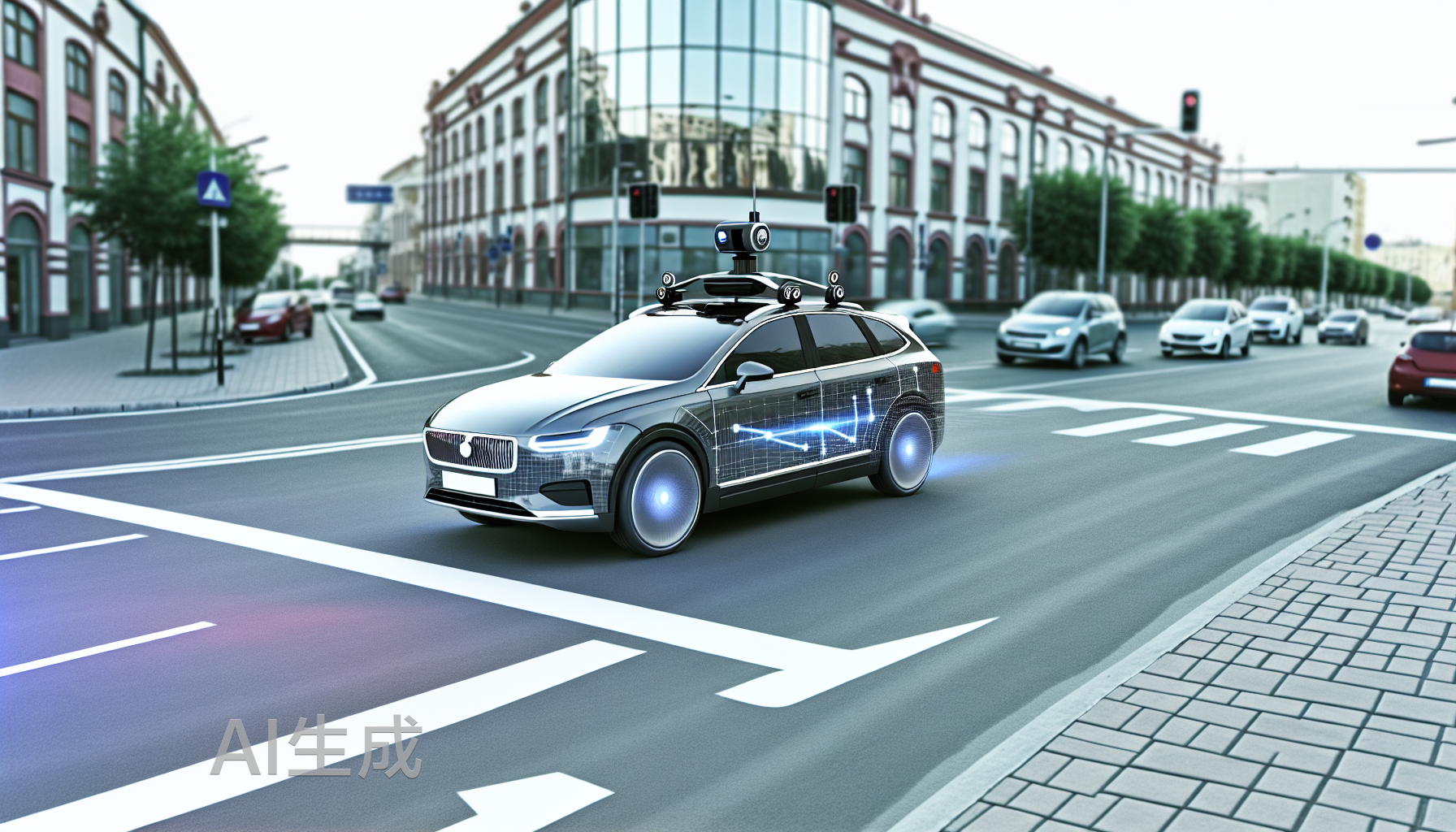
11月深圳篇:2025年主流车企城市NOA试驾报告
Soochow Securities· 2025-12-17 09:00
Investment Rating - The report does not provide specific investment recommendations for individual companies or suppliers in the smart driving sector [2][5][7]. Core Insights - 2025 marks a pivotal year for automotive intelligence, initiating a three-year cycle that will elevate the domestic electrification penetration rate to 50%-80%+ [2]. - Leading smart driving manufacturers have successfully implemented urban NOA (Navigation on Autopilot) experiences, enhancing complex scenario handling and passenger experience [2]. - The report evaluates the smart driving experiences of seven manufacturers through both large sample and small sample road tests, focusing on various dimensions such as scenario implementation and comfort [2][4]. - The performance gap among manufacturers is narrowing, with second-tier manufacturers improving their capabilities significantly compared to Q1 [2]. Summary by Sections Road Test Overview - The report includes both large sample concentrated road tests and small sample in-depth road tests to assess the smart driving capabilities of various models [4][28]. - The concentrated road test was conducted on a fixed route in Shenzhen, covering complex scenarios such as narrow passages and busy intersections [31][67]. Performance Evaluation - The average takeover frequency across the tests was noted, with specific scores assigned to each vehicle based on their performance in various driving scenarios [36][37]. - The report highlights that the Wanjie M7 achieved the highest overall evaluation score, with an average takeover frequency of 0.47, indicating excellent smart driving performance [36][37]. - The performance of the Wei brand Lanshan and Xiaopeng models was also noted, with average takeover frequencies of 1.83 and 2.40, respectively, showcasing their capabilities in complex scenarios [40][42]. Model-Specific Insights - The report details the specific smart driving versions tested, including Huawei ADS 4.0, Xiaopeng XOS 5.7.8, and others, along with their respective performance metrics [12][14][18][19]. - Each model's strengths and weaknesses in handling various driving scenarios were analyzed, with particular attention to their ability to manage complex urban environments [2][67]. Future Outlook - The report anticipates that the advancements in smart driving technology will continue to evolve, with manufacturers focusing on enhancing their systems to better handle complex driving conditions [2][22].




一份信噪比与画面均优质的理想i6生产视频
理想TOP2· 2025-12-17 06:36
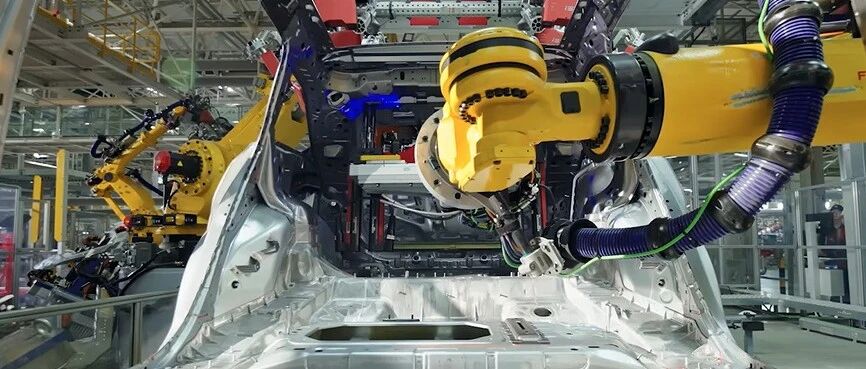
Core Viewpoint - The article highlights the advanced manufacturing processes and technologies employed by the company in the production of the Li Xiang i6 vehicle, showcasing automation, precision, and innovative techniques throughout various production stages. Group 1: Stamping Workshop - The i6 stamping production line features five presses with a maximum pressure of 6,600 tons, utilizing hundred-ton molds [2] - Robots equipped with dual 3D cameras perform high-precision part handling with a positioning accuracy of ±1 mm, ensuring 100% accuracy in part identification and placement [2] Group 2: Welding Workshop - The assembly of high-strength vehicle bodies requires advanced technologies, including dual main assembly processes and hundreds of positioning clamping units for high precision [6] - Robots work collaboratively to complete the main welding processes, enhancing efficiency and accuracy [7] Group 3: Painting Workshop - The vehicle body undergoes cleaning and electrophoresis treatment before painting, ensuring a high-quality finish [12] - High-precision FANUC painting robots, combined with SAMES atomizers, achieve consistent paint application and control over various parameters [15] Group 4: Final Assembly Workshop - Every operation in the final assembly workshop is recorded and uploaded to the cloud, with data retention for up to 15 years [18] - The assembly process includes precise installation of components, such as the air suspension system and tires, utilizing robotic arms for efficiency [21][23] Group 5: Quality Control - The company employs advanced blue-violet light detection technology for surface inspections, ensuring 100% quality checks on vehicle bodies [29] - Professional quality inspectors conduct thorough checks on various aspects, including paint smoothness and component functionality [30] Group 6: Testing - Each Li Xiang i6 undergoes extensive road testing across various terrains, including acceleration and maneuverability tests, to ensure performance standards [33] - The vehicle is subjected to severe weather simulations, including heavy rain tests, to validate its durability and reliability [35]
国联民生证券:L3级自动驾驶商业化加速 行业有望开启发展新阶段
Zhi Tong Cai Jing· 2025-12-17 06:24
Group 1 - The Ministry of Industry and Information Technology officially announced the first batch of L3 conditional autonomous driving vehicle permits in China, marking a significant step towards the commercialization of L3 autonomous driving [1] - Two models, one from Changan Automobile and another from BAIC BluePark, have received conditional approval for L3 autonomous driving capabilities, with specific operational areas designated in Chongqing and Beijing [1] - The Changan SC7000AAARBEV can operate in congested traffic at speeds up to 50 km/h, while the Arcfox BJ7001A61NBEV can operate at speeds up to 80 km/h on designated highways [1] Group 2 - Multiple domestic automakers, including Changan, BYD, GAC, Dongfeng, SAIC, Geely, Xpeng, and Li Auto, have made substantial progress in the L3 autonomous driving sector, with several models receiving road testing permits [2] - Huawei's QianKun Intelligent Driving ADS L3 solution is undergoing internal testing across multiple cities and models, while GAC's A800 has obtained a license for L3 testing at speeds of up to 120 km/h in Guangzhou [2] - The PhiGo Max, developed by 4D Mapping and its subsidiary, is set for mass production in 2026, targeting the high-end L3 intelligent driving market [2]



16家车企仅四成有望达成全年销量目标,新能源汽车与出口成关键因素
Xin Lang Cai Jing· 2025-12-17 03:49
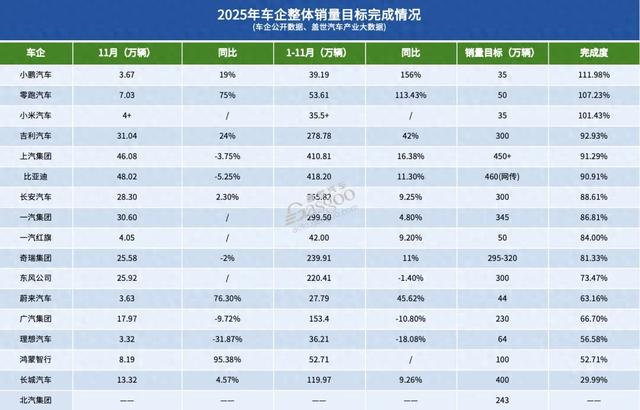
Core Viewpoint - As the end of the year approaches, major automotive companies are reporting their sales for November, allowing for predictions on whether they will meet their sales targets for 2025. The total sales targets set by these companies exceed the overall market forecast, indicating that some may not achieve their goals due to intensified competition and fluctuating pricing dynamics [1][3]. Group 1: Sales Performance of Key Companies - Three companies, Leap Motor, Xiaomi Auto, and Xpeng Motors, have already met their 2025 sales targets ahead of schedule, showcasing strong performance in a competitive market [3][4]. - Leap Motor achieved a cumulative sales volume of 536,000 units from January to November, exceeding its target by 7.23% [4]. - Xiaomi Auto delivered over 355,000 units in the same period, surpassing its target of 350,000 units, despite facing production and delivery challenges [5]. - Xpeng Motors reported cumulative deliveries of 392,000 units, achieving a year-on-year growth rate of 156% and exceeding its target of 350,000 units [5][6]. Group 2: Overall Market Trends - The overall automotive market is experiencing pressure on traditional fuel vehicle sales, while the growth of new energy vehicles continues to outpace the market, driving structural transformation in the industry [3][6]. - Major companies like BYD, SAIC, Geely, Changan, and FAW have completion rates above 80%, indicating a relatively stable performance [7][10]. - However, companies with higher sales targets face significant challenges in the final month, needing to sell tens of thousands of vehicles to meet their goals [8][12]. Group 3: Challenges Faced by Other Companies - Companies such as NIO, Great Wall Motors, and Dongfeng have completion rates below 70%, making it unlikely for them to meet their annual targets [14][17]. - NIO, for instance, has a target of 440,000 units but has only delivered about 280,000 units, requiring a significant increase in December sales [14]. - The challenges faced by these companies include overly ambitious targets, lack of competitive new products, and insufficient progress in their new energy segments [14][17]. Group 4: Factors Contributing to Success - Successful companies share common traits, including realistic target setting, clear growth engines, and robust systemic capabilities that enhance their resilience during the year-end push [13][17]. - For example, Geely's Galaxy series has significantly contributed to its sales, while BYD benefits from a comprehensive product matrix supported by its entire supply chain [11][13].

今日新闻丨鸿蒙智行、小鹏、理想获得L3级道路测试牌照!激光雷达巨头Luminar申请破产!欧拉5、红旗HS6 PHEV上市!
电动车公社· 2025-12-16 15:50
Core Viewpoint - The article highlights the recent launches of electric vehicles, including the Hongqi HS6 PHEV and Ora 5, along with significant developments in the autonomous driving sector and challenges faced by the lidar industry [1][3][20]. Group 1: Hongqi HS6 PHEV Launch - The Hongqi HS6 PHEV was launched on December 16, with a price range of 178,800 to 228,800 yuan [1][3]. - The vehicle features a family design style with a closed vertical grille, dimensions of 4925/1970/1740mm, and a wheelbase of 2925mm, positioning it as a mid-to-large SUV [2]. - It is equipped with a 110kW 1.5T engine and two electric motor options (168kW and 369kW), with battery capacities of 23kWh and 40kWh, offering a pure electric range of 148/225/248km depending on the version [7]. - The vehicle's performance includes 0-100 km/h acceleration times of 7.9/8.3/4.8 seconds and WLTC fuel consumption rates of 5.1/5.4/5.9L/100km [7]. - The competitive landscape for large SUVs is intense, with rivals like Silver River M9 and Funyun T11 offering advantages in size and features [9]. Group 2: Ora 5 Launch - The Ora 5 was also launched on December 16, with a price range of 99,800 to 133,800 yuan, and an additional limited-time trade-in subsidy of 8,000 yuan [10][11]. - The vehicle maintains the design style of the Ora Good Cat, featuring retro mechanical lines and dimensions of 4471/1833(1844)/1641mm, with a wheelbase of 2720mm, classifying it as a compact SUV [13]. - It includes a 150kW electric motor and battery options of 45.3kWh and 58.3kWh, providing CLTC ranges of 480km and 580km respectively [17]. - The Ora 5 targets a younger demographic with its design and features, including the integration of lidar technology at a price point below 120,000 yuan [19]. Group 3: Autonomous Driving Developments - Companies including Hongmeng Zhixing, Xiaopeng, and Li Auto have received L3-level road testing licenses for autonomous driving, allowing for regular testing on specific roads [20][21]. - The L3 license is conditional and does not imply full autonomy, as it is primarily for testing purposes, with no company currently possessing a civilian L3 capability in China [23]. Group 4: Lidar Industry Challenges - Luminar, a leading lidar company, has filed for bankruptcy protection, with a peak valuation of $5 billion now reduced to an estimated $1-5 billion, while liabilities range from $5-10 billion [24]. - Volvo, Luminar's largest customer, ceased collaboration due to unmet contractual obligations, highlighting the importance of technology in the lidar market [26].



AI赋能,可穿戴腕表高端化趋势明显
Yin He Zheng Quan· 2025-12-16 14:58
Investment Rating - The report maintains a "Recommended" investment rating for the consumer electronics industry [1]. Core Insights - The global consumer electronics market is experiencing structural differentiation, with traditional categories slowing down and new AI-driven products like AI smartphones, AI PCs, and AI glasses accelerating their market entry. The competition is shifting from individual product comparisons to ecosystem building focused on overall user experience [17]. - In Q3 2025, global smartphone shipments reached approximately 323 million units, a year-on-year increase of 2.6%. The Chinese smartphone market saw a slight decline of 0.5%, with major players like Vivo and Apple maintaining significant market shares [4][6]. - The wearable watch market is showing a clear trend towards high-end products, with global shipments stable at 54.6 million units, reflecting a 3% year-on-year growth. The average selling price increased by 9%, indicating a shift towards premium offerings [9][10]. Summary by Sections Industry Tracking: Wearable Watch High-End Trend - In Q3 2025, global smartphone shipments were approximately 323 million units, with a 2.6% year-on-year growth. Samsung and Apple remained the top two players, while Vivo held the third position. The Chinese market showed a slight decline, influenced by seasonal factors and policy changes [6][7]. - The global PC market saw a 9.4% year-on-year increase in shipments, reaching 76 million units, driven by the end of Windows 10 support and the transition to AI PCs [8]. - The global tablet market reached 40.04 million units in Q3 2025, marking a 5.1% year-on-year growth, with Apple leading the market [9]. Industry News: Exploring Technology Boundaries with Foldable Screens and AI Glasses - Major advancements in foldable screens and AI glasses were reported, including the launch of Samsung's Galaxy Z TriFold and Alibaba's Quark AI glasses S1, showcasing the industry's push towards innovative technology [13][14]. Sector Tracking: AI as the Core Engine Driving the Industry - The consumer electronics index outperformed the CSI 300 index by 0.74 percentage points over the past month, with a year-on-year performance exceeding the CSI 300 by 20.93 percentage points [16].




理想砍掉BEV与token化直接用OCC稀疏注意力进行4D世界模型预测
理想TOP2· 2025-12-16 12:44
Core Insights - The article discusses the innovative SparseWorld-TC model released by Ideal, emphasizing a shift from traditional structured approaches to a more data-driven methodology that enhances performance in 3D spatial representation and prediction [1]. Group 1: De-quantized Structure - The model transitions from discrete tokens to a Sparse Occupancy Representation, allowing direct operations in continuous 3D coordinate space, which improves inference speed and scene reconstruction fidelity [2]. Group 2: Removal of Spatial Mediators - Ideal's approach eliminates the need for Bird's Eye View (BEV) projections, which impose geometric constraints and bottlenecks in information flow, by using trajectory-conditioned sparse queries that directly extract information from multi-view image features [3]. Group 3: Elimination of Temporal Serial Structures - The model adopts a feed-forward full attention architecture, enabling parallel output of multiple future frames in a single inference pass, significantly enhancing prediction accuracy and speed compared to traditional autoregressive methods [4]. Group 4: Inspiration from GPT - The model draws inspiration from GPT's attention mechanisms, aiming to understand 3D spatial physics without the limitations of discrete tokenization, thus maintaining continuous physical attributes while efficiently participating in attention calculations [5].

全球关注,美国重要数据今晚公布;美股三大期指齐跌;甲骨文近3个月暴跌46%;国际油价大跌,布油跌破60美元/桶【美股盘前】
Mei Ri Jing Ji Xin Wen· 2025-12-16 12:35
Market Overview - Major U.S. stock index futures are experiencing declines, with Dow futures down 0.18%, S&P 500 futures down 0.36%, and Nasdaq futures down 0.54% [1] Company News - Oracle's stock continues to decline, down 1.3% to $182.5 per share, marking a 46% drop from its historical high of $345 per share reached in September [1] - Ford has announced the cessation of production for its all-electric F150 Lightning truck, shifting focus to hybrid vehicles and smaller, more affordable electric cars. This decision is expected to result in a $19.5 billion reduction in revenue, with most losses accounted for in the current quarter [2] - PayPal has submitted an application to become a bank in the U.S., named "PayPal Bank," aiming to expand its financial services [1] Industry Developments - Nasdaq has filed a proposal with the SEC to extend trading hours to 23 hours on weekdays, which would significantly increase trading time for stocks and exchange-traded products [2] - Tesla's market capitalization is projected to potentially reach $3 trillion by the end of 2026, driven by advancements in artificial intelligence and the commercialization of autonomous driving and robotics. Currently, Tesla's stock is down 1.13% [2] Energy Sector - Brent crude oil futures have fallen below $60 per barrel for the first time since May, currently trading at $59.42 per barrel, reflecting a 1.43% decline [3] Economic Indicators - The U.S. is set to release a combined non-farm payroll report for October and November, with economists predicting an addition of 50,000 jobs in November and an unemployment rate of 4.5%. This data suggests a weak labor market without rapid deterioration, which could influence the stock market positively by increasing the likelihood of further interest rate cuts by the Federal Reserve [3]



