
NIO(NIO)

Search documents
安徽汽车产业谋变:一份协议,三方协同
Xin Hua Wang· 2026-01-10 02:10
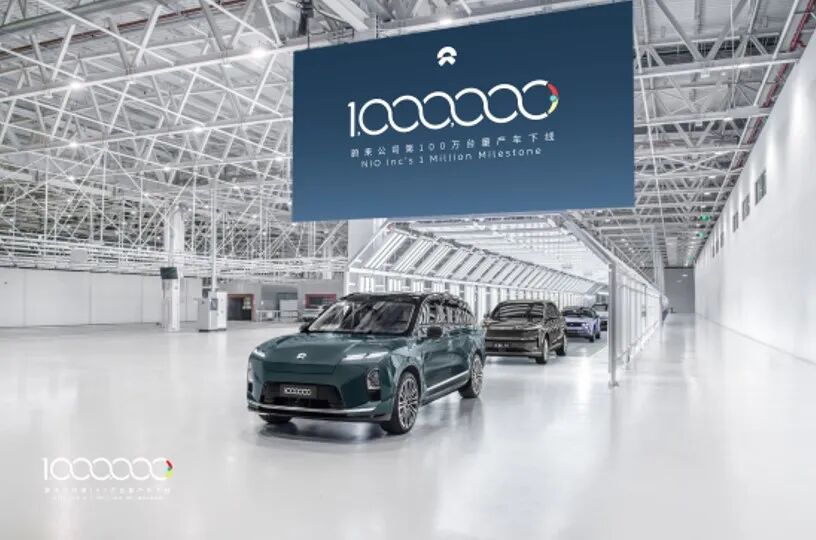
Core Insights - NIO has officially produced its one millionth vehicle, marking a significant milestone for the company and the Chinese automotive industry [1][3][6] - The company aims to transition into a new growth phase focused on high-quality growth, with plans to enhance its technology and infrastructure [5][9] Group 1: Milestone Achievement - On January 6, NIO celebrated the production of its one millionth vehicle at its manufacturing facility in Hefei, symbolizing its entry into the "million-vehicle club" [1][3] - NIO has invested 65 billion yuan in research and development and holds 9,900 patents, establishing a unique battery swapping service system [1][3] - The company achieved a record delivery of 22,256 units of the new ES8 in December, the highest monthly sales for vehicles priced over 400,000 yuan in China [4][6] Group 2: Strategic Partnerships - NIO signed a collaborative innovation agreement with Chery and JAC Motors to build an open and competitive automotive ecosystem [1][5] - The partnership aims to enhance joint research and development of vehicles and key components, as well as localize chip development [5][8] Group 3: Future Growth Plans - NIO's chairman, Li Bin, outlined a three-phase development strategy, with the current phase focusing on high-quality growth and technological leadership [3][5] - The company plans to invest in 12 core technology systems for smart electric vehicles and aims to establish over 10,000 charging and battery swapping stations by 2030 [5][9] - NIO targets an annual growth rate of 40% to 50% while expanding its global market presence [5][10] Group 4: Industry Context - In 2025, NIO, Chery, and JAC Motors achieved significant milestones in high-quality growth, global expansion, and high-end breakthroughs [8][12] - The automotive industry in Anhui province is experiencing a transformation, with a focus on innovation and competitiveness [8][9] - NIO's success contributes to the overall growth of the automotive sector in Anhui, which aims to lead in both production and exports [8][12]

传统车企分化、新势力加速洗牌 打响生态战 2025车企生存启示录
Zhong Guo Jing Ying Bao· 2026-01-09 20:03
Core Insights - The Chinese automotive market in 2025 shows a stable total volume with a differentiated structure, indicating a new competitive norm where traditional automakers maintain dominance while new players face varied growth trajectories [3][4][5] Traditional Automakers - SAIC Group sold 4.507 million vehicles in 2025, a 12.3% increase year-on-year, with a retail volume of 4.67 million, maintaining its industry leadership [3] - Geely Automobile achieved sales of over 3.02 million vehicles in 2025, exceeding its targets and setting a 2026 goal of 3.45 million vehicles, reflecting strong growth momentum [4] - Chery Group sold 2.806 million vehicles, including 1.344 million exports, leading in Chinese passenger car exports for 23 consecutive years, with its new energy segment growing by 54.9% year-on-year [4] New Energy Vehicle Players - Leap Motor emerged as a significant player with 596,600 deliveries in 2025, marking a 103% year-on-year increase and becoming the top seller among new forces [2][4] - NIO is gradually recovering from a downturn, with a milestone of producing its one-millionth vehicle expected in early 2026, despite reporting a cumulative loss of nearly 15.7 billion yuan in the first three quarters of 2025 [2][5] - The competitive landscape for new energy vehicles is marked by a stark contrast, with some players struggling while others, like Lantu and Avita, show steady growth backed by traditional automakers [4][5] Strategic Shifts - The industry is shifting from product-centric competition to a focus on ecosystem collaboration and technological innovation, as companies aim to build resilient and innovative ecosystems [5][7] - SAIC Group emphasizes a dual strategy of technological innovation and ecosystem cooperation, launching over 20 competitive new products and collaborating with partners like Huawei and OPPO [6][8] - Companies are setting ambitious goals for 2026, with a focus on advanced technologies such as solid-state batteries, AI, and global expansion, indicating a move towards a more integrated and strategic approach to competition [8][9]



1 Million Reasons to Buy Nio Stock for 2026
Yahoo Finance· 2026-01-09 17:25
Core Insights - Nio is making significant progress in the electric vehicle market, recently producing its millionth vehicle and planning to expand its operations globally while aiming for annual sales growth of 40% to 50% by 2030 [1][2] Company Overview - Nio, founded in 2014, focuses on designing, manufacturing, and selling smart, premium electric vehicles that emphasize connected technology and autonomous capabilities [2] - The company is also involved in developing semi-autonomous driving technologies and participates in platforms like Formula E racing to enhance its brand and technological credibility [2] Financial Performance - Nio's market capitalization is approximately $10 billion, with its stock increasing by 13.4% over the past year [3] - The company has experienced a compound annual growth rate (CAGR) of 42.23% in revenue over the last five years, with total revenues for Q3 2025 reaching $3.06 billion, a 16.7% increase from the previous year [4][5] - Vehicle sales for the same quarter amounted to $2.7 billion, reflecting a 15% increase, driven by a rise in delivery volumes to 87,071, which is a 40.8% annual increase [5] - Losses narrowed to $0.16 per share from $0.31 per share year-over-year, which was better than the consensus estimate of a loss of $0.23 per share [6] - This marks the sixth quarter of narrowing losses in the past nine quarters, although it is only the third time losses were lighter than consensus estimates, indicating that the company is not consistently meeting bottom-line expectations [6]
Nio Ended a 4 Year-Losing Streak Last Year: What’s the 2026 Forecast for NIO Stock?
Yahoo Finance· 2026-01-09 16:40
Core Viewpoint - Nio, once considered the "Tesla of China," has faced market challenges but shows signs of recovery with a positive 2026 forecast and improved financial performance [1] Group 1: Recent Performance - Nio delivered 48,135 vehicles in December, marking a 54.6% year-over-year increase and setting a new monthly record [2] - In Q4 2025, Nio delivered 124,807 vehicles, a 71.7% increase compared to Q4 2024, although below the forecast of 150,000 [2] Group 2: Production Milestone - Nio has achieved the significant milestone of producing 1 million cars, highlighting its growth in the competitive EV market [3] Group 3: Financial Performance - In Q3 2025, Nio's gross margin improved to 13.9% from 10.7% year-over-year, and its net loss decreased by 31.2% to $488.9 million, which was narrower than expected [4] - The company ended Q3 2025 with cash and cash equivalents totaling $5.1 billion [4] Group 4: 2026 Forecast - Nio aims for a volume growth target of 40% to 50% in 2026, with deliveries rising 46.9% to 326,028 in the previous year, potentially reaching close to half a million deliveries in 2026 [5] - The company plans to launch five new models in 2026, which, along with existing models like the Onvo L90 and ES8, are expected to drive further delivery growth [5] Group 5: Profitability Outlook - Nio is optimistic about achieving breakeven on adjusted profits in Q4 2025, which would be a significant milestone for the company and the industry [6] - For 2026, Nio targets full-year profitability on a non-GAAP basis [6]
2026年车企销量目标出炉:增幅最高近70%
Jing Ji Guan Cha Wang· 2026-01-09 13:53
Core Viewpoint - The automotive market in China is expected to see a slight growth in 2026, with total sales projected at approximately 35.5 million units, a 2% increase year-on-year, while retail sales of passenger cars are estimated at around 24 million units, reflecting a 1% growth. Despite this modest growth forecast, several automakers have set ambitious sales targets, indicating an intensifying competition for market share as the industry transitions from expansion to competition for existing market segments [2]. Group 1: New Energy Vehicle Manufacturers - New energy vehicle manufacturers maintain optimistic growth expectations, with target growth rates exceeding 30%, significantly higher than the 13% forecasted growth for new energy passenger vehicles by the China Passenger Car Association [3]. - Leap Motor aims for a sales target of 1 million units in 2026, representing a growth rate of 67.5%. In 2025, Leap Motor sold 597,000 units, achieving a remarkable 103% year-on-year increase and becoming the sales champion among new energy vehicle manufacturers [3]. - NIO's growth target for 2026 is set between 456,000 and 489,000 units, reflecting a growth rate of 40%-50%. In 2025, NIO sold 326,000 units, marking a 46.9% increase but falling short of its 440,000-unit target [4]. - Xiaomi Auto has set a sales target of 550,000 units for 2026, with a growth rate of 34%. In 2025, it sold 410,000 units, exceeding its previous target of 350,000 units [4]. Group 2: Traditional Automakers - Traditional automakers are generally more cautious, with Changan Automobile setting a target growth rate of 13.3% for 2026, aiming for total sales of 3.3 million units, including 1.4 million new energy vehicles, which would require a 26.2% year-on-year increase [6]. - Geely Automobile has a target growth rate of 14%, with a total sales goal of 3.45 million units for 2026. In 2025, Geely sold 3.025 million units, achieving a 39% increase [6]. - Chery Group also targets a growth rate of 14%, aiming for total sales of 3.2 million units in 2026. In 2025, it sold 2.806 million units, reflecting a 7.8% increase [7]. - Great Wall Motors has set a relatively high target growth rate of 36% for 2026, with a sales goal of 1.8 million units. In 2025, it sold 1.324 million units, marking a 7.33% increase [7]. - Dongfeng Group has established a sales target of 3.25 million units for 2026, with a growth rate of 30%, including 1.7 million new energy vehicles, which would require a 63% increase [8].





蔚来今年将进入澳大利亚、新西兰市场
Guan Cha Zhe Wang· 2026-01-09 10:04
Core Viewpoint - NIO aims to expand its global market presence, targeting Australia and New Zealand by the second half of 2026, while also entering Thailand in March 2024 with its sub-brand Firefly [1][2][3]. Group 1: Global Expansion Plans - NIO plans to accelerate its global business expansion starting from the end of 2024, focusing on markets outside of Europe [3]. - The company has previously concentrated its international efforts in Europe but is now looking to diversify its market presence globally by 2026 [4]. Group 2: Product Launches and Market Strategy - NIO's Firefly brand will officially enter the Thai market in March 2024, marking a significant step in its overseas strategy [2]. - The launch of the first right-hand drive model at the Singapore Motor Show signifies NIO's commitment to expanding into right-hand drive markets, with Singapore being strategically important [5]. Group 3: Financial Performance and Goals - NIO has not yet achieved profitability but aims to reach breakeven by Q4 2025, with a target for overall profitability in 2026 [6]. - In Q3 of the previous year, NIO reported record revenue and gross margin, with cash reserves of 36.7 billion RMB, a significant increase, and a net loss of 3.48 billion RMB, which showed a narrowing trend year-on-year [6].
跨过100万台的蔚来,凭什么活下来?
Xin Lang Cai Jing· 2026-01-09 09:02
Group 1 - NIO delivered 48,135 vehicles in December 2025, marking a 54.6% year-on-year increase and setting a historical record [22] - In Q4 2025, NIO delivered 124,807 vehicles, a 71.7% increase year-on-year, also a historical high [22] - Total deliveries for 2025 reached 326,028 vehicles, representing a 46.9% year-on-year growth, achieving a historical record [22] Group 2 - NIO's founder and CEO, Li Bin, stated that the company has entered a new phase of rapid growth after overcoming challenges in early 2025 [6] - Li emphasized the need for strategic focus and resilience in the face of intensified competition in the smart electric vehicle industry [6][26] - The company aims for annual growth of 40-50% in the upcoming growth cycle [6][26] Group 3 - NIO's multi-brand strategy has been revitalized, with significant contributions from its sub-brands, including Ladao and Firefly, which have seen increasing sales [28][31] - The Ladao brand's L90 model and the new ES8 have been pivotal in driving sales, with Ladao achieving over 40,000 deliveries within four months [29][31] - The Firefly brand also saw sales surpass 7,000 units in December 2025, indicating a successful multi-brand approach [28][31] Group 4 - NIO's long-term R&D investments are beginning to yield results, enhancing product competitiveness and reducing costs through self-developed platforms and technologies [29][31] - The company is focusing on expanding into lower-tier markets with plans to open multi-brand "SKY" stores [31][32] - NIO has implemented a new operational mechanism (CBU) to improve efficiency and accountability across teams [32][34] Group 5 - Li Bin predicts that by 2030, the penetration rate of new energy vehicles will exceed 90%, with pure electric vehicles accounting for over 80% [34][36] - The market is shifting towards pure electric vehicles, with recent trends showing significant growth in this segment [36][41] - NIO's unique battery-as-a-service (BaaS) model offers tax benefits, potentially lowering the cost for consumers and mitigating price competition [41][42]
定位新旗舰 蔚来ES9亮相工信部公告
Zhong Guo Zhi Liang Xin Wen Wang· 2026-01-09 05:07
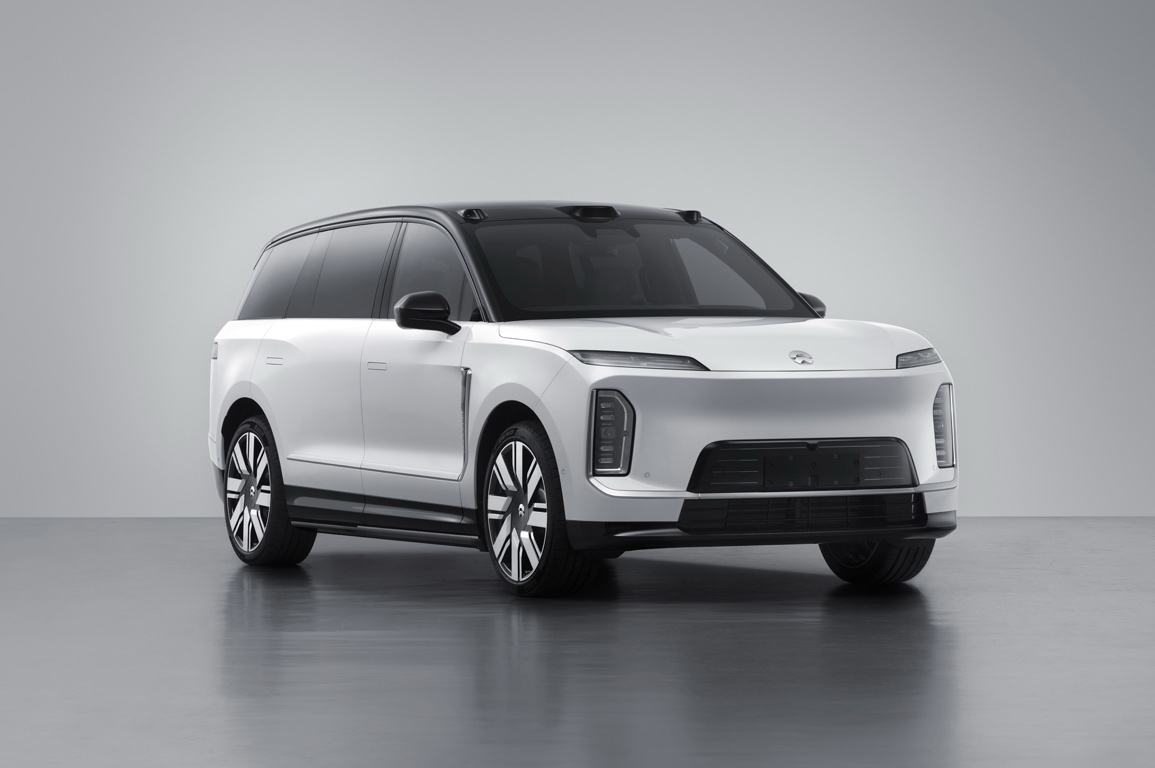
ES9拥有蔚来最高水准的科技配置,包括天行底盘系统等,将给用户带来全新的SUV驾乘体验,且结合视觉感知系统,根据地库高度自动降低底盘以方便进 出。 1月8日,蔚来 ES9亮相工信部公告。作为蔚来SUV产品线的旗舰代表,ES9展现了蔚来在高端纯电领域的深度探索与技术积淀。 蔚来ES9尺寸长5365mm、宽2029mm、高1870mm,轴距3250mm;最高速220km/h;总质量3490kg,整备质量2845/2870/2915kg;轮胎有三种规格: 265/50R21、275/45R22、HL275/40R23,前轮距1730mm,后轮距1758mm。 ...
记者手记:从两个“百万”看中国新能源汽车产业的量质齐升
Xin Hua Wang· 2026-01-09 02:10
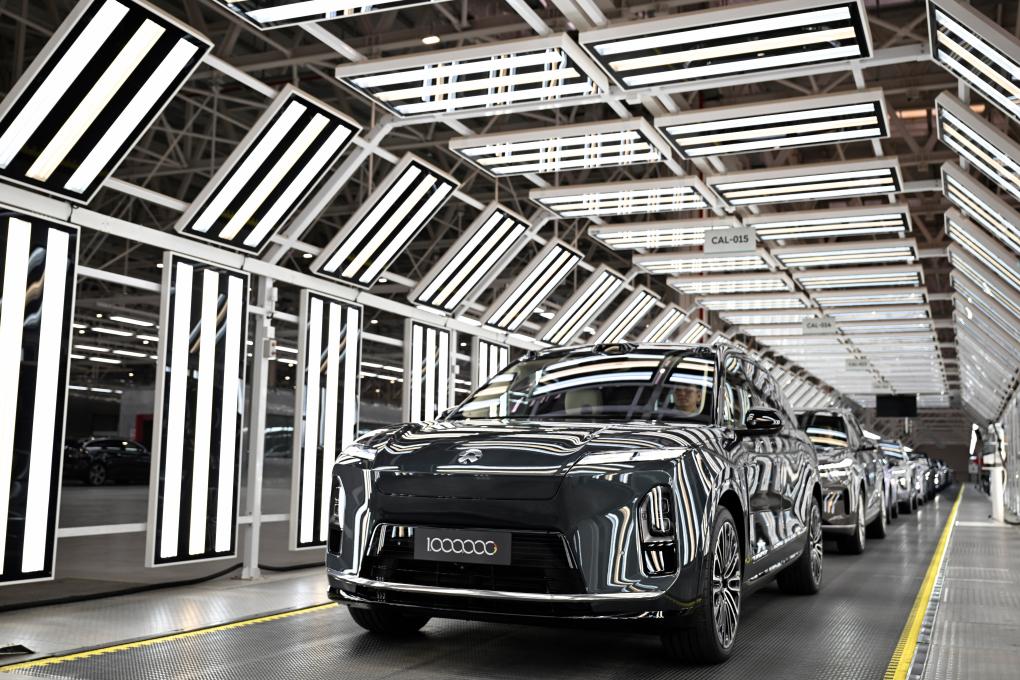
Group 1 - The core message highlights the dual breakthroughs in scale and brand for China's new energy vehicle (NEV) industry, marked by the production of the one-millionth vehicle by companies like NIO, Leap Motor, and Xpeng [1][3] - The NIO ES8, as the one-millionth vehicle, symbolizes the significant progress made in the NEV sector, showcasing a shift from traditional fuel vehicles to electric and intelligent models [3] - The collaboration between Huawei and JAC Motors to produce the high-end S800 model, priced over 1 million yuan, signifies a breakthrough in the luxury electric vehicle market, indicating a trend towards high-end positioning in the NEV industry [1][5] Group 2 - The data from the China Association of Automobile Manufacturers shows strong performance in NEV production and sales, with 14.907 million units produced and 14.78 million units sold from January to November 2025, reflecting year-on-year growth of 31.4% and 31.2% respectively [5] - The emergence of new players like NIO, Li Auto, and Xpeng is seen as a transformative force in the automotive industry, redefining business models and user relationships through a focus on experience and data [3] - The S800's launch represents a new collaborative model in the automotive industry, where technology companies provide the technical foundation, allowing traditional manufacturers to focus on production and integration [5]


李斌:蔚来不飘了
Zhong Guo Jing Ji Wang· 2026-01-09 00:32
Core Viewpoint - NIO's founder and CEO Li Bin emphasizes the company's commitment to becoming a more grounded and efficient organization, despite achieving significant milestones like the production of 1 million vehicles. He acknowledges the challenges ahead in a competitive automotive industry and stresses the importance of operational efficiency and execution [2][15]. Group 1: Company Performance and Strategy - NIO achieved a 47% year-on-year increase in vehicle sales, reaching 1 million units produced, but Li Bin describes the company as "weak" in the broader automotive market context [2][3]. - In Q4, NIO delivered 124,807 vehicles, a 71.7% increase year-on-year, with all three brands achieving record quarterly deliveries [3]. - The company aims for a delivery target of 326,028 vehicles in 2025, achieving a completion rate of 74%, which is lower compared to competitors like Leap Motor and Xpeng [3]. - Li Bin projects a stable growth rate of 40% to 50% annually without setting specific sales targets for 2026, focusing instead on operational efficiency [3][19]. Group 2: Operational Efficiency and Cost Management - NIO has entered its third development phase, focusing on improving operational efficiency and quality, which is crucial for survival in a competitive landscape [3][6]. - The company has implemented measures to reduce losses by 1.7 billion yuan and expects to achieve profitability in Q4, driven by increased deliveries of high-margin vehicles [8]. - Li Bin highlights the importance of internal management efficiency, emphasizing that every expense must be justified, which aligns with the company's long-term strategy [13][16]. Group 3: Technological Innovation and Infrastructure - NIO has invested over 65 billion yuan in R&D, focusing on core technologies and innovative manufacturing processes, which have enhanced product competitiveness and improved gross margins [11][12]. - The company plans to expand its battery swapping infrastructure significantly, aiming to add 1,000 new battery swap stations this year and ultimately establish over 10,000 stations by 2030 [21][22]. - NIO's commitment to a "chargeable, swappable, and upgradable" electric vehicle technology route has been a key factor in its growth and user adoption [12]. Group 4: Market Position and Future Outlook - Li Bin acknowledges that NIO remains a small player in the automotive industry, with only about 1% market share in China, and emphasizes the need to increase this share significantly [15]. - The company aims to maintain a steady growth trajectory, with expectations that the penetration rate of new energy vehicles in China will exceed 90% by 2030, with pure electric vehicles making up at least 80% of that [19]. - Li Bin believes that the automotive industry is entering a "finals" stage of competition, where only a few companies will dominate, but he is optimistic about the potential for multiple Chinese brands to succeed [23].