Nissan Motor(NSANY)

Search documents
只有一家中国车企参展的世界级车展,有多魔幻?
3 6 Ke· 2025-10-29 23:33
Core Insights - The Tokyo Mobility Show, held in late October 2023, showcases the evolving landscape of the Japanese automotive market, emphasizing a shift towards mobility solutions beyond traditional vehicles [1][12] - Chinese automaker BYD made a significant impact by launching the first electric K-Car specifically designed for the Japanese market, marking a historic moment in the Tokyo auto show [9][10] Group 1: Overview of the Tokyo Mobility Show - The event is characterized as a "mobility show" rather than a traditional "auto show," highlighting a broader focus on various modes of transportation [1][3] - Japanese automakers prominently featured K-Cars, which hold nearly 40% market share in Japan, indicating their cultural significance [5][17] - The show had a lower international presence compared to previous years, with fewer European manufacturers participating [11][12] Group 2: Chinese Automaker BYD's Strategy - BYD's launch of the electric K-Car Racco represents a strategic entry into Japan's automotive market, targeting local consumers with a product that directly competes with established Japanese brands [15][19] - The Racco features advanced technology, including a blade battery, and aims to challenge the slow electric transition of Japanese competitors [17][19] - BYD's presence at the show signifies a shift in market dynamics, with Chinese brands increasingly challenging traditional Japanese dominance [13][15] Group 3: Japanese Automakers' Response - Japanese automakers, including Toyota, Honda, and Nissan, showcased a mix of innovative concepts and traditional models, indicating a dual approach of maintaining heritage while embracing new technologies [26][40] - Toyota introduced several groundbreaking models, including a new generation Corolla concept and the FJ Land Cruiser, reflecting a commitment to innovation [27][29] - Honda and Nissan also presented new electric models, emphasizing their strategies to enhance their electric vehicle lineups and adapt to market changes [40][49] Group 4: Future Mobility Trends - The show highlighted advancements in battery technology, with Toyota showcasing solid-state batteries that promise rapid charging and extended range [90][92] - Japanese automakers are exploring diverse mobility solutions, including air and sea transportation, indicating a broader vision for future mobility [94][97] - The overall sentiment at the show reflects Japan's cautious yet determined approach to transitioning towards electric and smart mobility solutions [98]





Nissan and Mercedes sound alarm over chip supply crisis
Reuters· 2025-10-29 10:01
Core Viewpoint - Nissan Motor and Mercedes-Benz have raised concerns about a worsening semiconductor supply shortage, indicating significant repercussions for the automotive industry [1] Group 1: Semiconductor Supply Crisis - The semiconductor supply crunch is deepening, affecting major global automakers [1] - The situation reflects ongoing tensions between various stakeholders in the semiconductor supply chain [1] Group 2: Impact on Automotive Industry - The automotive industry is experiencing growing fallout from the semiconductor shortage, which may lead to production delays and reduced vehicle availability [1] - Companies are likely to face challenges in meeting consumer demand due to the constrained supply of critical components [1]

汽车早餐 | 神龙汽车领导班子调整;长安汽车与京东联合开发新能源无人智能车;马斯克或离开特斯拉
Zhong Guo Qi Che Bao Wang· 2025-10-29 01:29
Group 1: National Policies and Industry Development - The "14th Five-Year Plan" emphasizes the construction of a manufacturing powerhouse, quality powerhouse, aerospace powerhouse, transportation powerhouse, and cyber powerhouse, while maintaining a reasonable proportion of manufacturing [2] - The plan aims to eliminate unreasonable restrictions on consumption in sectors like automobiles and housing, and to establish management methods that adapt to new consumption formats and scenarios [2] - Strategic emerging industries such as new energy, new materials, aerospace, and low-altitude economy will be accelerated [2] Group 2: Automotive Industry Developments - The 8th China International Import Expo will showcase 461 new products, technologies, and services, including new themes in automotive and cultural tourism, aimed at expanding consumption [3] - Over 1.1 million new energy vehicles have been insured through a platform designed to manage high compensation risks in the insurance industry, providing risk coverage exceeding 1.1 trillion yuan [4] - The State Administration for Market Regulation has approved the establishment of 10 measurement talent training centers, including one focused on new energy vehicles, to address technical bottlenecks in modern industry [5] Group 3: International Automotive News - Toyota plans to build multiple automotive factories in the U.S. with an investment exceeding 10 billion dollars [6] - In September, European car sales increased by 11% to 1.24 million units, with Tesla's new car registrations in the EU declining by 19%, while BYD's registrations surged by 272% [7] Group 4: Technological Innovations - Nissan's new solid-state battery has achieved an energy density of 400-500 Wh/kg, potentially increasing the driving range of electric vehicles to 800-1000 kilometers, with plans for mass production by the fiscal year 2028 [8] Group 5: Corporate News - Shenlong Automobile announced leadership changes, appointing new executives to key positions [11] - Changan Automobile is collaborating with JD Group to develop new energy unmanned intelligent vehicles and logistics solutions [12] - Hongmeng Zhixing has delivered its 1 millionth vehicle, achieving this milestone in 43 months with an average transaction price of 390,000 yuan [13] - XPeng Motors reported a 125% year-on-year increase in overseas sales in the first three quarters, with significant market presence in Southeast Asia [14] - Leap Motor established a smart control company in Zhejiang with a registered capital of 200 million yuan [15] - Guoxuan High-Tech founded a power technology company in Wuhu with a registered capital of 1 billion yuan, focusing on battery sales and manufacturing [16]



「隐形冠军」神话终破灭
36氪· 2025-10-29 00:16
Core Viewpoint - The article discusses the decline of "hidden champions" in Germany and Japan, highlighting the rise of Chinese companies as new leaders in the global industrial landscape. Group 1: Definition and Characteristics of Hidden Champions - The term "hidden champions" refers to small and medium-sized enterprises that dominate niche markets but remain largely unknown to the public. These companies typically have a global market share in the top two positions and annual sales below $10 billion, although the criteria have been relaxed to include those with sales under $50 billion [5][7]. - As of 2023, there are 3,406 hidden champions globally, with Germany accounting for 1,573, nearly half of the total [7][11]. Group 2: Current State of Hidden Champions - The article notes that the myth of hidden champions is fading as the high-end industrial supply chain in China undergoes comprehensive upgrades [6]. - Germany's manufacturing sector, particularly the automotive industry, is experiencing a systemic decline, with a reported 80% increase in bankruptcies since 2021 [22][25]. Group 3: Economic Challenges in Germany - Germany's GDP fell by 0.2% last year, marking its second consecutive year of decline, a rare occurrence since 1950 [21]. - Major automotive companies, including Bosch and Volkswagen, are planning significant layoffs, with Bosch alone cutting 13,000 jobs [22][24]. Group 4: Comparison with Chinese Companies - While hidden champions in Germany and Japan are declining, Chinese companies are rapidly emerging as new industrial leaders, particularly in advanced manufacturing and digital technology [41]. - China has cultivated over 14,000 specialized small and medium-sized enterprises, with the number of hidden champions increasing from about 100 to 300 in the past five years [41]. Group 5: Future Outlook - The article suggests that the traditional manufacturing models of Germany and Japan are becoming obsolete, as they struggle with digital transformation and innovation [33][35]. - In contrast, China's hidden champions are gaining strength and represent significant future growth potential, indicating a shift in the global industrial landscape [41][43].



日产汽车9月从日本出口至北美的汽车数量同比下降62%,至6486辆。
Xin Lang Cai Jing· 2025-10-27 06:09
Core Insights - Nissan's exports of vehicles from Japan to North America in September decreased by 62% year-on-year, totaling 6,486 units [1] Company Summary - Nissan's export figures indicate a significant decline in vehicle shipments to North America, reflecting potential challenges in demand or supply chain issues [1]
「隐形冠军」神话终破灭
投资界· 2025-10-26 08:32
Core Viewpoint - The article discusses the concept of "hidden champions," small and medium-sized enterprises that dominate niche markets but remain largely unknown to the public. It highlights the decline of these companies in Germany and Japan due to various economic challenges and the rise of Chinese companies in the same space [4][14][36]. Group 1: Definition and Characteristics of Hidden Champions - Hidden champions are defined as companies that hold a top two global market share, have annual sales below $10 billion, and are not widely recognized by the public. This definition has evolved to include companies with annual revenues below $50 billion [5][14]. - As of 2023, there are 3,406 hidden champions globally, with Germany having 1,573, the highest number, followed by the United States and Japan [5][9]. Group 2: Economic Decline of German and Japanese Hidden Champions - Germany's economy has faced significant challenges, with GDP declining by 0.2% last year and a further 0.3% drop in the second quarter of this year, marking a rare occurrence of consecutive annual GDP shrinkage since 1950 [16][19]. - The automotive industry, a cornerstone of Germany's manufacturing sector, has seen a dramatic increase in bankruptcies, with over 80% growth in the number of bankrupt companies since 2021 [16][19]. - Major automotive companies like Bosch and Volkswagen are planning significant layoffs, with Bosch cutting 13,000 jobs and Volkswagen planning to lay off 35,000 employees by 2030 [19][21]. Group 3: Rise of Chinese Companies - Chinese companies are increasingly taking over roles traditionally held by hidden champions in Germany and Japan, with 300 German companies acquired by Chinese firms between 2014 and 2020 [32]. - China has developed a robust ecosystem of hidden champions, with over 14,000 specialized small and medium enterprises and 1,500 single-item champion companies [33][34]. - The number of identified hidden champions in China has increased from about 100 to 300 in the past five years, indicating a significant growth in this sector [34]. Group 4: Challenges Faced by Traditional Hidden Champions - German and Japanese hidden champions are struggling with digital transformation, with many companies lagging in adopting new technologies and innovations [26][28]. - The reliance on traditional business models and a lack of sensitivity to new industries have hindered their ability to adapt to changing market conditions [28][29]. - The emergence of electric vehicles and the energy crisis in Europe have further exacerbated the challenges faced by these companies, leading to a decline in their market positions [22][24].



全球汽车行业大裁员,高额补偿却成了焦点
吴晓波频道· 2025-10-26 00:21
Core Viewpoint - The article discusses the ongoing "optimization" wave in the global automotive industry, highlighting the challenges companies face in balancing employee rights, corporate image, and long-term competitiveness [2][28]. Group 1: Industry Overview - Major automotive companies are announcing significant layoffs, with a total of 133,100 positions being cut across various firms, including Mercedes-Benz (30,000), Audi (7,500), and Ford (5,000) [3][4]. - The optimization trend is affecting the entire automotive supply chain, with companies like ZF Friedrichshafen and Bosch also planning substantial job cuts [4]. Group 2: Employee Compensation and Support - Mercedes-Benz is offering a voluntary departure plan with compensation up to 400,000 RMB, which has sparked discussions about employee treatment during layoffs [4][5]. - Volvo has allocated 1.5 billion SEK (approximately 1.134 billion RMB) for its optimization plan, providing an average of 380,000 RMB per departing employee [5]. Group 3: Global Comparison of Layoff Policies - Different countries have varying approaches to employee compensation during layoffs, with South Korea requiring severance pay based on tenure and France offering compensation based on years of service [8][9]. - In the UK, employees must work for at least two years to qualify for severance pay, while in Canada, the compensation is based on years of service with a minimum payout [9][10]. Group 4: Legal and Compliance Considerations - Companies must navigate legal requirements when implementing layoffs, including providing adequate notice and compensation as mandated by local labor laws [21][40]. - The article emphasizes the importance of compliance to avoid legal challenges and reputational damage, suggesting that companies should embed compliance into their decision-making processes [41]. Group 5: Strategic Recommendations for Companies - Companies are encouraged to adopt transparent and humane optimization strategies, including clear communication and support programs for affected employees [32][36]. - The article suggests that businesses should focus on retaining key talent and maintaining morale among remaining employees to ensure long-term operational efficiency [27][38].

东风日产汽车金融董事、副总经理杨曦任职资格获批
Bei Jing Shang Bao· 2025-10-24 11:57
Group 1 - The National Financial Regulatory Administration's Shanghai Bureau approved the appointment qualifications of Yang Xi as the director and deputy general manager of Dongfeng Nissan Automotive Finance Co., Ltd [1]
轩逸再夺冠,日产“苟着”看
Tai Mei Ti A P P· 2025-10-24 11:46
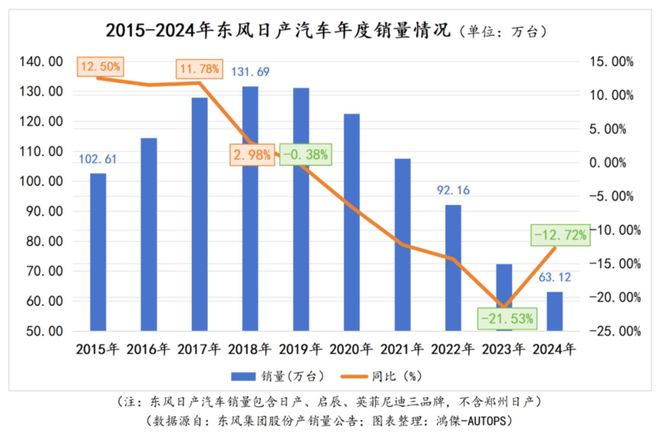
Core Viewpoint - The surprising sales champion for fuel vehicles in China is Nissan, specifically the Sylphy model, which has achieved a "five consecutive championships" status despite the overall decline of Japanese brands in the market [1][2]. Group 1: Market Performance - Dongfeng Nissan's cumulative sales from January to September 2025 reached approximately 418,600 units, a year-on-year decline of 9.4%, with an estimated total sales of about 631,600 units for the entire year 2024, down 12.72% year-on-year [2]. - This marks the seventh consecutive year of sales decline for Dongfeng Nissan, with a significant drop from a peak of 1,316,900 units in 2018 to just 631,200 units in 2024, representing a 52.07% decrease [3][4]. - Compared to other Japanese brands, Nissan was the first to enter a downward cycle in 2018, while Toyota and Honda followed later, indicating a more severe decline for Nissan [4][7]. Group 2: Sales Strategy - The Sylphy model has been crucial for Nissan, contributing approximately 60.47% of the brand's total sales in September 2025, with a total of about 32,590 units sold in the past year [8][10]. - The reliance on the Sylphy is evident, as other models like the Tiida, Juke, and Almera have seen drastic declines in sales, with some models selling as few as one unit in September [10][11]. - The Sylphy's success is attributed to aggressive pricing strategies, with discounts reaching up to 41%, making it the most discounted model among major Japanese brands [11][12]. Group 3: Future Prospects - Despite the initial success of the Nissan N7 electric vehicle, which achieved over 10,000 orders in its first month, its sales dropped to 6,410 units in September, indicating potential challenges ahead [14][15]. - The future of Nissan's market position remains uncertain, as the company may need to continue its current pricing strategies to maintain market presence while seeking opportunities for recovery [13][15].
2025日本移动出行展前瞻:电动化终于迈向日本市场
Guan Cha Zhe Wang· 2025-10-24 10:27
Core Insights - The 2025 Japan Mobility Show, taking place from October 29 to November 9, represents a significant shift in the Japanese automotive market, focusing on electric vehicle (EV) transformation and consumer demand changes [1][12] - Japanese automakers, including Toyota and Honda, are accelerating their transition towards electric and hybrid vehicles in response to competition from companies like BYD and Tesla [1][12] Group 1: Toyota's Strategy - Toyota will showcase its electric product concepts, including a new Corolla replacement model available in both pure electric and hybrid versions, aligning with its European strategy [3][4] - Lexus plans to unveil a new ES sedan and a six-wheeled LS concept car, indicating a commitment to both electric and luxury segments [3][4] - Toyota is also developing a new independent ultra-luxury brand to compete with Rolls-Royce and Bentley, alongside introducing a new coupe concept under its "Century" series [4] Group 2: Honda's Focus - Honda will present two new electric concept cars, including the third model of its next-generation 0 series electric vehicles, emphasizing small and easy-to-handle electric cars [6][12] Group 3: Nissan's Approach - Nissan will focus on mass production vehicles, introducing the new Elgrand with third-generation e-POWER technology and an upgraded Ariya electric crossover [9][12] - The company aims to showcase its commitment to electrification through various global electric models, including the third-generation Leaf and models developed in collaboration with the Chinese market [9] Group 4: Mazda's Innovations - Mazda will display two concept cars that represent its future design direction and next-generation power systems, including efforts in carbon-neutral fuel and carbon capture technology [11][12] Group 5: Market Trends - Data from JATO Dynamics indicates that the share of pure internal combustion engine vehicles in Japan has fallen below 50% for the first time in 2023, with projections showing a further decline to 42.3% in 2024 [12][15] - The market for hybrid vehicles has stabilized at a penetration rate of 33.8% in the first half of 2025, while pure electric vehicles remain at a low 1.3% [12][15] - The growth in the light vehicle segment is driving the increase in pure electric models, with Japanese consumers showing a willingness to adopt electric products if quality and quantity improve [15] Group 6: Competitive Landscape - BYD plans to introduce a dedicated micro electric vehicle for the Japanese market, indicating its strategy to compete in the unique microcar segment [17] - Hyundai and Kia will also present new electric models at the show, including the Nexo hydrogen fuel cell crossover and electric commercial vehicles, highlighting the competitive landscape in the Japanese EV market [19][20]