NTES(NTES)

Search documents
网易官宣:《燕云十六声》海外版玩家突破1500万
Xin Lang Cai Jing· 2025-12-16 06:08
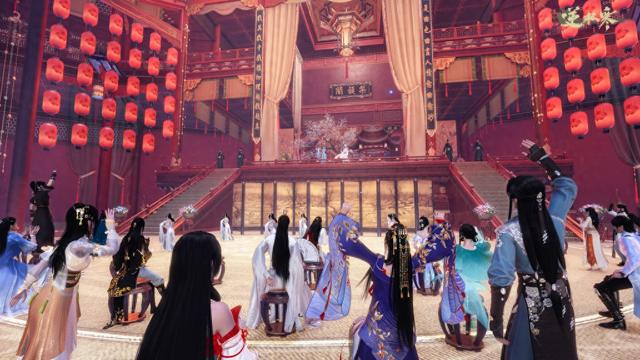
Core Insights - The overseas version of NetEase's martial arts open-world game "Where Winds Meet" has surpassed 15 million players in its first month since release [1][2] - The PC version achieved over 9 million players within two weeks and ranked second on the Steam bestseller list [1][2] - The mobile version has topped the free game charts in 60 markets on the App Store, marking it as a significant cultural export from China [1][2] Company Strategy - The game's release is seen as an opportunity for Chinese game developers to tell Chinese cultural stories to a global audience [1][2] - As the first martial arts open-world game led by Chinese technology and focused on Chinese narratives, it aims to enhance the global perception of Chinese culture [1][2] - The company plans to adapt the game for more devices and implement additional localized languages to provide an immersive experience of traditional Chinese culture [1][2]

网易-S(09999):游戏业务毛利保持高企,创新业务利润提升
Waton Financial· 2025-12-16 05:21
Investment Rating - The investment rating for the company is "Buy" [2] Core Insights - The report highlights strong financial performance with a revenue of 28,400 million RMB in Q3 2025, representing an 8.2% year-over-year growth, and a net profit of 8,600 million RMB, with a non-GAAP net profit of 9,500 million RMB, both showing double-digit growth [3][14] - The gaming business remains the core revenue driver, contributing approximately 82% of total revenue, with Q3 gaming revenue reaching 23,300 million RMB, up 11.8% year-over-year [5][18] - The company is focusing on long-term operations, new product launches, and global expansion as key growth strategies [28] Financial Performance - In Q3 2025, the company achieved a gross profit of 18,200 million RMB, with a gross margin maintained at a high level, and a net cash flow from operations of 12,900 million RMB, accounting for about 45% of revenue [3][14][17] - The company’s total assets reached approximately 214,500 million RMB, with a significant net cash position of 153,200 million RMB, providing a buffer against external uncertainties [16] - The net profit margin is approximately 30%, indicating robust profitability [14] Business Development - The gaming segment continues to thrive, with a gross margin of about 69% and deferred revenue increasing by 25% year-over-year, driven by popular titles and new game launches [5][18] - The cloud music segment reported a slight revenue decline of 1.8% to 1,964 million RMB, but improved profitability with a gross profit of 695 million RMB, reflecting effective cost management [20] - The innovative business segment, particularly Youdao, saw a revenue increase of 3.6% to 1,600 million RMB, with a significant rise in operating profit driven by AI subscriptions and online marketing [21] Profit Forecast - The company expects a revenue growth of 10.0% and a net profit growth of 9.2% for 2025, with corresponding PE ratios of 17.41, 25.66, and 20.65 for 2025-2027 [6][8]
等等,这“炸翻游戏圈”的产品,背后竟有网易4年前偷偷做的投资?
3 6 Ke· 2025-12-16 03:34
Core Insights - The success of "Expedition 33" at TGA 2025 is attributed not only to the developer Sandfall Interactive but also significantly to the publisher Kepler Interactive, which was invested in by NetEase for $120 million in 2021 [1][3][4] - Kepler Interactive operates as a unique alliance of developers rather than a traditional publisher, allowing for a collaborative decision-making structure among its member studios [5][6][9] Group 1: Kepler Interactive's Model - Kepler Interactive is described as a developer co-governance model, where founders of the seven studios form a decision-making committee, allowing for shared ownership and collaborative decision-making [5][6] - This model provides member studios with essential support in human resources, legal, and IT, while maintaining creative autonomy [6][9] - Kepler aims to be recognized for high-quality mid-tier games, similar to A24 in the film industry, focusing on unique and innovative game designs [9] Group 2: Success Factors of "Expedition 33" - "Expedition 33" successfully filled a market gap for 2A games, particularly in the JRPG genre, which had seen a decline in offerings [10][12] - The game was developed with a restrained cost strategy, reportedly under $30 million, allowing for a sustainable development approach [14][15] - Sandfall Interactive plans to maintain a small team of under 50 people to ensure agility and creativity in future projects, avoiding the pitfalls of larger team structures [15][16] Group 3: Implications for the Industry - The success of "Expedition 33" highlights the potential for innovative publishing models to revitalize the gaming industry, encouraging a focus on efficient development processes [17] - NetEase's investment in Kepler serves as a case study for other major companies to consider investing in promising publishers and developers that understand market dynamics [17]


网易_ 预计2026又是激动人心的一年;中国数字娱乐板块首选股
2025-12-16 03:27
Summary of the Conference Call on NetEase Company Overview - **Company**: NetEase (NTES US, 9999 HK) - **Market Capitalization**: Approximately $88.1 billion USD / 85.3 billion HKD [2][30] Key Industry Insights - **Industry**: Chinese Digital Entertainment - **Current Performance**: NetEase's stock price has increased by 56% year-to-date, outperforming the Chinese internet index fund which rose by 27% [1][12] - **Future Outlook**: Anticipated continued growth in 2026 driven by new game releases and strong performance in overseas markets [1][5] Core Points and Arguments - **Game Revenue Growth**: - Projected 2026 online gaming revenue growth of 15%, up from 14% in 2025, supported by new game launches and contributions from existing titles [1][5] - Key upcoming titles include "Yanyun Sixteen Sounds" (successful overseas launch), "The Sea of Oblivion" (expected Q1 2026), and "Infinity" (expected Q2 2026) [1][4][5] - **Milestone Achievements**: - "Yanyun Sixteen Sounds" has achieved significant success in overseas markets, ranking among the top three revenue-generating games on Steam with over 9 million players [4] - The game is noted as the first successful free-to-play martial arts RPG from China in international markets [4] - **Potential for Hong Kong Stock Connect**: - NetEase may qualify for inclusion in the Hong Kong Stock Connect due to over 57% of its trading volume occurring on the Hong Kong exchange [1][11] - **Valuation**: - Current valuation is attractive compared to peers, with a projected P/E ratio of 20x for 2026, lower than major competitors [1][12][19] - Target price set at $190 USD / 295 HKD, indicating a potential upside of 39% [1][25] Additional Important Insights - **Analyst Ratings**: - Analysts maintain a "Buy" rating on NetEase, citing strong game pipeline and favorable market conditions [1][23] - **Risks**: - Potential risks include declining revenue from older games, increased competition in the overseas gaming market, and stricter regulations in the Chinese gaming industry [27] - **Financial Projections**: - Expected adjusted net profit for 2026 is approximately $43.5 billion RMB, with a compound annual growth rate of 13% from 2026 to 2027 [32][31] Conclusion - **Investment Thesis**: NetEase is positioned for significant growth in 2026, driven by a strong lineup of new games and favorable market dynamics, making it a preferred stock in the Chinese digital entertainment sector [1][32]
2026年科技股策略:锚定恒生科技优质标的 财通证券推荐了这20只股
Ge Long Hui· 2025-12-16 02:29
Core Viewpoint - The report by Haitao Securities emphasizes the importance of identifying stocks with potential short-term or long-term performance discrepancies or surprises in AI advancements as a core task for 2026 [1] Group 1: Investment Strategy - The main investment strategy is to focus on value investing in the Hang Seng Technology Index, leveraging volatility from the Hong Kong stock market and short-selling mechanisms [1] - The key to successful operations lies in selecting fundamentally strong companies with sustainable development capabilities [1] Group 2: Recommended Stocks for 2026 - Stocks currently at the bottom or adjusting, with a high likelihood of fundamental reversal in 2026: Meituan, Xiaomi Group (planning next vehicle), BYD Electronics [2] - Stocks expected to benefit from EPS gains and potential valuation uplift: Tencent Holdings, Trip.com Group, JD Health, Lenovo Group [2] - Stocks with controllable elasticity: Alibaba, Baidu Group, SMIC, Hua Hong Semiconductor [2] - AI elastic stocks: Kuaishou, Bilibili, Kingdee International, Horizon Robotics, Xpeng Motors, Yueda Group, NetEase, Sunny Optical Technology, UBTECH [2] - Potential small-cap companies: Inspur Digital Enterprise, Xindong Company, Huiliang Technology [2] Group 3: Individual Stock Insights - Kuaishou, Bilibili, Horizon Robotics, Xpeng Motors, Sunny Optical Technology, UBTECH are highlighted as key stocks with positive outlooks [2] - Inspur Digital Enterprise and Huiliang Technology are noted as quality small-cap stocks with promising prospects [2] - Tencent Holdings is identified as a top pick due to its strong research framework [2] - Alibaba is considered a leading asset in AI technology [2] - Lenovo Group is expected to achieve profitability in its server business next year due to accelerated AIPC penetration [2] - Trip.com Group is positioned well for growth driven by domestic stability and overseas acceleration [2] - JD Health is recognized as a leading player in internet healthcare with a clear growth path [2] - Meituan is noted for its resilience and potential turning point in competitive landscape [2] - Kingdee International's growth is constrained by macroeconomic factors, but AI and overseas expansion provide additional elasticity [2] - Xiaomi Group is expected to see improvements as negative factors gradually clear [2] - SMIC is experiencing an increase in advanced manufacturing proportion and continuous technological breakthroughs [2] - Hua Hong Semiconductor is benefiting from growth driven by computing and consumer electronics [2] - Yueda Group focuses on IP as a core asset, with expectations for further expansion and monetization [2] - NetEase is anticipated to enter a new product cycle with upcoming releases [2] - BYD Electronics is expected to see growth from Apple's foldable phone production and has significant potential in the new energy vehicle and data center sectors [2] - Xindong Company is driven by gaming and Taptap, with expectations for the launch of an overseas version [2]



网易有道上涨2.44%,报9.24美元/股,总市值11.05亿美元
Jin Rong Jie· 2025-12-16 01:05
Core Viewpoint - NetEase Youdao (DAO) has shown a significant increase in stock price and impressive financial growth, indicating a positive outlook for the company in the online education sector [1] Financial Performance - As of September 30, 2025, NetEase Youdao reported total revenue of 4.344 billion RMB, reflecting a year-on-year growth of 1.36% [1] - The company achieved a net profit attributable to shareholders of 59.1 million RMB, marking a substantial year-on-year increase of 7581.01% [1] Company Overview - NetEase Youdao is a foreign holding company registered in the Cayman Islands, primarily operating through its domestic subsidiary, NetEase Youdao Information Technology (Beijing) Co., Ltd [1] - The company is recognized as a leading smart learning provider in China, focusing on user-oriented learning products and services [1] - Founded in 2006, Youdao is a subsidiary of NetEase Inc. (NASDAQ: NTES; Hong Kong Stock Code: 9999) and has developed a range of interactive learning applications and smart learning devices [1]

网易上涨2.11%,报139.14美元/股,总市值881.03亿美元
Jin Rong Jie· 2025-12-15 15:15
Group 1 - The core viewpoint of the articles highlights that NetEase (NTES) has shown a positive financial performance with a revenue increase and significant profit growth [1][2] - As of December 15, NetEase's stock opened at $139.14, reflecting a 2.11% increase, with a total market capitalization of $88.103 billion [1] - Financial data indicates that by September 30, 2025, NetEase's total revenue is projected to reach 85.079 billion RMB, representing a year-on-year growth of 8.32%, while the net profit attributable to shareholders is expected to be 27.518 billion RMB, marking a 31.47% increase [1] Group 2 - NetEase is recognized as a leading internet and gaming service provider, focusing on delivering high-quality content and continuously expanding its gaming ecosystem [2] - The company has developed and operated several popular mobile and PC games, supported by a top-tier in-house development team [2] - In addition to gaming, NetEase's other businesses include Youdao, an intelligent learning company, and NetEase Cloud Music, a well-known online music platform, along with its lifestyle brand NetEase Yanxuan [2]
传媒行业12月投资策略:把握游戏龙头底部机会,布局AI应用新周期
Guoxin Securities· 2025-12-15 13:37
Investment Rating - The report maintains an "Outperform" rating for the media industry [3] Core Insights - The media sector outperformed the market in November, with the Shenwan Media Index rising by 1.69%, surpassing the CSI 300 Index by 4.14 percentage points, ranking 7th among 31 industries [4][20] - The number of game approvals reached a new high, with 178 domestic games and 6 imported games approved in November, contributing to a total of 1,625 game approvals from January to November, a year-on-year increase of 26.8% [4][28] - The gaming market revenue in October was 31.4 billion yuan, a year-on-year growth of 7.8%, driven by strong product cycles from leading companies [4][32] Summary by Sections Market and Industry Review - The media sector's performance in November was strong, with a 1.69% increase in the Shenwan Media Index, outperforming the CSI 300 Index [4][20] - The current TTM-PE for the Shenwan Media Index is 42.6x, positioned at the 82.2% percentile over the past five years [20][26] Gaming - The number of game approvals in November was the highest in three years, with a total of 178 domestic and 6 imported games approved [28] - The gaming market revenue in October was 31.4 billion yuan, with mobile gaming revenue at 22.6 billion yuan, reflecting a year-on-year growth of 2.4% [32] - The overseas revenue for Chinese self-developed games reached 1.799 billion USD in October, marking an 11.9% year-on-year increase [41] Film and Television - The total box office in November reached 3.553 billion yuan, a year-on-year increase of 89.3%, primarily due to the success of "Zootopia 2" [49] - The top five films in November included "Zootopia 2," which grossed over 2.2 billion yuan within nine days of release [60] - The drama market saw high viewership, with "The Tang Dynasty Mysteries" leading with 1.5 billion views [67] AI Applications - The report highlights advancements in AI video models, including the launch of the O1 video model by Keling AI, which allows users to generate videos from text prompts [79] - PixVerse V5.5 was released, enabling the creation of multi-angle narrative videos [84] - Google's Gemini 3 Pro and Nano Banana Pro were launched, showcasing significant improvements in AI capabilities [91] Investment Recommendations - The report suggests focusing on the gaming sector's new product cycles and AI applications, recommending companies such as Giant Network, G-bits, and K-Game Network [96] - The December investment portfolio includes Giant Network, K-Game Network, Bilibili, and HuiLiang Technology [7]






网易(09999)投出TGA最大赢家!《光与影:33号远征队》狂揽9项大奖,法国总统发文祝贺
智通财经网· 2025-12-15 11:28
Core Insights - The game "Light and Shadow: Expedition 33" won nine awards at TGA 2025, including Game of the Year, Best Narrative, and Best Art Direction, marking it as the most awarded game in a single TGA event's history [1][2] - The success of "Expedition 33" is attributed to its innovative content and strong support from its publishing team, focusing 90% of resources on core experiences such as combat feedback, camera language, and musical narrative [1] - The game received recognition from French President Macron, highlighting its significance as a symbol of French creativity [2] Company Overview - Kepler Interactive, the publisher of "Expedition 33," employs a "developer co-governance" model, allowing studio founders to retain creative autonomy while jointly making decisions [2] - Kepler Interactive has previously published successful low-budget titles, including "Sifu," which also received multiple nominations at TGA 2022 [2] Industry Impact - "Expedition 33" achieved a historic breakthrough at TGA 2025, generating global attention and setting a record with 12 nominations, the highest in TGA history [2]
戏曲与游戏融合正成为“新赛道”,能否助力传统文化破圈生长
Xin Lang Cai Jing· 2025-12-15 10:54
Core Insights - The integration of traditional Chinese opera and gaming is emerging as a new cultural phenomenon, enhancing both artistic expression and audience engagement [1][3][32] - The academic seminar "Art New Quality Productivity: Innovation Drive and Paradigm Change" highlighted the importance of technology in art creation and the growing trend of "opera-game fusion" [1][3] Group 1: Industry Trends - The gaming industry is becoming a significant platform for the dissemination of traditional culture, with a projected user base of 674 million and a market size exceeding 350 billion yuan in 2024 [3] - 68% of overseas gamers express a preference for games featuring Chinese cultural elements, indicating a global interest in this fusion [3] - "Embedded fusion" is identified as a key collaboration model, integrating opera elements into game design, narrative, and aesthetics [3][24] Group 2: Successful Case Studies - The collaboration between Zhejiang Xiaobaihua Yue Opera Troupe and Tencent's "Honor of Kings" successfully integrated elements from the Yue opera "Butterfly Lovers," achieving 64 million skin acquisitions and 1.5 billion total exposures [5] - The partnership between Tencent's "Tianya Mingyue Dao" and Shanghai Peking Opera House showcased Peking opera through motion capture technology, enhancing player experience [8] - Perfect World's "Dream New Zhu Xian" and Jiangsu Peking Opera House's collaboration received positive feedback from young players, demonstrating the effectiveness of opera integration [9] Group 3: Audience Engagement - The "Digital Pear Garden" initiative by NetEase's "Nirvana in Fire" game has attracted significant player engagement, with 89.6% of players experiencing opera for the first time through the game [17] - Players actively participate in sharing their experiences and engaging with opera culture, indicating a successful outreach strategy [17][19] - The collaboration with various opera forms, including Huangmei opera, has resonated well with younger audiences, leading to high engagement rates [19][26] Group 4: Future Directions - The concept of "opera-game fusion" is seen as a pathway for traditional opera to reach new audiences and explore digital cultural products [32] - The integration of advanced technologies like motion capture and 3D scanning is enhancing the authenticity of opera representation in games [32][33] - Industry experts emphasize the need for innovation while respecting the artistic integrity of traditional opera, ensuring that the essence of the art form is preserved in its digital adaptations [33]