
NTES(NTES)

Search documents
网易(09999)投出TGA最大赢家!《光与影:33号远征队》狂揽9项大奖,法国总统发文祝贺
智通财经网· 2025-12-15 11:28
Core Insights - The game "Light and Shadow: Expedition 33" won nine awards at TGA 2025, including Game of the Year, Best Narrative, and Best Art Direction, marking it as the most awarded game in a single TGA event's history [1][2] - The success of "Expedition 33" is attributed to its innovative content and strong support from its publishing team, focusing 90% of resources on core experiences such as combat feedback, camera language, and musical narrative [1] - The game received recognition from French President Macron, highlighting its significance as a symbol of French creativity [2] Company Overview - Kepler Interactive, the publisher of "Expedition 33," employs a "developer co-governance" model, allowing studio founders to retain creative autonomy while jointly making decisions [2] - Kepler Interactive has previously published successful low-budget titles, including "Sifu," which also received multiple nominations at TGA 2022 [2] Industry Impact - "Expedition 33" achieved a historic breakthrough at TGA 2025, generating global attention and setting a record with 12 nominations, the highest in TGA history [2]

戏曲与游戏融合正成为“新赛道”,能否助力传统文化破圈生长
Xin Lang Cai Jing· 2025-12-15 10:54
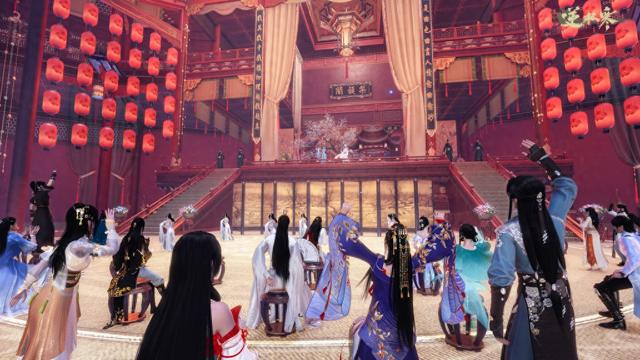
Core Insights - The integration of traditional Chinese opera and gaming is emerging as a new cultural phenomenon, enhancing both artistic expression and audience engagement [1][3][32] - The academic seminar "Art New Quality Productivity: Innovation Drive and Paradigm Change" highlighted the importance of technology in art creation and the growing trend of "opera-game fusion" [1][3] Group 1: Industry Trends - The gaming industry is becoming a significant platform for the dissemination of traditional culture, with a projected user base of 674 million and a market size exceeding 350 billion yuan in 2024 [3] - 68% of overseas gamers express a preference for games featuring Chinese cultural elements, indicating a global interest in this fusion [3] - "Embedded fusion" is identified as a key collaboration model, integrating opera elements into game design, narrative, and aesthetics [3][24] Group 2: Successful Case Studies - The collaboration between Zhejiang Xiaobaihua Yue Opera Troupe and Tencent's "Honor of Kings" successfully integrated elements from the Yue opera "Butterfly Lovers," achieving 64 million skin acquisitions and 1.5 billion total exposures [5] - The partnership between Tencent's "Tianya Mingyue Dao" and Shanghai Peking Opera House showcased Peking opera through motion capture technology, enhancing player experience [8] - Perfect World's "Dream New Zhu Xian" and Jiangsu Peking Opera House's collaboration received positive feedback from young players, demonstrating the effectiveness of opera integration [9] Group 3: Audience Engagement - The "Digital Pear Garden" initiative by NetEase's "Nirvana in Fire" game has attracted significant player engagement, with 89.6% of players experiencing opera for the first time through the game [17] - Players actively participate in sharing their experiences and engaging with opera culture, indicating a successful outreach strategy [17][19] - The collaboration with various opera forms, including Huangmei opera, has resonated well with younger audiences, leading to high engagement rates [19][26] Group 4: Future Directions - The concept of "opera-game fusion" is seen as a pathway for traditional opera to reach new audiences and explore digital cultural products [32] - The integration of advanced technologies like motion capture and 3D scanning is enhancing the authenticity of opera representation in games [32][33] - Industry experts emphasize the need for innovation while respecting the artistic integrity of traditional opera, ensuring that the essence of the art form is preserved in its digital adaptations [33]


互联网传媒行业投资策略周报:GPT-5.2模型发布,迪士尼与OpenAI达成战略合作协议-20251214
GF SECURITIES· 2025-12-14 08:49
Core Insights - The report maintains a "Buy" rating for the internet media sector, highlighting strong performance in e-commerce, social entertainment media, internet healthcare, short videos, and other segments, despite recent market fluctuations [4][16][19]. E-commerce - The e-commerce sector is experiencing stock price fluctuations with a lack of catalysts, but companies are deemed to have attractive valuations. Alibaba's narrative focuses on AI advancements and cloud growth, while Meituan's outlook remains cautious due to ongoing competition [4][16][17]. Social Entertainment Media - Bilibili and Tencent's advertising performance continues to outperform the market, with Tencent's gaming fundamentals improving. Upcoming titles like "Delta Action" and Bilibili's "Escape from Duckkov" are expected to drive growth [4][16][17]. Internet Healthcare - JD Health and Alibaba Health leverage their leading platform advantages to deepen collaborations with upstream pharmaceutical manufacturers, resulting in strong revenue and profit growth [4][16][17]. Short Videos - Recent declines in AI-related stocks are noted, but Kuaishou's core business remains stable, with ongoing advancements in AI technology and commercialization [4][16][17]. IP and Trendy Toys - Pop Mart's new flagship store in Shanghai enhances interactive space, and the company continues to launch new IPs like 1001moons and supertutu [4][16][17]. Online Mobility - Cao Cao Mobility has upgraded its Robotaxi strategy, moving towards fully unmanned operations by 2026, with a focus on cost advantages in customized vehicles [4][16][18]. Long Videos - The State Administration of Radio and Television's new policies aim to enhance content supply, suggesting investment opportunities in iQIYI and Mango TV [4][16][18]. Music Streaming - TME and NetEase Music show stable performance, although concerns about competition have led to valuation adjustments. The report emphasizes the importance of quality content in driving paid subscriptions [4][16][18]. Gaming Sector - The domestic gaming market remains robust, with continued recommendations for leading companies like Tencent and NetEase. Attention is drawn to companies with improving product trends and operational conditions [4][19]. Advertising - Focus Media's performance has exceeded expectations, with significant growth in internet advertising spending anticipated for Q4, driven by new business initiatives [4][19]. Publishing - Some publishing companies face challenges due to educational reforms, impacting revenue recognition. The report suggests focusing on companies with strong fundamentals and high dividend yields [4][21]. Film and Television - The report highlights the potential recovery in the long video sector, with a focus on production companies with strong project pipelines and leading platforms like Mango TV and iQIYI [4][21]. AI and Technology - The report emphasizes the importance of AI in transforming various sectors, with specific recommendations for companies involved in AI applications across media and healthcare [4][22].




传媒互联网数据月报:港美股披露3Q业绩,年末娱乐景气度提升-20251214
CICC· 2025-12-14 08:37
Investment Rating - The report maintains an "Outperform" rating for the media and internet industry, with specific stock recommendations across various segments [5][8]. Core Insights - The media sector experienced a slight rebound in November, with the advertising segment gaining traction due to AI applications, while other segments showed minor fluctuations. The demand for entertainment is expected to rise towards the end of the year, suggesting potential opportunities in niche segments [3][4]. - Key trends for 2026 include a supportive policy environment fostering resilient growth, with a focus on AI applications, overseas expansion of Chinese content, and the revaluation of IP value driven by upgraded demand [3][4]. - The report highlights strong Q3 performance in Hong Kong and US stocks, particularly in gaming and social media sectors, with notable revenue growth from Tencent and Kuaishou [3][4][18]. Summary by Sections Industry Dynamics - The media index rose by 1.69% in November, contrasting with a decline in the Shanghai Composite Index by 1.67%. Sub-sectors showed varied performance, with digital media up by 1.76% and advertising marketing up by 9.68% [2][11]. - The gaming sector saw a record high in the issuance of domestic game licenses in November, with 178 games approved, indicating a robust supply side [20]. Company Performance - Tencent Music reported a revenue of 8,463 million, exceeding expectations, while iQIYI's performance was in line with forecasts at 6,682 million [18]. - Kuaishou's revenue reached 35,554 million, meeting expectations, driven by advancements in AI technology [18]. Valuation and Recommendations - The report maintains target prices and ratings for covered companies, recommending stocks such as Century Huatong, Mango Excellent Media, and Kuaishou for A-shares, and Tencent Music and iQIYI for Hong Kong and US stocks [5][8]. - Specific stock recommendations include Century Huatong (target price 26.50), Kuaishou (target price 89.00), and iQIYI (target price 2.50), all rated as "Outperform" [5][8].
招聘市场回暖!脉脉高聘:字节招聘量断层领先 AI科学家平均月薪12.7万元
Mei Ri Jing Ji Xin Wen· 2025-12-14 06:22
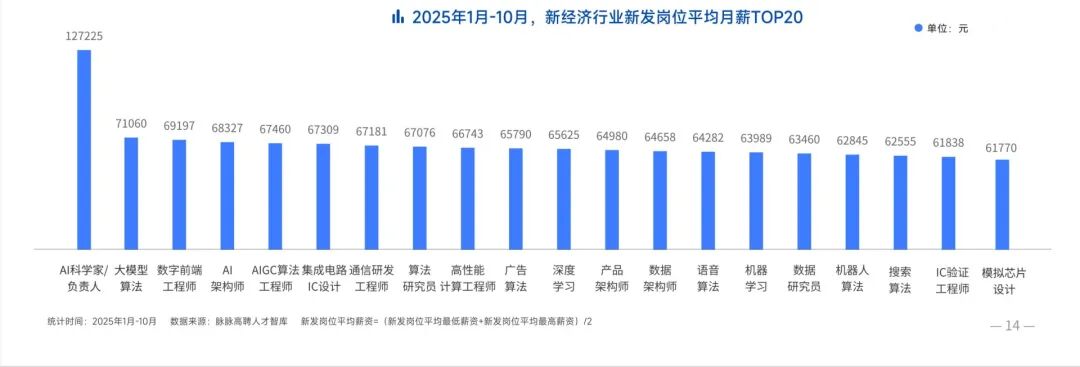
Group 1 - The report indicates that the average monthly salary for the top 20 high-paying positions in 2025 exceeds 60,000 yuan, with AI research and development roles dominating the list [1][2][3] - ByteDance leads in new job postings, followed by Meituan and Alibaba, with Tencent in fourth place and Xiaohongshu surpassing JD.com, NetEase, and Ant Group to enter the top five [1][6] - Chasing has the highest growth rate in new job postings, exceeding 300%, indicating a significant demand for talent in the AI sector [1][8] Group 2 - The job market is showing signs of recovery, with the talent supply-demand ratio in the new economy sector rising to 2.23, meaning 2.23 individuals are competing for one position [2] - From January to October 2025, the number of new AI job postings surged by 543% year-on-year, with a monthly increase of over 11 times in September alone [2] - The most in-demand technical positions in the new economy sector include algorithm engineers and large model algorithms, with high-performance computing engineers being the most scarce [2][3] Group 3 - AI positions dominate the high-paying job market, with AI algorithm engineers earning nearly 18% more than regular algorithm engineers, and AI product managers earning 20% more than their counterparts [2][3] - The average monthly salary for AI scientists/managers is 127,225 yuan, with large model algorithm positions and digital front-end engineers following closely [3][5] - Hardware technology roles such as integrated circuit design and IC verification engineers also maintain competitive salaries, reflecting the broad application of algorithm technology [5] Group 4 - The demand for AI talent is particularly strong in the smart hardware and internet sectors, with companies like Huawei, OPPO, and Xiaomi entering the top 20 for AI job demand [10] - The automotive and transportation industries, including companies like Xiaopeng Motors and Didi, are also showing significant demand for AI positions [10] - The transformation of organizational structures in the AI era is emphasized, with a call for HR to embrace advanced AI tools and redefine operational efficiency [10]




隔夜欧美·12月13日
Sou Hu Cai Jing· 2025-12-13 00:45
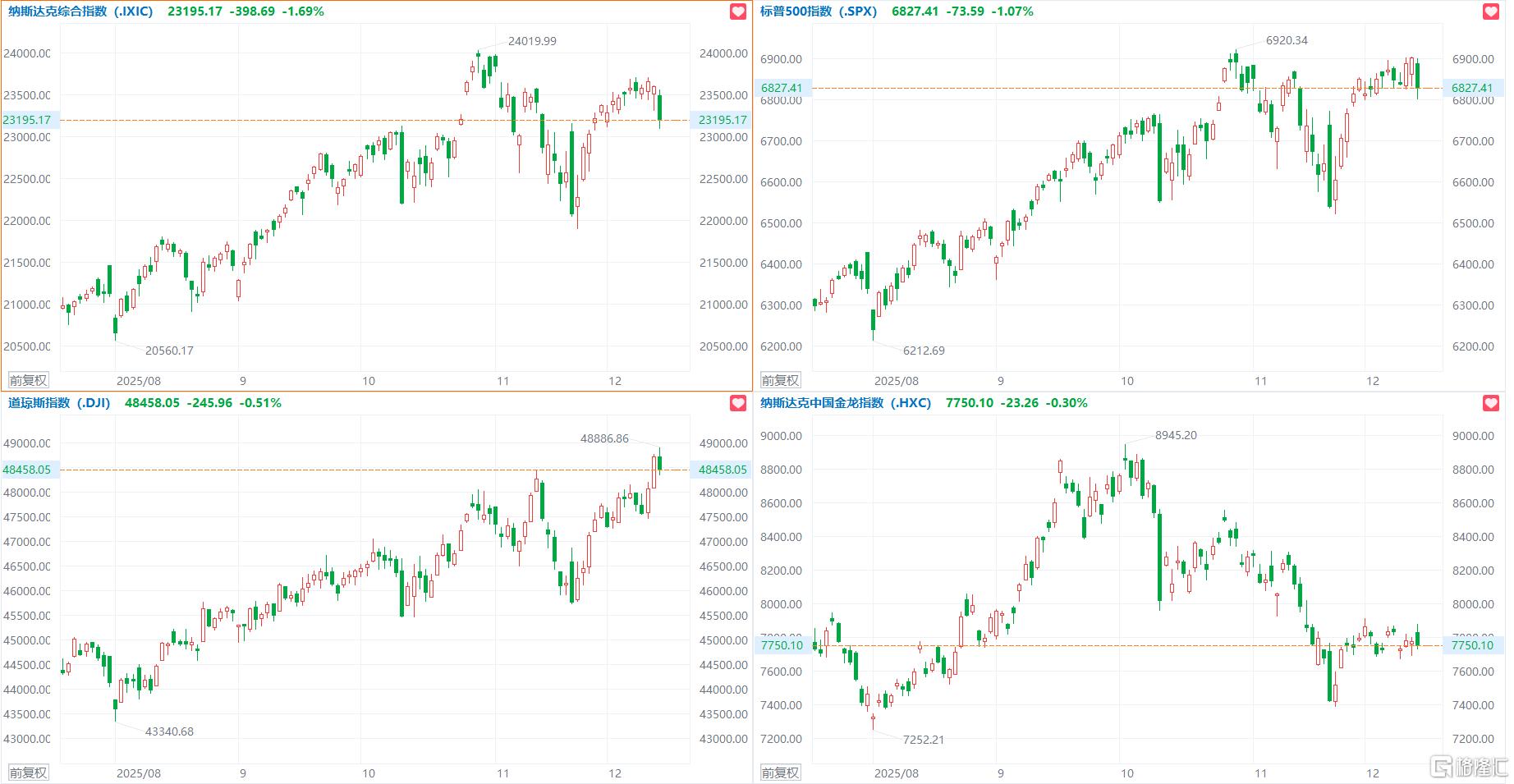
Market Performance - The three major U.S. stock indices closed lower, with the Dow Jones down 0.51% at 48,458.05 points, the S&P 500 down 1.07% at 6,827.41 points, and the Nasdaq down 1.69% at 23,195.17 points [1] - Most large-cap tech stocks declined, with Nvidia down over 3%, Amazon down nearly 2%, and Google, Microsoft, and Facebook down over 1%. In contrast, Tesla rose nearly 3% and Apple increased by 0.09% [1] - Chinese concept stocks mostly fell, with Canadian Solar down over 10%, Daqo New Energy down over 6%, and Pony.ai down over 5%. However, TAL Education rose over 3%, and New Oriental and NetEase both increased by over 2% [1] European Market - European stock indices closed slightly lower, with Germany's DAX down 0.41% at 24,196.16 points, France's CAC40 down 0.21% at 8,068.62 points, and the UK's FTSE 100 down 0.56% at 9,649.03 points [1] Commodity Prices - COMEX gold futures rose 0.39% to $4,329.80 per ounce, with a weekly increase of 2.05%. In contrast, COMEX silver futures fell 3.88% to $62.09 per ounce, but saw a weekly increase of 5.13% [1] - U.S. oil futures closed down 0.12% at $57.53 per barrel, with a weekly decline of 4.24%. Brent crude oil futures fell 0.11% to $61.21 per barrel, with a weekly drop of 3.98% [1] Metal Prices - London base metals closed lower, with LME copper down 2.69% at $11,552.50 per ton, and a weekly decline of 0.59%. LME zinc fell 2.01% to $3,139.00 per ton, but had a weekly increase of 1.32% [1] Bond Yields - U.S. Treasury yields were mixed, with the 2-year yield down 1.20 basis points at 3.522%, while the 10-year yield rose 3.14 basis points to 4.184% [1] - European bond yields collectively increased, with the UK 10-year yield up 3.3 basis points at 4.515% and France's 10-year yield up 2.3 basis points at 3.575% [1]


美股三大指数集体收跌,纳指、标普500指数跌逾1%,博通跌超11%
Ge Long Hui· 2025-12-12 22:26
Market Overview - The three major U.S. stock indices closed lower, with the Dow Jones down 0.51%, the Nasdaq down 1.69%, and the S&P 500 down 1.07% [1] - Popular tech stocks experienced declines, with Broadcom falling over 11%, Nvidia down over 3%, and Google, Microsoft, Meta, and Amazon all dropping over 1%. Tesla, however, saw an increase of over 2% [1] Sector Performance - The storage sector, cryptocurrency mining companies, and semiconductor stocks faced significant declines, with Corning down nearly 8%, Quantum down over 7%, and Micron Technology, Dell Technologies, and Logitech all dropping over 6%. AMD fell nearly 5%, Intel was down over 4%, and HP dropped over 2% [1] - The automotive manufacturing sector saw gains, with Polestar rising over 19%, Rivian up over 12%, and Toyota increasing by over 2% [1] Chinese Stocks - The Nasdaq Golden Dragon China Index fell by 0.30%. Among popular Chinese stocks, Pony.ai dropped 5.6%, WeRide fell 3.2%, and Baidu and NIO both declined over 2%. XPeng was down 1.1%, Alibaba fell 0.9%, and Pinduoduo remained flat. However, Li Auto rose 0.3%, Yum China increased by 1.8%, and New Oriental and NetEase both gained 2.1% [1]



今天TGA上的暴雪翻身之作,要掀翻赛道桌子
3 6 Ke· 2025-12-12 08:36
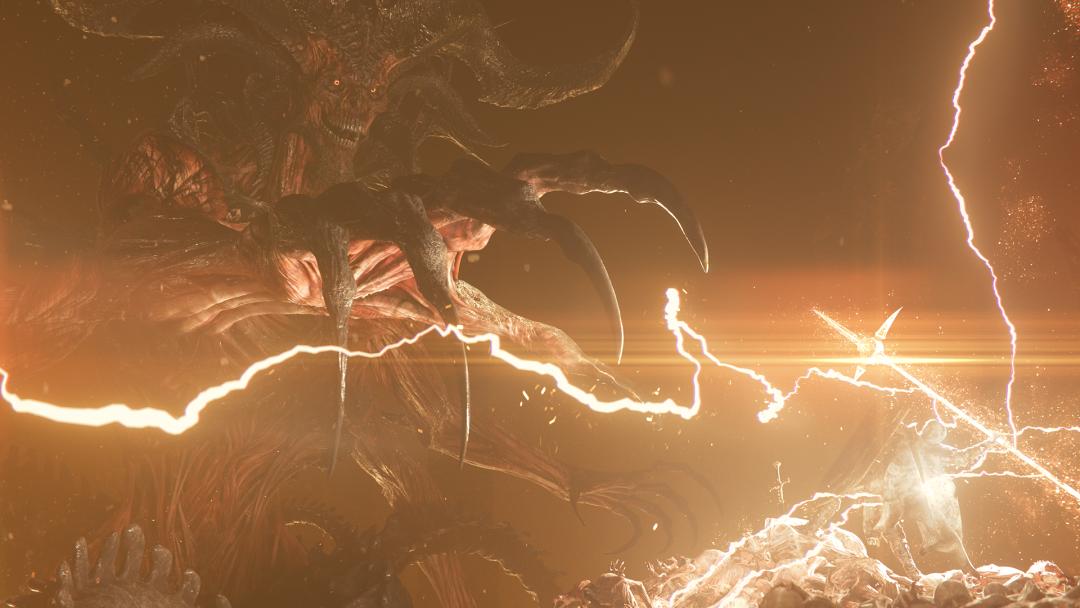
Core Insights - The article highlights the impressive sales performance of "Diablo IV," which achieved over $666 million in sales within five days and attracted over 10 million players in its first month, marking it as Blizzard's fastest-selling game ever [2][44] - The competitive pricing strategy for the Chinese market, with the base version priced at 128 yuan, is emphasized as a significant factor in its success, making it more accessible compared to other games in the market [4][44] - The introduction of new content, including the "Paladin" class and the upcoming DLC "King of Hatred," is expected to further enhance player engagement and retention [2][8] Pricing Strategy - The base version of "Diablo IV" is priced at 128 yuan, which is the lowest globally, making it highly competitive against other titles [4][44] - The "Carnival Package" priced at 488 yuan includes all DLCs and additional cosmetic items, showcasing Blizzard's commitment to providing value to players [6][8] - The "Family Bundle" at 888 yuan offers exclusive content from previous titles, further incentivizing players to invest in the game [8][44] Gameplay Experience - "Diablo IV" focuses on enhancing core gameplay experiences, including combat, loot collection, and character progression, which are critical to the ARPG genre [9][25] - The game introduces innovative mechanics, such as the ability to extract and apply "Legendary Powers" to different gear, increasing build diversity and lowering entry barriers for new players [11][13] - Seasonal updates have continuously improved gameplay, addressing pain points like endgame content and loot variety, thus enhancing player satisfaction [15][17] Market Positioning - The game is positioned as a mature product in the ARPG market, balancing depth and accessibility, which appeals to a broad range of players [36][40] - The ongoing updates and player feedback integration demonstrate Blizzard's commitment to creating a stable and engaging gaming environment [38][41] - The launch of the Chinese server is seen as a strategic move to tap into a large player base, offering a competitive entry point with clear rules and a fair environment [40][41] Conclusion - "Diablo IV" is presented as a strong contender in the ARPG market, combining a solid foundation of gameplay mechanics with a competitive pricing strategy, making it an attractive option for players seeking a long-term investment in a loot-based game [43][44]

港股异动 | 网易-S(09999)尾盘涨超4% 《燕云十六声》海外持续出圈 游戏采用自研“弥赛亚引擎”
智通财经网· 2025-12-12 07:09
智通财经APP获悉,网易-S(09999)尾盘涨超4%,截至发稿,涨3.72%,报217.4港元,成交额13.77亿港 元。 消息面上,近日,由国产引擎打造的武侠开放世界游戏《燕云十六声》在海外市场持续掀起热潮。上线 两周,全球玩家超900万,斩获Steam全球畅销榜第二,好评率近90%。继11月15日PC端全球上线获得 佳绩后,其移动端乘胜追击,定档12月12日登陆iOS与Android平台。截至12月11日,海外版移动端预约 量已突破500万。 据了解,《燕云十六声》采用网易耗时10年自研的"弥赛亚引擎",该引擎拥有20多项专利技术,在执行 效率、能耗控制等方面表现优异。其不仅实现PC与移动端流畅跨端互通,支撑起开封城等宏大场景与 上万名AI NPC的实时生态,更以精细物理渲染呈现服饰绣花、光影流转等细节。游戏中超过一万个AI NPC拥有独立生活日程与个性,"AI捏脸"功能支持照片或声音生成专属角色,引发玩家创作热潮。 ...
网易-S尾盘涨超4% 《燕云十六声》海外持续出圈 游戏采用自研“弥赛亚引擎”
Zhi Tong Cai Jing· 2025-12-12 07:07
据了解,《燕云十六声》采用网易耗时10年自研的"弥赛亚引擎",该引擎拥有20多项专利技术,在执行 效率、能耗控制等方面表现优异。其不仅实现PC与移动端流畅跨端互通,支撑起开封城等宏大场景与 上万名AI NPC的实时生态,更以精细物理渲染呈现服饰绣花、光影流转等细节。游戏中超过一万个AI NPC拥有独立生活日程与个性,"AI捏脸"功能支持照片或声音生成专属角色,引发玩家创作热潮。 消息面上,近日,由国产引擎打造的武侠开放世界游戏《燕云十六声》在海外市场持续掀起热潮。上线 两周,全球玩家超900万,斩获Steam全球畅销榜第二,好评率近90%。继11月15日PC端全球上线获得 佳绩后,其移动端乘胜追击,定档12月12日登陆iOS与Android平台。截至12月11日,海外版移动端预约 量已突破500万。 网易-S(09999)尾盘涨超4%,截至发稿,涨3.72%,报217.4港元,成交额13.77亿港元。 ...