Nvidia(NVDA)

Search documents
'Magnificent 7' stocks are seeing a shocking run: Chart
Yahoo Finance· 2026-03-26 17:31
Core Viewpoint - The "Magnificent Seven" stocks are experiencing significant declines, with all down double-digit percentages from their 52-week highs, indicating a challenging environment for growth-oriented tech stocks [1][2]. Group 1: Stock Performance - Microsoft (MSFT) has seen a decline of over 30% from its highs, attributed to slowing sales growth and increased capital expenditures [1]. - The performance of other "Magnificent Seven" stocks includes: - Google (GOOGL): down 16.64% from a high of $349 to $290.93 - Amazon (AMZN): down 18.13% from a high of $258.60 to $211.71 - Apple (AAPL): down 12.47% from a high of $288.62 to $252.62 - Meta (META): down 25.19% from a high of $796.25 to $594.89 - Nvidia (NVDA): down 15.79% from a high of $212.19 to $178.68 - Tesla (TSLA): down 22.62% from a high of $498.83 to $385.95 [4]. Group 2: Market Conditions - Higher oil prices, influenced by Operation Epic Fury, have contributed to persistent inflation, leading the Federal Reserve to maintain a prolonged higher interest rate stance, which negatively impacts growth-oriented tech valuations [3]. - Capital expenditures for major tech players (Google, Microsoft, Amazon, and Meta) are projected to exceed $650 billion in 2026, marking a 60% increase from 2025, which may pressure profit margins [5]. Group 3: Investor Sentiment - Institutional investors are shifting away from digital growth stocks to safer investments in energy, defense, and domestic manufacturing, indicating a cautious market sentiment towards the "Magnificent Seven" [6]. - Market strategists suggest that the "Magnificent Seven" may eventually transition to a value play, but current conditions do not favor immediate investment in these stocks [6].




The Biggest Surprise About Nvidia's AI Conference: It Didn't Give the Stock a Boost
Yahoo Finance· 2026-03-26 17:20
Core Insights - Nvidia's CEO Jensen Huang predicts that orders related to Blackwell and the new Vera Rubin platform will exceed $1 trillion by 2027, indicating significant growth potential in the AI sector [1] Group 1: Stock Performance - Despite positive growth prospects, Nvidia's stock has declined approximately 4% since the beginning of the year, raising concerns about its performance in the AI market [2] - Nvidia is not alone in its struggles; other major tech stocks, including Meta Platforms and Tesla, have also experienced declines of 9% and 13% respectively, while the Technology Select Sector SPDR ETF is down nearly 5% [3] Group 2: Market Trends - There is a noticeable shift among investors towards safer assets such as dividend stocks, gold, and silver, indicating a potential fatigue with tech investments and concerns about the future of AI [4] Group 3: Valuation Concerns - Nvidia's current valuation at around $4.4 trillion suggests that much of its future growth may already be priced in, which could limit the stock's upward movement despite a strong backlog of orders [5] - The stock trades at 36 times its trailing earnings, which may deter investors if there are doubts about the sustainability of AI spending [6] Group 4: Competitive Landscape - The future attractiveness of Nvidia as an investment hinges on the continued high spending in AI and the company's ability to maintain its dominance in the chip market amidst increasing competition from other firms developing their own chips [7]

Microsoft and NVIDIA's AI-Nuclear Play: ETFs That May Gain
ZACKS· 2026-03-26 16:56
Core Insights - Microsoft (MSFT) has partnered with NVIDIA (NVDA) to enhance AI applications in the nuclear energy sector, aiming to streamline regulatory approvals, accelerate design processes, and improve operational efficiency [1][12] Group 1: Industry Challenges and Opportunities - The demand for carbon-free power is increasing due to the rise in digital infrastructure and supply chain reshoring, with nuclear energy being a crucial component [2] - The nuclear industry faces significant challenges, including delivery bottlenecks, complex engineering requirements, fragmented data, and stringent regulatory hurdles that often delay projects before construction begins [2] - AI has the potential to transform the nuclear energy landscape by standardizing workflows, enhancing traceability and security, and improving predictability while minimizing rework and maintaining safety [3][4] Group 2: AI Integration and Efficiency Gains - The integration of AI tools is expected to help engineers and regulators prioritize the timely and budget-friendly construction of safe, reliable, and carbon-free power [4] - Transitioning from fragmented workflows to structured systems will enhance efficiency without compromising rigor, supporting faster deployment of reliable power and strengthening regulatory trust [5] - Microsoft’s AI initiatives have already shown significant progress, with Aalo Atomics reducing permitting time by 92% and saving an estimated $80 million annually through the use of Microsoft's Generative AI for Permitting solution [6] Group 3: Market Dynamics and Investment Opportunities - The increasing demand for data centers, driven by AI applications, is making nuclear power an attractive solution for energy-intensive operations [8][9] - The ongoing geopolitical tensions, particularly in the Middle East, have raised concerns about energy security, potentially accelerating the shift towards renewable and low-carbon energy sources [10][11] - The focus on nuclear energy is creating investment opportunities in related ETFs, such as Global X Uranium ETF (URA) and VanEck Uranium+Nuclear Energy ETF (NLR), which may benefit from the growing interest in the sector [13]


Hedge Fund and Insider Trading News: Catherine Wood, Ray Dalio, Bill Ackman, Warren Buffett, Two Sigma Advisors, MGM Resorts International (MGM), Kymera Therapeutics Inc (KYMR), and More
Insider Monkey· 2026-03-26 16:51
Core Insights - Generative AI is viewed as a transformative technology by Amazon's CEO Andy Jassy, indicating its potential to significantly enhance customer experiences across the company [1] - Elon Musk predicts that humanoid robots could create a market worth $250 trillion by 2040, representing a major shift in the global economy driven by AI innovation [2] - Major firms like PwC and McKinsey acknowledge that AI could unlock multi-trillion-dollar opportunities, reinforcing the optimistic outlook on AI's economic impact [3] Company and Industry Analysis - A breakthrough in AI technology is believed to be redefining work, learning, and creativity, leading to increased interest from hedge funds and top investors [4] - There is speculation about an under-owned company that may play a crucial role in the AI revolution, suggesting potential investment opportunities [4] - Prominent figures in technology and finance, including Bill Gates and Warren Buffett, recognize AI as a significant technological advancement with the potential for substantial social benefits [8]



Iran War Put Stock Purchases on Ice for Many. Nvidia Still Leads.
Barrons· 2026-03-26 16:44
Core Insights - A new report indicates a significant decline in individual purchases of single stocks since the onset of the war [1] Group 1 - The report highlights that individual investors have reduced their stock purchases sharply, reflecting a broader trend in market behavior during times of geopolitical instability [1]
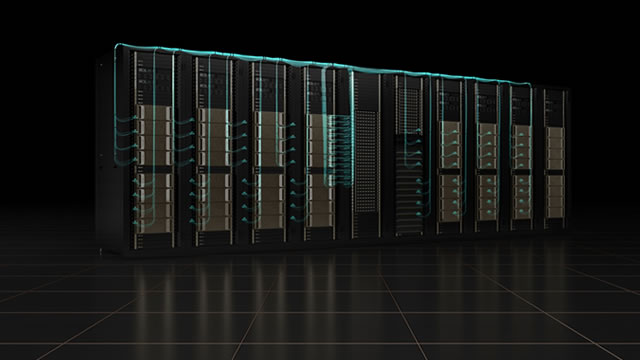
Geopolitical Tensions and Google’s AI Breakthrough Weigh on Wall Street Midday
Stock Market News· 2026-03-26 16:07
Market Overview - U.S. equity markets are experiencing significant downward pressure due to escalating geopolitical conflict in the Middle East and a disruptive technological announcement from the tech sector [1] - Major indexes have reversed course after a brief relief rally, with the Nasdaq leading the declines as energy prices surge and semiconductor valuations are reassessed [1] Major Market Indexes Performance - The Nasdaq Composite has dropped approximately 1.14%, while the S&P 500 is down 0.80% trading near 6,549 points, and the Dow Jones Industrial Average has decreased by 0.49%, roughly 230 points [2] Geopolitical and Economic Drivers - The ongoing war in Iran is a primary driver of the market retreat, with crude oil prices soaring; Brent crude has surpassed $100 per barrel, and U.S. WTI is trading up over 4% near $94 [3] - This spike in energy costs has reignited fears of persistent inflation, leading to a rebound in Treasury yields that negatively impacts credit-sensitive sectors [3] Corporate News and Stock Movements - Alphabet's announcement of a new AI chip, "TurboQuant," which reduces memory requirements for large language models by up to six times, has led to a sell-off in memory chip providers like Micron, Samsung, and SK Hynix [4] - Nvidia remains a focal point despite CEO Jensen Huang's optimistic projections of $1 trillion in orders; however, the stock struggles amid broader tech declines [5] - Other major tech companies, including Tesla and Microsoft, have seen stock drops between 1.5% and 3% due to prevailing risk-off sentiment [5] Sector Performance - The energy sector shows resilience, with Valero Energy rising 4.4% and ConocoPhillips gaining 1.4% as refining margins benefit from higher oil prices [6] - Best Buy surged 6.5% on unusual options activity, while Super Micro Computer experienced a volatile bounce of 8.2% despite ongoing legal scrutiny [6] Upcoming Market Events and Economic Data - Investors are monitoring economic data, including Initial Jobless Claims reported at 210,000, indicating a tight labor market despite geopolitical uncertainty [7] - Upcoming speeches from Federal Reserve Governors are anticipated for insights into the central bank's next moves, with a "higher for longer" narrative gaining traction as inflation risks mount [7] Earnings Reports - Commercial Metals reported weaker-than-expected profits, while investors await earnings results from Blink Charging, Lovesac, and Veritone, which will be critical in assessing consumer discretionary and industrial demand [8]




腾讯研究院AI速递 20260327
腾讯研究院· 2026-03-26 16:06
Group 1: Google TurboQuant Algorithm - Google released the TurboQuant algorithm, which compresses KV cache to 3-bit, reducing memory usage by 6 times and increasing inference speed by 8 times [1] - The algorithm does not require retraining or calibration data, achieving performance close to full precision models in five long-context benchmark tests, and passing the "needle in a haystack" test perfectly at 100,000 tokens [1] - The news caused a collective decline in the storage chip sector, with major companies like Micron and Western Digital seeing stock price drops, although the industry believes that the Jevons Paradox will lead to an actual increase in memory demand [1] Group 2: Google Lyria 3 Pro - Google launched Lyria 3 Pro, capable of generating complete songs up to 3 minutes long, with structured arrangements for verses, choruses, and precise control over rhythm and lyrics timeline [2] - The AI Studio introduced a Composer mode for segment adjustment, with upgraded photo-to-music composition features, and is fully accessible through multiple platforms including Gemini App and API [2] - OpenAI shut down Sora due to cost pressures, earning only $2.1 million in six months, while Google opted to embed generative capabilities into its existing product ecosystem [2] Group 3: Nvidia AVO - Nvidia introduced the AVO autonomous evolution operator, which replaces traditional evolutionary search methods with autonomous coding agents, running continuously for 7 days on Blackwell B200 GPUs without human intervention [3] - The attention kernel generated by AVO achieved 1668 TFLOPS at BF16 precision, surpassing Nvidia's official cuDNN by 3.5% and FlashAttention-4 by 10.5% [3] - This optimization can be transferred to grouped query attention, requiring only 30 minutes for autonomous adaptation to achieve significant performance improvements, with researchers claiming "blind programming is the future of software engineering" [3] Group 4: Meta's HYPERAGENTS - Meta proposed the HYPERAGENTS concept, combining Gödel machine ideas with Darwinian open algorithms, allowing agents to not only complete tasks but also optimize their underlying logic for meta-learning [4] - Performance on SWE-bench improved from 20% to 50% automatically, and agents optimized for specific models maintained performance improvements when switching to other models, demonstrating cross-domain transfer capabilities [4] - The paper further introduced the DGM-H superintelligent agent, integrating task agents with meta-agents into editable programs for meta-cognitive self-modification, accepted by ICLR 2026 [4] Group 5: NeurIPS New Regulations - NeurIPS introduced new regulations prohibiting submissions and peer review participation from institutions on the US OFAC sanctions list, affecting 873 Chinese entities including Huawei and SenseTime [6] - Several scholars publicly refused to serve as area chairs and reviewers, and the Chinese Computer Society issued a statement advocating for a suspension of submissions and reviews, considering moving NeurIPS out of recommended directories if necessary [6] - Chinese scholars have become a core force at NeurIPS, with Tsinghua University ranking first globally with 390 papers for NeurIPS 2025, leading to criticism that this move politicizes academic exchange [6] Group 6: AI Scientist - The AI Scientist system proposed by Sakana AI and others achieved full automation of the research process, autonomously generating research ideas, writing code, running experiments, drafting papers, and conducting peer reviews [7] - A paper generated by the system received a score of 6.33 in ICLR 2025 reviews, and had it not been for the "AI-generated" withdrawal protocol, it would likely have been accepted [7] - Research indicates that the quality of the system's output significantly improves with enhanced foundational model capabilities and computational resources, though limitations such as superficial creativity, coding errors, and citation hallucinations remain [7] Group 7: AI Trends in China - Gartner predicts that by 2030, 80% of local AI infrastructure in China will utilize domestic AI chips, up from the current 20%, driven by export restrictions that accelerate independent R&D and local market protection [10] - By 2028, cross-regional compliance and AI bias issues are expected to account for 50% of AI data management, requiring companies to address compliance risks from multi-regional model usage through data localization [10] - By 2029, 70% of Chinese enterprises are expected to implement formal AI security testing, with AI agents taking on over 40% of IT operations in large enterprises, marking a shift towards "agentified enterprises" as the next phase [11]



Nvidia vs Palantir: Which AI Stock is a Long-Term Buy?
247Wallst· 2026-03-26 15:24
Core Viewpoint - The article compares Nvidia and Palantir as potential long-term investments in the AI sector, highlighting their financial performance and growth prospects. Financial Performance - Nvidia reported Q4 FY2026 revenue of $68.13 billion, a 73% increase year-over-year, with Data Center revenue at $62.31 billion (up 75% YoY) and Data Center Networking revenue surging 263% to $10.98 billion [2][6][7]. - Palantir posted Q4 2025 revenue of $1.41 billion, a 70% increase year-over-year, with U.S. commercial revenue reaching $507 million (up 137% YoY) and total contract value at a record $4.26 billion (up 138% YoY) [3][8]. Growth Drivers - Nvidia's growth is primarily driven by its Blackwell Data Center architecture, which constitutes 91.5% of its total revenue [7]. - Palantir's growth is fueled by its U.S. commercial segment, which is accelerating significantly, prompting analysts to reassess the company's potential [8]. Valuation Metrics - Nvidia has a forward P/E ratio of approximately 22x, supported by a robust annual free cash flow of $96.58 billion [12][15]. - Palantir's forward P/E ratio stands at about 116x, reflecting high expectations for sustained growth, particularly in U.S. commercial revenue [12][15]. Future Guidance - Nvidia anticipates Q1 FY2027 revenue to be around $78 billion, excluding certain revenue from China [10]. - Palantir projects U.S. commercial revenue to exceed $3.14 billion in FY2026, implying at least 115% growth, which is considered an ambitious target [13]. Risk and Execution - Nvidia's diversified demand and strong free cash flow generation provide a more stable investment profile compared to Palantir, which faces challenges related to stock-based compensation and execution risks [11][14][15]. - Palantir's commercial pivot shows promise, but its high valuation may pose risks for investors seeking lower volatility [16].

Nvidia Faces Class Action Over Alleged Crypto Mining Revenue Disclosure Gaps
Yahoo Finance· 2026-03-26 15:14
Core Viewpoint - A class action lawsuit has been revived against Nvidia Corporation, alleging misclassification of GPU revenue from crypto mining and misrepresentation of its gaming segment to investors during a volatile period in digital asset markets [1][2]. Group 1: Legal Allegations - The lawsuit, originally filed as In re NVIDIA Corp. Securities Litigation, claims violations of Section 10(b) of the Securities Exchange Act of 1934 and includes control-person liability claims against CEO Jensen Huang under Section 20(a) [2]. - The refiled action was reinstated on January 15, 2026, after earlier dismissals on procedural grounds in 2022 [2]. Group 2: Impact on Nvidia and Industry - The lawsuit's revival may lead to increased scrutiny of how hardware companies with significant crypto exposure report their segment-level disclosures, a regulatory question that remains unresolved [3]. - The allegations raise a structural question regarding whether bundling crypto-driven hardware sales under consumer gaming labels constitutes a material misrepresentation, which could have implications beyond Nvidia's earnings cycle from 2017-2018 [4]. Group 3: Specific Allegations and Financial Data - The complaint focuses on Nvidia's earnings reporting during late 2017 to early 2018, a period marked by high demand for GPUs driven by cryptocurrency mining, particularly Ethereum [5]. - Plaintiffs allege that Nvidia characterized a significant portion of this demand as gaming revenue instead of isolating it as mining revenue, thus presenting a misleadingly stable revenue picture [5]. - Internal data reportedly identified approximately $155 million in mining-attributable GPU sales during Q4 2017 that were not disclosed separately, with the company's acknowledgment of "elevated" mining demand being described as deliberately vague [6].
Is NVDA's Networking Unit Becoming a Core Growth Engine Amid AI Boom?
ZACKS· 2026-03-26 15:01
Core Insights - NVIDIA's networking business is becoming a vital component of the AI boom, with networking revenues reaching approximately $11 billion in Q4 FY26, a year-over-year increase of over 3.5 times, and full-year sales soaring 142% to around $31 billion [2][11] Group 1: Networking Business Growth - The demand for NVIDIA's networking products, such as NVLink, InfiniBand, and Spectrum-X Ethernet, is increasing as AI models become larger and more complex, necessitating faster connections between processors [3] - Cloud service providers and AI-focused data center operators are building large clusters that require high-speed interconnects, benefiting NVIDIA due to the tight integration of its networking hardware with its compute platforms [4] - The integrated approach of NVIDIA's systems enhances margins, as high-performance switches and interconnects are sold at attractive prices, particularly when part of a larger AI system [5] Group 2: Future Revenue Projections - The AI networking segment is well-positioned for NVIDIA's growth, with the Zacks Consensus Estimate projecting networking revenues to reach $48.68 billion in FY27, indicating a year-over-year growth of approximately 55% [6] Group 3: Competitive Landscape - NVIDIA faces competition from Broadcom and Arista Networks in the AI networking space, with Broadcom being a leader in Ethernet switching and custom silicon solutions, and Arista Networks specializing in high-speed Ethernet switches [7][8] Group 4: Financial Performance and Valuation - NVIDIA's shares have increased by around 56.8% over the past year, outperforming the Zacks Semiconductor – General industry's gain of 49.9% [9] - The company trades at a forward price-to-earnings ratio of 21.51, which is below the industry's average of 23.27 [13] - Earnings estimates for fiscal 2027 and 2028 imply year-over-year increases of approximately 66.7% and 30.6%, respectively, with recent revisions indicating slight downward adjustments for FY27 and upward adjustments for FY28 [16][17]