古茗

Search documents
华源晨会精粹20250730-20250730
Hua Yuan Zheng Quan· 2025-07-30 13:27
Fixed Income - The bank wealth management market's existing scale reached 30.67 trillion yuan as of H1 2025, an increase of 0.72 trillion yuan compared to the end of 2024, surpassing the average change of -0.13 trillion yuan from H1 2021 to H1 2024 [2][7][8] - The average annualized yield of wealth management products weakened in H1 2025, with an average yield of 2.12%, down 0.53 percentage points from the entire year of 2024 [9][10] - The market is expected to stabilize above 30 trillion yuan in H2 2025, with a focus on long-term municipal investment bonds and capital bonds [10] New Consumption - Maternal and Infant Industry - The implementation of the childcare subsidy policy is expected to stimulate the maternal and infant industry, with the market size projected to reach 76,299 billion yuan in 2024 and 89,149 billion yuan by 2027 [12][13] - The birth population in China is expected to increase to 9.54 million in 2024, marking a rise of 520,000 from 2023, the first increase since 2017 [13] - The policy aims to alleviate family burdens and enhance birth rates, benefiting sectors such as dairy products, education and training, and infant care [13] New Consumption - Investment Opportunities - The high-end beauty sector is expected to grow faster than the mass market, with projected CAGR of 9.6% for skincare and 10.8% for makeup from 2023 to 2028 [14][15] - The ancient gold market shows strong growth potential, with a CAGR of 21.8% expected from 2023 to 2028 [15][16] - The current beverage market is seeing a rise in ready-to-drink products, with the market size for ready-to-drink beverages reaching 5,175 billion yuan in 2023, accounting for 36.3% of the beverage market [16][17] Medical Devices - Kaili Medical - Kaili Medical is positioned as a leader in ultrasound and endoscopy equipment, with new product launches expected to enhance market penetration [19][20] - The company has expanded its workforce significantly, preparing for a recovery in the medical device sector, with procurement activities showing signs of normalization [20][21] - Revenue forecasts for Kaili Medical indicate a growth trajectory, with expected revenues of 2.388 billion yuan in 2025, growing to 3.224 billion yuan by 2027 [21] Transportation - YTO Express - YTO Express reported a revenue of 5.53 billion yuan in June 2025, reflecting a year-on-year increase of 11.35%, with a business volume growth of 19.34% [23][24] - The express delivery market is experiencing structural growth, with YTO's business volume growth outpacing overall market growth [24][25] - The "anti-involution" policy is expected to improve profitability in the express delivery sector, with YTO's net profit per ticket projected to increase significantly [25][26]


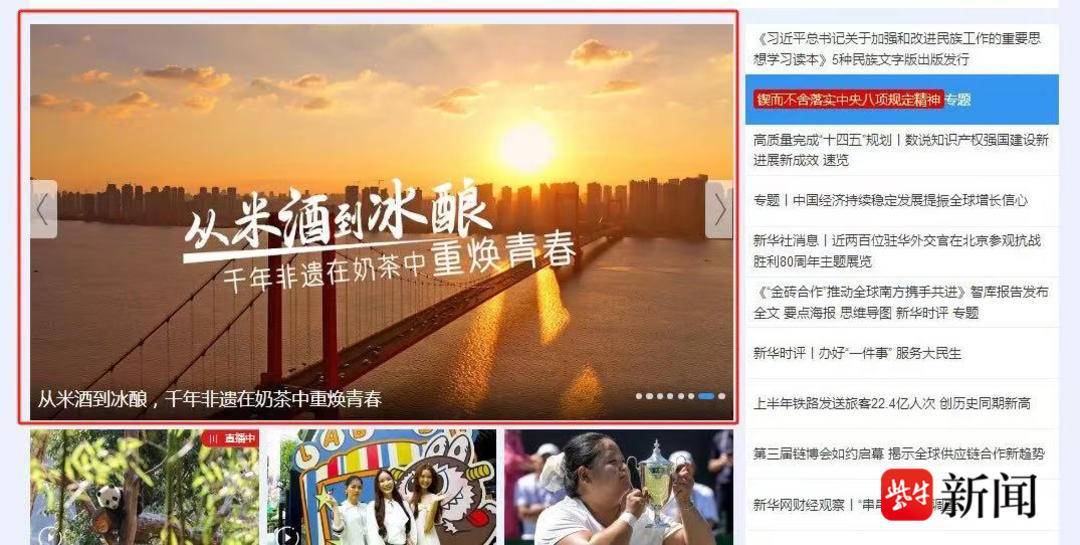
非遗茶饮爆红背后:一杯荔枝冰酿如何撬动Z世代消费市场
Sou Hu Cai Jing· 2025-07-30 12:50
Core Insights - The "Lychee Ice Brew" from "Grandpa Doesn't Brew Tea" has become a summer sensation, achieving over 80 million topic views on Weibo in a single day, indicating a significant shift in the tea beverage market [1] - The product's success is attributed to the integration of intangible cultural heritage (ICH) and emotional value, reshaping the competitive landscape of the tea industry [1] Group 1: Product and Sales Performance - The "Lychee Ice Brew" incorporates the ICH of Hubei Xiaogan rice brewing techniques, with cumulative sales reaching 38 million cups since its launch in 2018, and it is projected to become the top-selling rice brew milk tea in 2024, surpassing the combined sales of its competitors [2] - The use of unique ingredients, such as "Three Grain Inch" glutinous rice and special honeycomb yeast, provides a distinctive flavor that is difficult for industrial products to replicate [9] Group 2: Emotional Value and Market Trends - Emotional value has emerged as a key factor in the popularity of tea beverages, with products like the "Drunken Limited Edition" targeting young consumers' relaxation needs after work, leading to a significant increase in orders for alcoholic tea drinks after 8 PM [10] - The industry is evolving from focusing solely on taste to enhancing consumer experiences and emotional connections, as seen in various brands' strategies to cater to nighttime consumption [11] Group 3: Marketing and Consumer Engagement - "Grandpa Doesn't Brew Tea" has launched the "YE" series marketing activities to strengthen emotional connections, including tasting parties and pop-up stores, resulting in a 175% increase in orders during events [12] - The trend of "tea + lifestyle" collaborations is gaining traction, with other brands also engaging in cross-industry marketing to enhance customer engagement and boost sales [14] Group 4: Industry Competition and Future Directions - The competition in the tea industry is intensifying, with brands focusing on systematic operational capabilities, such as "Heytea" testing ICH tea workshops and "Naixue" planning eco-friendly packaging for ICH series [16] - The concept of deep consumer interaction, such as involving customers in the rice brewing process, is seen as a potential growth area as product homogenization increases [16]

时薪10块,连干10小时:奶茶店的暑假工已跑路
虎嗅APP· 2025-07-30 10:13
Core Viewpoint - The article discusses the impact of the "0 yuan purchase" promotional campaigns on the tea beverage industry in Shenzhen, highlighting the struggles of summer workers and the operational challenges faced by tea shops during intense competition among delivery platforms [3][4][12]. Group 1: Impact of Subsidy Wars - The subsidy wars initiated by various delivery platforms have led to significant operational challenges for tea shops, with reports of unsold beverages and increased workload for staff [3][4][12]. - Many tea shop employees, particularly summer workers, have left their jobs due to the overwhelming demands and chaotic work environment created by these promotional campaigns [4][12]. - The financial implications for tea shops are severe, as they often receive only 10% to 30% of the subsidies offered to customers, leading to losses despite increased sales volume [16][17]. Group 2: Employee Experiences - Employees report extreme physical strain, with long working hours (often exceeding 9 hours) and a lack of breaks, leading to various health issues such as tendonitis and varicose veins [6][7][12]. - The working conditions are described as chaotic, especially during peak times, with employees feeling overwhelmed by the volume of orders and the pressure from delivery riders [9][19]. - Many summer workers perceive themselves as "cheap labor," with low wages and high turnover rates, as they often leave jobs shortly after starting due to the demanding nature of the work [13][15]. Group 3: Conflicts and Challenges - Conflicts between delivery riders and tea shop employees are common, particularly during busy periods when orders are delayed, leading to heightened tensions and confrontations [19][20]. - The article notes that the operational pressures from the promotional campaigns have created a hostile environment for both employees and riders, with both groups feeling the strain of the competitive landscape [20][21]. - Despite the increase in order volume due to promotions, the actual financial benefits for tea shop employees remain minimal, as their compensation does not reflect the increased workload [17][18].

中金:维持古茗(01364)目标价28港元 评级“跑赢行业”
智通财经网· 2025-07-30 06:41
Core Viewpoint - The report from CICC indicates a strong long-term competitive advantage for Gu Ming (01364), leading to an upward revision of adjusted net profit estimates for 2025 and 2026 by 9% and 7% to 2.2 billion and 2.5 billion HKD respectively [1] Group 1: Revenue Growth and Store Expansion - The company is expected to achieve approximately 30% revenue growth in the first half of 2025, driven by both same-store sales and new store openings [2] - The number of stores is projected to reach around 11,000 by the end of the first half of 2025, with about 1,100 new stores added [2] - The company signed nearly 2,000 new stores from January to May, although some openings are delayed due to renovation capacity constraints [2] Group 2: Profitability and Margin Improvement - The company is anticipated to see a recovery in profit margins, with a projected increase in non-GAAP net profit to around 1 billion HKD in the first half of 2025 [2] - The gross margin is expected to expand due to increased cup volume, although lower margins from coffee machines may offset some of this gain [2] - The company plans to enhance coffee product marketing, which is expected to increase coffee cup volume to over 10% by June [2] Group 3: Future Outlook and Competitive Position - The outlook for same-store sales in the second half of the year remains positive, with expectations for accelerated store openings due to the easing of renovation constraints [3] - The company is leveraging delivery subsidies for new customer acquisition and product promotion, particularly for coffee products [3] - The long-term competitive advantage of Gu Ming is expected to be maintained, focusing on brand value and customer experience rather than solely on short-term promotions [3]
中金:维持古茗目标价28港元 评级“跑赢行业”
Zhi Tong Cai Jing· 2025-07-30 06:40
Core Viewpoint - The company has a solid long-term competitive advantage, leading to an upward revision of adjusted net profit for 2025 and 2026 by 9% and 7% to 2.2 billion and 2.5 billion respectively [1] Group 1: Revenue Growth - The company is expected to achieve approximately 30% revenue growth in the first half of 2025, driven by both same-store sales and an increase in the number of stores [2] - The number of stores is projected to reach around 11,000 by the end of the first half of 2025, with about 1,100 new stores added [2] - The company signed nearly 2,000 new stores from January to May, although some were delayed due to renovation capacity constraints, which are expected to ease by June [2] Group 2: Profitability - The company is anticipated to see a recovery in profit margins, with a projected non-GAAP net profit of around 1 billion in the first half of 2025 [3] - The gross margin is expected to expand due to increased cup volume, although the lower margin from coffee machines may offset some of this increase [3] - The company plans to enhance marketing efforts for coffee products, which may lead to a rise in coffee cup volume to over 10% by June [3] Group 3: Future Outlook - The company is expected to accelerate store openings in the second half of the year, potentially exceeding 3,000 new stores for the entire year [4] - Same-store performance may normalize in the second half due to base effects and a reduction in delivery subsidies, but it is still expected to outperform the industry [4] - The company has established a foundation that does not rely solely on a single platform for survival, which may enhance its long-term competitive advantage despite the reduction in delivery subsidies [4]
165万茶农人均增收1.83万元 浙江多元解锁茶产业“共富密码”
Zhong Guo Chan Ye Jing Ji Xin Xi Wang· 2025-07-30 06:05
Core Viewpoint - Zhejiang province is accelerating the high-quality development of its tea industry, aiming to enhance employment and income for tea farmers while promoting the region's tea culture and brand recognition [1][2]. Group 1: Employment and Income - In 2022, Zhejiang had 1.65 million individuals engaged in tea production, with an average income increase of 18,300 yuan per tea farmer, contributing to over 100 million jobs and 10 billion yuan in income [1]. - During the spring tea picking season, Zhejiang attracts over 500,000 tea pickers from other provinces, with an average monthly income exceeding 6,000 yuan [1]. Group 2: Industry Development Goals - The government aims to expand tea garden area to 3.2 million acres and achieve an agricultural output value of 31.5 billion yuan in 2023, with plans to cultivate 20 nationally influential tea brands and target a comprehensive output value of 130 billion yuan [2]. - By 2027, the tea garden area is expected to reach 3.3 million acres, with an agricultural output value of 35 billion yuan and an increase in influential tea brands to 30, aiming for a comprehensive output value of 150 billion yuan [2]. Group 3: Product and Brand Strategy - The strategy focuses on strengthening four major tea production areas: Longjing tea, Baihua tea, early tea, and other specialty teas, with green tea as the primary product [2][3]. - The development will include a variety of tea products such as tea beverages, tea foods, and tea health products, enhancing the overall brand strength of Zhejiang tea [2][3]. Group 4: Technological and Market Innovations - The province plans to promote the global marketing of premium green tea and support the export of tea products, targeting an export value of over 500 million USD [3]. - Emphasis will be placed on digital transformation across the entire tea industry chain, from cultivation to consumption, to enhance efficiency and value [3]. Group 5: New Tea Products and Standards - New tea beverages and foods are emerging as growth areas, with established brands like Nongfu Spring and Gu Ming leading the market [5]. - Zhejiang aims to develop a standardized production system for new tea beverages, focusing on quality and traceability, with 23 companies already participating in the traceability program [6]. Group 6: Export and Internationalization - In 2022, Zhejiang exported 156,000 tons of tea worth 470 million USD, maintaining a leading position nationally [7]. - The province plans to expand its export portfolio to include premium teas and new tea beverages, enhancing international standards and quality management systems [7].
新消费势能向好,关注美护、黄金、潮玩及现制茶饮赛道
Hua Yuan Zheng Quan· 2025-07-30 05:42
Investment Rating - The report maintains a "Positive" investment rating, highlighting the favorable momentum in new consumption sectors, particularly in beauty care, gold, trendy toys, and freshly brewed tea drinks [4]. Core Insights - The new consumption landscape reflects the evolving consumer preferences of the younger generation, emphasizing the importance of understanding these narratives for capturing growth opportunities in new consumption companies [80]. Beauty Care Sector - The high-end beauty segment is expected to grow faster than the mass market, with projected CAGR for high-end skincare and makeup at 9.6% and 10.8% respectively from 2023 to 2028, compared to 8.2% and 6.7% for mass-market products [5][9]. - Domestic brands are gaining market share, with the national beauty market share reaching 50.4% in 2023, surpassing foreign brands [15][18]. Gold Jewelry Sector - The gold jewelry market in China is projected to grow from 820 billion yuan in 2023 to 1,140 billion yuan by 2028, with a CAGR of 6.8% [19]. - The ancient gold segment shows strong growth potential, with a CAGR of 21.8% expected from 2023 to 2028, despite a slowdown in growth rates [24][25]. Trendy Toys Sector - The trendy toy market in China reached 626 billion yuan in 2023, with a CAGR of 31.24% from 2019 to 2023, indicating rapid growth [40]. - The market concentration is increasing, with the top five companies' market share rising from 22.8% in 2019 to 26.4% in 2021 [46]. Freshly Brewed Tea Drinks Sector - The freshly brewed tea drink market in China was valued at 517.5 billion yuan in 2023, accounting for 36.3% of the beverage market, with expectations to reach 1,163.4 billion yuan by 2028 [67]. - The market for freshly brewed tea drinks is anticipated to maintain its position as the largest segment within the freshly brewed beverage category, with a projected CAGR of 17.3% from 2023 to 2028 [71][75].



智通港股沽空统计|7月30日
智通财经网· 2025-07-30 00:25
Summary of Key Points Core Viewpoint - The report highlights the top short-selling stocks in the market, indicating significant short-selling activity and potential investor sentiment towards these companies. Group 1: Top Short-Selling Ratios - JD Health (86618) has the highest short-selling ratio at 100.00% [1][2] - Hang Seng Bank (80011) follows with a short-selling ratio of 88.44% [1][2] - SenseTime (80020) has a short-selling ratio of 76.25% [1][2] Group 2: Top Short-Selling Amounts - Xiaomi Group (01810) leads in short-selling amount with 2.209 billion [1][2] - Tencent Holdings (00700) has a short-selling amount of 0.955 billion [1][2] - WuXi AppTec (02359) reports a short-selling amount of 0.698 billion [1][2] Group 3: Top Short-Selling Deviations - Hang Seng Bank (80011) has the highest deviation value at 48.82% [1][2] - JD Health (86618) follows with a deviation value of 45.78% [1][2] - Uni-President China (00220) has a deviation value of 33.70% [1][2]






时薪10块,连干10小时:奶茶店里被“0元购”干翻的暑假工已跑路
Hu Xiu· 2025-07-29 09:49
Core Points - The article discusses the ongoing subsidy war among food delivery platforms since the launch of Taobao's delivery service in May, highlighting the intense competition and its impact on businesses and workers [1][35]. Group 1: Impact on Tea Shops - The tea and coffee shop sector is heavily affected by the subsidy wars, with many shops experiencing operational challenges such as unclaimed orders and staff conflicts [2]. - Some tea shop employees report significant financial losses due to the subsidy model, where they receive minimal compensation for orders, often not covering their costs [2][28]. - The article mentions a specific case where a tea shop received 1,600 orders in a day but only generated over 1,000 yuan in revenue, indicating the financial strain on businesses [29]. Group 2: Employee Experiences - Employees in tea shops, particularly summer workers, report physical exhaustion and injuries due to long hours and high-pressure environments, with some quitting after just a few days [5][6][22]. - The working conditions are described as grueling, with employees often standing for over 9 hours a day without breaks, leading to various health issues [10][11][12]. - The article highlights the perception of employees as "cheap labor," with summer workers earning around 20 yuan per hour, which is considered competitive but still low given the demands of the job [23][24]. Group 3: Conflicts and Challenges - There are frequent conflicts between delivery riders and shop employees, particularly during peak order times, leading to stressful working conditions [30][32]. - The article notes that the chaotic environment during busy periods often results in mistakes, further exacerbating tensions between staff and riders [31][34]. - Despite the increase in order volume due to subsidies, the article emphasizes that the financial benefits do not translate to higher earnings for employees, who remain underpaid and overworked [28][36].

冰杯市场迎来农夫山泉、伊利、蒙牛等多方巨头,这个夏天又卖爆了
Xi Niu Cai Jing· 2025-07-29 06:42
Core Insights - The ice cup market is experiencing intense competition with numerous brands entering the space, including Yuanqi Forest, Yili, Mengniu, and others, all of which have found success in this segment [2] - The price of ice cups has increased significantly, with some products priced at nearly three times the cost of the water used to make them, indicating a shift in consumer willingness to pay for convenience and novelty [2] - Consumer habits are evolving, with ice cups becoming a popular choice for refreshing drinks during summer, leading brands to capitalize on this trend by enhancing their ice cup offerings [3] Market Dynamics - The ice cup market has seen a dramatic increase in sales, with a reported growth rate exceeding 300% over the past two years, particularly in first-tier cities where the average annual consumption is 48 cups per person [3] - The future growth of ice products in instant retail channels is projected to reach 39% over the next three years, significantly outpacing the overall channel growth of 8% [3] - Despite the current dominance of plain water ice cups, there is potential for flavor diversification, which could become a key competitive factor in the market [3] Consumer Behavior - Ice cups are increasingly viewed as a solution for consumers seeking convenience, especially in scenarios where traditional ice acquisition is difficult, thus enhancing the appeal of these products [3] - The emotional value and experiential aspect of ice cups are driving consumer interest, as they cater to modern consumers' desires for personalized and immediate consumption experiences [4] - The seasonal nature of ice cups presents challenges, with potential sales peaks followed by periods of low demand, indicating a need for brands to innovate and maintain consumer engagement year-round [3][4]