吉利

Search documents
港股概念追踪 | 上海推“模速智行”行动计划 自动驾驶产业有望迎来加速发展(附概念股)
智通财经网· 2026-01-14 23:37
Core Insights - Shanghai is advancing its autonomous driving industry through the "Mosu Zhixing" action plan, aiming to transform technological innovation into industrial competitiveness [1][2] - The plan includes the establishment of public service platforms like digital twin training grounds and expands the autonomous driving open area to 2,000 square kilometers with over 5,000 kilometers of roads [1] - The action plan also promotes the orderly organization of smart taxi demonstration operations and the trial of L3 autonomous passenger vehicles [2] Industry Development - Shanghai has consistently pushed for the development of the autonomous driving industry, with previous initiatives such as the 2022 implementation plan for smart connected vehicles and the issuance of road testing licenses for driverless vehicles in 2023 [2] - The introduction of the action plan is expected to provide new support for the industry's growth, particularly in the commercialization of intelligent driving technologies [2] - The demand for advanced autonomous driving components like chips, lidar, and control systems is anticipated to grow rapidly as the ecosystem expands [3] Company Progress - Several domestic companies, including Changan, BYD, GAC, Dongfeng, SAIC, Geely, XPeng, and Li Auto, have made significant advancements in L3 autonomous driving, with multiple models receiving road testing permits [4] - Companies like Huawei and GAC have developed L3 solutions and are actively testing them in various cities, indicating a shift towards practical applications of autonomous driving technology [4] - The formal implementation of L3 autonomous driving regulations is expected to be a key catalyst for industry development by 2026 [4] Related Companies - Junsheng Electronics has signed a strategic cooperation agreement with Sien Intelligent Driving to develop L4 autonomous driving solutions [5] - Seres has launched multiple models, including the Aito M5 and M7, targeting the high-end user market with differentiated positioning [6] - Cao Cao Mobility is advancing its Robotaxi business with the launch of its autonomous driving platform, marking a significant step in operational integration [6] - Leap Motor has commenced nationwide deliveries of its Lafa5 model, which incorporates advanced AI and lidar systems [6] - Horizon Robotics and ZF are collaborating to develop an L3 intelligent driving system, expected to achieve mass production in 2026 [6]
新能源车全年渗透率首超燃油车
Mei Ri Shang Bao· 2026-01-14 23:16
Core Insights - In 2025, China's passenger car retail reached 23.744 million units, a year-on-year increase of 3.8%, with new energy vehicles (NEVs) surpassing 57% penetration rate, marking a significant shift in market dynamics [1] - BYD topped the global pure electric vehicle sales with 4.6024 million units, while China's total vehicle exports exceeded 7 million units, setting a new historical record [1] - The competition in the automotive market has shifted from price wars to value comparisons, with models like Geely's Xingyuan and Wuling's Hongguang MINIEV leading their respective segments [1] Industry Performance - In the 2025 sales rankings, domestic brands occupied seven out of the top ten spots, with NEVs leading significantly; Geely's Xingyuan sold 465,775 units, becoming the annual "dark horse" [2] - Wuling Hongguang MINIEV ranked second with 435,599 units sold, contributing nearly half of SAIC-GM-Wuling's NEV sales [2] - The top three models included Nissan's Sylphy, which sold 319,990 units, maintaining a strong market presence despite the rise of NEVs [2] New Entrants and Innovations - Among new entrants, Xiaomi's SU7 performed well with 258,164 units sold, but faced challenges due to safety concerns and controversies [3] - Leap Motor led the new force segment with 596,600 units sold, achieving a completion rate of 119.3%, marking it as the fastest-growing new force brand [3] Upcoming Models and Market Trends - The 2026 automotive market is set to intensify with the release of several flagship models, focusing on diverse technologies and smart features [4] - New models include Xiaomi's SU7, which is set to launch at a starting price of 229,900 yuan, and NIO's flagship SUV ES9, aimed at competing with luxury models like BMW X7 and Mercedes GLS [4] - The market is expected to shift from "incremental expansion" to "stock competition," with domestic brands pushing for high-end development and joint ventures accelerating technological transitions [5]

产销连续3年保持3000万辆以上规模 汽车产业竞争力源自硬实力(经济聚焦)
Ren Min Ri Bao· 2026-01-14 21:55
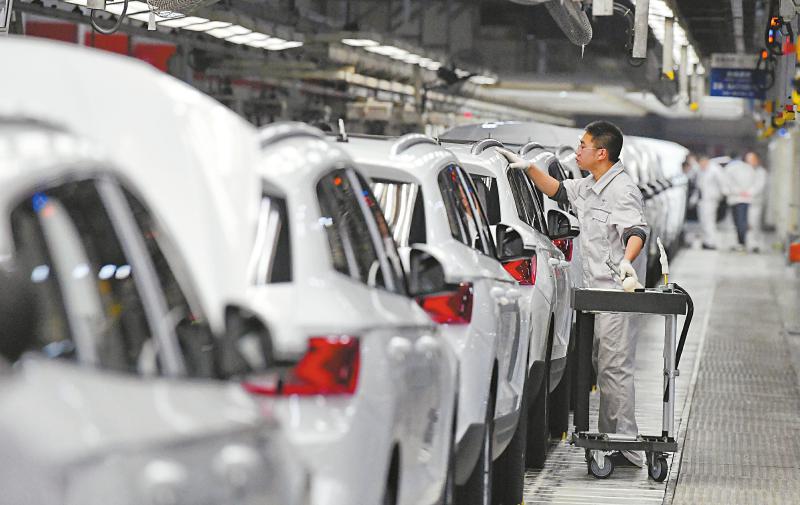
Core Insights - The continuous advancement of electrification technology and the application of cutting-edge technologies have led to sustained growth in China's automotive production and sales, reflecting the resilience and dynamic momentum of the economy [1] Group 1: Automotive Production and Sales - China's automotive production and sales have maintained a scale of over 30 million units for three consecutive years, ranking first globally for 17 years [1] - The production and sales of new energy vehicles (NEVs) are projected to reach 16.626 million and 16.49 million units respectively in 2025, with year-on-year growth of 29% and 28.2%, making up 47.9% of total new car sales [2] Group 2: Technological Advancements - The average range of pure electric passenger vehicles in China is expected to approach 500 kilometers by 2025, with rapid adoption of 800V high-voltage silicon carbide platforms and fast-charging technology [2] - The integration of various technological routes, including electrification, efficient internal combustion engines, hydrogen fuel, and synthetic fuels, is advancing, with China's "super electric hybrid technology" becoming a successful example for reverse technology export [2] Group 3: Export Growth - In 2025, China's NEV exports are expected to reach 2.615 million units, doubling year-on-year, with passenger vehicle exports at 2.532 million units and commercial vehicle exports at 83,000 units, showing significant growth [3] Group 4: Intelligent Driving and Automation - Huawei's ADS 5 is transitioning from technology validation to mass production, with over 1 million units equipped and a user engagement rate exceeding 95%, indicating a shift towards large-scale deployment of autonomous driving technology [4] - The proportion of new passenger vehicles with L2-level combined auxiliary driving functions has exceeded 60%, with the first L3-level conditional autonomous driving models receiving approval [4] Group 5: Industry Transformation and Profitability - Measures to combat "price wars" and improve industry standards have been implemented, leading to a 4.4% profit growth in the automotive industry from January to October 2025, accelerating to 7.5% by November [6] - The industry is transitioning from resource-dependent, low-cost competition to a focus on technological innovation and value upgrading, with high-end domestic brands seeing over 40% year-on-year sales growth [6] Group 6: Future Outlook - The Chinese automotive industry is expected to continue its high-quality development and maintain stable market operations in 2026, supported by the smooth transition of new policies [7]
成都打响“下半场”逆袭战
Si Chuan Ri Bao· 2026-01-14 19:17
Core Insights - The establishment of Jetta Sichuan marks a significant milestone for Chengdu's automotive industry, allowing for local market-oriented research and rapid decision-making, which is crucial for adapting to the electric vehicle (EV) market [2][3] - Chengdu aims to transform its automotive industry from assembly-based operations to a more integrated model that includes R&D, manufacturing, and sales, thereby enhancing its competitiveness in the EV sector [2][3] Industry Overview - Chengdu has over 10 automotive manufacturers, primarily functioning as assembly plants, lacking headquarters and R&D capabilities, which hindered its response to the EV wave [2] - In 2025, Chengdu's automotive production reached 821,000 units, a year-on-year increase of 26.6%, with EV production at 205,000 units, reflecting a remarkable growth of 198.3% [2] Strategic Developments - Jetta Sichuan, with a registered capital of 3 billion yuan, is positioned to lead the development of smart electric vehicles tailored to local needs, supported by local government and strategic partnerships with major automotive players [3] - The collaboration between local governments and automakers like FAW and Dongfeng aims to create "city partners" and "industry partners," fostering a supportive ecosystem for the automotive sector [3] Future Goals - Jetta Sichuan plans to produce 400,000 to 500,000 vehicles annually, with five new models, four of which will be EVs, expected by 2028 [3] - Chengdu targets to exceed 1.5 million vehicles in production and 300 billion yuan in output by 2030, aiming to reclaim its position among the top automotive cities in China [3]

驶入阿拉木图:满街的中国品牌,与一场正在发生的认知变革
2 1 Shi Ji Jing Ji Bao Dao· 2026-01-14 12:15
Core Insights - Chinese brands have established a strong presence in Kazakhstan, becoming a significant part of the local market with a wide range of products from automobiles to electronics [1][2][3] - The trade relationship between China and Central Asia has seen substantial growth, with trade volume expected to reach $60.7 billion from 2017 to 2024, marking a 150% increase [1] - Kazakhstan is emerging as a key hub for Chinese companies looking to expand overseas, with over 9,000 Chinese enterprises operating in the region [1][3] Trade and Investment - By 2024, China's direct investment and loans to Central Asia are projected to exceed $24 billion, with bilateral trade between China and Kazakhstan reaching a historic high of $43.8 billion [3][4] - The market share of Chinese automotive manufacturers in Kazakhstan has surged from approximately 2% in 2020 to 38% in 2024, indicating a rapid acceptance of Chinese vehicles [3][4] Market Dynamics - The local market in Kazakhstan is characterized by a young population, with 95% owning smartphones, making it an attractive target for internet and technology companies [1][2] - The presence of Chinese brands is evident in various sectors, including home appliances, automobiles, and mobile phones, with local production of Chinese vehicles already underway [4][5] Consumer Behavior - There is a notable shift in consumer perception of Chinese products, moving from low-cost options to recognizing their reliability and technological advancements [5][6] - The acceptance of new technologies and experiences by the young population in Kazakhstan provides fertile ground for the introduction of innovative products [5][6] E-commerce and Marketing Strategies - The e-commerce market in Central Asia is projected to reach $14.7 billion by 2024, with Kazakhstan's market alone estimated at $6 billion [6][7] - Companies are advised to adopt a dual approach in marketing: utilizing mainstream e-commerce platforms for quick consumer access while also developing direct-to-consumer (D2C) channels to build brand identity [7][8] Localization Challenges - Entering the Central Asian market requires a nuanced understanding of local languages and consumer habits, as each country has distinct preferences and regulatory environments [8][9] - Companies often underestimate the complexity of the market, leading to potential pitfalls if they do not conduct thorough market research and engage local partners [9]
年度目标55万辆以上,小鹏2026年的「生死战」,全看这四张底牌
3 6 Ke· 2026-01-14 08:17
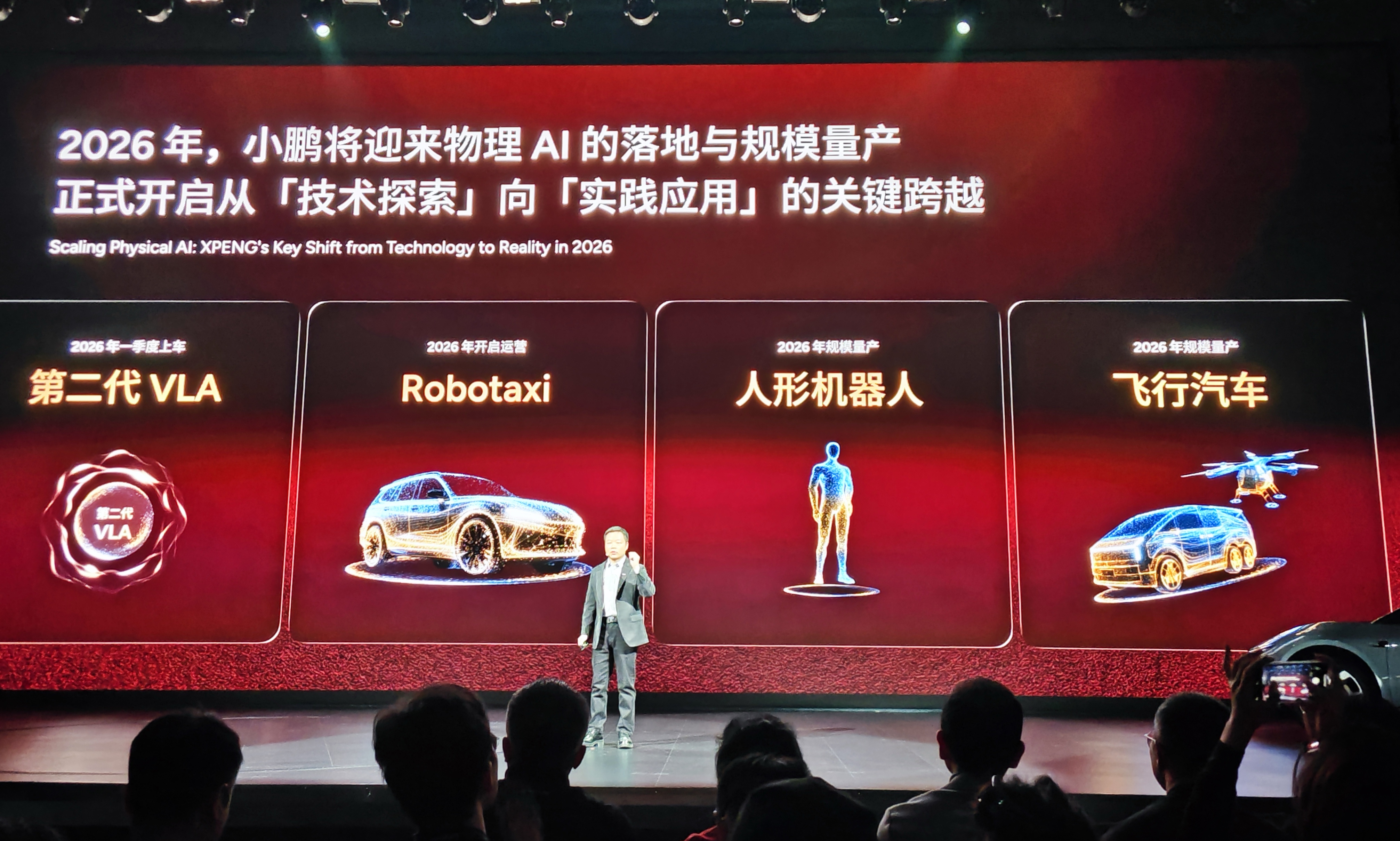
Core Insights - Xiaopeng Motors is rapidly advancing its transformation into a "physical AI company," with plans to launch humanoid robots, flying cars, and Robotaxi operations this year [1] - The company set an ambitious sales target of 550,000 to 600,000 vehicles for 2026, representing a year-on-year increase of approximately 28% from 429,445 units sold in 2025 [5][21] - To achieve this target, Xiaopeng aims to sell an average of at least 45,834 vehicles per month, which is a significant increase from the 35,787 monthly average in 2025 [6] Sales Strategy - Xiaopeng's sales strategy involves launching four new SUVs (G01, G02, and two new MONA models D02 and D03) to support its ambitious sales goals [6][21] - The G01 and G02 are expected to target the high-end market, while the D02 and D03 will focus on the mainstream SUV segment [18][20] - The G01 is anticipated to feature a super-range version, aiming to alleviate range anxiety for high-end family users with a potential electric range exceeding 430 km and a total range surpassing 1,500 km [14] Market Positioning - The high-end SUV market is becoming increasingly competitive, with established players like BYD and Geely already having a strong foothold [12][20] - Xiaopeng's strategy includes leveraging its existing models, such as the MONA M03, to build a solid foundation for the new SUVs [20] - The company aims to differentiate itself through a "high intelligence and cost-effectiveness" approach, particularly in the 150,000 RMB market segment [20] Technological Advancements - Xiaopeng is focusing on integrating advanced AI technologies into its vehicles, including self-developed AI chips and systems that enhance driving assistance and user experience [24][28] - The company is aware of the need to maintain a competitive edge in technology, especially as competitors are also enhancing their offerings in the same price range [29][30] Challenges and Considerations - Despite a successful year in 2025, Xiaopeng faces challenges in sustaining high sales volumes for new models, as market competition intensifies [32][35] - The company must balance its product offerings to ensure that it meets consumer expectations for high-quality, feature-rich vehicles while managing costs effectively [28][29] - Building brand perception and customer loyalty in the high-end market is crucial, as consumers increasingly seek not just product quality but also brand identity and service [36][37]

2025年克罗地亚共售出69140辆新乘用车
Shang Wu Bu Wang Zhan· 2026-01-13 15:21
Core Insights - In 2025, Croatia sold a total of 69,140 new passenger cars, representing an 8.3% increase compared to 2024 [1] - December sales saw a year-on-year growth of 15.4%, reaching 4,206 vehicles [1] Brand Performance - The top-selling brands in Croatia were Skoda (9,458 units, 13.7% market share), Volkswagen (8,594 units, 12.4%), Opel (6,063 units, 8.7%), Renault (5,300 units, 7.7%), and Suzuki (4,299 units, 6.2%) [1] - Among emerging Asian brands, Geely sold 895 units and BYD sold 365 units [1] Fuel Type Distribution - Gasoline vehicles dominated the market with 32,574 units sold, accounting for 47.1% of the market share [1] - Hybrid vehicles followed with sales of 25,270 units, representing 36.5% of the market [1] - Diesel vehicles sold 8,684 units, making up 12.6% of the market [1] - Electric vehicles totaled 1,334 units sold, which is 1.9% of the market [1] - Gasoline-powered vehicles also had sales of 1,278 units, accounting for 1.8% [1]
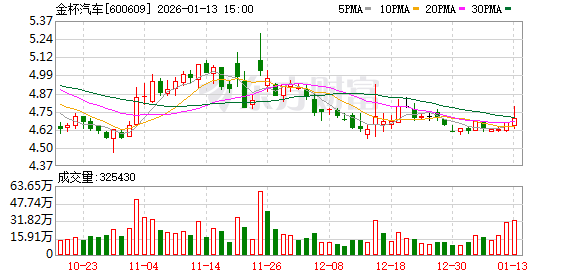
金杯汽车已取得中拓科技52%股权 成为其控股股东
Zheng Quan Shi Bao Wang· 2026-01-13 12:22
Core Viewpoint - The company has successfully acquired a 52% stake in Changchun Zhongtuo Molding Technology Co., Ltd. for a total investment of 158 million RMB, marking a significant step in its growth strategy focused on high-quality development [2][4]. Group 1: Investment Details - The company invested 158 million RMB to acquire 52% of Zhongtuo Technology, which has now increased its registered capital to 85 million RMB, with the company contributing 44.2 million RMB [2]. - The acquisition allows the company to become the controlling shareholder of Zhongtuo Technology, which specializes in automotive parts and has established manufacturing bases in Changchun, Chengdu, and Tianjin [2]. Group 2: Business Operations - Zhongtuo Technology is a high-tech enterprise engaged in the research, production, and sales of automotive components, supplying major clients such as Hongqi, Volkswagen/Audi, BMW, Toyota, and others [2]. - The company’s main business includes designing, producing, and selling automotive parts, with significant products like interior components and seats primarily supplied to Brilliance BMW [3]. Group 3: Strategic Implications - The transaction aligns with the company's growth strategy centered on "new" initiatives, enhancing its presence in the lightweight automotive parts sector and diversifying its customer base [4]. - Following the acquisition, Zhongtuo Technology will not have any equity pledges or external guarantees, allowing it to be fully integrated into the company's consolidated financial statements [4].

中欧电动汽车案磋商达成积极成果
Cai Jing Wang· 2026-01-13 09:08
Core Viewpoint - The EU-China Electric Vehicle anti-subsidy negotiations have made significant progress, emphasizing that the competitiveness of China's electric vehicle industry stems from continuous technological innovation and market competition, rather than subsidies [1][2]. Group 1: Negotiation Progress - The EU and China have engaged in multiple rounds of negotiations to address the EU's concerns regarding electric vehicles, aiming for a "soft landing" in the anti-subsidy case [1]. - The EU has issued guidance for Chinese exporters on submitting price commitment applications, which will allow them to address concerns in a WTO-compliant manner [1][3]. - The EU-China Chamber of Commerce welcomed the dialogue-driven approach to resolving the electric vehicle case, highlighting its importance for bilateral trade and investment cooperation [1]. Group 2: Price Commitment Framework - The EU has confirmed that it will evaluate price commitment applications based on objective and non-discriminatory principles, adhering to WTO rules [5]. - Two methods for determining minimum prices have been outlined: one based on the CIF price during the investigation period plus the applicable anti-subsidy tax rate, and the other based on the sales price of similar electric vehicles produced within the EU [5]. - Exporters may also make annual export quantity commitments to mitigate cross-subsidy risks, which will further strengthen the response to subsidy damages [5]. Group 3: Impact of Anti-Subsidy Tax - Despite the anti-subsidy tax, the market share of Chinese electric vehicles in the EU has increased from 7% in 2024 to 7.6% in the first eight months of 2025 [8]. - Several Chinese automakers are establishing local production in Europe to avoid tariffs, which will be a significant factor in price commitment negotiations [9]. Group 4: Investment Commitments - Investment commitments in local manufacturing will be positively considered in the evaluation of price commitment proposals, reflecting a broader industrial policy issue rather than just a trade dispute [9]. - Chinese electric vehicle companies have announced various investment and production plans in the EU following the introduction of the anti-subsidy tax, including BYD's establishment of a European headquarters and R&D center in Budapest [9].



【新能源周报】新能源汽车行业信息周报(2026年1月5日-1月11日)
乘联分会· 2026-01-13 08:40
Industry Information - The world's first commercially viable solid-state battery has been introduced, featuring an energy density of 400 Wh/kg and the ability to charge in just 5 minutes, with a cycle life of up to 100,000 times [11] - The Ministry of Commerce predicts that over 11.5 million vehicles will be replaced under the vehicle trade-in policy by 2025, with a total sales value exceeding 2.6 trillion yuan [11] - At CES 2026, autonomous driving technology and artificial intelligence are highlighted as key themes, with significant interest in how AI can address safety challenges in autonomous vehicles [12][13] - Contemporary Amperex Technology Co., Ltd. (CATL) has signed a five-year strategic agreement with NIO to deepen collaboration on battery swapping technology [10] - The first half-solid-state lithium battery energy storage project in Inner Mongolia has been connected to the grid, marking a significant advancement in energy storage technology [14] Policy Information - The State Council is accelerating the introduction of comprehensive management measures for the recycling of new energy vehicle batteries [22] - Various local governments are implementing policies to promote the development of electric vehicle charging infrastructure, including the construction of charging stations and the integration of charging facilities in urban planning [20][25][37] - The Guangdong provincial government is optimizing insurance services for new energy vehicles and exploring the development of smart driving liability insurance products [27] - The Ministry of Industry and Information Technology is soliciting opinions on national standards related to automatic parking and safety event data for smart connected vehicles [35] Company Information - NIO has launched 36 new power swap stations, bringing the total to 3,680 stations [8] - GAC Group has signed a contract with Huawei to deepen cooperation in the HarmonyOS ecosystem and AI technology [8] - Leap Motor has achieved a record delivery of over 160,000 units of its B series vehicles [8] - Huawei's partnership with Qian Kun has resulted in over 900,000 units sold in 2025, with a market share of 27.8% in urban navigation assistance [16]