鸿蒙智行

Search documents
预计2025年零售增速5%,车市驶入“平稳期”
Bei Jing Shang Bao· 2025-12-08 13:53
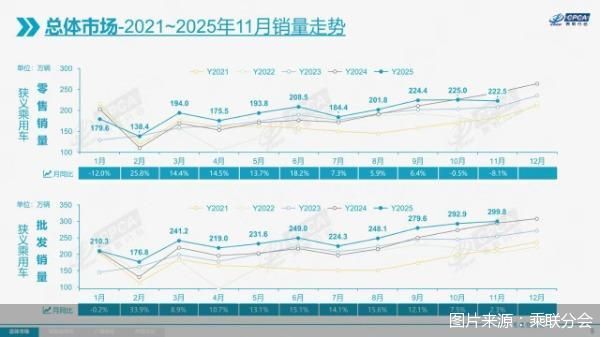
Core Viewpoint - The Chinese automotive market is entering a stable development phase, with retail sales expected to grow by 5% this year despite a decline in November sales compared to previous months [1][4]. Group 1: Market Performance - In the first eleven months of 2023, retail sales reached 21.483 million vehicles, maintaining overall growth [1]. - November retail sales of passenger vehicles were 2.225 million units, a year-on-year decrease of 8.1% and a month-on-month decrease of 1.1% [3]. - The market is experiencing a "horizontal" trend, with a stable performance after a period of rapid growth earlier in the year [3][4]. Group 2: Wholesale and Export Trends - In November, wholesale volume reached 2.998 million units, a year-on-year increase of 2.3% and a month-on-month increase of 2.4%, marking a historical high for the month [4]. - Passenger vehicle exports reached 601,000 units in November, showing a significant year-on-year increase of 52.4% and a month-on-month increase of 9.1% [4]. Group 3: New Energy Vehicle (NEV) Insights - The penetration rate of new energy vehicles (NEVs) has approached 60%, with wholesale penetration at 56.9% and retail penetration at 59.3% in November [5]. - In November, the wholesale volume of NEVs was 1.706 million units, a year-on-year increase of 18.7%, while retail sales reached 1.321 million units, a year-on-year increase of 4.2% [6]. Group 4: Market Dynamics and Consumer Behavior - The automotive market is expected to see increased consumer activity towards the end of the year, driven by promotional activities and the urgency of tax incentives expiring [9][10]. - The automotive consumption index for November was 93.2, indicating a higher level of consumer activity compared to October, with expectations for improved performance in December [10].

11月国内乘用车零售销量同比下降8.1%,2026年车市增长面临压力
Mei Ri Jing Ji Xin Wen· 2025-12-08 11:51
Core Insights - In November, the domestic passenger car market in China experienced a year-on-year decline in sales, contrasting with the typical year-end surge seen in previous years [1] - The total retail sales for the year reached approximately 21.48 million units, reflecting a year-on-year growth of 6.1% [1] Group 1: Market Performance - November retail sales of passenger cars were about 2.225 million units, down 8.1% year-on-year and 1.1% month-on-month [1] - The cumulative growth rate for retail sales fluctuated throughout the year, with a notable increase of 13% in the first half, followed by a slowdown in the latter half [3] - The "old-for-new" policy has been a significant factor in adjusting market growth, with over 11.2 million applications for subsidies by October 22 [3] Group 2: New Energy Vehicles (NEVs) - In November, the number of manufacturers with monthly wholesale sales of NEVs exceeding 10,000 units rose to 22, accounting for 94.2% of total NEV sales [4] - NEV sales reached 1.321 million units in November, marking a year-on-year increase of 4.2%, with a penetration rate of 59.3% in the overall passenger car market [4] - The penetration rate for NEVs among domestic brands was 79.6%, while luxury brands and mainstream joint ventures had rates of 38.8% and 8%, respectively [4] Group 3: Export Trends - In November, NEV exports reached 284,000 units, a significant year-on-year increase of 243.3%, representing 47.3% of the total export market [7] - The export of pure electric vehicles accounted for 57% of NEV exports, while plug-in hybrid models made up 42% [7] - The export of complete vehicles has also driven growth in battery exports, with a total of 7.039 million kWh of electricity used for NEV exports and wholesale in November [7] Group 4: Future Outlook - The market is expected to stabilize in December, with potential for slight negative growth due to current market conditions [10] - Predictions for 2025 indicate that the "old-for-new" subsidy program could exceed 180 billion yuan, with a 10% tax exemption for NEVs expected to boost sales [10] - However, the transition to a reduced tax rate in 2026 may pose significant challenges for market growth, with a projected loss of over 100 billion yuan in tax incentives [10]


中国汽车市场一周行业信息快报——2025年12月第2期
Zhong Guo Zhi Liang Xin Wen Wang· 2025-12-08 08:58
Group 1: National Standards Implementation - The implementation of national standards for dynamic monitoring and early warning of new energy vehicle safety performance, as well as remote service and management systems, began on December 1 [1][2] - The standards aim to enhance data monitoring on safety platforms and establish a new safety management model for new energy vehicles [1] Group 2: November Sales Data - Multiple automotive companies reported their November sales figures, with China FAW selling 306,000 vehicles and producing 312,000 [5] - Changan Automobile's sales reached 283,000 units, a year-on-year increase of 2.3% [5] - BYD's sales slightly declined, while Hongmeng Zhixing saw an 89.61% year-on-year increase in new car deliveries [5] - Other companies like NIO and Li Auto reported significant year-on-year growth, while Li Auto experienced a continuous decline for six months [5] Group 3: Government Initiatives - The Ministry of Industry and Information Technology encouraged leading companies in lithium batteries and new energy vehicles to expand internationally and invest in green energy projects [6] - The ministry emphasized the importance of international cooperation in green technology and standards [6] Group 4: Automotive Repair Industry - The China Automotive Maintenance Industry Association announced the initiation of a credit evaluation system for automotive repair enterprises to enhance integrity and market order [7][9] Group 5: New Standards and Initiatives - The new national standard GB17675-2025 for steering systems will replace the previous standard starting July 1, 2026, focusing on the safety of new technologies [9] - Geely Auto Group declared December as "Geely Safety Month" and will open a global safety center on December 12 [9][10] Group 6: New Product Launches - ZF announced the mass delivery of the Indi coaxial reducer, which significantly improves efficiency while saving space and weight [11] - The National Lithium Battery Material and Product Quality Inspection and Testing Center passed a national acceptance check, equipped with advanced testing facilities [12][14] - Scania's first locally manufactured Super trucks were officially launched from its production base in Jiangsu, with a total investment of 2 billion euros [16]




年末车市订单遭“疯抢”
Feng Huang Wang· 2025-12-04 06:55
Group 1 - The domestic automotive market is experiencing a surge in orders due to the adjustment of vehicle purchase tax policies and the early release of orders for the upcoming year [1][2] - Several automakers, including Deep Blue Automotive and GAC Group, have introduced purchase tax "safety net" policies to encourage consumers to place orders before the end of 2025, with subsidies of up to 15,000 yuan [1][2] - Nearly 20 brands are offering purchase tax subsidies to consumers who place orders this year, including Chery, Zeekr, NIO, and Li Auto, in anticipation of the upcoming changes in tax policy [2] Group 2 - The vehicle purchase tax policy is set to change in 2026, transitioning from full exemption to a 50% reduction, which is expected to pressure the domestic automotive market in the first quarter of 2026 [2] - Analysts predict that the automotive market will face challenges in 2026, leading to a significant number of orders being released in the fourth quarter of this year [2] - The China Automobile Dealers Association noted that the market is expected to see stable growth in the fourth quarter, driven by policy guidance and high growth foundations, despite the upcoming tax changes [3]
年末车市订单遭“疯抢”
财联社· 2025-12-04 06:39
在2025年进入尾声、2026年即将到来的关键期,叠加购置税政策调整、明年订单提前释放等因素的国内车市迎来一波"抢单"热潮。 据财联社记者不完全统计, 选择"自掏腰包"为年内锁单消费者补贴购置税的品牌数量已近20个, 除前述外还包括奇瑞汽车、极氪、蔚来、理 想、广汽丰田等。 主机厂密集"兜底",归因为车辆购置税政策即将于2026年调整。根据两年前出台的《关于延续和优化新能源汽车车辆购置税减免政策的公 告》,2024年、2025年连续两年新能源汽车免征车辆购置税后,未来两年将实施减半征收车辆购置税的政策,其中每辆新能源乘用车减税 额不超过1.5万元。 有业内人士分析称,行业普遍预期2026年一季度国内车市将承压,主机厂此举属于未雨绸缪。 "除明年购置税从全免调整为减半征收外,很多 车企将这一波'兜底'政策截止日期定在'2026年2月14日',也是在将部分订单释放至明年一季度,以求届时完成平稳过渡。" 12月4日,深蓝汽车推出购置税"兜底"政策,即2025年12月31日前锁单深蓝全系车型,因非客户原因导致车辆2026年开票交付、且在 2026年2月14日(含)前提车,可享受深蓝跨年购置税差额补贴。 除深蓝汽车外, ...
交银国际每日晨报-20251203
BOCOM International· 2025-12-03 01:59
Consumer Industry - The consumer market in mainland China has shown a mild recovery since 2025, with cautious consumer sentiment expected to continue into 2026, leading to a new normal characterized by moderate growth and structural differentiation in demand [1] - Companies can seize growth opportunities by focusing on product positioning, channel layout, and technology application, while also exploring overseas markets as a strategic path for growth [1] - The report suggests a dual strategy for investment: allocate to defensive sectors with stable cash flow and strong demand resilience, while also actively pursuing high-growth structural opportunities [2] Automotive Industry - In November, BYD's passenger car sales reached 474,921 units, showing a year-on-year increase of 8.7% but a month-on-month decline of 5.8% [3] - NIO delivered 36,275 new cars in November, marking a significant year-on-year increase of 76.3% and a month-on-month increase of 10.2% [4] - Xpeng Motors delivered 36,728 units in November, reflecting a year-on-year increase of 18.9% but a month-on-month decline of 12.6% [5] - Li Auto delivered 33,181 new cars in November, with a year-on-year decrease of 31.9% and a month-on-month increase of 4.5%, impacted by supply chain bottlenecks [8] - Leap Motor achieved total deliveries of 70,327 units in November, a year-on-year increase of 75.1% [8] - The report emphasizes the importance of maintaining caution regarding short-term fluctuations while focusing on structural opportunities in the automotive sector [11]
新势力洗牌鸿蒙智行月销8万夺冠 零跑“单打独斗”再售7万辆连增9月
Chang Jiang Shang Bao· 2025-12-02 23:32
Core Viewpoint - The delivery volumes of leading new energy vehicle manufacturers in China are showing positive trends, with significant competition for monthly sales leadership among companies like Hongmeng Zhixing, Leap Motor, and Xiaomi Auto [2][4]. Group 1: Hongmeng Zhixing - In November, Hongmeng Zhixing achieved a record delivery of 81,900 vehicles, marking a year-on-year increase of 89.61% [3][4]. - This delivery volume not only set a historical high for Hongmeng Zhixing but also surpassed Leap Motor, allowing it to claim the title of monthly sales champion [3][4]. - The company has a diverse product lineup, including models from Seres, Chery, BAIC, and JAC, collectively branded under the "Hongmeng Zhixing" series [5]. Group 2: Leap Motor - Leap Motor reported a delivery of 70,300 vehicles in November, reflecting a year-on-year growth of over 75% and a month-on-month increase [8]. - The company has achieved a cumulative sales target of over 500,000 vehicles since 2025, ahead of its annual goal [9]. - Leap Motor's third-quarter financial report indicated a revenue of 19.45 billion yuan, a 97.3% increase year-on-year, with a gross margin of 14.5% [10]. Group 3: Xiaomi Auto - Xiaomi Auto has emerged as the third-largest player in the new energy vehicle sector, with a cumulative delivery of over 500,000 vehicles since its launch in April 2024 [11][12]. - In November, Xiaomi Auto maintained a monthly delivery volume of over 40,000 vehicles for the third consecutive month [12]. - The company has already met its annual target of 350,000 vehicles for 2025 [13]. Group 4: Other Competitors - Xpeng Motors delivered 36,700 vehicles in November, a year-on-year increase of 19%, with a total of 391,900 vehicles delivered in the first eleven months of 2025 [15]. - NIO delivered 36,300 vehicles in November, showing a year-on-year growth of 76.3% [18]. - Lantu Motors achieved a monthly delivery of 20,000 vehicles in November, marking an 84% year-on-year increase and setting a new record for the company [18].

新势力阵营展开“体系化能力”比拼
Zheng Quan Ri Bao Zhi Sheng· 2025-12-02 16:10
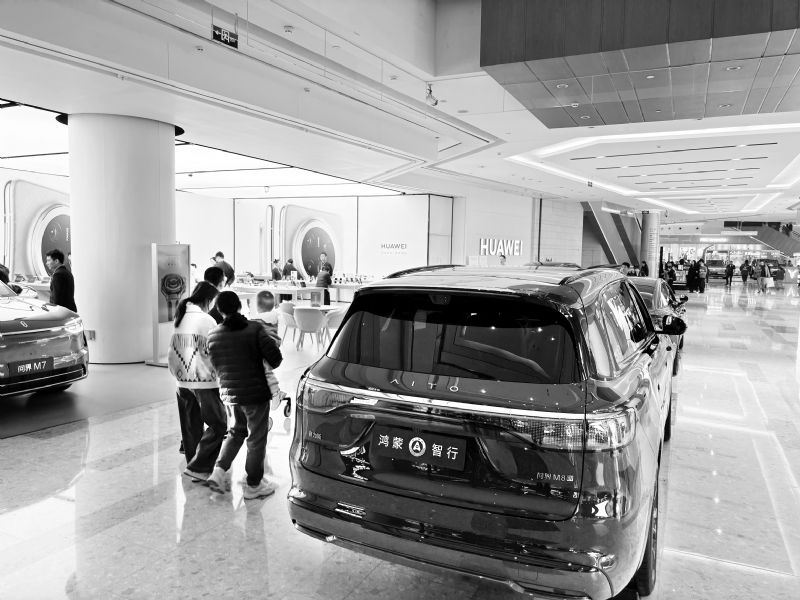
Core Insights - The Chinese new energy vehicle (NEV) market is experiencing a robust growth phase, with new force car manufacturers achieving record-high deliveries in November, indicating a maturation of the market [1] - The competition among NEV companies has shifted from relying on single popular models to a more systemic capability supporting multi-brand expansion [2][3] Group 1: Leading Brands - Leading new force car manufacturers continue to show strong growth, with a shift in growth logic towards systemic capabilities and multi-brand strategies [2] - Hongmeng Zhixing delivered 81,900 vehicles in November, benefiting from a comprehensive brand matrix and technological expansion, covering a price range from 150,000 to 1,000,000 yuan [2] - Leap Motor has consistently surpassed 70,000 deliveries for two consecutive months, focusing on cost structure optimization through self-research and electric drive platforms, establishing sustainable competitive advantages [2] Group 2: Emerging Players - Second-tier new force car manufacturers have also shown impressive performance, with several achieving historical best results, reflecting a clearer market segmentation [4] - Brands like Lantu, Zhiji, and Avita have seen significant growth, with Lantu surpassing 20,000 deliveries for the first time in November, indicating a broader acceptance of products centered around intelligent driving [5] - The competition is evolving from a head-dominated market to a multi-layered competition, with second-tier brands leveraging differentiated positioning to capture market share [5] Group 3: Market Dynamics - The expansion of the consumer base for NEVs is leading to a clear segmentation in user demand, with increasing interest in mid-to-large-sized vehicles, personalization, and intelligent driving features [4] - As the year-end approaches, manufacturers are expected to optimize sales through inventory control and rights management, with delivery capabilities and supply chain assurance becoming critical for year-end performance [5] - The core of competition is shifting towards building long-term, stable systemic capabilities, which will determine the leaders in the next phase of the market [5]


车市消失的“翘尾”
Hua Er Jie Jian Wen· 2025-12-02 12:03
Core Insights - The Chinese automotive market is experiencing a "folding sensation," with significant disparities in sales performance among major players, indicating a shift towards a more competitive environment [1][2][4] Group 1: Market Performance - In November, BYD achieved sales exceeding 480,000 units, with overseas sales surpassing 130,000 units, alleviating concerns about domestic sales pressure [2] - Geely's sales reached 310,000 units in November, with a 53% year-on-year increase in new energy vehicle sales, indicating a successful transition to new energy [2] - Leap Motor reported a 75% year-on-year increase in sales, aiming for one million units next year, while Hongmeng Zhixing sold 81,864 units, marking a record high for monthly deliveries [1][2] Group 2: Market Dynamics - The overall retail data for the passenger car market showed a decline in sales year-on-year and month-on-month from November 1 to 23, indicating a cooling market despite strong performances from leading companies [1][4] - The disappearance of the year-end sales surge is a concerning signal, as traditional strategies like price cuts and promotions failed to boost sales [4] - The shift in consumer psychology is evident, with a decrease in demand for hybrid models and diminishing effects of price wars, leading to a more challenging environment for lower-end models [4][6] Group 3: Future Outlook - The automotive market is expected to face intensified competition by 2026, with the reintroduction of a 5% purchase tax on new energy vehicles, increasing consumer costs [6][7] - UBS predicts that the overall growth rate for passenger car wholesale will slow to 3% by 2026, while electric vehicle growth will decelerate to 15%, indicating a shift in market dynamics [6][7] - Companies are urged to consolidate resources to withstand the upcoming challenges, as the era of rapid growth is over, and survival will depend on efficiency and market positioning [7][8]
大洗牌!造车新势力巨变来袭
Xin Lang Cai Jing· 2025-12-02 11:44
Core Insights - The competition among new energy vehicle manufacturers is intensifying, with significant shifts in market leadership as companies strive to establish themselves ahead of the 2025 deadline [1][3][38] - The "big reshuffle" in the automotive market is a recurring theme as new players enter the field, leading to increased industry concentration and the potential elimination or upgrading of smaller firms [4][39] Sales Performance - Hongmeng Zhixing achieved a record monthly delivery of 81,900 vehicles in November, marking a 89.61% year-on-year increase [5][40] - Leap Motor delivered 70,327 vehicles in November, maintaining a growth streak for nine consecutive months [5][40] - Xiaomi's sales exceeded 40,000 units, solidifying its position in the second tier of new energy vehicle manufacturers [5][40] - Xpeng Motors delivered 36,728 vehicles, showing a 19% year-on-year increase but a 12.6% decline from the previous month [5][40] - NIO delivered 36,275 vehicles, with a 76.3% year-on-year increase but a 10% month-on-month decline [5][40] - Li Auto's deliveries were 33,181 units, reflecting a 31.9% year-on-year decrease but a 4.45% month-on-month increase [5][40] - Deep Blue and Lantu also reported sales of 33,060 and 20,005 vehicles respectively, with varying year-on-year performance [5][40] Market Dynamics - The new energy vehicle sector is experiencing a significant transformation, with companies like Leap Motor and Xiaomi achieving their annual sales targets ahead of schedule [8][43] - The competitive landscape is shifting, with traditional leaders like NIO, Xpeng, and Li Auto facing challenges as they collectively fall below 40,000 units in November [6][41][42] - The market is increasingly defined by technological advancements, with safety becoming a critical concern for manufacturers as they navigate the evolving landscape [70] Financial Performance - Leap Motor has exceeded its annual delivery target of 500,000 vehicles, while NIO, Xpeng, and Leap are all currently operating at a loss [26][61] - Li Auto has emerged as the first new energy vehicle manufacturer to achieve annual profitability, with a reported net profit of 11.81 billion yuan [25][26] - The cumulative losses for NIO have surpassed 100 billion yuan, highlighting the financial struggles faced by many in the sector [58][61] Industry Trends - The new energy vehicle market is characterized by a rapid influx of players, with significant investments exceeding 100 billion yuan over the past decade [11][46] - The competitive dynamics have led to a re-evaluation of market positions, with companies like Xiaomi quickly gaining traction despite being relatively new entrants [10][67] - The industry is moving towards a phase where technological capabilities will determine survival, with safety and reliability becoming paramount [70]