奔驰

Search documents
智能汽车行业研究框架培训
2025-08-14 14:48
Summary of Key Points from the Conference Call Industry Overview - The smart automotive industry in China experienced double-digit growth from 2009 to 2015, but since 2016, the growth rate has entered a volatile phase, indicating a mature market similar to Japan's development trajectory [1][3] - By 2024, the penetration rate of new energy vehicles (NEVs) is expected to reach 45%, with a forecast of over 55% by 2025. The penetration rate of domestic brands is projected to reach 68% [1][5] Market Segmentation - The largest market segment is in the price range of 80,000 to 250,000 RMB, with NEV penetration rapidly increasing. The high-end market (above 250,000 RMB) has also reached a NEV penetration rate of 53% [1][5] - Consumers in the 80,000 to 200,000 RMB price range prioritize cost-effectiveness, while those above 250,000 RMB focus on emotional value, such as comfort and intelligence [1][6] Brand Performance - BYD holds a dominant position in the 80,000 to 200,000 RMB segment with a market share of approximately 18%. Tesla, BMW, Mercedes-Benz, and Audi lead in the segment above 150,000 RMB [1][7] - The automotive industry cycle significantly impacts company performance, with the SUV cycle benefiting companies like Great Wall and Geely, while the NEV cycle has propelled the growth of Tesla and BYD [1][8] Future Growth Directions - Future growth for Chinese automotive brands will focus on expanding product categories and international markets. BYD has already achieved over 5 million units in sales, and a multi-brand strategy is a key trend [1][9] Technological Advancements - Smart technology is crucial for the future of the automotive industry, with consumers increasingly valuing intelligent driving technologies. The market size is expected to grow significantly as L3 autonomous driving regulations are implemented [1][4][13] - BYD has a competitive edge in technology iteration, with its electric and hybrid platforms being developed early and upgraded every three years [1][11] Investment Insights - Short-term investment logic focuses on industry prosperity and vehicle launches. Companies with a high density of new model launches and those without competing models in niche markets are more attractive for investment [1][18] - Companies like JAC Motors, SAIC, Geely, and XPeng are highlighted as potential investment opportunities due to their new model cycles and technological advancements [1][21] Market Performance and Expectations - In the first half of the year, the NEV market maintained a growth rate of over 30%, although the penetration rate was below expectations at around 48%. The overall growth rate for the year is projected to be around 4%, with a potential surge in demand due to policy support in the latter half [1][19][20] Conclusion - The automotive investment framework includes three critical dimensions: industry cycle assessment, tracking industry prosperity in relation to policy changes, and analyzing specific companies' new model plans and technological capabilities [1][22]

保时捷的中国困境
远川研究所· 2025-08-14 13:14
Core Viewpoint - Porsche's sales in China have significantly declined, with a projected drop to 56,000 units in 2024, marking a 28% year-on-year decrease, after previously being the largest single market for the brand [6][17][31]. Group 1: Sales Performance and Market Position - In 2021, Porsche achieved a peak sales figure of 95,000 units in China, contributing one-third of its total sales [6][17]. - The Cayenne and Macan models accounted for approximately 60% of Porsche's sales in China since 2015 [11][14]. - The brand's sales average in China has decreased from 1.06 million to 930,000 yuan over the past three years, indicating a loss of market positioning [37]. Group 2: Electric Vehicle Strategy - Porsche has been aggressive in its electric vehicle (EV) transition, with plans for electric and hybrid models to make up 50% of total sales by 2025 and over 80% by 2030 [24][22]. - The Taycan, Porsche's first all-electric model, surpassed 40,000 units in global sales in 2021, becoming the best-selling model after the SUVs [24][18]. - The company has invested heavily in battery technology and partnerships to support its electric vehicle strategy, including the establishment of a joint venture for battery production [23][22]. Group 3: Challenges in Transition - Porsche faces significant challenges in its transition to electric vehicles, particularly due to reliance on the Volkswagen Group for software and electronic architecture, which has encountered delays [30][27]. - The development of the E3 electronic architecture has faced setbacks, impacting the launch timelines of new models like the Macan EV [30][28]. - The competitive landscape in the electric vehicle market has intensified, with domestic brands capturing over 60% of the market share, further complicating Porsche's position [37][31]. Group 4: Brand Positioning and Market Dynamics - Porsche occupies a unique position between luxury and premium segments, which exposes it to greater competitive pressures, especially in a rapidly evolving market [34][37]. - The brand's pricing strategy has been challenged by the aggressive pricing of electric vehicles, leading to a structural disruption in its pricing model [32][31]. - As competitors lower prices, Porsche's middle-ground positioning risks losing brand value, which could have long-term implications for its market strategy [37][34].

国金证券:传统燃油向新能源过渡 关注品牌溢价&设计溢价两大主线
Zhi Tong Cai Jing· 2025-08-14 05:58
Core Viewpoint - The luxury fuel vehicle market is characterized by a pursuit of premium pricing, driven by brand premium, design premium, and technology premium [1][2][3] Group 1: Luxury Vehicle Market Analysis - The luxury vehicle market is segmented into first-line luxury, second-line luxury, and other luxury brands, with brand premium being the most significant factor [2] - Design premium includes the refinement of products and the rarity of vehicles, which is essential for creating a sense of luxury [2] - Technology premium is derived from critical components such as engines, chassis, and transmissions, with high technical barriers being a core aspect of fuel vehicle pricing [2] Group 2: Changes in the Luxury Vehicle Market in the Era of New Energy - The value system of new energy vehicles differs significantly from that of fuel vehicles, leading to a reduction in technology premium due to the commoditization of high horsepower and the dominance of supply chain companies [3] - The premium in the electric vehicle era is primarily determined by brand and design premiums, as seen in successful models like Huawei's Aito series and Li Auto's L series [3][4] - Domestic electric vehicles struggle to penetrate the ultra-luxury market (over 1.5 million yuan) and have limited presence in the high-end market (over 800,000 yuan) due to the weakened technology premium [3][4] Group 3: Competitive Landscape in the High-End Market - The high-end market is less affected by price wars, as consumers have stronger purchasing power and are less sensitive to tax incentives [4] - High-end vehicle brands cannot engage in price wars without damaging their brand equity, and some brands are still in the process of establishing their market presence [4] - The domestic high-end vehicle market is showing early signs of success, with growth driven by both incremental demand and domestic replacement [4][5] Group 4: Recommendations for Investment - The focus in the new energy high-end market should be on companies with strong brand and product development capabilities, particularly those like Huawei and Xiaomi that have established significant brand equity [5] - Li Auto is highlighted for its strong product development capabilities, particularly with its successful range-extended L series [5]

8点1氪:NIKE起诉陈冠希索赔90万,陈冠希发文;中国恒大8月25日退市;奔驰CEO警告没有燃油车的后果
36氪· 2025-08-14 00:00
Group 1 - Nike filed a lawsuit against Edison Chen for breach of contract, claiming that his company, Juice Los Angeles LLC, owes $126,000 (approximately 900,000 RMB) for goods provided by Nike [6] - Chen was a personal guarantor for Juice's account with Nike, which led to his inclusion in the lawsuit [6] - Chen's collaboration with Nike ended in October 2023, after which he became a creative partner with Adidas [6] Group 2 - China Evergrande Group announced its delisting from the Hong Kong Stock Exchange, effective August 25, 2025, due to failure to meet the exchange's resumption requirements [7][8] - The last trading day for Evergrande shares will be August 22, 2025, and the company has no intention to appeal the delisting decision [7] Group 3 - Mercedes-Benz CEO warned that the European automotive industry could face collapse if the EU insists on banning new fuel vehicles by 2035, emphasizing the need for a balanced approach to decarbonization [8] - The company had previously planned to transition fully to electric vehicles by the end of the century but has now reversed this stance [8] Group 4 - Tencent reported a revenue of 184.5 billion RMB for Q2 2025, marking a 15% year-on-year increase, with significant growth in value-added services and marketing services [25] - The company also increased its R&D investment by 17% to 20.25 billion RMB, reflecting its commitment to AI strategy [25] Group 5 - Xiaomi appointed several executives to strengthen its presence in the African market, with plans to increase investment in the region [13] - The company has already established operations in 16 African countries, including Egypt and South Africa [13] Group 6 - Didi invested in the autonomous vehicle company New Stone, expanding its logistics delivery capabilities [13] - New Stone has deployed over 7,500 autonomous vehicles across more than 280 cities [13] Group 7 - Gree Electric's public account underwent a name change, indicating a potential shift in branding strategy [12] - The company continues to adapt its marketing and product strategies in response to market dynamics [12]






8点1氪丨NIKE起诉陈冠希索赔90万,陈冠希发文;中国恒大8月25日退市;奔驰CEO警告没有燃油车的后果
3 6 Ke· 2025-08-14 00:00
Group 1 - Chipone Technology plans to issue H-shares and apply for listing on the Hong Kong Stock Exchange [1] - Wolong Electric submitted a listing application to the Hong Kong Stock Exchange with joint sponsors including CICC, Huatai International, and GF Securities [2] Group 2 - Nike filed a lawsuit against Edison Chen for breach of contract, claiming $126,000 in unpaid goods [3] - China Evergrande's listing status will be canceled on August 25 due to failure to meet the Hong Kong Stock Exchange's requirements [4] Group 3 - Mercedes-Benz CEO warned that the European automotive industry could face collapse without fuel vehicles [4] - Multiple video platforms have limitations on ad-free experiences for members, with some ads still appearing even for paid subscriptions [5] Group 4 - Li Auto aims to deliver over 8,000 units of the Li i8 by the end of September, with a challenge to reach 10,000 units [6] - Xiaomi appointed several executives for its African market to increase investment and operations [9] Group 5 - Tencent reported Q2 2025 revenue of 184.5 billion yuan, a 15% year-on-year increase, with significant growth in various service segments [20] - Youyan Silicon reported a net profit of 106 million yuan for the first half of 2025, a decline of 18.74% year-on-year [21] - Baolidi achieved a net profit of 63.8 million yuan in the first half of 2025, a 15.19% increase year-on-year [22] - Hatou Co. reported a net profit of 380 million yuan for the first half of 2025, a 233.08% increase year-on-year [23]
奔驰CEO示警欧洲:“我们需要认清现实……”
汽车商业评论· 2025-08-13 23:25
Core Viewpoint - The article emphasizes the challenges faced by the European automotive industry regarding the EU's 2035 ban on new gasoline and diesel vehicles, highlighting concerns from industry leaders about the feasibility and implications of such a policy [4][12][18]. Group 1: Industry Concerns - Mercedes CEO Ola Källenius warns that the EU's 2035 ban could lead to the collapse of the European automotive sector, as consumers may rush to purchase traditional vehicles before the ban takes effect [4][6]. - The transition to electric vehicles (EVs) is not progressing as expected, with industry insiders expressing pessimism about the maturity of the EV market in Europe [12][13]. - The European automotive manufacturers are experiencing significant profit declines, with Mercedes reporting a net profit of $2.7 billion in the first half of the year, down from €6.1 billion the previous year [15]. Group 2: Infrastructure and Policy Challenges - The current ratio of charging stations to electric vehicles in Europe is approximately 12:1, compared to China's 3:1, indicating a significant infrastructure gap that complicates EV adoption [9]. - The uneven distribution of charging infrastructure across Europe, with northern countries having better facilities than southern ones, poses additional challenges for automakers [11]. - The European Automobile Manufacturers Association (ACEA) warns that a forced transition to pure electric vehicles could lead to a hollowing out of the automotive supply chain, potentially impacting 800,000 jobs [11]. Group 3: Competitive Landscape - European automakers are losing ground to Chinese competitors, who are gaining market share through pricing advantages and advanced technology [13][15]. - The article notes that traditional car manufacturers in China are successfully integrating smart technologies into their gasoline vehicles, while European companies struggle with the transition [17][18]. - The pressure from Chinese EV manufacturers is prompting European companies to reconsider their strategies, as they face declining competitiveness in both domestic and international markets [15][18].
大摩闭门会-金融、机器人、汽车、锂行业更新
2025-08-13 14:53
Summary of Key Points from Conference Call Records Industry Overview Robotics Industry - The robotics industry is expanding its applications into manufacturing, commercial, and service sectors, driven by AI large models, although efficiency and accuracy still need improvement [1][2] - Significant hardware advancements in dexterous hands have been noted, but data and software remain bottlenecks, with physical data collection being a Chinese advantage [1][4] - Policy support is accelerating the development of the robotics industry, with a focus on technologies such as gear reducers, sensors, and new materials, as well as the profitability of related supply chain companies [1][6] Automotive Industry - The automotive industry is experiencing limited effects from anti-involution measures, with price increases being a passive adjustment rather than a demand-driven change [1][8] - Desay SV's performance in smart cockpit and intelligent driving solutions is highlighted, with a 30% year-on-year revenue growth and a 41% profit increase [1][9] - The development of humanoid robots presents new opportunities for automotive parts companies [1][9] Financial Sector - Chinese household financial assets maintained a 12% growth rate, primarily benefiting from rising equity values, with insurance products growing faster than other financial assets [1][10] - The institutionalization trend is driving market growth, with insurance and growth-oriented banking sectors showing investment potential [1][11] - The securities industry is entering an early recovery phase after a tightening cycle, with regulatory easing and increased trading volumes being key variables [1][12][13] Lithium Industry - The lithium industry is facing complexities due to the requirement for resource verification reports, leading to increased expectations of supply shortages [1][21] - Market sentiment is cautious, with predictions of tight supply in September but an overall slight surplus for the year [1][21][22] Steel and Cement Industries - The steel industry is expected to reduce production by 10 to 20 million tons by the end of the year, with profitability fluctuating due to rising raw material costs [1][24] - The cement industry has undergone a significant capacity reduction, with effective capacity dropping from 21-22 billion tons to 16 billion tons, leading to price increases as the peak season approaches [1][25][26] Core Insights and Arguments - The robotics industry is in an early stage but is rapidly exploring various applications, with a focus on ecological cooperation and international market expansion [1][5][7] - The automotive sector's price adjustments are not indicative of improved demand, and long-term capacity clearing remains challenging due to local government interests [1][8][9] - The financial sector's growth is supported by a shift towards institutional investments, particularly in insurance and high-dividend assets, which bolster stock market stability [1][10][11] - The securities industry is benefiting from regulatory changes and increased trading activity, with a focus on differentiated advantages in institutional and derivative businesses [1][12][14] Additional Important Content - The robotics industry is expected to see more supportive policies nationwide, which will facilitate the commercial rollout of wheel-type and composite robots [1][7] - The automotive industry's smart technology advancements are creating new market opportunities, particularly for companies involved in intelligent cockpit solutions [1][9] - The lithium market's volatility is influenced by regulatory requirements and market speculation, necessitating close monitoring of supply dynamics [1][21][22] - The cement industry's proactive pricing strategies indicate a shift towards a more favorable market environment as demand increases [1][25][26]



15%汽车关税敲定,德国车企进入“比惨时代”?
2 1 Shi Ji Jing Ji Bao Dao· 2025-08-13 14:38
Core Viewpoint - The German automotive industry, represented by the "Big Three" (Mercedes-Benz, Volkswagen, and BMW), is facing significant challenges due to tariffs and trade policies, leading to substantial declines in profits and increased operational costs [1][2][3]. Group 1: Financial Performance - Mercedes-Benz reported a net profit drop of over 50% year-on-year for the first half of the year, with the CEO stating that the current situation is more challenging than ever [1]. - Volkswagen's after-tax profit decreased by 38.3% year-on-year, and the company has revised its annual performance expectations downward three times within six months [1]. - BMW, while less affected, still saw a 29% year-on-year decline in after-tax net profit [1]. Group 2: Impact of Tariffs - The German automotive manufacturers are expected to see a combined cash flow reduction of approximately €10 billion due to U.S. tariff policies [1]. - Despite a trade agreement reducing EU tariffs on U.S. imports to 15%, the current U.S. tariff on European cars remains at 27.5% [1][2]. - The European Automobile Manufacturers Association (ACEA) criticized the 15% tariff as still significantly higher than the previous 2.5% rate, indicating ongoing negative impacts on the EU industry [2]. Group 3: Market Dynamics - The U.S. is the largest export market for German cars, accounting for 13.1% of total German automotive exports, with luxury vehicles making up a significant portion of this trade [2][3]. - The majority of German cars exported to the U.S. are high-end models, which have a larger profit margin, making the 15% tariff more manageable for these manufacturers [3]. Group 4: Strategic Responses - In response to tariffs, German automakers are planning to increase investments in U.S. manufacturing, with companies like Mercedes-Benz and BMW considering new production lines in the U.S. [5][6]. - However, the shift to U.S. production comes with challenges, including increased costs from tariffs on imported components and potential export barriers for vehicles produced in the U.S. [6][7]. Group 5: Employment and Production Adjustments - The shift in production to the U.S. is leading to job cuts in Germany, with companies like Audi and Volkswagen announcing significant layoffs [7]. - The transition to U.S. manufacturing may also hinder the electric vehicle transition for German automakers, as they focus on traditional fuel vehicles to meet U.S. market demands [8].
前瞻全球产业早报:京东称不会参与外卖“恶性内卷”
Qian Zhan Wang· 2025-08-13 13:58
Group 1 - CATL confirmed the suspension of mining operations at its Yichun lithium project after the mining license expired on August 9, with no clear timeline for resumption [2] - The world's first smart robot 4S store opened to the public during the World Robot Conference in Beijing [3] - Taobao's flash sales surpassed Meituan for the first time, with daily order volumes exceeding 100 million during promotional events [4] Group 2 - Yushun announced participation in the first World Humanoid Robot Games, with multiple teams using its hardware [5] - Former Honor CEO Zhao Ming denied rumors of joining Zhijie Auto [6] - Swire Properties launched a private AI assistant, TK Mates, for personalized fashion advice [7] Group 3 - Shenzhen Huaqiang stated that prices of most electronic components have reached a bottom after two years of decline [8] - Huawei's QianKun autonomous driving system has been installed in over 1 million vehicles [9] - Xiaomi's founder Lei Jun emphasized the strong capabilities of the YU7 standard version, seeking to rename it to Pro or Max [10] Group 4 - Huawei plans to open-source UCM in September 2025, contributing to mainstream inference engine communities [11] - JD Group's CEO Xu Ran stated the company will not engage in "malicious internal competition" amid ongoing subsidy wars [12] - Ford announced a $5 billion investment to produce new electric vehicles, including a mid-size electric pickup truck [13] Group 5 - Samsung is developing advanced packaging technology for large-scale chip system integration to compete with Intel and TSMC [14] - Elon Musk's xAI plans to take legal action against Apple for alleged anti-competitive practices regarding the App Store [15] - NVIDIA launched new tools and models to accelerate the development of robotic solutions [16] Group 6 - Citigroup's CEO is in Mexico discussing the potential IPO of its local retail unit, Banamex [17] - Mercedes-Benz's CEO criticized the EU's ban on internal combustion engines, warning it could lead to a collapse of the European car market [18] - OpenAI has reinstated the GPT-4o model for Plus subscribers following user feedback [19] Group 7 - "Ronghe Yuanchu" completed over 100 million B-round financing with investments from multiple firms [20] - "Daimon Robotics" secured angel funding led by China Merchants Venture Capital [21] - Shanghai Leju Technology announced B++ round financing exclusively from Kunlun Capital [22]
科技与性价比拉满!2025齐鲁车展(秋季)新车型亮点抢先看
Qi Lu Wan Bao· 2025-08-13 09:32
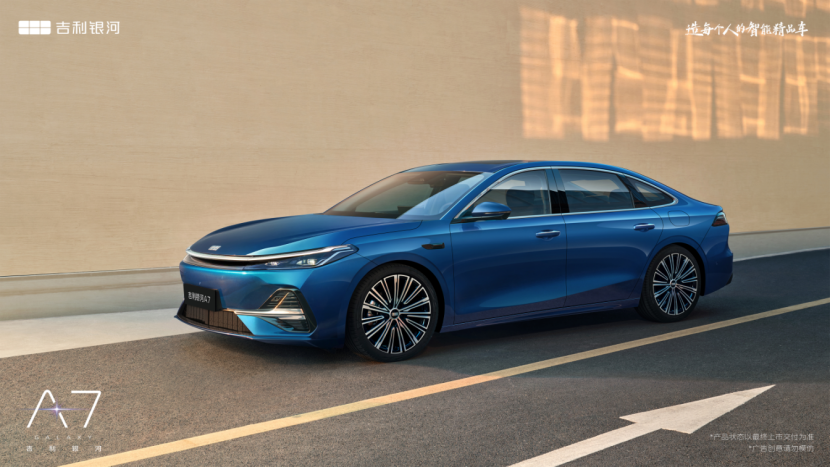
Core Viewpoint - The 2025 Qilu Auto Show (Autumn) will take place from September 4 to 8 at the Shandong International Convention and Exhibition Center, showcasing over a hundred mainstream automotive brands and featuring a record exhibition area of nearly 80,000 square meters [1][16]. Group 1: Event Details - The event will include four exhibition halls and will present luxury brands, new energy vehicles, joint ventures, and independent new forces, along with dozens of newly launched models [1][16]. - The auto show is positioned as a significant opportunity for car purchases and a window to witness industry trends, featuring cutting-edge technologies and immersive experience zones [16]. Group 2: Featured Models - The Geely Galaxy A7, a mid-size plug-in hybrid sedan, boasts a pure electric range of 70/150 kilometers and a comprehensive range exceeding 2100 kilometers, with a fuel consumption of only 2.67L/100km [1]. - The SAIC Audi A5L Sportback, priced between 260,000 to 320,000 yuan, is the first model on the PPC platform, integrating Huawei's intelligent driving assistance and a fifth-generation EA888 engine [3]. - The FAW Audi Q6L e-tron features a CLTC range of 765 kilometers and can charge from 10% to 80% in just 20 minutes, aiming to reshape the luxury pure electric SUV market [5]. - The Aito M8 pure electric version has a pre-sale exceeding 10,000 units, with a range of 705 kilometers and equipped with Huawei's ADS4 intelligent driving system [7]. - The new FAW-Volkswagen Teramont is priced between 299,900 to 319,900 yuan, featuring a new generation EA888 2.0T engine and upgraded interior with a floating dual-screen design [10]. - The XPeng G7, a mid-size SUV, features a "Chasing Light" panoramic AR-HUD and a range of 702 kilometers, with a pre-sale price of 235,800 yuan [12]. - The Chery Fengyun A9L, a mid-large executive sedan, has a pre-sale starting at 159,900 yuan and offers a range of 2500 kilometers with a hybrid system [14].