红旗连锁

Search documents
中东局势再升级,AH同步调整,该如何应对?
2025-06-23 02:09
Summary of Key Points from Conference Call Records Industry or Company Involved - The discussion primarily revolves around the **financial markets**, including **U.S. stocks**, **A-shares**, **H-shares**, **gold**, **bonds**, and the **semiconductor industry**. Additionally, geopolitical factors, particularly the **Middle East situation** and **U.S. Federal Reserve policies**, are significant themes. Core Points and Arguments 1. **U.S. Federal Reserve's Policy Impact** The Federal Reserve maintained interest rates in June but revised upward its unemployment and PCE forecasts for 2025 and 2026, while downgrading economic data, raising concerns about stagflation in the market [2][3][4] 2. **Middle East Geopolitical Tensions** The U.S. has conducted strikes on Iranian nuclear facilities, marking the onset of a nuclear conflict phase. However, the situation is expected to remain controlled, with a low probability of extreme events occurring [2][5] 3. **Gold Market Dynamics** Despite a 1.8% decline in gold prices recently, the long-term outlook remains positive, suggesting a strategy of dollar-cost averaging for investment [7][17] 4. **A-shares and H-shares Market Performance** Both markets are experiencing adjustments, influenced by external events and concerns over earnings reports. Defensive strategies focusing on AI, military, and stable industries are recommended [6][8][9][18] 5. **Bond Market Trends** Bond yields have slightly decreased, with expectations of liquidity tightening in the coming weeks. A recommendation to reduce positions and focus on short-term bonds is advised [11][12] 6. **Semiconductor Industry Growth** The PCB industry is expected to benefit from increased demand for North American ASIC chips, with projections indicating a market size of approximately $3 billion in 2025 and over $5-6 billion in 2026 [3][23] 7. **Investment Strategies in Current Economic Environment** The overall market sentiment is cautious due to various uncertainties, with a focus on defensive strategies and identifying sectors with potential growth, such as AI and military-related industries [13][14][18] 8. **Market Liquidity Expectations** The next two weeks are anticipated to be the peak of liquidity in the financial market, after which a marginal tightening is expected, impacting both long-term bonds and equities [12] Other Important but Possibly Overlooked Content 1. **Short-term vs Long-term Investment in Gold** The gold market should be analyzed from both a long-term investment perspective and a short-term trading strategy, with the latter suggesting potential reductions in holdings [17] 2. **Impact of External Factors on A-shares and H-shares** The performance of A-shares and H-shares is significantly influenced by external factors, including foreign capital movements and geopolitical tensions, which may lead to adjustments in investment strategies [15][18] 3. **Emerging Opportunities in the PCB Sector** The PCB sector is poised for growth driven by ASIC chip demand, with specific companies like Huadian and Shengyi Technology highlighted as potential investment opportunities [23][25] 4. **Defensive Investment Recommendations** In light of current market conditions, investments in defensive sectors such as banking and public utilities are recommended, alongside monitoring for opportunities in AI and military sectors [8][9][18] 5. **Trends in the White Wine Sector** The white wine sector is experiencing a rebound due to changes in consumption regulations and low valuations, indicating potential for growth [29][31] 6. **Short Drama Market Development** The short drama market is evolving under new regulations, with a focus on quality content production, which may benefit companies involved in this sector [26][27] This summary encapsulates the critical insights and recommendations derived from the conference call records, providing a comprehensive overview of the current market landscape and strategic considerations.
廖市无双:4月以来的反弹结束了吗?
2025-06-23 02:09
除了新消费和创新药,上周我们还对券商进行了分析。券商存在两种走势:一 种是直接调整;另一种是由于 618 陆家嘴金融会议可能出台重磅金融政策,有 资金提前布局博弈题材,因此券商有可能继续上涨。如果券商上涨,将带动上 证指数挑战 5 月 14 日高点 3,417 点。这两种情况分别标识为橙色和蓝色走势。 如果券商打不起来,再加上医药和新消费走弱,大盘可能直接进入调整。 廖市无双:4 月以来的反弹结束了吗?20250622 美国介入以色列与伊朗冲突对全球资本市场有什么影响? 摘要 新消费板块前期涨幅较大后显疲态,已形成五浪结构,面临调整压力。 黄金饰品等龙头股走弱,港股相关标的也出现回调,建议投资者保持谨 慎。 创新药板块技术指标显示调整信号,中证创新药指数和港股创新药指数 均出现顶背离迹象,预示日线级别四浪整理需求。短期内不宜盲目追高。 券商板块存在两种走势可能:直接调整或受陆家嘴金融会议政策预期影 响上涨,带动上证指数挑战 3,417 点。券商表现将影响大盘走向,值得 密切关注。 近期市场受中东地缘政治冲突影响,风险偏好下降,上证 50 和沪深 300 小幅下跌,其他指数跌幅较大。银行板块表现较强,对市场起到 ...
下沉市场!县城餐饮人做生意的3个狠招
Sou Hu Cai Jing· 2025-06-22 17:06
Core Insights - The article emphasizes that the lower-tier market is not a simplified version of urban dining, but rather a complex environment where local businesses thrive through understanding consumer needs and leveraging local resources [1][22]. Group 1: Key Principles for Success in Lower-Tier Markets - Key Principle 1: "Upgrading" is rooted in "essential needs," where value perception is crucial rather than just low pricing [3]. - Customers in county towns seek quality and visible value, as evidenced by local restaurants achieving high patronage despite higher average spending compared to urban chains [4][5]. - Key Principle 2: "Efficiency wars" focus on supply chain effectiveness, with local sourcing being critical for maintaining quality and customer loyalty [9]. - Local sourcing can lead to higher costs but results in better customer experiences and repeat business, as shown by a local hotpot restaurant that prioritizes fresh ingredients [9][10]. - Key Principle 3: Understanding local social dynamics is essential for success, where building relationships and community ties can drive business [20]. - Engaging with local key customers, such as wedding planners and influential families, can secure consistent business opportunities [16][18]. Group 2: Case Studies and Examples - A case study from Jiangxi highlights a restaurant that emphasizes transparency and quality, leading to customer satisfaction despite higher costs [5]. - Another example from Hebei illustrates how a restaurant enhances the dining experience through entertainment, making it appealing for family gatherings [6][9]. - A community kitchen in Shandong demonstrates the importance of adapting to local supply conditions and customer preferences, showcasing flexibility in menu offerings [12][14]. Group 3: Marketing and Community Engagement - Local marketing strategies, such as personal outreach and relationship-based discounts, are more effective than digital advertising in county towns [20]. - The importance of compliance with local regulations and maintaining good relationships with neighboring businesses is highlighted as critical for operational success [22].


新茶饮决战美国:喜茶纽约开LAB、霸王瞄准比佛利、瑞幸2美元搅局
创业邦· 2025-06-21 10:10
Core Viewpoint - The article discusses the rapid expansion of Chinese tea brands into international markets, particularly focusing on the strategies and challenges faced by these brands in developed countries like the United States and South Korea. The competition is intensifying as brands adopt different approaches to capture market share, with a notable shift from Southeast Asia to more mature markets in the West [4][20][23]. Group 1: Brand Expansion Strategies - Heytea has opened over 20 stores in the U.S., testing high-ticket markets with its LAB store model [5][25]. - Bawang Chaji targets affluent areas like Beverly Hills, with single-store investment costs several times higher than in China [7][27]. - Cha Baidao is boldly challenging the coffee-dominated South Korean market with a differentiated strategy [9][30]. Group 2: Market Performance and Financials - Bawang Chaji's overseas stores generated a GMV of 178 million yuan in Q1 2025, marking an 85.3% year-on-year increase [13][36]. - Despite rapid expansion, overseas revenue for brands like Mixue Ice City remains low, accounting for less than 5% of total revenue [22][50]. - Bawang Chaji's marketing expenses surged from 73.6 million yuan in 2022 to 1.1 billion yuan in 2024, indicating a high-cost strategy [52][53]. Group 3: Market Challenges - The U.S. market presents unique challenges, including high investment costs and lengthy approval processes for store openings, which can take 9-12 months [33][34]. - Compliance with local regulations significantly increases operational costs, as seen with the requirements for seating and restroom facilities in California [56]. - Local competition and imitation brands pose significant threats, complicating market entry and brand protection efforts [56][57]. Group 4: Supply Chain and Operational Efficiency - Bawang Chaji's simplified supply chain focuses on tea, milk, and packaging, resulting in lower logistics costs compared to fruit-based brands [49]. - The complexity of the supply chain for fruit tea brands creates challenges in overseas expansion, with some opting for local sourcing to mitigate costs [49][54]. - The article highlights that over 80% of restaurant brands face failure when expanding internationally, emphasizing the difficulties in establishing a sustainable presence abroad [50].

张一鸣重回一线?知情人士:仍base在新加坡;罗马仕充电宝3C证书几乎全数被撤销;携程调价助手被指强制调价丨邦早报
创业邦· 2025-06-21 00:54
Group 1 - Zhang Yiming, the founder of ByteDance, is reportedly focusing on AI business while based in Singapore, participating in core technology team discussions monthly [2] - Weima has been acquired by Baoneng Automobile, with reports indicating that Weima vehicles are now displayed in Baoneng's showroom [2] - Romaishi's fast-charging power bank has had its 3C certification revoked, leading to a significant reduction in product availability on e-commerce platforms [4][5] Group 2 - Yushu Technology has completed a C round financing of approximately 700 million RMB, with a post-financing valuation of about 12 billion RMB, and is preparing for an IPO, primarily targeting the A-share market [6] - Ele.me's former CEO, Han Liu, has been taken by police for investigation related to alleged job-related crimes, prompting internal company changes [6][7] - Nio Automobile's parent company has entered bankruptcy proceedings, with industry insiders suggesting potential restructuring due to significant sales declines [7] Group 3 - Ctrip's price adjustment tool has faced criticism for disrupting market pricing, with hotel operators claiming it forces them to lower prices against their will [6][7] - The Hong Kong IPO market has seen strong performance in the first half of 2025, with Ningde Times leading in fundraising at 41 billion HKD [15] - OpenAI is in a critical restructuring phase to secure a significant investment from SoftBank, with potential reductions in funding if deadlines are not met [16] Group 4 - The Chinese humanoid robot market is projected to see commercial sales reach nearly 60,000 units by 2030, with a compound annual growth rate of 95.3% [26] - The Chinese gaming market reached a size of 28.051 billion RMB in May 2025, showing a year-on-year growth of 9.86% [26] - The retail sales of narrow passenger vehicles in June are expected to reach 2 million units, with new energy vehicles projected at 1.1 million units, indicating a penetration rate of around 55% [26]

巴奴 IPO 三大猜想
Sou Hu Cai Jing· 2025-06-20 15:25
Core Viewpoint - The Hong Kong IPO market is experiencing a significant decrease in the new stock breakage rate, particularly in the consumer sector, indicating a favorable environment for new listings like that of Ba Nu hot pot [3][4]. Group 1: Market Environment - The breakage rate for new stocks in Hong Kong has dropped to 27.78% in 2025 from 34.29% in the previous year, reflecting a more stable market [3]. - The tea beverage sector has seen a surge in IPOs, with brands like Mi Xue Ice City and Hu Shang A Yi achieving first-day gains exceeding 50%, highlighting the resilience of consumer stocks [3][4]. Group 2: Company Financials - Ba Nu's projected revenue for 2024 is 2.31 billion RMB, with a net profit of 123 million RMB, and a year-on-year revenue growth of 25.7% in Q1 2025 [3][4]. - The average table turnover rate has increased from 3.0 times per day in 2022 to 3.7 times in Q1 2025, indicating improved customer flow and operational efficiency [4][20]. Group 3: Business Strategy - Ba Nu positions itself as the largest quality hot pot brand in China, focusing on product differentiation to attract investors [7][8]. - The company is expanding its presence in lower-tier cities, with 78.6% of its new stores located in these areas, where consumers are more price-sensitive but exhibit higher loyalty [13][24]. Group 4: Supply Chain and Operational Efficiency - Ba Nu has developed a third-generation supply chain system that ensures fresh ingredients are delivered within 48 hours, enhancing operational efficiency [15]. - The company plans to open 150 new stores over the next three years, demonstrating a strategic approach to expansion by establishing multiple bases in new regions before scaling up [16][18]. Group 5: Market Position and Future Outlook - The quality hot pot market is expected to grow at a compound annual growth rate of 7.8% from 2024 to 2029, outpacing the overall hot pot market growth of 6.5% [22]. - Ba Nu's unique marketing strategies and product offerings, such as seasonal ingredients, are designed to appeal to younger consumers and differentiate the brand in a competitive landscape [25][28].

宏辉果蔬:与蜜雪冰城合作为主要供应柠檬
news flash· 2025-06-20 10:43
Group 1 - The company, Honghui Fruits and Vegetables, has a supply and sales cooperation with Mixue Ice City, primarily involving lemons [1] - The business with Mixue Ice City accounts for less than 1% of the company's overall operations [1]


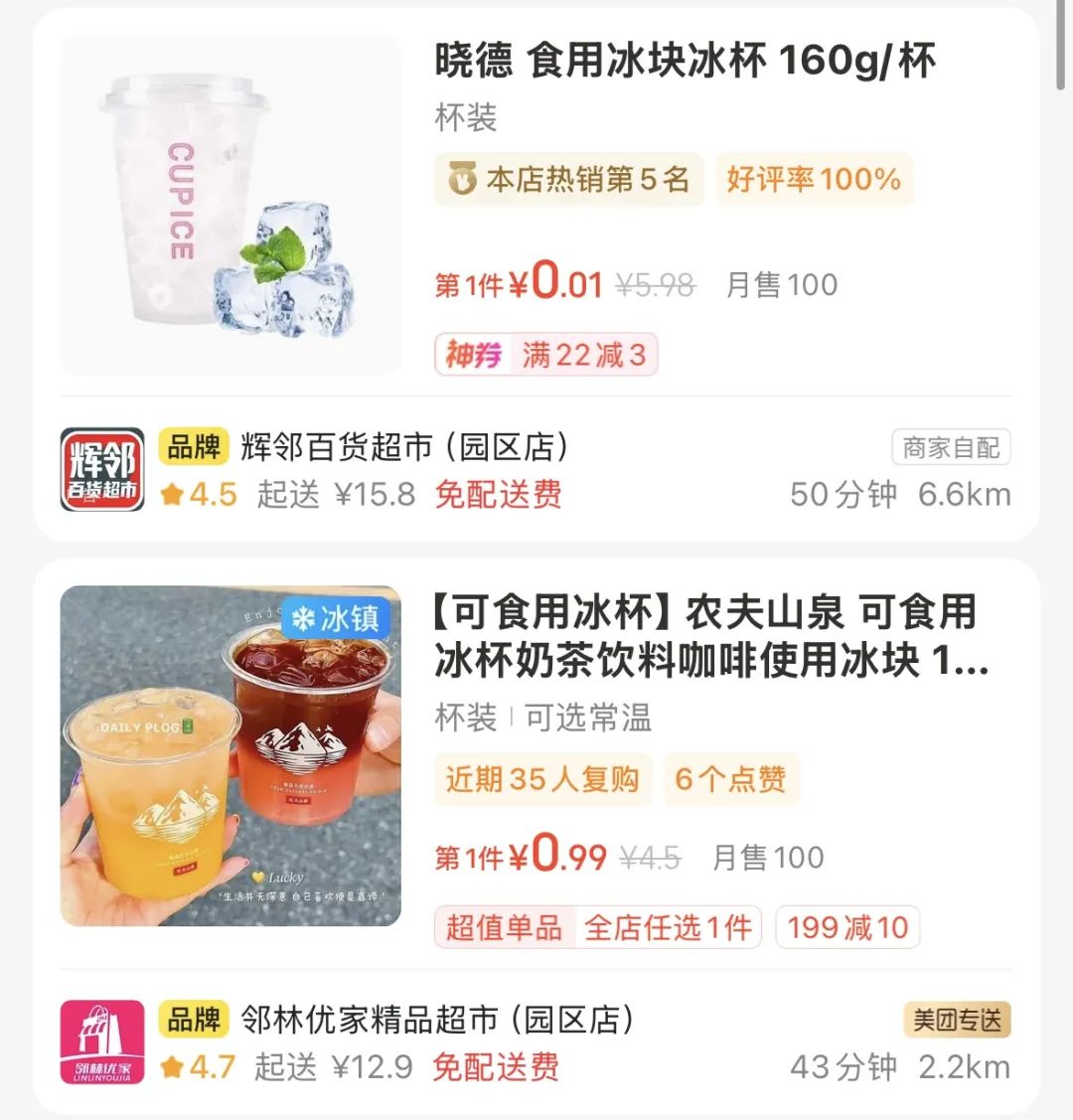
1分钱一杯比水还便宜?去年爆火的冰杯,今年杀回来了
3 6 Ke· 2025-06-20 09:12
Core Viewpoint - The ice cup market is experiencing significant growth, driven by low pricing strategies and innovative marketing tactics, leading to increased consumer engagement and sales opportunities. Group 1: Market Dynamics - Online platforms have reduced the price of ice cups to as low as 1 yuan or even 0.01 yuan, while major tea brands are launching "1 yuan ice water/ice cup" promotions to attract customers [1][4] - According to the "2025 China Urban Consumption Behavior White Paper," ice cup sales have seen a growth rate exceeding 300% for two consecutive years, with per capita annual consumption in first-tier cities reaching 48 cups [7] - The "one yuan strategy" has proven effective in driving foot traffic to stores, with approximately 35% of customers who purchase 1 yuan ice water also buying additional products, raising the average transaction value to over 20 yuan [9][12] Group 2: Product Innovation - Ice cups are evolving beyond simple ice blocks, with brands introducing flavored ice cups and unique shapes, enhancing the visual appeal and consumer experience [17][19] - The packaging of ice cups is also being upgraded to cater to younger consumers' preferences for personalization and social sharing, with themed designs gaining popularity [21][23] Group 3: Consumer Behavior - The rise of DIY beverage culture, fueled by social media, has positioned ice cups as essential components for creating personalized drinks, with 69% of consumers using ice cups for homemade beverages [31] - The convenience of purchasing ice cups over making ice at home aligns with the "lazy economy," as consumers seek instant gratification during hot weather [34][35] Group 4: Competitive Landscape - Traditional giants and emerging brands are entering the ice cup market, with established players like Mengniu and Yili launching their own ice cup products [25][28] - The market is witnessing a shift in consumer preferences, with ice cups becoming a staple in convenience stores and supermarkets, driving additional sales through bundled offerings [14][16]
火锅激烈鏖战中,巴奴冲上市
虎嗅APP· 2025-06-19 23:55
Core Viewpoint - Banu's IPO is part of a broader trend of restaurant companies going public in Hong Kong, showcasing strong financial performance and growth potential in the hot pot industry [1][2]. Financial Performance - Banu's revenue from 2022 to 2024 shows significant growth: 1.433 billion yuan in 2022, 2.112 billion yuan in 2023 (47.38% growth), and 2.307 billion yuan in 2024 (9.23% growth) [1]. - The company turned a profit in 2023 with 102 million yuan, up from a loss of 5.19 million yuan in 2022, and expects further profit growth to 123 million yuan in 2024 [1]. - In Q1 2025, Banu reported a revenue increase of 25.7% to 709 million yuan and a profit increase of 57.48% to 55.16 million yuan [2]. Expansion Plans - Banu plans to open approximately 40, 50, and 60 new stores in 2025, 2026, and 2027, respectively, requiring substantial capital investment [2]. - The company aims to leverage IPO proceeds to support its expansion strategy and enhance brand presence [2]. Market Positioning - Banu has established a unique brand identity focused on product quality, emphasizing "tripe and mushroom soup" over service, which differentiates it from competitors like Haidilao [4]. - The company has a stable customer base due to its high-quality offerings, which include premium-priced vegetables that are perceived as trustworthy by consumers [4]. Supply Chain and Operational Strategy - Banu operates five central kitchens and one specialized base material processing plant, ensuring stable supply and quality of ingredients across 14 provinces [5]. - The company is cautious about franchising, opting for a self-operated model to maintain quality control, with 145 stores across 39 cities as of March 2025 [5][6]. Competitive Landscape - The hot pot market is highly competitive, with Banu holding a 3.1% market share among the top brands, facing challenges from both established and emerging competitors [8]. - The company is experiencing a slowdown in growth rates, with 2024 revenue growth expected to drop to 9.23% from 47.38% in 2023, indicating potential challenges in market expansion and customer acquisition [8]. Consumer Trends - The hot pot industry is undergoing a transformation, with younger consumers (especially those born in the 90s) driving demand for higher quality and diverse dining experiences [10][11]. - Banu's average customer spending has increased from 120 yuan in 2018 to over 150 yuan in 2023, reflecting a shift towards premium offerings [10]. Challenges Ahead - Banu faces the challenge of balancing quality and expansion, especially as it approaches the critical threshold of 200 stores, which may strain management capabilities [11]. - Food safety remains a significant concern, as any incidents could undermine consumer trust and impact business performance [7].
买个产品→买种心情,情绪消费崛起ing | 红杉爱生活
红杉汇· 2025-06-19 14:16
Core Viewpoint - The article highlights the growing trend of "emotional consumption" among young consumers, emphasizing their unique purchasing behaviors driven by personal satisfaction and self-expression [2][4][7]. Group 1: Trend of Emotional Consumption - Young consumers are increasingly influenced by emotional value in their purchasing decisions, seeking products that resonate with their individuality and provide joy [2][4]. - The "潮玩" (trendy toys) market in China has seen significant growth, with market value increasing from 6.3 billion yuan in 2015 to 60 billion yuan in 2023, and projected to reach 110.1 billion yuan by 2026 [4]. - The popularity of products like LABUBU, which embodies a "cute-ugly" aesthetic, reflects the desire of Generation Z for unique and non-conformist expressions [4][5]. Group 2: The "谷子" Economy - The "谷子" economy, referring to merchandise derived from popular media, is projected to reach a market size of 168.9 billion yuan in 2024, growing over 40% from 2023 [7]. - This segment thrives on the emotional connection fans have with their favorite characters and stories, serving as a medium for social interaction among enthusiasts [7]. Group 3: Pet Economy - The pet industry is booming, with the number of pet dogs and cats in urban areas expected to exceed 120 million by 2024, indicating a strong trend among young people to treat pets as family members [8][9]. - Young pet owners are increasingly focused on high-quality, nutritious pet food and personalized services, driving a shift towards premium products in the pet market [9][10]. Group 4: Home Renovation Trends - The home renovation trend among young renters is characterized by a focus on aesthetic improvements and personalized spaces, with a significant online presence on platforms like Xiaohongshu [11][12]. - Young consumers prioritize cost-effectiveness while also being willing to invest in high-quality, stylish home decor items [16]. Group 5: New Tea Beverage Market - The new tea beverage market has become a social currency among young people, with brands rapidly emerging to cater to diverse tastes and preferences [17][18]. - The emotional satisfaction derived from these beverages contributes to their popularity, as they serve as a means to alleviate stress and enhance social interactions [18]. Group 6: Light Outdoor Activities - The "light outdoor" trend is gaining traction, with activities like camping and short trips becoming popular among young consumers seeking immediate enjoyment and relaxation [21][22]. - The camping economy is projected to reach nearly 214 billion yuan in 2024, reflecting a growing interest in outdoor experiences as a form of social engagement [21]. Group 7: Emotional Healing Products - There is a rising demand for products and services that address emotional well-being, including mindfulness and therapeutic offerings, as young consumers seek comfort amid various pressures [23]. - The willingness to spend on emotional value indicates a shift in consumer behavior, with a focus on experiences that enhance mental health and happiness [23].