蔚来

Search documents
盘点2026年部分车企销量目标
Zhong Guo Qi Che Bao Wang· 2026-01-08 07:15
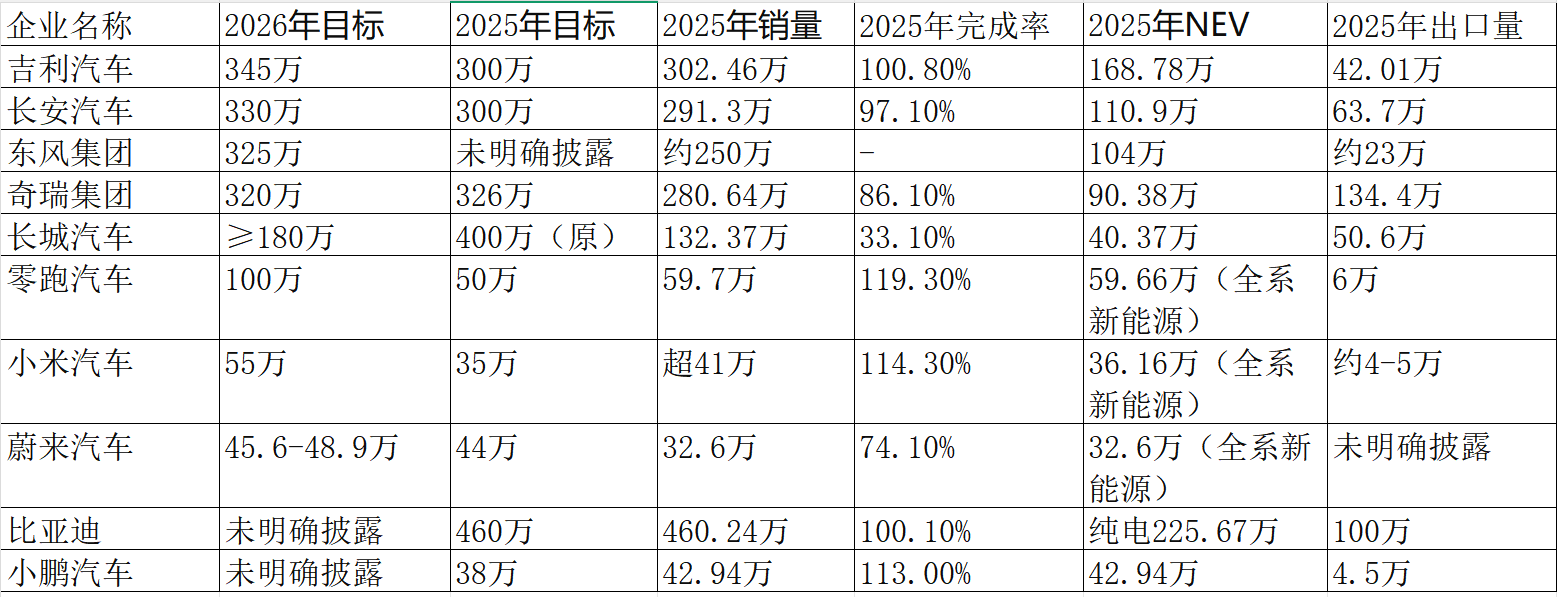
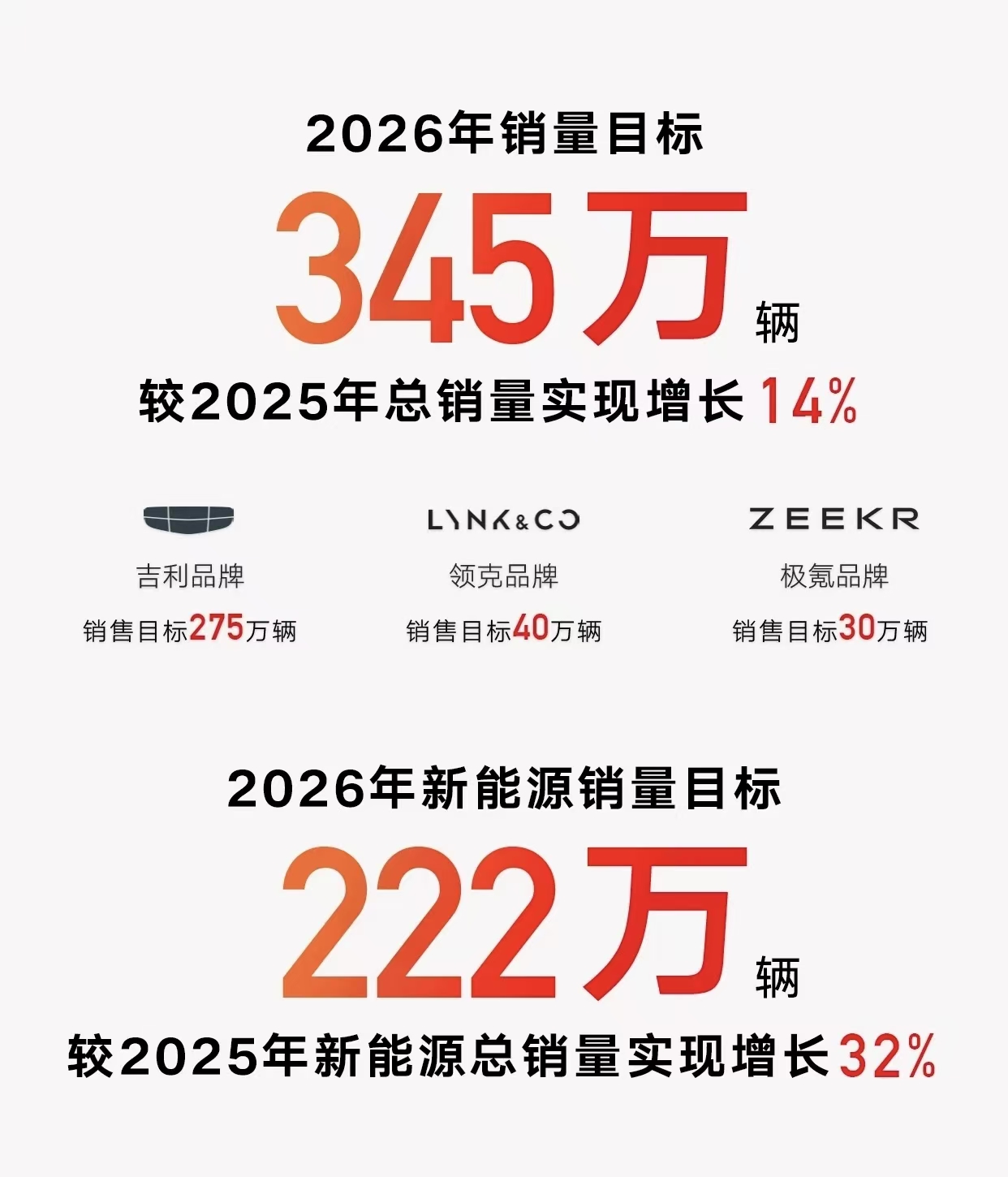
Core Viewpoint - Several automotive companies have announced their sales targets for 2026, and an analysis of their 2025 performance reveals the potential challenges they may face in achieving these goals [3]. Group 1: Company Performance and Targets - Geely Automobile aims for a target of 3.45 million units in 2026, having achieved 3.0246 million units in 2025, exceeding its target of 3 million units with a completion rate of 100.8% [3] - BYD's actual sales in 2025 reached 4.6024 million units, surpassing its adjusted target of 4.6 million units, with a significant pure electric sales figure of 2.2567 million units, ranking first globally [5] - Leap Motor set a target of 1 million units for 2026, achieving 597,000 units in 2025, exceeding its target of 500,000 units with a completion rate of 119.3% [8] - Changan Automobile has a target of 3.3 million units for 2026, with 2025 sales of 2.913 million units, achieving a completion rate of 97.1% [12] - Chery Group aims for 3.2 million units in 2026, having sold 2.8064 million units in 2025, with a completion rate of 86.1% [15] - NIO targets between 456,000 and 489,000 units for 2026, with 2025 sales of 326,000 units, achieving a completion rate of 74.1% [20] Group 2: Challenges Faced by Companies - Geely faces challenges such as EU anti-subsidy investigations and changes in Brazil's tax policies affecting exports [3][4] - BYD needs to improve sales in the high-end market, particularly for its luxury models, and address rising overseas transportation costs, which increased by 47% [6][7] - Leap Motor must compete in the 100,000-150,000 yuan market against Geely and Changan, while its gross margin is only 12%, below the industry average of 15% [10] - Changan's challenges include competition in the new energy market with BYD and Tesla, and reliance on Middle Eastern and Southeast Asian markets for exports, which are subject to geopolitical risks [14] - Chery's domestic market faces low new energy penetration at 32%, necessitating a faster transition, while its exports are vulnerable to currency fluctuations and trade barriers [15] - Great Wall Motors has significantly reduced its target from 4 million to 1.8 million units, indicating a strategic contraction, and faces delays in its new energy transition [18][19] - NIO's sales target increase of 40-50% requires monthly sales of 38,000-41,000 units, while its average monthly sales in 2025 were only 27,000 units, alongside ongoing financial losses [22] Group 3: Industry Trends and Insights - The competition in the automotive market is intensifying, with many companies having gross margins below the industry average of 15%, limiting their operational flexibility [23] - The price volatility of lithium carbonate, a key component for batteries, is expected to negatively impact cost reduction efforts for automotive companies in 2026 [23] - The automotive industry is entering a phase of "technology-driven + globalization" competition, requiring companies to balance scale, profit, and technology to achieve their 2026 targets [25]






2025全年销量出炉:汽车行业维持“一超多强”格局,三大预期打开行业空间
智通财经网· 2026-01-08 06:29
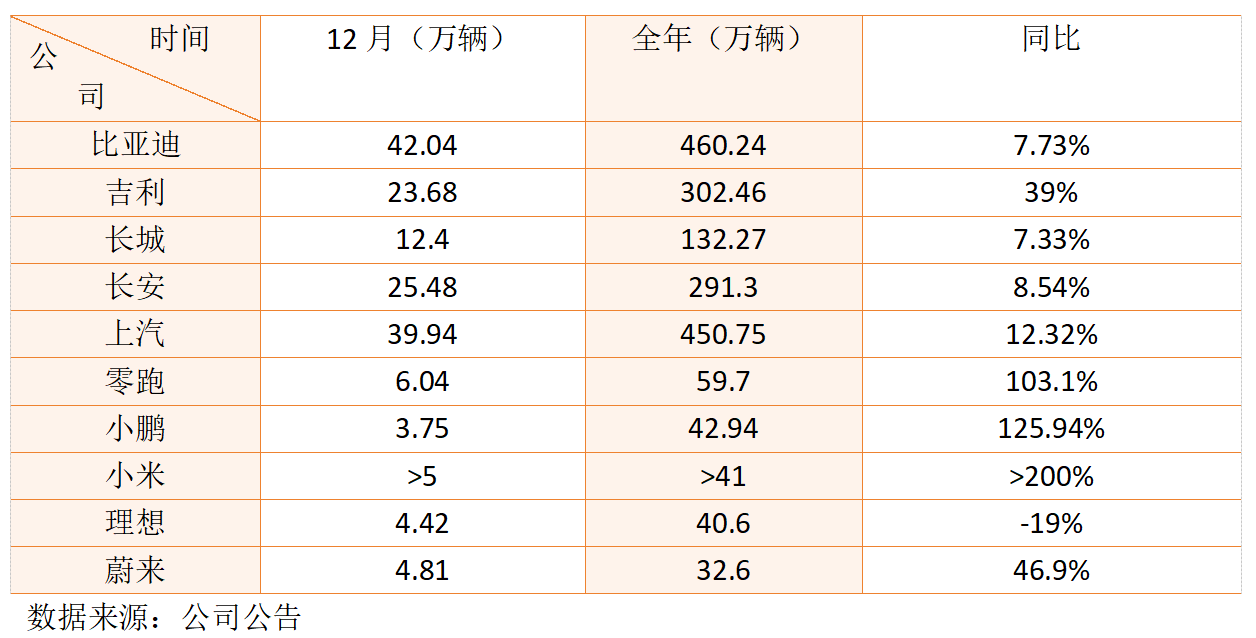
Core Insights - The automotive industry in 2025 has shown a mixed performance, with new energy vehicle (NEV) sales growing significantly while traditional brands face challenges [1][2][10] - BYD remains the dominant player with 4.6024 million units sold, while Leap Motor has emerged as a leading new force with 597,000 units sold [1][2][3] - The market is experiencing a shift towards domestic NEVs, with traditional brands like SAIC and Volkswagen seeing significant declines in sales [2][4] Sales Performance - In December, Leap Motor sold 64,000 units, a 42.11% increase, while NIO and Xiaomi also reported substantial growth [2] - For the entire year, BYD led with 4.6024 million units sold, followed by Geely with 302,460 units and Leap Motor with 597,000 units, which represents a 103.1% increase [3][4] - Traditional automakers, except for BYD, are accelerating their transition to NEVs, with SAIC's NEV sales reaching 1.643 million units, a 33.12% increase [4] Market Trends - The NEV retail penetration rate has surpassed 50%, indicating a slowing growth trend in a high base market [1][4] - The industry is witnessing three major trends: intelligent driving, long-range requirements, and increasing exports [4][5] - The introduction of L3-level autonomous driving vehicles is expected to create new market dynamics [5] Export Growth - NEV exports have surged, with BYD and Chery leading the charge, achieving over 90% growth in export volume [6] - BYD's overseas sales reached 1.0496 million units, a 145% increase, while Chery maintained its position as the top Chinese brand in passenger car exports [6] Investment Opportunities - The automotive sector is currently in an adjustment phase, with some stocks undervalued, presenting potential investment opportunities [8] - BYD is highlighted as a strong investment due to its comprehensive supply chain and rapid overseas growth [8] - Leap Motor is recognized as a leading new force with consistent sales growth and profitability, making it an attractive investment target [8][9] Competitive Landscape - The competition in the NEV market is intensifying, with traditional brands struggling against the rise of domestic manufacturers [7][10] - The market is expected to face challenges in 2026, including the potential withdrawal of purchase tax subsidies and increased competition [7][10]
车市2025丨年销量分化加剧:谁在领跑?谁已掉队?
Bei Ke Cai Jing· 2026-01-08 06:01
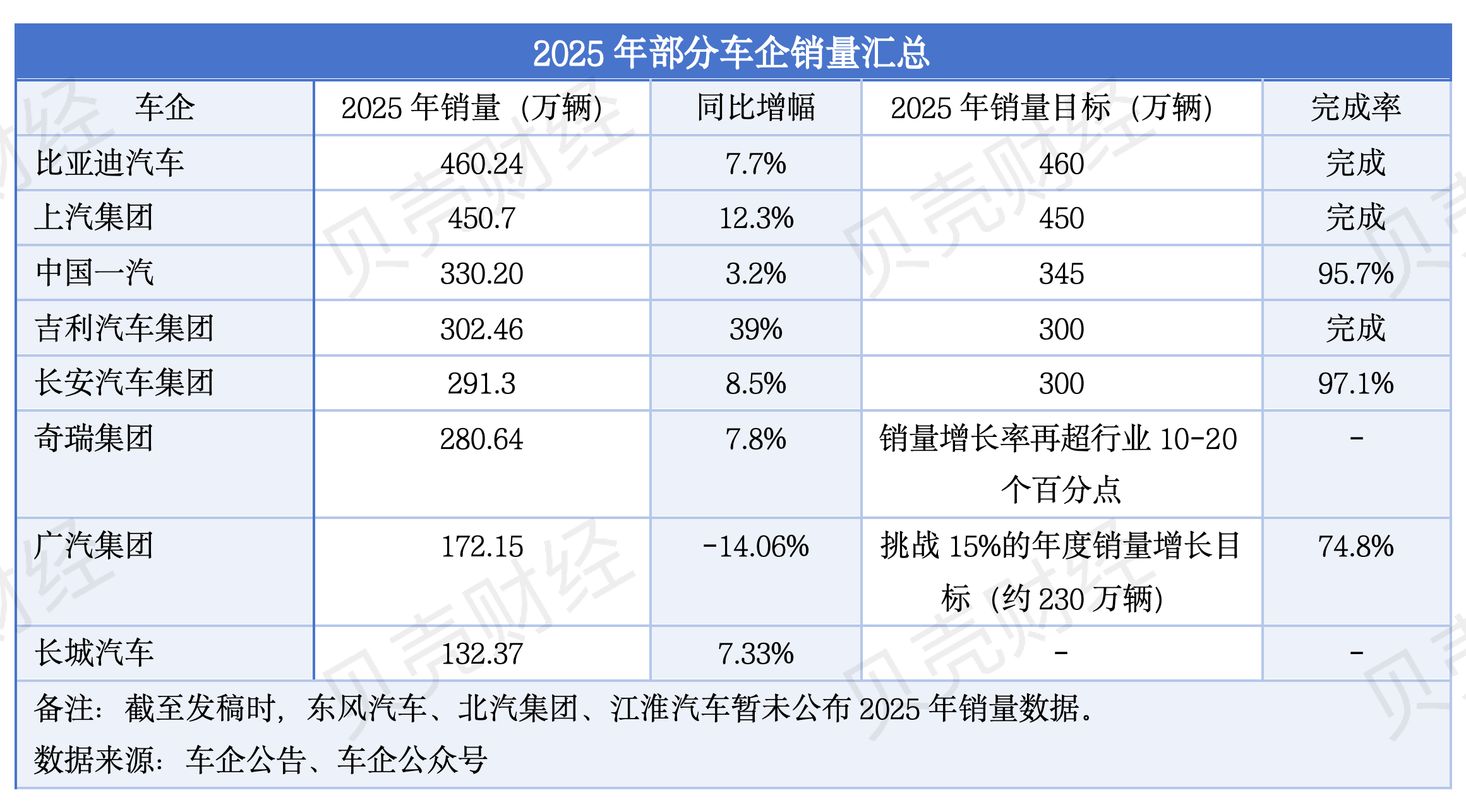
Core Viewpoint - The Chinese automotive market in 2025 is characterized by "overall growth with internal differentiation," as the transition to new energy continues and competition intensifies [1] Group 1: Sales Performance of Major Automotive Groups - Among the automotive groups that have reported 2025 sales, seven achieved positive growth, with four groups exceeding 3 million units in annual sales, solidifying the leading position [2][6] - BYD sold 4.6024 million vehicles in 2025, a year-on-year increase of 7.7%, achieving its annual target [7] - SAIC followed closely with approximately 4.507 million vehicles sold, a 12.3% increase year-on-year, also meeting its annual target [8] - Geely's total sales reached 3.0246 million units, a 39% year-on-year increase, exceeding its target and setting a historical high [9] - Changan and FAW were close to their targets, achieving 95.7% and 97.1% of their goals, respectively [10] Group 2: New Forces in the Automotive Market - The new energy vehicle segment is experiencing significant differentiation, with 400,000 units becoming a critical threshold for scale [3] - Among the new forces, Leap Motor, Seres, Xiaopeng, Xiaomi, and Li Auto crossed this threshold, creating a gap with subsequent tiers [3] - Three out of eleven new energy vehicle companies met their sales targets, with Leap Motor, Xiaopeng, and Xiaomi being the notable achievers [12] Group 3: Competitive Landscape and Future Outlook - The automotive market is entering a phase of stock competition, where the competition extends beyond product and sales to include technology iteration speed, ecosystem building, and operational efficiency [4] - The consensus for 2026 is that competition will intensify, with traditional companies focusing on high-end and intelligent vehicles while new forces seek differentiation through rapid technological advancements [5][22] - The shift in the automotive export landscape indicates that new energy vehicles have become the core growth engine, replacing traditional fuel vehicles [21] Group 4: Overseas Market Performance - The overseas market is becoming a key growth area, with Chery, SAIC, and BYD forming a "million-unit club" in overseas sales [18] - Chery led with over 1.344 million vehicles exported, while BYD achieved a 145% year-on-year increase in overseas sales, surpassing 1 million units for the first time [19][20]


多家车企公布2026年销量目标,零跑冲击100万,吉利奇瑞增长14%
Jin Rong Jie· 2026-01-08 04:46
Group 1 - Geely Auto exceeded its 2025 sales target of 3 million units, achieving over 3.02 million units, and aims for a sales target of 3.45 million units in 2026, representing a 14% year-on-year growth [1] - Dongfeng Group has set a sales target of 3.25 million units for 2026, an increase of 250,000 units from its 2025 target of 3 million units; the 2025 sales figure is expected to be around 2.5 million units based on the first 11 months' sales of 2.204 million units [1] Group 2 - Leap Motor performed exceptionally in 2025, surpassing its initial sales target of 500,000 units with actual sales close to 600,000 units, making it the top seller among new energy vehicle companies; for 2026, it targets 1 million units, a 68% increase [6] - Xiaomi Auto achieved sales of 410,000 units in 2025, exceeding its target of 350,000 units, and aims for a sales target of 550,000 units in 2026, reflecting a 34% year-on-year growth; it plans to launch four new models in 2026, including two range-extended SUVs [6] Group 3 - NIO's actual sales in 2025 were approximately 326,000 units, falling short of its target of 440,000 units; however, models like the L90 and the new ES8 performed well, stabilizing the company's position; for 2026, NIO targets sales between 456,000 and 489,000 units, indicating a year-on-year growth of 40%-50% [7] - The continued implementation of the vehicle trade-in policy in 2026 is expected to stimulate automotive consumption, with industry experts predicting overall market growth exceeding zero growth in 2026 [7]
特斯拉中国再推低息购车方案
Jing Ji Wang· 2026-01-08 02:47
Core Viewpoint - Tesla China is implementing a strategic adjustment to stimulate consumer demand by introducing low-interest financing options for its Model 3 and Model Y vehicles in response to declining sales pressure [1][4]. Group 1: Financing Options - Tesla China has launched a 7-year ultra-low interest financing plan for Model 3 and Model Y, with a minimum down payment starting at 79,900 yuan and monthly payments as low as 1,918 yuan [2]. - For the Model Y L, the financing plan includes a 5-year 0% interest option, with a down payment starting at 99,900 yuan and monthly payments starting at 3,985 yuan [2]. Group 2: Market Context - In 2025, Tesla produced approximately 1.655 million electric vehicles and delivered about 1.636 million, marking an 8.6% decline in delivery compared to the previous year [4]. - The fourth quarter of 2025 saw Tesla's global production at around 434,000 vehicles and deliveries at 418,000, reflecting a year-on-year drop of about 16% [4]. - The competitive landscape in the electric vehicle market is intensifying, with brands like BYD, Li Auto, and NIO actively launching high-performance models that challenge Tesla's market share [4][5]. Group 3: Competitive Strategies - Multiple Chinese automotive brands are introducing limited-time offers and interest-free loans to capture market share, prompting Tesla to adopt more flexible financing solutions [5]. - In 2025, BYD surpassed Tesla in annual electric vehicle sales, achieving nearly 2.26 million units sold, a growth of nearly 28% from 2024 [5]. - The automotive industry expert suggests that Tesla's ability to regain growth momentum will depend on its product iteration speed and localization capabilities in the face of increasing competition from domestic brands [5].

进入百万台俱乐部的蔚来,决赛圈准备怎么打?
2 1 Shi Ji Jing Ji Bao Dao· 2026-01-08 02:16
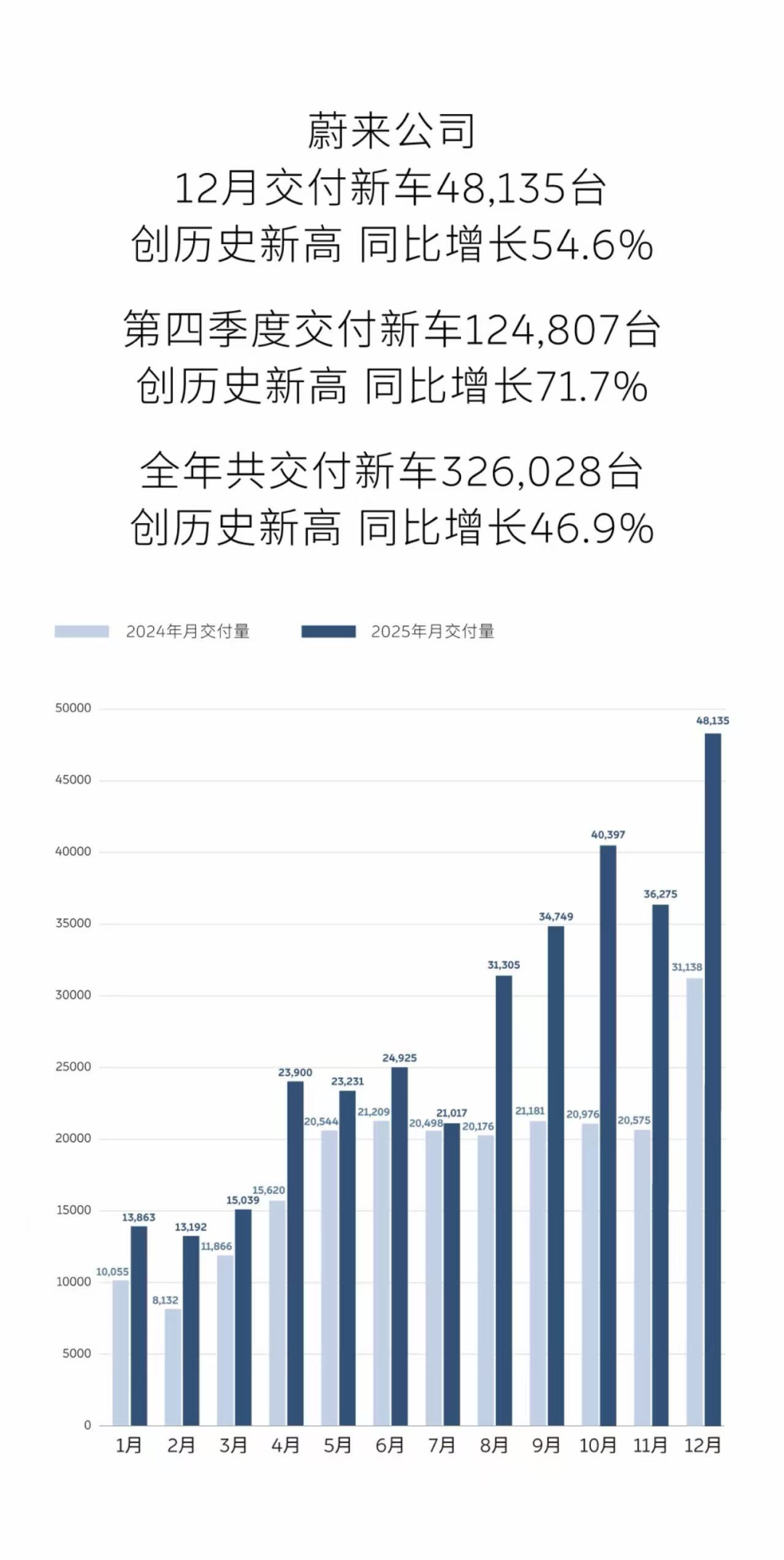
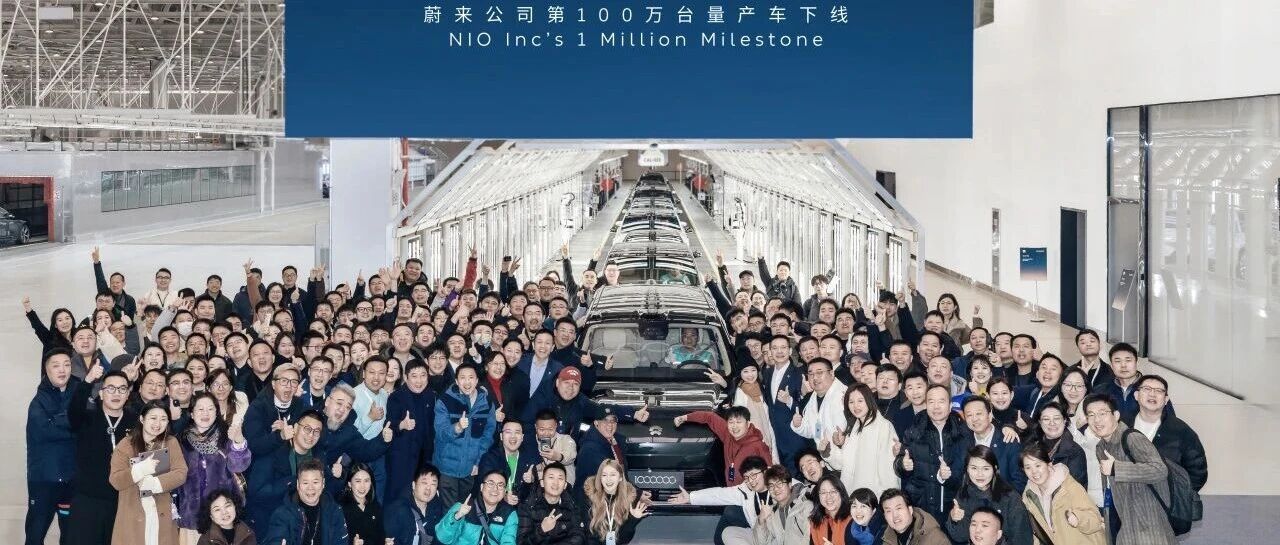
Core Insights - NIO achieved a significant milestone with the production of its one millionth vehicle on January 6, 2026, marking a return to rapid growth and setting new sales records for December 2025 and the entire year [1][2] - CEO Li Bin emphasized the need for continuous effort and strategic focus in his internal communication, highlighting the importance of building a solid foundation for long-term development [1][10] Sales Performance - In December 2025, NIO delivered 48,135 vehicles, a year-on-year increase of 54.6%, and for the fourth quarter, total deliveries reached 124,807, up 71.7% year-on-year [1] - The total vehicle deliveries for 2025 amounted to 326,028, reflecting a 46.9% year-on-year growth, all of which are historical highs for the company [1] Growth Strategy - NIO is entering a third growth phase, aiming for annual growth rates of 40-50% while focusing on maintaining stable and rapid growth [2] - The company plans to expand into lower-tier markets by opening integrated stores for its three brands: NIO, Lado, and Firefly [7] Product Development and Market Position - The new ES8 model achieved a record monthly delivery of 22,256 units, setting a new benchmark for vehicles priced above 400,000 yuan [6] - The multi-brand strategy is proving effective, with the Firefly model also surpassing 7,000 units in monthly sales, indicating a successful synergy among NIO's brands [6] Technological Advancements - NIO's investments in technology and infrastructure are beginning to yield results, with the launch of self-developed platforms and chips enhancing product competitiveness and reducing costs [6][12] - The company has established nearly 3,700 battery swap stations nationwide, significantly alleviating range anxiety for electric vehicle users [7] Organizational Efficiency - Li Bin noted that organizational changes have strengthened operational efficiency and cost control, which are crucial for competing in the market [9][10] - The implementation of the CBU (Core Business Unit) mechanism has led to a more focused approach on core operations, enhancing execution capabilities [9][10] Market Outlook - Li Bin predicts that by 2030, the penetration rate of new energy vehicles will exceed 90%, with pure electric vehicles accounting for over 80% of the market [11][16] - The market is shifting favorably for NIO, as pure electric vehicles are becoming the dominant choice, with significant growth in the large SUV segment [18]

进入百万台俱乐部的蔚来,决赛圈准备怎么打?
21世纪经济报道· 2026-01-08 02:06
Core Viewpoint - NIO has achieved significant milestones, including the production of its one millionth vehicle, while also expressing a sense of urgency and commitment to continuous improvement and growth in a recent internal communication from CEO Li Bin [1][3]. Sales Performance - In December 2025, NIO delivered 48,135 vehicles, marking a 54.6% year-on-year increase, and in Q4 2025, deliveries reached 124,807 units, up 71.7% year-on-year. The total deliveries for 2025 amounted to 326,028 vehicles, representing a 46.9% increase, all setting new historical records [1][3]. - The new ES8 model achieved a monthly delivery of 22,256 units, setting a record for vehicles priced above 400,000 yuan, and reached 40,000 units in just 100 days post-launch, the fastest in its category [9][12]. Growth Strategy - NIO aims for an annual growth rate of 40-50% in its third growth phase, focusing on maintaining stable and rapid growth [3]. - The company plans to expand into lower-tier markets by opening comprehensive stores for its three brands: NIO, Ladao, and Firefly, with the first batch set to open before the Spring Festival [14]. Technological and Infrastructure Development - NIO's investments in R&D and infrastructure are beginning to yield results, with the launch of its self-developed 925V platform and NX9031 chip enhancing product competitiveness and reducing costs [12][14]. - The expansion of the battery swap network, with nearly 3,700 stations nationwide, has alleviated range anxiety for electric vehicle users, contributing to the sales success of the Ladao L90 and new ES8 models [12][14]. Organizational Efficiency - NIO has undergone significant organizational changes, implementing the CBU (Core Business Unit) mechanism to enhance operational efficiency and focus on core activities, which has improved execution and management stability [16][18]. - The CBU mechanism emphasizes ROI metrics and performance accountability, leading to a more focused approach on vehicle production and sales [18]. Market Outlook - Li Bin predicts that by 2030, the penetration rate of new energy vehicles will exceed 90%, with pure electric vehicles accounting for over 80% of the market, supported by the growing trend towards electrification [19][22]. - The competitive landscape is intensifying, with traditional automakers accelerating their electrification efforts, but NIO remains confident in its technological innovations and infrastructure investments [19][22].
特斯拉在华卖不动了?
Bei Ke Cai Jing· 2026-01-08 01:48
Core Viewpoint - Tesla's stock price dropped 4.14% on January 6, resulting in a market value loss of $66.23 billion, attributed to disappointing sales figures for 2025 [1][2]. Group 1: Sales Performance - In 2025, Tesla's global deliveries reached 1.636 million units, a year-on-year decline of 8.6%, marking the first time it lost its title as the global leader in pure electric vehicle sales [3]. - In China, Tesla's sales for the first 11 months of 2025 were 531,900 units, down 7.37% from 574,200 units in the same period last year, while the domestic electric vehicle market continued to grow [5]. - Tesla's sales in China showed a pattern of "overall weakness with a short-term year-end rebound," indicating a struggle against increasing competition from local brands [4]. Group 2: Competitive Landscape - BYD's pure electric vehicle sales reached 2.2567 million units in 2025, a year-on-year increase of 27.86%, highlighting the competitive pressure on Tesla [5]. - Tesla's Shanghai Gigafactory contributed 52% of its global deliveries in 2025, but the demand in China was significantly affected by local brands [5]. - Local brands like Xiaomi and BYD are rapidly gaining market share through frequent product updates and better alignment with consumer preferences, contrasting with Tesla's slower product iteration [8]. Group 3: Product and Market Adaptation - Tesla's slower product updates and lack of localized adaptations are seen as core issues contributing to its declining sales [8]. - The absence of Tesla's Full Self-Driving (FSD) system in China, limited by regulatory constraints, further hampers its competitive edge [9]. - Analysts suggest that Tesla needs to accelerate localization efforts to transition from "Tesla China" to "China Tesla," emphasizing the importance of aligning with local market demands and consumer values [9].
雷军再回应“1300公里只充一次电”争议;字节跳动辟谣跨界造车
Sou Hu Cai Jing· 2026-01-08 01:35
Group 1: Artificial Intelligence and Manufacturing - The Ministry of Industry and Information Technology and seven other departments issued an implementation opinion for the "AI + Manufacturing" initiative, aiming for secure and reliable supply of key AI technologies by 2027, with the industry scale and empowerment level remaining among the world's top [2] - The initiative plans to promote 3-5 general large models in deep applications within the manufacturing sector, create 100 high-quality datasets in industrial fields, and promote 500 typical application scenarios [2] Group 2: Regulatory Changes in E-commerce - The State Administration for Market Regulation and the National Internet Information Office jointly released the "Supervision and Management Measures for Online Trading Platforms," prohibiting unreasonable restrictions on operators' activities and the use of big data for price discrimination [3] Group 3: Company Responses and Developments - Xiaomi CEO Lei Jun addressed the controversy regarding the claim of traveling 1300 kilometers on a single charge, stating that misinformation spread by "water armies" misrepresented his statements [4] - He emphasized that the information was clear in previous communications, but was taken out of context [4] - NIO's CEO Li Bin mentioned that rising memory prices pose cost pressures for the automotive industry, suggesting consumers consider purchasing vehicles sooner [11] Group 4: Market Movements and Company Strategies - IKEA China announced the closure of seven stores and plans to open over ten small-format stores, shifting focus to precision market development in key cities like Beijing and Shenzhen [7] - ByteDance denied rumors of entering the automotive industry, clarifying that there are no plans for car manufacturing [7] - Google surpassed Apple in market capitalization for the first time since 2019, with a market cap of $3.88 trillion compared to Apple's $3.84 trillion, highlighting a divergence in AI strategies between the two companies [11] Group 5: Employee Compensation Trends - Major companies, including JD and ByteDance, have initiated salary increases and bonus enhancements, with JD reporting that 92% of employees received full or excess year-end bonuses, and ByteDance increasing its bonus investment by 35% [13]




尾盘跳水!昨夜,道指大跌
证券时报· 2026-01-08 00:55
Market Performance - On January 7, US stock indices experienced a decline, with the Dow Jones falling by 466.00 points (0.94%) to close at 48996.08, while the Nasdaq rose by 37.10 points (0.16%) to 23584.27, and the S&P 500 dropped by 23.89 points (0.34%) to 6920.93 [1] - During the trading session, the Dow reached an intraday high of 49621.43, and the S&P 500 peaked at 6965.69, both marking historical highs [3] Energy Sector Developments - The US government announced it would indefinitely control Venezuelan oil exports, with Energy Secretary Chris Wright stating that sales would be managed by the US government, including both current inventory and future sales [2][3] - The US aims to stabilize and increase Venezuelan oil production by providing heavy crude oil diluents, parts, equipment, and services, with potential increases in daily production by hundreds of thousands of barrels in the coming years [4] Defense Sector Impact - President Trump indicated that defense contractors would not be allowed to distribute dividends or conduct stock buybacks until complaints regarding the industry are resolved, leading to declines in defense stocks such as Lockheed Martin (down nearly 5%) and Northrop Grumman (down over 5%) [4] Technology Sector Highlights - Alphabet's market capitalization surpassed Apple's, reaching $3.89 trillion compared to Apple's $3.85 trillion, reflecting divergent strategies in artificial intelligence [5] - Intel's stock rose by 6.47% following the announcement of its new AI PC chip series based on 18A process technology, marking a significant milestone in its manufacturing revival and technology leadership [7]