
零跑

Search documents
新能源车要开始卷充电速度了
虎嗅APP· 2025-11-13 00:09
Core Viewpoint - The article discusses the growth of China's new energy vehicles (NEVs) and charging piles, highlighting the decreasing vehicle-to-pile ratio while emphasizing that the charging difficulties persist due to the imbalance between private and public charging infrastructure [5][6][8]. Group 1: Growth of NEVs and Charging Infrastructure - In 2020, China had 4.92 million NEVs and 1.68 million charging piles, with a vehicle-to-pile ratio of 3.1:1. By 2022, NEV ownership rose to 13.1 million, and charging piles increased to 5.2 million, reducing the ratio to 2.5:1 [5][6]. - Projections for 2024 indicate NEV and charging pile ownership will reach 31.4 million and 13.08 million, respectively, with a further decrease in the vehicle-to-pile ratio to 2.4:1 [6]. - As of mid-2025, NEV ownership is expected to hit 36.89 million, with charging piles around 16.04 million, leading to a vehicle-to-pile ratio of 2.3:1 [6]. Group 2: Charging Difficulties - The article argues that simply observing a declining vehicle-to-pile ratio does not accurately reflect the alleviation of charging difficulties, as it fails to differentiate between public and private charging piles [8]. - By the end of 2024, out of 16.04 million charging piles, 11.94 million will be private piles, leaving owners of vehicles without charging piles reliant on public options [10]. - The growth of private piles has consistently outpaced public piles, with private piles increasing by 373,000 and public piles by only 85,300 in 2024 [11]. Group 3: Public Charging Infrastructure Challenges - The article identifies three critical variables affecting charging difficulties: the percentage of vehicle owners with private charging piles, the ratio of new public piles to vehicles without charging piles, and the ratio of existing vehicles to public piles [14][15]. - The ratio of existing vehicles to public piles has worsened from 6.5:1 in 2021 to 9:1 by mid-2025, indicating that the growth of public charging infrastructure is lagging behind vehicle sales [15][17]. - The annual production of 30 million vehicles contrasts sharply with the addition of only 850,000 public charging piles, highlighting inefficiencies in public charging infrastructure investment and operation [17]. Group 4: Economic Viability of Charging Operators - The article discusses the performance of 特来电 (Telai Electric), which operates 792,000 public charging terminals, holding a 24% market share as of mid-2025 [19]. - Despite a significant number of terminals, the average profit per terminal is low, with each terminal generating only 4.1 yuan in gross profit per day [24]. - The decline in revenue per terminal is attributed to the expansion of partnerships and collaborations, which dilute the profitability of individual charging stations [22]. Group 5: Charging Speed and User Experience - The article emphasizes that the primary issue is not the number of charging piles but the slow charging speed, which contributes to user anxiety regarding vehicle range [29]. - Current average charging power across 18 million charging piles is only 44 kW, leading to long wait times for users [31]. - The article advocates for a "charging revolution" where charging speeds match those of refueling gasoline vehicles, which would significantly improve user experience and operational efficiency for charging operators [31][38]. Group 6: Government Initiatives and Future Outlook - As of September 2025, China aims to have 28 million charging piles by 2027, with a focus on increasing charging speed and efficiency [32]. - The government has recognized the need for faster charging solutions and plans to enhance the infrastructure to support high-power charging stations [32]. - The article concludes that the future of NEV competitiveness will hinge on charging convenience and speed, rather than just battery capacity [41].


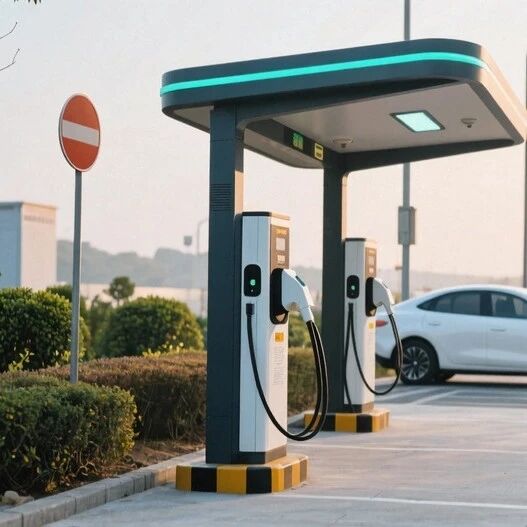
零跑Lafa5正式售价会是多少?Ultra版何时上市?官方回应
Feng Huang Wang· 2025-11-12 14:30
凤凰网科技讯 11月12日,针对零跑Lafa5目标用户关心的价格问题以及Ultra版上市时间等相关问题,零 跑官方在新一期的预售期答网友问中回应称:零跑Lafa5是为10-15万年轻个性市场打造的新产品,采用 无框车门设计,并搭载激光雷达智能辅助驾驶功能,续航达到605公里,综合产品力媲美15万以上的高 端车型。 此外,Lafa5 Ultra将搭载专属运动套件,内饰质感与动态操控上也进行了深度优化。目前,Lafa5 Ultra 的正式发布与交付计划于2026年第二季度启动,具体的配置详情与价格信息将采取分阶段公布的方式, 通过官方第一时间进行公布。 ...
年内三现负增长!增程车“续航焦虑”没解决,先遇市场焦虑
Guo Ji Jin Rong Bao· 2025-11-12 13:28
Core Insights - The range-extended electric vehicle (REEV) market is facing growth bottlenecks, with wholesale sales in October dropping to 121,000 units, a year-on-year decline of 1.9%, marking the third negative growth in the first ten months of the year [1][9] - In contrast, pure electric vehicle (BEV) sales have shown robust growth, with a year-on-year increase of 31.6% in October, maintaining an average monthly growth rate above 30% throughout the year [3][9] Sales Performance - October wholesale sales for REEVs: 121,000 units, down 1.9% year-on-year [2] - Year-to-date REEV sales: 1.826 million units, down 1.1% year-on-year [9] - BEV sales in October: 1.02 million units, up 31.6% year-on-year [2] - Plug-in hybrid electric vehicle (PHEV) sales in October: 480,000 units, up 2% year-on-year [2] Market Dynamics - The REEV market, once dominated by the Li Auto ONE, has seen increased competition with new entrants like AITO and Deep Blue, yet Li Auto still holds nearly 60% market share [4][5] - The total sales of REEVs are projected to exceed 1 million units by 2024, with a significant increase in brand participation [7] Consumer Sentiment and Challenges - REEVs were initially favored for their "no range anxiety" feature, but advancements in BEV technology have diminished this advantage [9] - Consumer complaints regarding REEVs have surged by 280% in 2024, with over 70% of complaints related to range misrepresentation, high fuel consumption when depleted, and battery issues [9] Regulatory Environment - Policy changes are impacting the REEV market, with a shift in tax incentives starting in 2026, which will reduce the cost advantage of REEVs compared to traditional fuel vehicles [10] - New regulations will require REEVs to meet specific criteria, such as a minimum electric range of 100 kilometers, potentially leading to the elimination of lower-range models from the market [10]

全球份额稳定提升,中国汽车持续释放活力
Zhong Guo Qi Che Bao Wang· 2025-11-12 13:03
Core Insights - The global automotive market is experiencing significant growth, with global sales reaching 8.55 million units in September 2025, marking a 10% year-on-year increase and a 12% month-on-month increase. China's market share has risen to 38%, up 2 percentage points from the previous year, indicating an acceleration in the globalization of Chinese automobiles [2] Group 1: Domestic Market Dynamics - A series of favorable policies in China have injected strong momentum into the automotive and particularly the new energy vehicle (NEV) sector, driving domestic consumption through trade-in and replacement incentives [2] - Major Chinese automakers, including SAIC, BYD, and Geely, reported sales exceeding 300,000 units in October, with significant year-on-year growth, and the share of NEVs in traditional automakers' sales continues to rise [2] - New energy vehicle startups like Leap Motor, Xiaomi, and Xpeng have also achieved record sales, with Leap Motor's monthly sales surpassing 70,000 units for the first time [2] Group 2: Global Market Position - Chinese automakers are increasingly influential in the global market, with two Chinese companies, BYD and Geely, ranking 6th and 9th respectively among the world's top 10 automakers, and Chery approaching the top 10 at 11th place [4] - The shift in product strategy for Chinese automakers has moved from a one-size-fits-all approach to localized development tailored to the specific needs of different regional markets, enhancing their competitiveness [4][5] - Chinese NEV companies are adapting to stringent European emission regulations and are exploring mid-to-high-end products, improving their brand perception and market presence [4] Group 3: Strategic Shifts in Global Operations - Chinese automakers are transitioning from "going out" to "going in," establishing local production facilities overseas to comply with local regulations and reduce trade barriers [5] - The "ecological going out" strategy represents a new model of globalization for Chinese automotive companies, focusing on systematic output, localized R&D, and supply chain collaboration [5] - The future direction for Chinese automotive companies includes deepening technological innovation, enhancing supply chain collaboration, and building a comprehensive global service ecosystem to maintain stable growth in global market share [5]



广州车展下周开幕,93台首发新车!超千台展车6成是新能源
Nan Fang Du Shi Bao· 2025-11-12 01:29
Group 1 - The 23rd Guangzhou International Auto Show, themed "New Technology, New Life," will feature 93 global premieres and a total of 1,085 vehicles, with 629 being new energy vehicles, highlighting the focus on electrification and intelligence [1] - The exhibition will take place from November 21 to 30, 2025, at the China Import and Export Fair Complex, covering an area of 220,000 square meters, with major international brands participating [2] - Domestic brands will showcase their full product lines, including notable companies such as BYD, Geely, and Great Wall Motors, among others [2] Group 2 - New energy vehicle brands and tech companies like NIO, Xpeng, and Huawei will compete at the show, alongside luxury and modified vehicle brands [3] - The event will host forums discussing the future of automotive technology, including topics like smart cabins and autonomous driving [3] - The introduction of an intelligent customer service system and a panoramic security system will enhance the exhibition experience [3] Group 3 - The automotive industry is shifting its competitive focus from scale to quality, with projections indicating that by 2024, China's automotive production and sales will exceed 30 million units, and new energy vehicle sales will surpass 10 million units [4] - The penetration rate of new energy vehicles reached 50.2% in the first half of 2025, significantly exceeding the target set in the New Energy Vehicle Industry Development Plan [4] - The exhibition will showcase advancements in technology, such as AI integration in vehicles and the introduction of solid-state batteries [4] Group 4 - The competition rules in the automotive industry are being redefined, with future success depending on global dynamics and the resilience of the entire value chain [5] - The auto show represents not just an exhibition but a broader ecological platform for the future of the Chinese automotive industry [5]
高级副总裁曹力:相较S01 Lafa 5上市时零跑已进化
Guo Ji Jin Rong Bao· 2025-11-11 17:38
Core Viewpoint - Leap Motor has officially launched the pre-sale of its new pure electric sedan, Lafa 5, with a price range of 105,800 to 131,800 yuan, and plans to enter the global market starting next year [2] Group 1 - The Lafa 5 will be available in five different models and is expected to be officially launched by the end of this month [2] - Leap Motor's Senior Vice President, Cao Li, stated that the approach to developing the Lafa 5 is significantly different from their first attempt at a sports sedan six years ago [2] - The company now has 1 million users, allowing them to better understand customer preferences and needs, moving from a focus on practicality to addressing personalized demands [2]
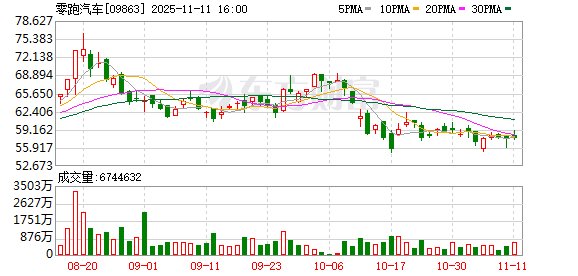
富特科技(301607.SZ)是国内少数能够为国际一流整车品牌及高端新能源车型配套车载高压电源的企业
Ge Long Hui A P P· 2025-11-11 11:46
Core Viewpoint - Futec Technology (301607.SZ) has established a diverse customer base, including traditional domestic automotive brands, local new car manufacturers, and major overseas automotive companies, positioning itself as a key supplier of high-voltage power supplies for international first-class vehicle brands and high-end new energy vehicles [1] Group 1: Customer Structure - The company has formed stable partnerships with leading domestic car manufacturers such as GAC, NIO, Great Wall, Xiaomi, Xpeng, Leap Motor, and Changan [1] - It has successfully entered the supply chains of several major overseas clients, including Renault and Stellantis, leveraging its experience and technical strength in the domestic market [1] Group 2: Market Position - The company has built a strong reputation in the industry, continuously consolidating its leading position and competitiveness in the global market [1]
8点1氪|银行App迎来关停潮;全国多地西贝门店闭店;李斌回应被网暴:无所谓,CEO有娱乐大家的责任
3 6 Ke· 2025-11-10 23:58
Group 1 - Several banks are shutting down their mobile apps, particularly in the credit card and direct banking sectors, due to low user engagement and high operational costs [2][3] - The credit card industry is entering a contraction phase, prompting some banks to close their credit card apps as part of a broader digital transformation strategy [2][3] - The trend of banks discontinuing apps reflects a shift from user acquisition to managing existing customer bases amid declining consumer spending [2][3] Group 2 - The first "JD Car" has been launched with a price of 49,900 yuan for battery rental and 89,900 yuan for outright purchase, indicating a strategic partnership between JD, GAC Group, and CATL [4] - The Aion UT super model features a range of 500 kilometers and supports battery swapping, significantly reducing refueling time to 99 seconds [4] Group 3 - TSMC reported a 16.9% year-on-year increase in October sales, with consolidated revenue reaching approximately 367.47 billion NTD [20] - Nanchao Foods announced a 5.27% decrease in October revenue, totaling 235 million yuan [20] Group 4 - CPE Yuanfeng is investing $350 million into Burger King China, acquiring approximately 83% of the joint venture to expand its restaurant presence from 1,250 to over 4,000 by 2035 [15] - The market regulator has issued compliance guidelines for the "Double 11" shopping festival to prevent unfair practices and protect consumer rights [16]
增程车“失宠”
3 6 Ke· 2025-11-10 11:39
Core Insights - The range-extended electric vehicle (REEV) market has experienced a rare "three consecutive declines" in monthly sales, with July, August, and September sales at 106,900 units, 97,400 units, and 105,000 units respectively, reflecting year-on-year declines of 11%, 7%, and 13% [1][3] - Ideal Automotive, once a leader in the REEV market, has seen a significant drop in sales for five consecutive months, raising questions about whether this decline is a temporary market fluctuation or indicative of a ceiling for this technology path [1][3] - The REEV market, which saw explosive growth from 2021 to 2024 with sales increases of 218%, 130%, 154%, and 70.9%, and market share rising from 3.6% to 9.1%, is now facing challenges as the core advantages of REEVs are being undermined by advancements in pure electric vehicles (EVs) [1][3][5] Market Dynamics - The REEV market has expanded significantly, with total sales expected to exceed one million units by 2024 and the number of brands reaching 23 [3] - However, the landscape is changing as Ideal Automotive shifts focus towards pure electric vehicles, while competitors like Wuling, Deep Blue, and others continue to enter the REEV space [3][4] - The core reasons for the decline in REEV popularity include significant improvements in pure EV range, enhanced charging infrastructure, and decreasing battery costs [5][8] Technological Shifts - The average range of new pure EVs has increased to over 500 km, with mainstream models exceeding 600-700 km, closely matching traditional fuel vehicles [5][8] - Charging infrastructure has improved dramatically, with a total of 12.8175 million charging stations in China by the end of 2024, a 49.11% year-on-year increase [8] - Battery costs are projected to drop to $99 per kWh by 2025, making EVs more cost-competitive with fuel vehicles [8][9] Future Considerations - The new generation of REEVs is shifting towards "large battery + small fuel tank" configurations, raising questions about the necessity of the range-extending engine when pure electric range is comparable to that of pure EVs [9][12] - Industry opinions are divided on whether this shift represents progress or a deviation from the original efficiency goals of REEV technology [12][14] - The decline in REEV popularity highlights the transient nature of market advantages and the importance of addressing consumer pain points [15][16]


21记者提问:小鹏超级增程独特在哪? 小鹏:节奏、能耗、密度
2 1 Shi Ji Jing Ji Bao Dao· 2025-11-07 06:25
Core Insights - The trend of super range extension technology is gaining traction, with various companies like GAC, Zhiji, Buick, and Xiaopeng actively developing it. Xiaopeng's unique selling point lies in its energy consumption and integration capabilities, distinguishing it from competitors [1][2][3]. Group 1: Technology Comparison - Xiaopeng's range reaches 1,600 km, while competitors like Li Auto and others achieve 1,500 km. Xiaopeng's super electric range is 450-460 km, with Leap Motor reaching 500 km [1]. - The key differentiator for Xiaopeng is not just the powertrain technology but the ability to identify unique points of differentiation and effectively implement them [1][2]. Group 2: Internal Capabilities - The company emphasizes its strong internal capabilities, particularly in energy consumption and integration, which are critical for performance [2][3]. - Internal capabilities encompass more than just power; they include various other aspects that contribute to the overall vehicle performance [4].
