古茗

Search documents
新茶饮,5月开店2178家
3 6 Ke· 2025-06-15 01:18
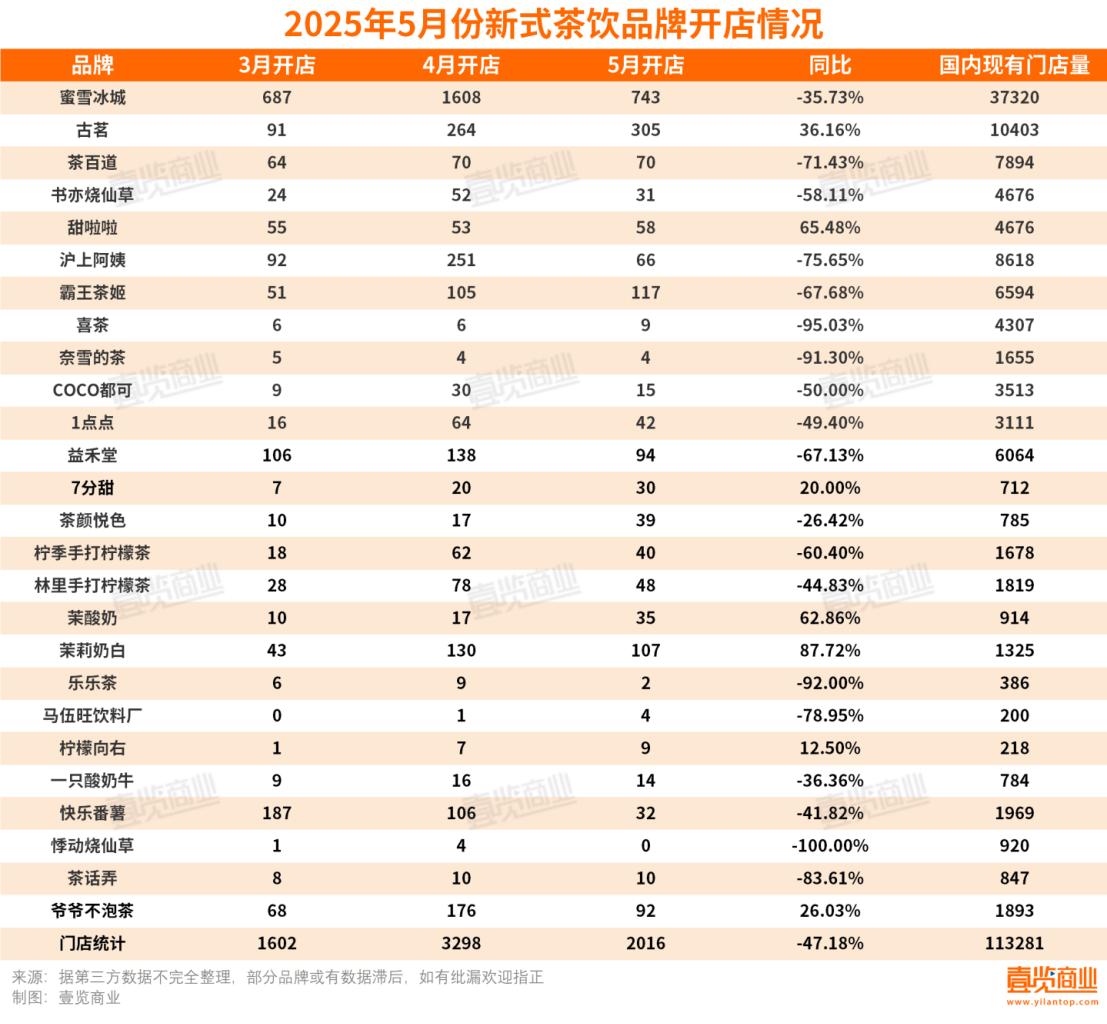
Core Insights - The new tea beverage market is entering a "preparation period" ahead of the Dragon Boat Festival and summer season, with a significant decrease in new store openings in May 2025 compared to previous months and the same period last year [1][4]. Store Opening Trends - In May 2025, 26 new tea beverage brands opened a total of 2016 stores, a decrease of 38.87% month-on-month and 47.18% year-on-year [1][3]. - The total number of stores in the industry reached 113,281, with an increase of 1,029 stores compared to April [1]. - Major brands like Mixue Ice City opened 743 new stores in May, although this was a decrease of approximately 865 stores from April [4]. Brand Performance - Mixue Ice City remains the leader in store openings, followed by Gu Ming with 305 new stores, marking a year-on-year increase of 36.16% [4][7]. - Other brands such as Bawang Chaji and Yihe Tang also showed stable performance with 117 and 94 new stores respectively [4][8]. - Brands like Hey Tea and Nayuki continued to open stores at a slow pace, with only 9 and 4 new stores in May [4][7]. Product Development and Marketing - In May, 26 brands launched approximately 105 new SKUs, an increase of 17 from April, indicating a focus on product innovation [8][11]. - The most popular new product ingredients included peach and bayberry, with several brands introducing related products [11]. - Marketing strategies are shifting from collaboration-driven promotions to influencer marketing, with 7 brands engaging in celebrity or KOL partnerships in May [12]. Industry Dynamics - The industry is experiencing a more differentiated expansion among leading brands, with Gu Ming entering the "10,000 store club" [7]. - Tea Baidao is facing store contraction despite opening 70 new stores, with a net decrease of 104 stores compared to April [7]. - The overall marketing approach is transitioning from heavy reliance on collaborations to a more refined focus on direct sales impact and private domain traffic [12].


7家消费公司拿到新钱,影石上市首日涨超270%,智能眼镜销量暴涨|创投大视野
3 6 Ke· 2025-06-14 12:39
Group 1: Investment Activities - Bepei Technology completed Pre-A round investment led by Shunwei Capital, raising nearly $10 million in total funding [1] - Shiok Burger announced Pre-A round financing led by AC Ventures, with existing shareholders increasing their stakes, achieving profitability after 12 months of growth [2] - Feixiong Lingxian completed nearly 100 million yuan in C round financing, providing comprehensive services in the frozen goods supply chain [3] - Wuxian Exploration secured 16 million yuan in angel round financing, focusing on innovative fruit tea products [4] - Maiba obtained 10 million yuan in angel round financing, offering a 24-hour self-service KTV model [5] - Renren Rental completed several hundred million yuan in D1 round financing, leveraging blockchain and AI technologies for a circular rental service platform [6] - Jason Entertainment received strategic investment from Hengdian Capital, focusing on IP copyright operations and content investment [7] Group 2: Corporate Developments - Ximalaya confirmed acquisition rumors by Tencent Music, maintaining brand independence and operational continuity post-acquisition [8] - Yingshi Technology debuted on the Sci-Tech Innovation Board, with a first-day stock price increase of over 270%, achieving a market cap exceeding 70 billion yuan [9] Group 3: Market Trends - Nova Coffee partnered with Lawson convenience stores to enhance market penetration, launching promotional offers and coffee products [12] - The second-hand market is shifting towards trust-based competition, with the opening of "Super Zhuangzhuang," a multi-category second-hand store [13] - The smart glasses market is experiencing significant growth, with global shipments expected to reach 12.8 million units by 2025, and China's market projected to exceed 2.75 million units [13][14] - In the restaurant sector, consumer preferences are shifting towards higher-rated establishments, with a 15.4% increase in average dining orders and a notable rise in the share of high-quality dining options [15]

7家消费公司拿到新钱,影石上市首日涨超270%,智能眼镜销量暴涨|创投大视野
36氪未来消费· 2025-06-14 12:28
Group 1: Investment Activities - Bepei Technology completed a Pre-A round investment led by Shunwei Capital, with total financing amounting to nearly 10 million USD [3] - Shiok Burger announced its Pre-A round financing led by AC Ventures, expanding to 13 stores in Singapore since its launch in December 2023, achieving profitability [4] - Feixiong Lingxian completed nearly 100 million C round financing, providing comprehensive services in the frozen goods supply chain [5] - Wuxian Exploration completed 16 million RMB angel round financing, focusing on innovative fruit tea products [6] - Maiba completed 10 million RMB angel round financing, offering a 24-hour self-service KTV model [7] - Renren Rental announced several hundred million D1 round financing, leveraging blockchain and AI technologies for a circular rental service platform [8][9] Group 2: Corporate Developments - Himalaya confirmed acquisition rumors by Tencent Music, maintaining its brand and operational independence post-acquisition [11] - Yingshi Technology debuted on the Sci-Tech Innovation Board, with a first-day increase of over 270%, and a market capitalization exceeding 70 billion RMB [12][13] - Gu Ming launched a new coffee product, "Good Light Coconut Latte," as part of its expansion into the coffee market [14] - Nova Coffee partnered with Lawson convenience stores to enhance brand penetration, offering promotional deals [15] - Zhuanzhuan opened its first multi-category second-hand circular warehouse store, emphasizing trust in the second-hand market [16][18] Group 3: Market Trends - The smart glasses market is experiencing significant growth, with global shipments expected to reach 12.8 million units by 2025, and China's market projected to exceed 2.75 million units [18] - In the restaurant sector, consumer preferences are shifting towards higher-rated establishments, with a 15.4% increase in average dining orders and a 13.7 percentage point rise in the consumption rate of high-quality restaurants [19]

星巴克首次直接降价,并非放弃“咖位”
财富FORTUNE· 2025-06-13 13:19
Core Viewpoint - Starbucks China is adopting a different strategy compared to other global markets, focusing on unique market conditions and competitive dynamics [1][5]. Group 1: Strategic Changes - Brian Niccol, the new CEO, aims to fundamentally change the company's strategy by streamlining the menu, reducing discounts, and slowing down new store openings to support transformation [2]. - Starbucks China is not included in the global adjustment plan, as the CEO acknowledges the intense competition in the Chinese market and the need for a clear growth strategy [3][4]. Group 2: Financial Performance - In the second fiscal quarter of 2025, Starbucks China's revenue reached $739.7 million, a 5% year-over-year increase, with same-store sales growing by 4%, reversing a downward trend [4]. - In contrast, North America's same-store sales declined by 4% during the same period, highlighting the importance of the Chinese market for the company [4]. Group 3: Pricing Strategy - On June 10, Starbucks China launched a "Summer Heart Price" promotion, reducing prices of certain non-coffee products by an average of 5 yuan, marking the first time the company has proactively lowered prices in over 20 years [6]. - The price adjustments are not considered a price war, as the discounted products still start at a minimum of 23 yuan, differentiating Starbucks from lower-priced competitors [7]. Group 4: Market Dynamics - The non-coffee product market in China is substantial, with projections estimating the ready-to-drink tea market to reach 368.9 billion yuan by 2025, surpassing the coffee market by 100 billion yuan [7]. - Starbucks is adopting a "coffee + non-coffee" dual-engine model to cater to diverse consumer preferences and enhance product offerings [8]. Group 5: Expansion Plans - Unlike the global strategy of reducing new store openings, Starbucks China plans to continue expanding, with a 9% year-over-year increase in store count in the second fiscal quarter of 2025 [8]. - The company is seeking partners to potentially increase its store count from approximately 8,000 to 20,000, indicating significant growth ambitions in the Chinese market [9][10]. Group 6: Long-term Commitment - Brian Niccol reiterated the immense growth potential in the Chinese market, emphasizing the company's long-term commitment to deepening its presence and development in the region [11].

【关注】新茶饮产品高度同质化,上市效益普遍下滑
Sou Hu Cai Jing· 2025-06-13 09:30
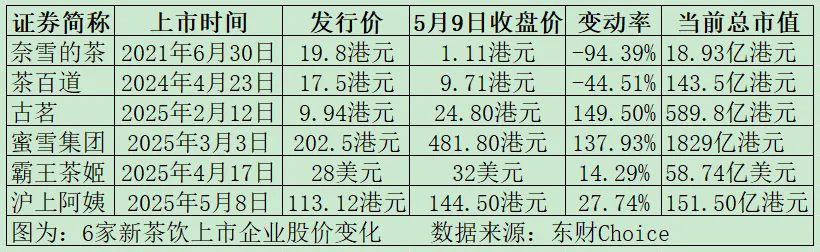
Core Viewpoint - The new tea beverage industry is experiencing a significant differentiation among leading companies following a series of IPOs, indicating a shift into a more competitive phase characterized by homogenization and over-expansion issues [1][10]. Company Performance - Companies like Gu Ming and Mi Xue Group have seen substantial stock price increases post-IPO, with Gu Ming rising by 149.50% and Mi Xue Group by 137.93% as of May 9 [2][3]. - In contrast, companies such as Nai Xue's Tea and Cha Bai Dao have faced significant declines in stock prices, with Nai Xue's Tea down 94.39% and Cha Bai Dao down 44.51% since their respective IPOs [2][7]. - The stock performance of Ba Wang Cha Ji and Hu Shang A Yi has also been weaker compared to their peers, with Ba Wang Cha Ji showing a modest increase of 14.29% and Hu Shang A Yi at 27.74% [3][5]. Market Trends - The new tea beverage market is projected to reach a scale of 354.72 billion yuan in 2024, with a stable growth forecast of 6.4% year-on-year, potentially exceeding 400 billion yuan by 2028 [14]. - The industry is transitioning from a growth phase focused on market share acquisition to a more mature phase emphasizing differentiation and refined strategies [14][16]. Challenges and Issues - The industry faces challenges such as product homogenization, excessive store expansion, and declining operational efficiency, leading to a "impossible triangle" scenario where companies struggle to balance scale expansion, cost control, and brand differentiation [10][12][16]. - Some companies have reported significant drops in net profit, with Cha Bai Dao experiencing a 58.55% decline in 2024, while Nai Xue's Tea reported substantial losses [8][12]. Strategic Directions - Companies are increasingly focusing on differentiation strategies, with Mi Xue Group leveraging its supply chain capabilities to gain competitive advantages [16]. - Expansion into overseas markets is a key strategy for many leading new tea beverage companies, with Ba Wang Cha Ji already testing its first North American store shortly after its IPO [17].
沪上阿姨上市后股价过山车:资本狂欢下的新茶饮生存样本
Xin Lang Zheng Quan· 2025-06-13 09:14
Core Viewpoint - The rapid rise and fall of Hu Shang A Yi's stock price post-IPO reflects a significant shift in the new tea beverage industry from aggressive expansion to a more rational approach, highlighting the challenges faced by the company and the sector as a whole [1][2]. Group 1: IPO and Market Reaction - Hu Shang A Yi's IPO was highly successful, with an oversubscription rate of 3616.83 times and over 940 billion HKD in frozen funds, marking it as the highest new stock subscription in Hong Kong after regulatory changes [2]. - On its first trading day, the stock price surged by 74.68% to 197.6 HKD, but subsequently dropped by 8.78% the following day, leading to a cumulative decline of over 20% within a week [1][2]. - By early June, the stock price had fallen to around 125 HKD, representing a nearly 37% decrease from its peak [1]. Group 2: Financial Performance and Challenges - In 2024, Hu Shang A Yi reported a revenue of 3.285 billion HKD, a year-on-year decline of 1.9%, and a net profit of 329 million HKD, down 15.2% [4]. - The company's business model heavily relies on a franchise system, with 99.7% of stores operated by franchisees, leading to a significant drop in single-store GMV from 1.559 million HKD in 2023 to 1.37 million HKD in 2024, a decrease of 12.12% [4][5]. - The closure rate of franchise stores increased to 12.7% in 2024, with over 1,000 stores shutting down, significantly higher than the industry average of 4% [4]. Group 3: Competitive Landscape and Market Dynamics - The new tea beverage industry is experiencing a slowdown, with a projected growth rate of only 8.2% in 2024 and further decline to 7.5% in 2025, leading to intense price wars among leading brands [6]. - Hu Shang A Yi faces challenges in both low-price and mid-to-high-end markets, struggling against competitors like Mi Xue Bing Cheng and Xi Tea, which have established stronger market positions [6]. - The company's reliance on third-party suppliers and inadequate cold chain coverage hinder its ability to reduce costs, making it difficult to compete on price with rivals [5][6]. Group 4: Future Outlook and Strategic Considerations - The company must focus on optimizing its supply chain and digital commitments, potentially allocating 60% of its IPO proceeds to these areas to regain growth momentum [6]. - Reducing food waste to levels comparable to competitors and leveraging scale procurement could help Hu Shang A Yi improve its cost structure and competitive positioning in the market [6].
港股新消费明星企业,卖空数据显著攀升
财联社· 2025-06-12 10:59
Core Viewpoint - The significant increase in short-selling data for Pop Mart and Blok is contrasted with their high market valuations and strong performance, indicating potential concerns about future growth and sustainability in the new consumption sector [1][3][9]. Group 1: Short-Selling Trends - Pop Mart's short-selling shares rose from 563,600 in early May to 1,707,000 by June 11, an increase of over 200% [1]. - Blok's short-selling shares increased from 71,400 on May 16 to 256,800 on June 11, marking a 260% rise [3]. - In contrast, other companies in the new consumption sector, such as Guming and Maogeping, experienced a decline in short-selling volumes [5]. Group 2: Performance and Valuation Concerns - Despite strong performance, the stock price increases for Pop Mart and Blok have potentially overstretched future growth expectations [9]. - The Labubu series from Pop Mart has a secondary market premium exceeding 10 times, raising concerns about valuation fragility [9]. Group 3: IP Dependency Risks - Blok relies on the Ultraman IP for 48.9% of its revenue, with the copyright expiring in 2027, leading to uncertainties regarding renewal costs and alternative IPs [9]. - Pop Mart's Labubu series contributes 23.3% of its revenue, with projected income of 3.04 billion in 2024, but faces challenges in managing the IP lifecycle [9]. Group 4: Market Sentiment and Consumer Behavior - On June 9, the day Blok was included in the Hong Kong Stock Connect, short-selling volume surged by 459%, indicating potential short-term arbitrage opportunities [9]. - Research shows that about 30% of blind box consumers are reducing purchases due to waning novelty, raising concerns about the sustainability of emotional consumption among Generation Z [9].

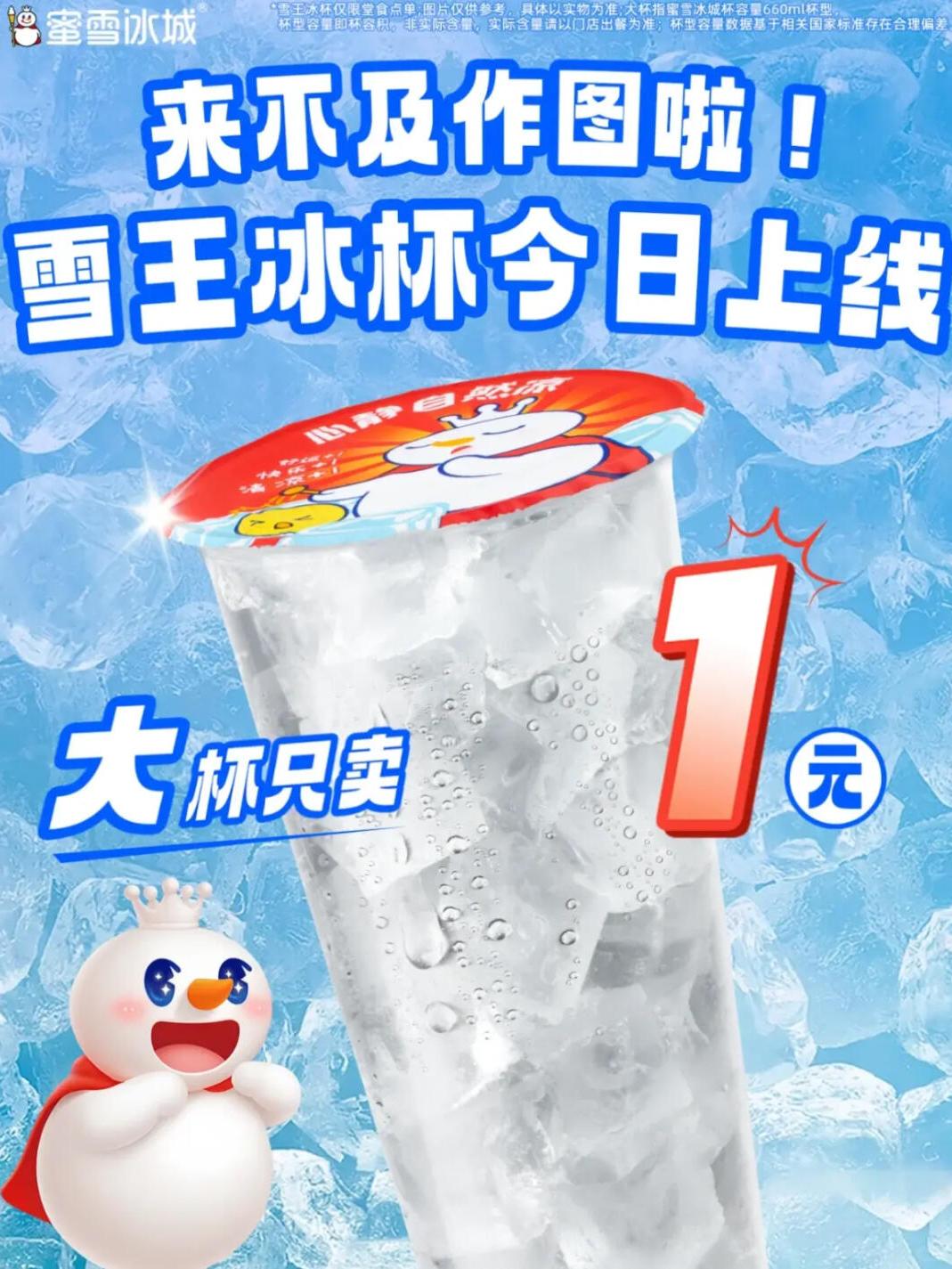
1元冰杯卖爆:蜜雪冰城们赔本赚吆喝,图什么?
3 6 Ke· 2025-06-12 01:21
Core Insights - The introduction of the 1 yuan ice cup by brands like Mixue Ice City, Guming, and Shuyi Burned Fairy Grass marks a new trend in the beverage market, transforming a simple product into a platform for brand engagement and customer interaction [3][9][33] - The ice cup phenomenon is not just about low-cost beverages; it represents a shift towards a convenience store model, where brands aim to enhance customer loyalty and increase transaction frequency [33][34] Group 1: Market Dynamics - Mixue Ice City launched the 1 yuan ice cup with a capacity of 660 ml, leading to high demand and supply chain challenges, indicating a genuine market interest rather than a mere marketing gimmick [3][7] - Guming and Shuyi Burned Fairy Grass followed suit, with Guming offering a 500 ml ice water cup and Shuyi implementing a purchase incentive strategy to boost sales [9][13] - The trend of ice cups is recognized as a growing market opportunity, particularly in first-tier cities, while also having significant potential in lower-tier markets [15] Group 2: Financial Implications - The cost structure for Mixue Ice City's ice cup reveals a minimal profit margin, with production costs around 0.5 yuan per cup, highlighting the financial strain on the supply chain [7][8] - Despite the low profitability of the ice cup, it serves as a marketing tool to drive additional sales of higher-margin products like milk tea and ice cream [8] Group 3: Consumer Behavior - The ice cup has evolved into a DIY beverage container for young consumers, allowing them to create personalized drinks, which enhances its appeal beyond a simple refreshment [8][20] - Social media platforms are amplifying the popularity of ice cups, with various DIY combinations becoming trending topics among younger demographics [20][24] Group 4: Industry Trends - The ice cup is becoming a staple in convenience stores and retail chains, with significant sales growth reported, particularly in coffee ice cups, which saw a 60% increase [24][30] - The overall market for ice products and beverages is projected to exceed 63 billion yuan by 2026, indicating a robust growth trajectory for this segment [30]
新消费快讯|阿迪达斯开售宠物服装挖掘它经济;Mush扩展隔夜燕麦产品线
新消费智库· 2025-06-11 12:46
New Consumption Overview - Fujian Liangkouzi Food Co., Ltd. launched beef pies using a 72-layer Chinese pastry technique and Canadian wheat flour with Anchor butter [3] - Jelly Brown partnered with Lai Yi Hu to introduce three new yogurt fruit and vegetable drinks [3] - Stone Island opened a flagship store in Hangzhou, enhancing its presence in the Chinese market [3] - Luckin Coffee introduced a new vegetable tea product in collaboration with SpongeBob SquarePants [6] - Gu Ming launched a new coconut latte, offering 10,000 free vouchers for consumers [6] Investment and Financing - Aifenda submitted its registration as a high-tech enterprise focused on HVAC home products [7] - Junhe Alliance Bio completed several rounds of financing totaling over 600 million yuan [7] - Tantu Technology secured hundreds of millions in Series B financing to enhance core component development [7] - Dolce & Gabbana received 150 million euros in new debt financing for expansion in beauty and real estate [9] - L'Oréal is reportedly interested in acquiring the UK skincare brand Medik8 for 1 billion euros [9] Major Companies - Adidas launched its first pet clothing line, tapping into the pet economy [10] - RIMOWA collaborated with Vitra to release a limited edition series for 2025 [11] - Three Squirrels established a new food company with a registered capital of 5 million yuan [11] - Mush expanded its overnight oats product line, introducing protein-rich options [14] - Giant Biotech plans to establish a Southeast regional headquarters in Xiamen [14]

柠檬向右徐柏鹤:我从来没有想快的心,晃晃悠悠走也能到达终点
Cai Jing Wang· 2025-06-11 12:15
Group 1 - The current ready-to-drink tea industry is showing signs of reaching its peak, with slower new store openings and reduced single-store output, leading to skepticism about market capacity and the search for new potential brands [1] - Lemon Tea brand "Lemon Towards Right" has less than 300 stores but has significant online presence, driven by founder Xu Baihe's engaging social media content [1] - Xu Baihe emphasizes a focus on quality over rapid expansion, stating that the brand does not prioritize the number of stores or GMV, but rather aims for long-term stability [4][5][34] Group 2 - The challenges faced by the lemon tea industry include maintaining product quality due to weather-dependent lemon supply, requiring frequent adjustments to standard operating procedures (SOP) [2][12][23] - Xu Baihe's approach involves meticulous attention to detail in store operations, with SOPs being updated every few days to ensure consistent taste and quality [22][23] - The brand's strategy includes diversifying product offerings, such as ice cream, to mitigate the instability of lemon supply and enhance customer experience [15][28] Group 3 - The industry is characterized by a trend of rapid expansion, often leading to operational challenges and quality control issues, with many brands prioritizing speed over sustainability [10][11][26] - Xu Baihe critiques the fast-paced growth model prevalent in the industry, suggesting that many brands fail to maintain quality due to their focus on rapid expansion [9][10] - The brand's operational model includes a full management approach for franchisees, aiming to ensure consistent quality and support for store operations [26][27]