宝马

Search documents
【科股宝VIP周刊】中报季不同行业“温差”较大,回顾、等待与展望
Tai Mei Ti A P P· 2025-06-28 03:04
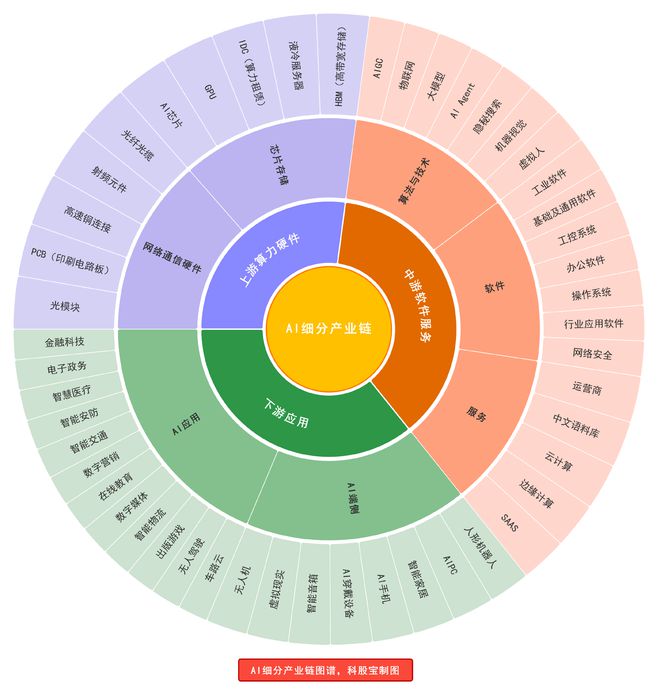
科股宝VIP是北京商报联合钛媒体共同推出的新闻资讯产品,包括科股一线解读、大事件必读、并购一 线、精华研报等数个栏目,围绕新闻及政策动态,提供媒体视角的解读。 以下是近期复盘及栏目发稿回顾: 1、 AI链、海内外算力链、国产半导体企业IPO迎来集中进展、部分存储产品涨价 (1)6月5日,栏目组发文《市值超越微软!英伟达3.46万亿美元"封王",AI产业链需求持续爆发丨科 股一线拆解》文章指出: 英伟达市值再度超越微软,重夺全球市值最高上市公司头衔。截至6月4日收盘,英伟达股价报 141.92美元,过去一个月累计涨幅达25.59%,总市值达3.46万亿美元。 这场AI盛宴还惠及更多科技公司。高速连接以及高速串行链路通信解决方案提供商CRDO Credo Technology也于6月3日盘中暴涨30%。 伴随着AI算力需求的结构性爆发,光模块/CPO、液冷服务器、AEC、PCB/CCL等业绩兑现确定性 较强的AI上游算力产业链可能率先响应。 AI中下游领域还需等待边际改善。偏硬件的上游算力和下游端侧AI环节已经率先兑现业绩,中游 软件、下游AI应用等环节则尚未迎来困境反转。 国内来看,未来两周有两个重要议程:6月 ...

曝马斯克亲自动手,开除“心腹大将”
Sou Hu Cai Jing· 2025-06-28 00:59
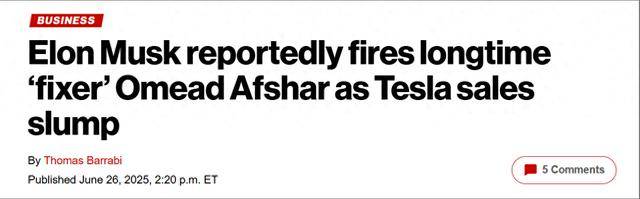
Group 1 - The core viewpoint of the articles highlights Tesla's significant challenges, particularly in terms of declining sales and increased competition in both North American and European markets [1][2] Group 2 - Tesla's North American and European operations head, Omead Afshar, has reportedly been dismissed, which may be linked to the company's declining sales performance in these regions [1] - In Q1 2025, Tesla's global delivery volume was 336,700 units, representing a 13% year-over-year decline, marking the worst quarterly performance since 2022 [2] - In major markets, Tesla's sales have seen drastic reductions: Germany down 59.5%, France down 63%, the UK down 8%, California down 11.6%, and China down 11.5% [2] - Tesla's electric vehicle sales in Europe have dropped for five consecutive months, with May 2025 seeing a 40.5% year-over-year decline, resulting in a market share decrease from 1.6% to 0.9% [2] - Analysts predict that Tesla's global delivery volume for Q2 will decrease by at least 10% year-over-year, estimating around 392,800 units, with UBS forecasting a more pessimistic figure of 366,000 units, a decline of 18% [2] - The company faces fierce competition from Chinese brands like BYD, Xiaomi, and Xpeng, which offer greater product diversity and cost-effectiveness, further constraining Tesla's market space [2] - The European market is also seeing increased competition from traditional automotive giants such as Volkswagen and BMW [2]

亏钱卖车的经销商,如今连返利、返佣也难拿到了
Jing Ji Guan Cha Wang· 2025-06-27 14:22
Core Viewpoint - The automotive dealership industry is facing significant challenges due to intense competition, price wars, and long payment cycles from manufacturers, leading to a decline in profitability and an increase in dealership closures [2][4]. Group 1: Industry Challenges - Automotive dealers are increasingly relying on ancillary services such as after-sales service, insurance rebates, and vehicle decoration for profit, as selling cars directly is often unprofitable [2]. - In 2024, the number of automotive 4S dealerships in China is projected to decline by 4,419, marking the first negative growth in dealership scale since 2021 [2]. - The average gross profit margin (GP1) for dealerships is reported to be around -16%, indicating that most dealers are unable to achieve profitability through car sales alone [4]. Group 2: Manufacturer Responses - Some manufacturers, including GAC Group and BMW, have committed to shortening the rebate payment cycle to within 60 days to alleviate financial pressure on dealers [3]. - However, the current measures are deemed insufficient as the banking system has halted high-interest rebate policies, further straining the already fragile dealership ecosystem [3][7]. Group 3: Rebate Issues - The complexity and ambiguity of rebate structures, particularly promotional rebates, create challenges for dealers in calculating their earnings [4][6]. - There is a significant disparity in rebate payment timelines among different brands, with luxury brands often having longer payment cycles compared to domestic brands [5][6]. - The automotive industry association has called for clearer rebate policies, a maximum payment cycle of 30 days, and cash payments to dealers to improve financial conditions [6]. Group 4: Financial Policy Impact - The recent cessation of high-interest rebate policies has severely impacted dealership profitability, as many dealers relied on these financial incentives to maintain margins [7][9]. - The average early repayment rate for car loans has exceeded 30%, leading to reduced net interest margins for banks and contributing to the discontinuation of high-interest rebate policies [8][9]. - The automotive industry is expected to undergo significant restructuring as a result of these financial policy changes, with manufacturers needing to adapt their financial strategies to remain competitive [9].
内卷的解药不是涨价
海豚投研· 2025-06-27 11:59
Core Viewpoint - The article discusses the evolution of competition in the business landscape from price-cutting strategies to concerns about "low-price internal competition," highlighting the complexities of pricing, quality, and value addition in manufacturing and consumer goods [1][2]. Group 1: Pricing Dynamics - The article argues that the decline in prices is often linked to increased market scale and fragmented market structures, where larger consumer bases lead to heightened price sensitivity [5][6]. - It emphasizes that price reductions are not necessarily indicative of lower quality but can result from economies of scale and advancements in production technology [4][5]. - The case of air purifiers illustrates that while average prices fell by 34% since 2016, production volume increased by 53%, indicating a growing market demand [5][6]. Group 2: Value Addition and Quality - The article questions where the added value comes from when prices rise, suggesting that without improvements in product attributes or production processes, price increases may not lead to sustainable benefits for supply chains or employee wages [14][15]. - It highlights that true consumption upgrades occur when previously unaffordable products become accessible to a broader audience, rather than merely shifting consumer preferences to higher-priced items [15][16]. - The concept of "white label" products and alternatives arises from the competition based on cost rather than genuine value addition, which can lead to a race to the bottom in pricing [15][16]. Group 3: Market Structure and Competition - The article notes that as market structures stabilize and consolidate, price competition diminishes, leading to a more sustainable pricing environment among major players [9][10]. - It points out that in a mature market, companies may find themselves in a "consumption war," where the focus shifts from aggressive pricing to maintaining market share and profitability [9][10]. - The narrative suggests that the characteristics of entrepreneurs are often shaped by the industry dynamics they operate within, particularly in stable or stagnating markets [11][12]. Group 4: Labor and Productivity - The article argues that the solution to low-price internal competition is not to eliminate low-priced goods but to enhance labor productivity, drawing parallels to historical examples like Ford's assembly line innovations [23][24]. - It emphasizes that the value created in manufacturing comes from human knowledge and skills rather than just raw materials and production processes [19][21]. - The discussion includes the importance of recognizing and rewarding the intellectual contributions of workers, which can lead to higher market valuations for products and services [28][29].


芯片人去德国!一口气看两场行业大展
芯世相· 2025-06-27 10:28
Core Viewpoint - The article emphasizes the importance of exploring overseas markets for the chip industry, particularly in Europe, as a strategy for industry upgrade and sustained growth. It highlights the need for a deep understanding of terminal markets, regional regulations, technological trends, and industry rhythms to successfully navigate this transition [3]. Group 1: Event Overview - The "Exploring European Electronics Trends" business investigation activity will take place from September 4 to September 14, focusing on five key German cities: Berlin, Leipzig, Dresden, Stuttgart, and Munich [3]. - The event will include visits to two major global exhibitions: IFA (Berlin International Consumer Electronics and Home Appliances Exhibition) and IAA (German International Automobile and Smart Mobility Exhibition) [4][5]. Group 2: IFA and IAA Details - IFA is one of the largest international exhibitions for audio-visual and consumer electronics, attracting over 1,800 exhibitors and more than 210,000 visitors from 138 countries in the last edition. AI is a significant theme this year, making it a crucial window for observing trends in AI and hardware [4]. - IAA is one of the top five auto shows globally, playing a key role in the automotive industry's development, with 750 exhibitors from 38 countries and over 500,000 visitors in the last edition, covering the entire automotive supply chain [4]. Group 3: Activities and Networking - The itinerary includes organizing two in-depth salons to facilitate local resource connections, building on previous successful networking events held during the last IAA [6]. - The trip aims to provide participants with firsthand experiences of the industrial atmosphere in Germany, enhancing their understanding of local market dynamics and fostering potential collaborations [7][10]. Group 4: Company Visits and Insights - Participants will visit notable companies such as GlobalFoundries and Mercedes-Benz, gaining insights into their operations and the broader industry landscape [19][20]. - The Fraunhofer Institute, known for its integration of scientific research and industrial development, will also be a focal point, showcasing its significant revenue of €3.4 billion and its role in fostering innovation [23]. Group 5: Itinerary Highlights - The itinerary includes visits to key cultural and industrial sites, allowing participants to experience Germany's rich heritage while engaging with local businesses [16][24]. - The program is designed to optimize efficiency and depth, ensuring that both newcomers and experienced professionals can derive valuable industry insights [12][13].


国泰海通|汽车:小米YU7订单火爆,供应链迎来新机遇
国泰海通证券研究· 2025-06-27 10:09
Core Viewpoint - The launch of Xiaomi YU7 is expected to structurally change the prosperity of the automotive parts industry, with a significant increase in orders indicating a positive outlook for the supply chain [2][3]. Group 1: Product Launch and Market Impact - Xiaomi YU7 has been officially launched with a starting price of 253,500 yuan, featuring the Xiaomi Super Motor V6s Plus, achieving 0-100 km/h in 3.23 seconds, and a maximum range of 835 km due to its 800V silicon carbide high-voltage platform [2]. - The YU7 is available in three configurations: YU7 priced at 253,500 yuan, YU7 Pro at 279,900 yuan, and YU7 Max at 329,900 yuan, which are considered competitive in the market [2]. - The initial response to the YU7 has been strong, with over 289,000 pre-orders within the first hour of its release, indicating a robust demand in the 200,000-300,000 yuan electric vehicle market [3]. Group 2: Market Potential and Sales Forecast - The stable annual sales of YU7 are projected to reach 300,000 to 400,000 units, supported by the large market for electric SUVs priced between 200,000 and 300,000 yuan, which is estimated to exceed one million units collectively [3]. - The YU7 is expected to drive additional market growth due to its product strength and influence, potentially creating a new demand in the domestic passenger car market [3]. Group 3: Supply Chain Opportunities - The introduction of influential products like the Xiaomi YU7 is anticipated to lead the domestic passenger car consumption into a phase where supply creates demand, presenting new opportunities for the automotive parts supply chain [3].


【快讯】每日快讯(2025年6月27日)
乘联分会· 2025-06-27 08:50
Domestic News - China FAW Group has established a new company, FAW Qixin Power (Changchun) Technology Co., Ltd., with a registered capital of 500 million yuan, focusing on AI and robotics, marking a significant step in the company's smart transformation strategy [5] - Buick has launched the next-generation intelligent cockpit based on Qualcomm's SA8775P chip, set to debut in the Buick high-end new energy sub-brand "Zhijing" in the second half of 2025 [6] - Dongfeng Motor Group has formed a new company, Yipai Automotive Technology Co., Ltd., to integrate resources and strengthen its independent passenger vehicle business [7] - Lexus has officially commenced construction of its new energy project in Jinshan District, Shanghai, with an expected annual production capacity of 100,000 vehicles starting in 2027 [9] - Li Auto has opened its first shuttle supercharging flagship station in Changzhou, featuring advanced charging technology that allows for efficient vehicle turnover and reduced waiting times [10] - CATL plans to introduce its battery swapping technology to the European market, aiming to build 1,000 battery swap stations in China by the end of the year and expand to 10,000 in three years [11] - GAC Group has opened its first battery service center in Thailand, enhancing its global strategy and providing comprehensive battery services [12] - Garrett has inaugurated its new innovation center in Wuhan, China, to enhance its zero-emission technology development capabilities [13] International News - U.S. new car sales in June are expected to increase by 2.5% year-on-year, reaching 1.25 million units, although actual sales may decline by 5.4% when adjusted for sales days [14] - Japan has reiterated its opposition to the U.S. imposing a 25% tariff on imported cars, highlighting the significant investment Japanese automakers have made in the U.S. [15] - Tesla is introducing a "virtual queue" system to alleviate the demand for supercharging stations, aiming to improve charging efficiency and user experience [16] - BMW continues to invest in internal combustion engine development while advancing its electrification efforts, emphasizing consumer choice in the transition to electric vehicles [17] Commercial Vehicles - Yutong has launched its new high-end bus model, Tianyu S12, in Xi'an, featuring various seating configurations to meet the latest demands in passenger transport [19] - Changan's Kai Cheng V919, the first pure electric rear-drive wide-body light bus, has been globally launched, marking a significant step in the company's commercial vehicle strategy [20] - FAW Liberation has celebrated the sale of over 1,100 new energy commercial vehicles in the Jinmeng region, reinforcing its commitment to the dual carbon strategy [21] - SANY's electric heavy-duty trucks were showcased at the Mobility Live Middle East exhibition in Dubai, highlighting the growing demand for electric transportation solutions in the region [22]






德汽车协会:中欧电动车反补贴谈判取得技术进展
3 6 Ke· 2025-06-27 02:00
Group 1 - The core viewpoint of the article emphasizes the potential for a new phase in China-Europe automotive industry cooperation, particularly in technology collaboration and market positioning, as negotiations on the anti-subsidy tariffs for electric vehicles produced in China are nearing completion [1][4]. - The negotiations are seen as crucial for achieving trade balance, with both sides expressing a commitment to work together to prepare for significant economic agendas in 2023 [2][4]. - The article highlights the shift in the competitive landscape, where China, as the largest automotive market and production hub, is increasingly engaging in a "co-opetition" model with German automakers, moving beyond traditional market-for-technology exchanges [2][3]. Group 2 - The technical negotiations regarding the anti-subsidy tariffs have been largely completed, with the next phase focusing on political negotiations, emphasizing the need for open competition rather than tariff-based solutions [4][5]. - The article notes that a price commitment model, previously used in the solar trade dispute, could be a more favorable alternative for Chinese automakers compared to anti-subsidy taxes, allowing them to maintain price margins while adhering to WTO rules [6]. - Data indicates that as of February 2025, only 6.9% of electric vehicles registered in Europe were manufactured by Chinese companies, marking a significant decline since February 2023 [7]. Group 3 - The article discusses the increasing investment between China and the EU, with China's direct investment in the EU reaching €185 billion in 2024, the highest in five years, while EU investment in China remains stable at €184 billion [9][11]. - German automakers are expected to enhance their investment in China, particularly in R&D, to keep pace with the rapid advancements in electric and intelligent vehicle technologies [9]. - The article highlights the emergence of new cooperative models, such as reverse joint ventures, where Chinese companies leverage their technological advantages while collaborating with established European firms to expand their market reach [10]. Group 4 - The article emphasizes the importance of long-term strategies for Chinese automakers entering European markets, advocating for a focus on quality and safety to build brand reputation over time [8]. - It also points out that many Chinese automakers are establishing local production facilities in Europe, with companies like BYD and Chery investing in manufacturing plants to better integrate into the local market [7][10]. - The evolving dynamics of the China-Europe automotive industry are characterized by a deepening interdependence, with both sides recognizing the need for collaboration to enhance technological capabilities and market competitiveness [11][12].
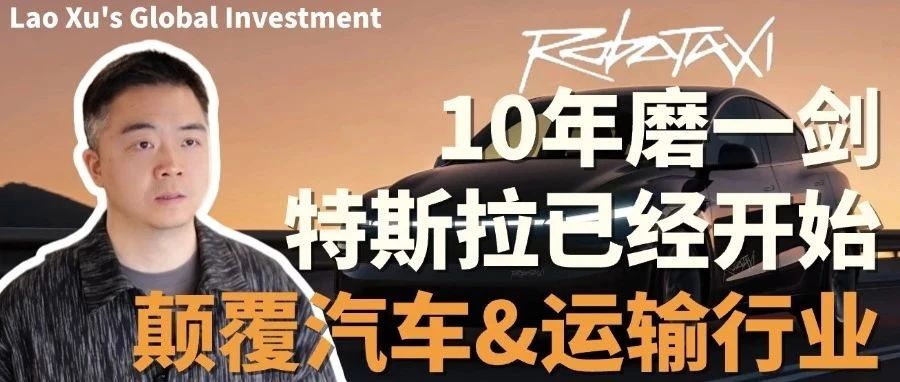
本周精华总结:10年磨一剑,特斯拉已经开始颠覆汽车乃至整个运输行业!!
老徐抓AI趋势· 2025-06-26 15:12
Core Viewpoint - Tesla's launch of Robotaxi in Austin marks a significant milestone in the automotive and transportation industry, indicating a shift towards fully autonomous driving [1][5]. Group 1: Robotaxi Launch and Technology - Tesla's Robotaxi service began trial operations on June 22, 2023, with a cautious approach, utilizing fewer than 20 vehicles and an invitation-only system [5][6]. - The technology behind Robotaxi has evolved over time, with Tesla finally identifying a successful path in early 2024, focusing on end-to-end learning with FSD V12 [5]. - Initial performance of Robotaxi shows high completion rates, with minor navigation issues expected to be resolved by the end of Q3 2023 [6]. Group 2: Market Impact and Competition - Tesla's production capacity and existing fleet position it uniquely in the market, with the potential to convert 2 million vehicles into Robotaxis through software upgrades [6][7]. - The introduction of autonomous driving is expected to disrupt traditional ride-hailing services like Uber and Lyft, as well as challenge new entrants in the EV market such as BYD and Xpeng [7][8]. - The widespread adoption of Robotaxi could transform travel experiences and impact various industries, including hospitality and ride-sharing, leading to significant job displacement for drivers [7][8]. Group 3: Investment Opportunities - The emergence of autonomous driving presents new business opportunities, such as managing fleets of Robotaxis and developing supporting services for passengers [8]. - The article emphasizes the importance of recognizing technological advancements that start in niche markets and gradually penetrate mainstream markets, creating investment opportunities during transitional phases [9][11]. - Historical examples, such as the rise of the iPhone and solid-state drives, illustrate how technologies can evolve from being questioned to becoming dominant market players, highlighting the potential for significant returns on early investments [9][11].
向“智”升级 中德加强智能制造领域合作
Xin Hua She· 2025-06-26 12:24
Group 1 - The core event was the Sino-German Intelligent Manufacturing Industry Matchmaking Conference held in Hefei, Anhui, where nearly 100 German companies and institutions participated, resulting in 28 trade investment projects worth over 6.8 billion yuan [2][5] - The conference highlighted the shift in Sino-German cooperation from "technology introduction" to "joint innovation" and "mutual empowerment," providing a collaborative model for global intelligent manufacturing [2][5] - German companies, such as Würth and Trumpf, are increasingly engaging in R&D in China, recognizing the strong innovation potential of Chinese enterprises and talent [3][4] Group 2 - The 2024/2025 Business Confidence Survey by the China-Germany Chamber of Commerce indicated that 55% of German companies in China expect their Chinese competitors to become industry innovation leaders in the next five years [3] - The cooperation between Chinese and German firms is expanding from individual projects to a systematic ecosystem, with a focus on technology sharing, standard recognition, and capacity collaboration [5] - Local governments in China, such as Anhui and Hunan, are actively supporting Sino-German cooperation through the establishment of international cooperation parks and financial incentives for German investment projects [5]