
吉利汽车

Search documents
记者手记:在阿拉木图,看见具体而生动的“出海”
2 1 Shi Ji Jing Ji Bao Dao· 2026-01-19 04:17
Group 1 - Almaty, known as the "Apple City," remains an economic and cultural center of Kazakhstan despite the capital moving to Astana, showcasing a blend of old Soviet-style buildings and modern architecture [1] - The digital economy is rapidly developing in Kazakhstan, with 95% of the population using smartphones, leading to a mobile-first internet ecosystem that bypassed traditional PC usage [1][2] - Chinese brands have significantly penetrated the Almaty market, with high visibility of logos from companies like Geely, BYD, and Huawei, indicating a strong acceptance and recognition of these brands among local consumers [2] Group 2 - Kazakhstan is viewed as a strategic market for internet companies, particularly Yandex, which sees it as a key area for growth outside of Russia, with a developing consumer base and established habits [2][4] - The market is characterized by rapid change and growth, similar to China's market a decade ago, presenting numerous opportunities for brands looking to expand [4] - The local ride-hailing platform Yandex Go predominantly features Chinese cars, reflecting the increasing presence of Chinese automotive brands in the region [2]
李飞飞的World Labs联手光轮智能,具身智能进入评测驱动时代!
量子位· 2026-01-19 03:48
Core Viewpoint - The collaboration between World Labs, led by Fei-Fei Li, and Guanglun Intelligent, a leading synthetic data company, aims to address the long-standing issue of "scalable evaluation" in the field of embodied intelligence, marking the entry into an evaluation-driven era for this technology [1][2][3]. Group 1: Companies Involved - World Labs is founded by Fei-Fei Li, a prominent figure in AI, known for her work on ImageNet and as a former chief AI scientist at Google Cloud [4][5]. - Guanglun Intelligent is recognized as a hot company in the embodied intelligence infrastructure sector, having established a strong partnership with NVIDIA and contributing to the development of simulation systems [54][55]. Group 2: Technological Innovations - World Labs is set to launch its first product, Marble, by the end of 2025, which can generate high-fidelity 3D worlds from minimal input [8][9]. - Marble aims to provide a visualized world model, allowing users to create and export 3D environments efficiently, thus serving as a productivity tool for visual effects and game developers [15][16]. Group 3: Challenges in Evaluation - The rapid advancement of models in embodied intelligence has outpaced existing benchmarks, creating a need for new evaluation methods [20][22]. - Traditional evaluation methods are inadequate for assessing the capabilities of embodied intelligence, necessitating the use of simulation as a scalable solution [29][30]. Group 4: Strategic Collaboration - The partnership between World Labs and Guanglun Intelligent is crucial for developing a comprehensive evaluation framework that integrates environment generation and physical interaction [37][49]. - Guanglun Intelligent's role is to provide the necessary physical assets and evaluation loops, ensuring that the simulated environments can support real physical interactions [49][50]. Group 5: Future Directions - The collaboration signifies a pivotal moment in the embodied intelligence sector, as it transitions into an evaluation-driven era, with the potential to shape research directions and identify technological bottlenecks [71][72][76]. - The establishment of robust evaluation standards, such as RoboFinals, highlights the industry's shift towards scalable and credible assessment frameworks for advanced robotic models [63][64].


三大巨头联手押注!深圳“硬核”芯片公司要上市啦!
是说芯语· 2026-01-19 03:45
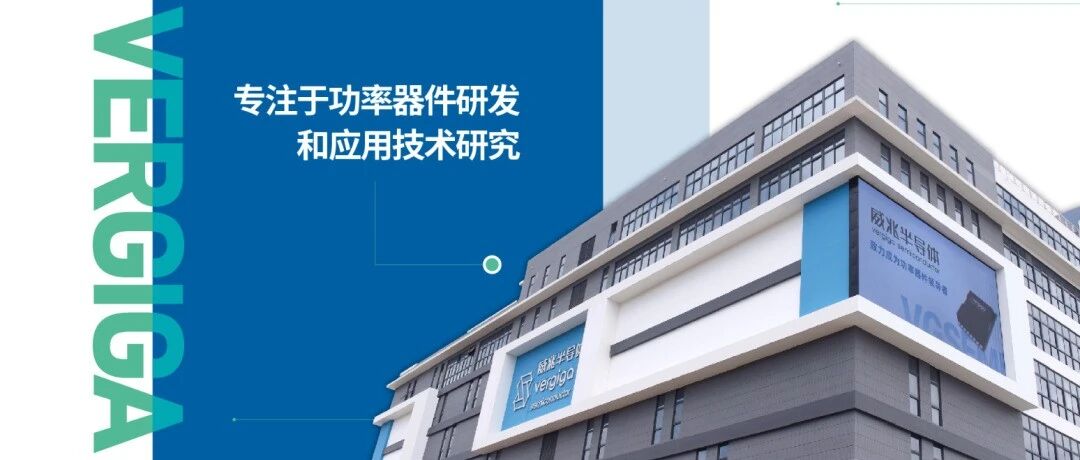
Company Overview - The company was established in 2012 and is headquartered in Nanshan Technology Park, Shenzhen, a hub for high-tech companies [5] - It is recognized as a national-level "specialized and innovative" small giant enterprise, indicating its status as a technology leader [5] - The core business focuses on the research and sales of high-performance power semiconductors, which are essential components for energy conversion and control in electronic devices [5] Unique Aspects - The company employs a "light wafer fab" model, balancing in-house production of critical processes while outsourcing standardized procedures, ensuring both quality control and operational flexibility [10] - It boasts a strong technical team, with many members recruited from leading domestic and international firms, enabling the company to master advanced chip design technologies [10] - The flagship product is a WLCSP ultra-small packaged chip, known for its thinness, small size, excellent heat dissipation, and durability, primarily used in battery protection circuits for smartphones, tablets, and smartwatches, where it holds the top position in China [10] - The company has successfully entered the automotive supply chain, providing chips to major automotive manufacturers like BYD and Geely, thus becoming a key player in the domestic automotive chip ecosystem [10] - The shareholder base includes prominent companies such as OPPO, Xiaomi, Intel, and CATL, providing not only financial backing but also significant industry collaboration resources [10] Reasons for Going Public - The company aims to raise funds to invest in cutting-edge technology research and development [11] - It seeks to enhance its brand influence and industry standing [11] - The goal is to contribute to narrowing the gap with leading foreign companies, promoting China's core chip autonomy and industrial upgrade [11]
广发证券:2026年新能源乘用车单车带电量提升几何?
智通财经网· 2026-01-19 03:20
Core Viewpoint - The report from GF Securities predicts a 15.0% year-on-year increase in the battery capacity of new energy passenger vehicles in 2026, driven by changes in policy, supply, and demand [1]. Group 1: Key Drivers for Battery Capacity Increase - The first driver for the increase in PHEV battery capacity is the new energy vehicle purchase tax adjustment requirements and the launch of long-range PHEVs priced below 200,000 yuan, which will enhance user experience by reducing charging frequency [2]. - The second driver for PHEV battery capacity increase is the concentration of supply for large battery PHEVs priced above 200,000 yuan, as consumers in this segment are less price-sensitive and prefer better daily usage experiences [2]. - For EVs, the first driver is the decrease in the proportion of low-end pure electric vehicles due to the subsidy policy, while the second driver is the competitive strategy of leading manufacturers to "enhance features and raise prices" in response to rising raw material costs [2]. Group 2: Investment Recommendations - The report suggests focusing on right-side targets in the passenger vehicle chain, including Geely, BYD, Chery, Seres, Li Auto, Xpeng, and Leap Motor, while left-side targets include Great Wall Motors and Changan Automobile [3]. - For upstream and downstream chains, right-side targets include Minth Group, Yinlun, Bertli, Top Group, Aikodi, Fuyao Glass, and others, while left-side targets include Yongda Automobile and New Coordinates [3]. - Companies at an inflection point include SAIC Motor, with potential opportunities identified in various segments of the industry [3].

坚持产业链思维
Xin Lang Cai Jing· 2026-01-18 22:34
转自:贵州日报 生态赋能,是链条延伸的关键支撑。贵州立足"富矿精开"战略,围绕磷、铝、煤等资源发展精深加工, 包括六盘水"煤—焦—氢"项目等构建起闭环产业链,副产物实现高效利用;省级层面出台税收优惠、用 地保障等政策,22个重点园区"一图三清单"精准破解产业链短板;"贵人服务"制度化落地,持续优化营 商环境……这种"政策+服务+产业"的组合拳,让产业链条越拉越长、韧性越来越强。 从"引来一企"到"繁荣一链",体现的是系统思维与长远眼光。实践表明,只有坚持产业链思维,强化龙 头带动、优化生态供给,才能推动更多产业集群崛起并发展壮大。 李蔓毓 招商引资的竞争早已告别"拼优惠"的单一维度,迈入"拼生态"的深水区。去年,贵州用链式招商激活产 业生态,走出了一条从资源优势到产业优势的进阶之路。 "链主"领航,是集群成势的核心密码。贵阳依托吉利、奇瑞等整车企业集聚47家配套企业,本地化配套 率超48%,"电动贵州"形成从矿石到整车的全产业链布局;安顺围绕黎阳国际吸引航空零部件企业集 聚,实现核心部件24小时内交付;铜仁市思南县以佳里佳公司为龙头,带动淀粉加工、智能包装等10家 配套企业落户,红薯产业综合产值超12亿元…… ...
贵阳先进制造与现代服务市域产教联合体成立
Xin Lang Cai Jing· 2026-01-18 22:34
转自:贵州日报 该联合体将立足贵阳贵安产业发展实际,聚焦先进制造与现代服务领域,整合政府、行业、企业、学校 四方资源,构建协同育人、协同创新、服务发展的长效机制,进一步贯通人才链、产业链、创新链与教 育链。 贵州交通职业大学相关负责人表示,将依托该联合体,持续推动装备制造大类专业建设与产业需求对 接、人才培养与岗位能力衔接、科研服务与企业创新协同,为"强省会"行动和区域经济发展注入职教动 能。 贵阳先进制造与现代服务市域产教联合体由贵州交通职业大学与贵州吉利汽车制造有限公司、观山湖现 代服务产业试验区联合申报并建设,是推进市域产教深度融合、服务区域产业转型的一个重要平台。 本报讯(记者 袁航)1月13日,由贵州交通职业大学牵头成立的贵阳先进制造与现代服务市域产教联合 体正式授牌并入驻观山湖现代服务产业试验区。 ...
从“单一冬测基地”迈向全链条平台——黑龙江省黑河市寒区试车产业实现多维度跃升
Zheng Quan Ri Bao· 2026-01-18 17:09
Core Insights - The fifth Heilongjiang Cold Region Test Festival commenced in Heihe, attracting 147 automotive companies and 4044 test vehicles, with over 60% being new energy vehicles [1] - The transition of the global automotive industry towards electrification and intelligence has made performance metrics in extreme cold environments essential rather than optional [1] Group 1: Testing Infrastructure and Capabilities - Heihe's unique natural conditions provide a testing environment with over 200 days of ice coverage annually and temperatures below -35°C for a month, facilitating the validation of vehicle performance [2] - The city has developed 120 specialized testing roads and is investing 260 million yuan in the Honghe Valley Four Seasons Low-Temperature Test Field, aiming to create Asia's first year-round low-temperature testing facility [2] - The number of cold region test vehicles in China is projected to increase by approximately 40% for the 2025-2026 testing season, with some testing sites reporting up to 90% of vehicles being new energy models [2] Group 2: Industry Development and Standards - Heihe has invested over 1 billion yuan in infrastructure and has participated in the formulation of 58 national and industry standards, including 2 international standards, with test data recognized by over 40 countries [4] - The cold region testing industry has evolved significantly, expanding its scale and brand influence, and attracting foreign investment for testing [4] - Cold region testing is becoming a necessary quality benchmark for new energy and intelligent connected vehicles, with companies focusing on core performance metrics [4][5] Group 3: Economic Impact and Future Directions - The integration of cold testing with tourism and sports has generated over 600 million yuan annually for related industries [6] - The cold region testing has shifted from traditional performance validation to a critical technology hub for safety and reliability in electric vehicles and intelligent systems [6] - Heihe aims to enhance its testing capabilities by expanding into intelligent connected and low-altitude testing, with ongoing collaborations with companies like Baidu [5][6]
周观点 | 2025Q4前瞻:以旧换新政策延续 板块表现分化【国联民生汽车 崔琰团队】
汽车琰究· 2026-01-18 15:41
Market Performance - The automotive sector outperformed the market this week, with the A-share automotive sector rising by 0.5%, ranking 12th among Shenwan sub-industries, compared to the CSI 300 which fell by 0.9% [3] - Within the sub-sectors, automotive services and automotive parts increased by 4.5% and 1.8% respectively, while commercial passenger vehicles, commercial freight vehicles, motorcycles, and passenger cars saw declines of -1.1%, -1.3%, -1.7%, and -1.9% respectively [3] Investment Recommendations - The core investment recommendations for this month include Geely Automobile, Xpeng Motors, BYD, Berteli, Top Group, New Spring Co., and Chunjun Power [4] 2025Q4 Outlook - Total wholesale sales of passenger vehicles are expected to be 8.748 million units in 2025Q4, a year-on-year decrease of 1.3% but a quarter-on-quarter increase of 13.8% [5] - In the new energy sector, wholesale sales of new energy passenger vehicles are projected to reach 4.46 million units, a year-on-year increase of 3.1% and a quarter-on-quarter increase of 10.9% [5] - Price competition is expected to ease, with discounts stabilizing and profitability improving [5] - Companies expected to perform well year-on-year in 2025Q4 include Seres, Xiaomi Motors, NIO, Leap Motor, and Geely [5] Components Sector - Revenue in the components sector is expected to be driven by strong performances from Xiaomi, Geely, and BYD, while costs are anticipated to decrease due to lower raw material prices and shipping costs [36] - The average global shipping cost in 2025Q4 is projected to be $3,484, a year-on-year decrease of 2.6% [38] - The performance of the components sector is expected to diverge significantly based on customer structure, with companies like Top Group and Hu Guang expected to perform well [41] Heavy Trucks - The heavy truck sector is expected to see continued recovery in demand, with wholesale sales projected at 231,000 units in 2025Q4, a year-on-year increase of 34.7% [42] - The market competition is expected to remain stable, with companies like FAW Group and Beiqi Foton gaining market share [43] Motorcycles - The wholesale sales of large-displacement motorcycles (over 250cc) are expected to be 191,000 units in 2025Q4, a year-on-year increase of 4.3% but a quarter-on-quarter decrease of 26.3% [60] - Domestic sales are projected to be 69,000 units, a year-on-year decrease of 5.2% [60] - Export sales are expected to reach 122,000 units, a year-on-year increase of 10.5% [60] Policy Impact - The continuation of the vehicle replacement policy is expected to stimulate demand, with subsidies for scrapping old vehicles remaining in place [33][64] - The new subsidy policy for 2026 will shift to a percentage of the vehicle price, which is expected to improve the structure of subsidized models [65][70]
汽车行业周报:乘用车库存25年12月小幅去化,静待观望需求落地-20260118
GF SECURITIES· 2026-01-18 13:26
[Table_Page] 跟踪分析|汽车 证券研究报告 [Table_Title] 汽车行业周报 乘用车库存 25 年 12 月小幅去化,静待观望需求落地 [Table_Summary] 核心观点: | [Table_Grade] 行业评级 | 买入 | | --- | --- | | 前次评级 | 买入 | | 报告日期 | 2026-01-18 | [Table_PicQuote] 相对市场表现 -10% -2% 6% 14% 22% 30% 01/25 04/25 06/25 08/25 11/25 01/26 汽车 沪深300 | [分析师: Table_Author]张力月 | | | --- | --- | | | SAC 执证号:S0260524040004 | | | 021-38003727 | | | zhangliyue@gf.com.cn | | 分析师: | 闫俊刚 | | | SAC 执证号:S0260516010001 | | | 021-38003682 | | | yanjungang@gf.com.cn | | 分析师: | 陈飞彤 | | | SAC 执证号:S02605 ...
智驾领域催化多,岚图与引望达成深化战略合作
CMS· 2026-01-18 13:01
Investment Rating - The report maintains a "Recommendation" rating for the automotive industry, indicating a positive outlook for the sector [5]. Core Insights - The automotive industry experienced an overall increase of 0.7% from January 11 to January 17, with significant developments in the smart driving sector, including strategic partnerships and advancements in autonomous vehicle technology [1][9]. - The report highlights that China's automotive production is projected to reach 34.53 million units and sales to hit 34.4 million units in 2025, marking a historical high and maintaining its position as the world's largest automotive market [26]. - The report emphasizes the growing importance of electric vehicles, with projections indicating that over 50% of new car sales will be electric or hybrid by 2025 [26]. Market Performance Overview - The automotive sector's performance was mixed, with the automotive services segment showing the highest weekly increase of 3.4%, while motorcycle and passenger vehicle segments experienced declines of 2.0% and 1.7%, respectively [2][13]. - Individual stocks within the automotive sector saw significant fluctuations, with notable gainers including Aikelan (+40.5%) and Jiaoyun Shares (+39.3%), while Tianpu Shares (-25.3%) and Yueling Shares (-15.4%) faced substantial losses [3][17]. Industry Dynamics - Key partnerships in the smart driving field were established, such as the collaboration between Lantu and Huawei's subsidiary, focusing on the development of intelligent driving and cockpit technologies [9][28]. - The report notes that Uber is set to launch a customized autonomous taxi service in San Francisco, marking its entry into the autonomous ride-hailing market [29]. - The report also mentions that Xpeng plans to establish a localized supply chain team in Europe and ASEAN markets to enhance operational efficiency and support local production [29]. Future Projections - The report forecasts a slight increase in domestic automotive sales to 34.75 million units in 2026, reflecting a 1% growth from the previous year [26]. - The report indicates that the Chinese automotive industry is expected to maintain its competitive edge globally, with a significant portion of sales driven by the domestic market [25][26].