
红旗连锁

Search documents
2025中国快消市场一季度纵览
凯度· 2025-05-08 23:20
Investment Rating - The report indicates a positive outlook for the fast-moving consumer goods (FMCG) market, with a steady growth trend observed in the first quarter of 2025 [5][69]. Core Insights - The FMCG market in China is experiencing a recovery, with a GDP growth rate of 5.4% and an increase in urban disposable income by 4.9% in the first quarter of 2025 [6][69]. - Consumer purchasing behavior is shifting towards smaller, more frequent purchases, reflecting a trend towards convenience and emotional value in products [11][69]. - Domestic products are gaining traction, while imported products face challenges due to declining prices and changing consumer preferences [70][69]. - The growth of the out-of-home consumption market is notable, particularly during festive periods, indicating a need for brands to focus on specific consumption scenarios [71][69]. Summary by Sections Market Overview - The FMCG market is showing signs of recovery with a growth rate of 4.2% year-on-year as of March 2025 [6][8]. - The overall market sentiment is positive, with food and daily chemical products accelerating in sales compared to the previous quarter [8][69]. Consumer Behavior - There is a notable trend of small-sized product purchases, with a 25.1% increase in small specifications [12][69]. - The frequency of purchases has increased by 6.3%, indicating a shift towards fragmented purchasing channels and diverse consumption scenarios [15][69]. Product Categories - Food and beverage categories are performing well, with food sales up by 4.5% and beverages by 6.1%, while dairy products are under pressure with a decline of 3.0% [11][69]. - The average purchase price for imported products has decreased by 7.6%, leading to a decline in household spending on these items [19][70]. Retail Channels - The modern retail channel is experiencing a bifurcation, with traditional supermarkets and convenience stores adapting to consumer needs [24][71]. - E-commerce continues to grow, with platforms like Douyin leading in penetration rates and purchase frequency [31][69]. Out-of-Home Consumption - The out-of-home consumption market is thriving, with significant growth during the Spring Festival, highlighting the importance of targeting specific consumer scenarios [71][69]. - Brands are encouraged to enhance their presence in various out-of-home settings, such as snack shops and entertainment venues, to effectively reach consumers [43][71]. Demographic Trends - The rise of single-person households is influencing consumption patterns, with a focus on self-enjoyment and convenience [54][71]. - Brands need to adapt their strategies to cater to the unique preferences of single households, emphasizing emotional value and efficient products [71][69].
王凯在郑州调研促消费工作
He Nan Ri Bao· 2025-05-08 14:07
Group 1 - The core viewpoint emphasizes the need to optimize consumer supply and fully unleash domestic demand potential to enhance consumption's role in economic growth [2][3] - The government is implementing special actions to boost consumption, focusing on demand-driven and market-oriented strategies, particularly in the ready-to-drink beverage sector [2] - The government encourages companies like Mixue Ice City to improve R&D capabilities, introduce new popular products, and enhance digital oversight across the supply chain to ensure food safety [2] Group 2 - Urban commercial circles are identified as crucial platforms for consumer activity and city vitality, necessitating high-standard planning and development to attract flagship stores and cultivate new consumption scenarios [3] - The government aims to elevate consumption as a fundamental driver of economic growth, promoting policies that enhance consumer spending in major goods and services [3] - There is a focus on improving consumer capacity and conditions, protecting consumer rights, and creating an optimized consumption environment to stimulate demand and support sustained economic momentum [3]

中概股回流,港股能否成为“避风港”?
Tai Mei Ti A P P· 2025-05-08 08:29
当天,中国证监会主席吴清在国新办发布会上表示,加强双多边的跨境监管合作,塑造稳定、透明、可 预期的监管环境,维护企业在境外市场的正当利益,支持优质中概股回归内地和香港市场。 中概股回流潮或已开启 极氪拟从美股退市,中概股回流潮正在开启。 5月7日,吉利汽车控股有限公司宣布计划收购极氪智能科技有限公司已发行的全部股份,目前吉利汽车 持有极氪约65.7%的股份。若交易完成,极氪将与吉利汽车完全合并,实现私有化并从纽约证券交易所 退市。而这距离极氪汽车正式上市还不到一年时间。 在中美关税摩擦背景下,极氪的私有化以及从美股退市的计划,成为市场热议中概股回流的"第一股"。 根据公告,吉利汽车建议购买价为每股极氪股份2.5美元或每股美国存托股票25.66美元,较最后交易日 美国存托股票于纽交所的收市交易价溢价约13.6%,较截至最后交易日止最后30个交易日期间美国存托 股票于纽交所的成交量加权平均价格溢价20%。私有化资金来源包括吉利汽车拟发行新股、现金储备及 债务融资。 事实上,在2020-2022年,中概股ADR潜在退市风险也曾引发全球投资者关注。这场退市风波结束后, 部分中概股为了规避风险,开始启动从美股退市或回归 ...



五一假期消费热潮涌动,新业态引领假日经济新飞跃
Sou Hu Cai Jing· 2025-05-08 07:38
Group 1: Consumer Market Recovery - The consumer market in China showed significant recovery during the May Day holiday, with 314 million trips taken, a 6.4% increase year-on-year [1] - Total spending by domestic tourists reached 180.27 billion yuan, reflecting an 8.0% year-on-year growth [1] - The expansion of transportation networks supported cross-regional mobility, with civil aviation transporting 11.15 million passengers during the holiday, a 55.4% increase compared to 2019 [1] Group 2: Accommodation Sector Trends - The accommodation sector experienced structural upgrades, with high-end hotel markets performing strongly, especially in lower-tier cities where high-star hotel consumption exceeded that of first-tier cities [2] - Hotel prices in popular tourist destinations like Sanya and Xiamen increased by 30%-40%, yet occupancy rates remained above 95% [2] - The number of accommodation-related enterprises in China surpassed 1.561 million, with approximately 89,000 new registrations in 2025 [2] Group 3: Dining and Retail Integration - The integration of dining and retail sectors brought new vitality to the consumer market, with key restaurant enterprises reporting an 8.7% increase in sales [2] - The contribution rate of county-level markets to restaurant sales exceeded 35%, marking a significant growth driver [2] - Night economy and 24-hour stores saw a 48% increase in numbers, with nighttime consumption rising by 127% [2] Group 4: Policy and Market Innovation - Innovative policies, such as Shanghai's "Leisure Shanghai" consumption vouchers, significantly boosted local dining consumption [4] - The outdoor economy gained traction, with cycling becoming popular in cities like Shanghai and Beijing, leading to a surge in sales of outdoor sports equipment [4] Group 5: Camping and Outdoor Equipment Growth - The camping trend continued to rise, with rapid development in camping bases and equipment manufacturing [6] - Sales of outdoor equipment saw substantial growth, particularly in low-priced camping products [6] - The number of outdoor equipment-related enterprises exceeded 79,000, with about 2,900 new registrations in 2025 [6]
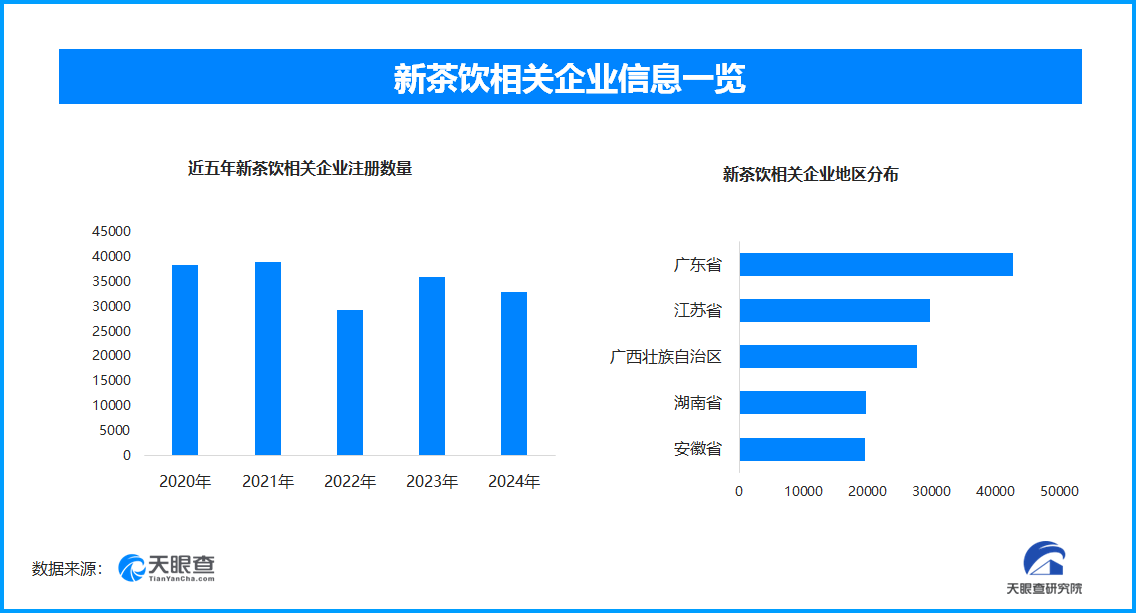
一年买出107亿,门店近万家,上海最大茶饮IPO来了
3 6 Ke· 2025-05-08 03:37
Core Viewpoint - The company "沪上阿姨" has successfully listed on the Hong Kong Stock Exchange, achieving a significant market valuation and attracting substantial investor interest, reflecting the ongoing trend of new tea beverage companies entering the market [1][2]. Company Overview - "沪上阿姨" was founded by a couple, 单卫钧 and 周蓉, who transitioned from corporate jobs to entrepreneurship, inspired by a successful local tea shop [4]. - The first store opened in Shanghai in 2013, focusing on a unique blend of health-oriented ingredients with traditional tea [5]. Financial Performance - Revenue figures for "沪上阿姨" from 2022 to 2024 are as follows: 2.199 billion RMB, 3.348 billion RMB, and 3.285 billion RMB, respectively [6]. - The adjusted net profit for the same years was 154 million RMB, 416 million RMB, and 418 million RMB [6]. - The company's GMV (Gross Merchandise Volume) grew from 6.068 billion RMB in 2022 to 9.732 billion RMB in 2023, with a further increase to 10.736 billion RMB in 2024, marking a 60.4% increase in 2023 and a 10.3% increase in 2024 [7][9]. Market Position and Expansion Strategy - "沪上阿姨" has established itself as one of the fastest-growing brands in the Chinese tea beverage market, with a focus on expanding into lower-tier cities [7][12]. - As of 2024, the company operates 9,176 stores, with a significant presence in northern China and a strategy to penetrate third-tier and below cities [9][19]. - The company has a unique market positioning, with 51.4% of its stores located in northern regions, capitalizing on the local taste preferences [15][19]. Competitive Landscape - The tea beverage industry is experiencing intense competition, with "沪上阿姨" facing challenges such as declining average daily GMV per store, which fell from 4,109 RMB in 2022 to 3,833 RMB in 2024 [21]. - The market is shifting towards mid-priced tea beverages, which now account for 51.3% of the market share, indicating a growing segment for brands like "沪上阿姨" [21]. Future Outlook - The company plans to continue its expansion strategy, focusing on digital upgrades, product development, and strengthening its supply chain [1][23]. - "沪上阿姨" is also exploring opportunities in the coffee market with its "沪咖" brand, aiming to capture a broader consumer base [23].

便利店赛道杀出一匹黑马“左邻右舍”
Xin Lang Cai Jing· 2025-05-08 00:07
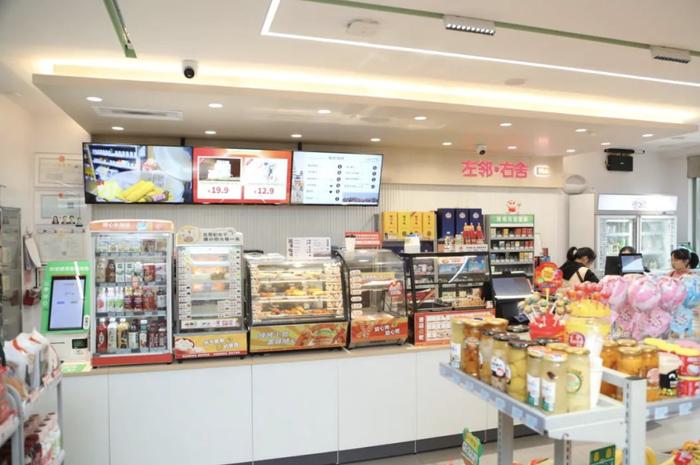
Core Insights - The convenience store industry in China is witnessing significant changes, with the latest CCFA TOP100 list highlighting the stability of leading brands while showing volatility among lower-ranked brands [1][3] - The rapid growth of the "Left Neighbor Right Neighbor" brand under Chicheng Holdings is notable, with a total of 5,310 stores as of the latest report, marking a significant increase from previous years [1][4] Industry Overview - The top six convenience store brands in China have remained largely unchanged, with Meiyijia leading with nearly 40,000 stores for three consecutive years [1] - The entry threshold for the top ten has increased, with the tenth-ranked store now requiring 3,447 locations, up from 2,800 the previous year [1] - The 100th ranked store's entry threshold has decreased from 165 to 129, indicating a more dynamic lower tier in the industry [1] Company Performance - Chicheng Holdings' "Left Neighbor Right Neighbor" and "Life Station" brands have shown impressive growth, with an average of over 400 new stores opened annually over the past four years [3] - As of the end of 2024, "Left Neighbor Right Neighbor" is projected to exceed 5,800 stores, having opened 1,200 new stores in the past year [3][4] - The company reported a revenue of 1.065 billion yuan in 2024, a year-on-year increase of 15.39%, with a net profit of approximately 18.77 million yuan, up 181.18% [8] Competitive Landscape - The fastest-growing brands in the convenience store sector include Lawson and Meiyijia, with additions of 1,175 and 3,840 stores respectively in the past year [4] - "Left Neighbor Right Neighbor" is positioned as a strong competitor to "Furong Xingsheng," which has 5,838 stores, indicating a close competition in the community-focused convenience store segment [8][9] - The brand's unique selling proposition includes providing community services such as bill payments and package collection, differentiating it from other convenience stores [5][6] Business Model - The franchise model employed by "Left Neighbor Right Neighbor" allows for rapid expansion, with low initial investment costs for franchisees, estimated at 120,000 to 140,000 yuan for a 30-40 square meter store [4][5] - The brand focuses on essential goods and services, avoiding high-priced imported items, which appeals to local consumers [5][6] - The operational strategy emphasizes a localized approach, targeting lower-tier cities and gradually expanding into first-tier cities [6][8]
从餐饮到电动汽车,中国品牌收获韩国粉丝
Huan Qiu Shi Bao· 2025-05-07 22:42
Group 1: Chinese Brands in South Korea - Chinese brands are rapidly expanding in South Korea, particularly in the smart appliance and electric vehicle sectors, leveraging high cost-performance ratios [1][5][9] - The popularity of Chinese cuisine, especially hot pot and milk tea, is increasing among South Korean youth, leading to a surge in demand for Chinese dining options [2][3][4] Group 2: Market Performance and Growth - The sales of the Chinese hot pot chain "Haidilao" in South Korea increased from approximately 13.9 billion KRW in 2020 to an estimated 78.1 billion KRW by 2024, with operating profits reaching 11 billion KRW [2] - The Chinese milk tea brand "Mixue Ice City" has gained popularity due to its competitive pricing, with a cup priced at 1,200 KRW, significantly lower than local competitors [3] - Chinese consumer electronics, such as smart vacuum cleaners, are outperforming local brands like Samsung and LG in South Korea, with a notable shift in consumer perception over the past decade [5][7] Group 3: E-commerce and Cross-Border Trade - South Korean consumers' orders on Chinese cross-border e-commerce platforms are projected to increase by 85% in 2024, reaching approximately 21.1 billion RMB [8] - JD Logistics has established its own logistics centers in South Korea, marking a significant move for Chinese e-commerce companies in the region [8] Group 4: Electric Vehicle Market - Chinese electric vehicle brands, including BYD, NIO, Xpeng, and Li Auto, are planning significant expansions in the South Korean market, with BYD aiming to sell 10,000 vehicles in 2025 [9][10] - The competitive landscape in South Korea's electric vehicle market is intensifying, with Chinese brands leveraging advanced technology and pricing advantages to challenge established local players [10]

新消费观察| 零售品牌 “走出去” ,如何开辟“新蓝海”?
Xin Lang Cai Jing· 2025-05-07 14:24
Group 1: Market Entry and Expansion - CHAGEE opened its first store in North America at Westfield Century City in Los Angeles, showcasing modern tea drinks and attracting long queues [1] - The new tea beverage industry in China is experiencing rapid growth, with brands like ChaPanda, MIXUE, HEYTEA, and CHAGEE expanding internationally [3] - Several tea companies, including MIXUE, have successfully listed in Hong Kong, indicating a trend of Chinese retail brands going global [4] Group 2: Factors Driving International Expansion - The global expansion of brands is driven by the need for internationalization, competitive domestic markets, and the growing overseas Chinese population [4][5][6] - Establishing physical stores abroad enhances brand visibility and can attract investment, which may lead to better domestic store locations in the future [5] - The increasing number of overseas Chinese consumers creates demand for Chinese products, which are often perceived as cost-effective [4] Group 3: Key Markets for Chinese Brands - Hong Kong is a significant market for brands due to its proximity to mainland China, making it easier for brands with established retail networks in southern China to enter [7] - Southeast Asia, particularly Singapore, is a competitive market for Chinese brands, driven by a large Chinese population [8] - European cities like London and Paris are viewed as essential for brands aiming for international recognition, although cultural differences pose challenges [9] Group 4: Challenges in International Markets - Chinese brands face challenges in gaining local consumer recognition and adapting to cultural differences, particularly in Europe [17] - Supply chain and logistics issues require careful planning before entering new markets [18] - High operational costs in markets like Singapore and Europe necessitate thorough financial planning [18] Group 5: Localization Strategies - Successful market entry requires understanding local consumer habits and preferences, with brands needing to adjust their offerings accordingly [19][20] - Brands should focus on high-traffic areas for store locations to maximize visibility and customer engagement [19] - The importance of local partnerships for smooth market entry and operations is emphasized, as they can help navigate local regulations and consumer preferences [18]




长线游、反向游、出入境游热度显著,五一数据延续高景气
GOLDEN SUN SECURITIES· 2025-05-07 02:30
Investment Rating - The industry investment rating is maintained as "Accumulate" [5] Core Viewpoints - The travel and tourism sector shows significant growth, with domestic travel during the May Day holiday reaching 314 million trips, a year-on-year increase of 6.4%, and a 36.4% increase compared to 2019 [1] - The average spending per traveler during the holiday was 574 yuan, reflecting a 1.5% year-on-year increase [1] - The overall retail and catering sales during the holiday increased by 6.3% year-on-year, indicating sustained consumer market vitality [4] Summary by Sections Travel and Tourism - Popular scenic spots saw substantial visitor increases, with notable growth in ticket sales and revenue for various attractions [2] - Long-distance travel destinations in western China experienced ticket sales growth of 100-200% year-on-year [3] - Outbound travel orders increased by 20% year-on-year, while inbound travel orders surged by 130% due to favorable policies [3] Hotel and Accommodation - Hotel bookings during the May Day holiday increased by 24.93% year-on-year, with average booking prices for economy hotels rising compared to last year [2] - High occupancy rates were reported in various regions, particularly in second and third-tier cities [2] Retail and Consumer Spending - Key retail and catering enterprises reported a year-on-year sales increase of 8.7% during the holiday [4] - Specific sectors such as home appliances, automobiles, and communication equipment saw sales growth of 15.5%, 13.7%, and 10.5% respectively [4] - The overall consumer market remains vibrant, with significant increases in foot traffic and sales in major cities [7] Investment Opportunities - The report highlights potential investment opportunities in hotel and tourism companies such as Huazhu Group, Jinjiang Hotels, and Xiangyuan Culture Tourism [8] - The retail sector is expected to benefit from ongoing policy support, with companies like Yonghui Supermarket and Chongqing Department Store identified as key players [8]