奔驰

Search documents
杭州技师学院为技能人才提供追求梦想的舞台
Hang Zhou Ri Bao· 2025-07-08 03:07
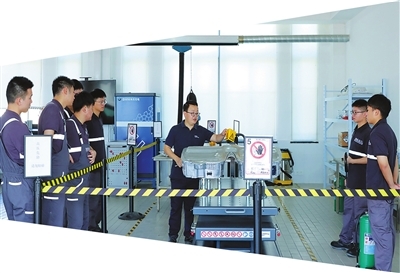
Core Viewpoint - Hangzhou Technician College has become a key institution for cultivating high-skilled talents, attracting students from various regions, particularly Xinjiang, and achieving significant success in skills competitions [3][5]. Group 1: Achievements and Recognition - The college has participated in the World Skills Competition for five consecutive sessions, winning 2 gold medals and 3 excellence awards [5]. - Graduates from the college are highly sought after in the job market, with an employment satisfaction rate exceeding 98% and an average starting salary over 4,000 yuan [5]. - The college has received numerous accolades, including the Zhejiang Province May Day Labor Award and recognition as a national-level high-skilled talent demonstration base [9]. Group 2: Educational Approach and Industry Collaboration - The college emphasizes deep integration of industry and education, establishing partnerships with over 300 enterprises and creating specialized classes in collaboration with major companies like BMW and Audi [8]. - It has developed five industry colleges focusing on sectors such as magnetic materials, logistics, and medical devices, aligning its curriculum with regional industrial needs [7]. - The college plans to expand its facilities with an investment of approximately 310 million yuan, aiming to accommodate 8,000 students and enhance practical training environments [9][10]. Group 3: Student Development and Training - Students undergo rigorous training, exemplified by participant Chen Binbin, who trained intensively for six months to win an award in automotive painting [4]. - The college's training model allows for real-world application of skills, with a focus on producing graduates who meet the demands of emerging industries [6][7].

7月起,4大“降价潮”袭来!不是福利,而是提醒,你准备好了吗?
Sou Hu Cai Jing· 2025-07-07 07:16
Group 1 - The Chinese consumer market is undergoing a significant adjustment characterized by a widespread price drop affecting various sectors, including housing, automotive, and consumer goods [1][3] - The real estate market is experiencing a decline in property prices, with major cities like Shanghai seeing a drop of over 30% from peak prices, and a significant decrease in new home sales [5] - The automotive industry is facing an "epic price war," with over 30 major car manufacturers participating in substantial price cuts, leading to a profit margin decline to 3.9% in the first quarter of 2025 [7] Group 2 - The home appliance market is witnessing a price reduction of 10-15% across common appliances, with new products being priced significantly lower than previous flagship models [9] - The overall consumer price index (CPI) in China showed a slight decrease of 0.1% in the first half of 2025, indicating potential deflationary risks despite increased purchasing power for cash holders [10][13] - The economic landscape is shifting, and companies that adapt to the changing price dynamics and understand the underlying economic logic will be better positioned for future cycles [12]

现在自动驾驶领域的行情怎么样了?都有哪些方案?
自动驾驶之心· 2025-07-07 06:47
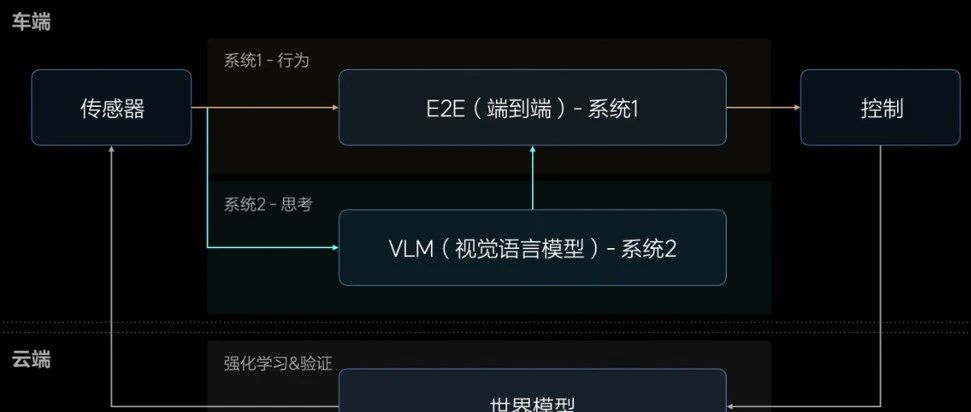
最近有很多同学咨询我们自动驾驶产业到底怎么样了?有哪些职位和方案,今天为大家盘点下当下的一些情况! 所有内容出自AuotRobo求职星球,自动驾驶、具身智能、AI类求职聚集地!这里有最专业的面经和岗位分享~ 自动驾驶分级与应用 主要功能:行车,泊车,座舱,V2X 核心系统构成:芯片,软件,传感器 技术趋势一览 1)传统自动驾驶pipline 2)端到端自动驾驶 3)VLM方案 4)VLA方案 主机厂和自驾公司 1)主机厂 新势力:小鹏,理想,蔚来,华为,极氪,小米,零跑,岚图,深蓝(长安)等; 老牌车厂:比亚迪,吉利,长安,奇瑞(星途),长城,上汽(智己),广汽(埃安)外企:奔驰,大众,现代 等; 2)供应商 已经上市:地平线,小马智行,黑芝麻智能,文远智行,知行汽车等; 未上市:momenta,轻舟智行,元戎启行,卓驭,大疆大厂:百度,滴滴等,京东; 其它:商汤绝影,毫末智行,四维图新,经纬恒润等; 职位与方向一览 1)传统方案 定位建图: 1. 定位匹配 2. 建图(nerf,splatting) 感知层次: 1. 障碍物,红绿灯,地面元素 2. BEV算法,OCC ,mapfree 后融合:静态后融合、 ...
高息高返全面叫停,车市将迎来涨价潮?
Sou Hu Cai Jing· 2025-07-07 02:45
Core Viewpoint - The Chinese automotive industry is undergoing significant reforms in the first half of 2025, marked by stringent regulatory policies and the prohibition of high-interest, high-rebate financial models that have been prevalent in the market [1][3]. Group 1: Regulatory Changes - The Ministry of Industry and Information Technology has introduced a series of strict regulatory policies, while the central bank and six other departments have issued guidelines to support consumer financing in the automotive sector [1]. - The rebate given to dealers by banks has been drastically reduced from 15% to below 4%, and the annual interest rate for car loans has decreased from 6.5% to 3.2% [1]. Group 2: High-Interest, High-Rebate Model - The high-interest, high-rebate financial model, which gained widespread attention in 2022 and faced regulatory scrutiny in 2024, is set to be completely phased out by mid-2025 [3]. - This model was initially designed to benefit banks, dealers, and consumers, with dealers using rebates to subsidize car prices for consumers [3][5]. Group 3: Impact on Dealers and Consumers - Dealers have increasingly relied on high-interest, high-rebate commissions for profit, leading to practices that restrict consumer choices, such as prioritizing loan purchases over cash transactions [5][6]. - The reliance on this model has resulted in banks becoming the financial losers, as consumers tend to repay loans earlier than expected, diminishing banks' anticipated returns [8][10]. Group 4: Price Adjustments Post-Regulation - Following the ban on high-interest, high-rebate policies, major automotive brands like Lexus, Audi, BMW, and Mercedes have begun to raise prices, with Lexus models seeing average increases of over 25,000 yuan [10][12]. - Some brands have implemented promotional strategies to encourage purchases, but these often result in price hikes compared to previous financing options [12][13].
中欧贸易战开打?欧盟要限制中国!中国被迫反制!欧盟为何反水?
Sou Hu Cai Jing· 2025-07-07 02:26
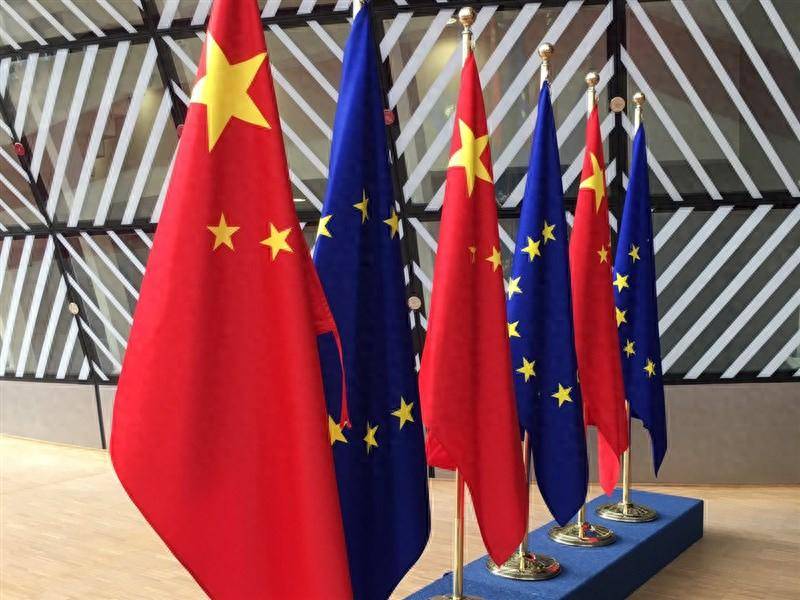
Group 1 - The core viewpoint of the articles highlights the escalating tensions between China and the EU, particularly regarding trade disputes and protective measures [1][2][5] - China initiated an anti-dumping investigation against EU-origin brandy, citing a dumping margin of 27.7%-34.9%, and imposed a five-year anti-dumping duty starting July 5 [1][6] - The EU's decision to impose additional tariffs of up to 38.1% on Chinese electric vehicles is seen as a significant point of contention, reflecting a broader trend of trade protectionism from the EU [1][4][15] Group 2 - The French Finance Minister's comments indicate a growing sentiment among some European politicians that trade with China could harm European interests, which may hinder healthy bilateral relations [2][4] - The EU's unilateral imposition of anti-dumping duties is viewed as a double standard, undermining fair competition principles and reflecting anxiety over China's industrial advancements [5][6] - China's response to the EU's trade measures, including the anti-dumping investigation and restrictions on medical devices, demonstrates its commitment to defending its trade rights while advocating for fair and open trade practices [6][15] Group 3 - The complex dynamics of China-EU relations provide both challenges and opportunities for diplomatic engagement, as highlighted by recent high-level dialogues between Chinese officials and EU leaders [10][12] - Misinterpretations and misinformation in media regarding China-EU negotiations can disrupt the communication process and hinder mutual understanding [10][12] - The articles suggest that cooperation between China and the EU is essential for maintaining global economic stability and countering unilateralism, particularly in the context of U.S. trade policies [15]
MPV,中产男人的归宿
投资界· 2025-07-05 08:00
Core Viewpoint - The article discusses the evolving preferences of middle-aged men regarding vehicle choices, emphasizing that business vehicles (MPVs) represent a final destination in their automotive journey, symbolizing practicality and comfort over status and luxury [3][7][29]. Group 1: Vehicle Preferences - Middle-aged men transition from luxury sedans to business vehicles as they prioritize space and comfort for family and personal use [5][17]. - Business vehicles are seen as practical choices that accommodate family needs, contrasting with the earlier desire for flashy cars [15][24]. - The article highlights that owning a business vehicle allows men to feel more relaxed and less constrained compared to traditional sedans [9][27]. Group 2: Social Perception and Identity - Driving a business vehicle conveys a sense of maturity and stability, moving away from the need for social comparison [10][20]. - The choice of vehicle reflects a man's life stage, with business vehicles symbolizing a settled lifestyle rather than a pursuit of status [21][24]. - Men who own business vehicles often modify them to reflect personal style, indicating a blend of practicality and individuality [21][24]. Group 3: Practicality and Comfort - Business vehicles provide superior comfort, with spacious interiors that allow for relaxation during long drives, which is particularly appealing to middle-aged men [17][27]. - The article notes that some men even repurpose business vehicle seats for office use, highlighting their multifunctionality [18]. - The comfort of business vehicles is compared favorably to ergonomic office chairs, making them suitable for both leisure and work [17].

“大限”前欧美谈判僵持 美国威胁农产品征税 欧盟两手准备 车企寻求关税“抵免”
Hua Er Jie Jian Wen· 2025-07-04 19:05
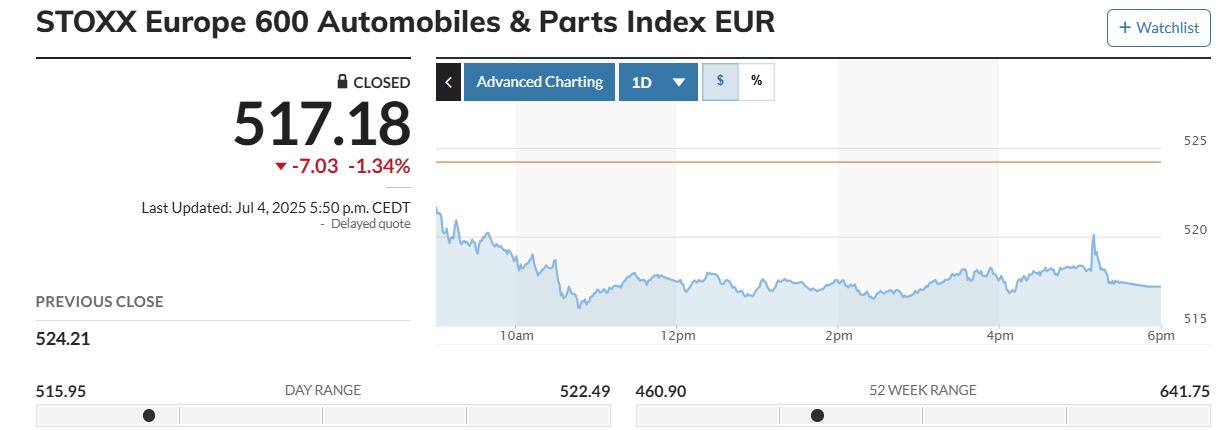
Group 1: Trade Negotiations - The US and EU trade negotiations are at a standstill, with a deadline for a "tariff pause" approaching on July 9 [1][2] - EU representatives are seeking a principle-based agreement before the deadline, while also preparing for potential extensions of the tariff pause if no agreement is reached [2][8] - There are internal divisions within the EU regarding the approach to negotiations, with some countries favoring a quick agreement and others advocating for a stronger stance against US tariffs [1][9] Group 2: Automotive Industry Impact - European automotive manufacturers are facing pressure, with stock prices declining significantly amid tariff threats, including a 17% potential tariff on EU agricultural products and a 50% tariff on other goods if negotiations fail [4][8] - Some European governments and car manufacturers are pushing for an investment-based agreement with the US, where increased investment in the US could lead to tariff reductions [2][3] - The EU's second round of countermeasures against US tariffs has been scaled down from €950 billion to €720 billion, indicating a strategic adjustment in response to ongoing negotiations [10] Group 3: Economic Implications - The EU is prepared to take countermeasures to protect its economy if negotiations do not yield favorable results, with the EU Commission President stating that all options are on the table [10] - The potential for a principle-based agreement could maintain the current "truce" status, avoiding new US tariffs, while failure to reach an agreement could lead to the implementation of previously suspended tariffs [10]

中国断供稀土!欧盟对华不满,最难熬的德企:还不如中国一个省
Sou Hu Cai Jing· 2025-07-04 15:35
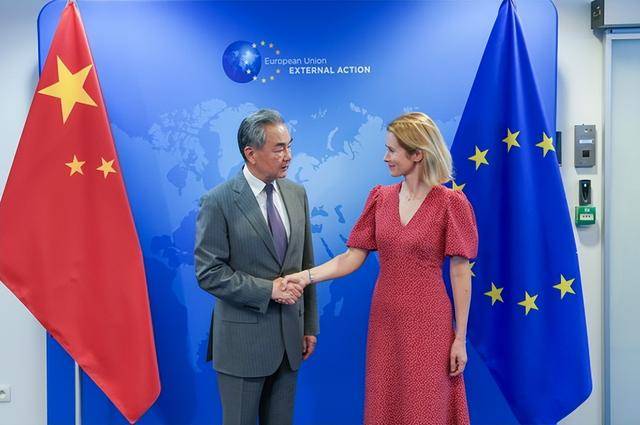
Group 1 - The core issue of the article revolves around the escalating tensions between the EU and China regarding rare earth exports, highlighting the EU's demands for China to lift export controls or face the cancellation of high-level meetings [3][15]. - Rare earth elements, while seemingly ordinary, are crucial for high-tech industries, making the EU's reliance on China a significant concern [5][7]. - European companies, particularly those dependent on rare earths, are facing unprecedented challenges due to supply instability, leading to production disruptions and potential job losses [21][19]. Group 2 - The EU's attempts to pressure China through ultimatums have not yielded results, as China has responded with strict measures to protect its rare earth technology and impose anti-dumping duties on EU products [17][19]. - The internal discord within the EU regarding the rare earth crisis has been exposed, with member states prioritizing their own interests over collective action [23][25]. - Despite the EU's investment of €1.7 billion in the Critical Raw Materials Act to reduce dependence on China, projections indicate that by 2030, the EU's self-sufficiency in rare earths will only reach 15%, far from meeting its industrial needs [27][29]. Group 3 - China's strategic management of rare earth resources includes a comprehensive tracking system to monitor the entire supply chain, ensuring that rare earths are not misused [37][39]. - China employs a differentiated supply strategy, providing favorable access to companies that have not participated in sanctions against it, while restricting supply to those that have [41][43]. - The global landscape shows that while many countries are attempting to reduce their reliance on Chinese rare earths, their efforts have largely been unsuccessful due to various limitations [55][60].
芯片人去德国!一口气看两场行业大展
芯世相· 2025-07-04 09:09
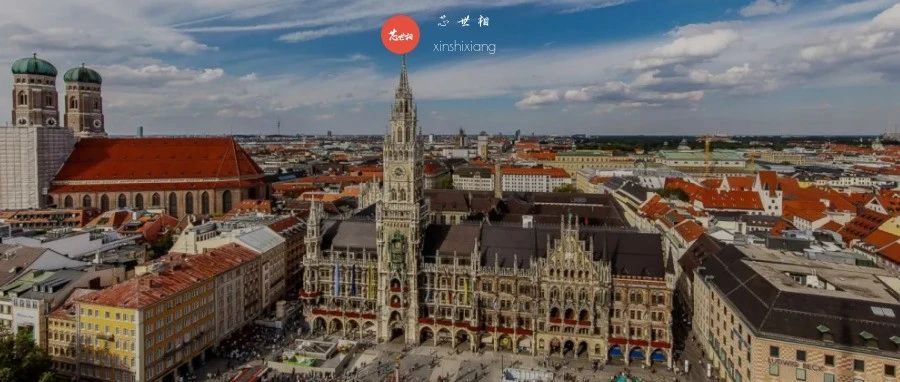
Core Viewpoint - The article emphasizes the importance of exploring overseas markets for the chip industry, particularly in Europe, as a strategy for industry upgrade and sustained growth amidst intense domestic competition and technological innovation [3]. Group 1: Overview of the Business Trip - The company is organizing a business trip to Germany from September 4 to September 14, focusing on understanding the European electronic industry's trends and demands through visits to major cities and participation in key exhibitions [3][4]. - The trip will include visits to two major global exhibitions: IFA (Berlin International Consumer Electronics and Home Appliances Exhibition) and IAA (German International Automobile and Smart Mobility Exhibition) [4][5]. Group 2: Exhibition Details - IFA is one of the largest international exhibitions for consumer electronics, attracting over 1,800 exhibitors and more than 210,000 visitors from 138 countries in its last edition, with AI being a significant theme this year [4]. - IAA is one of the top five auto shows globally, featuring 750 exhibitors from 38 countries and over 500,000 visitors, covering the entire automotive supply chain [4][5]. Group 3: Activities and Networking Opportunities - The trip will include deep-dive salons to facilitate connections with local resources, building on previous successful networking events held during past exhibitions [6]. - Participants will have the opportunity to visit key companies and universities, gaining firsthand insights into the industry and establishing valuable contacts [7][10]. Group 4: Itinerary Highlights - The itinerary includes visits to significant cities such as Berlin, Leipzig, Dresden, Stuttgart, and Munich, each representing distinct industrial characteristics [7]. - Specific visits to notable companies like GlobalFoundries and Mercedes-Benz are planned, along with tours of educational institutions like the Technical University of Munich [19][21][22]. Group 5: Historical Context and Experience - The company has organized multiple business trips to Germany since 2018, accumulating extensive experience and local resource networks, which enhance the effectiveness of the current trip [10][12]. - The previous trips have included visits to various countries, allowing for continuous optimization of itineraries based on industry feedback [10].
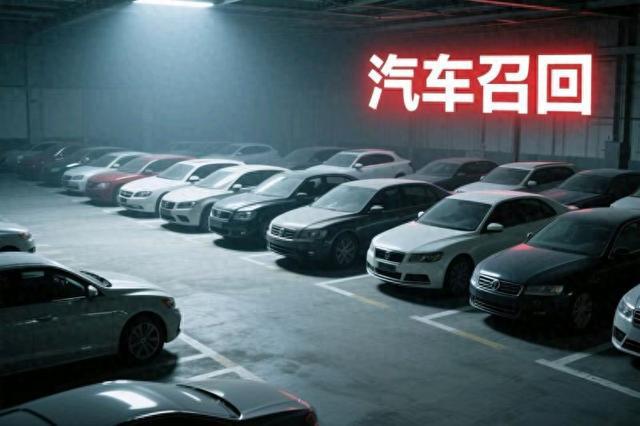
同比激增29.5%!2025年上半年累计召回汽车超528万辆,软件缺陷成主因
Hua Xia Shi Bao· 2025-07-04 05:38
Core Insights - The automotive recall landscape is shifting from mechanical failures to software and electronic system issues, reflecting the industry's transformation into mobile intelligent terminals [2][6][8] - In the first half of 2025, a total of 60 recall announcements affected 28 brands, impacting 5.281 million vehicles, marking a year-on-year increase of 29.5%, the second-highest in nearly a decade [2][3] - Over 40% of the recalls are attributed to vehicle system vulnerabilities, with new energy vehicles (NEVs) accounting for 30% of the recalls, highlighting the digital challenges faced by the industry [2][3] Recall Trends - Honda's joint ventures in China executed the largest single recall in industry history, affecting 1.367 million vehicles due to steering system defects, representing 25% of the total recalls in the first half of the year [3] - Tesla recalled 1.2068 million Model 3/Y vehicles due to electronic system defects, nearing its global delivery total for 2024 [3] - Korean brands saw a staggering 113-fold increase in recall volume, while European brands experienced a 45-fold increase, primarily due to supply chain management issues during their electrification transitions [3] Quality Management Improvements - Domestic brands have reduced recall volumes by 85.1% through enhanced quality management systems, reflecting advancements in research, development, and production control [4][5] - The frequency of recalls in the core battery management system and electric drive components has significantly decreased, indicating improved safety measures and technological maturity in the NEV sector [6][8] Regulatory Changes - The Ministry of Industry and Information Technology's 2025 inspections will include mandatory testing for battery performance and collision safety, pushing companies to establish comprehensive testing systems [7] - Luxury brands like Mercedes-Benz and BMW accounted for 55% of the total recall announcements, indicating ongoing challenges in quality control within the high-end market [7] Future Outlook - The automotive industry is transitioning to a new era of quality management, focusing on a "prevention-response-optimization" closed-loop system that encompasses the entire product lifecycle [8] - Companies that adapt to this new quality standard, prioritizing user experience and comprehensive lifecycle management, will gain a competitive edge in the intelligent mobility landscape [8]