
三星电子

Search documents
今年市场的两条主线:AI和地缘、反内卷
Sou Hu Cai Jing· 2026-01-17 01:57
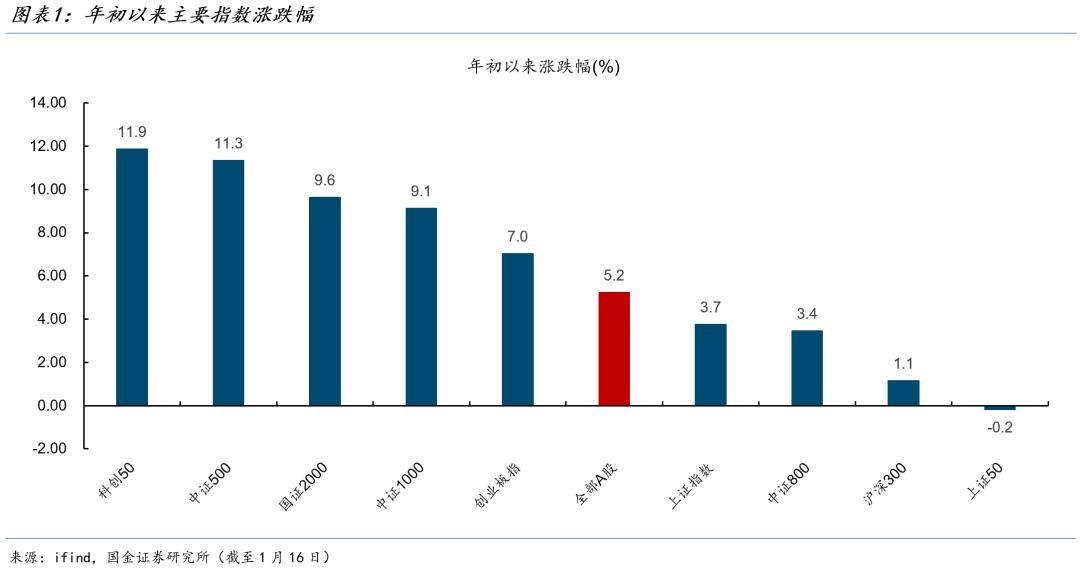
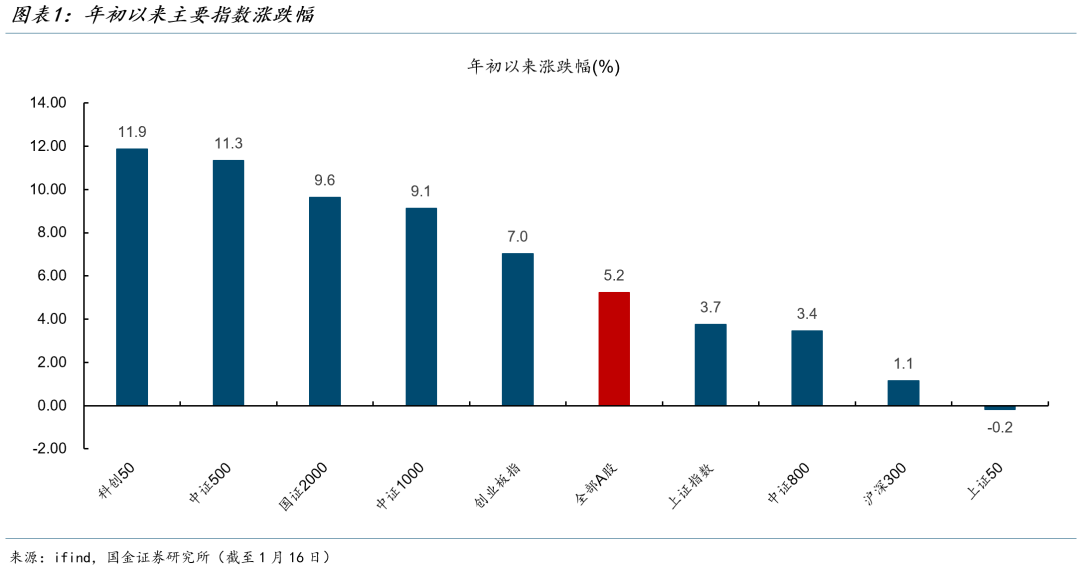
Group 1 - The core theme for A-share pricing in 2026 revolves around AI and geopolitical factors, reflecting the U.S. focus on technology for growth and geopolitical strategies for elections, while another underpriced theme is "anti-involution," corresponding to China's push for reform-driven momentum [1][8] - Since the beginning of 2026, the A-share market has shown a "good start" with a cumulative increase of 5.2% in the Wind All A index and an average daily trading volume exceeding 3 trillion yuan, with the Sci-Tech 50, CSI 500, and National 2000 indices leading the gains at 11.9%, 11.3%, and 9.6% respectively [2] - The leading sectors include media, computer, non-ferrous metals, and military industries, with year-to-date increases of 16.0%, 14.0%, 14.0%, and 9.0%, indicating that the current market focus is on "AI and geopolitical" themes [2] Group 2 - The impact of AI is evident not only in the A-share market but also in marginal changes in the macro economy, with the PPI in December 2025 rising by 0.2% month-on-month, marking the highest increase since 2024, driven in part by AI's contribution to price improvements in non-ferrous and technology sectors [5][8] - In December 2025, prices in the non-ferrous metal mining and smelting industries rose by 3.7% and 2.8% respectively, with AI-driven electricity demand significantly boosting prices for metals like copper, silver, lithium, and cobalt [5] - The prices of external storage devices and integrated circuits increased by 15.3% and 2.4% respectively in December 2025, with high-end AI chips occupying advanced process resources, leading to structural tensions in chip availability [7] Group 3 - The improvement in PPI reflects strategic choices made by China and the U.S. in the current global macro context, which are expected to become two main pricing themes for A-shares in 2026: "AI and geopolitics" and "anti-involution" [8] - The "anti-involution" theme is entering a new phase in 2026, with recent discussions emphasizing the need to address malicious low-price dumping and promote healthy competition [9] - Recent policy changes indicate a clearer execution strategy for "anti-involution," focusing on "quality over price" in industries like photovoltaics and energy storage, with regulatory bodies emphasizing quality standards and price monitoring [10][12] Group 4 - The cancellation of export tax rebates for photovoltaic products and the reduction of tax rates for battery products reflect the national-level implementation of "anti-involution," aimed at allowing competitive companies to raise prices and retain funds for domestic investment [11] - Local governments are shifting their competitive advantages from unsustainable policy incentives to sustainable business environments and professional service capabilities, indicating a broader commitment to "anti-involution" practices [12] - Strengthened regulatory enforcement against monopolistic and unfair competition behaviors signals an acceleration of "anti-involution," aiming to enhance market order and promote a virtuous cycle of quality and pricing in the industry [12]

宋雪涛:今年市场的两条主线
智通财经网· 2026-01-17 01:46
Market Performance - The A-share market has shown a "good start" in 2026, with the total return of the Wind All A index reaching 5.2% and the average daily trading volume exceeding 30 trillion yuan [1] - The leading sectors include technology and small-cap stocks, with the Sci-Tech 50, CSI 500, and National Index 2000 showing cumulative gains of 11.9%, 11.3%, and 9.6% respectively [1] Sector Analysis - The media, computer, non-ferrous metals, and military industries have led the market, with year-to-date gains of 16.0%, 14.0%, 14.0%, and 9.0% respectively, indicating a market focus on "AI and geopolitics" [1] - The AI-driven market trend is extending from upstream computing infrastructure to downstream AI applications, with geopolitical conflicts in regions like Venezuela and Iran catalyzing the non-ferrous and military sectors [1] Economic Indicators - The Producer Price Index (PPI) in China rose by 0.2% month-on-month in December 2025, marking the highest monthly increase since 2024, with AI contributing to this improvement, particularly in non-ferrous and technology prices [3] - Prices in the non-ferrous metal mining and smelting industries increased by 3.7% and 2.8% respectively, driven by rising electricity demand due to AI [3] - In the technology sector, prices for external storage devices and integrated circuits rose by 15.3% and 2.4%, respectively, with high-end AI chips impacting the availability of other chips [3] Policy and Structural Changes - The "anti-involution" policy is gaining traction, contributing to the PPI recovery, with lithium-ion battery manufacturing prices increasing by 1.0% and new energy vehicle manufacturing prices turning from a decline of 0.2% to an increase of 0.1% [4] - The strategic choices made by China and the U.S. in the current global macro context are expected to shape A-share pricing in 2026, focusing on "AI and geopolitics" and "anti-involution" [6] - The "anti-involution" initiative is transitioning from capacity governance to operational entity management, emphasizing quality competition and regulatory compliance [7][8] Government Initiatives - Local governments are shifting their focus from unsustainable policy incentives to sustainable business environments and professional service capabilities in attracting investments [10] - Recent central government actions have intensified the regulation of anti-monopoly and unfair competition, signaling a stronger push for "anti-involution" [10] - The cancellation of export tax rebates for photovoltaic products reflects the national level's commitment to "anti-involution," aiming to enhance the competitiveness of leading enterprises [8]
存储芯片涨价潮或将贯穿2026年
Zhong Guo Jing Ying Bao· 2026-01-16 19:34
Core Viewpoint - The current surge in storage chip prices is expected to continue into 2026, driven by a combination of supply constraints and recovering demand, particularly in sectors like AI and data centers [3][4][10]. Group 1: Price Trends and Market Dynamics - Storage chip prices have seen significant increases, with examples like Acer's 32GB DDR5 memory rising from approximately 1300 RMB to around 2700 RMB within a few months [3]. - Analysts predict that the price of enterprise-grade SSDs may double in early 2026 due to strong demand for server-grade storage [4]. - The current price surge is characterized as a result of supply contraction and recovering demand after a prolonged downturn in the storage industry [5][11]. Group 2: Impact on the Supply Chain - The packaging and testing (封测) sector is experiencing structural improvements, with major firms raising prices by up to 30% due to high capacity utilization [5][6]. - The demand for advanced packaging technologies is increasing, which is driving up costs in the packaging and testing segment [6]. - Some mid-to-high-end packaging services are seeing improved pricing power, while traditional packaging services remain competitive and less affected by price increases [6][7]. Group 3: Differentiation Among Downstream Manufacturers - The impact of rising storage chip prices varies among manufacturers, with upstream firms benefiting more than midstream and downstream companies [7]. - PC manufacturers like Lenovo and Dell have raised prices by 10% to 30%, while some smartphone models have seen price increases of up to 500 RMB [8]. - Larger brands with better supply agreements and pricing power are less affected by cost increases compared to smaller manufacturers [9]. Group 4: Future Outlook and Opportunities - The storage chip market is expected to remain in a supply-demand imbalance, with DRAM and NAND flash consumption projected to increase significantly in 2026 [10]. - Domestic storage manufacturers are likely to gain market share and improve profitability due to favorable market conditions [11]. - Opportunities exist for companies involved in high-end storage and recycling, as well as those that can innovate in product offerings and cost structures [11].
宏观专题分析报告:资产定价的双主线
SINOLINK SECURITIES· 2026-01-16 15:14
Market Performance - Since the beginning of 2026, the A-share market has shown a "good start" with a cumulative increase of 5.2% in the Wind All A Index, and the average daily trading volume has exceeded 30 trillion yuan[5] - The leading sectors include media, computer, non-ferrous metals, and military industry, with year-to-date gains of 16.0%, 14.0%, 14.0%, and 9.0% respectively, reflecting the current market focus on AI and geopolitical factors[5] Economic Indicators - In December 2025, China's PPI increased by 0.2% month-on-month, marking the highest monthly increase since 2024, driven by improvements in non-ferrous and technology sector prices[12] - Prices in the non-ferrous metal mining and smelting industries rose by 3.7% and 2.8% respectively, influenced by AI-driven demand for electricity[12] Strategic Trends - The two main strategic lines for A-share pricing in 2026 are AI, reflecting the U.S. focus on technology for growth, and "anti-involution," which corresponds to China's push for reform and high-quality development[3] - The "anti-involution" strategy is entering a new phase, emphasizing "quality over price" and a shift in local government performance perspectives[15] Policy Changes - The cancellation of export tax rebates for photovoltaic products is a national-level manifestation of the "anti-involution" strategy, aimed at promoting price increases among leading companies while eliminating those relying on low prices[18] - Recent regulatory actions against monopolistic practices in the photovoltaic industry signal a commitment to fair competition and the acceleration of "anti-involution" efforts[19] Risks - Potential risks include unexpected geopolitical tensions and slower-than-expected progress in "anti-involution" reforms, which could disrupt market dynamics[4][21]
三星半导体业务部门将获得高额绩效奖励 接近半年工资
Xin Lang Cai Jing· 2026-01-16 13:31
【TechWeb】1月16日消息,据外媒报道,在通用DRAM价格上涨、人工智能所需的高带宽存储器持续 改善的推动下,三星电子负责半导体业务的设备解决方案部门的业绩也有改善,公司整体的业绩也随之 提升。 而在设备解决方案部门的业绩改善之后,员工也将获得高额的绩效奖励。 外媒在最新的报道中就提到,三星电子在当地时间周 五,已经公布了超额绩效奖励的支付比例,设备解决方 案部门是全年工资的47%,也就是接近半年的工资。 设备体验部门在2025年获得全年工资47%的超额绩效奖 励,较2024年就有大幅增加,当年他们的超额绩效奖励 是全年工资的14%。 外媒在报道中还提到,三星电子设备解决方案部门获得 全年工资47%的超额绩效奖励,适用于旗下的全部业务 团队,包括存储业务、代工业务和系统LSI业务部门。 对于三星电子今年的超额绩效奖励,外媒称将在1月30日发放,届时各业务部门的员工就将收到。(海 蓝) 【TechWeb】1月16日消息,据外媒报道,在通用DRAM价格上涨、人工智能所需的高带宽存储器持续 改善的推动下,三星电子负责半导体业务的设备解决方案部门的业绩也有改善,公司整体的业绩也随之 提升。 而在设备解决方案部门 ...
内存疯涨,买车要多掏腰包?
3 6 Ke· 2026-01-16 12:36
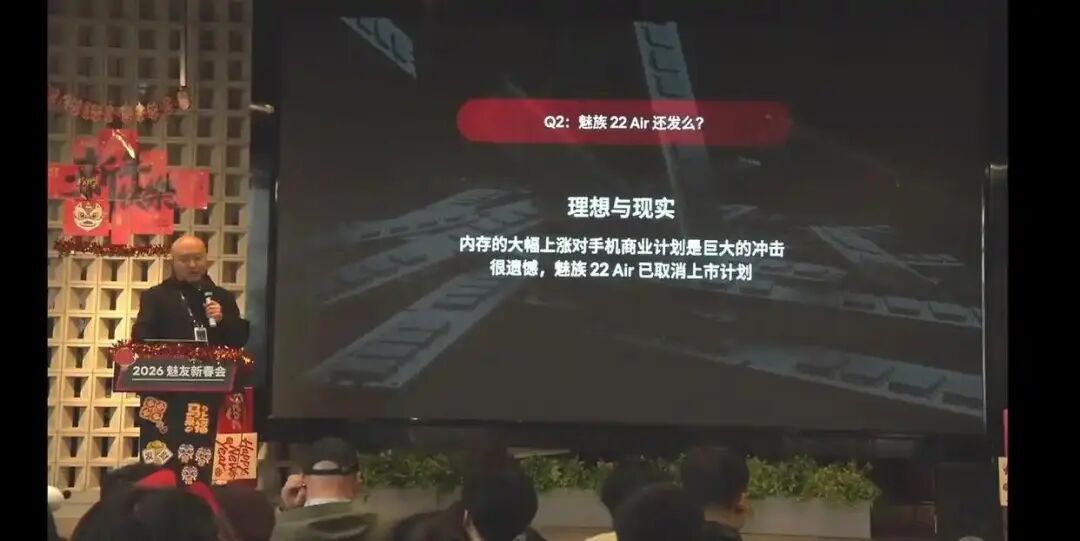
Group 1 - The price of memory chips has surged dramatically, with 16GB DDR4 memory increasing by 1800% and DDR5 by 500% compared to last year [1][3] - The automotive industry is facing significant cost pressures due to rising memory prices, with estimates suggesting that the memory cost for a car priced around 300,000 yuan has increased by 2,000 to 4,000 yuan [3][5] - Car manufacturers may respond to rising memory costs by either increasing prices or reducing features without lowering prices, leading to a potential decline in consumer experience [5][6] Group 2 - The primary driver behind the skyrocketing memory prices is the AI industry, which requires significantly more memory for training large models, diverting production away from standard memory used in consumer electronics and vehicles [6][7] - Major memory manufacturers like Samsung and SK Hynix have seen their stock prices soar, with Micron Technology's stock projected to increase by 240% by 2025 [7][9] - Domestic companies like Changxin Technology are emerging as potential players in the memory market, but they currently only meet a fraction of domestic demand, with China consuming nearly 40% of global memory but producing less than 10% [9][11] Group 3 - The current memory crisis resembles the previous chip shortage, where the focus was on basic components rather than advanced chips, indicating a supply chain issue that may persist [6][12] - Consumers looking to purchase vehicles may want to wait for potential price adjustments or take advantage of current pricing before manufacturers adjust for increased costs [13]




存储双雄,疯狂发奖金
半导体芯闻· 2026-01-16 10:27
Group 1 - Samsung Electronics' Device Solutions (DS) department will receive a performance bonus equivalent to 47% of annual salary, a significant increase from last year's 14%, driven by strong performance in DRAM and HBM [1] - The Mobile Experience (MX) division, supported by strong sales of Galaxy S25 and Fold 7, has allocated a 50% dividend rate [1] - Samsung's preliminary results for Q4 show an operating profit of 20 trillion KRW, with approximately 80% (16 to 17 trillion KRW) coming from the DS department [2] Group 2 - SK Hynix will implement a shareholder participation plan for the second consecutive year, linking performance bonuses to stock options, with expected bonuses exceeding 130 million KRW per employee due to strong HBM market performance [3] - The performance bonus system at SK Hynix is expected to increase significantly, with an estimated total bonus of around 135 million KRW per employee based on last year's operating profit of nearly 45 trillion KRW [4] - A proposed amendment to the Commercial Act could potentially cancel or reduce the current bonus system if the bill to revoke treasury bond authorization is passed [5]
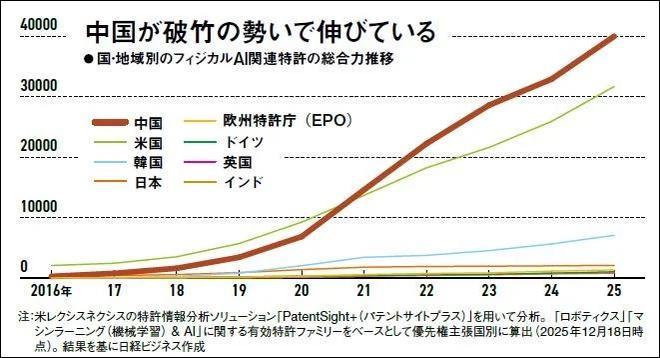
比拼物理AI:中国世界第一,中企包揽专利竞争力前三
Guan Cha Zhe Wang· 2026-01-16 09:19
Core Insights - Physical AI is a key area of global technological competition, with Chinese companies emerging as leaders in the field of humanoid robots, automotive applications, and other physical AI patents [1][3] - According to a recent analysis, China ranks first globally in terms of comprehensive strength in patent applications, followed closely by the United States [1][3] - Major Chinese tech firms such as Baidu, Huawei, and Tencent lead in patent scores, while China Ping An Insurance ranks sixth [1][4] Patent Rankings - The analysis ranks Baidu, Huawei, and Tencent as the top three companies in the field of Physical AI, with scores of 4126, 3645, and 3043 respectively [4] - Samsung Electronics from South Korea ranks fourth with a score of 2734, followed by NVIDIA (2154) and China Ping An Insurance (1881) [4] - Other notable companies include Intel (1543), LG Electronics (1393), Alphabet (1325), and the Chinese Academy of Sciences (835) [4] Industry Context - The analysis indicates that while Chinese companies have a strong patent quantity, they still lag behind U.S. competitors like Intel, NVIDIA, and Alphabet in terms of patent quality [1][3] - The shift towards AI technologies is emphasized in China's 14th Five-Year Plan, which highlights the importance of high-quality development and technological advancement [4] - The CES 2024 showcased various Physical AI applications, indicating a competitive landscape among tech companies from China, the U.S., and South Korea [5] Future Developments - The Chinese government is actively supporting Physical AI as a national strategy, with plans to enhance AI integration across various industrial sectors by 2025 [5][6] - The application of AI in industrial enterprises is projected to rise significantly, with a forecasted increase from 9.6% in 2024 to 47.5% in 2025 [7] - China has established over 7000 advanced smart factories, demonstrating significant progress in the integration of AI and manufacturing [7]

科技股助推美股指期货全线上涨,亚太股指创历史新高,日元止跌反弹,金银继续回调
Hua Er Jie Jian Wen· 2026-01-16 09:16
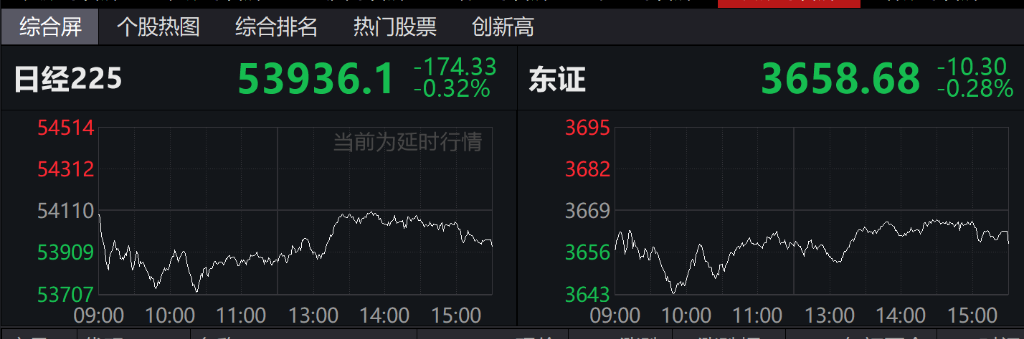
Group 1: Market Overview - The latest wave of enthusiasm in technology stocks continues, driving U.S. stock index futures higher, with the Dow futures up 0.6%, S&P 500 futures up 0.26%, and Nasdaq 100 futures up 0.32% [1] - Asian technology stocks have rebounded strongly, reaching historical highs, alleviating previous concerns about overvaluation in the sector [1] - The MSCI Asia-Pacific index rose 0.4%, hitting a record high, while the Nikkei 225 index closed at 53,936.17 points, down 0.32% but up 7.51% over the last 20 trading days [1][5] Group 2: Currency and Commodity Movements - The Japanese yen appreciated by 0.2% to 158.28 against the dollar, driven by concerns from Japanese officials regarding the weak currency [3][5] - Gold and silver prices experienced slight declines, with spot gold down 0.2% to $4,606.06 per ounce and spot silver down 1.11% to $91.65 per ounce [1] Group 3: Individual Stock Performance - TSMC (Taiwan Semiconductor Manufacturing Company) surged approximately 3%, reaching a historical peak, which positively influenced regional market sentiment [4][5] - Semiconductor stocks in the U.S. pre-market saw gains, with Micron Technology up nearly 4%, AMD up over 2%, and TSMC up over 1% [7] Group 4: Bond Market Insights - Asian bonds remained stable, with the 10-year yield showing minimal fluctuations for the fifth consecutive week, while global corporate bond yield premiums fell to their lowest since 2007 [5][6] - U.S. jobless claims unexpectedly decreased, leading to a decline in U.S. Treasury yields, which contributed to stability in Asian bonds [6]
越南军队电信集团开建越南首座芯片工厂,预计2027年底试运行
Xin Lang Cai Jing· 2026-01-16 08:31
尽管中国大陆与中国台湾地区目前仍在封装、测试和组装(ATP)等半导体后端制造领域占据主导地 位,但越南的相关产业正迎来高速增长。 根据美国半导体行业协会与波士顿咨询集团 2024 年联合发布的一份报告预测,越南在全球半导体封测 产能中的占比将从 2022 年的 1%,提升至 2032 年的 8% 至 9%。 越南军方运营的电信企业越南军队电信集团(Viettel)于周五正式动工兴建越南首座半导体制造工厂, 预计 2027 年底启动试生产。该项目是越南打造本土半导体制造生态系统计划的重要组成部分。 越南军队电信集团在一份声明中表示,这座占地 27 公顷的工厂坐落于河内市郊的和乐高科技园区,将 于明年年底前完成厂房建设与技术转移工作,随后进入试运行阶段;在 2030 年之前,工厂还将持续优 化生产流程并升级相关设备。 声明指出:"这座全新的制造工厂将助力越南覆盖半导体产业链的全部六个环节,其中包括工艺技术复 杂的晶圆制造环节 —— 该环节目前在越南本土尚未实现本土化生产。" 该工厂将聚焦芯片的研发、设计、制造与测试,产品将面向航空航天、电信、医疗设备以及汽车制造等 多个领域。 越南军队电信集团并未披露该项目的具体 ...