拓普集团

Search documents
拓普集团股价涨5.04%,银河基金旗下1只基金重仓,持有39.37万股浮盈赚取137.79万元
Xin Lang Cai Jing· 2026-02-06 02:46
银河中证机器人指数发起式A(021301)基金经理为黄栋。 截至发稿,黄栋累计任职时间13年138天,现任基金资产总规模15.79亿元,任职期间最佳基金回报 118.94%, 任职期间最差基金回报-21.5%。 声明:市场有风险,投资需谨慎。 本文基于第三方数据库自动发布,不代表新浪财经观点,任何在本 文出现的信息均只作为参考,不构成个人投资建议。如有出入请以实际公告为准。如有疑问,请联系 biz@staff.sina.com.cn。 2月6日,拓普集团涨5.04%,截至发稿,报72.94元/股,成交11.71亿元,换手率0.95%,总市值1267.58 亿元。 资料显示,宁波拓普集团股份有限公司位于浙江省宁波市北仑区大碶街道育王山路268号,成立日期 2004年4月22日,上市日期2015年3月19日,公司主营业务涉及汽车零部件及配件的研发、生产和销售。 主营业务收入构成为:内饰功能件33.76%,底盘系统28.66%,减震器15.77%,汽车电子8.31%,热管理 系统7.58%,其他(补充)5.86%,电驱系统0.06%。 从基金十大重仓股角度 数据显示,银河基金旗下1只基金重仓拓普集团。银河中证机器人 ...

高位成立难回本 东方品质消费一年基金不到5年亏6成
Zhong Guo Jing Ji Wang· 2026-02-05 08:09
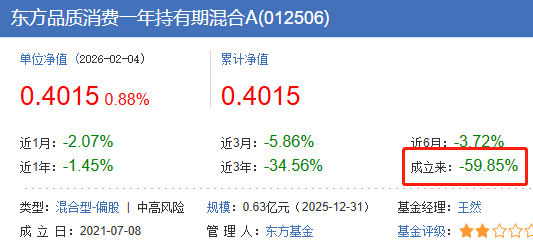
Core Insights - The article discusses the performance of actively managed equity funds established in 2021, revealing that over 50% of these funds are currently at a loss, with significant declines in value for many [1] Fund Performance Summary - A total of 667 actively managed equity funds established in 2021 were analyzed, with approximately 362 funds showing negative returns since inception, representing over 54% of the sample [1] - Among these, 86 funds have experienced declines of over 30%, and 34 funds have seen declines exceeding 40% [1] - The "Oriental Quality Consumption One-Year Holding Period Mixed Fund," established in July 2021, has recorded a cumulative decline of approximately 60.6%, making it one of the worst performers in the sample [1][3] Specific Fund Data - The "Oriental Quality Consumption One-Year Holding Period Mixed Fund A" has a current net value of 0.4015, with a cumulative return of -59.85% since its inception [2] - The fund's performance over the past year shows a decline of -1.45%, and over three years, it has decreased by -34.56% [2] - The fund's top ten holdings include major companies such as Yili Group, Midea Group, and Tencent Holdings, but it has consistently underperformed compared to its peers and the CSI 300 index [3][4] Comparative Performance Analysis - In 2025, the fund's annual return was -0.53%, while the average return for similar funds was 33.12%, and the CSI 300 index returned 17.66% [4] - The fund's ranking among peers has been poor, with significant drops in its position over the years, indicating a consistent underperformance [4][6]

汽车行业:如何看待原材料成本上涨对乘用车车企的影响?
GF SECURITIES· 2026-02-05 07:28
Investment Rating - The industry investment rating is "Buy" [2] Core Viewpoints - The report discusses the impact of rising raw material costs on passenger car manufacturers, particularly focusing on the effects of copper, aluminum, and lithium prices on vehicle production costs [5][8][11][14] - It highlights that the cost increase for electric vehicles (EVs) and plug-in hybrid electric vehicles (PHEVs) is significantly influenced by the prices of copper and lithium, with estimated cost increases of approximately 2,300 RMB for EVs and 1,600 RMB for PHEVs due to copper price hikes, and 3,200 RMB for EVs and 1,500 RMB for PHEVs due to lithium price increases [5][11] - The report quantifies the cost impact on various manufacturers, indicating that companies like Chery, Geely, and Great Wall Motors experience relatively smaller increases in average vehicle costs due to their sales structure and the types of vehicles they produce [15][17] - It outlines five strategies that manufacturers can employ to mitigate the impact of rising raw material costs, including cost reductions through enhanced features, annual cost reductions, technological advancements, scale effects, and structural adjustments [22][23] Summary by Sections Section 1: Impact of Raw Material Price Increases - The report estimates that the increase in copper prices will raise the production costs of fuel vehicles, EVs, and PHEVs by approximately 800 RMB, 2,300 RMB, and 1,600 RMB respectively, while aluminum price increases will add about 700 RMB, 900 RMB, and 900 RMB to the respective vehicle types [5][8] - Lithium price increases are projected to raise costs by 3,200 RMB for EVs and 1,500 RMB for PHEVs, assuming a price of 160,000 RMB per ton [11][14] Section 2: Cost Pressure by Manufacturer - The report analyzes the cost pressure on manufacturers based on their sales structure, concluding that companies like Chery, Geely, and Great Wall Motors face smaller increases in average vehicle costs due to their diverse product lines and sales strategies [15][17] Section 3: Strategies to Mitigate Cost Increases - Manufacturers are expected to implement various strategies to counteract the impact of rising raw material costs, including: 1. Enhancing features while maintaining competitive pricing 2. Achieving annual cost reductions of around 2% 3. Utilizing technological advancements to lower costs 4. Leveraging scale effects to dilute fixed costs 5. Adjusting product structures to focus on higher-end models and exports [22][23] Section 4: Investment Recommendations - The report suggests a "shelf-style" investment approach, recommending attention to various companies within the passenger vehicle chain, including Geely, BYD, Chery, and others for potential investment opportunities [25]
新势力 | 1月:车市表现平淡 新势力同比表现好于行业【国联民生汽车 崔琰团队】
汽车琰究· 2026-02-05 03:45
Core Viewpoint - The January 2026 performance of the new energy vehicle market was relatively flat, but new forces in the industry showed better year-on-year performance compared to the overall market [3]. Group 1: January Delivery Data - Leap Motor delivered 32,059 vehicles in January, a year-on-year increase of 27.4% but a month-on-month decrease of 31.9% [2]. - Li Auto delivered 27,668 vehicles, down 7.5% year-on-year and down 37.5% month-on-month [7]. - NIO delivered 27,182 vehicles, marking a significant year-on-year increase of 96.1% but a month-on-month decrease of 14.2% [6]. - Zeekr delivered 23,852 vehicles, with a year-on-year increase of 99.7% and a month-on-month decrease of 9.3% [8]. - Xpeng delivered 20,011 vehicles, down 34.1% year-on-year and down 38.0% month-on-month [5]. - Xiaomi delivered over 39,000 vehicles in January [8]. Group 2: Market Performance Analysis - The total retail market for narrow passenger cars in January was approximately 1.8 million units, a month-on-month decrease of 20.4% but a slight year-on-year increase [3]. - The new energy vehicle retail market is expected to reach 800,000 units, with a penetration rate of 44.4% [3]. - The five sample new force car companies (excluding Xiaomi and Aion) delivered a total of 130,772 vehicles, a year-on-year increase of 17.5% but a month-on-month decrease of 28.0% [3]. Group 3: Company-Specific Insights - Leap Motor's growth is attributed to strong product offerings like the C10 and B01, with plans to launch new models in 2026 [4]. - Xpeng's delivery decline is noted, but the company plans to launch multiple new models in 2026 [5]. - NIO's delivery increase is supported by strong sales of the ES8 and new software updates enhancing user experience [6]. - Li Auto's stable sales are backed by the L series, with ongoing expansion in the charging infrastructure [7]. - Zeekr's growth is driven by the success of the 7X model and plans for new model launches [8]. Group 4: Industry Trends - The smart driving technology is accelerating, with companies like Xpeng and Huawei leading the charge in promoting intelligent driving features [9]. - The industry is expected to see a shift towards more affordable smart driving solutions, enhancing competitiveness against joint venture brands [9]. - The rise of intelligent capabilities is becoming a critical factor in competition among automakers, with a focus on autonomous driving and user acceptance [10].




浙江“十五五”共富新局:打造AI高地,居民收入接近发达经济体
2 1 Shi Ji Jing Ji Bao Dao· 2026-02-04 12:33
"十五五"时期,浙江以新质生产力夯实产业底盘,以高质量就业托底共同富裕。 近日,《浙江省"十五五"高质量发展建设共同富裕示范区规划(征求意见稿)》(以下简称《征求意见 稿》)公布,提出到2030年,基本建成高质量发展高品质生活先行区,人均地区生产总值和城乡居民收 入接近发达经济体水平。 在具体做法上,《征求意见稿》首先提及的两大项是:推动经济高质量发展,不断夯实共同富裕物质基 础;深入实施就业优先战略,促进城乡居民稳定增收。 其中,"加快建设创新浙江"这一项细分任务中提到,浙江将打造人工智能创新发展高地。统筹规划全省 算力资源,构建多层次算力服务体系。实施"芯模联动"行动,打造世界一流"基础+垂类"模型群,着力 营造最优开源开放生态。具体到构建浙江特色现代化产业体系,浙江将实施"415X"先进制造业集群培 育工程。 在强产业同时,浙江重点提出促进高质量充分就业,加快构建就业友好型发展方式,深化省域统一人力 资源大市场建设,推进新就业形态劳动权益保障省域立法等。 柯敏表示,新兴产业发展方面,以生物医药为例,相比于上海、江苏等地,浙江布局较为不足,"十五 五"时期要精准发力,形成差异化布局模式,做强良渚、西湖、瓯 ...
光大证券晨会速递-20260204
EBSCN· 2026-02-04 01:45
Group 1: Market Overview - The market sentiment is currently high, with over 60% of stocks in the CSI 300 index showing an upward trend, indicating a bullish outlook for the near future [2] - The momentum sentiment indicators are trending upwards, suggesting a sustained positive market environment [2] Group 2: Industry Insights - In the coal, steel, float glass, cement, and fuel refining sectors, profit sentiment is expected to decline year-on-year [3] - The inventory of breeding sows is decreasing significantly, leading to a tighter supply forecast for Q2 2026, which may support a recovery in pig prices [3] - The PMI remains stable, indicating no significant changes in the cyclical industries monitored [3] Group 3: Automotive Sector - The performance of new energy vehicles in January was weak, prompting automakers to increase purchase incentives [4] - Recommended stocks include Geely Automobile for whole vehicles and Fuyao Glass for components, alongside Top Group and Shuanglin Co. for humanoid robots [4] Group 4: Real Estate Sector - Multiple cities have initiated old housing buyback programs, accelerating the "old for new" exchange, which is expected to stabilize the housing market [5] - Notable companies recommended include China Merchants Shekou and China Jinmao, which are positioned as leading brands in the real estate sector [5] Group 5: Chemical Industry - Qicai Chemical and Huanliang Technology have established an AI laboratory to enhance product development efficiency, marking a shift from experience-driven to model-driven approaches in the chemical industry [6] - Companies like Sinopec, Wanhua Chemical, and Qicai Chemical are highlighted for their potential in leveraging AI for cost reduction and efficiency improvements [6]
阿童木机器人冲击港股,聚焦工业机器人产品,净利润连续两年亏损
Ge Long Hui· 2026-02-03 03:21
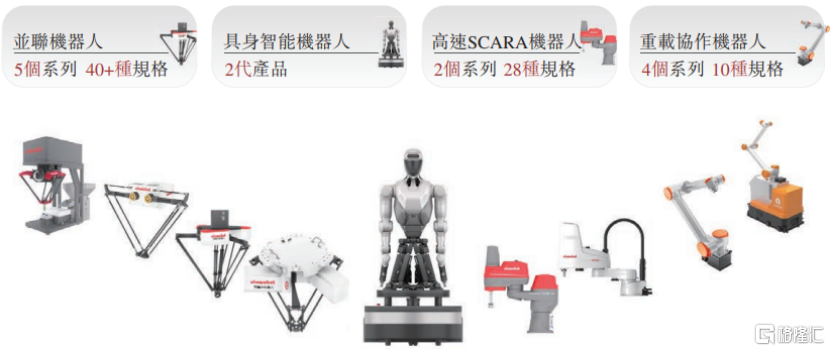
Core Insights - The article highlights the increasing importance of industrial robots in manufacturing, driven by the rise of smart manufacturing and structural increases in labor costs, positioning robots as key tools for efficiency and cost reduction [1] Company Overview - Tianjin Atongmu Robot Co., Ltd. (referred to as "Atongmu Robot") has submitted an IPO application to the Hong Kong Stock Exchange, aiming to list under Chapter 18C, with Huatai International as the sole sponsor [1] - The company focuses on the research, production, sales, and service of high-speed and high-reliability industrial robots, with products spanning parallel robots, high-speed SCARA robots, heavy-duty collaborative robots, and embodied intelligent robots [1][4] Financial Performance - Approximately 50% of Atongmu Robot's revenue comes from parallel robots, but the company has reported net losses for two consecutive years [3] - Revenue for the years 2023, 2024, and the first nine months of 2025 is approximately RMB 93.49 million, RMB 135.26 million, and RMB 156.96 million, respectively, with corresponding gross margins of 17%, 22.8%, and 28.9% [8] - The company has incurred net losses of approximately RMB -39.25 million, RMB -47.07 million, and a profit of RMB 0.938 million for the same periods [8] Product and Market Dynamics - Atongmu Robot's product matrix includes parallel robots, high-speed SCARA robots, and heavy-duty collaborative robots, with a significant portion of revenue derived from robot bodies [6][8] - The average selling prices of the company's products have declined during the reporting period, which may impact revenue [8][9] - The global and Chinese industrial robot market is projected to grow, with expected shipment values of approximately RMB 101.3 billion and RMB 46.6 billion in 2024, respectively [15][16] Competitive Landscape - The industrial robot market is characterized by intense competition, with Atongmu Robot needing to compete against multinational corporations and established domestic manufacturers [10][18] - In 2024, Atongmu Robot is expected to rank second among global parallel robot manufacturers with a market share of 4.8% and first in China with a market share of 12.3% [18] Future Outlook - The company plans to use the funds raised from the IPO for ongoing research and development, expanding its multifunctional headquarters, enhancing production capacity, and developing overseas markets [22] - The future growth of the industrial robot market is anticipated due to ongoing automation upgrades across various industries, with a compound annual growth rate of approximately 12.3% for the global market from 2024 to 2029 [16]

未知机构:Ky机械特斯拉3代机器人即将亮相板块调整充分买入近期有催化的确定性标的-20260203
未知机构· 2026-02-03 02:20
特斯拉官宣3代机器人即将亮相,通过观察人类行为即可学习新技能! 未来一周内冻结!近期机器人板块调整充 分,风险释放完毕,建议买入有实质进展、近期有催化、高确定性的优质标的!!! 最新北美沟通归来,高确定性;主业6亿+利润,当前仅118亿市值,高安全边际和弹性空间; 【Ky机械】特斯拉3代机器人即将亮相,板块调整充分,买入近期有催化的确定性标的!!! 特斯拉官宣3代机器人即将亮相,通过观察人类行为即可学习新技能! 未来一周内冻结!近期机器人板块调整充 分,风险释放完毕,建议买入有实质进展、近期有催化、高确定性的优质标的!!! 最新北美沟通归来,高确定性;主业6亿+利润,当前仅118亿市值,高安全边际和弹性空间; 体丝杠量产最具优势供应商,已拿到code并 【Ky机械】特斯拉3代机器人即将亮相,板块调整充分,买入近期有催化的确定性标的!!! 主业持续高增,10亿+利润,预期差巨大; 全球第一,特斯拉核心供应商,1月份新参与送样缓震结构件和足部总成。 主业含并购2亿利润,T链市值最小弹性最大; 拓普集团(总成)、五洲新春(新剑链核心)、旭升集团(铝镁合金结构件)、日盈电子(手套、皮肤等)、蓝 思科技(头部总成)、浙 ...

研判2026!中国汽车智能水阀行业市场政策汇总、产业链图谱、市场规模、竞争格局及发展趋势分析:下游市场需求旺盛[图]
Chan Ye Xin Xi Wang· 2026-02-03 01:35
Core Viewpoint - The automotive smart water valve market in China is experiencing rapid growth driven by the booming new energy vehicle (NEV) industry, with a projected market size of 4.96 billion yuan by 2025, representing a 44.6% year-on-year increase and accounting for 62.1% of the global market [1][11]. Overview - The automotive thermal management system is crucial for regulating and optimizing vehicle temperatures to enhance efficiency, safety, and comfort, encompassing various components such as heat exchangers, valves, pumps, and compressors [2]. - Automotive smart water valves, also known as electronic water valves, are key components in thermal management systems, enabling precise control of coolant flow to regulate temperature in electric vehicle systems [3]. Market Policies - The Chinese government has implemented several policies to support the development of the automotive parts industry, including the automotive smart water valve sector, creating a favorable policy environment for growth [5]. Industry Chain - The upstream of the automotive smart water valve industry includes metal parts, electronic components, and raw materials, while the midstream involves R&D, design, and production, and the downstream primarily targets the automotive market [6]. Development Status - The demand for high-end products like proportional valves and multi-way valves is rapidly increasing, driven by the higher precision and stability requirements of NEVs compared to traditional fuel vehicles [10][11]. Competitive Landscape - The global automotive thermal management system market is highly concentrated, with leading companies leveraging their expertise in core components and system integration. Chinese companies like Sanhua Intelligent Control and Top Group are gaining market share in the NEV sector [12]. - The competitive structure of the smart water valve market mirrors that of the overall thermal management system market, characterized by foreign dominance in high-end segments and the rise of domestic players in mid-range products [12]. Key Players Analysis - Sanhua Intelligent Control focuses on thermal management solutions and has established partnerships with major automotive manufacturers, achieving significant revenue from its automotive parts business [12]. - Tianbo Intelligent Technology specializes in automotive thermal management components and has seen substantial growth in smart water valve production and sales [14]. Development Trends - Future trends indicate a shift towards integrated and intelligent designs for smart water valves, incorporating multiple functions and advanced materials to enhance performance and efficiency [15]. - Regulatory pressures will drive product upgrades and green transformations, emphasizing energy efficiency and sustainability across the supply chain [15]. - Local companies are increasingly replacing imported products, enhancing supply chain localization and fostering collaboration between automakers and valve manufacturers [16].


特斯拉业务重心转向,但中国供应商仍是中坚力量
Guan Cha Zhe Wang· 2026-02-02 11:53
Core Viewpoint - Tesla is shifting its business focus from electric vehicles to humanoid robots, with plans to produce the "Optimus" robot in the U.S. while still relying on China's extensive robot supply chain for components [1][4]. Group 1: Tesla's Plans and Production - Elon Musk announced plans to gradually reduce the production of Model S and Model X electric vehicles to convert the Fremont factory for "Optimus" production, aiming for mass production by the end of 2026 [5]. - The long-term goal is to produce 1 million humanoid robots annually at the Fremont factory, with a third-generation "Optimus" expected to launch in a few months [5]. - Musk expressed caution regarding the current performance of "Optimus," stating it is still in the early stages of development [5]. Group 2: Supply Chain and Component Suppliers - Tesla has been engaging with hundreds of Chinese component suppliers for over three years, collaborating on research and hardware design, with some suppliers already delivering prototype parts [3]. - Key potential suppliers include Zhejiang Sanhua Intelligent Control, which provides thermal management components, and Ningbo Top Group, which is developing actuators and other robot parts [3]. - Bain & Company estimates that Chinese suppliers will play a significant role in the global humanoid robot supply chain, accounting for at least 55% of the material costs for core components [4]. Group 3: Cost and Market Dynamics - Morgan Stanley predicts that component suppliers are likely to benefit first from the growth of the humanoid robot industry, with an expected 16% decrease in the total material costs for humanoid robots in China this year [6]. - Tesla aims to keep the manufacturing cost of each "Optimus" robot around $20,000 (approximately 138,900 RMB) [6]. - Analysts highlight that the cost and efficiency of the Chinese supply chain are key advantages, allowing for localized production and rapid response to design changes [5].