龙湖集团

Search documents
债市调整中信用相对强势1Y期收益率逆势下行
Xinda Securities· 2025-07-12 13:22
Report Industry Investment Rating No relevant content provided. Core View of the Report In the bond market adjustment, credit bonds were relatively strong, with the yields of 1Y - term varieties declining against the trend. The yields of interest - rate bonds rose across the board this week due to the increased risk appetite brought by the rise in the equity market. Credit bond yields generally followed the interest - rate increase but showed relative strength. Credit spreads mostly declined, and the spreads of urban investment bonds and industrial bonds also showed various downward trends, while the performance of secondary perpetual bonds was weaker than that of ordinary credit bonds, and the excess spreads of industrial perpetual bonds remained flat while those of urban investment bonds increased slightly [2]. Summary According to the Directory 1. Credit bonds were relatively strong in the bond market adjustment, and the yields of 1Y - term varieties declined against the trend - Affected by the increased risk appetite from the equity market, the yields of interest - rate bonds rose across the board this week. The yields of 1Y, 3Y, 5Y, 7Y, and 10Y term China Development Bank bonds rose by 5BP, 4BP, 5BP, 3BP, and 3BP respectively. Credit bond yields generally followed the interest - rate increase, but 1Y - term and some 10Y - term varieties had declining yields. The yields of 1Y - term credit bonds of all ratings declined by 1 - 2BP [2][5]. - Credit spreads mostly declined, with high - grade 7Y - term varieties rising slightly. Rating spreads and term spreads mostly remained flat or declined [2][5]. 2. The spreads of urban investment bonds declined across the board, and medium - and low - grade varieties performed better - The credit spreads of external - rated AAA, AA +, and AA - grade urban investment platforms declined by 3BP, 4BP, and 5BP respectively. The spreads of most AAA - grade platforms declined by 2 - 4BP, with Inner Mongolia down 8BP; the spreads of most AA + - grade platforms declined by 3 - 5BP, with Heilongjiang, Inner Mongolia, Liaoning, and Tibet having relatively large declines; the spreads of most AA - grade platforms declined by 4 - 6BP, with Yunnan down 9BP and Guizhou down 12BP [2][9]. - By administrative level, the credit spreads of provincial, prefecture - level, and district - county - level platforms declined by 3BP, 4BP, and 4BP respectively [2][15]. 3. Most spreads of industrial bonds declined, and the spreads of AAA - grade coal bonds declined significantly - This week, the spreads of central and local state - owned enterprise real - estate bonds declined by 5 - 6BP, the spreads of mixed - ownership real - estate bonds declined by 1BP, and the spreads of private - enterprise real - estate bonds rose by 2BP. Longfor's spreads declined by 20BP, Midea Real Estate's by 5BP, Vanke's by 5BP, and Gemdale's by 4BP, while CIFI's rose by 151BP [2][13]. - The spreads of AAA, AA +, and AA - grade coal bonds declined by 13BP, 5BP, and 3BP respectively; the spreads of AAA and AA + - grade steel bonds declined by 5BP and 2BP respectively; the spreads of all - grade chemical bonds declined by 4 - 6BP [2][13]. 4. The performance of secondary perpetual bonds was weaker than that of ordinary credit bonds, and the spreads of 3Y - term varieties rose - Affected by the increase in certificate of deposit prices, the performance of secondary perpetual bonds was weaker than that of ordinary credit bonds this week, and the spreads of 3Y - term varieties rose. The yields of 1Y - term secondary perpetual bonds of all ratings rose by 3 - 4BP, and the spreads compressed by 1 - 2BP. The yields of 3Y - term AAA - grade secondary capital bonds rose by 6BP, and those of other ratings rose by 4BP, with spreads rising by 0 - 2BP; the yields of all - grade perpetual bonds rose by 5BP, and the spreads rose by 1BP [2][25][27]. 5. The excess spreads of industrial perpetual bonds remained flat, and the excess spreads of urban investment bonds increased slightly - This week, the excess spreads of 3Y - term AAA industrial perpetual bonds remained flat at 3.82BP, at the 0.95% quantile since 2015; the 5Y - term excess spreads remained flat at 8.51BP, at the 6.38% quantile. The excess spreads of 3Y - term AAA urban investment perpetual bonds rose by 0.64BP to 4.40BP, at the 0.59% quantile; the 5Y - term excess spreads rose by 0.21BP to 10.12BP, at the 10.27% quantile [2][29]. 6. Credit spread database compilation instructions - Market - wide credit spreads, commercial bank secondary perpetual spreads, and urban investment/industrial perpetual bond credit spreads are calculated based on ChinaBond Medium - and Short - Term Notes and ChinaBond Perpetual Bonds data, with historical quantiles since the beginning of 2015. Urban investment and industrial bond - related credit spreads are compiled and statistically analyzed by Cinda Securities R & D Center, with historical quantiles since the beginning of 2015 [35]. - Industrial and urban investment individual - bond credit spreads = individual - bond ChinaBond valuation (exercise) - same - term China Development Bank bond yield to maturity (calculated by linear interpolation method), and then the credit spreads of industries or regional urban investments are obtained by the arithmetic mean method [35]. - Excess spreads of bank secondary capital bonds/perpetual bonds = credit spreads of bank secondary capital bonds/perpetual bonds - credit spreads of bank ordinary bonds of the same rating and term; excess spreads of industrial/urban investment perpetual bonds = credit spreads of industrial/urban investment perpetual bonds - credit spreads of medium - term notes of the same rating and term [35].
海外策略周报:美国关税问题使全球多数市场趋于承压-20250712
HUAXI Securities· 2025-07-12 11:56
Global Market Overview - The report indicates that global markets are under pressure due to current tariff issues, leading to increased volatility. Major US stock indices experienced pullbacks, with the S&P 500, Nasdaq, and Dow Jones all declining [1][3] - The TAMAMA technology index's price-to-earnings (P/E) ratio has risen to 35.1, exceeding the 35 mark, indicating a high valuation. The Philadelphia Semiconductor Index's P/E ratio has further increased to 51.8, while the Nasdaq's P/E ratio stands at 42.5, both suggesting potential overvaluation [1][12] - The report highlights that the Shiller P/E ratio for the S&P 500 is at 38.12, significantly above historical averages, indicating that various sectors such as finance, consumer, communication services, and industrials may face corrections due to high valuations and economic uncertainties [1][12] US Market Performance - The S&P 500 index, Nasdaq, and Dow Jones Industrial Average all saw declines of 0.31%, 0.08%, and 1.02% respectively during the week [3][12] - Within the S&P 500, the energy sector had the highest increase at 2.48%, while the financial sector experienced the largest decline at 1.91% [12][16] European Market Performance - European markets showed mixed results, with the German DAX index increasing by 1.97%, while other indices like the UK FTSE 100 and French CAC40 also saw modest gains [9][10] - The report anticipates potential corrections in major European indices such as the CAC40, FTSE 100, DAX, and others due to high price-to-book ratios and economic pressures [1][9] Hong Kong Market Performance - The Hang Seng Index, Hang Seng China Enterprises Index, and Hang Seng Hong Kong Chinese Enterprises Index all increased, with respective gains of 0.93%, 0.91%, and 2.07% [4][24] - The report notes that the Hong Kong market is expected to experience further differentiation, with low-valuation assets that are less impacted by trade issues presenting structural buying opportunities amidst volatility [1][39] Emerging Markets Performance - Emerging markets displayed varied performance, with the Ho Chi Minh Index rising by 5.1%, while the Brazilian IBOVESPA index fell by 3.59% [11][39] - The report suggests that emerging markets may also face corrections due to economic fundamentals and uncertainties stemming from US trade policies [1][39] Key Economic Data - The report mentions that in May 2025, the Eurozone retail sales index grew by 1.8%, down from 2.7% previously, indicating a slowdown in consumer spending [4][43] - In June 2025, Germany's CPI year-on-year growth was 2%, slightly lower than the previous 2.1%, while France's CPI increased to 1% from 0.7% [40][43]
头部房企发力盘活存量资产 长租公寓市场持续扩容
Zheng Quan Ri Bao Zhi Sheng· 2025-07-11 16:41
Group 1: Market Overview - The centralized long-term rental apartment market continues to expand steadily, with the top 30 companies having a total of 1.359 million units opened by the end of June, an increase of 27,000 units from the end of May [1] - Leading companies include Vanke's "Boyu" brand with 198,200 units, Longfor's "Guanyu" brand with 123,000 units, and Magic Cube Life with 84,000 units [1] - The market expansion is supported by increases in opened units from real estate companies, local state-owned enterprises, and hotel-based rental companies [1] Group 2: Company Performance - Vanke's rental housing business reported revenue of 3.702 billion yuan, a year-on-year increase of 7%, with 40,600 new units added and a total of 261,400 units managed by the end of 2024 [2] - Vanke's occupancy rate stands at 95.6%, with a front-end GOP profit margin of 89.8%, maintaining industry-leading levels [2] - Longfor's rental income reached 2.65 billion yuan, a 4% increase, with an occupancy rate of 95.3% and a total of 124,000 units opened [2] Group 3: Financial Instruments and Market Dynamics - In June, the first successful expansion of a rental housing REIT in China raised over 900 million yuan for various infrastructure projects in Beijing [3] - Leading platforms have established replicable and scalable asset operation models through standardized products, efficient operations, and digital management tools [3] - Capital tools like REITs provide an efficient exit mechanism for the rental housing market [3]


昆明楼市新变局:市场主导权在转移,新旧产品更迭竞争激烈
Xin Lang Cai Jing· 2025-07-11 11:15
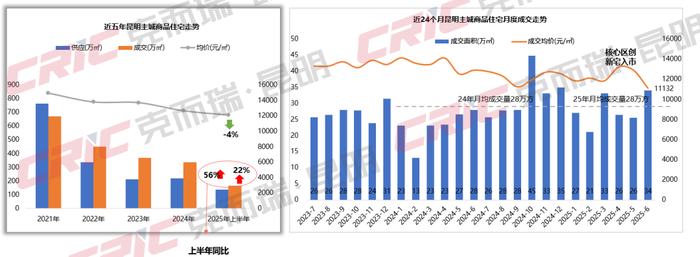
Core Insights - The real estate market in Kunming has shown significant changes in the first half of 2025, with a notable increase in new residential property transactions and a shift in market dynamics towards innovative products [1][15] - The emergence of innovative housing products, particularly those with zero or negative public area, has gained traction among buyers, especially among the younger demographic [1][10] Market Performance - In the first half of 2025, the transaction volume of new residential properties in Kunming reached 1.68 million square meters, representing a 22% year-on-year increase, translating to approximately 14,000 units sold [1] - The average monthly sales of new homes were around 2,510 units, indicating a robust market activity [1] Buyer Demographics - The primary buyers in the Kunming real estate market are now 90s generation clients from other provinces and local improvement buyers, favoring well-located, reasonably priced innovative residential products [3][15] - Preferred property sizes are between 130-150 square meters, with total prices ranging from 2.5 to 3 million yuan [3] Product Trends - The market has seen a rise in the popularity of fourth-generation residential products, which have been well-received by buyers, with two projects achieving sales of 448 million yuan and 257 million yuan respectively [8][10] - Traditional high-density projects are losing competitiveness, while projects with high space utilization and advantageous locations remain resilient [10][15] Sales Dynamics - The top-selling projects in the first half of 2025 include several innovative and improvement-oriented developments, contrasting with older, less competitive offerings [7][11] - The introduction of housing ticket projects has provided new avenues for inventory clearance, with significant sales success reported [12][15] Future Outlook - The market is expected to continue favoring innovative residential products, with traditional high-density and high-public area projects facing increasing sales pressure [15] - Companies are likely to focus on core areas and zero-public area markets as the new battleground for competition [15]

房地产行业月报:旺季整体楼市保持稳定,现有政策进一步优化-20250711
BOCOM International· 2025-07-11 10:51
Investment Rating - The report assigns a "Buy" rating to several companies in the real estate sector, including Sun Hung Kai Properties, China Resources Land, Link REIT, Country Garden Services, and Yuexiu Property, among others [3][4]. Core Insights - The overall real estate market remained stable during the peak season in June 2025, with total sales rising from RMB 316.2 billion in May to RMB 370.8 billion, reflecting a month-on-month increase of 17.2% [4][10]. - The report highlights that state-owned enterprises (SOEs) dominated the sales performance, with a market share of 74.8% among the top 50 developers in the first half of 2025 [4][11]. - The report anticipates continued improvement in secondary market demand, with a preference for projects by state-owned enterprises as buyer sentiment improves [4][12]. Market Performance - The stock prices of mainland Chinese developers have generally outperformed the broader Chinese corporate index over the past month, with the industry net asset value discount narrowing to 87.3% [5]. - In June, the sales of the top 100 developers increased by 12.3% month-on-month, driven by a rise in average sales prices and sales area [10][11]. Sales Performance - The report indicates that the total contract sales for the first half of 2025 decreased by 11.4% year-on-year to RMB 177.92 billion, compared to RMB 200.82 billion in the same period of 2024 [10][11]. - Among the top developers, Poly Developments ranked first in sales, with a total of RMB 29.1 billion in June, despite a year-on-year decline of 31% [13][14]. Policy Review - The central government has initiated policies aimed at promoting high-quality development in the real estate sector, focusing on optimizing existing policies and encouraging local governments to implement tailored measures [33][35]. - Over 26 cities have introduced market stabilization policies in June 2025, addressing various aspects such as housing subsidies and urban renewal [35][36]. Company Updates - China Resources Land plans to issue a new tranche of medium-term notes worth RMB 3 billion, while also securing a RMB 5.85 billion offshore loan [41]. - Sunac China has received support from 75% of its creditors for its offshore debt restructuring, indicating a positive outlook for the company's financial recovery [43].


龙湖如期兑付“20龙湖拓展MTN001B” 已将5.225亿拨入上清所兑付账户
news flash· 2025-07-11 07:08
Group 1 - The company Longfor has transferred 522.5 million RMB to the clearing house for the repayment of the "20 Longfor Expansion MTN001B" due on July 15 [1] - The "20 Longfor Expansion MTN001B" was issued on July 15, 2020, with a maturity of 5 years, an issuance scale of 500 million RMB, and an interest rate of 4.5% [1] - In addition to this bond, Longfor has also repaid another bond, "22 Longfor 04," on July 3, totaling 1.766 billion RMB [1] Group 2 - Longfor has cumulatively repaid over 9 billion RMB in public bonds this year [1]
多城“好房子”领涨
3 6 Ke· 2025-07-11 02:25
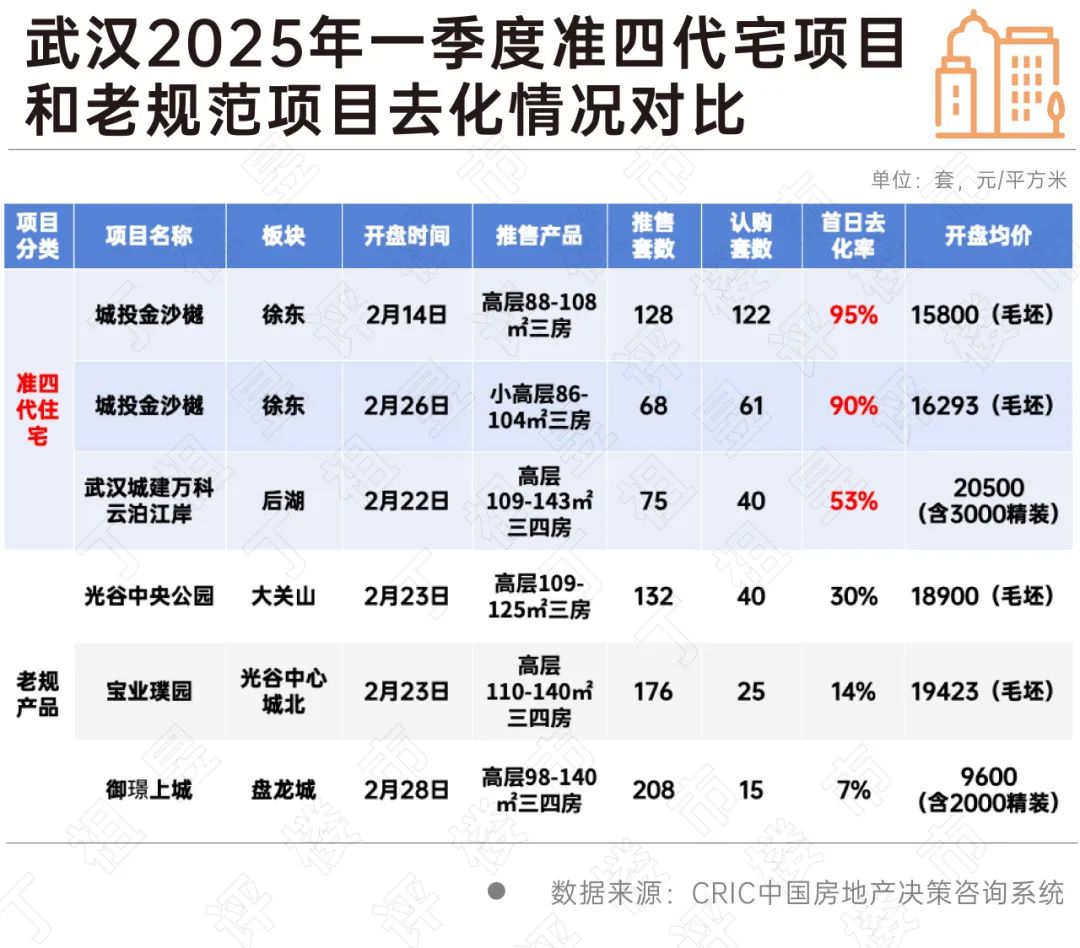
Core Insights - The "Good House" national strategy is guiding the real estate market, with major cities implementing new regulations to enhance residential product quality and comfort [1][2][4] - The new regulations are driving demand across various market segments, including first-time buyers, upgrade buyers, and high-end clients, leading to a notable recovery in the housing market [1][3][4] Regulatory Developments - The central government has established "Good House" as a key focus for 2025, emphasizing the need for high-quality housing and a standard system for residential projects [2][12] - New standards include increased ceiling heights from 2.8 meters to 3 meters, reduced noise limits from 75 decibels to 65 decibels, and the introduction of age-friendly and green building requirements [2][12] Market Performance - From January to June 2025, new regulation-compliant projects have shown significantly higher sales rates compared to traditional projects, with some areas reporting up to 30 percentage points higher in sales [4][6] - In cities like Guangzhou, new regulation projects accounted for 60% of the market supply in April, with a subscription rate of 70% [6][12] Product Innovations - High gift rates have become a core advantage of new regulation products, allowing for more functional small spaces and enhanced living experiences for upgrade buyers [3][10] - The design of new products is shifting towards optimizing living scenarios, integrating technology, and improving service offerings rather than merely increasing usable space [13] Regional Highlights - In Wuhan, new regulation projects have outperformed traditional ones in terms of sales rates, indicating a strong market preference for these products [4][10] - In Chengdu, new regulation projects have achieved full sales during multiple launches, demonstrating high demand driven by competitive pricing and product quality [10][12] Regulatory Challenges - Some cities are tightening regulations on new products, such as requiring balconies to be externally protruding and limiting the area of certain features to prevent excessive space claims [12][13] - The tightening of regulations is a response to complaints from existing homeowners regarding the devaluation of older properties due to the high gift rates of new products [12][13]
港股内房股盘初拉升,绿地香港涨超20%
news flash· 2025-07-11 01:35
Group 1 - Hong Kong property stocks experienced a significant rise at the beginning of trading, with Greenland Hong Kong increasing by over 20% [1] - Other companies such as Agile Group Holdings saw an increase of over 5%, while Oceanwide Holdings, Longfor Group, and Sunac China also reported gains [1]
周期未满,结构至上——地产行业2025年度中期投资策略
2025-07-11 01:13
Summary of Real Estate Industry Conference Call Industry Overview - The Chinese real estate market is under pressure, but the decline is narrowing, with expected annual sales volume and area decreasing to single digits, and sales revenue potentially approaching 8 trillion yuan [1][3] - The market is experiencing significant differentiation among cities, with most unable to return to 2017 levels, while core cities like Shanghai, Beijing, and Hangzhou show strong performance in the luxury market [1][5] - The commercial property sector is under pressure overall, but quality companies such as China Resources, Longfor, and New Town have achieved year-on-year growth, benefiting from stable dividends with yields of 5%-7% [1][6] Key Points and Arguments - **Sales and Construction Trends**: National residential sales and area have decreased by approximately 50%, with top 100 developers seeing a 70% drop. New housing prices and second-hand housing prices remain high, with second-hand housing prices averaging 140,000 yuan per square meter [2][3] - **Future Market Expectations**: The real estate market will continue to face pressure, but the decline is expected to narrow. The total housing stock is nearing saturation, with household growth slowing down, leading to a projected urbanization rate of 72% by 2030 [3][12][13] - **Property Management Sector**: The property management business has significant value, with 15 companies having a market value exceeding 2.1 billion HKD, and an average dividend yield of 6.2%. Some companies expect double-digit growth, but concerns remain regarding fee reductions and collection rates [7][8] Additional Insights - **Second-Hand Market Dominance**: The second-hand housing market is becoming dominant, accounting for 46% of total transactions last year, with Beike holding a 32% market share in the second-hand market and 12% in the new housing market [10] - **Challenges for Developers**: The real estate development industry is entering a challenging phase, with a need for diversification into commercial property to mitigate risks. Companies are advised to adopt a strategy of asset disposal to reduce leverage [11][16][17] - **Investment Opportunities**: Quality companies such as China Resources, Binjiang, and Jinmao are recommended for long-term investment. Companies with diversified business models and strong cash positions, like Beike, are also highlighted as worthy of attention [18][19] Conclusion - The Chinese real estate market is in a transitional phase, with potential for recovery if supportive policies are implemented. Investors are encouraged to focus on quality assets and diversified business models for long-term value [19]
券商股异动!601696,午后1分钟涨停
Zheng Quan Shi Bao· 2025-07-10 09:54
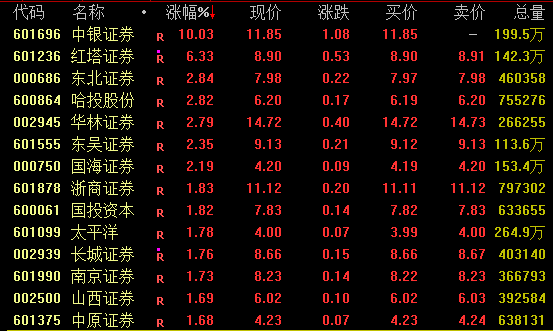
Market Overview - A-shares rose again on July 10, with the Shanghai Composite Index surpassing 3500 points, reaching a new high for the year, closing up 0.48% at 3509.68 points [1] - The Shenzhen Component Index and the ChiNext Index also saw gains, with the former up 0.47% and the latter up 0.22% [1] - Over 2900 stocks in the market were in the green, with significant contributions from the financial and real estate sectors [1] Financial Sector Performance - The brokerage sector showed strong performance, with Zhongyin Securities hitting the daily limit, and other firms like Hongta Securities and Northeast Securities also seeing gains [3][4] - Major banks, including Industrial and Commercial Bank of China and Agricultural Bank of China, reached new highs, with the banking sector overall showing robust growth [6][7] Real Estate Sector Activity - The real estate sector experienced a significant rise, with companies like Debi Group and Tiefa Service seeing gains of over 10% [7][8] - The Ministry of Housing and Urban-Rural Development emphasized the importance of stabilizing the real estate market and implementing effective policies to promote healthy development [7][9] Organic Silicon Sector Growth - The organic silicon sector surged, with companies like Silica Treasure Technology and Hongbo New Materials hitting their daily limits [10][11] - Recent price increases in silicon wafers, with rises between 8% and 11.7%, are expected to improve the performance of silicon wafer manufacturers [10][12] Investment Opportunities - The expansion of the "Southbound Bond Connect" to include more domestic investors is anticipated to enhance investment flexibility and yield for non-bank financial institutions [5][6] - The focus on high-quality residential development is expected to create opportunities in the housing market, aligning with government policies aimed at stabilizing the market [9]