抖音

Search documents
王兴再次回应“外卖大战”:坚决反对内卷,欢迎更多参与者|首席资讯日报
首席商业评论· 2025-06-11 03:56
Group 1 - Didi Enterprise Edition launched an "AI + one-stop" business travel solution to address industry pain points such as fragmented travel processes and cost control [1] - The solution aims to enhance travel efficiency and provide a unified management experience through technology [1] - The new product includes an AI travel assistant and management assistant, currently in internal testing [1] Group 2 - Baidu launched the industry's first "AI camera" that integrates input, processing, and output capabilities, enhancing the functionality of Baidu Cloud and Baidu Wenku [2][3] - Baidu Wenku's AI monthly active users (MAU) reached 97 million, while Baidu Cloud's MAU exceeded 150 million [3] Group 3 - Tencent Music announced a $1.26 billion acquisition of Ximalaya, with Ximalaya maintaining brand and operational independence [5] - The acquisition aims to respond to industry changes and enhance user experience and creator benefits [5] Group 4 - IBM plans to develop a large-scale fault-tolerant quantum computer by 2029, marking a significant step in quantum computing technology [7] Group 5 - The Chinese government issued guidelines to support the development of unmanned aerial vehicle management systems in Shenzhen, promoting innovation in emerging industries [8] Group 6 - Douyin refuted claims of a 90% return rate in its e-commerce sector, attributing the misinformation to coordinated attacks on social media [9] Group 7 - Gemdale Group reported a 51.92% year-on-year decline in signed area for May, totaling 238,000 square meters, and a 52.07% decline in signed amount to 3.12 billion yuan [10][11] Group 8 - Tenpay's registered capital increased to 22.3 billion yuan, reflecting regulatory support for its development and commitment to enhancing payment services [12] Group 9 - Beizhi Technology and Xingdong Jiyuan reached a strategic cooperation agreement to develop humanoid robots for smart logistics applications [13] Group 10 - Meituan's CEO expressed opposition to unhealthy competition in the food delivery industry, emphasizing the importance of sustainable competition [14][15] Group 11 - 51Talk reported a 93.1% year-on-year increase in net revenue for Q1, reaching $18.2 million, while reducing net losses [16] Group 12 - VinFast's Q1 electric vehicle deliveries surged by 296% year-on-year, with total revenue of approximately $6.57 million, despite a net loss of about $7.12 million [17] Group 13 - TSMC's May revenue increased by 39.6% year-on-year, totaling approximately NT$320.52 billion, while cumulative revenue for the first five months rose by 42.6% [18]



比亚迪长安等车企承诺账期不超60天,蔚小理尚未跟进;YU7外形被质疑抄袭,专家放话不侵权;喜马拉雅12.6亿美元卖身腾讯音乐
雷峰网· 2025-06-11 00:53
Group 1 - BYD and Changan have unified their payment terms to 60 days, while new players like NIO and Li Auto have not yet responded [4][5] - Xiaomi's YU7 model faces plagiarism accusations, but the company claims its design is original and backed by experts stating it does not infringe on patents [7][8] - BYD's salary levels have surpassed Huawei's, with significant investments in AI and a commitment to improving brand perception amid shareholder criticism [10][11] Group 2 - Ren Zhengfei of Huawei stated that the U.S. has exaggerated Huawei's achievements, emphasizing the need for continuous improvement in chip technology [13] - TSMC is accelerating its U.S. factory construction while slowing down projects in Japan and Europe due to market demand fluctuations [14] - BYD and other Chinese manufacturers are gaining ground in the autonomous driving sector, posing a threat to Tesla's market position [15] Group 3 - The Zhiyuan Research Institute showcased a four-legged robot designed to assist visually impaired individuals, successfully guiding them in complex environments [17] - Tencent Music announced a $12.6 billion acquisition of Himalaya, marking a significant move into the online audio sector [19] - Xiaopeng Motors is set to unveil its G7 model featuring the Turing AI chip, which boasts advanced processing capabilities [26] Group 4 - Huawei is preparing to launch its Pura 80 series smartphones, featuring advanced imaging technology and expected to start at around 5000 yuan [32] - Ideal Auto has established two new robotics divisions, focusing on space and wearable robots, indicating a strategic shift towards AI integration [34] - Gree Electric's president mentioned that several business segments are ready for potential spin-offs, reflecting a strategy to enhance market competitiveness [35]


关于专利池,多部门联合印发;李书福大动作,“吉利系”扩容;回升明显!这一指数升至89.5→
新华网财经· 2025-06-11 00:25
Group 1: Policy and Regulatory Developments - The National Intellectual Property Administration, Ministry of Science and Technology, Ministry of Industry and Information Technology, State-owned Assets Supervision and Administration Commission, State Administration for Market Regulation, and Chinese Academy of Sciences jointly issued guidelines for the construction and operation of patent pools to promote low-cost and efficient patent utilization [1][8] - The State Council issued opinions to deepen reform and innovation in Shenzhen, aiming to enhance the integration of education, technology, and talent systems, and to promote high-quality development of the real economy [4][5] - The State Administration for Market Regulation and the National Internet Information Office drafted a regulatory framework for live e-commerce to enhance supervision and protect consumer rights [6][11] Group 2: Company Developments - Cao Cao Travel has passed the listing hearing at the Hong Kong Stock Exchange, with plans to launch an L4-level Robotaxi model by the end of 2026 [1][13] - Tencent Music announced a merger agreement with Ximalaya, with a total consideration of $1.26 billion in cash and shares [14] - BYD's Tengshi brand announced the production of its 250,000th unit of the D9 model, marking a significant milestone in the new energy MPV segment [16] Group 3: Economic Indicators - The China SME Development Index (SMEDI) rose to 89.5 in May, indicating a recovery after two months of decline [2][6] - The Ministry of Finance announced an increase in the minimum monthly pension for urban and rural residents by 20 yuan, benefiting over 300 million elderly people [5] Group 4: Market Trends - The issuance of technology innovation bonds has gained traction, with 147 institutions issuing over 374.8 billion yuan in bonds as of June 7 [11] - The steel industry association called for a collective effort to resist "involution" competition and promote sustainable development through technological innovation [8]

外卖大战会持续多久?核心看这一点
Hu Xiu· 2025-06-10 06:16
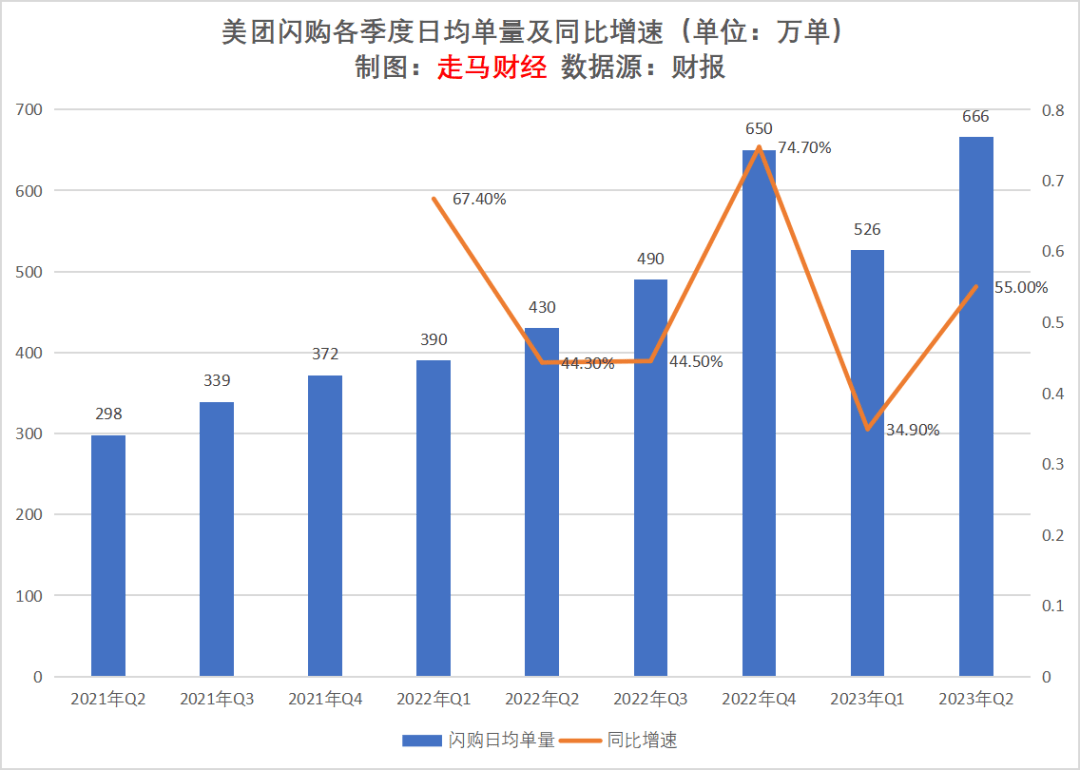
Core Viewpoint - The competition among Meituan, JD.com, and Taobao in the food delivery sector is intensifying, with JD.com entering the market, challenging Meituan's dominance [1][4]. Market Share and Competition - Before JD.com's entry, Meituan held a market share of 70%-80%, while Ele.me had 20%-30% [2]. - Previous attempts by other players, such as Douyin, to challenge Meituan's position have failed [3]. E-commerce Dynamics - The success of e-commerce platforms hinges on excelling in one of the four aspects: variety, quality, cost-effectiveness, and speed [5]. - Taobao excels in variety, while JD.com is known for quality, particularly in 3C digital products [6][8]. - Meituan has been challenging JD.com's speed advantage through local delivery from nearby stores [9][10]. Meituan's Growth and Strategy - Meituan's fastest-growing segment is "Meituan Flash Purchase," which offers local delivery within 30 minutes, similar to food delivery [11]. - Meituan Flash Purchase has reached a peak of over 18 million orders daily, contributing to a total of nearly 100 million orders per day when combined with food delivery [11][12]. - Meituan aims to leverage Flash Purchase to penetrate the e-commerce market, which is significantly larger than its food delivery business [14][15]. Competitive Challenges for JD.com - JD.com faces challenges in its delivery network, which is distinct from Meituan's local delivery system [22][25]. - JD.com is currently subsidizing consumers to compete, but this strategy may not be sustainable in the long term [26][28]. - The potential for delivery subsidies to drive e-commerce growth is a critical consideration for JD.com [29]. Taobao's Strategy - Taobao has entered the food delivery market through its app, enhancing user engagement and potentially increasing overall sales [30][34]. - The rapid growth of Taobao Flash Purchase, which surpassed 10 million orders shortly after launch, indicates strong market interest [31]. - The relationship between food delivery subsidies and overall e-commerce sales is crucial for understanding the sustainability of these strategies [35][36].


即时零售重塑消费场景研究报告
笙策零售· 2025-06-10 03:35
Investment Rating - The report does not explicitly state an investment rating for the instant retail industry Core Insights - Instant retail is defined as a consumption model based on an instant delivery system, emphasizing "online ordering, delivery within 30 minutes," allowing consumers to quickly obtain needed products [7][8] - The market size of China's instant retail reached 650 billion yuan in 2023, with a year-on-year growth of 28.89%, outpacing the growth of online retail by 17.89 percentage points [17][19] - By 2030, the instant retail market in China is expected to exceed 2 trillion yuan [19] Summary by Sections 1. Instant Retail Overview - Instant retail activates "scene consumption," meeting immediate needs, contrasting with traditional retail's reliance on "demand forecasting" [7][8] - The development of instant retail can be traced back to the emergence of food delivery platforms a decade ago, evolving into a high-speed growth phase post-2015 with platforms like Meituan and JD Daojia [11][13] 2. Background of Instant Retail's Rise - Consumer demand has shifted towards faster delivery, with over 50% of post-95 consumers wanting same-day or even within-hours delivery [24][27] - The Z generation's market share surged from 30% in 2020 to 59%, driving a shift towards "emotional value consumption" [30] - Technological advancements, including the integration of the internet and big data, support the growth of instant retail [32] 3. Reshaping of Consumption Scenarios - Instant retail has expanded from food delivery to encompass a wide range of products, including fresh produce, pharmaceuticals, and electronics [43][44] - New consumption scenarios have emerged, such as "hot pot delivery" and "instant meal kits," significantly reducing food waste [45] - Instant retail platforms have partnered with pharmacies to provide 24-hour medicine delivery services across over 300 cities [47] 4. Business Models of Instant Retail - Platform-based instant retail companies leverage various methods to acquire traffic, such as Meituan's integration with its food delivery service [60] - The front warehouse model is employed to ensure rapid response to consumer orders, particularly in densely populated areas [63] - The warehouse-store integration model enhances quality consumption by combining online and offline sales [71] 5. Competitive Landscape of Instant Retail - The market is characterized by a "one strong, many strong" structure, with Meituan leading with a 35% market share and over 10 million daily orders [79] - Major platforms have built strong supply chain systems and efficient delivery networks, enhancing their competitive edge [81][82] 6. Challenges Facing Instant Retail - Cost control is a significant challenge, with high warehousing and delivery costs impacting profitability [95] - Supply chain stability is crucial, as demand fluctuations can lead to supply interruptions [97] 7. Future Trends in Instant Retail - Instant retail platforms are expected to deepen service scenarios, such as offering laundry pickup and delivery services [109] - The integration of AI and IoT technologies will enhance operational efficiency and product quality assurance [118][119] 8. Development Recommendations - Companies should invest in AI and IoT technologies to optimize delivery routes and ensure product quality [131][132] - Strengthening partnerships with local producers and wholesalers can create a more agile supply chain [133]
今年618太好买!消费体验全面升级
Chang Sha Wan Bao· 2025-06-09 16:21
Core Insights - The 618 mid-year shopping festival has seen significant changes this year, driven by government initiatives to boost consumption and the simplification of discount rules by major e-commerce platforms [1][2][4] Group 1: Simplified Discount Rules - E-commerce platforms have shifted from complex discount structures to straightforward "official discounts" and "direct price reductions," enhancing consumer experience [2][3] - The government's "old-for-new" subsidy policy has expanded, increasing the number of eligible appliance categories from 8 to 12 and including digital products with a subsidy of up to 15% [3][4] Group 2: Integration of Content and E-commerce - There is a notable trend of "content + e-commerce" integration, allowing consumers to transition from product discovery on social media to purchasing on e-commerce platforms seamlessly [5][6] - Initiatives like the "Red Cat Plan" between Xiaohongshu and Taobao, and the "Jinghuo Plan" by Bilibili and JD, have facilitated direct links to products, enhancing the shopping experience [7] Group 3: Instant Retail and AI Technology - Instant retail has gained prominence, with platforms like Meituan Shanguo reporting a 200% increase in transaction volume, indicating a shift towards immediate delivery services [7][8] - AI technologies are increasingly utilized in e-commerce, with tools for personalized recommendations and automated video generation for product promotion, improving operational efficiency for merchants [8]

是边缘,也是金矿,电商平台对图书的矛盾两极心态
Sou Hu Cai Jing· 2025-06-09 14:05
Core Insights - The e-commerce platforms do not prioritize the direct GMV generated by books, but rather the external value of business expansion and audience conversion [2][13] Group 1: Market Overview - The domestic book retail market in China is projected to reach a scale of 112.9 billion yuan in 2024, with e-commerce contributing 40.92% and content e-commerce accounting for 30.38% [2] - The overall book market has been declining for several years, with all channels except content e-commerce experiencing negative growth [2][6] - Major platforms like Dangdang and JD have seen a decline of about 10% in their book market scale, while short video e-commerce platforms like Douyin are expanding but at a slowing rate [6] Group 2: Historical Context - The book market was once a key category for e-commerce, with Dangdang being established in 1999 focusing on books due to their standardization and ease of transport [4] - JD's entry into the book market led to a price war among major book e-commerce players, but despite the rise of new e-commerce forces, books remain an important category [5] Group 3: New Sales Logic - The approach to selling books has shifted from "people finding books" to "books finding people," emphasizing the need for books to reach their target audience [7] - The influence of short video marketing and live streaming has significantly impacted book sales, with Douyin selling over 300 million books daily in 2024 [9] Group 4: E-commerce Platforms' Strategies - E-commerce platforms are increasingly using books as a means to drive traffic to other categories, with a focus on long-term audience conversion rather than immediate sales [13] - The stable sales of educational and children's books account for a significant portion of the book market, indicating a consistent demand [14] Group 5: Potential Opportunities - High-value consumers are emerging, willing to invest in premium books, as seen with the pricing strategy of Zhejiang People's Publishing House [15] - The rise of IP-related books, driven by popular media franchises, is expected to boost sales and attract younger audiences [15]

全世界第一个AI超级应用诞生|AI产品榜
36氪· 2025-06-09 13:59
Core Insights - ChatGPT has surpassed overseas social media platform X (formerly Twitter) to become the world's first AI super application [3] - The AI Product Rankings for May 2025 include 18 AI product lists, highlighting significant trends and performance metrics in the AI industry [5][6] Global Rankings - ChatGPT leads the global rankings with 5.68 billion web visits, showing a growth of 6.82% [9] - Gemini ranks second among AI chatbots with 544.4 million visits, experiencing a notable increase of 28.90% [9] - DeepSeek and Nano AI Search are the only two products in the global top ten that are not dominated by major tech companies [8] Domestic Rankings - The domestic rankings are heavily dominated by major companies (BAT + ByteDance + 360), with DeepSeek and Nano AI Search being the only exceptions [8][11] - The top domestic product, DeepSeek, recorded 431.7 million visits, but saw a decline of 7.87% [11] - New entrants in the domestic growth rankings include Wanderboat (130% growth), Knowt (58.07% growth), and Kouzi Space (51.43% growth) [8][20] Growth and Decline Metrics - The growth leaderboard features products like Wanderboat, which serves as a travel guide, achieving a monthly visit count of 2.46 million [20] - Notable declines were observed in products like Sora.com, which saw a drop of 68.79% in visits [21] - The overall trend indicates that established products maintain their traffic, while new entrants are gaining traction [8] Application Categories - The AI product rankings cover various categories, including chatbots, image generation, and presentation tools, reflecting the diverse applications of AI technology [6][25] - The AI image generator category includes SeaArt, which recorded 21.43 million visits, despite a decline of 6.76% [26] - Presentation tools like AiPPT.cn have shown significant growth, with 14.58 million visits and a 36.19% increase [25]



1800亿身家的小红书放手一搏
Hua Er Jie Jian Wen· 2025-06-09 12:46
Core Viewpoint - Xiaohongshu is taking a different approach compared to Douyin by opening up its platform to external e-commerce links, partnering with Alibaba and JD.com to enhance its advertising revenue and efficiency, despite potential misunderstandings about its commitment to closed-loop e-commerce [1][2][4]. Group 1: Strategic Partnerships - Xiaohongshu has upgraded its strategic cooperation with Alibaba and JD.com, allowing external links to their platforms, which enables users to transition from Xiaohongshu to Taobao and JD.com directly [1][3]. - The collaboration aims to enhance the "grass planting" strategy, allowing merchants to manage their advertising budgets and track data more effectively [4][5]. - The "Red Cat Plan" with Alibaba and the "Red Jing Plan" with JD.com are designed to create a full-link connection from product discovery to purchase, boosting merchant sales [4][5]. Group 2: Advertising Focus - Advertising has become the primary revenue source for Xiaohongshu, contributing approximately 70%-80% of its total revenue in 2023, with the remainder coming from e-commerce [6][7]. - The platform is shifting its focus from a closed-loop e-commerce model to a more open monetization strategy, emphasizing the importance of measurable advertising effectiveness [2][8]. - Xiaohongshu's advertising strategy includes expanding its services to various industries and enhancing its product capabilities to optimize advertising performance [7][8]. Group 3: Market Position and Valuation - Xiaohongshu's valuation has significantly increased to $26 billion, reflecting strong market interest and growth potential, especially among younger demographics [15][16]. - The platform's user base has grown rapidly, reaching over 100 million daily active users between 2022 and 2023, making it an attractive partner for e-commerce platforms [3][15]. - Despite the challenges in the competitive e-commerce landscape, Xiaohongshu continues to pursue its e-commerce ambitions while focusing on advertising revenue [10][12]. Group 4: Future Outlook - Xiaohongshu aims to enhance its e-commerce capabilities while maintaining a strong advertising business, indicating a dual strategy for growth [10][12]. - The platform is expected to achieve a net profit of $500 million in 2023, with projections to double this figure in 2024, highlighting its financial performance ahead of a potential IPO [16][16]. - The company is exploring new e-commerce strategies and partnerships to strengthen its market position and improve its operational capabilities [12][13].
大通小兑:中国电商行业趋势观察(四)
Sou Hu Cai Jing· 2025-06-09 10:29
Group 1 - The core viewpoint is that the instant retail market is expected to grow rapidly, with a projected compound annual growth rate of around 30% over the next seven years, potentially reaching approximately 28.2 trillion by 2030 [1][3]. - As of June 30, the gross transaction value (GTV) for Meituan's flash purchase reached 175 billion, while JD Daojia and Ele.me's total GTV were 70.8 billion and approximately 40 billion, respectively, leading to a combined total of about 285.8 billion for the top three players [1]. - The overall industry is estimated to reach around 450 billion when including other channels like Hema, Dingdong, and Sam's Instant Delivery, indicating significant growth potential [1][3]. Group 2 - Instant retail is seen as a key growth area due to the digitalization of offline retail and the suitability of fresh produce for same-city retail scenarios, with a market potential exceeding 10 trillion across various daily necessities [3][5]. - Self-operated instant retail platforms like Hema and Meituan's grocery delivery are expected to integrate more with offline supermarkets, creating a hybrid model that could reach a scale of at least 1 trillion, compared to their current scale of just over 100 billion [5][7]. - Traditional e-commerce is also evolving towards same-city retail, with platforms like JD and Douyin Supermarket enhancing delivery efficiency, blurring the lines between instant retail and traditional e-commerce [7].