腾讯

Search documents
拥抱金融创新对AI的 托举效应
Sou Hu Cai Jing· 2025-10-15 16:28
Group 1 - The AI sector is experiencing a significant surge in capital expenditure, with companies like Oracle and AMD making substantial investments in AI infrastructure and technology [1][2] - Major players in the AI field, including Alibaba and Tencent, are increasing their capital expenditures, indicating a highly competitive environment [2] - Innovative financial models such as "equity-for-purchase" and "computing power-for-equity" are emerging to support AI capital expenditures, reflecting a strong backing from the financial system [2][4] Group 2 - The current investment risks in the AI sector can be quantified, suggesting that the potential for systemic risk is relatively low despite concerns about valuation bubbles [3] - AI is characterized as a capital-intensive industry, necessitating financial support to align transformative goals with entrepreneurial capabilities [3][4] - The integration of AI is reshaping the relationship between the real economy and the virtual economy, potentially reducing financial risks associated with disconnection between the two [3] Group 3 - The simplification of transaction processes in AI capital expenditure, such as "equity-for-purchase," reduces risk exposure and transaction costs [4] - There is a call for the financial system to enhance support for AI capital expenditures, focusing on improving capital turnover and risk management [4][6] - The establishment of efficient transaction structures is crucial for transforming existing resources into capital for AI investments, enabling smoother transitions between old and new economic models [6]

“6.8亿年薪”又把李想推到了风口上
Hua Er Jie Jian Wen· 2025-10-15 09:59
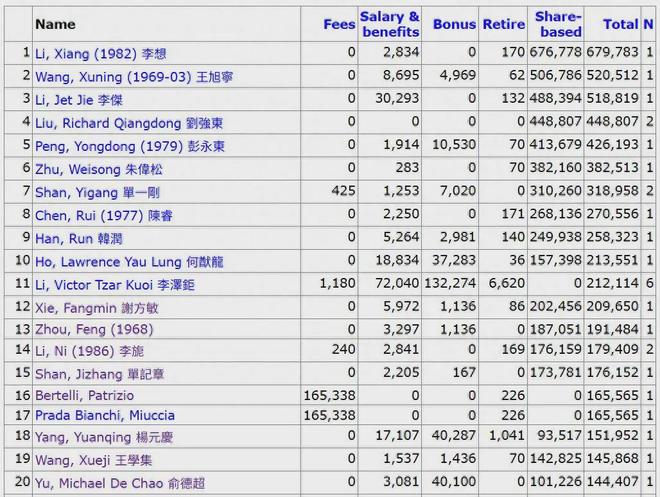
Core Insights - The article highlights the significant compensation of Li Xiang, the chairman and CEO of Li Auto, who topped the Hong Kong-listed companies' director remuneration list with a total salary of approximately HKD 680 million (around RMB 639 million) for 2024 [2][3] - The article contrasts Li Xiang's earnings with those of other automotive executives, indicating that his compensation is notably higher than that of peers from companies like Leap Motor, BYD, Great Wall Motors, and Xpeng [2] - Li Auto's stock options and incentive plans are discussed, revealing that a substantial portion of Li Xiang's compensation is tied to stock options rather than direct cash earnings [3][4] Summary by Sections Compensation Overview - Li Xiang's total compensation for 2024 is reported as HKD 680 million, with a base salary of HKD 2.665 million and a significant stock payment of HKD 636 million due to meeting performance targets [2][3] - Other executives at Li Auto also received high salaries, with President Ma Donghui earning approximately RMB 40.27 million and CFO Li Tie earning around RMB 39.16 million [2] Stock Options and Incentive Plans - Li Xiang's compensation includes stock options from a specific incentive plan that grants him 10.86 million Class B ordinary shares, which are subject to performance conditions [4] - The first tranche of stock options was unlocked after achieving a delivery target of 500,000 vehicles within a year, with subsequent tranches tied to higher delivery targets [4] Market Performance and Challenges - Despite Li Auto's sales growth under Li Xiang's leadership, the company faces challenges in maintaining stock price stability and market share, particularly as competition increases [5] - The company's market share in the high-end segment has declined from 32% to 26%, indicating a need for new growth strategies, especially in the pure electric vehicle market [5]


B站短剧,另类生长
3 6 Ke· 2025-10-15 09:46
Group 1 - The core viewpoint of the articles highlights the rapid growth and increasing popularity of micro-short dramas in China, supported by government initiatives and collaborations with major media platforms [2][5][6] - The micro-short drama market in China is projected to grow from 9.4 billion yuan in 2020 to 504.4 billion yuan by 2024, with expectations to reach 677.9 billion yuan by 2025 and exceed 1,500 billion yuan by 2030 [2] - Major video platforms are adopting differentiated strategies in the micro-short drama sector, with Douyin and Kuaishou being key players in content production and distribution, while platforms like Bilibili focus on high-quality content and user engagement [5][6] Group 2 - There is a significant distinction between vertical and horizontal micro-short dramas, with vertical dramas typically being shorter (1-3 minutes) and more numerous (80-120 episodes), while horizontal dramas are longer (10 minutes or more) and fewer in number (up to 30 episodes) [6][8] - Bilibili's approach to micro-short dramas emphasizes unique content that resonates with younger audiences, particularly through female-centric narratives and innovative storytelling techniques [16][18] - Bilibili's average daily active users (DAU) reached 109 million in Q2 2025, with a revenue of 14.341 billion yuan in the first half of 2025, indicating a strong user engagement and growth in its business model [19][20] Group 3 - Bilibili's investment in micro-short dramas is relatively limited compared to larger platforms like Tencent and iQIYI, which have higher production budgets and revenue from their content [13][15] - The platform's unique content strategy aims to attract and retain users, particularly through the creation of engaging narratives that reflect contemporary youth sentiments [18][24] - Bilibili is also exploring the potential of animated short dramas, which have shown significant revenue growth, indicating a diversification of content offerings to enhance user engagement [24][26]


前瞻全球产业早报:京东回应下场造车
Qian Zhan Wang· 2025-10-15 08:27
Group 1: Automotive Industry - In the first nine months of the year, China's automotive production and sales both exceeded 24.4 million units, with production at 24.33 million and sales at 24.36 million, representing year-on-year growth of 13.3% and 12.9% respectively [2] - New energy vehicle (NEV) production and sales surpassed 11 million units, with both categories showing over 30% year-on-year growth, and NEV sales accounted for 46.1% of total new car sales [2] - In terms of exports, 4.95 million vehicles were exported from January to September, marking a 14.8% increase year-on-year, with NEV exports reaching 1.758 million units, a significant 89.4% increase [2] Group 2: Shipping and Trade - The successful launch of the first China-Europe Arctic container fast shipping route was marked by the arrival of the "Istanbul Bridge" cargo ship in the UK, which is expected to provide significant time and cost advantages for trade between China and Europe [3] - This new shipping route is anticipated to optimize transportation paths and enhance the resilience of the industrial and supply chains between China and Europe [3] Group 3: Energy Sector - The establishment of the world's first fusion energy research and training collaboration center in Chengdu, China, signifies a notable enhancement of China's international standing in the fusion energy field [4] - This center is expected to inject critical momentum into Chengdu's development as a global hub for fusion energy innovation and to promote the commercialization of controlled nuclear fusion [4] Group 4: Technology and AI - OpenAI announced a partnership with Broadcom to develop its first AI chip, which is expected to enter mass production in nine months and be deployed by 2026, with a goal of completing a 10GW computing system by 2030 [13] - Google plans to invest approximately $15 billion in building an AI infrastructure center in southern India over the next five years, marking a significant commitment to the rapidly growing AI sector in the country [15] - Ant Group launched the Ring-1T model, a trillion-parameter thinking model, which has been open-sourced to enhance its natural language reasoning capabilities [10] Group 5: Financial Markets - SoftBank's PayPay is preparing for an IPO in the U.S. as early as December, with an expected valuation exceeding $20 billion, indicating strong investor interest [17] - The Chinese stock market saw declines across major indices, with the Shanghai Composite Index down 0.62% and the Shenzhen Component down 2.54% [20]

开源模型TOP5,被中国厂商包圆了
量子位· 2025-10-15 06:27
Core Insights - The article highlights the significant rise of Chinese open-source large models, with notable mentions of Alibaba's Qwen series and DeepSeek, which are expected to have a profound impact on the open-source community starting in the second half of 2024 [1][6][20]. Model Rankings - Chinese open-source models have moved from being followers to leaders in the field, as evidenced by their positions in the LMArena rankings, where models like GLM-4.6 and DeepSeek-v3.2 are closely following top proprietary models such as GPT-5 and Gemini-2.5-pro [7][10]. - Qwen3-max-preview has reached the top three in rankings, although it is not yet open-sourced [8]. Performance in Various Domains - In the text generation domain, Chinese models like DeepSeek-R1/V3.1 and GLM-4.6 are competing closely with leading proprietary models [10]. - In web development tasks, models such as DeepSeek-R1-0528 and Qwen3-Coder have also made it to the top ten [11]. - In the visual domain, Tencent's Hunyuan-vision-1.5 and Qwen3 are among the strongest open-source models, with Hunyuan-vision-1.5 still in the planning phase for open-sourcing [12]. Popularity and Downloads - Qwen3 is noted as one of the highest downloaded models, leading among open-source models when scaled to hundreds of billions of parameters [18]. - The most popular model currently is DeepSeek-R1, indicating strong user engagement and preference [17]. Industry Trends - The article suggests that the shift in dominance within the open-source model landscape is not just about who leads but may redefine the global innovation landscape [21]. - The driving force behind this momentum is increasingly recognized as coming from China, indicating a potential shift in the global AI development paradigm [20].


恒生科技有望止步“七连跌”,当前或兼具"胜率"与"赔率"
Mei Ri Jing Ji Xin Wen· 2025-10-15 05:59
Group 1 - The core viewpoint is that the Hang Seng Technology Index is experiencing a rebound, driven by the AI wave and improving fundamentals in the tech sector, making it a valuable investment opportunity [1][2] - The Hang Seng Technology Index ETF (513180) has seen a strong rise, with leading stocks like Huahong, SenseTime, Bilibili, ASMPT, JD Health, and Xpeng Motors performing well [1] - The global AI industry is transitioning from a technological breakthrough phase to a period of large-scale application, benefiting Hong Kong tech leaders due to their data accumulation, robust R&D investment, and established monetization paths [1] Group 2 - The valuation of the Hang Seng Technology Index is at a historical low, with a latest P/E ratio of 22.64 times, indicating a significant discount compared to other indices like NASDAQ and ChiNext, which are above 40 times [2] - There is potential for a 15% increase in the Hang Seng Technology Index if the valuations of leading tech stocks recover to their historical averages [2] - The outlook for the Hong Kong tech sector is positive, with expected benefits from AI trends, potential foreign capital inflow due to a favorable interest rate environment, and continued investment from southbound funds [2]
港股科技板块高开高走,恒生科技ETF易方达(513010)标的指数涨超1%
Mei Ri Jing Ji Xin Wen· 2025-10-15 03:03
Core Viewpoint - The Hang Seng Tech Index has shown a positive trend, with significant gains in major tech stocks, indicating a potential upward movement in the Hong Kong stock market driven by technological advancements and favorable monetary policies [1] Group 1: Market Performance - As of 10:25, the Hang Seng Tech Index rose by 1.8%, with JD Health and Bilibili-W increasing by over 4%, and Alibaba-W rising by over 3% [1] - The Hang Seng Tech ETF (513010) has seen a strong inflow of funds, with over 3.6 billion yuan net inflow in the past month [1] Group 2: Future Outlook - According to China Merchants Securities, the Hong Kong stock market may continue to experience fluctuations in the absence of new positive factors, but marginally positive factors are expected to accumulate, potentially driving the market upward [1] - The robust development of China's tech industry, particularly in AI, and the ongoing expectations of interest rate cuts by the Federal Reserve are seen as beneficial for foreign capital inflow into Hong Kong stocks [1] Group 3: Valuation Insights - The Hang Seng Tech Index consists of the 30 largest stocks related to technology themes listed in Hong Kong, including major companies like Alibaba, Tencent, Meituan, and Kuaishou [1] - The current rolling price-to-earnings ratio of the index is at the 27.6% percentile since its launch in 2020, indicating noteworthy investment value [1]
招银国际每日投资策略-20251015
Zhao Yin Guo Ji· 2025-10-15 02:13
Market Overview - The global stock markets showed mixed performance, with the Hang Seng Index closing at 25,441, down 1.73% for the day but up 26.83% year-to-date [1] - The US markets experienced slight declines, with the Dow Jones up 0.44% and the S&P 500 down 0.16% [1] - The Chinese stock market saw a third consecutive day of decline, particularly in sectors like materials, healthcare, and information technology, while utilities, telecommunications, and financials outperformed [3] Sector Performance - In the Hong Kong market, the Hang Seng Financial Index remained stable with a slight decrease of 0.01%, while the Hang Seng Industrial Index fell by 2.70% [2] - The public utilities sector showed resilience with a 0.66% increase, contrasting with the declines in real estate and industrial sectors [2] Company Insights - J&T Express reported a 23% year-on-year increase in parcel volume for Q3 2025, driven by a significant 79% growth in Southeast Asia, while growth in China slowed to 10% [5] - Baidu is expected to report Q3 2025 core business revenue of 24.6 billion RMB, a 7% decline year-on-year, primarily due to the ongoing transformation of its advertising business [5] - Baidu's cloud business is anticipated to grow by 20% year-on-year, partially offsetting the decline in advertising revenue [5] Economic Indicators - China's tax revenue data indicates an improvement in corporate revenue growth, with year-on-year growth rates of 2.6% and 6.9% for the second and third quarters, respectively [3] - The IEA's monthly report suggests a potential record oil surplus next year, estimated at nearly 4 million barrels per day [4] Investment Sentiment - Investor sentiment in the US stock market has shifted to an overweight position, reaching an eight-month high, with cash holdings dropping to a low of 3.8% [3] - Concerns about potential bubbles in AI stocks and high global stock valuations were noted, with 54% of surveyed investors expressing such concerns [3]

港股开盘 | 恒指高开1.08% 机构:港股中长期上行趋势还在
Zhi Tong Cai Jing· 2025-10-15 01:58
Group 1 - The Hang Seng Index opened up by 1.08%, with the Hang Seng Tech Index rising by 1.31%. Notable stock movements include Midea Group increasing by nearly 3%, JD Health and JD Group rising over 2%, and Alibaba and Xiaomi Group gaining nearly 2% [1] - Dongwu Securities suggests that the re-emergence of tariffs has increased short-term volatility risks for Hong Kong stocks. However, the medium to long-term upward trend remains intact, supported by global monetary easing and the unstoppable trend of the AI industry in China [1] - China Galaxy Securities indicates that the escalation of Sino-U.S. trade tensions has led to a decline in investor risk appetite, resulting in a valuation correction for Hong Kong stocks. However, domestic growth stabilization policies and medium to long-term measures to support the stock market are expected to stabilize investor sentiment [2] Group 2 - The valuation of the Hong Kong internet sector is now highly attractive after a prolonged adjustment, with the latest PE ratio of the CSI Hong Kong Internet Index at 26.69, which is at a low percentile compared to the past decade [2] - The narrative surrounding Hong Kong internet stocks is undergoing a fundamental shift from user growth and business models to new growth curves driven by AI empowerment, as evidenced by recent developments from Alibaba and Tencent [2] - The upcoming "14th Five-Year Plan" is anticipated to provide further insights into key sectors, which could influence market recovery if policies exceed expectations [1][2]
被高估的易中天
Sou Hu Cai Jing· 2025-10-15 01:18
Core Insights - The release of Sora2 by OpenAI has introduced new dynamics in the AI sector, but it does not significantly outperform existing domestic video models from ByteDance, Kuaishou, and Alibaba [2] - The competitive landscape is shifting, with Google launching Veo3.1 shortly after Sora2, indicating a potential for Google to surpass OpenAI due to its extensive infrastructure [2] - The AI hardware development path is uncertain, as companies like Alibaba and Google utilize their own AI chips, challenging the notion of a unified model dominated by OpenAI and Nvidia [3] Company Performance - New Yi Sheng reported a remarkable financial performance for the first half of 2025, with revenue reaching 10.437 billion yuan, a year-on-year increase of 282.64%, and net profit of 3.942 billion yuan, up 355.68% [5] - The company’s Q2 revenue was 6.385 billion yuan, reflecting a quarter-on-quarter growth of 57.5%, and net profit of 2.37 billion yuan, up 50.7% [7] - New Yi Sheng has transitioned from a traditional optical module supplier to a core supplier of AI computing infrastructure, capitalizing on the global AI computing investment boom [7][8] Market Trends - The demand for 800G optical modules is expected to reach 19.9 million units globally by 2025, with the market for 1.6T modules halved to 1 million units [8] - The company has successfully launched 800G/1.6T optical module products, establishing a competitive advantage in the AI computing infrastructure sector [8] - The revenue from high-speed optical modules (over 4.25G) constitutes 98.91% of total revenue, indicating a strong focus on advanced technology [9] Client Composition - The top five clients account for 72.74% of accounts receivable, primarily consisting of major cloud players like Amazon, Microsoft, and Meta [11] - ByteDance has emerged as the largest domestic client, with Alibaba expected to procure 5 million units of 800G optical modules by 2025, capturing a 25% market share [11][13] - The optimization of the client structure provides a more stable growth trajectory for the company, reducing reliance on a single market [13] Risks and Challenges - Inventory levels have increased by 43.86% to 5.944 billion yuan, with a significant rise in inventory impairment losses, indicating potential risks associated with rapid technological changes [14] - Accounts receivable have surged by 97.59% to 5.017 billion yuan, raising concerns about cash flow and potential bad debt risks [15] - The emergence of CPO technology poses a threat to traditional optical modules, with predictions suggesting it will dominate the market by 2027 [16][17]