小米

Search documents
哈尔滨这家70年老店,撑起了增程车的半壁江山
Hu Xiu· 2025-09-05 13:43
Group 1 - Changan Automobile Group has officially become China's 100th central enterprise, with its automotive business and military core assets completely separated [1] - The subsidiary of the Equipment Development Department, Dong'an Power, has been upgraded to a subsidiary of Changan, allowing it to openly undertake orders from the Changan system [2] Group 2 - Dong'an Power, a traditional engine manufacturer, has successfully transformed and now controls a significant portion of China's new energy industry, particularly in range-extended vehicles [6][30] - Established over 70 years ago, Dong'an Power has a rich history, including developing China's first turbojet engine for the J-5 fighter jet in the 1950s [8] Group 3 - Dong'an Power's significant growth began in 1998 when it introduced the Mitsubishi engine series, leading to the production of the 4G1 series engine, which became a key component for many domestic vehicles [10][12] - The company faced challenges in 2010 when mainstream joint venture manufacturers began localizing their own engines, leading to a decline in Dong'an's market position [14][16] Group 4 - In 2017, Dong'an Power developed China's first independently designed 6-speed automatic transmission, marking a significant technological advancement [18] - By 2022, Dong'an Power's sales of range-extended engines reached 613,400 units, with revenue of 5.767 billion yuan and a net profit of 108 million yuan [30] Group 5 - Dong'an Power's 1.5T range extender has been adopted by various new energy vehicle manufacturers, providing a cost-effective solution compared to self-developed options [32] - The company has established numerous partnerships and projects, including collaborations with companies like AVL List GmbH and BorgWarner, focusing on new energy applications [38] Group 6 - The story of Dong'an Power reflects the broader transformation of the new energy vehicle industry in Heilongjiang, with significant developments in local manufacturing and technology [40][54] - Heilongjiang has become a unique hub for new energy vehicles, integrating its cold climate resources into the automotive testing and development process [49][53]

理想的攻守抉择:要盈利还是要销量?
3 6 Ke· 2025-09-05 13:24
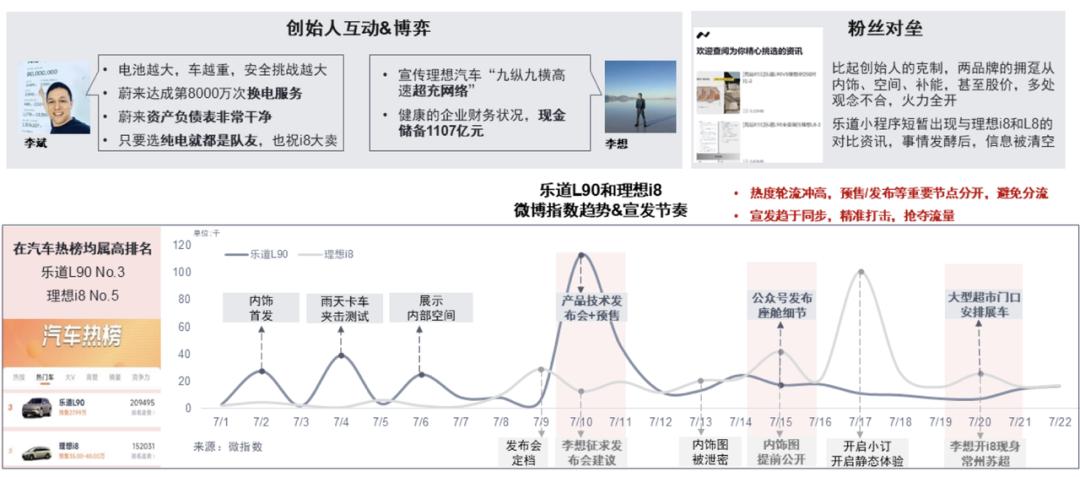
Core Insights - The article discusses the challenges faced by Li Auto in the competitive electric vehicle market, particularly highlighting its declining sales and the impact of new competitors [1][2] - It raises questions about Li Auto's strategic direction, whether to focus on maintaining current market share or to aggressively pursue growth [17][18] Group 1: Market Performance - In August, Li Auto delivered 28,529 vehicles, which is a decline for three consecutive months, falling behind competitors like NIO, Xpeng, and others [1][3] - Despite a 7.8% increase in delivery volume, Li Auto's revenue decreased by 2.0% year-on-year to 56.172 billion RMB, with a slight net profit increase of 2.8% to 1.743 billion RMB [1][11] - The company is projected to face a significant drop in sales for Q3, with estimates of 90,000 to 95,000 units, representing a year-on-year decrease of 37.8% to 41.1% [13] Group 2: Product Strategy - The launch of the Li i8, a family-oriented six-seat SUV, has not met expectations, leading to a rapid price adjustment shortly after its release [4][5] - The i8 competes directly with NIO's L90, with both vehicles targeting family buyers, but the i8's pricing strategy has been criticized [6][8] - Li Auto's management has indicated a shift towards focusing on fewer, stronger SKUs to enhance product value and user experience [21][22] Group 3: Financial Health - Li Auto reported a cash outflow of 47.4 billion RMB from operating activities in the first half of 2025, with a significant investment cash outflow of 111.9 billion RMB [14][15] - The company maintains a strong cash position with 106.9 billion RMB available, which is crucial for navigating current market challenges [14] Group 4: Strategic Initiatives - Li Auto is undergoing organizational changes to improve sales efficiency and customer experience, including restructuring its sales team and enhancing training programs [16] - The company is also exploring international markets, with plans to establish R&D centers in Germany and the U.S., targeting regions like the Middle East and Europe [24][25]


从新玩具到新入口:AI“百镜大战”战事将近
3 6 Ke· 2025-09-05 12:45
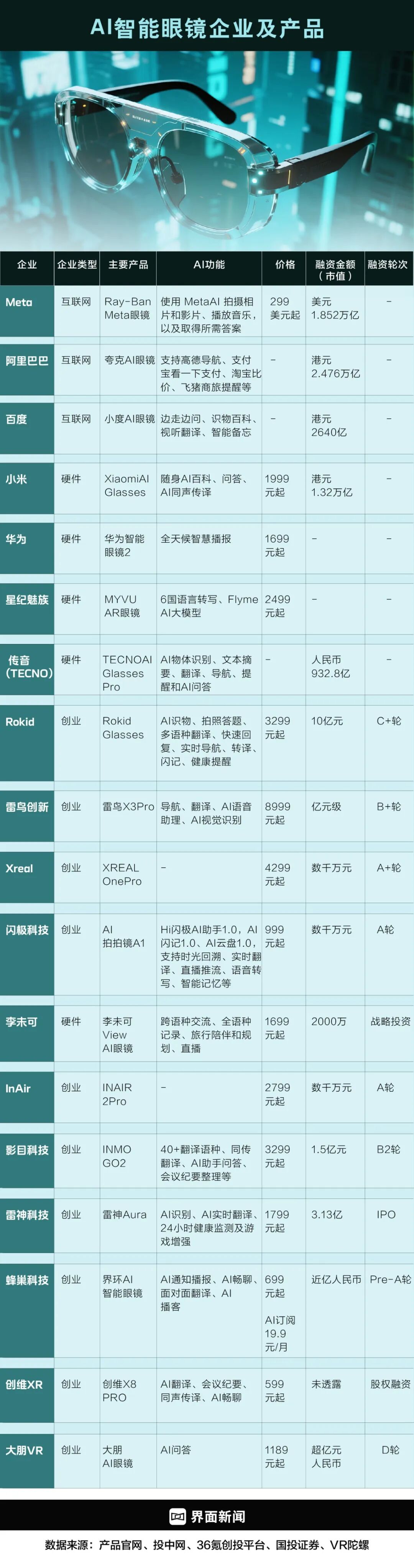
Group 1 - Xiaomi's AI glasses project, initiated by Li Chuangqi, is seen as a strategic product in the wearable business, marking the first establishment of the "AI glasses" concept within the company [1] - The project received immediate attention from Lei Jun, Xiaomi's founder, indicating strong internal support for the initiative [1] - The competitive landscape for AI glasses is heating up, with various tech companies, including startups and established firms, vying for market entry [2][4] Group 2 - Meta's second-generation Ray-Ban-Meta glasses have set a benchmark in the market, selling 1 million units within a year, showcasing the potential for AI glasses as a consumer product [3] - The emergence of AI glasses is being compared to previous tech battles in the industry, such as the "hundred groups battle" in the internet space [2] - Companies are exploring whether AI glasses could become the next major consumer entry point after smartphones, with Xiaomi's research indicating that future smart hardware must be capable of seeing, hearing, and sensing [5] Group 3 - The AI glasses market is characterized by a diverse ecosystem of entrants, including major internet companies like Alibaba and Baidu, as well as hardware manufacturers like Huawei and Xiaomi [7] - Xiaomi's internal assessments suggest that AI glasses could capture a significant market share, with a target of 500,000 units sold within three years [7][27] - The pricing strategy for Xiaomi's AI glasses was set at 1999 yuan, aligning with the price of its first smartphone, indicating a strategic approach to market positioning [28] Group 4 - The supply chain for AI glasses is currently viewed as immature, with companies like Xiaomi opting for the most expensive suppliers to ensure quality [23][27] - Startups like Shanjiji are facing challenges in competing with larger firms due to resource limitations, but they believe in the potential for market differentiation based on unique product attributes [19][20] - The first-generation products from various companies, including Xiaomi and Shanjiji, are experiencing growing pains, with issues related to production capacity and user feedback [29][30] Group 5 - The future of AI glasses is seen as dependent on the development of a robust software ecosystem, with companies needing to create independent applications rather than merely acting as accessories to smartphones [21] - The industry consensus is that AI applications will become central to product differentiation, although establishing a unique value proposition remains challenging [22] - Xiaomi's approach to AI glasses reflects a balance between aggressive market entry and cautious investment, aiming to avoid significant losses while establishing a foothold in the emerging market [30][31]
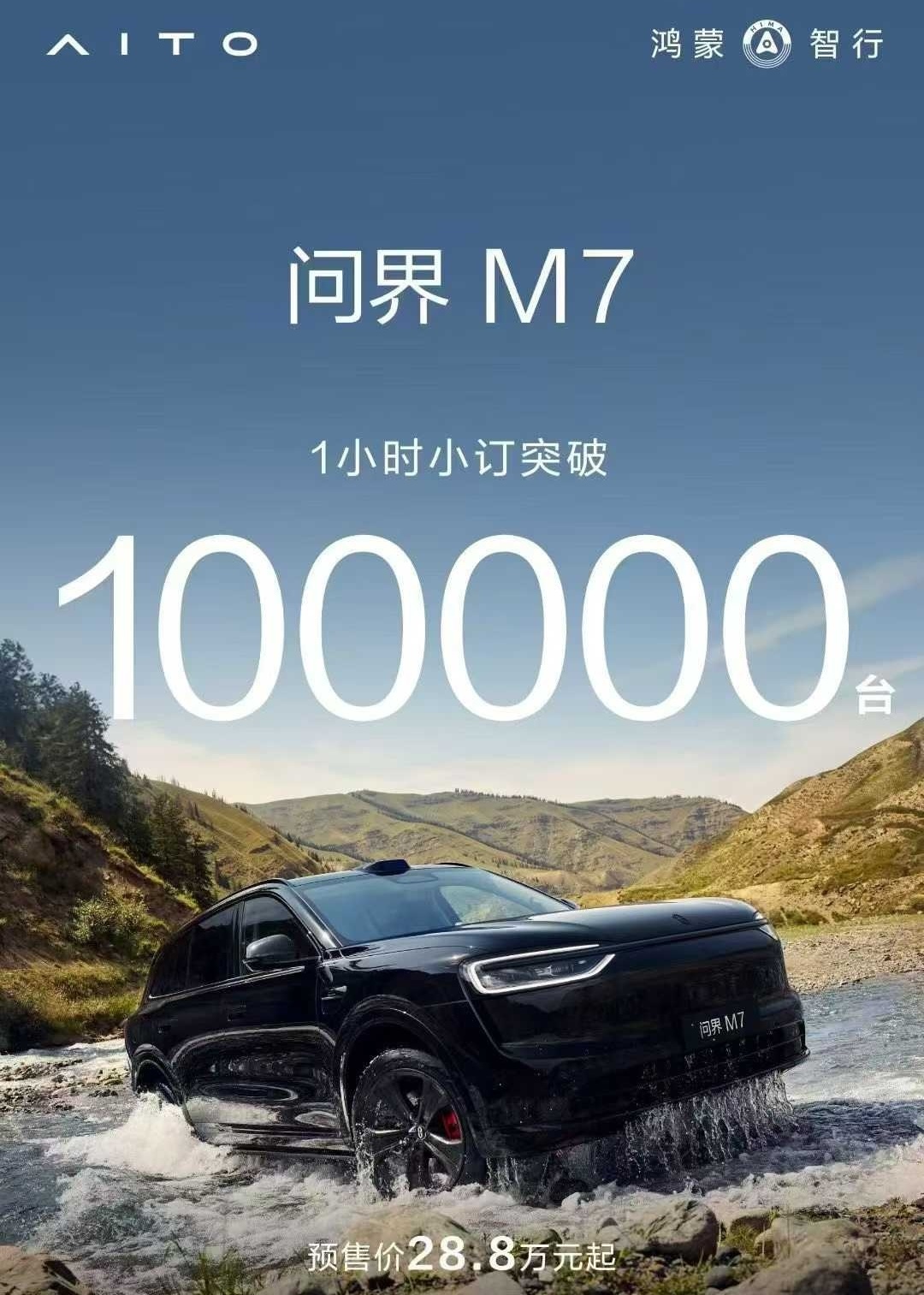
新问界M7预售1小时小订破10万辆!鸿蒙智行小程序一度崩溃,余承东直言“卖爆了,远超预期”
Mei Ri Jing Ji Xin Wen· 2025-09-05 09:33
Core Insights - The new AITO M7 has opened for pre-orders, with three versions priced between 288,800 to 349,800 yuan for range-extended models and 328,000 to 369,800 yuan for pure electric models [1] - The pre-order response was overwhelming, with over 20,000 small orders within 10 minutes and surpassing 100,000 in 43 minutes, indicating strong market demand [1] Group 1: Product Performance - The AITO M7 was initially launched in July 2022 but struggled with sales, often selling less than 1,000 units per month [5] - The updated AITO M7, launched on September 12, 2023, features improvements in body structure, chassis materials, suspension, and range, leading to a significant increase in sales [5][6] - In 2024, AITO brand delivered 389,000 vehicles, with the M7 contributing 198,000 units, accounting for over half of total sales [5] Group 2: Market Competition - The AITO M7 faces intense competition in the 250,000 to 350,000 yuan price range from models like Li Auto L6, L7, and Tesla Model Y, as well as new entrants [5][6] - The introduction of the competing R7 model from Hongmeng Zhixing has further divided the market, with R7 achieving significant sales growth in early 2023 [6] Group 3: Pricing Strategy - The new AITO M7's starting price is approximately 40,000 yuan higher than the previous model, reflecting its enhanced product capabilities [7] - Analysts suggest that the price increase is justified due to the improved product features and serves to differentiate it from the R7, while also leaving room for future models like the M6 [7][8] Group 4: Consumer Sentiment - There is a notable increase in consumer interest in the new AITO M7, with sales personnel reporting higher mention rates and potential buyers delaying purchases to wait for the final pricing announcement [7][8]
A股科技“四大天王”集中爆发,宁德时代、工业富联表现抢眼
Quan Jing Wang· 2025-09-05 08:25
Core Viewpoint - The A-share technology sector is experiencing a significant surge, with leading stocks like CATL, Industrial Fulian, BYD, and Cambricon being referred to as the "Four Kings" of A-share technology, collectively driving the sector's momentum [1] Group 1: Company Highlights - CATL, as the global leader in the power battery sector, boasts a market capitalization of 1.4 trillion, achieving breakthroughs in battery technology, including the rapid-charging battery that can provide 400 km of range in just 10 minutes [2] - Industrial Fulian, valued at 1.1 trillion, has established itself as a key player in AI computing power, leveraging its strong manufacturing capabilities and partnerships with major companies like Apple and NVIDIA [3] - BYD, with a market cap nearing 1 trillion, leads the new energy vehicle market through continuous technological innovation, including the development of the Blade Battery, which has become a benchmark in the industry [4] - Cambricon, valued at 530 billion, is a prominent player in the domestic AI chip sector, focusing on the development of high-performance chips and contributing to the establishment of a domestic computing power ecosystem [5] Group 2: Market Impact - The robust performance of these four technology giants not only generates substantial returns for investors but also plays a crucial role in advancing China's technology industry and promoting high-quality economic development [5]

深耕高速连接器 意华股份在通讯连接器领域和华为保持密切合作关系
Quan Jing Wang· 2025-09-05 08:17
Group 1 - Company maintains a close partnership with Huawei in the communications connector field, focusing on R&D and expanding into consumer electronics and automotive connectors [1] - The company has achieved mass delivery of high-speed connectors and optical modules, with a strong market presence due to high entry barriers [1] - In the first half of 2025, the company reported revenue of 3.045 billion yuan and a net profit of 162 million yuan, demonstrating operational resilience in a complex macroeconomic environment [1] Group 2 - The domestic computing power industry is experiencing high prosperity, and the company is leveraging its technical barriers and customer resources to enhance its consumer electronics connector product line [2] - The company is strategically expanding into high-growth sectors such as automotive electronics and smart terminal consumer electronics, which is expected to contribute significantly to performance [2] - The company has established relationships with well-known clients including Foxconn, Xiaomi, and OPP, and possesses advanced manufacturing capabilities [2] Group 3 - The photovoltaic industry is rapidly developing due to global carbon neutrality goals and clean energy transitions, with the company's subsidiary focusing on manufacturing core components for photovoltaic tracking brackets [3] - The company has established a solid reputation in the international market, achieving steady growth in shipment volumes and becoming a key supplier for major clients [3] - The company has a global production and supply network supported by factories in the US and Thailand, enhancing its operational efficiency [3] Group 4 - The company is one of the few in China capable of mass-producing high-speed connectors, with a focus on automotive connectors and photovoltaic bracket businesses [4] - Despite short-term pressures on the photovoltaic business due to global uncertainties, the long-term demand driven by carbon neutrality goals is expected to sustain growth [4] - The company's overseas production bases improve responsiveness to client needs and enhance supply chain resilience, supporting long-term growth [4]
港股科技ETF(513020)涨超1.5%,网罗互联网、芯片、新能源、医药等科技龙头股
Mei Ri Jing Ji Xin Wen· 2025-09-05 04:45
Group 1 - The core viewpoint of the article highlights a rebound in sectors such as new energy, communications, chips, and pharmaceuticals, with the Hong Kong tech ETF (513020) rising over 1.5% and experiencing net inflows for four consecutive days [1] - Domestic capital, represented by southbound funds, is accelerating its inflow into the Hong Kong stock market, with a record net inflow exceeding 410 billion yuan in the first quarter of 2025, marking a historical high [1] - As of August 15, 2025, the trading volume of southbound funds accounted for over 20% of the total trading volume on the Hong Kong Stock Exchange, significantly enhancing pricing power [1] Group 2 - According to Founder Securities, the current market phase indicates that the bull market in Hong Kong stocks is ongoing, and it is recommended to focus on undervalued stocks in the tech sector for potential rebound opportunities [1] - The continuous acceleration of capital inflow into the Hong Kong market, combined with expectations of interest rate cuts by the Federal Reserve by the end of the year, suggests a generally favorable liquidity environment that may further boost the Hong Kong stock market [1] - The Hong Kong tech ETF (513020) tracks the CSI Hong Kong Stock Connect Technology Index, which includes leading stocks in internet, chips, smart vehicles, and pharmaceuticals, featuring popular stocks such as Alibaba, Xiaomi, Tencent, Meituan, Lenovo, BYD, and SMIC, making it a quality target for capitalizing on the rebound in Hong Kong stocks [1]
华安期货金融工程日报-20250905





Xin Yong An Guo Ji Zheng Quan· 2025-09-05 03:45
The provided content does not contain any quantitative models or factors related to financial engineering or quantitative analysis. It primarily consists of financial news, stock performance data, and corporate updates. No relevant information for summarizing quantitative models or factors is present.
中泰国际每日晨讯-20250905
ZHONGTAI INTERNATIONAL SECURITIES· 2025-09-05 03:34
Market Overview - On September 4, the Hang Seng Index fell by 1.1% to close at 25,058 points, barely holding above 25,000 points[1] - The Hang Seng Technology Index dropped by 1.9% to 5,578 points, with a total market turnover of HKD 302.2 billion[1] - Alibaba (9988 HK) declined by 3.2%, while Xiaomi (1810 HK) fell over 2%[1] Sector Performance - The financial sector showed mixed results, with China Pacific Insurance (2601 HK) down over 5%, while Agricultural Bank of China (1288 HK) rose by 2.1%[1] - Semiconductor stocks faced significant declines, with SMIC (981 HK) dropping by 6.7%[1] - Consumer stocks like dining and dairy showed resilience, rising against the overall market trend[1] Valuation Insights - The current forecasted PE for the Hang Seng Index is at 11.3 times, indicating it is at a high valuation range compared to 2018-2019[2] - Structural earnings differentiation is evident, with most sectors facing downward revisions, except for information technology, materials, and finance[2] - The Hang Seng Index is expected to find value in the 24,000-24,500 point range for potential buying opportunities[2] Company Updates - BYD (1211 HK) has reportedly lowered its sales target for the year from 5.5 million to 4.6 million units, a reduction of 16%[3] - The healthcare sector saw a decline of 3.8% in the Hang Seng Medical Care Index, with most major companies experiencing drops[3] Future Outlook - Anticipated liquidity benefits include a decrease in Hong Kong interbank rates post-month-end, continued inflow of southbound funds, and potential interest rate cuts by the Federal Reserve[2] - The global liquidity environment is expected to provide strong support for the Hong Kong stock market[2]
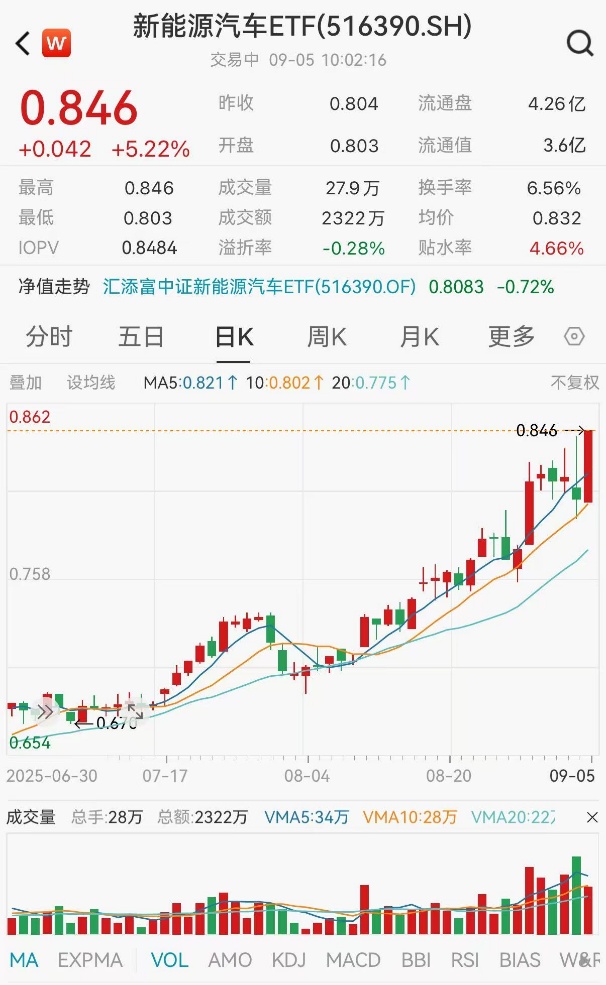
储能概念连续冲高,亿纬锂能涨超8%,新能源汽车ETF(516390)强势涨超5%,连续5日获资金净流入,锂电设备企业订单增长势头强劲
Xin Lang Cai Jing· 2025-09-05 02:29
Core Viewpoint - The news highlights a significant increase in the performance and liquidity of the New Energy Vehicle (NEV) sector, particularly focusing on the New Energy Vehicle ETF and its constituent stocks, driven by positive market sentiment and supportive government policies [1][4][6]. Group 1: Market Performance - The China Securities New Energy Vehicle Industry Index rose by 4.90%, with leading stocks such as QianDao Intelligent up by 18.18% and Hangke Technology up by 15.69% [1]. - The New Energy Vehicle ETF increased by 5.22%, reaching a latest price of 0.85 yuan, with a weekly cumulative increase of 3.74% as of September 4, 2025 [1]. - The ETF experienced a turnover rate of 6.61% during the trading session, with a transaction volume of 23.4 million yuan [1]. Group 2: Fund Growth and Inflows - Over the past year, the New Energy Vehicle ETF's scale grew by 458.84 million yuan, ranking it in the top half among comparable funds [3]. - In the last two weeks, the ETF's shares increased by 18 million, also placing it in the top half of comparable funds [3]. - The ETF saw a continuous net inflow of funds over the past five days, totaling 18.36 million yuan, with a peak single-day inflow of 734.09 million yuan [4]. Group 3: Government Policies and Industry Outlook - The Ministry of Industry and Information Technology and the State Administration for Market Regulation released a plan for stable growth in the electronic information manufacturing industry from 2025 to 2026, emphasizing high-quality development in sectors like photovoltaics and lithium batteries [4]. - The plan anticipates an average growth rate of around 7% for the electronic equipment manufacturing industry, with an overall revenue growth of over 5% when including lithium batteries and related sectors [4]. - Major lithium equipment companies are showing signs of order recovery, indicating a positive shift in the industry [4]. Group 4: Supply Chain Dynamics - Recent disruptions in lithium resource supply, including production halts at significant projects, have led to a notable increase in lithium carbonate prices since July [5]. - The domestic retail sales of passenger vehicles and new energy vehicles have shown a month-on-month increase, with new energy vehicle retail sales reaching 288,000 units, a year-on-year growth of 13.2% [5]. - The penetration rate of new energy vehicles reached 55.5%, with cumulative retail sales for the year at 7.425 million units, reflecting a 24.3% year-on-year increase [5]. Group 5: Competitive Landscape - Companies like XPeng and Leap Motor have gained market traction through high cost-performance ratios and technological innovations, while traditional automakers are also improving their positions in the NEV sector [6]. - The entry of new brands like Xiaomi is introducing additional competition, further optimizing the industry landscape [6]. - The outlook for the NEV sector remains positive, driven by global expansion and technological advancements in smart driving and robotics [6].