三星

Search documents
集邦咨询预测 DDR5 内存价格再涨 45%!2026 年电脑恐迎“史上最贵”的一年
Xin Lang Cai Jing· 2025-12-27 10:24
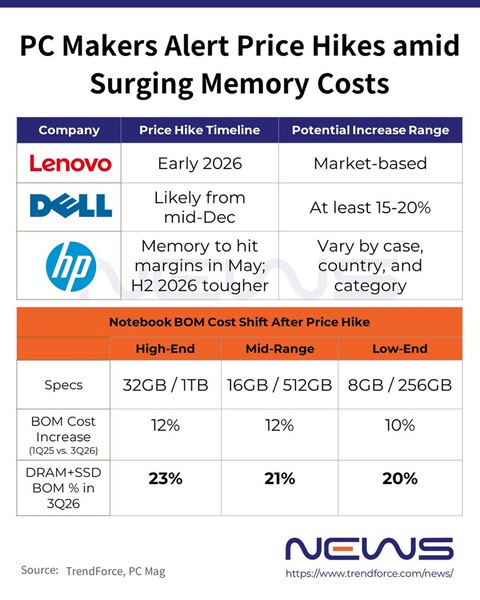
Core Insights - Major laptop manufacturers like Lenovo and HP are likely to delay their new product launches in 2026 due to a historic memory shortage impacting their product roadmaps [1] - The cost of core components is rising significantly, leading brands to reassess their release plans to avoid inventory buildup and high pricing risks [1] - The SSD prices are increasing due to AI monopolizing NAND flash supply, with DDR5 memory prices expected to rise by 45% by the end of 2026, making storage components account for 23% of total laptop material costs [1] Group 1: Price Hikes and Cost Implications - Lenovo plans to increase prices by at least 15-20% starting from mid-December 2025, with high-end models potentially seeing price hikes of up to 30% to maintain profit margins [2] - The BOM (Bill of Materials) cost for high-end laptops is expected to increase by 12% from Q1 2025 to Q3 2026, with DRAM and SSD components making up 23% of the BOM in 2026 [2] Group 2: Manufacturer Strategies - Dell and Framework have announced upcoming price increases, while ASUS considered producing DDR5 memory in-house but later denied this rumor [3] - Custom PC brand Maingear is encouraging customers to send in their own memory modules for assembly, although this unconventional method may not yield significant cost savings [3] Group 3: Market Outlook - The PC market, after a strong growth in 2025 driven by Windows 11 upgrade demands, is expected to face a sharp decline in 2026 due to the exhaustion of upgrade incentives and delayed new product launches [5] - Analysts predict a decrease in laptop sales in 2026 as consumer purchasing power declines and new product availability diminishes [5]



21专访|TCL李东生:将中国制造产业优势,扩展到全球
2 1 Shi Ji Jing Ji Bao Dao· 2025-12-27 10:05
Core Viewpoint - Tijuana, located on the US-Mexico border, is emerging as a critical hub for global manufacturing and trade, particularly for electronics, automotive, and medical devices, as companies like TCL expand their production bases in response to global supply chain restructuring [2][3] Group 1: Globalization and Business Strategy - TCL's approach to globalization is not merely market expansion but involves a long-term strategy focused on industrial capabilities and organizational structure, with a systematic upgrade of its global operations [3] - The company aims to establish five regional centers globally, enhancing local production, assembly, and supply chains to increase brand influence and business value [3] - TCL's overseas sales now account for 60% of its smart terminal business, highlighting the importance of international markets for revenue and profit growth [3] Group 2: Challenges and New Cycles - The current global landscape presents two overlapping challenges: a new cycle in global economic and trade patterns and a technological transformation cycle [5] - The shift towards localization and regionalization in global trade is creating both opportunities and challenges for Chinese enterprises, including TCL [5] - The rise of artificial intelligence and green development is reshaping business models and necessitating a focus on sustainability for Chinese companies [5][9] Group 3: Industrial Capability and Local Integration - The logic of overseas expansion is shifting from mere production to collaborative capability building, emphasizing the construction of supply chains and R&D capabilities [6] - TCL's strategy includes establishing local supply chains and manufacturing bases, as seen in its operations in Vietnam and Poland, which integrate local resources and talent [6][7] - The MOKA factory in Tijuana has evolved from a production facility to a key player in the local industrial ecosystem, enhancing its profitability and operational capacity [7] Group 4: New Trade Ecosystem - The global manufacturing system is characterized by interdependent relationships among industries and economies, which are being reshaped by recent trade dynamics [10] - Chinese companies, including TCL, are playing a crucial role in developing new trade ecosystems in countries like Mexico and Vietnam, enhancing their competitiveness in the global market [10][11] - The expansion of Chinese enterprises into international markets is driven by domestic pressures and the need to compete with multinational corporations [11][12] Group 5: Future Outlook - Participation in international competition is essential for Chinese companies to overcome growth limitations and achieve global leadership [12] - The ongoing evolution of globalization is complex and decentralized, requiring companies to focus on capabilities, organization, and resilience in their international strategies [12]

美丽废物还是年轻人潮品?一款迷你AI手机靠情绪价值众筹千万
36氪· 2025-12-27 09:48
Core Viewpoint - The article discusses the emergence of a niche AI smartphone, the IKKO Mind One Pro, which has successfully raised over 11.5 million HKD on Kickstarter, highlighting a shift in the smartphone industry towards catering to specific user needs rather than competing with mainstream devices [6][8]. Group 1: Product Features and Design - The IKKO Mind One Pro features a unique 4.02-inch square AMOLED display, making it approximately half the size of traditional smartphones, and includes a 50-megapixel 180-degree rotating camera [12][14]. - It employs a dual-system design with Android 15 for a complete app ecosystem and a lighter IKKO AI OS focused on minimizing distractions, which includes AI tools for translation and voice transcription [14][15]. - The device's compact size and innovative design challenge the prevailing trend of large screens in smartphones, positioning it as a supplementary device rather than a primary one [13][14]. Group 2: Market Position and Business Model - IKKO's strategy targets niche users, capitalizing on the emotional value of unique design and functionality, which contrasts with the more generic offerings from larger brands [11][24]. - The business model incorporates a subscription service for AI functionalities, potentially allowing for a more integrated hardware-software experience, although the viability of this model in the broader smartphone market remains uncertain [16][25]. - The article suggests that the AI smartphone market may evolve into a dual structure, with major brands competing at the top and smaller niche players innovating at the bottom [25]. Group 3: Challenges and Industry Trends - Despite its innovative approach, the IKKO Mind One Pro faces skepticism regarding its practicality and performance, particularly due to its use of an older MediaTek Helio G99 processor and a relatively small battery capacity of 2,200 mAh [20][21]. - The article notes that as AI capabilities become more integrated into mainstream smartphones, smaller brands like IKKO may struggle to differentiate themselves in the AI application space [22][21]. - The future of AI smartphones may hinge on addressing unmet design and emotional needs, rather than solely focusing on technical specifications [24][26].

一年两倍!千亿美金!
Ge Long Hui· 2025-12-27 06:17
Core Viewpoint - Micron's FY26 Q1 financial report shows impressive results, with revenue of $13.64 billion, significantly exceeding the guidance range of $12.2-12.8 billion and market expectations by nearly $700 million. Adjusted EPS reached $4.78, far surpassing the market expectation of $3.95 [1][3][6] Group 1: Performance Breakdown - Revenue and Profit: Micron's FY26 Q1 performance exceeded expectations across the board, with revenue of $13.64 billion, a year-on-year increase of 57% and a quarter-on-quarter increase of 21%, marking the highest growth rate in nearly five years [3][6] - Adjusted EPS of $4.78 significantly exceeded the market expectation of $3.95, showing a substantial jump from the previous quarter. Non-GAAP gross margin soared to 56.8%, up 17.3 percentage points year-on-year and 11.1 percentage points quarter-on-quarter, far exceeding the guidance of 50.5%-52.5% [6][7] - Operating cash flow reached $8.41 billion, well above the expected $5.94 billion, while adjusted free cash flow hit a record $3.91 billion, with a free cash flow margin close to 30% [6] Group 2: Product Structure - DRAM remains the main revenue driver, generating $10.8 billion, accounting for 79% of total revenue, with a quarter-on-quarter growth of 20%. Average Selling Price (ASP) surged approximately 20%, reflecting the scarcity of supply [7] - NAND business generated $2.7 billion, representing 20% of total revenue, with a quarter-on-quarter growth of 22%. ASP also saw mid-single-digit growth, indicating a "volume and price increase" trend [7] - HBM, crucial for AI servers, has seen its production capacity sold out for 2026, with expectations for HBM4 to enter mass production in CY26Q2, further enhancing profitability. The HBM market is projected to grow from $35 billion in 2025 to $100 billion by 2028, with a compound annual growth rate of about 40% [7][8] Group 3: AI Storage Demand - The demand for storage driven by AI is not a short-term trend but signals a new five-year cycle. The current recovery is fundamentally different from previous cycles, focusing on enterprise-level AI capital expenditures rather than consumer demand [9][10] - AI data centers are driving a "voracious demand" for storage, leading to price increases across all product categories, with HBM prices soaring by 500% and DDR4 prices rising over 50% [10] Group 4: Supply Constraints - The storage industry faces significant supply constraints, with expected DRAM and NAND shipment growth limited to about 20% year-on-year, falling short of demand growth [12] - The production adjustment cycle for storage wafer fabs exceeds five months, making it difficult to respond quickly to market demand changes, exacerbating supply-demand imbalances [12] Group 5: Future Outlook - Micron's optimistic FY26 Q2 guidance suggests adjusted revenue of $18.3-19.1 billion, significantly above the market expectation of $14.38 billion, indicating strong resilience in AI storage demand [15] - The ability to release capacity and achieve technological advancements will be critical for growth, with the successful mass production of DRAM's 1-gamma node and NAND's 232-layer node directly impacting supply and profitability [16][17] - The balance of supply and demand, along with price trends, will be crucial in determining the sustainability of the recovery, with potential risks from geopolitical factors affecting the semiconductor supply chain [18]

一年两倍!千亿美金!
格隆汇APP· 2025-12-27 06:10
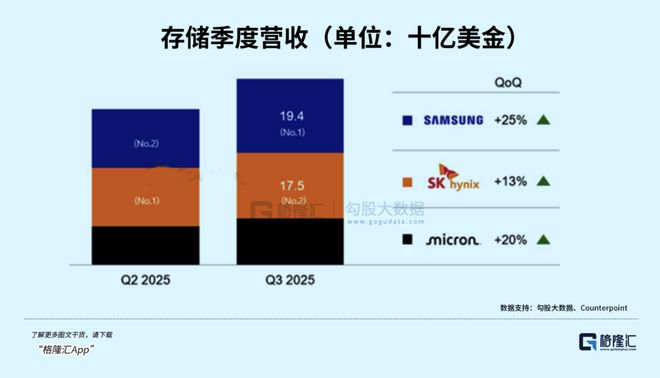
Core Viewpoint - Micron's FY26 Q1 financial report shows impressive results, with revenue of $13.64 billion, significantly exceeding the guidance range of $12.2-12.8 billion and market expectations by nearly $700 million. Adjusted EPS reached $4.78, far surpassing the market expectation of $3.95 [5][8][11] Group 1: Revenue and Profitability - Micron's revenue for the quarter increased by 57% year-over-year and 21% quarter-over-quarter, marking the highest growth rate in nearly five years [8] - The revenue growth was primarily driven by price increases rather than volume, with bit shipments showing only slight growth. The adjusted EPS of $4.78 represents a significant jump from the previous quarter [11] - Non-GAAP gross margin surged to 56.8%, a year-over-year increase of 17.3 percentage points, and a quarter-over-quarter increase of 11.1 percentage points, far exceeding the guidance of 50.5%-52.5% [11] - Operating cash flow reached $8.41 billion, well above the expected $5.94 billion, while adjusted free cash flow hit a record $3.91 billion, with a free cash flow margin close to 30% [11] Group 2: Product Structure - DRAM remains the dominant segment, generating $10.8 billion in revenue, accounting for 79% of total revenue, with a quarter-over-quarter growth of 20% [12] - The average selling price (ASP) for DRAM increased by approximately 20% quarter-over-quarter, reflecting the scarcity of supply [12] - NAND revenue reached $2.7 billion, representing 20% of total revenue, with a quarter-over-quarter growth of 22% [12] - HBM is highlighted as a key growth driver, with all of Micron's HBM capacity for 2026 already sold out, and HBM4 expected to enter mass production in Q2 2026 [12] Group 3: Demand and Supply Dynamics - The demand for storage is being driven by AI, with a "voracious" appetite for storage across all categories, leading to widespread price increases [15][16] - HBM prices have surged by 500% this year, while DDR4 prices have increased by over 50% [15] - The supply of DRAM and NAND is expected to grow by only about 20% year-over-year, significantly lagging behind demand growth, leading to a persistent supply-demand imbalance [19] - Micron's strategy involves balancing production between HBM and traditional DRAM while prioritizing strategic customers in data centers [20] Group 4: Future Outlook - The global storage market is projected to reach $193.2 billion by 2025, setting a historical record [22] - Key signals to watch for the sustainability of this recovery include whether Micron can maintain its strong performance in FY26 Q2, with guidance suggesting revenue of $18.3-19.1 billion and adjusted EPS of $8.42 [24] - The release of new production capacity and advancements in technology will be critical for growth, particularly in HBM [25][26] - The balance of supply and demand, along with price trends, will be crucial in determining the industry's profitability in the long term [27]
美丽废物还是年轻人潮品?一款迷你AI手机靠情绪价值众筹千万|焦点分析
3 6 Ke· 2025-12-27 01:45
Core Insights - The article discusses the emergence of a Hong Kong-based startup, IKKO, which has successfully crowdfunded an AI smartphone, the Mind One Pro, raising over 11.5 million HKD on Kickstarter, despite the smartphone industry appearing closed to new entrants a decade ago [2][4]. Group 1: Product Features - IKKO Mind One Pro features a unique 4.02-inch square AMOLED display, making it half the size of traditional smartphones, and includes a 180-degree flip camera that serves both front and rear photography needs [2][7]. - The device operates on a dual-system design, with Android 15 for a complete app ecosystem and a lighter IKKO AI OS focused on minimizing distractions and enhancing productivity through AI tools [8][9]. - The smartphone's AI capabilities are more focused compared to mainstream competitors, emphasizing a "distraction-free" work environment through its dedicated modes [9]. Group 2: Market Positioning - IKKO's strategy aligns with current trends of targeting niche markets rather than competing directly with major brands, allowing for potential success through unique product offerings [4][11]. - The company aims to integrate hardware and service models, offering free data services for AI functionalities in over 60 countries, which could pave the way for future subscription services [9]. Group 3: Challenges and Criticisms - Critics argue that the IKKO Mind One Pro may be perceived more as a fashion accessory than a practical tool, given its lower specifications compared to mainstream devices, such as its 2200 mAh battery and the use of a 2022 Mediatek Helio G99 processor [10]. - The smartphone faces skepticism regarding its advertised "free global network," as the service is limited to AI functionalities, leaving traditional data needs reliant on standard SIM cards [10]. - As the AI smartphone market matures, differentiation becomes increasingly challenging, with major brands integrating AI deeply into their systems, potentially overshadowing standalone hardware solutions like IKKO's [11].

芯片的十字路口
半导体行业观察· 2025-12-27 01:33
Core Viewpoint - The global semiconductor industry is at a historic crossroads, with Q3 2025 revenue projected to reach $216.3 billion, marking the first time it surpasses $200 billion in a single quarter. The annual revenue for 2025 is expected to exceed $800 billion, representing nearly a 20% increase from 2024. However, this growth is characterized by a "K-shaped recovery," indicating a structural shift in the industry rather than uniform growth across all sectors [1][4]. Group 1: Revenue and Growth Dynamics - The $200 billion quarterly revenue figure is misleading, as it masks the profound "K-shaped recovery" within the industry. The core contradiction of this cycle is the fundamental shift in demand focus from "consumer electronics-driven volume growth" to "data center-driven price increases" [4]. - Omdia attributes the unexpected performance in Q3 2025 to accelerated industry growth, with AI and storage as the main engines. Specifically, the combination of "computing power stacking + HBM premium" has driven revenue growth, with high-end GPUs and accelerators being in high demand due to AI training and inference [4][5]. - The semiconductor equipment sales are projected to reach approximately $133 billion in 2025, with expectations of continued growth in subsequent years, indicating a long-term bet on AI demand rather than a short-term spike [5]. Group 2: Profit Distribution and Market Structure - The top four semiconductor companies, including NVIDIA and major memory firms like Samsung and SK Hynix, account for over 40% of total industry revenue, highlighting a significant profit concentration among a few players [7]. - The industry is experiencing a "profit black hole," where a small number of companies capture the majority of profits, leading to a stark divide in profit structures and creating a scenario where capital expenditures from leading firms are essential for maintaining overall industry health [7][8]. - The demand for mature processes is weak, with traditional applications struggling to recover, leading to a price war in the market. This misalignment between supply and demand is expected to result in low visibility for orders in the latter half of 2025 [10]. Group 3: AI and Market Sentiment - The semiconductor industry's true nature, excluding AI and storage, resembles a "stock game," with companies grappling with inventory reduction and price stabilization challenges [9]. - The automotive semiconductor market is projected to grow by approximately 16.5% year-on-year for 2025-2026, driven by advancements in smart driving technology, while traditional components face pricing pressures [11]. - The smartphone market is showing signs of a "moderate recovery," with a 2.6% year-on-year increase in global shipments in Q3 2025, influenced by promotions and AI feature upgrades [11]. Group 4: Concerns Over AI and Investment - The discussion around an "AI bubble" is prevalent, with concerns about whether the demand for computing power will lead to over-investment in data centers and whether the returns on these investments will materialize in a reasonable timeframe [13][15]. - Major tech companies are projected to spend around $320 billion on capital expenditures in 2025, reshaping their valuation narratives. The focus is on whether these expenditures can translate into sustainable cash flows [15]. - The financial presentation of returns is under scrutiny, as significant investments may not yield immediate returns, prompting a closer examination of profit quality and accounting practices [16].


都快2026年了,机械硬盘居然涨价了
芯世相· 2025-12-27 01:06
Core Viewpoint - The article discusses the unexpected resurgence of mechanical hard drives (HDDs) in 2024, driven by the demand for cold data storage due to artificial intelligence (AI) infrastructure, leading to significant price increases and a notable rise in sales volume after nearly a decade of decline [5][6][10]. Group 1: Market Dynamics - The consumer electronics market has struggled to profit from AI advancements, facing price increases in memory and flash storage, which have also affected downstream products like smartphones and PCs [5]. - In 2024, HDD shipments are projected to grow for the first time in ten years, with average prices returning to levels not seen since 1998, resulting in a 50% increase in overall sales compared to 2023 [6][10]. - Major HDD manufacturers, Western Digital and Seagate, have raised prices across the board, attributing this to increased demand from AI and data centers, similar to past trends seen in the graphics card market [8][10]. Group 2: Data Storage Trends - The article distinguishes between "hot" and "cold" data, with hot data requiring high-speed access and cold data being less frequently accessed but voluminous, leading to different storage needs [10][11]. - HDDs are favored for cold data storage due to their lower cost per GB compared to solid-state drives (SSDs), which are more suitable for hot data due to their speed and reliability [11][12]. - The demand for cold data storage is increasing as AI models generate vast amounts of data, revitalizing the HDD market that had been stagnant for years [11][12]. Group 3: Manufacturer Strategies - HDD manufacturers are controlling production to maintain prices, with Western Digital and Seagate opting not to expand capacity despite rising demand [12][14]. - The market for consumer-grade HDDs is shrinking, with manufacturers focusing on enterprise-level products to maximize profits, as indicated by a significant drop in revenue share from over 20% to below 10% for consumer-grade HDDs [24][22]. - The competitive landscape is shifting, with SSDs becoming more prevalent, but HDDs still hold a cost advantage in specific enterprise applications, allowing manufacturers to maintain a stable market despite the overall decline in consumer demand [22][24].


消息称HBM3E芯片价格飙升50%,AI热潮成主要推手
Sou Hu Cai Jing· 2025-12-26 23:44
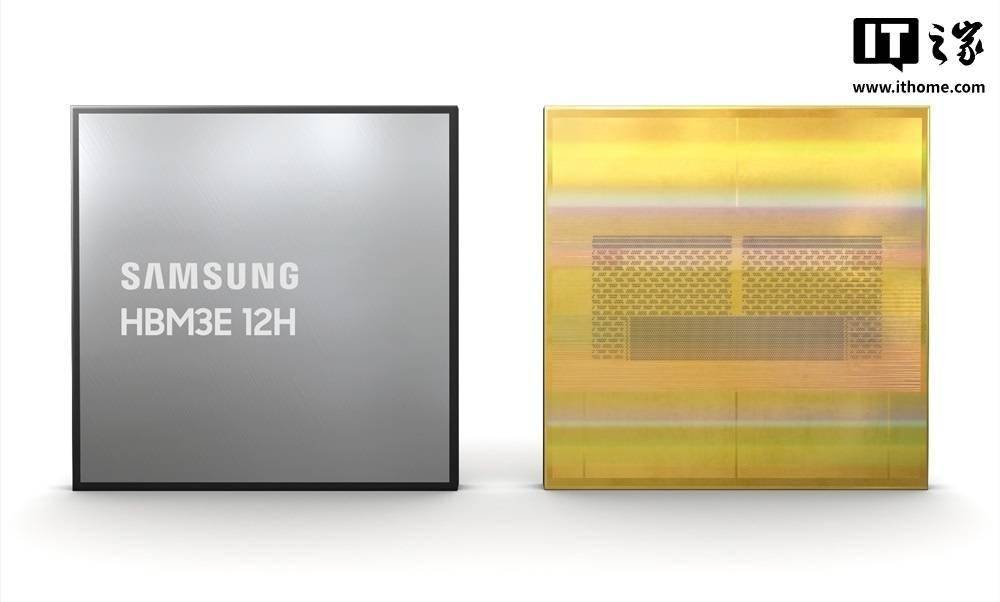
HBM(高带宽内存)是通过堆叠 DRAM 制成的产品,从今年下半年起价格一路走高,特别是近期大型 AI 巨头之间的竞争全面点燃后,业内 甚至出现"价格像坐火箭一样飞升"的说法。 HBM 价格的持续走高很可能延续至明年。尽管三星正尝试将 NAND 闪存产线转换为 DRAM 产线,但在 HBM2 即将量产的节骨眼下,扩大供 给并非易事。SK 海力士也需要等明年下半年新工厂量产后,才能新增供货。 IT之家 12 月 27 日消息,据韩媒 SEdaily 昨天报道,随着全球科技巨头在 AI 领域竞争逐渐升温,核心零部件 HBM 价格正在大幅飙升。 据报道,三星与 SK 海力士在与现有客户续签 HBM3E 12 层产品供货合同时,提出了相比以前高出 50% 以上的价格。而对于新客户而言,若 想拿到货的话,还得接受更高的报价。 据悉,此前 HBM3E 12 层产品的单颗价格大约是 300 美元(IT之家注:现汇率约合 2105 元人民币),而近期续签的企业差不多要用 500 美元 (现汇率约合 3508 元人民币)买一颗芯片,意味着 HBM3E 的市场价格已跃升至 HBM4 水平。 ...
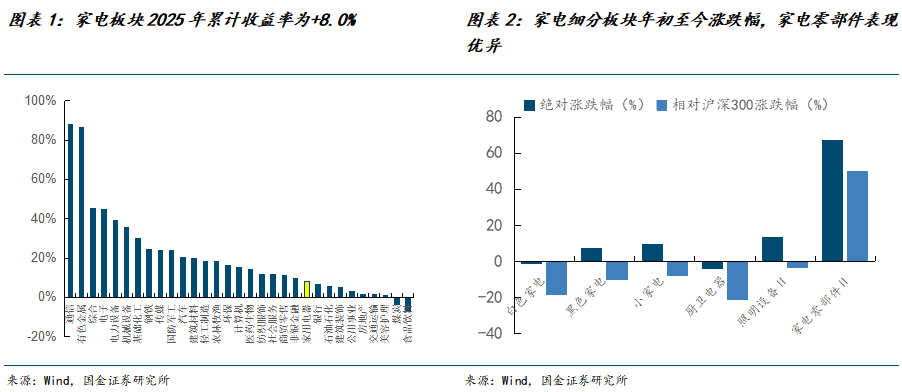
家电行业专题研究:拥抱龙头,重视出海
Xin Lang Cai Jing· 2025-12-26 12:24
Group 1: Domestic Demand and Market Outlook - The home appliance sector is expected to show a "high first half and stable second half" trend in 2025, driven by policy continuation and consumption peaks [1] - In the first three quarters of 2025, air conditioner shipments increased by 8.4%, refrigerators by 2.4%, and washing machines by 4.1% year-on-year [1][13] - For 2026, the continuation of subsidies is anticipated to mitigate the impact of high base effects and demand pull-forward, with projected declines in overall appliance sales of -4% to -7.3% under various subsidy scenarios [1][16][19] Group 2: Export Performance and Global Market Trends - Home appliance exports have slowed down due to tariff policies and global supply chain adjustments, but still show resilience and structural highlights [2] - In 2025, the export growth rate for air conditioners is expected to be weaker than that of washing machines and refrigerators, primarily due to adverse weather conditions affecting overseas demand [2][39] - The U.S. market is projected to benefit from a rate cut, which may enhance demand for home appliances, while the European market is expected to maintain a slow recovery [42][44][50] Group 3: Investment Themes - The narrative in the black appliance sector is shifting from "market share chasing" to "profit and pricing power," with Chinese brands like Hisense and TCL expected to convert market share into higher profits [3][55] - White appliances are seen as having strong growth potential due to their historical resilience through cycles, with leading brands like Midea and Haier expected to maintain stable growth and generous dividends [3][83] - The global competition in new consumer products, particularly in smart imaging and robotic vacuum cleaners, is expected to favor Chinese brands, highlighting their competitive advantages [3] Group 4: Financial Metrics and Valuation - As of December 22, 2025, the home appliance sector's PE TTM is 16.27 times, remaining below the 10-year average of 32.8% [7] - The white appliance segment's current PE is 11.22, while black appliances stand at 25.94, indicating varying levels of market valuation [9] - The home appliance sector has seen a decline in public fund holdings, with a heavy allocation of only 2.46% in Q3 2025, reflecting concerns over demand in 2026 [9]