小米

Search documents
理想销量不敌蔚来和小鹏,李想还能再冲一次吗?
首席商业评论· 2025-09-03 04:29
Core Viewpoint - Li Auto is heavily investing in the pure electric and AI markets, but faces challenges with declining sales and increased competition in the EV sector [2][3][4]. Financial Performance - In Q2 2025, Li Auto reported a revenue of 30.2 billion yuan, a year-on-year decline of 4.5%, with vehicle sales revenue down 4.7% to 28.9 billion yuan [8]. - The company maintained a high gross margin of 19.4% and had a cash reserve of 106.9 billion yuan, but reported a negative free cash flow of -3.8 billion yuan due to increased strategic investments [8]. - The Q2 delivery volume was 111,074 units, up from 92,864 units in Q1 2025, but the company lowered its Q3 delivery guidance to 90,000 - 95,000 units, a decrease of 14% - 19% from Q2 [6][9]. Market Challenges - Li Auto's sales target for the year was reduced from 700,000 to 640,000 units, with only 36.7% of the target achieved by July [8]. - The company is experiencing increased competition, with rivals like NIO and XPeng showing significant growth, while Li Auto's August sales dropped 41% year-on-year [12][18]. - The market for range-extended vehicles is becoming saturated, and Li Auto's high-margin models, L8 and L9, are seeing significant declines in sales [17]. Strategic Shifts - Li Auto is shifting focus towards the pure electric vehicle market, which is growing faster than range-extended vehicles, with pure electric vehicle sales increasing by 46.2% in the first half of 2025 [21][22]. - The company is also investing heavily in AI technology, with plans to enhance its autonomous driving capabilities through the development of a new multi-modal large model called VLA [28][33]. Competitive Landscape - The competitive landscape is intensifying, with new entrants and established players like Xiaomi entering the market, posing a threat to Li Auto's market share [22][25]. - The company needs to differentiate itself from competitors by leveraging its AI capabilities and ensuring its products meet evolving consumer demands [28][36].



监管铁幕落下又升起,谁能掌握“稳定币”的话语权?
3 6 Ke· 2025-09-03 03:13
Group 1: Overview of Stablecoins - Stablecoins are blockchain-based digital currencies that maintain a stable value, typically pegged to the US dollar at a 1:1 ratio, aimed at facilitating daily transactions [2][4] - The largest stablecoin by market share is USDT (Tether), while USDC is another prominent stablecoin issued by Circle and Coinbase [2] - The appeal of stablecoins lies in their price stability compared to volatile cryptocurrencies like Bitcoin, providing users with predictability in value [4] Group 2: Market Developments - Circle's stock surged 750% following its NYSE listing in June, and the US government has recognized stablecoins as legitimate financial instruments through the signing of the "Genius Act" [1][14] - Hong Kong has taken the lead in regulating stablecoins with the introduction of the "Stablecoin Ordinance," prompting major companies like Ant Group and JD.com to explore the stablecoin market [1][9] - The global trend shows increasing adoption of stablecoins in countries facing currency devaluation, such as Argentina and Venezuela, where stablecoins are used for domestic transactions [8] Group 3: Regulatory Landscape - The "Genius Act" in the US establishes a legal framework for stablecoin issuance, requiring that only licensed financial institutions can issue stablecoins and mandating a 100% reserve requirement [15] - In contrast, Hong Kong's regulatory approach emphasizes functional regulation, allowing stablecoins to be pegged to multiple currencies, potentially facilitating the internationalization of the Renminbi [17] - The regulatory environment for stablecoins is evolving, with significant scrutiny on their use in illicit activities, leading to a complex landscape of compliance and innovation [11][17] Group 4: Technological and Economic Implications - Stablecoins enable efficient and low-cost transactions, operating 24/7 and significantly reducing friction in cross-border payments compared to traditional banking systems [6] - The integration of stablecoins with real-world assets (RWA) is becoming more prevalent, as seen in recent cross-border financing projects involving renewable energy assets [10] - The potential for stablecoins to create a Web 3.0 version of the Bretton Woods system is being explored, highlighting their role in reshaping global financial dynamics [8]
全球份额调查:中国企业在15个品类下滑
日经中文网· 2025-09-03 02:54
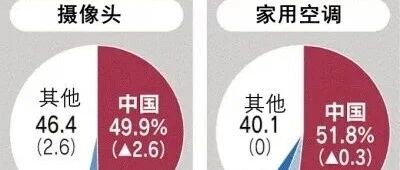
Core Insights - The article highlights the competitive landscape of global markets, indicating that the U.S. leads in 27 product categories, while China leads in 18 categories, an increase from 17 the previous year [2][7] - Despite some categories showing a decline in market share for Chinese companies, there are 24 categories where they have expanded their share, up from 21 the previous year [6] Group 1: Market Share Trends - In 2024, Chinese companies saw a reduction in market share across 15 categories, an increase from 13 categories in 2023 [4] - The market share of Chinese companies in the camera segment decreased from 52.5% to 49.9%, with Hikvision's share dropping by 1.8 percentage points [4] - The cloud services sector, previously growing, is now showing signs of decline, with Alibaba's share down by 0.7 percentage points [6] Group 2: Economic Impact - The ongoing real estate downturn in China, exacerbated by the crisis of Evergrande Group, has led to a sluggish domestic demand, impacting sectors like home appliances [6] - The real estate and related industries are estimated to account for 30% of China's GDP, contributing to economic stagnation and poor sales in home-related products [6] - The beer market also reflects this trend, with China Resources Beer’s market share declining by 0.2 percentage points to 5.2% [6] Group 3: Competitive Landscape - In the electric vehicle (EV) sector, Tesla's market share decreased by 2.3 percentage points to 16.1%, while the combined market share of Chinese companies like BYD exceeds 30% [6] - In the smartphone market, companies like Xiaomi and Transsion are gaining traction, particularly in emerging markets [7] - The U.S. government continues to exert pressure on Chinese companies through tariffs and regulations, which is expected to prolong the stagnation of the Chinese economy [7]
港股震荡走低,恒生科技指数ETF(513180)转跌,蔚来、理想汽车早盘活跃
Mei Ri Jing Ji Xin Wen· 2025-09-03 02:30
Group 1: Market Performance - The Hong Kong stock market indices experienced fluctuations, with the Hang Seng Technology Index turning downward on September 3rd [1] - The Hang Seng Technology Index ETF (513180) followed the index's downward trend, while stocks like Alibaba Health, NIO, Baidu Group, Li Auto, and JD Group saw gains [1] - The Hong Kong Stock Connect Automotive ETF (159323) saw a slight increase, with stocks like Ascendent Holdings and Li Auto rising, while BYD, Horizon Robotics, and Xpeng Motors declined [1] Group 2: New Energy Vehicle Market - The new energy vehicle market in China maintained a growth trend in August, with wholesale sales of 1.3 million units, a year-on-year increase of 24% and a month-on-month increase of 10% [1] - Cumulatively, from January to August, wholesale sales reached 8.93 million units, representing a year-on-year growth of 34% [1] - Several new energy vehicle manufacturers reported significant delivery numbers for August, with Leap Motor delivering 57,066 units (up over 88%), Xpeng Motors delivering 37,709 units (up nearly 169%), and NIO delivering 31,305 units (up over 55%) [1] Group 3: Investment Insights - Everbright Securities noted that despite the overall good performance of the Hong Kong stock market this year, valuations still offer certain cost-effectiveness [2] - The influx of southbound funds has exceeded HKD 1 trillion this year, with a recent focus on AI core assets in the Hong Kong stock market [2] - The Hang Seng Technology Index ETF (513180) includes 30 leading Hong Kong technology stocks, focusing on the AI industry chain, with companies like Alibaba, Tencent, Xiaomi, Meituan, SMIC, and BYD expected to be among the "Seven Giants" of Chinese tech stocks [2]


中泰国际每日晨讯-20250903
ZHONGTAI INTERNATIONAL SECURITIES· 2025-09-03 02:03
Market Overview - On September 2, the Hang Seng Index fell by 0.5% to close at 25,496 points, while the Hang Seng Tech Index dropped by 1.2% to 5,728 points[1] - The market turnover was HKD 328.1 billion, with a net inflow of HKD 9.28 billion from southbound funds[1] Sector Performance - Major tech stocks faced pressure, with Meituan and Alibaba both down nearly 2%, while Xiaomi rose by 3.4%[1] - Semiconductor and infrastructure sectors showed weakness, with Hong Teng Precision down nearly 10% and SMIC down over 4%[1] - Conversely, banking stocks performed well, with Agricultural Bank of China up nearly 3%[1] Economic Indicators - The Hang Seng Index is currently oscillating around the 25,000-point mark, which is considered a normal consolidation phase[2] - External uncertainties are rising as the U.S. stock market enters the historically poor-performing month of September, with significant economic data releases expected[2] - Gold prices recently surpassed USD 3,500, indicating a potential shift towards risk aversion among global investors[2] Industry Insights - In the automotive sector, BYD reported a slight year-on-year sales increase of 0.15% for August, while Geely's sales surged by 38%[3] - The healthcare sector saw a minor increase of 0.07% in the Hang Seng Healthcare Index, supported by new approvals for innovative drugs[3] Real Estate Trends - New home transaction volume in 30 major cities reached 1.8 million square meters, a year-on-year increase of 3.6%[9] - The property inventory-to-sales ratio for major cities was 101.9, higher than last year but lower than the previous week[11] - Recent policy adjustments in Shanghai aim to stimulate the housing market, allowing eligible families to purchase unlimited properties outside the outer ring[13]
独家|阿里速卖通内部筹备“最高规格”品牌出海项目,将设全新品牌专区
Xin Lang Ke Ji· 2025-09-02 23:53
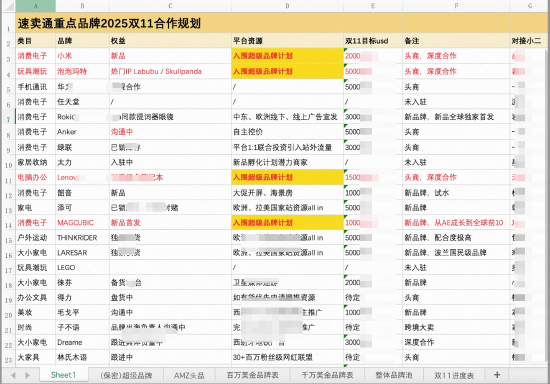
Core Insights - Alibaba's AliExpress is preparing a high-profile brand expansion project, inviting Fortune 500 and leading domestic and international brands, expected to launch before Double 11 [1] - A leaked screenshot indicates that brands like Xiaomi and Pop Mart are included in the "Super Brand Plan" for deep cooperation [1] - The growth targets for this initiative are described as "very aggressive," with plans to create a new brand section on the app to provide traffic support and local operations for selected brands [1] Group 1 - AliExpress is focusing on brand expansion in response to the potential of overseas markets, leveraging the upcoming 2025 Double 11 and Black Friday events to drive growth [1] - The cross-border e-commerce sector has faced intense price competition over the past three years, prompting AliExpress to take the lead among the "four dragons" of overseas expansion [1] - Several brands have already achieved significant breakthroughs in Gross Merchandise Volume (GMV) through this initiative [1] Group 2 - A brand representative indicated that the internal validation of the "Brand Expansion Plan" has likely secured additional resources to enhance this business upgrade, emphasizing collaboration with major brands [1] - AliExpress confirmed that it will soon launch a brand expansion project, with specific details to be released officially [1]


云界汽车成立,野马破产重整中的“资质博弈”|钛度车库
Tai Mei Ti A P P· 2025-09-02 14:20
Core Viewpoint - The establishment of Cloud Realm Intelligent Automotive (Chengdu) Co., Ltd. marks a new player in the automotive industry, focusing on a broader scope beyond traditional vehicle manufacturing, including smart drones and industrial robotics [2][4]. Company Overview - Cloud Realm Intelligent has a registered capital of 24.8 million yuan, with a diverse shareholder structure including Shenzhen Kanghu New Energy Transportation Development Co., Ltd. (35%), Sichuan Yema Automobile Co., Ltd. (25%), and others [2]. - The company aims to create an integrated transportation solution that combines land and air mobility, positioning itself as a technology enterprise rather than a conventional car manufacturer [2][5]. Shareholder Dynamics - Sichuan Yema, a company currently undergoing bankruptcy restructuring, holds a significant stake, raising industry interest due to its historical value and production qualifications [2][3]. - The partnership allows Cloud Realm to leverage Yema's existing manufacturing capabilities and supply chain, which are considered valuable assets despite Yema's operational challenges [3][4]. Industry Trends - The automotive industry is witnessing a shift where traditional manufacturing assets are being revitalized through collaborations with technology and capital, exemplified by Cloud Realm's formation [4]. - The focus on integrating advanced technologies such as smart manufacturing and low-altitude flying vehicles aligns with broader industry trends, including the interest from companies like XPeng and GAC in flying cars [5]. Market Potential - The low-altitude economy in China is projected to reach 1.5 trillion yuan by 2025 and 3.5 trillion yuan by 2035, indicating significant growth potential for flying vehicles [5]. - Cloud Realm aims to differentiate itself in this emerging market by utilizing Yema's manufacturing foundation and the technological expertise of its other shareholders [5]. Challenges Ahead - Cloud Realm faces substantial challenges, including limited initial capital of 24.8 million yuan, which may hinder its ability to fund research and development in flying cars and robotics [6]. - The company must navigate high technical barriers related to aviation safety and regulatory compliance, which could impede its progress [6][7]. - Increasing competition from established players like Huawei and BYD, as well as regulatory uncertainties in the low-altitude vehicle sector, pose additional risks to Cloud Realm's success [6][7].

8月乘用车:自主海外大比拼、新势力持续狂飙、合资反攻新能源
Zhong Guo Jing Ji Wang· 2025-09-02 13:04
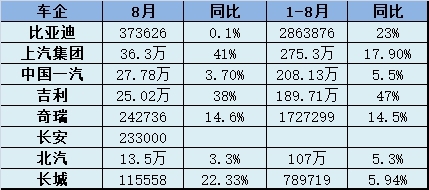
Core Insights - The automotive market in August showed significant growth driven by favorable policies and consumer demand, with domestic brands leading the market while luxury and joint venture brands lagged behind [1] Domestic Brands Performance - BYD achieved sales of 373,626 units in August, a slight increase of 0.1% year-on-year, with cumulative sales of 2,863,876 units for the first eight months, representing a 23% increase [2] - SAIC Group reported sales of 363,700 units in August, up 41% year-on-year, with cumulative sales of 2,753,000 units, a 17.9% increase [2] - Chery exported 129,000 vehicles in August, marking a 32.3% increase year-on-year, and maintained its position as the top exporter of Chinese cars [4] - Geely's new energy vehicle sales reached 147,000 units in August, a remarkable 95% increase year-on-year, making it the second-largest player in the new energy sector after BYD [4] New Energy Vehicle Market - The new energy vehicle segment continues to thrive, with companies like Leap Motor achieving record sales of 57,066 units in August, leading the new force brands [5][6] - Hongmeng Zhixing and Xiaopeng also reported strong sales, with the former selling nearly 50,000 units and the latter launching a new model that boosted sales [6][7] Joint Venture Brands - FAW-Volkswagen sold 135,772 units in August, a 4.2% year-on-year increase, while its Audi brand saw significant sales due to new product launches [8][10] - The joint venture brands are facing challenges from both domestic and new energy brands, with a notable decline in sales for luxury brands like Mercedes-Benz, BMW, and Audi [9][10] Market Outlook - The automotive market is expected to become increasingly competitive as the traditional sales peak season approaches, with ongoing policy support likely to reshape market dynamics [10]


8月新能源汽车行业洞察:零跑、小鹏、蔚来单月交付量均创历史新高
CAITONG SECURITIES· 2025-09-02 10:27
Investment Rating - The report maintains an investment rating of "Positive" for the electric vehicle industry [1][7]. Core Insights - The report highlights that major domestic brands such as Leap Motor, Xpeng, and NIO achieved record monthly delivery numbers in August 2025, indicating strong sales performance [3]. - Leap Motor's deliveries reached 57,066 units in August, marking a year-on-year increase of over 88% [3]. - NIO delivered 31,305 vehicles in August, a year-on-year growth of 55.2%, with the launch of new models contributing to this increase [3]. - Li Auto delivered 28,529 vehicles in August, with the new model Li i8 expected to accelerate production and deliveries [3]. - Xpeng achieved a delivery of 37,709 vehicles in August, representing a year-on-year increase of 169% [3]. - Xiaomi's deliveries exceeded 30,000 units in August, reflecting consistent performance in the market [3]. Summary by Relevant Sections Domestic Brand Sales - Leap Motor, Xpeng, and NIO all reported record high deliveries in August, showcasing the growth of domestic brands in the electric vehicle market [3]. - Leap Motor's new model, Lafa5, is set to debut at the Munich Auto Show, enhancing its international strategy [3]. - NIO's new ES8 model is positioned as a flagship SUV, with a starting price of 416,800 yuan [3]. - Li Auto's new model, i6, is expected to launch in September, targeting a price range of 250,000 to 300,000 yuan [3]. - Xpeng's new P7 model was launched in August, with significant pre-orders [3].
上半年投资什么最赚钱?真相你肯定不相信
Sou Hu Cai Jing· 2025-09-02 10:08
Group 1 - The most profitable investment in the first half of the year was the Russian Ruble, which appreciated by 41% against the US dollar by June 30 [3][4] - The US market experienced a significant capital outflow, with a 70% reduction in procedural capital inflow, contributing to the decline of the US dollar index [4] - The South Korean stock market saw substantial gains, attributed to its low average price-to-earnings ratio of around 10 times, indicating a value opportunity [4][5] Group 2 - The Hong Kong Hang Seng Index increased by 20% in the first half of the year, influenced by major companies like Meituan, JD.com, and Alibaba, which have significant weight in the index [4][5] - Chinese companies listed in Hong Kong are considered attractive investments due to their appealing valuations after a period of decline from 2020 to 2023 [5] - The A-share market has shown signs of recovery, with the Shanghai Composite Index surpassing 3500 points, historically indicating potential bullish trends [6][7] Group 3 - Investors in the A-share market are increasingly favoring low price-to-earnings ratio stocks with high dividends, while technology companies are achieving high valuations [7][8] - The outlook for commercial bank stocks is positive, as they are seen as a value play amidst global liquidity easing expectations [8] - The Chinese real estate market is projected to bottom out between 2025 and 2026, based on historical data analysis [8] Group 4 - Gold prices rose by 26% in the first half of the year, with expectations that the upward trend may continue [9] - Gold is viewed as a "faith investment," with its value tied to investor confidence in its ability to hedge against inflation [9][10] - Caution is advised for individual investors regarding leveraged investments in gold, as it poses significant risks [10]