奈雪的茶

Search documents
雪王盯上打工人的早餐,全时段盈利战开打
3 6 Ke· 2025-12-19 09:13
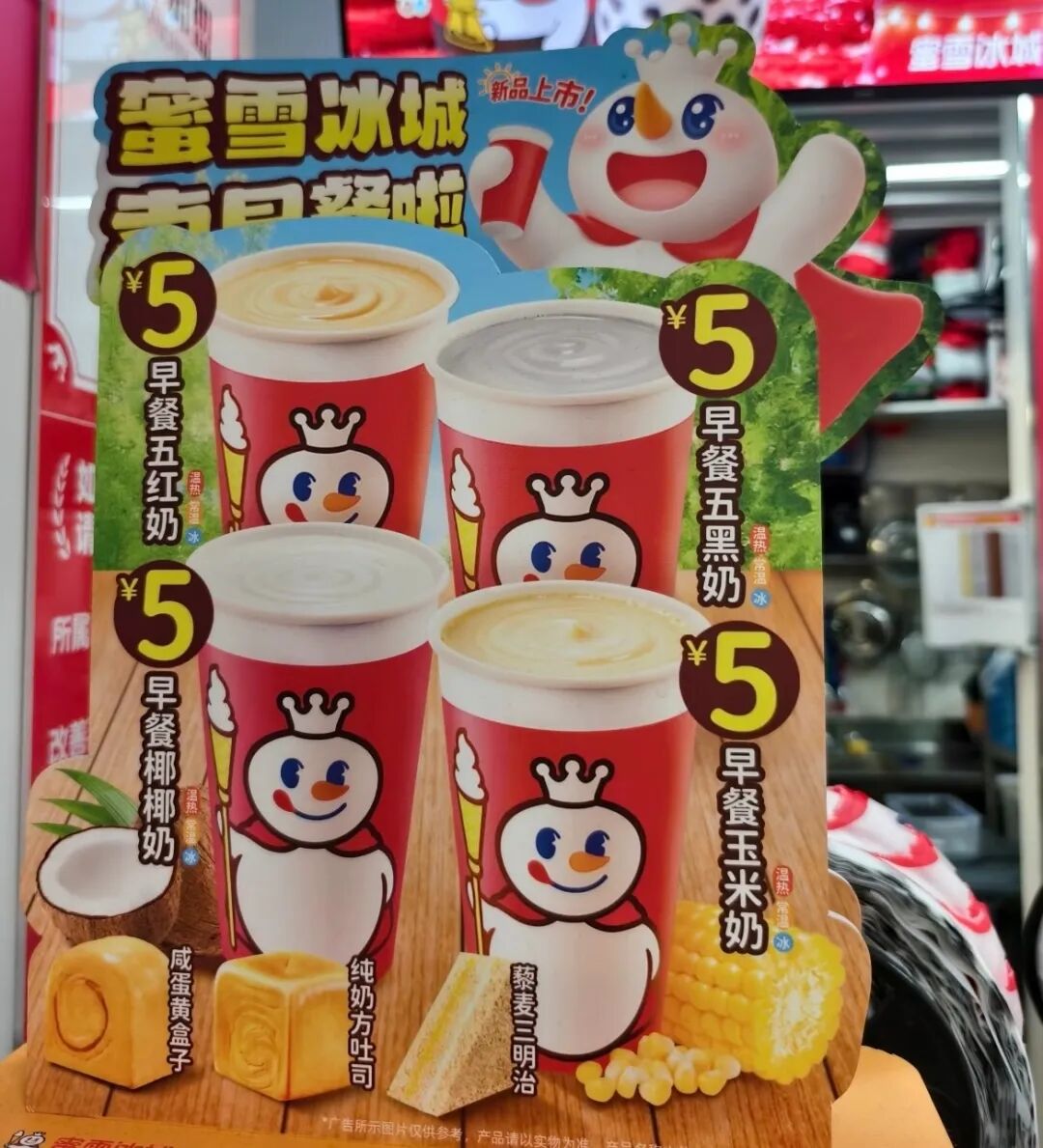
7.9元买雪王早餐套餐,2.5元吃茶颜悦色零食,5元喝喜茶气泡水,当消费者在茶饮店的点单界面,频繁刷到奶茶之外的选项时,一场关于增长的焦虑突围 战,已在新茶饮行业全面铺开。 当雪王开始卖早餐,"穷鬼"开始闹了。 5元的早餐奶,2.9元的袋装面包,这份不到8元的早餐套餐目前只在大连、西安、南宁、杭州四座城市做业务试点,第一批尝鲜的消费者已经开始吐槽毫 无性价比。 "这么说吧,雪王早餐在武汉肯定没市场,武汉人过早绝不会花7.9元买预制冷面包加勾兑早餐奶,热干面加蛋酒更香" "看着不贵,但细想一下这类预制的小面包和早餐奶根本没有街边的豆浆加包子吃着好" "雪王,喝奶茶可以选你,但早餐我另有选择" 其实单论价格,雪王的早餐套餐已经颇具诚意,想要和其他茶饮、咖饮类同行正面刚的心思也很明确。瑞幸咖啡、库迪咖啡、M Stand、奈雪的茶等品牌 都早已推出过早餐套餐,并且一度把价格打到9.9元起,雪王入局,仍然首先从价格上拉开了距离。 但相较于茶饮品类,早餐对于国人的重要性不言而喻,选择面也更广,所以对于雪王早餐套餐的审视自然也有更高的要求,这或许就是雪王早餐套餐推出 后没能收获好评的重要原因。 从喜茶的"百货化"试水,到奈 ...

商场餐饮“排队王”,扎堆去新疆捞金
投中网· 2025-12-18 06:45
Core Insights - The article discusses the rapid growth of the restaurant market in Xinjiang, highlighting the influx of well-known brands and the unique market conditions that make it an attractive opportunity for investors [4][10]. Group 1: Market Dynamics - Xinjiang is characterized as a "non-competitive market," with fewer chain brands compared to other major cities, leading to a lack of price wars and higher profit margins for existing brands [10]. - The entry of major brands like Tims, Haidilao, and Luckin Coffee into Xinjiang has accelerated since 2023, marking a significant increase in brand presence [9]. - The local market is described as having a high consumer spending capacity, comparable to first-tier cities, with consumers showing less sensitivity to prices [12]. Group 2: Consumer Behavior and Trends - The tourism sector in Xinjiang is booming, with a projected 33% increase in online travel transactions for the winter season, indicating a growing consumer base with substantial spending power [13]. - The local food supply is advantageous for restaurant brands, as Xinjiang is a major agricultural region, providing cost-effective ingredients [13]. - The cultural diversity in Xinjiang necessitates careful consideration of customer demographics and dining habits, particularly regarding halal food for the local Muslim population [19]. Group 3: Strategic Recommendations - Companies are advised to replicate successful national brand models in Xinjiang while adapting to local market conditions to establish a strong presence [16]. - It is recommended to partner with established brands as regional agents to leverage existing market knowledge and resources [17]. - Key operational considerations include understanding local dining habits, managing logistics effectively due to the vast distances within Xinjiang, and ensuring consistent quality across locations [20][21].

新茶饮不是倒在价格战
3 6 Ke· 2025-12-18 01:27
Core Insights - The decline of new tea beverage brands, exemplified by Heytea closing over 600 stores, indicates a significant challenge in the industry's expansion strategy [1] - The rapid growth of store numbers has not translated into profitability, with many brands facing pressure on single-store performance [3][5] - The shift to a franchise model has not alleviated the financial burdens on franchisees, leading to increased closures and operational difficulties [7][11] Industry Overview - As of October 2024, Heytea had 4,610 stores, but this number is projected to drop to 3,930 by October 2025, marking a net decrease of 680 stores in one year [3] - Other brands, such as Bawang Chaji, are also experiencing profit declines despite increasing store counts, with adjusted net profits dropping by 22.23% year-over-year [3] - The overall market is seeing a decline in same-store sales, with Heytea's monthly GMV per store down 28.3% [5] Franchise Model Challenges - Franchisees are reporting extended payback periods, often exceeding 18 months, due to high operational costs and insufficient sales [7][18] - Complaints from franchisees include high operational costs and inadequate support from the franchisor, leading to inefficiencies [7] - The franchise model, initially seen as a growth lever, is now revealing significant risks as profitability at the store level diminishes [18] Competitive Landscape - The market is becoming increasingly crowded, with many brands competing on price rather than quality, leading to thinner profit margins [8][21] - The rise of mid-tier brands with established franchise systems is intensifying competition, forcing established brands to engage in price wars [8][21] - The consumer preference is shifting towards more affordable options, as seen with the growth of brands like Mixue Ice Cream and Tea [21][25] Economic Context - The overall economic environment is affecting consumer spending, with retail sales growth slowing to 2.9% year-over-year as of October 2025 [23] - The shift in consumer behavior towards more budget-conscious spending is impacting non-essential goods like premium tea beverages [23][25] - The industry is facing a hard constraint as the high-margin growth period ends, forcing brands to adapt to a more competitive and price-sensitive market [23][27] Future Directions - The industry may need to pivot towards creating more frequent and everyday products, reducing reliance on high-margin narratives [27] - Alternatively, weaker players may exit the market, leading to a reduction in supply and potentially healthier competition in the long run [27] - The focus will shift from merely expanding store counts to ensuring each store can operate profitably under real market conditions [27]
低欲望时代,这五个赛道仍在疯狂卷钱
创业家· 2025-12-17 10:15
Core Insights - The article discusses the decline in sales of Durex, with a 50% drop in 2020 and a 40% industry-wide decline, alongside a 20% decrease in marriage rates, indicating a broader trend of reduced sexual desire in society [2][3]. Group 1: Changing Consumer Behavior - The decline in traditional sexual products is attributed to a "low-desire society," where consumer spending is shifting towards other areas [3]. - The overall e-commerce sales during the 618 shopping festival saw a negative growth of 7%, and the Double Eleven event has not reported results for four consecutive years [3]. Group 2: Emerging Growth Sectors - Five high-growth sectors are identified as alternatives to traditional sexual products: 1. **Pet Consumption Upgrade**: The pet market is projected to reach 302 billion in 2024, with one pet for every three young people [4]. 2. **Endorphin Economy**: An increase of 200 million new sports participants in the last decade, with a surge in outdoor activities and sports brands [8]. 3. **Aromatherapy**: The fragrance market is valued at 850 million USD in 2023, growing at a rate of 10% annually [8]. 4. **Emotional Fast-Moving Consumer Goods (FMCG)**: Products that provide immediate emotional satisfaction, such as colorful small items and emotional flower shops [11][12]. 5. **Self-Rescue Economy**: Health-focused products like probiotic cola and health teas are gaining popularity, reflecting a trend of anxiety rather than health consciousness [16][19]. Group 3: Underlying Consumer Needs - The five growth trends reflect the demands of a low-desire society, focusing on feelings of companionship, control, healing, ritual, and safety, which add extra value to products [20]. Group 4: Strategic Recommendations - For businesses to thrive by 2026, it is crucial to align their development with national strategies, technological trends, globalization perspectives, and user demands [21].


解读新茶饮品牌TOP50:拼口味是幌子,供应链才是真王牌?
Nan Fang Nong Cun Bao· 2025-12-16 14:03
Core Insights - The new tea beverage industry is shifting its competitive focus from front-end brand marketing to the depth of supply chain systems, highlighting the importance of supply chain capabilities in achieving success in a market valued at 350 billion [14][23][88] - A recent report and ranking of the top 50 new tea beverage supply chain brands emphasizes the need for collaboration between eastern and western regions of China, moving beyond traditional metrics like store count and revenue to evaluate core supply chain attributes [6][9][11] Industry Trends - The industry is transitioning from a phase of rapid growth to a key transformation period characterized by structural differentiation, with a notable increase in the closure of smaller brands [12][21] - The report indicates that the number of new tea beverage stores opened in the past year was 118,000, while closures reached 157,000, leading to accelerated market consolidation [20][21] Supply Chain Dynamics - The supply chain is now recognized as the "invisible backbone" of the new tea beverage industry, with a focus on raw material quality, supply capacity, efficiency models, and service depth [5][10][14] - Companies are increasingly leveraging AI for accurate sales forecasting, achieving an error rate of less than 5% and improving inventory turnover rates by 40% [3][4] Cost Management Strategies - Successful companies are not merely reducing costs through lower-quality ingredients but are optimizing logistics and production processes to maintain product quality while achieving cost savings [28][33] - For instance, a large restaurant chain's switch from a 60 yuan per kilogram coffee bean to a 50 yuan option resulted in minimal savings at the expense of taste, while optimizing logistics for fresh milk can yield significant cost reductions without compromising flavor [28][30][33] Product Innovation - Health-conscious trends are shaping product offerings, with low-sugar and natural ingredients becoming standard, and the report predicts that by 2025, the usage rate of sugar substitutes in milk tea will reach 61.3% [42][43] - Innovations in packaging and equipment are crucial for scaling new tea beverage brands, with a shift from aesthetic appeal to enhancing consumer experience [47][48] Collaborative Ecosystem - The new tea beverage industry is moving towards a "co-creation" model where brands and suppliers work together to meet consumer demands and share risks [55][62] - This collaborative approach is exemplified by customized logistics solutions and standardized quality measures that enhance operational efficiency and product consistency [57][64] Global Expansion - Leading brands are focusing on global supply chain strategies, enhancing direct sourcing and intelligent distribution networks to improve responsiveness and efficiency [74][76] - The industry is also embracing digital technologies to streamline supply chain processes, with a focus on local adaptation and compliance in international markets [75][76] Cultural and Economic Impact - The new tea beverage sector is evolving into a complex industry that combines consumer and cultural attributes, significantly impacting agricultural development and rural revitalization [78][81] - The collaboration between Guangdong and Guizhou provinces is fostering a new tea beverage supply chain center, benefiting local tea farmers and enhancing their income [82][85]

沪上阿姨再涨超7% 国内新茶饮品牌出海热潮高涨 公司目前进军马来西亚和美国市场
Zhi Tong Cai Jing· 2025-12-16 02:42
Core Viewpoint - The stock of Hu Shang A Yi (02589) has increased by over 7%, reaching 102.8 HKD, with a trading volume of 61.58 million HKD, indicating strong market interest and potential growth in the new tea beverage sector [1] Company Strategy - Hu Shang A Yi is implementing a "one body, two wings" strategy, where the "one body" refers to the main brand, Hu Shang A Yi, with a calculated domestic store expansion potential of 18,000 locations [1] - The "two wings" consist of "Tea Waterfall" and overseas markets, with "Tea Waterfall" having a domestic store expansion potential of over 5,000 locations [1] Market Expansion - The company is currently expanding into overseas markets, specifically Malaysia and the United States, which are in the early stages of development and present significant growth potential [1] - The recent entry of Nayuki Tea into the U.S. market marks a new phase for Chinese new tea beverage brands, further strengthening the competitive landscape [1] Business Integration - The coffee business has undergone adjustments and upgrades, now being integrated into the main Hu Shang A Yi brand, which is expected to contribute to incremental sales per store [1]
港股异动 | 沪上阿姨(02589)再涨超7% 国内新茶饮品牌出海热潮高涨 公司目前进军马来西亚和美国市场
Zhi Tong Cai Jing· 2025-12-16 02:27
Core Viewpoint - The stock of Hu Shang A Yi (02589) has increased by over 7%, reaching HKD 102.8 with a trading volume of HKD 61.58 million, indicating strong market interest and potential growth in the new tea beverage sector [1] Company Strategy - Hu Shang A Yi is implementing a "one body, two wings" strategy, where the "one body" refers to the main brand Hu Shang A Yi, with a potential domestic store expansion of 18,000 locations [1] - The "two wings" consist of "Tea Waterfall" and international markets, with "Tea Waterfall" having a domestic store expansion potential of over 5,000 locations [1] Market Expansion - The company is currently expanding into international markets, specifically Malaysia and the United States, which are in the early stages of development and show significant growth potential [1] - The recent entry of Nayuki Tea into the U.S. market marks a new phase for Chinese tea brands going global, further strengthening the competitive landscape [1] Business Integration - The coffee business has undergone adjustments and is now integrated into the main Hu Shang A Yi brand, which is expected to contribute to incremental sales per store [1]
2025消费行业年度趋势分析报告
Sou Hu Cai Jing· 2025-12-15 17:11
Core Trends in the Consumer Industry - The consumer industry in 2025 is characterized by market polarization, organizational restructuring, multi-point industry explosions, and talent resilience [1] - Understanding these trends is essential for businesses, investors, and professionals to seize opportunities amid uncertainty [1] Market Trends: New Opportunities in Polarization - The consumer market is undergoing significant transformation, with the "middle price range" cooling, rational consumption rising, and the silver economy booming [3] - High-income consumers are pursuing quality upgrades, while low- to middle-income consumers focus on cost-effectiveness, leading to a notable "polarization" in consumption [4] - The core driver of consumption upgrade is "value recognition," with high-income consumers willing to pay a premium for innovative, socially responsible, and health-oriented products [4] - The tea beverage industry exemplifies this trend, with low-cost brands like Mixue Ice Cream seeing over 40% profit growth, while mid-range and high-end brands face declining profits [5] Rational Consumption Rise - The brand premium is diminishing, with consumers now prioritizing quality and effectiveness over brand recognition [6] - Consumers are increasingly pragmatic, utilizing both online and offline channels for price comparison and product selection [6] - The rise of "ingredient-focused" consumers and the popularity of private label products reflect this shift, with significant growth in ingredient searches on platforms like Tmall [7] Silver Economy: A New Growth Frontier - The silver economy is transitioning from a niche market to a trillion-dollar sector, driven by an aging population and stable income for retirees [8] - By 2035, the number of individuals aged 60 and above in China is expected to reach 480 million, providing a solid foundation for this market [9] - Various sectors, including finance, entertainment, and consumer goods, are witnessing significant growth, with health products and senior-friendly smart devices gaining traction [9] Organizational Trends: Streamlining and Empowerment - Consumer companies are undergoing profound changes in organizational structure, focusing on efficiency and agility [11] - Many companies are engaging in "slimming down" initiatives, shedding non-core operations to concentrate resources on key business areas [12] - Strategic roles are evolving from advisory to operational, requiring personnel to be deeply involved in business execution [14] Industry Trends: Diverse Growth Across Segments - The beauty and personal care sector is shifting from online dominance to a blend of online and offline experiences, emphasizing the importance of physical retail [20] - The food and beverage industry is experiencing steady growth, with a focus on health and quality, as well as a shift towards high-quality price competition [22] - The health supplement market is booming, with a projected market size of 355.4 billion yuan in 2024, driven by diverse consumer demands and innovative product forms [24] - The pet industry is expanding, with a focus on emotional spending and professional services, reflecting a shift towards health and companionship [26] - Outdoor sports are experiencing explosive growth, driven by increased health awareness and diverse leisure activities [28] - The tourism sector is evolving towards quality and experiential offerings, with new business models reshaping the industry landscape [32] Talent Market: Opportunities Amidst Challenges - The talent market is characterized by intensified competition and a focus on immediate capabilities, with companies prioritizing recent industry experience [38] - The demand for social e-commerce talent is surging, driven by the transformation of traditional fast-moving consumer goods (FMCG) channels [39] - Building career resilience is essential for professionals to navigate the evolving job landscape and seize emerging opportunities [41]

商场餐饮“排队王”,扎堆去新疆捞金
3 6 Ke· 2025-12-15 12:32
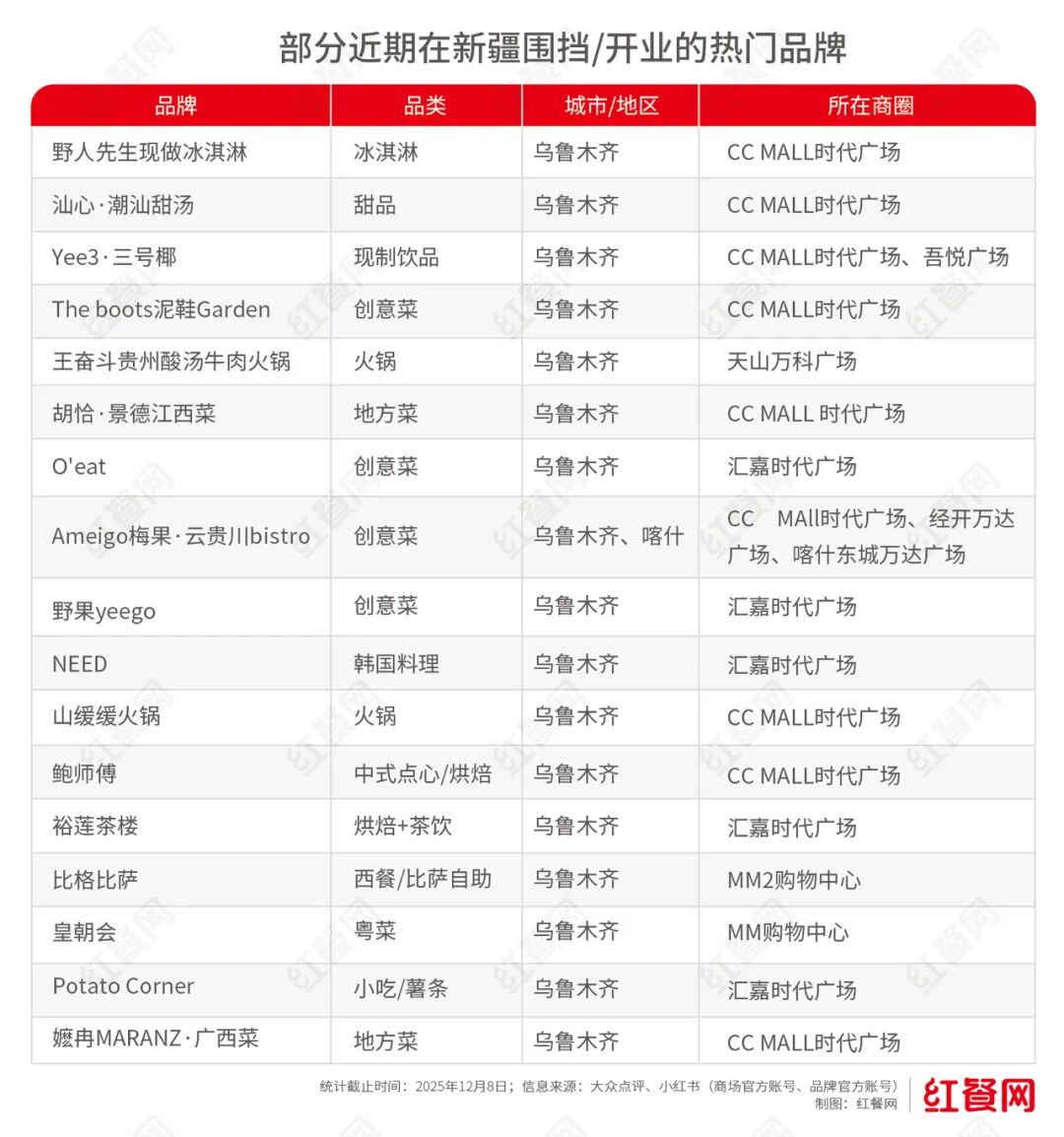
最近,新疆迎来了一轮餐饮品牌首店开业潮。 "昨天去买瑞幸,我的订单居然要排两个多小时。"阿聪告诉红餐网,最近哈密市开了一家瑞幸咖啡,生意火得不得了。他还表示,现在哈密的年轻人已经 实现了"奶茶自由","蜜雪冰城、霸王茶姬、喜茶、爷爷不泡茶这些品牌都能喝到。" 越来越多新疆的消费者发现,那些在北上广深大排长队的餐饮品牌,已经悄悄在新疆开店,尤其是省会城市乌鲁木齐,餐饮大牌首店正在扎堆上围挡。 据红餐网不完全统计,山缓缓火锅、The boots泥鞋Garden、Ameigo梅果·云贵川bistro、野果yeego等新晋"排队王"的新疆首店均已开业,鲍师傅、野人先生 现做冰淇淋、NEED创意韩国料理等热门品牌也上了围挡。 | 品牌 | 品类 | 城市/地区 | 所在商圈 | | --- | --- | --- | --- | | 野人先生现做冰淇淋 | 冰淇淋 | 乌鲁木齐 | CC MALL时代广场 | | 汕心·潮汕甜汤 | 甜品 | 乌鲁木齐 | CC MALL时代广场 | | Yee3 · 三号椰 | 现制饮品 | 乌鲁木齐 | CC MALL时代广场、吾悦广场 | | The boots泥鞋Garden ...
贵州土特产,成了打工人的“咖啡新替”
东京烘焙职业人· 2025-12-15 08:33
Core Viewpoint - The rise of matcha products in the beverage market is driven by changing consumer preferences towards more authentic, healthier, and complex flavors, with a notable shift towards bitter and concentrated matcha varieties [5][11][24]. Group 1: Market Trends - Matcha has gained significant popularity in 2024, with 50 leading tea brands launching 73 new matcha products, laying the groundwork for its explosive growth in 2025 [8]. - The perception of matcha has shifted from being considered too bitter to being embraced as a core selling point, with brands promoting the bitterness as a reflection of the tea's authentic flavor [11]. - The introduction of "thousand-mesh" matcha, which is finer and provides a more refined experience, has become prevalent, with many brands now sourcing matcha from domestic regions like Zhejiang and Guizhou [14][28]. Group 2: Consumer Behavior - Consumers are increasingly seeking genuine flavors and healthier options, moving away from overly sweet beverages to those that highlight the natural taste of ingredients [17][24]. - Matcha is being recognized not only for its flavor but also for its health benefits, being classified as a "superfood" rich in antioxidants, making it a preferred choice for those looking for a lighter beverage compared to coffee [19][20]. - The growing trend of DIY matcha preparation at home or in the office reflects a shift in consumer behavior, with 25.83% of consumers purchasing pure matcha drinks and 23.14% opting for matcha for home preparation [22]. Group 3: Supply Chain and Production - China has become the largest producer of matcha globally, with production reaching 3,916 tons in 2020, accounting for over 55% of the world's supply [26][27]. - Japan is facing a supply crisis due to adverse weather conditions affecting the production of key matcha ingredients, leading to increased prices and limited availability [28]. - The rise of domestic matcha production, particularly from regions like Zhejiang and Guizhou, is meeting the growing global demand, with Guizhou's matcha production exceeding 1,200 tons in 2024 [29][30]. Group 4: Cultural and Brand Development - The resurgence of matcha in China is seen as a return to its roots, with efforts underway to build a unique Chinese matcha culture and brand identity [34][35]. - Local brands are beginning to incorporate traditional Chinese tea practices to differentiate themselves from Japanese matcha, aiming to create a distinct cultural narrative around Chinese matcha [36].