一汽集团

Search documents
浙江荣泰(603119):主业稳健增长,传动业务卡位优越
Shanxi Securities· 2025-07-28 05:44
Investment Rating - The report assigns an "Accumulate-A" rating for the company, marking its first coverage [1][8]. Core Views - The company's main business is experiencing steady growth, particularly in the transmission sector, which is strategically positioned for future opportunities [1][8]. - The acquisition of a 15% stake in Jinli Transmission expands the company's robotics business footprint, enhancing its product matrix [2][8]. - The company has a robust customer base, including major international automotive manufacturers, which supports its strong cash flow and profitability [4][5][8]. Summary by Relevant Sections Company Overview - The company specializes in high-temperature insulation mica products, primarily for the new energy vehicle sector, with a revenue growth from 522 million to 1.135 billion from 2021 to 2024, reflecting a compound annual growth rate (CAGR) of 29.6% [4][8]. - The net profit increased from 104 million to 230 million during the same period, with a CAGR of 30.2% [4][8]. Financial Performance - As of March 31, 2025, the company reported a gross margin of approximately 35% and a net margin of around 20% [4][8]. - The projected earnings per share (EPS) for 2025, 2026, and 2027 are 0.87, 1.15, and 1.52 respectively, with corresponding price-to-earnings (P/E) ratios of 62.8, 47.7, and 36.0 [8][11]. Market Position and Strategy - The company is well-positioned to leverage its relationships with leading automotive manufacturers to expand its robotics business through strategic acquisitions [4][8]. - The acquisition of a 51% stake in Dizi Precision and the 15% stake in Jinli Transmission are part of the company's strategy to enhance its capabilities in micro transmission components [6][8]. Future Outlook - The company anticipates significant revenue growth, with projected revenues reaching 2.719 billion by 2027, representing a year-on-year growth of 30.8% [11][15]. - The company is expected to benefit from the ongoing industrialization of robotics, positioning it for long-term growth [8].

(经济观察)中国模型开源“接二连三” 开辟全球AI发展新路径
Zhong Guo Xin Wen Wang· 2025-07-26 12:41
Group 1 - Chinese technology companies are increasingly engaging in open-source AI model initiatives, with Alibaba launching multiple models in a short period, including Qwen3-235B-A22B-Instruct-2507, Qwen3-Coder, and Qianwen3 reasoning model [1] - The Kimi K2 model from Moonlight Dark Side, featuring a MoE architecture with 1 trillion total parameters and 32 billion active parameters, was also released [1] - The upcoming Step3 model from Jieyue Star will be the first full-size, native multimodal reasoning model, set to be open-sourced on July 31 [1] Group 2 - The open-source strategy of Chinese tech firms signifies a distinct path in AI development, promoting global AI technology accessibility and fostering an inclusive industrial ecosystem [2] - The Qwen3-Coder model has garnered attention from global investors and tech experts, being compared favorably to the Claude4 model [2] - The mixed model of "open-source ecology + closed-core" proposed by China emphasizes the balance between technology sharing and commercial value [2] Group 3 - The open-source wave in China is positively impacting the real economy, with major companies like FAW Group, China Petroleum, and Ping An Group integrating AI programming models [3] - The derivative models of Tongyi Qianwen have surpassed 140,000, making it the largest open-source model family globally, exceeding Meta's Llama series [3] - The "ecological empowerment" effect of open-source technology is evident across various sectors, creating a virtuous cycle of technology open-sourcing, scenario iteration, ecosystem cultivation, and market validation [3]

从传统车企到入列主流新能源玩家,一汽奔腾突围背后的行业逻辑
第一财经· 2025-07-24 15:38
Core Viewpoint - The Chinese electric vehicle (EV) industry is transitioning from rapid growth to a mature phase, with increasing market concentration among leading companies, making it difficult for new entrants to survive [1] Group 1: Company Performance - In the first half of 2023, FAW Bestune achieved a significant sales volume of 88,000 units, representing a 43% year-on-year increase, with new energy vehicle (NEV) sales reaching 73,000 units, nearly tripling year-on-year, and an NEV penetration rate exceeding 83% [1] - The company’s pure electric vehicle deliveries in June reached 16,800 units, marking its entry into the top ten for pure electric vehicle sales [1] - For the entire year of 2023, FAW Bestune is projected to exceed 120,000 units in sales, reflecting a 59.4% year-on-year growth, with expectations to surpass 150,000 units in 2024, achieving the best sales record in a decade [3] Group 2: Mechanism Innovation - FAW Bestune's growth is attributed to a "bone-removing" mechanism reform, which included introducing external investors for the first time, raising 1.6632 billion yuan from Jiangsu Yueda Automotive Group and 5 billion yuan from FAW Holdings [2] - The company underwent a structural adjustment, transitioning from "FAW Bestune Automobile Co., Ltd." to "FAW Bestune Automobile Co., Ltd." to enhance operational efficiency and resource allocation [2] Group 3: Market Strategy - FAW Bestune focuses on addressing core pain points for family users, emphasizing space, quality, and safety, which aligns with the needs of both female users and the lower-tier market [6] - The launch of the first NEV model, Bestune Xiaoma, achieved over 100,000 deliveries in its first year, becoming a phenomenon in the micro pure electric market [8] - The company plans to introduce six new models in the next two years, covering A0 to B-class segments, with the Yuyue 03 targeting the 70,000 yuan large space pure electric SUV market [8] Group 4: Technology Strategy - FAW Bestune adopts a "technology sharing" strategy, ensuring that key technologies are available across different price segments, enhancing competitiveness in the evolving market [10] - Collaborations with leading companies like CATL and Huawei improve the company's technological integrity in electric drive, battery, and intelligent cockpit areas [10] Group 5: User Engagement - The introduction of the "Joy Pai" user service brand expands traditional after-sales service into daily life, fostering community engagement and long-term emotional connections with users [12] - The "Joy Pai" initiative includes community-oriented activities that enhance user loyalty and increase the resale value and repurchase rates of vehicles [13] Group 6: Industry Implications - FAW Bestune's performance signifies a new phase in the EV competition, demonstrating that traditional state-owned enterprises can achieve systemic competitiveness through governance innovation, product focus, technology equity, and user ecosystem [15] - The company's success provides a replicable model for other state-owned enterprises in the industry, indicating a shift towards a more balanced competitive landscape in the Chinese EV market [15][16]


宁德时代新增10GWh磷酸铁锂电池产能
鑫椤锂电· 2025-07-23 07:04
Core Viewpoint - The article discusses the recent public announcement by the Ningde City Ecological Environment Bureau regarding the acceptance of the technical transformation project report for the Times FAW Power Battery Co., Ltd, indicating the formal approval of the project [1]. Group 1: Company Overview - Times FAW is a joint venture established by Ningde Times and FAW Group, focusing on the development, production, and sales of lithium-ion batteries, power batteries, and large-capacity energy storage batteries, along with related after-sales and technical consulting services [2]. - The company was founded on January 31, 2019, and has been actively involved in various projects, including the construction of a power battery project with an annual production capacity of 10GWh [2]. Group 2: Project Details - The first phase of the project, which has a production capacity of 10GWh, passed the environmental protection self-assessment on August 25, 2022, and has reached the approved capacity for environmental impact assessment [2]. - The second phase of the project aims to expand the production capacity to 30GWh, with ongoing construction of additional production lines and facilities [2]. - To meet market competition and industry development requirements, Times FAW plans to invest 200 million yuan to increase the first phase's production capacity by an additional 10GWh and introduce lithium iron phosphate battery production capabilities [2]. - The construction period for this project is set from July 2025 to January 2026, after which the total production capacity of the plant will reach 40GWh, including the already approved and under-construction capacities [2].

《财富》中国500强出炉:头部民营车企、新势力集体“升咖”
第一财经· 2025-07-22 15:19
Core Insights - The 2025 Fortune China 500 list highlights the significant rise of new energy vehicle (NEV) companies, showcasing a collective upward trend among firms like Seres, NIO, Xpeng, Li Auto, and the newcomer Leap Motor, indicating a vibrant industry [1][2] - The ranking is primarily based on companies' 2024 revenue, revealing a complex landscape of high revenue growth alongside profit declines and ongoing price wars [1][2] Group 1: New Energy Vehicle Companies - Seres achieved the largest ranking leap, moving from 404th to 169th, with revenue exceeding $20.177 billion, a remarkable increase of 298.5% [1] - Xpeng rose from 452nd to 351st, with revenue of $5.68 billion, up 31.1% year-on-year [2] - Li Auto's ranking improved slightly from 184th to 171st, with revenue of $20.077 billion, an increase of 14.8% [2] - NIO moved from 312th to 269th, with revenue of $9.136 billion, up 16.3% [2] - Leap Motor debuted at 423rd, with a revenue surge of 89% to $4.47 billion [2] Group 2: Established Private Automakers - BYD climbed from 40th to 27th, with revenue and profit growth of 26.9% and 31.8% respectively [2] - Geely Holdings improved from 54th to 41st, with a revenue increase of 13.6% and a slight profit rise of 2.8% [2] - Great Wall Motors moved from 158th to 140th, with revenue growth of 14.9% and a profit increase of 77.8% [2] Group 3: State-Owned Enterprises - Dongfeng Motor fell from 64th to 73rd, with a revenue decline of 10.9%, but managed to turn a profit of $318 million from a previous loss of $391 million [3] - SAIC dropped from 30th to 38th, with a revenue decrease of 17.1% and a profit drop of 88.4% [3] - FAW slid from 35th to 43rd, with a revenue decline of 13.1% and a profit drop of 70.8% [3] - GAC fell from 53rd to 66th, with a revenue decrease of 21.5% and a profit drop of 168.0% [3] Group 4: Export Performance - Chery Automotive rose from 100th to 49th, with revenue of $59.694 billion, up 52.7%, largely due to its export performance [4] - Yutong Bus saw a significant ranking increase from 488th to 375th, with a revenue growth of 35.4% and a profit increase of 122.9% [4] Group 5: Battery and Supply Chain Companies - CATL's ranking fell by 9 places to 77th, with an 11.2% revenue decline but a 13.2% profit increase [4] - Guoxuan High-Tech improved from 442nd to 394th, with a revenue increase of 10.2% and a profit rise of 26.5% [4] - Desay SV's debut on the list at 474th, with revenue of $3.838 billion, up 24.0%, and a profit of $279 million, up 27.5% [5]






《财富》500强出炉:头部民营车企、新势力集体“升咖”
第一财经网· 2025-07-22 13:12
Core Insights - The 2025 Fortune China 500 list highlights the significant rise of new energy vehicle (NEV) companies, showcasing a collective upward trend among them, while state-owned enterprises (SOEs) generally underperformed [1][2][3] Group 1: New Energy Vehicle Companies - New entrants like Seres, NIO, Xpeng, Li Auto, and Leap Motor saw substantial ranking increases, with Seres jumping from 404th to 169th, achieving a revenue of $20.177 billion, a 298.5% increase [1] - Xpeng rose from 452nd to 351st with a revenue of $5.68 billion, up 31.1% year-on-year; Li Auto's revenue reached $20.077 billion, a 14.8% increase, while NIO climbed from 312th to 269th with a revenue of $9.136 billion, up 16.3% [2] - Leap Motor, making its debut on the list, ranked 423rd with a revenue of $4.47 billion, soaring 89% [2] Group 2: Private Enterprises - BYD improved its ranking from 40th to 27th, with revenue and profit growth of 26.9% and 31.8% respectively; Geely Holdings moved from 54th to 41st with a 13.6% revenue increase and a slight profit rise of 2.8% [2] - Great Wall Motors climbed from 158th to 140th, reporting a revenue increase of 14.9% and a profit surge of 77.8% [2] Group 3: State-Owned Enterprises - SOEs like Dongfeng Motors fell from 64th to 73rd, with a revenue decline of 10.9% but managed to turn a profit of $318 million from a previous loss of $391 million [3] - SAIC dropped from 30th to 38th, with a revenue decrease of 17.1% and an 88.4% profit drop; FAW fell from 35th to 43rd, with a 13.1% revenue decline and a 70.8% profit drop [3] - GAC Motors slid from 53rd to 66th, with a revenue drop of 21.5% and a staggering 168% profit decline [3] Group 4: Export Performance - Chery Motors saw a significant ranking increase from 100th to 49th, with a revenue of $59.694 billion, up 52.7%, largely due to its export performance, which grew by 21.4% [3] - Yutong Bus also experienced a notable ranking rise from 488th to 375th, with a revenue increase of 35.4% and a profit growth of 122.9% [3] Group 5: Profitability Concerns - Despite rising rankings, some companies face profit declines, such as Li Auto, which reported a profit of $1.116 billion, down 32.5%, and Chery, with a profit drop of 21.7% [4] - The ongoing price war in the automotive sector is expected to lead to further differentiation and consolidation among companies [4] Group 6: Battery and Supply Chain Companies - CATL's ranking fell by 9 places to 77th, with an 11.2% revenue decline but a 13.2% profit increase; Guoxuan High-Tech rose from 442nd to 394th, with a revenue increase of 10.2% and a profit rise of 26.5% [4] - Companies in the intelligent driving supply chain, such as Joyson Electronics and Desay SV, also showed strong performance, with Joyson moving up to 300th and Desay entering the list at 474th with a revenue of $3.838 billion, up 24% [4]



汽车行业双周报:汽车反内卷力度加码,看好科技、品牌向上的车企-20250720
Hua Yuan Zheng Quan· 2025-07-20 14:56
Investment Rating - The investment rating for the automotive industry is "Positive" (maintained) [1] Core Viewpoints - The automotive industry is experiencing intensified efforts to combat "involution," leading to a more orderly terminal price competition. Since May 2025, various government departments have indicated a commitment to regulate "involution-style" competition in the automotive sector, with measures including cost investigations and price monitoring [3][6] - The impact of "involution" is expected to be more adverse for mid-to-low-end manufacturers, while manufacturers that can create user demand through technology and branding are likely to benefit [3][15] - The anticipated reduction in subsidies for new energy vehicles (NEVs) in 2026 may put pressure on actual sales growth, despite short-term support from consumer expectations of recovering discounts and potential tax incentives [3][16] Summary by Sections Automotive Industry Involution Measures - The core reason for the current round of involution in the automotive industry is weak demand, triggered by price cuts from major players like BYD. The market is entering a phase of stock competition, with many manufacturers resorting to price cuts to gain market share [6][7] - Key measures to combat involution include resisting low-price competition, enhancing product quality checks, advocating for the orderly exit of outdated capacities, and standardizing supplier payment terms to within 60 days [7][10] Impact on Price Competition - The measures taken are expected to lead to a more orderly terminal price competition, with significant promotional policies being retracted and efforts to stabilize dealer inventories and accelerate rebate payments [10][12] - Several manufacturers have committed to paying dealers within 60 days, which is expected to alleviate pressure on dealer inventories and stabilize terminal prices [11][13] Sales Outlook - The automotive industry is projected to face challenges in sales growth due to the anticipated reduction in NEV purchase tax subsidies in 2026. The expected decrease in subsidies may lead to a decline in sales growth rates, particularly for low-price segment manufacturers [16][17] - Historical data suggests that previous tax reduction policies have led to significant sales increases, indicating that the upcoming subsidy changes could similarly impact sales dynamics [20][21]
自主品牌加速崛起 六大车企半年销量破百万
Zhong Guo Jing Ying Bao· 2025-07-18 20:47
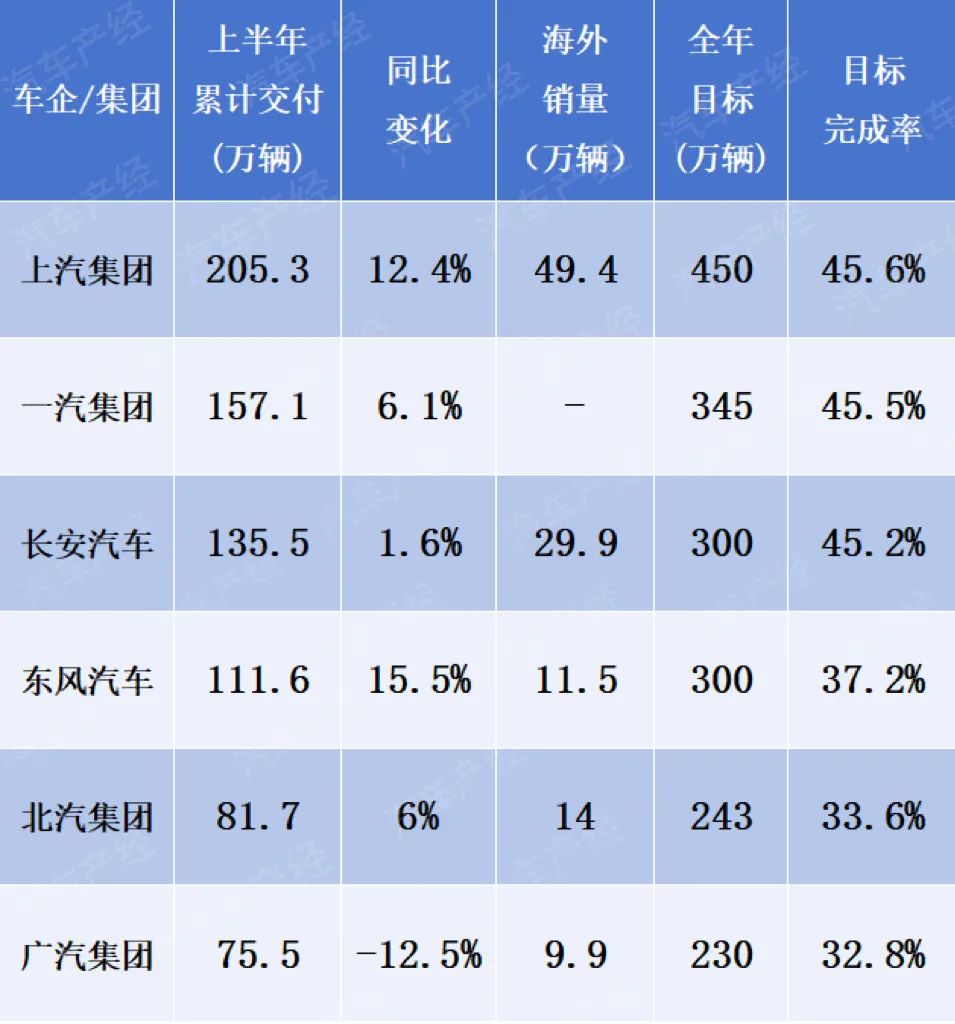
Industry Overview - The automotive market in China showed strong performance in the first half of 2025, with production and sales reaching 15.62 million and 15.65 million units respectively, marking year-on-year growth of 12.5% and 11.4% [2] - New energy vehicles (NEVs) also saw significant growth, with production and sales reaching 6.968 million and 6.937 million units, reflecting year-on-year increases of 41.4% and 40.3% [2][5] Major Players Performance - BYD achieved sales of 2.146 million vehicles in the first half of 2025, a year-on-year increase of 33.04% [4] - SAIC Motor sold 2.053 million vehicles, with a year-on-year growth of 12.4%, maintaining positive growth for six consecutive months [4] - Chery's sales reached 1.26 million vehicles, marking a year-on-year increase of 14.5% [5] - Geely's total sales were 1.93 million vehicles, with NEV sales reaching 1.001 million units, a remarkable year-on-year growth of 73% [5] New Energy Vehicle Trends - The NEV sector continues to thrive, with companies like Geely and Chery reporting substantial increases in NEV sales, contributing to the overall market growth [6][7] - The penetration rate of NEVs in Geely reached 52% in the first half of 2025, indicating a strong shift towards electric vehicles [5] Competitive Landscape - The competition among new car manufacturers has intensified, with Leap Motor leading the new forces with 221,700 deliveries, followed by Li Auto and Xpeng with 203,800 and 197,200 units respectively [3][7] - NIO's performance was relatively stable, delivering 114,000 vehicles, a year-on-year increase of 30.57% [8] Market Dynamics - The automotive industry is experiencing a shift from aggressive price competition to a focus on quality and innovation, as companies adapt to market changes and consumer demands [9][10] - The trend of "anti-involution" is gaining traction, with major players taking steps to stabilize supply chains and maintain supplier interests [8][9] Strategic Adjustments - Companies are restructuring internally to enhance competitiveness, with SAIC integrating its brands to improve resource utilization and reduce production costs [10] - The emphasis on brand innovation and quality improvement is becoming increasingly important in the competitive landscape of the automotive industry [10]

大明电子上交所IPO提交注册 专注于汽车电子零部件配套领域
智通财经网· 2025-07-18 12:44
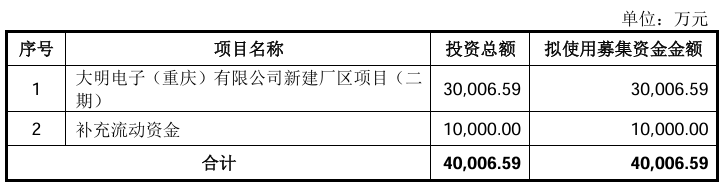
Core Viewpoint - Daming Electronics Co., Ltd. has applied for IPO on the Shanghai Stock Exchange, aiming to raise 400 million RMB, focusing on automotive electronic components and solutions [1] Group 1: Company Overview - Daming Electronics specializes in the design, development, production, and sales of automotive body electronic control systems, with products including driver assistance systems, cockpit central control systems, smart optical systems, window control systems, and seat adjustment systems [1] - The company has established stable partnerships with major domestic automotive manufacturers such as Changan Automobile, SAIC Group, BYD, and NIO, as well as foreign brands like Ford and Toyota [1] Group 2: Market Position and Strategy - Daming Electronics is actively expanding into the new energy vehicle sector, with products already applied in various models from brands like BYD and SAIC [2] - The company is conducting research on cutting-edge technologies to enhance product functionality and comfort, aligning with market trends in new energy and smart vehicles [2] Group 3: Financial Information - The total amount of funds raised will be allocated to the construction of a new factory and to supplement working capital, with a total investment of approximately 400 million RMB [3] - Projected revenues for 2022, 2023, and 2024 are approximately 1.713 billion RMB, 2.147 billion RMB, and 2.727 billion RMB, respectively, with net profits of about 151 million RMB, 205 million RMB, and 282 million RMB [3] - As of December 31, 2024, total assets are projected to be approximately 2.716 billion RMB, with a net profit of about 282 million RMB and a basic earnings per share of 0.78 RMB [4]
这可能是全网最全的年中盘点
3 6 Ke· 2025-07-16 04:08
Core Insights - The Chinese automotive market has shown strong performance in the first half of 2025, with retail sales of narrow passenger cars reaching 10.901 million units, a year-on-year increase of 10.8% [1] - Domestic brands have captured a significant market share of 64%, indicating their dominance in the Chinese market [1] - BYD leads the sales chart with 2.146 million units sold, while Geely has seen a remarkable growth rate of 47% year-on-year [1][12] - New energy vehicle sales are on the rise, with companies like Leap Motor and XPeng showing significant growth [1][19] Group 1: Overall Market Performance - As of June 2025, the cumulative retail sales of narrow passenger cars in China reached 10.901 million units, reflecting a 10.8% increase compared to the previous year [1] - Domestic brands have increased their market share to 64%, solidifying their position in the market [1] - BYD has achieved a sales volume of 2.146 million units, maintaining its position as the top seller [12] - Geely's sales have surged by 47%, prompting the company to raise its annual sales target to 3 million units [1][12] Group 2: Performance of New Energy and Emerging Brands - Leap Motor has emerged as a leader among new energy vehicle manufacturers, with monthly sales nearing 50,000 units [1] - XPeng has also shown impressive growth, selling more vehicles in the first half of 2025 than in the entire previous year [1] - The new energy vehicle segment is experiencing rapid growth, with companies like BYD and Geely leading the charge [12][19] Group 3: Traditional Automakers' Performance - Some traditional automakers are showing signs of recovery, with brands like FAW-Volkswagen and SAIC Volkswagen reporting positive year-on-year growth [1][9] - FAW Toyota has seen a significant increase of 16% in sales, indicating a rebound in the joint venture segment [1][9] - However, brands like GAC are struggling, with a decline in sales, highlighting the challenges faced by traditional automakers [1][9] Group 4: Export Performance - SAIC has become a leader in overseas sales, with 494,000 units sold, accounting for nearly 25% of its total sales [10] - Changan has also made strides in international markets, with overseas sales exceeding 300,000 units, a growth of over 45% [10] - GAC has reported a 45.6% increase in overseas sales, completing 55% of its annual export target [10]