格力电器

Search documents
做制造业 要一个一个螺丝钉去打造——珠海格力电器股份有限公司董事长董明珠访谈(与企业家谈“新”)
Ren Min Ri Bao· 2026-02-05 22:04
Core Viewpoint - Gree Electric Appliances is expanding from its core air conditioning business into industrial machinery and semiconductor industries, emphasizing the importance of high-quality products and a commitment to innovation and integrity in business practices [2][10]. Group 1: Company Development and Philosophy - Gree Electric's chairman, Dong Mingzhu, has been with the company for 36 years, highlighting the importance of commitment and responsibility in various roles within the organization [3]. - The company has shifted its sales model from "goods first, payment later" to "payment first, goods later," improving internal management and trust among distributors [4][5]. - Gree Electric emphasizes the need for a unified value system within the team to enhance product quality and ensure mutual benefits for consumers, shareholders, and partners [4]. Group 2: Quality and Innovation - The company is focused on using market feedback to drive improvements in product quality, asserting that only high-quality products can sustain market presence [6]. - Gree Electric has established a quality control system and is committed to continuous learning and innovation to enhance its technological capabilities [8]. - The company has made significant strides in the semiconductor sector, particularly in silicon carbide chips, and is continuously upgrading its technology [11]. Group 3: Market Position and Strategy - Gree Electric aims to maintain its competitive edge by investing in high-precision manufacturing equipment, moving away from reliance on imported machinery [10]. - The company is transitioning into a comprehensive technology-driven industrial group, with plans for 100% self-owned brand sales in international markets [17]. - Gree Electric is committed to delivering quality products despite market pressures and price wars, emphasizing the importance of brand integrity and consumer responsibility [18].


国恩股份(002768):Q3业绩延续高增 积极布局机器人赛道
Ge Long Hui· 2026-02-05 17:26
Core Viewpoint - The company reported strong financial performance in Q1-Q3 2025, with revenue and net profit showing significant year-on-year growth, driven by the demand for modified plastics in various industries, including traditional appliances and emerging markets like new energy vehicles and robotics [1][2]. Financial Performance - In Q1-Q3 2025, the company achieved revenue of 15.497 billion yuan, a year-on-year increase of 9.44%, and a net profit attributable to shareholders of 615 million yuan, up 34.24% year-on-year [1]. - For Q3 2025, revenue reached 5.743 billion yuan, reflecting an 18.81% year-on-year growth and a 7.52% quarter-on-quarter increase. The net profit attributable to shareholders was 269 million yuan, marking a 46.67% year-on-year rise and a 14.66% quarter-on-quarter increase [1]. Business Growth Drivers - The company's modified and composite materials business is expanding, capitalizing on opportunities in traditional and emerging markets, including partnerships with leading clients such as Hisense, Gree, CATL, and BYD [1]. - The company is focusing on high-end product development in areas like HP-RTM ultra-thin battery packs and PHB, which is driving product premiumization [1]. - Strategic investments in humanoid robotics and low-altitude economy sectors are underway, including a planned 1,000-ton PEEK materials project and the establishment of an autonomous computing center for AI model training [1]. Industry Outlook - China's modified plastics production is expected to grow significantly, with the modification rate increasing from 15.2% to 26.2% from 2014 to 2024, indicating substantial room for improvement compared to international standards [2]. - The compound annual growth rate (CAGR) for high polymer modified materials and composite materials in China is projected to be 14.1% from 2025 to 2029, driven by new industries such as robotics and low-altitude economy, as well as increased demand for modified plastics in appliances and automotive lightweighting [2]. Strategic Investments - The company is enhancing its vertical integration in the chemical industry through strategic investments in projects like Guo'en Yisu, Hong Kong Petrochemical, and Guo'en Dongming [2]. - The production capacity of Guo'en Yisu's 1 million tons of polystyrene (PS) project is progressing, with the first phase of 600,000 tons already operational [2].

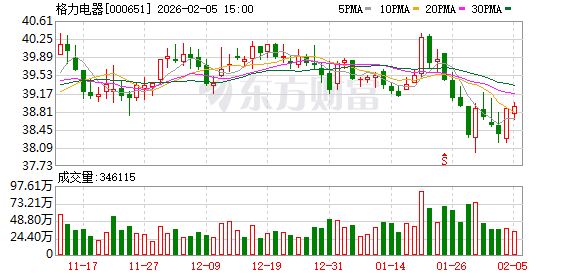
格力电器:公司具备强大的核心部件研发和制造能力
Zheng Quan Ri Bao Wang· 2026-02-05 13:48
证券日报网讯 2月5日,格力电器(000651)在互动平台回答投资者提问时表示,公司具备强大的核心 部件研发和制造能力,旗下有凌达压缩机、凯邦电机、新元电子、格力电工及格力模具等子公司,在产 能、技术和质量方面均处于行业领先地位。核心零部件自主研发、制造,保障了公司产品的综合竞争 力。 ...
广东芬尼股份IPO进入问询阶段,年入15亿,中信证券保荐
Sou Hu Cai Jing· 2026-02-05 13:13
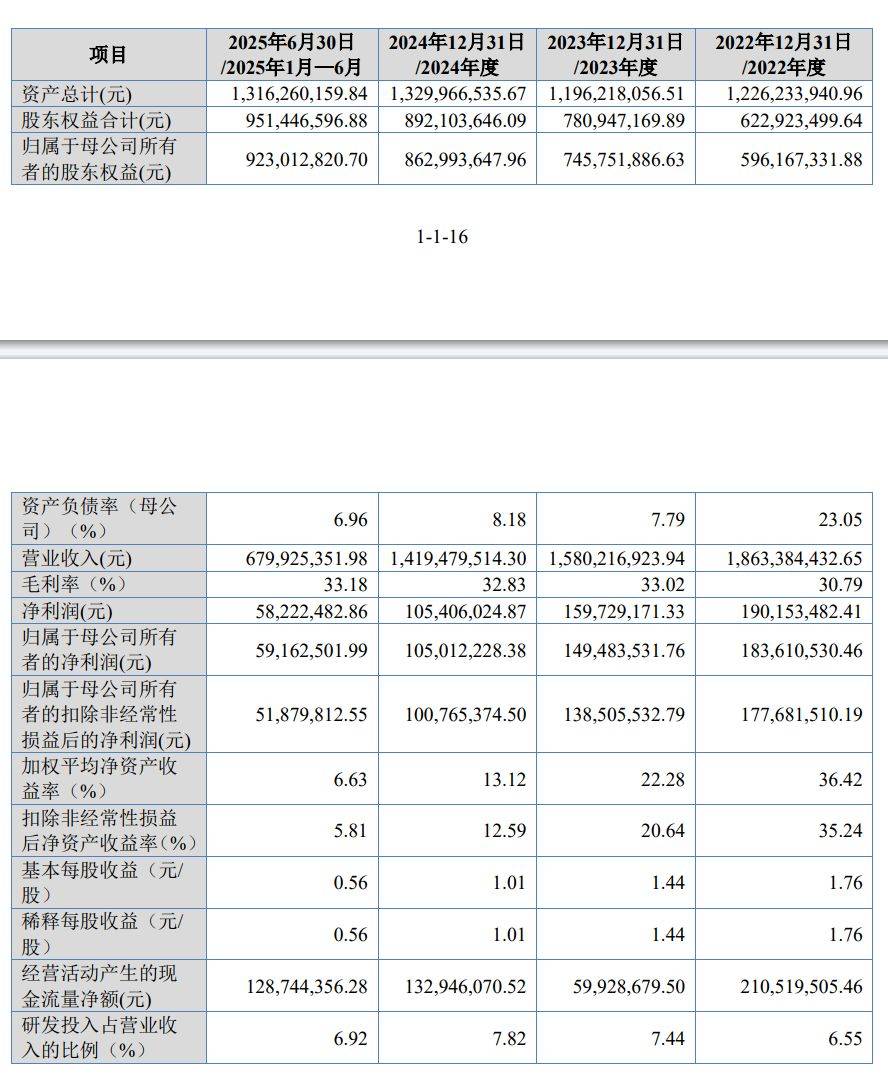
2026年1月27日,广东芬尼科技股份有限公司在北交所的IPO申请已进入已问询阶段。公司计划募集资金4.5亿元,保荐机构为中信证券股份有限 公司,律师事务所为北京市君合律师事务所,会计师事务所为天健会计师事务所(特殊普通合伙)。 公司定位 芬尼股份,公司位于广东省广州市,是一家围绕热泵产品开展研发、生产、销售及服务一体化业务的公司。公司的主要产品为空气源热泵及其 相关产品,公司产品按功能主要划分为泳池恒温产品、采暖(制冷)产品、生活热水产品和烘干产品等,广泛应用于家庭、商业和工农业等三 大领域。 主要财务数据 报告期内(2022年至2025年上半年),芬尼股份的营业收入分别为18.63亿元、15.8亿元、14.19亿元、6.8亿元;净利润分别为1.9亿元、1.6亿 元、1.05亿元、5822.25万元。 | 项目 | 2025年6月30日 | 2024年12月31日 2023年12月31日 | | 2022年12月31日 | | --- | --- | --- | --- | --- | | | /2025年1月-6月 | /2024年度 | /2023年度 | /2022年度 | | 资产总计(元) | 1 ...

铜价高位震荡 “以铝节铜”应用提速
Xin Hua She· 2026-02-05 13:00
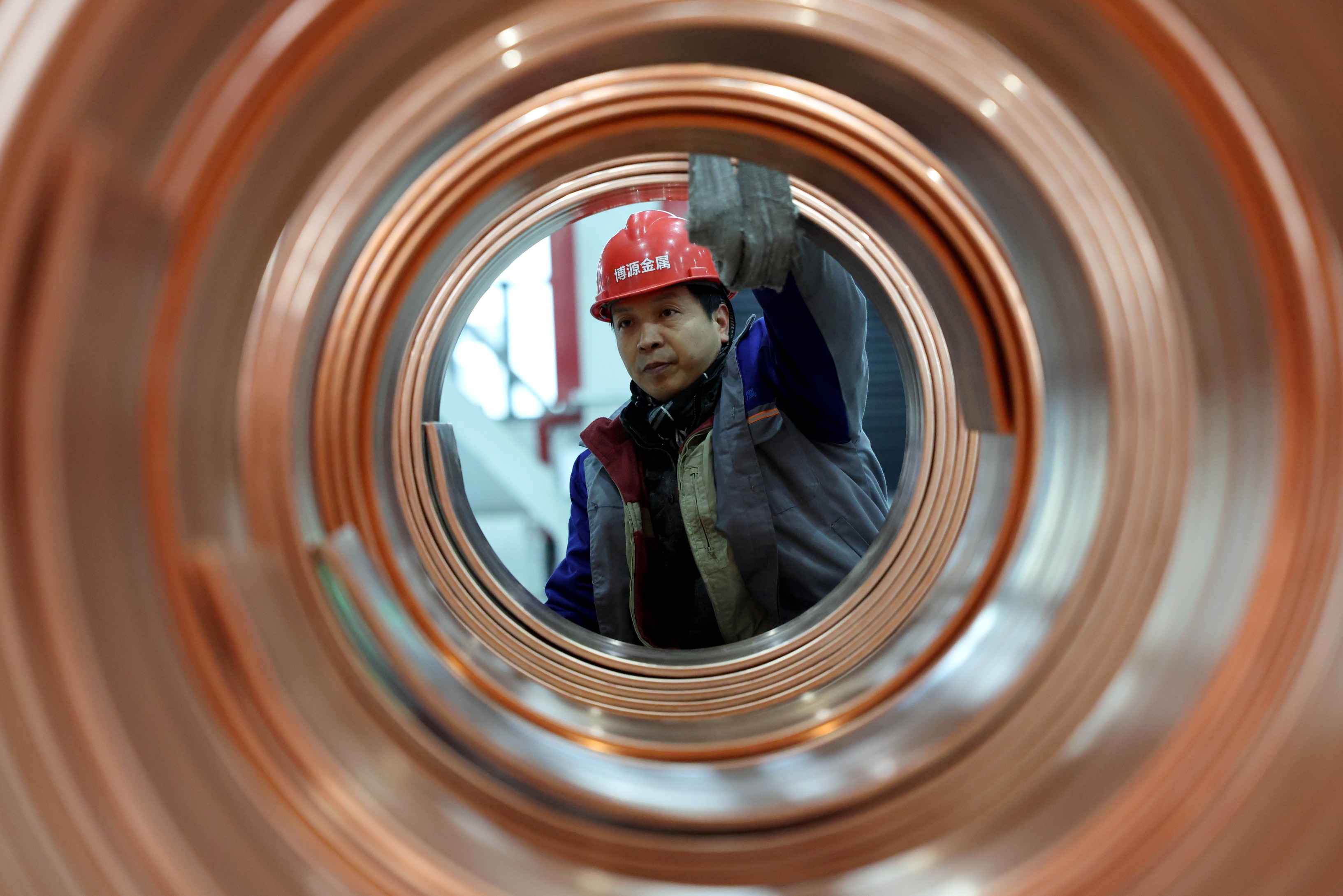
Group 1 - In January 2026, domestic copper prices surged significantly compared to both year-on-year and month-on-month figures, following a historical high in 2025, with high volatility observed in early February [1] - The recent increase in copper prices is attributed to a combination of supply disruptions, rising demand, and favorable policy expectations [1] - Global copper mines are facing long-term constraints due to declining resource quality, rising extraction costs, and increased supply vulnerabilities, with copper grades dropping from 1.3% in 2005 to 0.65% in 2025, and extraction costs rising over 40% since 2015 [1] Group 2 - The demand for copper is significantly driven by "green energy" and "artificial intelligence," with electric vehicles using 3 to 5 times more copper than traditional fuel vehicles, leading to a demand increase of hundreds of thousands of tons [1] - AI data centers have a higher copper density compared to traditional data centers, with the explosion of computing power and the construction of supporting power systems driving demand for high-purity copper foil and precision copper cables [1] - The global liquidity and geopolitical environment have also created favorable conditions for rising copper prices, with abundant liquidity and a strong equity market since the beginning of 2026 [1] Group 3 - The rise in copper prices has resulted in increased cost pressures for downstream companies, affecting various sectors from household items to industrial applications [4] - Companies like Anhui Meibo Intelligent Electric Group and Jiangjun Air Conditioning have issued price adjustment notices, citing rising copper prices as a significant reason [4] Group 4 - Some companies are focusing on technological upgrades to mitigate cost pressures, employing advanced technologies such as AI dynamic energy-saving techniques to enhance efficiency without increasing raw material usage [5] - Industry players are accelerating innovation, with companies like Nord Technology producing ultra-thin lithium battery copper foil and Jintian Copper upgrading recycling processes to achieve 99.99% purity for high-tech applications [5] - Long-term strategies include intelligent mining, low-grade utilization, and high-end material research to address cost pressures and achieve excess profits through technological innovation [5] Group 5 - The strategy of "using aluminum to save copper" is emerging as a significant exploration path, involving the development of aluminum alloy cables and copper-aluminum composite materials to conserve copper resources while ensuring performance [6] - The Ministry of Industry and Information Technology has identified key areas for aluminum development, including aluminum conductors for photovoltaic and wind power stations [6] - The application of copper-aluminum composite materials has shown promising results, with copper usage in air conditioning units decreasing from 12 kg per unit in 2000 to 4 kg currently, and in electric vehicles from 80 kg to 60 kg [6] Group 6 - The value of high-quality copper-aluminum composite materials extends beyond cost savings, offering green value with aluminum recycling energy consumption being only 5% of that for primary aluminum, which is lower than copper recycling energy consumption [8] - The adoption of "using aluminum to save copper" technologies enhances resource conservation and may reduce dependence on imported copper materials, particularly copper concentrates [8]
财经聚焦丨铜价高位震荡 “以铝节铜”应用提速
Xin Hua Wang· 2026-02-05 12:46
Core Viewpoint - Copper prices have been experiencing high volatility, driven by supply disruptions, increasing demand, and policy expectations, leading to significant price increases in early 2026 compared to previous years [1]. Supply Factors - Global copper mines are facing long-term constraints due to declining resource quality, rising extraction costs, and increased supply vulnerabilities. The copper grade has decreased from 1.3% in 2005 to 0.65% in 2025, with extraction costs rising over 40% since 2015 [1]. Demand Factors - The demand for copper is being significantly driven by the "green energy" and "artificial intelligence" sectors. For instance, a typical electric vehicle uses 3 to 5 times more copper than a traditional gasoline vehicle, leading to a demand increase of hundreds of thousands of tons. Additionally, AI data centers require much higher copper density compared to traditional data centers [1]. Market Environment - The global liquidity and geopolitical environment have also contributed to the rise in copper prices. Since the beginning of 2026, global liquidity has been ample, and the equity market has strengthened, further pushing copper prices upward [1]. Cost Pressure on Downstream Enterprises - The rise in copper prices has resulted in increased cost pressures for downstream companies, affecting various sectors such as electrical cable production and energy storage battery manufacturing. Companies like Anhui Meibo Intelligent Electric Group and Wuxi Jiangjun Air Conditioning have issued price adjustment notices citing rising copper prices as a key reason [3]. Innovation and Technological Upgrades - Companies are focusing on technological upgrades to mitigate cost pressures. For example, Gree Electric's use of AI dynamic energy-saving technology has improved efficiency without increasing raw material usage. Additionally, companies like Nord and Jintian Copper are innovating in copper foil production and recycling processes to meet high purity requirements for high-tech industries [4]. "Aluminum for Copper" Strategy - The "aluminum for copper" strategy is gaining traction, which involves using aluminum alloy cables and copper-aluminum composite materials in various sectors to save copper resources while ensuring performance. This approach is supported by government initiatives aimed at promoting aluminum applications in renewable energy and household appliances [6]. Performance Improvements - The application of copper-aluminum composite materials has shown significant results, with the amount of copper used in air conditioning units decreasing from 12 kg per unit in 2000 to 4 kg currently, and in electric vehicles from 80 kg to 60 kg [6]. Future Projections - Experts predict that in the next three years, the average copper usage in distribution network equipment will decrease by 65%, with complete switchgear equipment reducing copper usage from 200 kg to 70 kg per unit [7]. Environmental and Competitive Advantages - The use of high-quality copper-aluminum composite materials not only reduces costs but also has environmental benefits, as aluminum recycling consumes only 5% of the energy required for primary aluminum production, which is lower than that for copper recycling. This shift is expected to reduce dependence on imported copper raw materials, particularly copper concentrate [8].

2026开年中央空调行业集体涨价,谁来买单?
Xin Lang Cai Jing· 2026-02-05 12:18
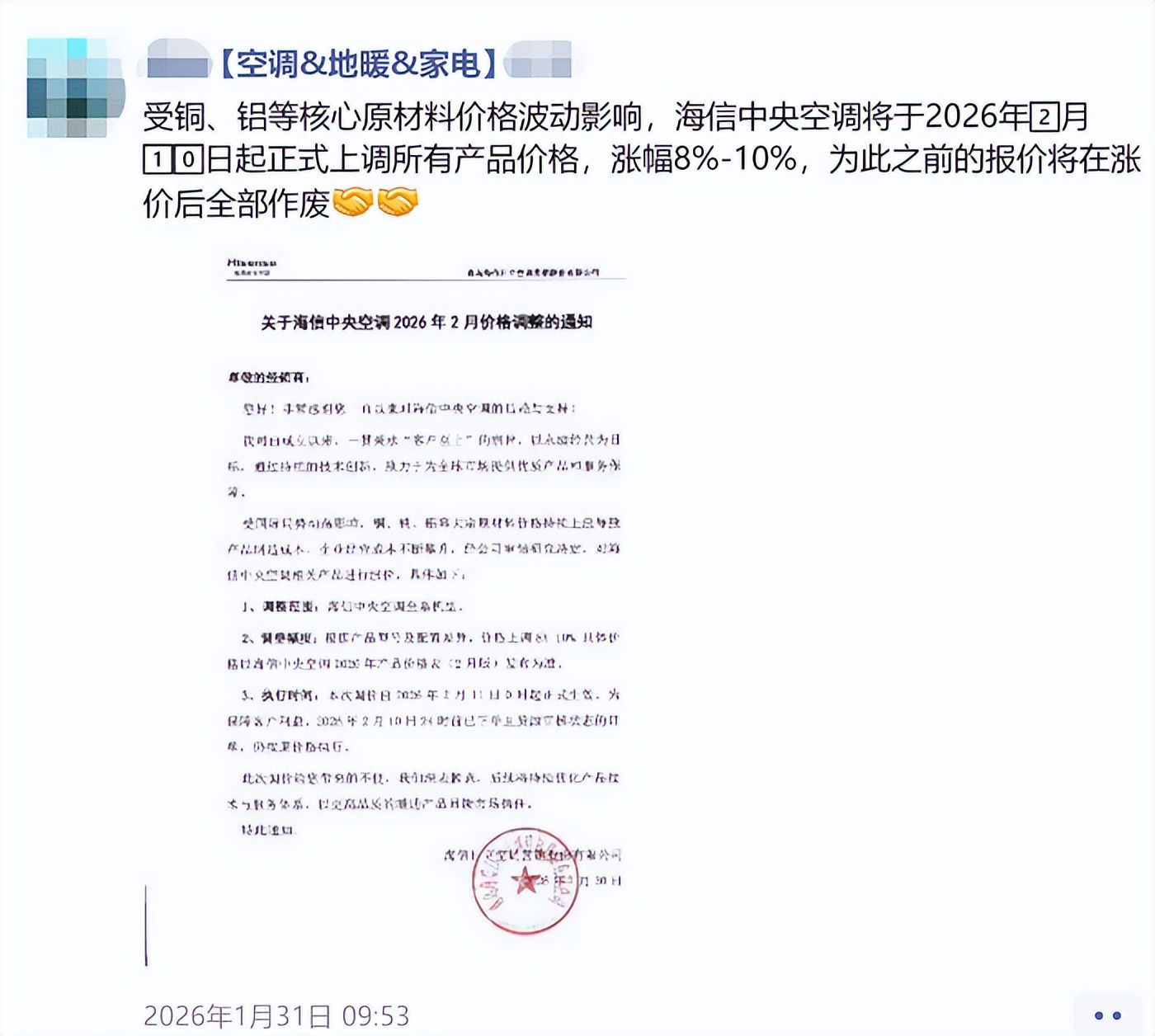
元旦刚过,中央空调市场便迎来一波密集的涨价通知。一位经销商在朋友圈转发海信中央空调的调价函时,或许并未意识到,这仅是冰山一角——一场始于 2025年底的行业性价格调整,正全面铺开。 早在2025年12月,镁刻阳光和iCongo丨志高智能环境已率先宣布,自2026年1月1日起上调产品提货价。2026年1月初,TCL、奥克斯等品牌迅速跟进。至1月 下旬,日立、海信、约克VRF、科龙等品牌纷纷加入,另有美的、格力等品牌施行了区域性的涨价通知,形成行业性的集体调价浪潮,涨幅普遍介于3%至 10%。 鑲刻 阳光 | MEKER 铝、冷媒等大宗原材料 因铜√ 价格上涨 2026年1月1日起 镁刻阳光空调全系列价格上调 5% 2026年1月1日起 因核心原材料价格上涨 iCongo全系列产品价 RISE IN PR 0 200 8169007 总部地址:广东省佛山 iCongo 志高智能环境 # 奥克斯空调温馨提示 # 1月10日起热销机型价格上调 5%-8% 感谢理解与支持 TQ 英全中国雷值本部空间产品经营中心 关于 TCL 空调产品1 各大区战区、各经销商: 近期空调相关大来原材料价格持 且上涨趋势仍在持续。此外,其 ...



邵宇| 黄金暴涨的逻辑:39万亿美元国债,是否庞氏骗局?【问诊2026中国经济】
Sou Hu Cai Jing· 2026-02-05 11:27
Group 1 - Gold prices surged to over $5,500 per ounce in early 2026, a significant increase from around $2,000 two years prior, driven by geopolitical tensions and economic uncertainties [1][6][20] - The current global economic landscape is characterized by three major bubbles: gold, digital currencies, and artificial intelligence, reflecting structural contradictions in the global economy [3][6][8] - Historical precedents for gold price surges include the collapse of the Bretton Woods system in 1973 and the U.S. debt crisis in the 1980s, both of which led to significant increases in gold value [6][18][20] Group 2 - The real estate bubble poses a unique risk to the economy, as excessive construction leads to resource wastage, and its collapse can have severe repercussions, as seen in the 2008 financial crisis [5][6] - The current technology bubble, particularly in artificial intelligence, is expected to be significantly larger than previous bubbles, with potential impacts on employment and economic structures [8][9][12] - The evolution of the AI bubble is driven by narratives that attract investment, similar to historical tech booms, but it raises concerns about job displacement and societal impacts [9][10][12] Group 3 - The demand for gold is influenced by its dual role as an economic asset and a safe haven during geopolitical crises, making it a preferred choice in times of uncertainty [18][20] - The future of the monetary system is under scrutiny, with gold being viewed as a potential ultimate store of value amidst concerns over fiat currency inflation and digital currency volatility [20][21] - The ongoing geopolitical conflicts and the shifting global order are contributing to the rising gold prices, as investors seek stability in uncertain times [27][28][34] Group 4 - The Chinese economy is facing challenges in maintaining growth amidst global uncertainties, emphasizing the need for investment in both emerging and traditional industries [34][35] - The K-shaped economic recovery highlights disparities between sectors, necessitating a balanced approach to support both new and traditional industries for sustainable growth [35][36] - The importance of stabilizing asset prices is crucial for maintaining public confidence and encouraging investment, particularly in the stock and real estate markets [36][39]
家电行业2026年度信用风险展望(2026年1月)
Lian He Zi Xin· 2026-02-05 11:01
Investment Rating - The report indicates a stable outlook for the home appliance industry, with a focus on credit risk assessment for 2026 [7] Core Insights - The home appliance industry in China experienced a historical high in domestic sales in 2025, driven by government policies and consumer demand, although growth is expected to slow down due to high base effects and market saturation [10][20] - The export of home appliances faced challenges in 2025, with total export value and quantity declining compared to the previous year, influenced by high base effects and uncertain trade environments [10][22] - The industry is undergoing structural changes, with growth driven by smart, green, and high-end product upgrades, as well as deeper market penetration [10][11] Industry Overview - In 2025, China's GDP reached 140.19 trillion yuan, growing by 5.0% year-on-year, supported by domestic demand and government policies [11] - The retail sales of home appliances and audio-visual equipment reached 1.16949 trillion yuan, a year-on-year increase of 11.0% [20] - The home appliance market is characterized by a shift from policy-driven growth to market-driven dynamics, with a notable impact from the "old-for-new" subsidy policies [10][20] Policy and Regulatory Environment - The government continued to enhance the "old-for-new" subsidy policy in 2025, expanding the scope and funding to stimulate home appliance consumption [15][16] - The 2026 policy will maintain support for the "old-for-new" program, focusing on energy-efficient products and expanding the range of supported items [17] Industry Performance - The home appliance sector showed resilience in 2025, with sample companies reporting revenue growth of 7.35% and profit growth of 10.42% in the first three quarters [44] - The industry is experiencing a structural differentiation in performance, with leading brands benefiting from government policies and market dynamics [38] Competitive Landscape - The home appliance industry is highly competitive, with leading companies like Midea, Haier, and Gree dominating the market, accounting for a significant share of total revenue [38][41] - The market is increasingly concentrated, with the top ten companies accounting for approximately 82.38% of the industry's revenue [38] Financial Condition - The sample companies in the home appliance industry maintain a low leverage level, with a median debt-to-asset ratio of 43.29% as of September 2025 [49] - Profitability indicators show a decline in gross margin to 21.61% in the first three quarters of 2025, compared to 23.15% for the previous year [45]
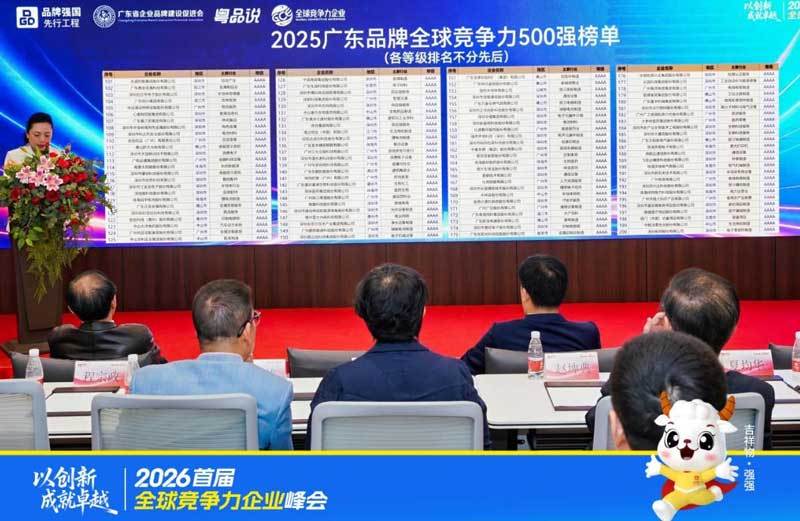
佛山新闻:2025广东品牌全球竞争力500强名单在佛山南海揭晓
Sou Hu Cai Jing· 2026-02-05 08:38
Core Insights - The 2026 Global Competitiveness Enterprise Summit was held in Foshan, Guangdong, focusing on the theme "Chinese Brands, Global Rise" and featured the release of the "2025 Guangdong Brand Global Competitiveness Top 500 Report" [1][2] - The summit highlighted the importance of brand strength as a key strategy for global competitiveness, with a strict evaluation process for the top 500 companies [2][5] Group 1: Event Overview - The summit was co-hosted by the Brand Strong Country Pilot Project Committee and the Guangdong Enterprise Brand Construction Promotion Association [1] - The "2025 Guangdong Brand Global Competitiveness Top 500" and "Global Competitiveness Enterprises" lists were officially unveiled, providing a scientific guide for brand globalization [1][2] Group 2: Company Performance - A total of 500 AAA-rated and above companies were selected, including major players like Huawei, Tencent, and BYD, showcasing Guangdong's manufacturing strength and global brand potential [2][5] - The report indicated that the total revenue of the top 500 companies reached 14.11 trillion yuan, surpassing the GDP of several developed countries [4] Group 3: Industry and Regional Insights - The top 500 companies displayed a clear trend of "regional concentration, industrial strength, and innovation-driven" characteristics, with 333 companies located in Shenzhen, Guangzhou, and Foshan [5][6] - Manufacturing dominated the list, with 416 companies (83.2%) in this sector, highlighting the strength of strategic emerging industries like biomedicine and new energy vehicles [6] Group 4: Future Directions - The summit emphasized the need for Guangdong brands to continue leveraging technological innovation and global operations to enhance their position in the global value chain [8][10] - Initiatives were announced to support brand development, including the establishment of a public welfare platform and specialized committees to aid in overseas expansion [10]