海底捞

Search documents
SKP、大悦城、兰州中心...西北68家商场2025年销售额来了!
3 6 Ke· 2026-01-30 01:57
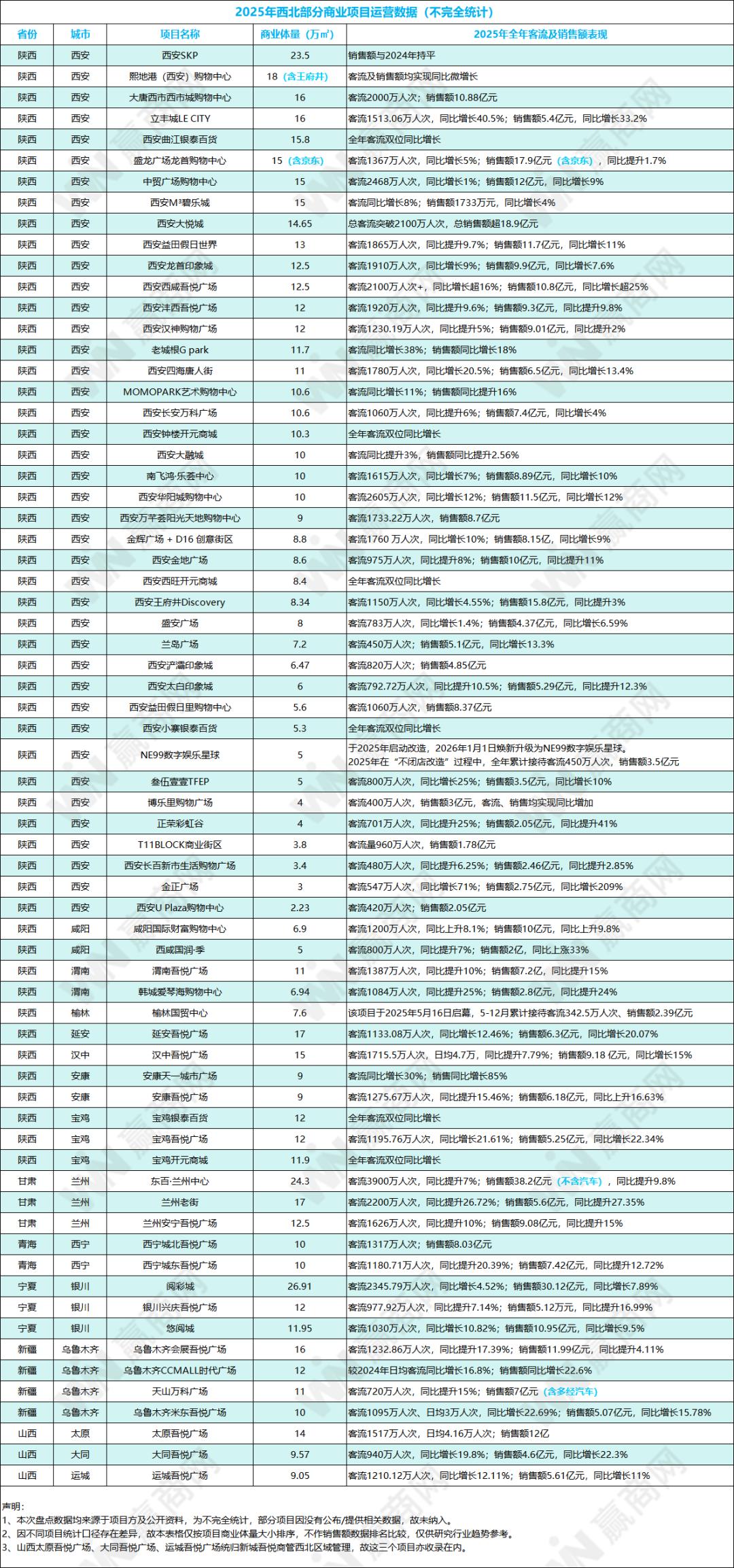
Core Insights - The commercial market in Northwest China shows steady growth in both customer traffic and sales, indicating resilience and a positive outlook for the industry [2][5][12] Group 1: Business Performance and Brand Insights - In 2025, 68 monitored projects in Northwest China reported stable or increasing customer traffic and sales, with 55.9% of projects achieving slight year-on-year growth [2] - Top-performing restaurant brands include Lanxiangzi (31 times in the top five), Haidilao (25 times), and KFC (16 times), which dominate the market through standardized operations [3] - Leading retail brands such as Huawei (34 times), Chow Tai Fook (25 times), and Xiaomi (19 times) are driving revenue growth, particularly in the digital and jewelry sectors [4] Group 2: Market Structure and Trends - The commercial landscape in Northwest China is shifting towards a focus on existing market optimization rather than new developments, aligning with national trends [5][6] - In 2025, only 19 new commercial projects were launched in Northwest China, with a significant increase in the proportion of projects focused on revitalizing existing spaces [7] - The annual brand replacement rate in the region is between 20-26%, indicating a shift towards enhancing existing commercial functions and customer engagement [8] Group 3: First Store Economy - The introduction of new brands is crucial for revitalizing existing commercial spaces, with 376 new stores opened in Xi'an in 2025, including 3 national first stores and 171 regional first stores [9] - This strategy not only injects vitality into existing projects but also directly contributes to increased customer traffic and sales [9] Group 4: Future Outlook - As the focus of commercial transformation shifts from basic adjustments to deep operational enhancements, businesses will better align with customer needs, fostering continuous economic vitality in the region [12]


2025餐饮行业观察:规模红利消退,靠什么赢得明天?
3 6 Ke· 2026-01-30 00:25
Group 1: Industry Overview - In 2025, the domestic catering industry in China reported a total revenue of 57,982 billion yuan, marking a year-on-year growth of 3.2% [1] - The revenue from catering enterprises above designated size reached 16,337 billion yuan, with a growth rate of 2.0% [1] - The industry is experiencing a shift from incremental expansion to stock competition, with challenges such as market fragmentation and evolving consumer demands [1] Group 2: Hot Pot Industry Insights - The hot pot industry has entered a phase of "stable total, optimized structure," with a decline in the number of hot pot restaurants by 5.7% year-on-year, totaling approximately 551,000 by the end of 2023 [2] - The top 100 hot pot brands accounted for a market share of 16% in the first half of 2025, generating a combined revenue of 99 billion yuan [2] - Despite the increase in industry concentration, leading companies like Haidilao and Jiumaojiu reported declines in revenue and net profit, indicating overall pricing pressure in the industry [3] Group 3: Consumer Trends and Market Dynamics - The average spending per person on hot pot has decreased from over 80 yuan to around 70 yuan, reflecting a price-sensitive market [3] - The rise of small hot pot brands is notable, with over 24,000 related enterprises existing by November 2025, showing a year-on-year growth of 2.6% [4] - Consumer preferences are diversifying, with younger consumers favoring unique flavors and healthier options, leading to a segmented market [5] Group 4: Challenges in the Hot Pot Sector - The hot pot industry faces challenges such as oversaturation of stores, rising costs, and a lack of innovation, with food ingredient costs increasing from 38% to 45% of total expenses [6] - The industry is experiencing a shift from reliance on store expansion to focusing on supply chain efficiency and differentiated positioning [6] - The competition is intensifying, with brands needing to balance cost and quality to maintain profitability [6] Group 5: Chinese Cuisine and Market Fragmentation - The Chinese dining market is characterized by a "big market, small companies" phenomenon, with leading brands holding less than 1% of the total market share [8] - High cooking standards and regional flavor preferences hinder the scalability of Chinese cuisine, making it difficult for brands to achieve nationwide recognition [8][9] - Many brands are exploring "fusion cuisine" to overcome regional limitations, but face challenges in maintaining flavor integrity and operational efficiency [9] Group 6: Fast Food Sector Challenges - The fast food segment, represented by brands like Laoxiangji and Yuanji Yun Jiao, faces intense competition despite having a large number of stores [11] - Laoxiangji, as the leading brand, has expanded to 1,404 stores but struggles with maintaining quality across its franchise model [12] - Yuanji Yun Jiao's rapid expansion through franchising raises concerns about quality control and food safety, impacting brand reputation [12] Group 7: Future Outlook - The growth logic of the catering industry is shifting from "store scale competition" to "single-store efficiency competition," emphasizing supply chain optimization and quality management [15] - Brands that can balance expansion, quality control, and cost management will likely succeed in the evolving market landscape [15] - The industry is expected to continue facing challenges related to consumer trust and operational efficiency, necessitating ongoing innovation and adaptation [15]
品牌投B站,为什么冰火两重天?
3 6 Ke· 2026-01-29 12:44
去年双11,我们曾在一篇文章里提到B站的情况: 前段时间,跟B站内部人交流,他们也说,今年带货广告客户数量有显著增长,尤其是高客 单的品牌。11月12日,他们发了大促战报,投放带货广告的客户数比去年同期翻了一倍多, 千元以上消费品GMV同比增长63%。 品牌涌入新渠道,短期内推高投放和GMV,但如果操作不慎有可能翻船。在最近,有商家在我们的社 群转发帖子,"品牌投B站,是不是疯了?",引起不少人的兴趣;有人说转化难,有人说投了没赚到钱。 吐槽归吐槽,去年还是有许多品牌投B站拿到了结果。特别是数码、家居、小家电等耐消品,涌现出许 多靠大单品获得很好销量的案例。比如荣耀Magic8,在B站投放带货,15日GMV就超过4500万元,单 稿件投流ROI超40,效果超过同期的抖音和小红书。 品牌投B站,为啥冰火两重天?其实不难理解,这些新兴平台有许多认知和信息门槛,也有一些品牌品 类与平台匹配的问题。最近,借着B站官方的AD TALK、Z100榜单等,我们也借此梳理它的商业化逻 辑。 一批品牌正在打透B站,"价值断层"带来新空间 截至去年三季度,B站广告收入已经连续11个季度增长超20%。连续增长的数据表明,一批品牌吃 ...

海底捞午前涨超3% 花旗对创始人张勇重掌海底捞CEO看法正面
Zhi Tong Cai Jing· 2026-01-29 05:49
海底捞(06862)午前涨超3%,截至发稿,涨3.22%,报16.02港元,成交额2.04亿港元。 消息面上,1月13日,海底捞发表公告,创始人张勇接替苟轶群出任公司CEO,即日生效。花旗对张勇 回归持正面看法,因为创办人往往更聚焦于收入带动的利润增长,并具备强大的执行力与突破创新能 力。该行相信,海底捞在去年下半年翻台率趋稳、翻新门店效率提升,及新业务的销售贡献所支持下, 预计公司的收入增长将重新加快。 天风证券(601162)认为,看好公司经营企稳改善趋势,在创始人及新董事会团队带领下,火锅业务稳 健发展,"红石榴计划"构筑新增长曲线。该行指出,海底捞火锅相对中高价且直营占比高,若经营数据 改善叠加可能的政策刺激催化可能会带来业绩弹性。 ...

港股异动 | 海底捞(06862)午前涨超3% 花旗对创始人张勇重掌海底捞CEO看法正面
智通财经网· 2026-01-29 05:48
消息面上,1月13日,海底捞发表公告,创始人张勇接替苟轶群出任公司CEO,即日生效。花旗对张勇 回归持正面看法,因为创办人往往更聚焦于收入带动的利润增长,并具备强大的执行力与突破创新能 力。该行相信,海底捞在去年下半年翻台率趋稳、翻新门店效率提升,及新业务的销售贡献所支持下, 预计公司的收入增长将重新加快。 智通财经APP获悉,海底捞(06862)午前涨超3%,截至发稿,涨3.22%,报16.02港元,成交额2.04亿港 元。 天风证券认为,看好公司经营企稳改善趋势,在创始人及新董事会团队带领下,火锅业务稳健发 展,"红石榴计划"构筑新增长曲线。该行指出,海底捞火锅相对中高价且直营占比高,若经营数据改善 叠加可能的政策刺激催化可能会带来业绩弹性。 ...
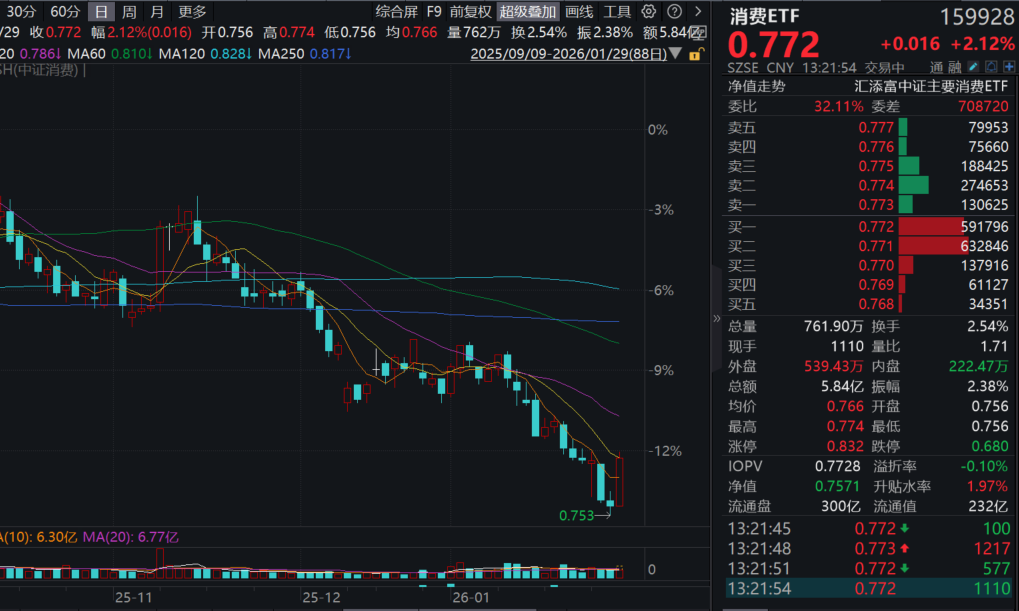
贵州茅台大涨超4%,段永平称“真的不贵”!消费ETF(159928)大涨超2%!2026白酒板块如何看?
Xin Lang Cai Jing· 2026-01-29 05:47
Group 1 - The core viewpoint of the article highlights the recent surge in the stock prices of major liquor companies, particularly Moutai, which rose over 4% after a period of decline, indicating a potential recovery in the market [2] - Notable investor Duan Yongping expressed confidence in Moutai's long-term value, emphasizing the positive impact of the iMoutai platform on consumer access to genuine products [2] - The white liquor industry is expected to benefit from a new consumer acquisition and education strategy, with a focus on channel collaboration and consumer-centric approaches [5][8] Group 2 - The white liquor sector is entering a "five-bottom phase," suggesting a potential turning point in the industry cycle, with expectations of improved sales performance as consumer demand stabilizes [8][9] - Recent data indicates that Moutai's sales and pricing are performing better than market expectations, with a projected increase in sales volume leading up to the Spring Festival [7] - The overall sentiment in the capital market regarding the white liquor industry remains low, with public fund holdings at a historical low, indicating a potential opportunity for investment as valuations are attractive [9][11] Group 3 - The upcoming Spring Festival is anticipated to maintain stable sales for the white liquor industry, with no excessive pessimism expected regarding market performance [10] - Companies are actively working on inventory reduction and price stabilization strategies, with a focus on enhancing brand strength and market share during challenging economic conditions [6][8] - The industry is witnessing a shift towards embracing consumer preferences, particularly among younger generations, which is expected to support long-term demand for white liquor products [8][9]

国投证券(香港)港股晨报-20260129
国投证券(香港)· 2026-01-29 03:21
Group 1: Market Overview - The core viewpoint of the report indicates a bullish sentiment in the Hong Kong stock market, with the Hang Seng Index rising by 2.58%, the Hang Seng China Enterprises Index increasing by 2.89%, and the Hang Seng Tech Index up by 2.53% [2] - The market is driven by two main themes: "AI new infrastructure" and "resource inflation," with a strong willingness from investors to buy [2] - The total trading volume surged to approximately 361.5 billion HKD, while the short-selling ratio on the main board increased to about 18.75% [2] Group 2: Sector Analysis - The optical communication sector experienced a significant surge, driven by a long-term supply agreement between Meta and Corning worth up to 6 billion USD, aimed at supporting AI data center construction [3] - Following the announcement, Corning's stock price soared over 15%, reaching a 52-week high, indicating a shift in the AI competition from software to hardware and supply chain security [3] - The three major telecom operators in China saw a collective rise, with China Telecom leading with an increase of over 6% [3] Group 3: Economic Indicators - In January, the total retail sales in China for 2025 showed a cumulative growth of 3.7%, with December retail sales amounting to 45,136 billion CNY, reflecting a year-on-year increase of 0.9% [7] - The report highlights a decline in growth rates across various consumer sectors, with commodity retail growth slowing down to 0.7% year-on-year in December [7] - The food and daily necessities sectors showed mixed results, with food retail sales growing by 3.9% year-on-year, while clothing sales only increased by 0.6% [8] Group 4: Price Trends - The Consumer Price Index (CPI) in December rose by 0.8%, indicating a reduction in deflationary pressures, with some food prices showing signs of recovery [9] - The report notes that pork prices are expected to rebound slightly in January due to the upcoming Spring Festival, while fresh milk prices continue to decline [9] Group 5: Investment Strategies - Investment opportunities are identified in companies like Lao Pu Gold (6181.HK), which is expected to benefit from rising gold prices and increased consumer demand during the Spring Festival [10] - Haidilao (6862.HK) is anticipated to see marginal improvements in same-store sales growth in the second half of 2025, supported by the founder's return [10] - The upcoming listing of Ming Ming Hen Mang (1768.HK) is highlighted, with expectations of rapid growth during the Spring Festival season [10]
376家首店,264场首发活动!2025西安首发经济活力拉满
3 6 Ke· 2026-01-29 02:22
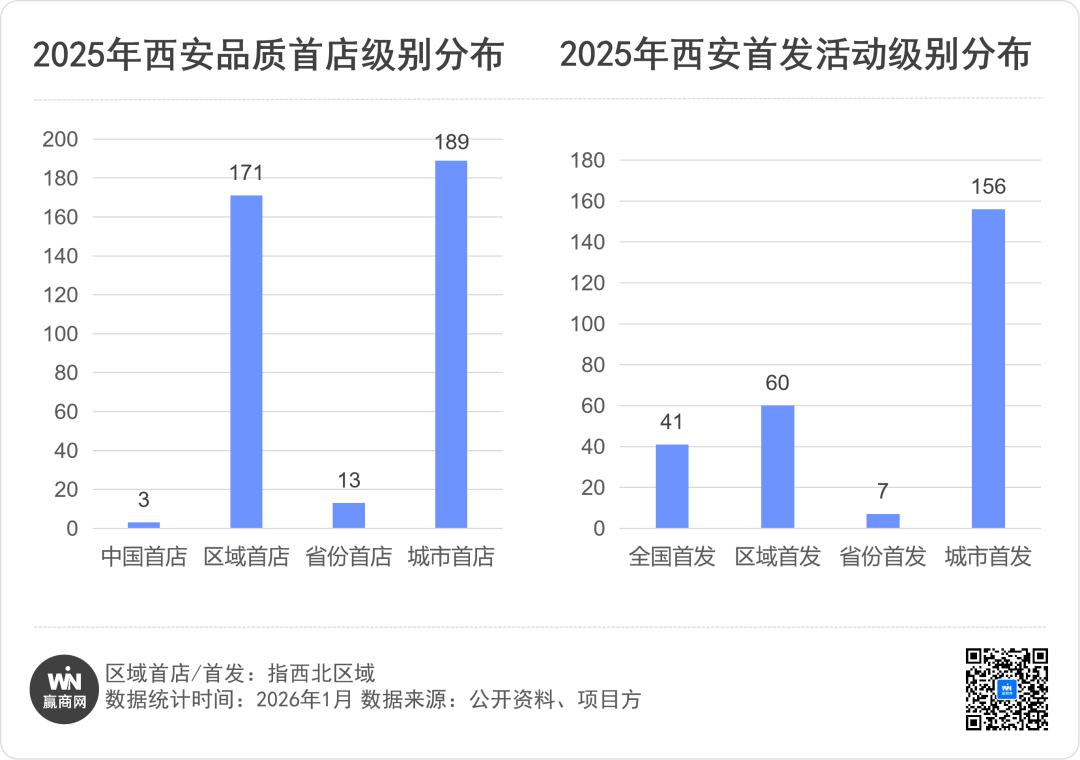
Core Insights - Xi'an has introduced a total of 376 new brand stores in 2025, including 3 national first stores, 171 regional first stores, 13 provincial first stores, and 189 city first stores, indicating a strong market presence and strategic positioning in the Northwest region of China [1][4] - The city has hosted 264 launch events, with 41 being national launches, showcasing a vibrant commercial atmosphere and a shift towards experience-driven retail [1][15] Group 1: Store Introduction and Brand Strategy - The proportion of regional first stores is 45.5%, while city first stores account for 50.3%, indicating a preference for Xi'an as a strategic base for brands in the Northwest market [4][6] - Notable national first stores include MINISO's WAKUKU theme store, which features over 6,000 products in an immersive shopping environment, reflecting the city's growing commercial influence [4][6] - The distribution of store grades shows that C-grade stores dominate at 52.9%, while S and A-grade stores combined account for only 9.9%, suggesting room for improvement in brand quality [6][7] Group 2: Regional Distribution and Market Dynamics - Yanta District leads with 138 first stores, representing 37% of the total, followed by Qujiang New District with 62 stores, highlighting a concentration of commercial activity in mature urban areas [8] - Emerging areas like Chanba Ecological District and Chang'an District are beginning to attract new stores, indicating a shift in commercial development from traditional centers to peripheral regions [8] Group 3: Commercial Projects and Performance - The Xi'an Seg International Shopping Center stands out with 59 first stores, showcasing a diverse range of categories and a strong market position [9][10] - Other significant projects like Xi'an Joy City and Xi'an MixC have also introduced over 20 first stores each, enhancing their competitive edge in the market [9] Group 4: Industry Trends and Consumer Preferences - The restaurant sector dominates with 54.79% of new stores, reflecting a growing trend towards experiential dining and lifestyle consumption [11][14] - Bakery and beverage categories are particularly popular, with 38 and 33 new stores respectively, indicating a shift towards a "light enjoyment economy" [11][13] - Innovative dining concepts, such as self-service hot pot and seafood buffets, are emerging, showcasing a trend towards unique and high-quality dining experiences [14] Group 5: Launch Events and Marketing Activities - A total of 264 launch events were held, with 59% being city-level events, indicating a robust local commercial activity [15][19] - Xi'an Joy City hosted the most events at 47, featuring high-profile activities that attract a younger demographic [15][17] - The structure of events shows a shift towards experiential and engaging formats, with exhibitions and performances becoming key drivers of consumer engagement [19]

研判2026!中国辣椒油树脂行业产业链上下游、发展现状、竞争格局、发展趋势分析:食品加工领域是核心需求来源,行业渗透率未来有望进一步提高[图]
Chan Ye Xin Xi Wang· 2026-01-29 01:21
Core Insights - Chili oil resin, a natural plant extract, is widely used in food processing, cosmetics, and biomedicine due to its coloring, preservative, and antioxidant properties. The food processing sector is the primary demand source, with increasing needs for stable spiciness and uniform flavor in ready-to-eat meals and compound seasonings. The market for chili oil resin is expected to grow, reaching a market size of 650 million yuan in 2024, driven by rising penetration rates and expanding application fields [1][10]. Industry Overview - Chili oil resin, also known as chili essence, is derived from chili peppers and contains over a hundred complex chemical substances, including capsaicin, proteins, pectin, polysaccharides, and chili pigments. It is a natural food ingredient and not an illegal additive, with a spiciness level starting from one million SHU [3][10]. Industry Chain - The chili oil resin industry chain consists of three segments: 1. **Upstream**: Chili cultivation, which is influenced by climate and soil conditions, primarily located in Sichuan, Guizhou, Hunan, and Hubei provinces. The planting area has remained stable at over 11 million acres, with a production exceeding 16 million tons from 2015 to 2023 [6][7]. 2. **Midstream**: Involves the extraction, refinement, and deep processing of chili oil resin [6]. 3. **Downstream**: Applications in food, pharmaceuticals, and cosmetics, with food industry being the largest segment, accounting for 46% of the market [10][11]. Market Size and Growth - The chili oil resin market in China is projected to reach 650 million yuan by 2024, with expectations of continued growth as penetration rates increase and application fields expand [1][10]. Competitive Landscape - Major companies in the chili oil resin industry include Morning Bio, Yasheng Group, Tianwei Foods, and others. Morning Bio holds a dominant market position, but faces competition from domestic peers and international brands [2][11]. Development Trends 1. **Integration of Industry Chain**: There will be a stronger collaboration between processing companies and chili cultivation bases, focusing on high-quality chili varieties and stable supply [14]. 2. **Diversified and Globalized Market Demand**: Demand will expand into non-food sectors like pharmaceuticals and cosmetics, while international markets will see increased exports as product quality improves [15]. 3. **Increasing Industry Penetration**: Currently, the penetration rate of chili oil resin in downstream sectors is below 1%, indicating significant growth potential as consumer preferences evolve [16].


进入“20元时代”,中式米饭快餐没有退路
虎嗅APP· 2026-01-29 00:23
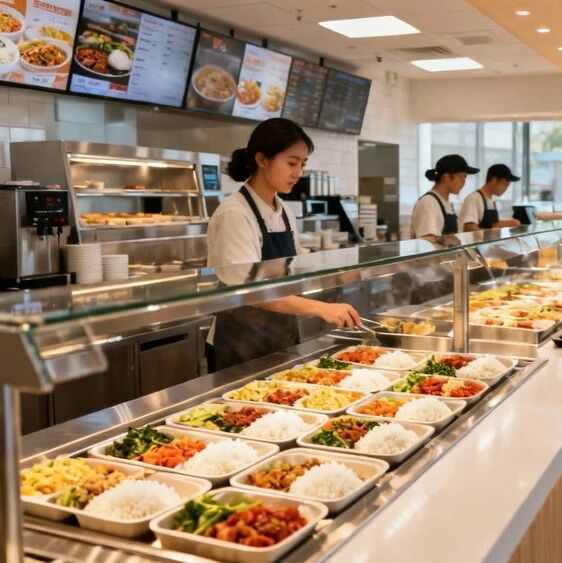
Core Viewpoint - The Chinese rice fast food sector is undergoing a significant paradigm shift in 2026, characterized by intense competition among leading brands and the entry of cross-industry players, leading to a consensus that profitability is increasingly difficult to achieve [4][6]. Group 1: Industry Challenges - The primary challenge for Chinese rice fast food brands remains profitability, with industry leaders like Chaoyixing reporting a mere profit of 0.7 yuan per 10 yuan meal [7]. - Rising costs for ingredients, labor, and rent, combined with a return to rational consumer spending, are squeezing profit margins, forcing brands to adapt their business models to survive [8][9]. - The average consumer spending in the rice fast food sector has decreased from 29.7 yuan in 2022 to 27.5 yuan in 2025, indicating a downward trend in pricing [15]. Group 2: Business Model Transformation - Brands are focusing on creating "all-day, all-customer, all-capable" stores to attract a wider customer base and improve profitability [5][10]. - Successful adaptations include diversifying product offerings and enhancing customer experience, as seen with brands like Nanchengxiang and Xiaonv Dangjia, which have introduced new menu items and self-service options [10][11]. - The shift towards a "price down, experience up" strategy is evident, with brands like Xiangcunji and Dami Xiansheng emphasizing fresh, high-quality ingredients while maintaining competitive pricing [18][19]. Group 3: Market Expansion and Competition - The market for Chinese rice fast food is projected to reach 277 billion yuan in 2024, with a potential to exceed 300 billion yuan in 2025, indicating a growing demand for this segment [21]. - Leading brands are rapidly expanding into new regions, with Nanchengxiang opening a new store every 0.85 days on average, while others like Mivun Banfan have paused their aggressive expansion due to operational challenges [23][25]. - The competitive landscape is shifting, with brands needing to adapt their models to local markets rather than relying on a one-size-fits-all approach, as evidenced by the struggles of brands like Chaoyixing and Nanchengxiang in new territories [25][26]. Group 4: Future Outlook - The next decade for Chinese rice fast food will involve a multi-faceted competition focusing on freshness, transparency, intelligence, low pricing, and health [27]. - Brands that can balance cost management with quality and customer experience will be better positioned to thrive in a market where consumer expectations are evolving [28][29].