
蔚来汽车

Search documents
镁佳股份IPO累亏10亿元,清华才女庄莉身家30亿元
Sou Hu Cai Jing· 2025-08-19 07:49
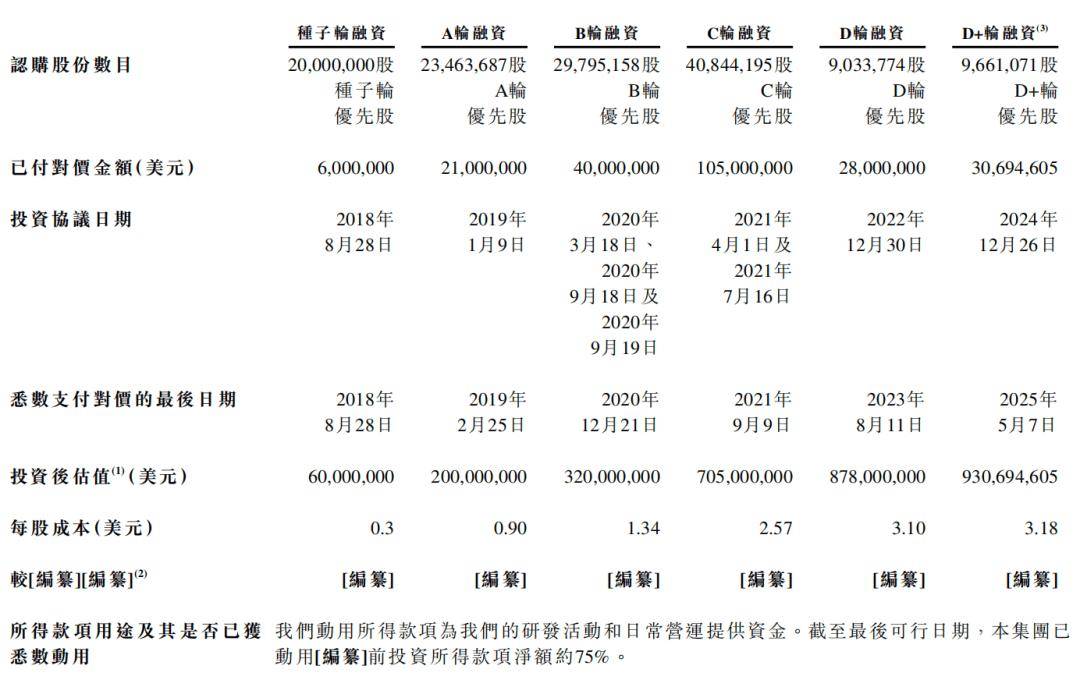
Core Viewpoint - Megatronix Inc. (镁佳股份) is a rising automotive technology company focused on AI-driven integrated domain control solutions, led by former NIO executive Zhuang Li, who aims to leverage capital for growth despite facing significant financial challenges [1][2][16]. Company Overview - Zhuang Li transitioned from Vice President at NIO to CEO of Megatronix in August 2019, aiming to reshape future mobility through innovative automotive software solutions [1][3][4]. - The company has achieved rapid growth, with revenues increasing from over 100 million RMB in 2021 to 1.5 billion RMB in 2023, although it has faced cumulative losses exceeding 1 billion RMB from 2022 to 2024 [1][16]. Financial Performance - Megatronix's revenue for 2022, 2023, and 2024 was reported at 388 million RMB, 1.51 billion RMB, and 1.42 billion RMB respectively, with a notable revenue drop of 6.2% in 2024 [16][17]. - The company has incurred significant operating cash flow losses totaling 1.39 billion RMB, 2.08 billion RMB, and 1.76 billion RMB over the same period, leading to a cumulative loss of 1.07 billion RMB [18]. Funding and Valuation - Megatronix has completed five funding rounds from January 2019 to December 2024, raising over 231 million USD and achieving a pre-IPO valuation of approximately 930 million USD [2][8][10]. - The company’s valuation has increased more than 15 times since its initial funding round, reflecting strong investor interest in its technology and market potential [7][8]. Market Position and Strategy - Megatronix focuses on integrated domain control solutions, with a market share of 9.3% in the integrated domain control solution sector in China, ranking second in terms of installation volume [16][18]. - The company aims to shift its sales focus from basic domain control solutions to higher-value integrated solutions, which are expected to enhance profitability despite ongoing financial challenges [18]. Customer and Supplier Dynamics - The company has a high customer concentration, with the top five clients contributing 92.8%, 91.2%, and 84.7% of revenue from 2022 to 2024, indicating potential risks if major clients change their purchasing behavior [19][20]. - Supplier concentration is also significant, with the top five suppliers accounting for 69.1%, 82.4%, and 77.2% of total procurement, which poses operational risks if supplier relationships deteriorate [20]. Future Outlook - Megatronix plans to utilize IPO proceeds to enhance R&D and expand its product matrix in smart cockpit solutions, aiming for sustainable growth in a competitive market [19][21].

天奇股份:智能装备业务引领扭亏 机器人布局筑牢增长后劲
Zheng Quan Shi Bao Wang· 2025-08-18 15:02
Core Viewpoint - The company has significantly improved its performance in the first half of 2025, achieving a revenue of 1.247 billion yuan and a net profit of 55.83 million yuan, marking a substantial turnaround from a loss of 78.51 million yuan in the same period last year, with a year-on-year increase of 171.11% [1] Group 1: Smart Equipment Business - The smart equipment segment has shown rapid growth, with revenue reaching 842 million yuan, a year-on-year increase of 23.22% [2] - The overseas business has been a key driver, generating 417 million yuan in revenue, a remarkable increase of 64.23%, accounting for 33.44% of total revenue, up from 19.36% in the previous year [2] - Major projects such as BYD's Indonesia project and BMW's Mexico project have accelerated delivery, contributing to revenue growth [2][3] Group 2: Lithium Battery Business - The lithium battery recycling segment has shown signs of improvement, with revenue of 137 million yuan, despite a year-on-year decline of 44.63% due to industry challenges [4] - The narrowing of losses in this segment is attributed to a temporary increase in cobalt prices due to export bans from the Democratic Republic of Congo [4] - New policies have been implemented to facilitate the import of recycled materials, providing a stable supply for the lithium battery recycling business [4] Group 3: Robotics Business - The company has established a humanoid robotics division to enhance its strategic layout in the robotics industry, focusing on technology collaboration and resource integration [5] - A joint venture with Beijing Galaxy General Robotics has been formed to develop robotic technology and applications [5] - The company aims to leverage its engineering capabilities and technological strengths to provide diverse solutions in intelligent manufacturing [6] Group 4: Industry Trends and Future Outlook - The automotive intelligent equipment and robotics sectors are in a high-growth cycle, with significant market opportunities arising from the transition to electric and intelligent vehicles [6] - The global humanoid robot market is projected to reach 1.24 million units by 2025, with China becoming a core engine in the global humanoid robotics supply chain [6] - The company is well-positioned to capitalize on industry growth and strengthen its competitive advantages through innovation and resource integration [6]

港股午评:恒指涨0.62%、科指涨1.96%,科技股普涨,影视及汽车股强势,煤炭及石油股走低
Sou Hu Cai Jing· 2025-08-18 04:13
Market Performance - The Hong Kong stock market showed a mixed performance with the Hang Seng Index rising by 0.62% to 25,426.53 points, the Hang Seng Tech Index increasing by 1.96% to 5,651.97 points, and the National Enterprises Index up by 1.01% to 9,130.71 points [1] - Major technology stocks contributed positively, with JD.com and NetEase both rising over 4%, Baidu increasing nearly 3%, and Alibaba, Xiaomi, and Meituan all gaining over 1% [1] - Automotive stocks surged, particularly Great Wall Motors, which rose over 12% following the opening of a factory in Brazil, while NIO, Geely, and BYD also performed well [1] - The film industry saw a boost with a strong summer box office, leading to significant gains in film stocks, such as Ningmeng Film, which surged over 37% [1] Company Financials - China Hongqiao reported revenue of approximately 81.039 billion yuan, a year-on-year increase of 10.1%, and a net profit of about 12.361 billion yuan, up approximately 35% [2] - Hong Kong and China Gas reported revenue of about 10.437 billion HKD, a decrease of 0.6%, with a net profit of approximately 758 million HKD, an increase of 2% [2] - China Resources Cement reported revenue of approximately 10.21 billion yuan, a year-on-year decrease of 1%, but a net profit of about 307 million yuan, an increase of 85% [3] - Sands China Limited reported revenue of 3.49 billion USD, a decrease of 1.7%, and a net profit of 413 million USD, down 23.7% [3] Institutional Insights - Industrial analysts from Industrial Securities noted that the Hong Kong stock market is experiencing volatility and may be poised for a rally, focusing on mid-year performance and value [4] - Guohai Securities indicated that the Hong Kong market may exhibit better elasticity compared to the US market, with a focus on sectors benefiting from fiscal and tariff negotiations [4] - Noted economist Hong Hao suggested that the Hong Kong market will see continued inflows from mainland and overseas investors, supported by ample liquidity and potential interest rate cuts from the Federal Reserve [5]
一文搞懂港股A股差异:从市场特征到风险模型
Minsheng Securities· 2025-08-15 10:53
Quantitative Models and Construction Methods 1. Model Name: Barra Risk Model - **Model Construction Idea**: The model identifies and quantifies common factors (industry and style factors) and idiosyncratic factors affecting stock returns, aiming to decompose return sources and provide risk constraints such as industry and style neutrality[119][121]. - **Model Construction Process**: - **Data Processing**: - Align reporting periods due to varying fiscal years among Hong Kong-listed companies[120]. - Standardize accounting standards using Wind GSD reports, converting to IFRS[120]. - Normalize financial reporting currencies using time-series exchange rates[120]. - Exclude dual-counter trading stocks and REITs for consistency[120]. - **Factor Construction**: - Constructed for three pools: Southbound Stock Connect, full Hong Kong market, and full market excluding penny stocks[121]. - Includes 10 major style factors (e.g., Beta, Momentum, Size, Earnings Yield) and industry factors[121]. - Factors are standardized using median-based outlier removal and normalized to standard normal distribution[122]. - Factor returns are calculated using Weighted Least Squares (WLS) with free-float market cap weights[122]. - Formula for WLS: ``` min Σ sqrt(w_i,t-1) * (r_i,t - Σ β_i,k,t-1 * f_k,t + Σ γ_i,m,t-1 * g_m,t)^2 ``` where weights are the fourth root of free-float market cap proportions[123]. - **Factor Definitions**: - Beta: Systematic risk derived from regression of stock returns against market returns[125]. - Momentum: Weighted log returns over a 500-day period[125]. - Size: Logarithm of total market capitalization[125]. - Earnings Yield: Inverse of P/E ratio[125]. - Volatility: Derived from residual standard deviation and monthly return ranges[125]. - Growth: Based on regression of past five years' revenue and earnings per share[125]. - Value: Inverse of P/B ratio[125]. - Leverage: Includes metrics like market leverage and debt-to-asset ratio[125]. - Liquidity: Based on trading volume relative to free-float shares over different time horizons[125]. - **Model Evaluation**: The model demonstrates good applicability in the Hong Kong market, with stable R² values across different pools[126][152]. --- Model Backtesting Results 1. Barra Risk Model - **R² Values**: - Southbound Stock Connect: Average R² = 36.7% since 2014[126][152]. - Full Hong Kong Market: Average R² = 17.4%[126][152]. - Full Market (Excluding Penny Stocks): Average R² = 21.9%[126][152]. - **Factor Cumulative Returns**: - Positive: Beta, Momentum, Liquidity, BP, Earnings Yield[130][149]. - Negative: Size, Growth, Non-Linear Size[130][149]. - Mixed: Volatility (positive for full market, negative for Southbound Stock Connect), Leverage (positive for full market, negative for Southbound Stock Connect)[130][149]. --- Quantitative Factors and Construction Methods 1. Factor Name: Penny Stock Screening - **Factor Construction Idea**: Screen stocks based on price, financial, and behavioral metrics to identify and exclude penny stocks[117][118]. - **Factor Construction Process**: - **Price Metrics**: - Rolling one-month average closing price < 1 HKD and market cap < 10 billion HKD[117]. - Rolling one-month average closing price < 1 HKD and average trading volume in the lowest 20% of the market[117]. - **Financial Metrics**: - ROE and debt-to-asset ratio thresholds[118]. - **Behavioral Metrics**: - History of stock splits or rights issues in the past year[118]. - **Exclusion of "Three Highs"**: High equity pledges, high debt ratios, and frequent fundraising activities[118]. - **Factor Evaluation**: Helps mitigate risks associated with high-volatility, low-liquidity stocks prevalent in the Hong Kong market[117][118]. --- Factor Backtesting Results 1. Penny Stock Screening - **Market Characteristics**: - As of June 2025, 56% of Hong Kong stocks are priced below 1 HKD, with 14.5% below 0.1 HKD[112][113]. - Penny stocks exhibit high volatility and low liquidity, making them risky for investment[112][117]. 2. Barra Risk Model Factors - **Cumulative Returns by Factor**: - Beta: Positive across all pools[130][149]. - Momentum: Positive across all pools[130][149]. - Size: Negative across all pools[130][149]. - Earnings Yield: Positive across all pools[130][149]. - Volatility: Positive for full market, negative for Southbound Stock Connect[130][149]. - Growth: Negative across all pools[130][149]. - Value: Positive across all pools[130][149]. - Leverage: Positive for full market, negative for Southbound Stock Connect[130][149]. - Liquidity: Positive across all pools[130][149].
销量占比超七成,自主汽车品牌加速“超车”
Bei Jing Shang Bao· 2025-08-11 11:08
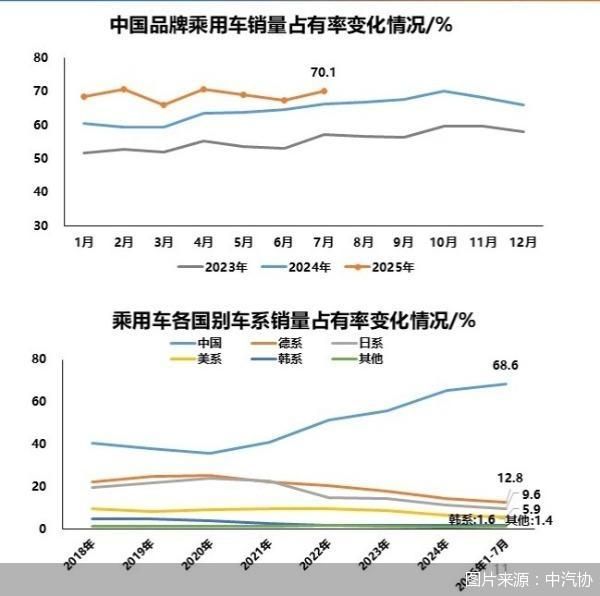
Group 1 - In July 2023, China's automotive production and sales reached 2.591 million and 2.593 million units respectively, showing a month-on-month decline of 7.3% and 10.7%, but a year-on-year increase of 13.3% and 14.7% [2] - The decline in July is attributed to the traditional off-season for the automotive market and some manufacturers conducting annual equipment maintenance, leading to a seasonal slowdown in production and sales [2] - The "trade-in" policy continues to show positive effects, and the comprehensive rectification of the industry is making progress, with new models being continuously launched by companies, contributing to stable market operations [2] Group 2 - In July 2023, the production and sales of passenger vehicles were 2.293 million and 2.287 million units, respectively, with year-on-year growth of 13% and 14.7% [3] - Chinese brands are becoming a significant support for passenger vehicle sales, with sales of Chinese brand passenger vehicles reaching 1.604 million units in July, a year-on-year increase of 21.3%, and a market share of 70.1%, up 3.8 percentage points year-on-year [3] - The market share of Chinese brand sedans, SUVs, and MPVs in July was 64.9%, 73.7%, and 68% respectively, indicating growth in all categories [3] Group 3 - In the first seven months of 2023, the domestic sales of new energy vehicles reached 6.913 million units, a year-on-year increase of 32.3%, with new energy passenger vehicles accounting for 6.499 million units, up 30.9% [4] - The top fifteen groups in new energy vehicle sales accounted for 95.1% of total sales, with BYD and Geely being the top two, together holding over 42% of the market share [4] - The competition among Chinese brands is intensifying, with Leap Motor surpassing Li Auto to become the sales champion in the first half of the year, and new entrants like AITO and Xpeng also showing strong sales performance [5] Group 4 - In July 2023, exports of Chinese vehicles reached 575,000 units, a year-on-year increase of 22.6%, with Chery and BYD leading the export growth [5] - Chery exported 119,000 units, a year-on-year increase of 31.9%, while BYD's exports reached 81,000 units, a significant increase of 160% [5] - Chinese brands are actively expanding into overseas markets, with several companies establishing overseas R&D and production bases [5]

7月新能源车渗透率升至54%,创年内新高,预计8月车市增速仍平稳
BOCOM International· 2025-08-11 06:22
Investment Rating - The report assigns a "Buy" rating to multiple companies in the automotive sector, indicating a positive outlook for their future performance [2][12][13]. Core Insights - In July, the penetration rate of new energy vehicles (NEVs) reached 54%, marking a new high for the year, with expectations for stable growth in the automotive market in August [1][5]. - The retail sales of passenger vehicles in July were 1.826 million units, showing a year-on-year increase of 6.3% but a month-on-month decline of 12.4% [5]. - The cumulative retail sales for the first seven months of 2025 reached 12.728 million units, reflecting a year-on-year growth of 10.1% [5]. - Domestic brands outperformed the overall industry, with retail sales of 1.21 million units in July, a year-on-year increase of 14% [5]. - The report highlights that NEV retail sales in July were 987,000 units, with a year-on-year increase of 12% [5]. Summary by Sections Market Performance - The automotive market entered a sales lull in July, with a slight decline in month-on-month sales but maintained year-on-year growth due to trade-in programs [5]. - The market share of domestic brands increased to 65.9%, while mainstream joint venture brands saw a decline in retail sales [5]. New Energy Vehicles - The NEV penetration rate for the first seven months of 2025 was 50.7%, with July's rate at 54%, an increase of 2.7 percentage points year-on-year [5]. - The report notes that the export of NEVs maintained a strong growth trend, with July exports totaling 213,000 units, a year-on-year increase of 120.4% [5]. Investment Opportunities - The report suggests that the upcoming launch of several new models, including Li Auto's i6 and the new XPeng P7, will enhance market supply and drive retail sales recovery [5]. - Companies to watch include BYD, XPeng Motors, and Geely, all rated as "Buy" due to their potential for growth and market performance [5][12].




金十数据全球财经早餐 | 2025年8月11日
Jin Shi Shu Ju· 2025-08-10 23:03
Group 1 - The meeting between Trump and Putin on August 15 in Alaska may involve "territorial exchanges" related to the Ukraine peace agreement [12] - Netanyahu stated that the next phase of military action by Israel will focus on two locations still controlled by Hamas [12] - The U.S. Treasury Secretary expects trade issues to be resolved by the end of October [12] Group 2 - The U.S. stock market saw all three major indices rise, with the Dow Jones up 0.47%, S&P 500 up 0.78%, and Nasdaq up 0.98%, marking a historical closing high for Nasdaq [4] - Apple shares rose over 4%, with a weekly gain of 13%, the best performance since July 2020 [4] - Tesla and Google also saw gains of 2.29% and 2.44% respectively [4] Group 3 - European major stock indices showed mixed results, with Germany's DAX30 down 0.12% and the UK FTSE 100 down 0.06% [5] - The Hong Kong Hang Seng Index fell 0.89%, closing at 24,858.82 points, with a trading volume of 2,067.2 million HKD [5] - Semiconductor stocks led the decline in Hong Kong, while gold stocks rose [5] Group 4 - The A-share market experienced narrow fluctuations, with the Shanghai Composite Index down 0.12% and the Shenzhen Component down 0.26% [6] - The railway equipment sector led the gains, while the Huawei Euler concept stocks fell significantly [6] Group 5 - Bitcoin briefly surpassed $119,000, marking its highest level since July 29, while Ethereum reached $4,300, the highest since the end of 2021 [7]

履新中国长安汽车集团董事长11天,朱华荣拜访任正非
Zheng Quan Shi Bao Wang· 2025-08-10 09:39
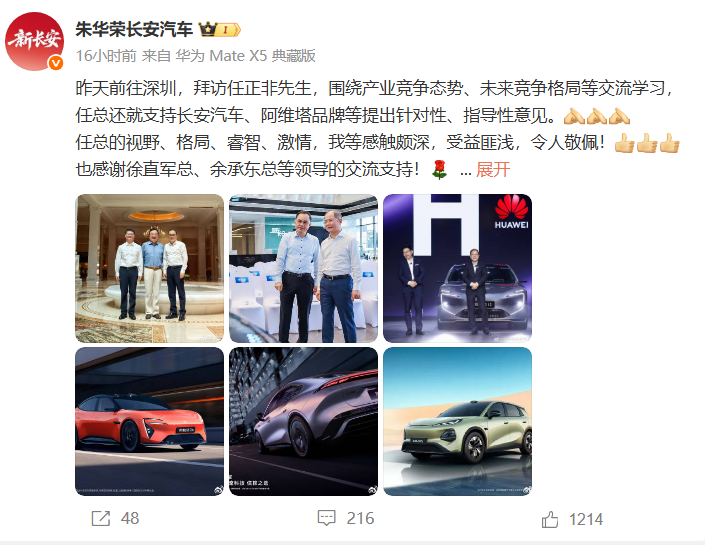
8月9日晚,长安汽车(000625)董事长朱华荣微博发文,称8月8日前往深圳拜访华为CEO任正非,围绕 产业竞争态势、未来竞争格局等交流学习。 任正非还就支持长安汽车、阿维塔品牌等提出针对性、指导性意见。 朱华荣表示:"任总的视野、格局、睿智、激情,我等感触颇深,受益匪浅,令人敬佩。" 据了解,阿维塔成立于2018年,最初由长安汽车与蔚来汽车合资成立(当时称作"长安蔚来")。在2021年 蔚来退出后,阿维塔引入华为、宁德时代(300750)两大战略投资者,形成"CHN(长安、华为、宁德时 代)"协同模式。 值得注意的是,当天是朱华荣履新中国长安汽车集团董事长的第11天。 今年7月,中国长安汽车集团有限公司在重庆挂牌成立,这是继中国一汽集团、东风汽车集团后的又一 家汽车央企。 7月29日,国务院国资委网站发布3户中央企业10名领导人员职务调整。其中,中国长安汽车集团有限公 司方面,朱华荣任中国长安汽车集团有限公司党委书记、董事长;赵非任中国长安汽车集团有限公司党 委副书记、董事,提名为中国长安汽车集团有限公司总经理人选;谭本宏任中国长安汽车集团有限公司 党委副书记、董事;贾立山、邓威、邓跃明任中国长安汽车集团有 ...

取消“智驾平权”,汽车智驾辅助收费是否可行?
Hua Xia Shi Bao· 2025-08-07 09:12
Core Viewpoint - The president of Bosch Intelligent Driving Control in China, Wu Yongqiao, argues that the strategy of free promotion and equal access to intelligent driving features in the automotive industry should be abandoned, advocating for a paid model to avoid disastrous consequences for the industry [1][2]. Industry Challenges - Wu highlights three main pressures: a profit crisis in the industry, sustainability issues in technology, and supply chain imbalances, which necessitate the cancellation of the "equal access" strategy for intelligent driving features [2]. - Despite a 7% revenue growth and a 14% increase in passenger car sales in early 2025, the overall industry profit has declined by 11.9%, indicating a "growth without profit" dilemma exacerbated by price wars [2]. Investment and Development - Significant investments have been made by automakers in intelligent driving systems, with BYD employing 4,000 people in its intelligent driving team at a monthly cost of 1 billion yuan [2]. - The pressure on suppliers to invest in research and development is increasing due to ongoing price competition, which could lead to a halt in technological upgrades if the industry adopts a free model [3]. Market Dynamics - Most automakers, except for a few like Tesla and Huawei, are currently offering intelligent driving systems for free, which could undermine the development of high-quality products [3][4]. - The competitive landscape has led to prices for vehicles equipped with intelligent driving systems dropping below 100,000 yuan, with some models like Chery's offering features for as low as 60,000 yuan [4]. Consumer Perspectives - Many consumers express reluctance to pay extra for intelligent driving features, questioning the value of paying for a function they feel should be included in the vehicle's price [5][6]. - The current state of intelligent driving technology is perceived as not mature enough for consumers to justify additional costs, with many preferring to wait until the technology improves [5][6]. Future Outlook - Experts suggest that a subscription model for intelligent driving features may not be feasible until around 2030, as the market is still in the early stages of developing effective marketing strategies [6].
告别“价格战”后,7月车市格局微变
Mei Ri Jing Ji Xin Wen· 2025-08-06 22:47
Group 1: Market Overview - In July, the automotive industry in China began to return to rationality amid the "anti-involution" backdrop, with average price reductions for new energy vehicles and fuel vehicles at 17,000 yuan and 13,000 yuan respectively, representing decreases of 11.1% and 10.4% [1] - The sales data for July showed that many major automakers experienced a year-on-year decline in sales, with three out of the "top five independent brands" seeing a month-on-month drop [1] - The retail volume for the narrow passenger car market in July is estimated to be around 1.85 million units, a year-on-year increase of 7.6% but a month-on-month decrease of 11.2% [1] Group 2: Sales Rankings - BYD maintained its position as the top seller with over 340,000 units sold in July, while Geely and Chery followed closely with a sales difference of 13,000 units [2] - Geely's sales reached 237,700 units in July, with new energy vehicle sales at 130,100 units, marking a year-on-year increase of 120% and a penetration rate of 55% [3] - Chery's sales were 224,400 units, with exports contributing significantly, achieving an industry-leading export volume of 119,000 units [3] Group 3: New Energy Vehicle Performance - Leap Motor led the new energy vehicle segment with over 50,000 units delivered in July, a year-on-year increase of over 126% [4] - Xiaopeng and Xiaomi cars also showed strong performance, with Xiaopeng delivering 36,700 units (up 229% year-on-year) and Xiaomi exceeding 30,000 units for the first time [4] - Ideal and NIO experienced fluctuations in sales, with Ideal delivering 30,700 units and NIO 21,000 units in July [5] Group 4: Joint Venture Brands - Major joint venture brands showed a rebound in sales, with FAW-Volkswagen selling 113,000 units in July, and both Toyota brands achieving sales of 60,000 units each [6][7] - SAIC-GM saw a significant increase in sales, reaching 42,300 units, a year-on-year growth of 181.68%, with Buick's performance particularly strong [7] - The overall market performance in July indicates a potential for stable growth, especially in the new energy vehicle sector, which continues to lead the market [7]
