米哈游

Search documents
第一创业晨会纪要-20251230
First Capital Securities· 2025-12-30 06:49
Group 1: Industry Overview - The latest auction by PJM, the largest grid operator in the U.S., indicates that the capacity price for 2027/2028 has reached a ceiling of $333.4, with a simulated "shadow price" suggesting that actual costs may be 60% higher. Goldman Sachs warns that if future auctions eliminate price caps, electricity costs could potentially double. In November, the U.S. data center power demand capacity saw an increase of 1.6 GW, significantly surpassing the average monthly growth of 0.26 GW from 2017 to 2024, bringing the total capacity to 44.6 GW. This trend supports the view that the development of AI in the U.S. is increasingly constrained by electricity costs, leading to a positive outlook for the power equipment industry [3]. Group 2: Semiconductor Industry - On December 29, SMIC announced that its subsidiary, SMIC Southern, will increase its registered capital from $6.5 billion to $10.0773 billion. The capital increase will primarily come from SMIC Holdings and various national and regional integrated circuit funds, totaling $7.778 billion. Following this capital increase, SMIC will hold a 41.56% stake in SMIC Southern. This significant growth indicates ongoing large-scale expansion, and with the current favorable outlook for storage demand, the semiconductor front-end equipment industry is expected to see improved market conditions [4]. Group 3: Advanced Manufacturing - The Secretary-General of the China Passenger Car Association, Cui Dongshu, has made forward-looking predictions regarding the demand for new energy batteries in early 2026. He suggests that due to seasonal disruptions from the Spring Festival and a temporary weakening of downstream demand, lithium battery demand may experience a noticeable month-on-month decline. The production data indicates that the total planned production of lithium batteries (including energy storage, power, and consumer) in China for January 2026 is approximately 210 GWh, a 4.5% decrease month-on-month, while the global market's planned production is about 220 GWh, down 6.4%. However, this decline is attributed to seasonal and structural factors, and the overall industry outlook remains positive, with a year-on-year increase of 39.8% in planned production for January [7]. Group 4: Consumer Sector - Soulgate plans to submit its prospectus to the Hong Kong Stock Exchange for the third time in November 2025. Tencent (holding 49.9%, not involved in daily operations) and miHoYo (holding 5.47%) are core shareholders. Since its launch in 2016, the Soul APP has attracted a large number of young users through its differentiated positioning of "soul socializing." The platform's average daily active users reached 10.96 million from January to August 2025, with an average of 20.1 launches per user per day and a 30-day user retention rate of 23%. The company has achieved a net profit since 2023, with steady revenue growth projected from 2022 to 2024, and a revenue of 1.683 billion yuan (up 17.82% year-on-year) for the first eight months of 2025, maintaining a gross margin above 80%. The integration of AI capabilities is expected to enhance user engagement and explore new business models in the social space [9].
游戏行业赚快钱的时代结束了
Di Yi Cai Jing· 2025-12-30 05:45
Core Insights - The Chinese gaming industry in 2025 is characterized by a complex landscape of "recovery" and "internal competition," with market revenue exceeding 350 billion yuan and user base surpassing 680 million, indicating a year of continued recovery despite intense competition [3][4][12] - The industry is experiencing a significant market divide, with the "winner-takes-all" trend intensifying, leading to a situation where a few leading companies dominate the market, while smaller teams find new opportunities in single-player and AI-native games [3][10][12] Market Performance - In 2025, the domestic gaming market revenue is approximately 350.8 billion yuan, reflecting a year-on-year growth of 7.7%, while the user base has grown by 1.4% to over 680 million [4][5] - Self-developed games have generated overseas revenue of about 20.46 billion USD, maintaining a scale exceeding 100 billion yuan for six consecutive years [4][5] - Despite the overall upward trend in the gaming and esports industry, the market has entered a phase of stock competition, with a saturated user base and increased self-developed game output [4][5] Industry Challenges - The competition among gaming companies has intensified, with many projects failing despite significant investments, as seen with NetEase's "射雕" and Kingsoft's "解限机," which faced substantial player drop-off and negative feedback [5][6] - The cost of developing successful mobile games has increased significantly, making it harder for companies to achieve profitability [6][9] Market Dynamics - The market recovery is largely driven by a few top-tier games from leading companies like Tencent and NetEase, which dominate the revenue charts [7][9] - Tencent's gaming revenue reached 636 billion yuan in Q3 2025, with total revenue for the first three quarters exceeding 1.8 trillion yuan, solidifying its position in the market [9][10] Future Trends - The rise of single-player games is a notable trend, with companies increasingly focusing on high-quality, creative content rather than just marketing [12][13] - AI technology is emerging as a potential game-changer, offering new opportunities for smaller developers to compete by lowering development costs and enhancing creativity [11][15] - The industry is expected to enter a new "golden decade" of growth, driven by improved game quality, expanded overseas markets, and supportive policies [12][15]



游戏行业赚快钱的时代结束了
第一财经· 2025-12-30 05:30
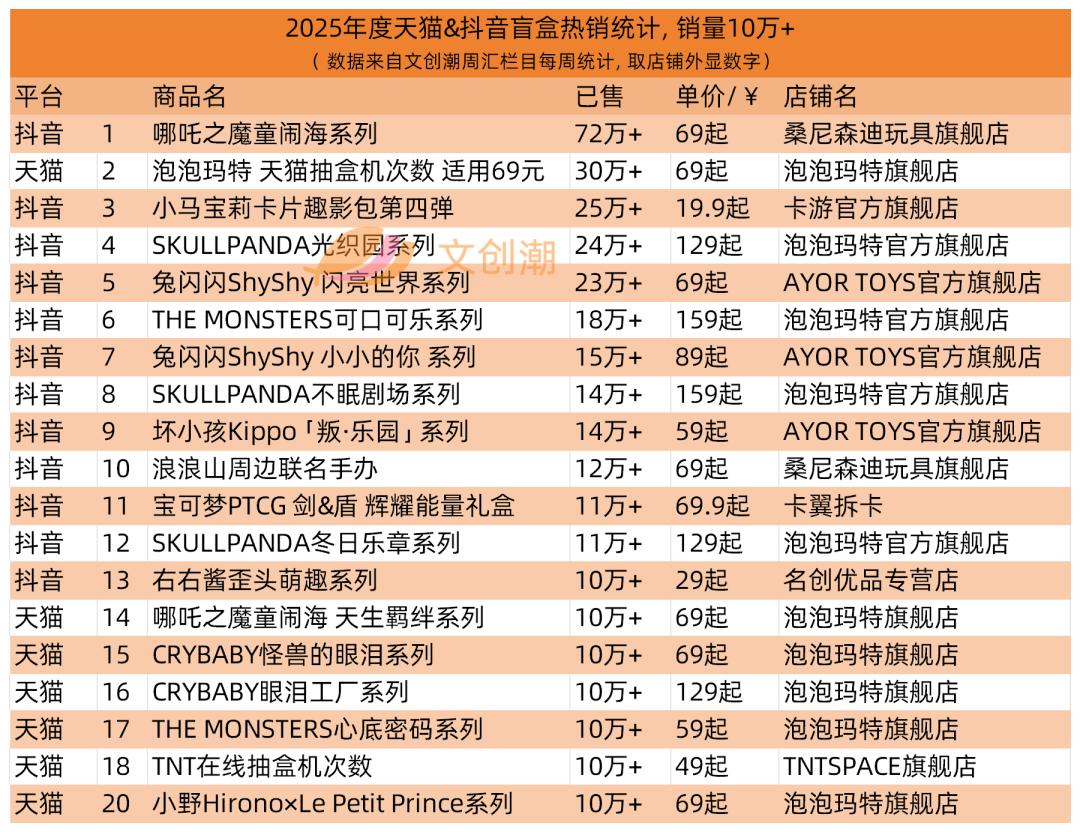
Core Viewpoint - The Chinese gaming industry in 2025 is characterized by a complex landscape of "recovery" and "internal competition," with market revenue exceeding 350 billion yuan and user base surpassing 680 million, yet competition remains fierce and profitability increasingly challenging [3][4]. Market Overview - The domestic gaming market revenue for 2025 is approximately 350.8 billion yuan, reflecting a year-on-year growth of 7.7%, while the user base has grown by about 1.4% to over 680 million [4]. - Self-developed games have generated overseas revenue of approximately 20.46 billion USD, maintaining a scale exceeding 100 billion yuan for six consecutive years [4]. - The industry has entered a phase of stock competition, with a saturated user base and a significant increase in self-developed game output, leading to heightened competition among companies [4][5]. Industry Trends - The gaming industry is experiencing a trend of increasing investment in research and development, particularly in art and quality, but the risk of failure for new games is rising due to intense competition in the stock market [4][5]. - The "winner-takes-all" phenomenon is intensifying, with top companies capturing a larger market share, leading to a shift from the "80/20 rule" to a potential "90/10 rule" in the industry [8][12]. Company Performance - Tencent's gaming revenue for Q3 2025 exceeded 63.6 billion yuan, marking a significant milestone, while NetEase's gaming revenue surpassed 70 billion yuan in the same period, indicating stable growth [10][11]. - The top ten mobile games in terms of revenue are dominated by Tencent, which has seven titles in the list, showcasing its strong market position [9][10]. New Opportunities - The rise of single-player games is a notable trend, with companies increasingly investing in AAA titles following the success of "Black Myth: Wukong," indicating a structural opportunity in the gaming industry [12][13]. - AI-native games are emerging as another exploration direction, with companies like miHoYo leading the way in integrating AI into game narratives, suggesting a potential shift in game development dynamics [14][15]. Future Outlook - The gaming industry is expected to enter a new "golden decade" of growth, driven by improved game quality, expanded overseas market pathways, and supportive policies, marking a transition from rapid growth to a focus on creativity and technology [15][16].


年终盘点|单机崛起、AI破局,游戏行业赚快钱的时代结束了
Di Yi Cai Jing· 2025-12-30 03:14
Core Insights - The Chinese gaming industry is experiencing a complex landscape of "recovery" and "internal competition," with market revenue surpassing 350 billion yuan and user base exceeding 680 million, indicating a year of continued recovery despite intense competition [2][3] - The industry is shifting from "Chinese production" to "Chinese creation," focusing on creativity rather than just sales, suggesting a new growth cycle for the gaming sector [2][12] Market Performance - In 2025, the domestic gaming market revenue is approximately 350.8 billion yuan, a year-on-year increase of 7.7%, while the user base has grown by 1.4% [3] - The self-developed games' overseas revenue reached approximately 20.46 billion USD, maintaining a scale exceeding 100 billion yuan for six consecutive years [3] Competitive Landscape - The gaming industry has entered a phase of stock competition, with a saturated user base and an exponential increase in self-developed game output, leading to heightened competition among companies [3][6] - The "80/20 rule" is evolving into a "90/10 rule," indicating that a small number of companies are capturing most of the market share, while many smaller firms struggle to survive [11] Major Players - Tencent continues to dominate the market, with its gaming revenue exceeding 636 billion yuan in Q3, and its total revenue for the first three quarters surpassing 1.8 trillion yuan [9][10] - NetEase's gaming revenue for the first three quarters is over 700 billion yuan, maintaining stable growth, but still lagging behind Tencent [10] Project Failures - High-profile game failures, such as NetEase's "射雕" and Kingsoft's "解限机," highlight the increasing difficulty of achieving success in the gaming market, even for major companies [4][5] - Kingsoft's gaming business revenue fell by 47% year-on-year to 900 million yuan, marking the largest decline since 2019 [4] Future Trends - The rise of single-player and AI-native games presents new opportunities for smaller teams to break through in the competitive landscape [2][12] - The success of "黑神话:悟空" has catalyzed a shift towards high-quality game development, with increasing investment in AAA titles [12][13] - AI technology is expected to lower development costs and enhance creativity, potentially leveling the playing field between large and small developers [11][14] Government Support - The Shanghai government is set to release policies to support the esports industry, which may further stimulate growth in the gaming sector [14]
2025年的爆款潮玩盲盒,有这些特征
3 6 Ke· 2025-12-30 02:56
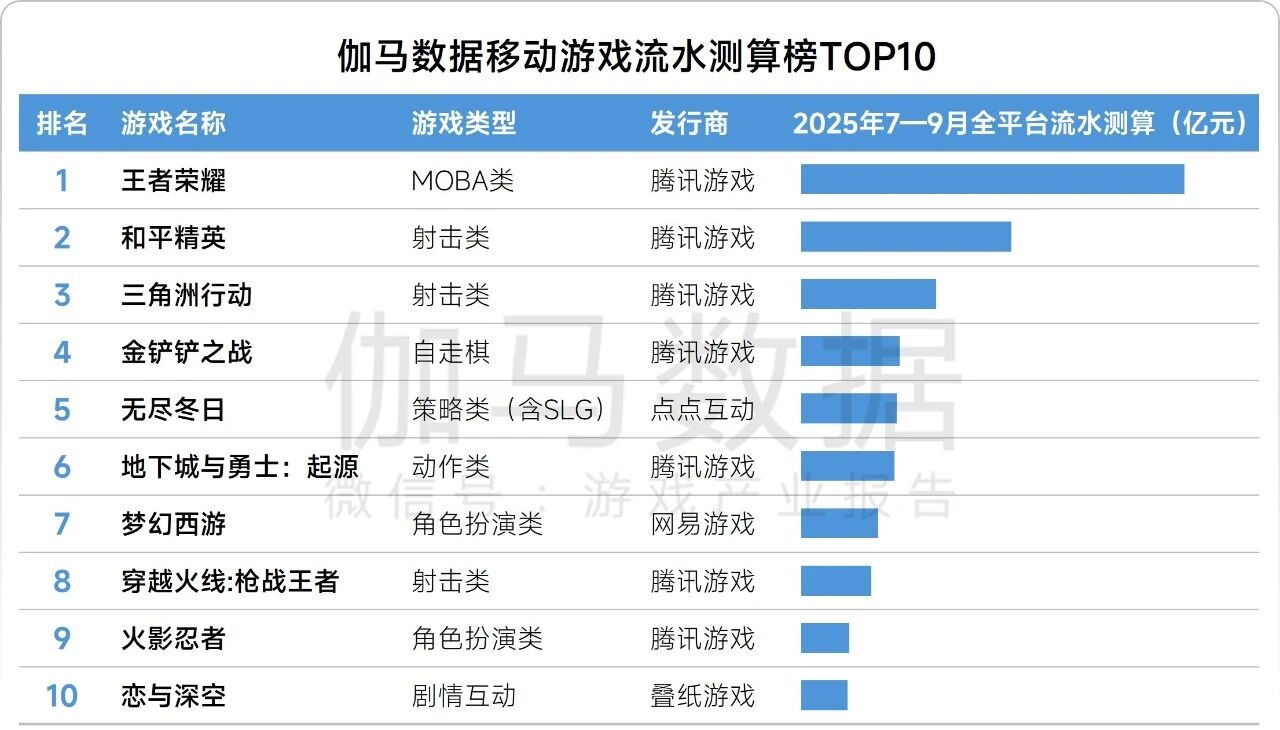
Core Insights - The article highlights the significant performance of IP-related products in 2025, particularly in the blind box market, with a notable increase in sales across various platforms like Tmall and Douyin [1][2] Group 1: Sales Performance - Over 10,000 units sold for many products, indicating a substantial market expansion compared to previous years [2] - The top-selling products include the "Nezha: The Devil's Child" series with over 720,000 units sold on Douyin and various other popular items from brands like Pop Mart and AYOR TOYS [1][4] - The list of products with sales exceeding 100,000 units includes diverse categories such as plush toys, cards, and figures, showcasing a rich variety of IP types [1][2] Group 2: Market Trends - The success of blockbuster animated films like "Nezha: The Devil's Child" and "The Little Monsters" has significantly boosted sales for related merchandise [2] - The influence of celebrity endorsements has become more pronounced, with many brands leveraging star power to drive sales [2][6] - The product categories have diversified beyond traditional plush toys to include various materials and types, such as food-themed toys and collectible figures [2][6] Group 3: Platform Dynamics - Douyin is recognized for its strong traffic potential, making it suitable for promoting popular IP-related products [3] - However, brands must integrate content strategies on Douyin to effectively build a fan base [3] Group 4: Brand Strategies - Brands like Sannisen and AYOR TOYS are adopting innovative supply chain and IP licensing models, which are expected to disrupt traditional market dynamics [6] - The collaboration between game IPs and product companies is deepening, as seen with the "DearNikki" brand and others [11]
《三角洲行动》官宣2026年1月更新,供需共振下,游戏行业景气上行周期依然延续
Mei Ri Jing Ji Xin Wen· 2025-12-30 02:54
Group 1 - The gaming sector is experiencing a positive trend with significant capital inflow, as evidenced by the game ETF (159869) which has seen a net inflow of 1.332 billion over the past seven trading days, reaching a total scale of 12.529 billion [1] - Tencent's game "Delta Operation" is set to release a major update in January 2026, which includes new game modes and promotional activities aimed at enhancing player engagement and solidifying its market position [1] - The gaming industry is in an upward cycle, supported by increasing supply and demand, with institutions maintaining a positive outlook on the sector due to improved valuation and profitability [2] Group 2 - The growth in the gaming sector is driven by new game releases from major players like Tencent, NetEase, and miHoYo, alongside innovative offerings from mid-sized companies [2] - The gaming ETF (159869) tracks the performance of A-share listed companies in the animation and gaming industry, presenting investment opportunities in this sector [2] - The gaming industry is undergoing transformations in AI, content, and commercialization models, which are expected to catalyze further growth [2]
2025年二游iOS成绩单:336款游戏没赚到钱
3 6 Ke· 2025-12-30 02:51
Core Insights - The 二次元 (anime) gaming sector, once a booming market, is now facing significant challenges, with many products being discontinued and a notable slowdown in growth among leading companies [1][2]. Market Overview - In 2025, a total of 2222 products are expected to be discontinued, with a significant portion being 二次元 games, indicating a saturated market [1]. - The 二次元 gaming market is experiencing severe polarization, where top products continue to generate substantial revenue while a majority of new entrants struggle to achieve profitability [1]. Financial Performance - Among the 717 二次元 games in the domestic market, only 407 (57%) reported revenue, meaning 43% did not generate any income over the past year [1]. - Notably, one product achieved over 10 billion in revenue through iOS channels, and 14 games surpassed 100 million in revenue [1]. Product Trends - The market is characterized by a clear gradient of product performance, ranging from highly profitable top-tier products to those that fail to meet expectations or are discontinued [2]. - A total of 126 games have been confirmed to be discontinued or halted in development, highlighting the ongoing challenges in the industry [2]. Revenue Data - The revenue data for 二次元 games from January 1 to December 15, 2025, shows a diverse range of performance among various titles, with leading games from companies like Tencent and miHoYo dominating the charts [3][4][16].

超20款二游停运,26年二游将迎来大变局
3 6 Ke· 2025-12-30 00:19
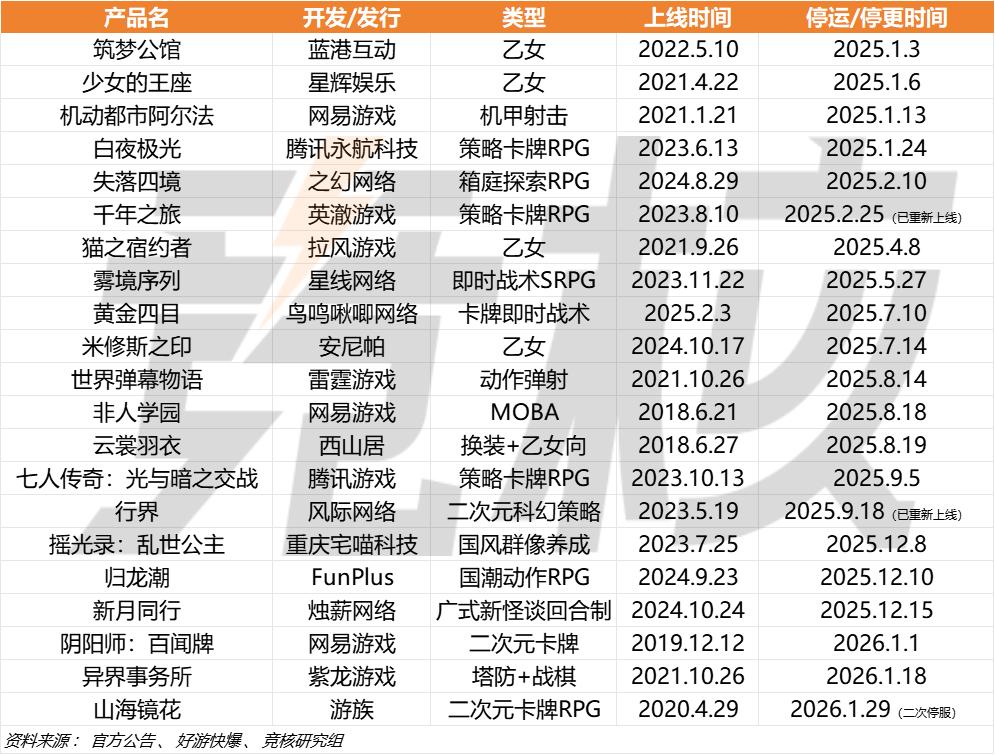
Core Insights - The 二次元 (2D) gaming market is experiencing significant decline, with over 20 games expected to cease operations or updates by 2025, indicating a severe contraction in the industry [1][27] - The 二次元 mobile game market's actual sales revenue is projected to be 282.81 billion yuan in 2025, reflecting a year-on-year decrease of 3.64% [3][7] - The market is undergoing a major reshuffle, with traditional companies focusing on next-generation products while many smaller developers face closure [6][39] Market Trends - The 二次元 gaming sector has seen a drop in the number of new successful titles, with only 14 games entering the iOS top 10 in 2025 compared to 20 in 2024 [9][22] - Established titles like 《原神》 and 《崩坏:星穹铁道》 are showing signs of decline, with fluctuations in their rankings on the iOS charts [12][14] - The market is increasingly dominated by a few top products, leading to a "head product solidification" phenomenon [7][26] Company Dynamics - Major companies like 米哈游 and 网易 are adapting by focusing on high-quality content and exploring new gameplay mechanics to retain player interest [40][42] - The closure of several high-profile games, such as 《白夜极光》 and 《机动都市阿尔法》, highlights the challenges faced by even well-known developers [31][32] - The trend of "game shutdowns" has intensified, with many mid-tier games failing to meet market expectations and subsequently ceasing operations [27][38] Future Outlook - The 二次元 market is at a critical juncture, with 2026 expected to bring a wave of new products that could redefine the landscape, moving away from the "百团大战" (hundred-group war) to a more competitive environment among a few top teams [50][51] - The industry's evolution is driven by changing player expectations, with a growing demand for unique experiences and innovative business models [39][45] - The upcoming product releases in 2026 are anticipated to be more sophisticated, focusing on unique gameplay and differentiated offerings to capture market share [47][48]
不止旧梦优雅:上海,要做全球文化创意的“定义者”
Mei Ri Jing Ji Xin Wen· 2025-12-29 15:16
Core Insights - Shanghai is transforming into a cultural and creative industry leader, aiming to establish itself as an internationally influential center by 2035 through initiatives like the "Cultural and Creative 50 Policies" [4][12] - The gaming and esports sectors are emerging as significant contributors to Shanghai's cultural identity, accounting for 17.8% of national offline esports events and nearly half of the industry's revenue [4][15] Group 1: Economic Contribution - By 2016, the added value of Shanghai's cultural and creative industry accounted for 12% of the city's GDP, consistently outpacing overall economic growth [4][10] - The gaming market in Shanghai is projected to reach approximately 155.8 billion yuan in 2024, representing nearly half of China's total gaming market [15][20] Group 2: Key Drivers - The success of Shanghai's cultural and creative industry is attributed to three key factors: originality, cultural openness, and sustainable business models [4][6] - The "first-release economy" has been a significant driver, with 848 new flagship stores established in 2025, making Shanghai a preferred location for brand launches [6][10] Group 3: Industry Ecosystem - Shanghai's cultural creative parks have evolved through four stages: spontaneous gathering, rapid growth, mature development, and transformation [9][11] - The integration of technology and content, particularly in gaming and esports, is seen as a future growth area, with initiatives to combine VR technology with gaming content [20][22] Group 4: Policy Support - Recent policies, such as the "Game Ten Measures," aim to enhance the gaming IP ecosystem and support local and foreign gaming enterprises [20][22] - The city is also focusing on deepening collaboration with the Yangtze River Delta region to leverage its strengths in international engagement and copyright protection [22]

AI正在闯入你的深夜
Tai Mei Ti A P P· 2025-12-28 08:40
图片由AI生成 2013年,《她》(her)上映,影片讲述了一段人与人工智能相恋的科幻故事。故事结尾,虚拟完美伴 侣"她"的离去,暗示了技术替代与真实情感的复杂性。 12年后,科幻电影里曾经出现的场景开始在现实生活中上演。深夜,你会突然接到AI打来的电话。 在社交平台上,你会看到很多关于AI主动打来电话的帖子。讨论度较高的是,下载使用了星野APP,就 有可能收到AI打来的电话。 星野是MiniMax(稀宇科技)旗下的情感陪伴类产品,面向中国本土市场,它还有同款面向国际市场的 Talkie。 作者在下载体验星野之后,每天晚上十点半之后,都会接到星野主动打来电话。 从社交媒体上的一些反馈来看,在学生群体中,有人在上课期间接到星野打来的电话。 看样子,对于不同的用户群体,星野打来的电话时间有所不同。 AI主动来电,或许不是什么值得大惊小怪的事,只是其背后的公司为了提升用户活跃度、增加用户黏 性,特意设置的一种技术和运营手段。 而值得注意的是,不管是星野,还是其他如猫箱、筑梦岛这类APP,其底层逻辑都是通过语言和剧情, 去突破虚构与现实的次元壁,让用户沉浸于幻想关系,得到情感慰藉和稳定陪伴。 从被动回答问题,到主动提 ...