
饿了么

Search documents
外卖大战“压垮”堂食了吗?多家门店称营业额少一半
Sou Hu Cai Jing· 2025-09-14 16:35
Core Insights - The fierce competition in the food delivery market has intensified, with major players like JD, Meituan, and Taobao aggressively subsidizing to attract users, leading to significant shifts in consumer behavior and restaurant revenue dynamics [2][4][10]. Delivery Market Dynamics - JD's entry into the food delivery market initially raised expectations, but the subsequent price wars have led to increased subsidies from competitors, resulting in a surge in daily active users for Taobao and significant growth in active users for JD [2]. - Meituan reported over 64 million daily orders in Q2, indicating a robust demand for delivery services [2]. Impact on Dining Experience - The rise of low-cost delivery options has shifted consumer preferences, with many opting for delivery over dining in, leading to a noticeable decline in in-store customers for many restaurants [3][5]. - Restaurant owners have reported a significant drop in dine-in customers, with some noting that their revenue from dine-in has decreased substantially due to the rise in delivery orders [4][5]. Financial Implications for Restaurants - Many restaurants are experiencing a decline in revenue despite an increase in delivery orders, as the actual income from delivery orders is often significantly lower than dine-in sales due to platform fees and discounts [4][6][10]. - For instance, a restaurant may receive only 22 yuan from a 40 yuan delivery order, compared to the full amount received from dine-in customers [4]. Consumer Behavior Changes - Consumers are increasingly adopting a "price comparison" mentality, often choosing to order delivery even when they are physically near the restaurant, leading to a rise in self-pickup orders [8][14]. - The prevalence of large discount coupons has further incentivized consumers to prioritize delivery and self-pickup over traditional dining [10][11]. Challenges for Small Restaurants - Smaller, non-chain restaurants are particularly vulnerable in this competitive landscape, as they lack the flexibility to adjust pricing and promotions in response to aggressive discounting by larger chains [6][14]. - Many small restaurant owners express confusion and frustration over the sustainability of their business models in light of the ongoing price wars and rising operational costs [12][16]. Future Outlook - The survival of restaurants may increasingly depend on their ability to adapt to the changing market dynamics, with a potential focus on high-quality dine-in experiences or specialized offerings that cannot be easily replicated through delivery [17][18]. - The ongoing evolution of consumer preferences and competitive strategies will likely continue to reshape the restaurant industry landscape, raising questions about the long-term viability of traditional dining establishments [18].



智慧康养引领产业升级,银发经济开启万亿赛道
Bei Jing Shang Bao· 2025-09-14 10:52
Group 1: Forum Overview - The 2025 Smart Health and Elderly Care Forum was successfully held on September 14, focusing on the theme "New Pattern of Silver Economy and All-domain Health Ecosystem" [1] - The forum aims to explore new paths, models, and mechanisms for the development of the health and elderly care industry in line with China's national conditions [1] - The establishment of the "Deep Blue Think Tank Elderly Care Industry Research Institute" marks a new phase for the forum, aiming to drive innovation and development in the elderly care industry [1] Group 2: Industry Insights - The silver economy is a significant economic opportunity, covering eight key areas including smart elderly care, elderly education, and health management, with a current scale of approximately 7 trillion yuan, accounting for 6% of GDP [2] - By 2035, the silver economy is expected to exceed 30 trillion yuan, representing 10% of GDP, highlighting the growth potential in this sector [2] - The penetration rate of smart elderly care products is currently only 3.8%, indicating both challenges and opportunities within the industry [2] Group 3: Technological Integration - The integration of digital technology and the health industry is reshaping the elderly care ecosystem, with innovations such as smart health monitoring devices and AI-assisted diagnosis [2][4] - The construction of a credible data space is essential for the digital transformation of the elderly care industry, enabling innovative configurations of production factors [4][5] - New technologies like IoT and wearable devices are facilitating real-time health data monitoring and risk prediction, transforming service delivery in elderly care [5] Group 4: Collaborative Efforts - The forum featured discussions on building an all-domain elderly care ecosystem, with participation from various companies sharing their experiences in community services, elderly dining, and education [8] - Companies like Lianjia and Ele.me are actively involved in community support projects, enhancing the quality of life for the elderly [8][9] - The introduction of functional foods and innovative dietary solutions is expanding the market to younger demographics, reflecting a shift in consumer health awareness [9][10] Group 5: Future Directions - The elderly care industry is expected to evolve with the integration of humanoid robots, which will replace traditional caregiving methods as technology advances [7] - The development of age-friendly home products is crucial, with companies focusing on redesigning existing furniture to meet the needs of the elderly [10] - The fusion of elderly care with other sectors like culture, finance, and education is creating new consumption demands and driving economic growth [6]
2025服贸会|智慧康养引领产业升级,银发经济开启万亿赛道
Bei Jing Shang Bao· 2025-09-14 10:45
Core Insights - The 2025 Smart Health and Elderly Care Forum was successfully held in Shougang Park, focusing on the theme of "New Patterns of Silver Economy and Comprehensive Health and Elderly Care Ecosystem" [1] - The forum aims to explore new paths, models, and mechanisms for the development of the elderly care industry that align with China's national conditions [1] Industry Overview - The silver economy is a vast economic blue ocean, covering eight key areas including smart elderly care, elderly education, and health management, with a projected scale of approximately 7 trillion yuan in 2023, accounting for 6% of GDP, and expected to exceed 30 trillion yuan by 2035, reaching 10% of GDP [3] - The integration of digital technology and health industries is reshaping the elderly care ecosystem, with smart health monitoring devices and AI-assisted diagnosis playing crucial roles in addressing the supply-demand imbalance in elderly health services [3][4] Technological Innovation - The establishment of the "Deep Blue Think Tank Elderly Care Industry Research Institute" marks a new phase in promoting innovative development in the elderly care industry [1] - The integration of new information technologies is creating a "boundary-less" infrastructure for elderly care, enabling real-time health data monitoring and AI-driven risk alerts [7] - The development of humanoid care robots is anticipated to replace traditional caregiving methods, with advancements expected in functionality and adaptability [8] Collaborative Ecosystem - The concept of "full-domain collaboration" is emphasized as key to breaking through challenges in the elderly care industry, requiring integration of financial support, technological innovation, and medical services [4] - Various enterprises are collaborating to build a comprehensive elderly care service network, addressing needs from living environments to community support [9] Market Demand and Consumer Trends - There is a growing multi-dimensional focus on health among consumers, with a significant percentage of people concerned about weight and mental health, leading to an expansion in the functional food market [12] - The elderly care dining service is evolving, with companies like Ele.me implementing "Elderly Meal" projects to ensure safe and nutritious meal delivery [11] - The demand for age-friendly home modifications is increasing, with companies focusing on redesigning products to meet the safety and comfort needs of the elderly [13]

外卖进了高校,就像人进了缅北
虎嗅APP· 2025-09-14 03:12
Core Viewpoint - The article discusses the challenges faced by university students in accessing convenient and timely food delivery services on campus, highlighting the monopolistic practices of a specific delivery platform and the resulting student dissatisfaction [5][6][7]. Group 1: Delivery Platform Issues - Southwest University has mandated that all external food deliveries must go through a platform called "Campus Life," leading to significant delays and confusion for students [5][19]. - The platform has been criticized for its slow delivery times, with reports of orders taking several hours to arrive, causing frustration among students [15][20]. - The limited number of restaurants available on the platform (only 10 initially) has been perceived as an insult to students, who feel their choices are severely restricted [12][19]. Group 2: Student Reactions and Experiences - Students have expressed their anger on social media, leading to the topic trending on platforms like Weibo, indicating widespread dissatisfaction with the new delivery system [6][7]. - Many students have reported issues with the delivery process, including not knowing where their food is once it enters the campus, leading to a sense of disconnect and frustration [20][22]. - The article notes that students have resorted to various tactics to protect their food from being mistakenly taken by others, highlighting the chaotic nature of food delivery on campus [24][25]. Group 3: Broader Context of Campus Food Delivery - The article outlines the competitive landscape of food delivery services targeting university campuses, with various platforms vying for student business, yet struggling to meet their needs effectively [30][33]. - It mentions that over 70% of students order food delivery weekly, indicating a strong demand for such services despite the current challenges [33]. - The article also discusses the emergence of alternative delivery methods, such as the introduction of food lockers and even drone delivery in some universities, as attempts to improve the situation [39][40].

新国标限速 25km/h,雅迪爱玛们只能卖情绪价值了
3 6 Ke· 2025-09-12 10:54
Core Viewpoint - The implementation of the new national standard for electric bicycles (GB 17761-2024) has significantly impacted consumer behavior and the market dynamics, leading to a surge in demand for old standard models while creating challenges for manufacturers of new standard models [3][10][15]. Market Dynamics - There has been a noticeable increase in foot traffic at stores selling electric bicycles, particularly brands like Aima, Tailg, and Yadea, as consumers rush to exchange their old models for new ones before the new regulations take full effect [1][10]. - The new regulations impose strict limitations, including a maximum speed of 25 km/h, which has caused anxiety among consumers and manufacturers alike [4][8]. - The old standard models have seen a price increase and heightened demand, contrary to expectations that they would phase out [11][15]. Regulatory Changes - The new regulations aim to eliminate the "gray growth" of electric bicycles over the past two decades, introducing stringent safety measures and technological requirements [4][7]. - Key features of the new regulations include a speed limit that, if exceeded, will cut off power to the vehicle, and the requirement for built-in GPS modules to prevent speed tampering [5][6]. Consumer Behavior - Consumers are exhibiting a "last-minute rush" mentality to purchase old standard models due to fears of future unavailability [10][11]. - Social media discussions around identifying old standard models and high demand for them indicate a shift in consumer focus towards these models [13]. Manufacturer Challenges - Major brands like Tailg, Yadea, and Aima face a dilemma as the popularity of old standard models complicates their transition to new standard models, which are currently not selling well [15][24]. - Manufacturers are concerned about the potential for product stagnation if they rush to produce new standard models without addressing consumer hesitance [15][24]. Strategic Adjustments - Companies are exploring alternative selling points to attract consumers, such as enhancing the smart features of their electric bicycles and focusing on aesthetics to appeal to younger demographics [16][19]. - Safety features are being emphasized as a core selling point, with brands investing in improved braking systems and battery management technologies [20][24]. Future Outlook - The transition to the new standard is expected to be a prolonged and challenging process, with ongoing tensions between regulatory demands, consumer preferences, and manufacturer capabilities [24].



淘宝闪购创造超百万新就业获全总调研组肯定
Zhong Guo Xin Wen Wang· 2025-09-12 10:22
Core Insights - The 2025 collective negotiation action initiated by national trade unions aims to enhance algorithm collaboration in platform companies, with 15 leading platforms involved, potentially benefiting over 20 million new employment form workers [1][3] - Ele.me has implemented various measures to improve the rights and welfare of delivery riders, including the establishment of over 100,000 rider stations and the introduction of affordable meal options [1][2] - The launch of the "City Rider Orange Plan" by Alibaba and Ant Group aims to reward riders for their contributions and support families in need, enhancing the overall welfare of the rider community [2] Group 1 - The national trade union's focus on algorithm negotiation has led to significant progress, with 15 major platforms participating and expected outcomes benefiting over 20 million workers [1][3] - Ele.me's initiatives include the construction of rider stations and the provision of various services to enhance the working experience and safety of riders [1][2] - The "City Rider Orange Plan" has been introduced to honor and incentivize riders, providing financial support for education and healthcare for their families [2] Group 2 - The first platform algorithm and labor rules agreement in the food delivery industry was signed at Ele.me, benefiting over 4 million riders [3] - The meeting emphasized the importance of institutionalizing effective negotiation outcomes to foster harmonious labor relations across the industry [3] - The collaboration between various platforms has led to increased competition and growth in the delivery sector, resulting in a significant rise in rider income and employment opportunities [2]
淘宝闪购创造超百万骑士新就业 全国总工会调研组肯定平台举措
Zhong Guo Jing Ji Wang· 2025-09-12 07:01
Core Insights - The National Trade Union's initiative to promote algorithm negotiation in platform companies has made significant progress, with 15 leading platform companies involved, potentially benefiting over 20 million new employment form workers [1] - Ele.me has implemented various measures to enhance rider welfare, including the establishment of over 100,000 rider stations and the introduction of affordable meal options [1] - The launch of Taobao Flash Sale has stimulated service consumption and led to a competitive environment in the food delivery industry, resulting in a substantial increase in rider employment and income [2] Group 1 - The National Trade Union's "2025 Collective Bargaining Action" focuses on algorithm negotiation, with 15 major platform companies participating [1] - The collaboration between Alibaba and Ant Group has led to the "City Riders. Orange Intent Plan," which provides special rewards and support for riders in need [1] - The first platform algorithm and labor rules agreement in the food delivery industry was signed at Ele.me, benefiting over 4 million city riders [3] Group 2 - Taobao Flash Sale has seen over 2 million daily active riders in August, creating over 1 million new jobs compared to the previous year [2] - The number of riders earning over 10,000 yuan in July increased to 2.8 times compared to last year [2] - The meeting emphasized the importance of institutionalizing effective negotiation outcomes to foster harmonious labor relations [3]
反内卷牛或成为行情上行新动力
Huachuang Securities· 2025-09-12 05:44
Group 1 - The "anti-involution bull" is seen as a crucial opportunity for the market to switch between the two halves of the bull market, with the first half driven by financial re-inflation and the second half by real asset re-inflation, leading to a return of blue-chip stocks driven by both valuation and performance [2][11][12] - The recent policy shift from the central government marks a significant turning point for "anti-involution," which is expected to drive inflation recovery and facilitate the transition between the two halves of the bull market [2][11][14] - The improvement in local government finances has provided the central government with the confidence to implement policies effectively, as evidenced by the recovery in land auction activities and the narrowing decline in land transfer revenues [2][11][14] Group 2 - The recent two months have seen a strengthening of policy determination from the top down, alongside an increase in corporate willingness to cooperate from the bottom up, alleviating previous market concerns regarding the execution of "anti-involution" policies [3][28][29] - The central government's intervention has shifted from industry association-led self-regulation to more direct involvement, with significant policy announcements aimed at curbing irrational competition in key sectors such as photovoltaics and new energy vehicles [3][29][32] - Corporations, particularly in the photovoltaic sector, have begun to respond positively to "anti-involution" initiatives, with major companies committing to production cuts and inventory control to align with industry-wide efforts [3][33][34] Group 3 - Industries that are expected to benefit from "anti-involution" include glass fiber, coal, energy metals, cement, commercial vehicles, and wind power equipment, identified through various criteria such as state-owned enterprise ratios and industry concentration [3][38] - The report emphasizes the importance of monitoring price elasticity and tax implications in identifying potential beneficiaries of the "anti-involution" strategy, with a focus on cyclical resource products [3][38]




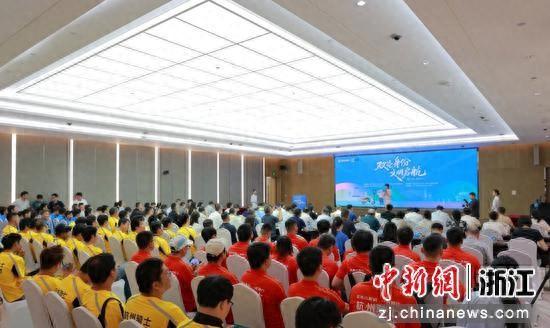
杭州发布浙江首个网约配送行业公约 规范新就业形态发展
Zhong Guo Xin Wen Wang· 2025-09-12 02:38
Core Viewpoint - Hangzhou has released the first comprehensive industry convention for the online delivery sector in Zhejiang Province, aiming to promote the healthy and orderly development of new employment forms [1][3]. Group 1: Industry Convention Details - The convention focuses on three main dimensions: platform responsibilities, employee behavior norms, and service guarantee mechanisms [3]. - It specifies requirements for fair competition, professional ethics training, safety management, adherence to traffic regulations, food preservation, and community safety cooperation [3][4]. - The convention aims to enhance emergency response and conflict resolution mechanisms to improve management and service levels for new employment groups [3]. Group 2: Industry Activities and Innovations - The event featured the launch of the "Double Identity" mechanism for party member delivery riders, allowing them to display their party affiliation both offline and online [3]. - A "Civilized Delivery" initiative was introduced, including a reward program for riders who do not run red lights, with potential rewards exceeding one thousand yuan [4]. - The industry convention and related initiatives signify significant progress in the standardized management of new employment forms and the promotion of industry civility in Hangzhou, providing a model for the healthy development of the online delivery sector in Zhejiang and nationwide [4].
星巴克,或许将出售中国业务控制权
2 1 Shi Ji Jing Ji Bao Dao· 2025-09-12 02:30
Group 1: Starbucks China Sale - Starbucks is preparing to sell its controlling stake in its China business, with final bids expected by early October from firms including Carlyle, Hillhouse, Sequoia China, and Boyu Capital [1] - The deal structure remains negotiable, but Starbucks aims to retain control over its coffee roasting facilities in China to maintain quality [1] - CEO Brian Niccol expressed confidence in the Chinese market and indicated that Starbucks is evaluating over 20 interested institutions for potential partnerships to expand its store count significantly [1] Group 2: Competitive Landscape - Luckin Coffee reported a 47.1% year-on-year revenue growth in Q2, reaching 12.36 billion yuan, significantly outpacing Starbucks, which saw an 8% revenue increase to 7.9 billion USD (approximately 56.25 billion yuan) [2] - Luckin's same-store sales grew by 13.4% in Q2, driven primarily by an increase in cup volume, while Starbucks experienced a 2% increase in same-store sales with a 4% decline in average transaction value [2] - The competitive dynamics in the Chinese coffee market are shifting, prompting local capital to pursue Starbucks due to its potential for localized growth [2]
