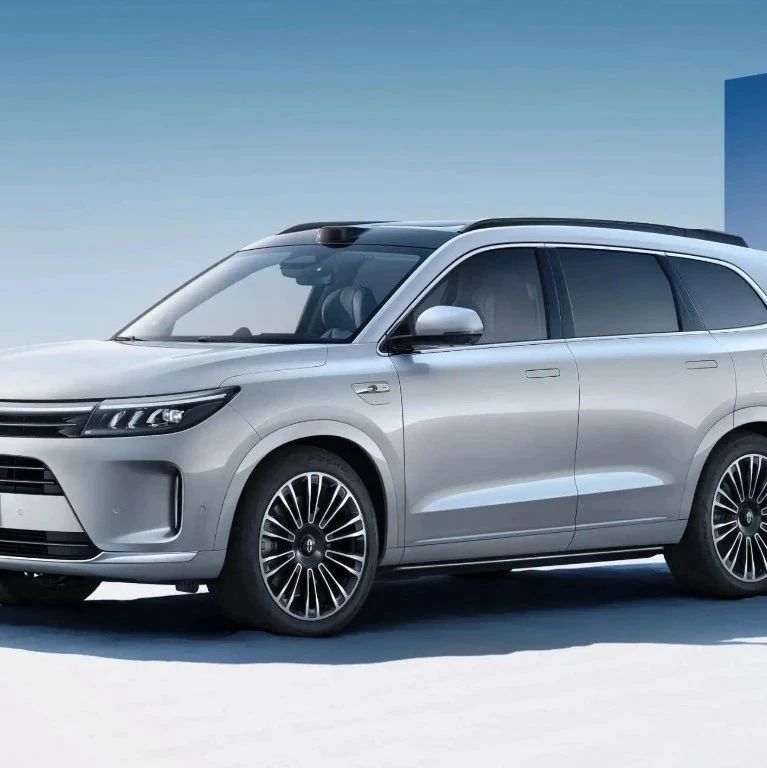
小鹏

Search documents
加大技术研发投入,推动汽车企业高质量竞争
2 1 Shi Ji Jing Ji Bao Dao· 2025-05-26 17:18
Group 1 - The core viewpoint of the articles highlights the recent decline in A-shares and Hong Kong stocks, particularly in the automotive sector, driven by significant price cuts from major players like BYD and the potential for a price war affecting industry profits [1][2] - BYD's price reduction strategy is aimed at clearing out older inventory lacking new driving assistance features, while the company still maintains a strong market position despite increased competition from other new energy vehicle manufacturers [1][2] - The Chinese automotive market is experiencing a transition characterized by slowing overall growth and increasing penetration of new energy vehicles, which poses challenges such as potential overcapacity and rising inventory levels [2][3] Group 2 - As of April 2025, the inventory of passenger vehicles in China reached a historical high, indicating potential market saturation and increased pressure on sales [3] - The ongoing price war could lead to financial losses for both new energy and traditional fuel vehicle manufacturers, as evidenced by the significant revenue and profit figures of major companies like Toyota [3] - The industry is urged to move away from "involution" competition, which focuses on price wars, and instead prioritize innovation, quality, and service improvements to enhance long-term competitiveness [4]

突然火了!3家明星公司,H股股价超A股!
证券时报· 2025-05-24 14:09
Core Viewpoint - The recent surge in A-share companies pursuing H-share listings has drawn significant market attention, particularly with companies like CATL and BYD seeing their H-share prices exceed A-share prices, highlighting a potential trend of H-share price appreciation relative to A-shares [1][3][5]. Group 1: H-share Performance - CATL's H-share price reached 322.40 HKD, surpassing its A-share price of 266.99 CNY, resulting in an AH share premium rate of -9.85% as of May 23 [5][7]. - Other companies such as BYD and China Merchants Bank also reported H-share prices exceeding A-share prices, with AH premium rates of -5.23% and -3.51% respectively [7]. - The overall trend indicates a potential resurgence of the AH premium phenomenon, with several companies showing narrowing price gaps between their A and H shares [10][11]. Group 2: Market Trends and Indices - The Hang Seng AH Premium Index has shown a decline from a high of 161.36 points in February 2024 to 131.88 points by May 23, indicating stronger performance of H-shares compared to A-shares [12]. - The Hang Seng Index for H-shares has increased by 7.04% this year, driven by factors such as global economic recovery and increased liquidity in the Hong Kong market [13]. Group 3: Institutional Insights - UBS's research suggests that the AH premium, currently around 30%, has room for narrowing due to factors like improved liquidity in Hong Kong and increased foreign investment [16]. - The report indicates that while the overall AH premium may stabilize, certain stocks could experience an AH discount due to heightened interest from foreign investors [17]. - Open-source securities predict that the AH premium could return to lower levels seen between 2016 and 2019, influenced by the "AI+" narrative and regulatory improvements in the internet sector [18].


和谐汽车(3836.HK):聚焦豪华汽车渗透率提升机会,积极拥抱电动化浪潮
Ge Long Hui· 2025-05-22 02:15
Core Viewpoint - The luxury car dealership industry has experienced significant growth over the past two years, driven by price increases and a strong performance in luxury vehicle sales, particularly amidst supply chain disruptions. The penetration rate of luxury cars in China still has substantial room for growth, and leading luxury car dealers are expected to maintain considerable growth moving forward [1][2]. Group 1: Market Opportunities - The luxury car penetration rate in China reached 16% in 2021, compared to approximately 27% in developed countries, indicating significant potential for growth [2]. - The compound annual growth rate (CAGR) for luxury car sales in China is projected to be 6% from 2021 to 2030, supported by a focus on vehicle replacement and upgrades [2]. - The company, Harmony Auto, is positioned as a leading luxury car dealer with a portfolio of 14 brands, including major luxury and super-luxury brands [1][2]. Group 2: Electric Vehicle Strategy - Harmony Auto has proactively engaged in the electric vehicle (EV) market, establishing partnerships with leading EV companies such as Tesla and NIO, and has received service authorizations from brands like Xpeng and Li Auto [3]. - The electric vehicle penetration among luxury brands in China remains low, with Porsche, Volvo, and BMW having electric vehicle ratios of 10.3%, 6.2%, and 6% respectively in 2021, but upcoming models are expected to focus on electric vehicles [3]. - Harmony Auto plans to expand its electric vehicle product line significantly, with BMW expected to offer 25 new energy models by 2023 and to fully utilize a new electric vehicle platform by 2025 [3]. Group 3: Performance and Market Confidence - Despite challenges from the pandemic and economic pressures, the demand for luxury cars remains stable and manageable, with notable growth in super-luxury brands like Ferrari and Rolls-Royce during the first half of the year [4][5]. - The company has initiated a share buyback plan of 200 million HKD, reflecting confidence in its long-term value and addressing current undervaluation [6].
开源晨会-20250521
KAIYUAN SECURITIES· 2025-05-21 14:42
Group 1: Electric Power Equipment and New Energy - In Q1 2025, European BEV sales from companies like Renault, Volkswagen, and BMW saw significant growth, with Renault's BEV sales up by 88%, Volkswagen's by 113%, and BMW's by 64% [5][6] - Chinese automakers are increasing exports to Europe, with BYD's sales reaching 14,000 units, a 124% year-on-year increase, while MG's sales dropped by 47% [6] - European automakers are set to launch new electric vehicle models from 2025 to 2026, which is expected to solidify the trend towards electrification [7] - The pressure from carbon emission assessments is high, but the introduction of new models is anticipated to help exceed targets by 2027 [8] Group 2: Social Services - Recent research highlights hyaluronic acid (HA) as a key factor in the aging process, marking a shift towards systemic interventions in anti-aging strategies [10][11] - Huaxi Biological Technology has positioned itself at the forefront of ECM research, with two new anti-aging products recently approved, indicating a shift from local to systemic interventions in anti-aging [12][13] Group 3: Media - Bilibili reported a revenue of 7.003 billion yuan in Q1 2025, a 23.6% year-on-year increase, with a net profit of 362 million yuan, indicating a turnaround from losses [15][16] - The platform's DAU reached 107 million, a 4.5% increase year-on-year, with MAU hitting a record high of 368 million, suggesting strong user growth [17][19] - The company is expected to benefit from the growth in gaming, membership, advertising, and IP monetization, driving future revenue growth [15][19] Group 4: Pharmaceuticals - The company has increased its stake in AR882 to 100%, enhancing its market position for this gout treatment, which shows significant potential for growth [21][22] - AR882 has demonstrated superior efficacy and safety in clinical trials, positioning it as a best-in-class product in the market [22][23] - The company is increasing its R&D investment, with a pipeline of 15 innovative drugs showing promising early-stage results [23]


订逾12500台成交额破22亿元,第二十四届青岛国际车展闭幕
Qi Lu Wan Bao Wang· 2025-05-21 06:09
Core Insights - The 2025 24th Qingdao International Auto Show successfully concluded with 390,000 attendees, over 12,500 orders, and a transaction volume exceeding 2.2 billion yuan, showcasing significant consumer engagement and sales potential [1][7] Group 1: Event Overview - The auto show featured over 90 global automotive brands and nearly 1,000 vehicle models, with more than 60% of the exhibition dedicated to new energy vehicles [2] - The event utilized a total exhibition area of 60,000 square meters, including five indoor halls and outdoor spaces, highlighting the scale and significance of the show [2] - The show was organized by "Jialubo," which has been hosting the event since 2002, making it the largest and most influential auto exhibition in Shandong Province [3] Group 2: Consumer Engagement and Sales - The event saw a significant boost in automotive consumption, with policies like vehicle trade-in leading to approximately 5.213 billion yuan in sales and 35,700 vehicles traded in [4] - The exhibition's success was attributed to favorable policies, including purchase subsidies of up to 20,000 yuan, which stimulated consumer demand [4] - The auto show maintained a strong brand presence, with major companies like BYD, Great Wall Motors, and Changan showcasing their latest models and innovations [2][4] Group 3: Industry Trends and Innovations - The integration of smart technology and electric vehicles is reshaping the automotive landscape, with companies showcasing advanced features such as intelligent humanoid robots and robotic dogs at the event [3][6] - China leads the global electric vehicle market with a 45.5% share, reflecting the country's resilience and innovation in the automotive sector [6] - The event highlighted the ongoing transformation in consumer behavior and industry dynamics, driven by the convergence of new energy and smart technologies [6]

飞行汽车量产倒计时 香山股份战略卡位低空经济蓝海迎先发优势
Quan Jing Wang· 2025-05-21 05:44
Group 1 - The production license application for Xiaopeng Huitian's flying car "land aircraft carrier" (code: X3-F) has been accepted, marking a significant step in the mass production system of flying cars in China [1] - The low-altitude economy is accelerating in China, with companies like Xiangshan Co., Ltd. strategically positioned to benefit from this emerging industry [1] - Xiangshan Co., Ltd.'s subsidiary, Junsheng Group, is a key partner for leading flying car companies, providing integrated charging and power management systems, expected to enter mass production by 2026 [1] Group 2 - Morgan Stanley predicts the global flying car market will reach $9 trillion, with China's potential market size at $2.1 trillion, and flying cars expected to grow at a compound annual growth rate of 46.2% over the next five years [2] - China Galaxy Securities believes new products in the low-altitude economy will provide new performance growth points for Xiangshan Co., Ltd. [3] - Xiangshan Co., Ltd. is a global tier-one supplier for major automotive brands, with projected revenue from new energy vehicle parts and charging systems reaching 987 million yuan in 2024, reflecting a compound annual growth rate of 21.08% [3] Group 3 - Xiangshan Co., Ltd. is transitioning from a traditional auto parts manufacturer to a leading provider of smart mobility solutions, with low-altitude economy being a key strategic focus [1] - The company has established a strong global operational capability with R&D centers in China, Germany, and North America, and 15 production bases worldwide [3] - The integration of Junsheng Electronics as a controlling shareholder has enhanced Xiangshan Co., Ltd.'s global supply chain resources and operational synergy [3]
摩根大通中国市场峰会:三大关键投资主题
Zhi Tong Cai Jing· 2025-05-21 02:29
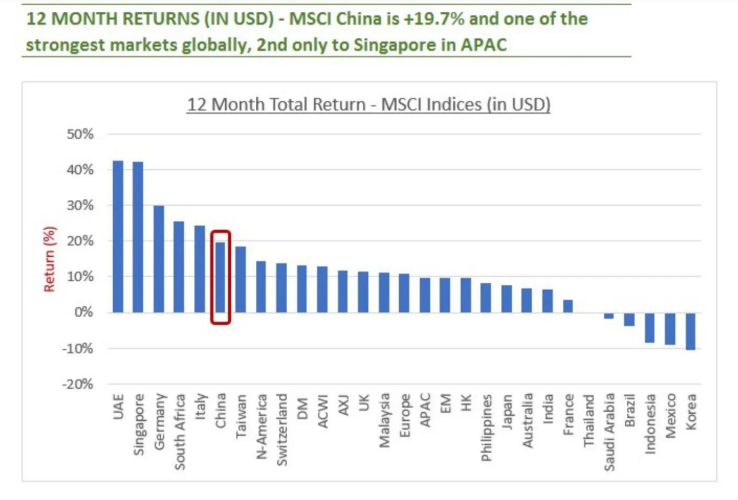
Core Insights - The Morgan Stanley China Summit is set to begin this week with over 2,800 participants, reflecting a more optimistic market sentiment compared to last year, which was focused on hope for policy shifts and growth stabilization that have since materialized [1] - The consensus for EPS growth for the MSCI China Index is projected at 8.3% for 2025 and 11.8% for 2026, with potential upside risks driven by increased AI applications [1][2] Group 1: Investment Themes - Three key investment themes highlighted by Morgan Stanley include: (1) AI innovations in enterprises, particularly in robotics and autonomous driving; (2) consumer demand supported by government policies; (3) the current state and future trajectory of US-China relations [2][10] Group 2: Market Positioning - Emerging market funds have returned to neutral positioning in Hong Kong/China markets, with a median overweight of +0.2 percentage points, ending a two-year low allocation period [4] - Global and EAFE funds remain significantly underweight in the Chinese market, requiring approximately $475 billion in long positions to adjust to neutral [4] Group 3: Market Performance - The MSCI China Index has risen 19% over the past year, outperforming the S&P 500 Index (+14%) and emerging markets (+10%), with a year-to-date increase of 16% [5][9] - Recent performance has lagged slightly, with a 9% increase in the past month compared to the S&P 500's 15% rise [5] Group 4: Valuation Metrics - The MSCI China Index's P/E ratio is currently at 12.6x, and P/B ratio at 1.6x, indicating valuations are no longer a barrier to market growth [6] - There are still significant value opportunities, particularly in the consumer discretionary sector, which is trading at a 30% discount to its 10-year average [6][11] Group 5: Consumer Sector Insights - The Chinese government is shifting focus from supply-side growth to boosting demand, which is crucial for EPS growth in consumer companies [10] - There is a notable disconnect between the earnings growth and stock performance of leading Chinese consumer companies, presenting attractive buying opportunities [11] Group 6: AI and Innovation - The focus on AI applications is expected to grow, with significant interest in "physical AI" such as robotics and advanced driver-assistance systems (ADAS) [14][15] - Companies like UBTECH and Unitree are leading in the humanoid robotics space, with a projected market size of $5 billion for humanoid robots [14] Group 7: US-China Relations - The strategic competition between the US and China extends beyond trade, with deep-rooted geopolitical tensions and a spectrum of potential outcomes ranging from a grand bargain to a new cold war [18][20][22] - The current geopolitical landscape poses risks for companies operating in both markets, with implications for their strategic decisions and operations [18]

汽车新规要求强制安装AEBS,有望带动相关产业链发展
Mei Ri Jing Ji Xin Wen· 2025-05-19 06:14
Group 1 - The Hong Kong stock market indices showed a narrowing decline, with the Hang Seng Tech Index ETF experiencing a slight downturn, while stocks like Meituan and Xiaomi led the gains [1] - The new mandatory national standard for light vehicle automatic emergency braking systems (AEBS) is set to replace the current standard, expanding its applicability to light commercial vehicles [1] - The new standard requires M1 and N1 class vehicles to be equipped with automatic emergency braking systems, indicating a significant regulatory shift in the automotive industry [1] Group 2 - The implementation of the new automotive regulations is expected to enhance the market penetration of AEBS, creating growth opportunities for the related supply chain [2] - Short-term benefits are anticipated for AEBS component suppliers due to increased business volume, while mid-term advantages will accrue to automotive electronics and intelligent driving system integrators [2] - Long-term growth is expected for autonomous driving technology providers and vehicle manufacturers as they benefit from AEBS technology upgrades and the promotion of smart connected vehicles [2] Group 3 - The Smart Vehicle ETF focuses on significant AI applications, highlighting its strong technological attributes [3] - The Automotive Parts ETF is expected to perform well as the replacement process accelerates within the parts sector [4] - The Hong Kong Stock Connect Automotive ETF includes leading vehicle manufacturers such as BYD, Li Auto, and Xpeng [5]
如何理解AI资产重估?
李迅雷金融与投资· 2025-05-15 12:07
Core Viewpoint - A structural transformation is occurring in the Chinese economy, characterized by a concentration of capital and technology in leading enterprises, particularly in AI and high-end manufacturing, while employment and consumption lag behind [1][2][3] Group 1: AI Technology Breakthrough - The domestic AI model DeepSeek has achieved significant breakthroughs, showcasing higher reasoning efficiency and local computing compatibility, marking a shift towards commercial expansion of Chinese AI models [1][2] - The valuation logic in the capital market is changing as Chinese AI companies transition from relying on foreign technology to establishing their own core capabilities, leading to a re-evaluation of their long-term growth potential [2][3] - A significant concentration of investment is observed in leading AI firms, with the DeepSeek index rising by 41.61% from February 4 to March 18, 2025, compared to a mere 22.37% increase in the Hang Seng Index during the same period [2][3][6] - The "winner-takes-all" dynamic is evident, where investment flows heavily favor a few leading companies, creating a feedback loop that enhances their competitive edge [3][4][6] Group 2: Industrial Upgrade and Concentration - High-end manufacturing is increasingly reliant on strong R&D capabilities and system integration, with government support favoring leading firms capable of overcoming technical challenges [9][10] - The concentration of capital in high-end manufacturing is not due to a lack of innovation among smaller firms, but rather the necessity for complete industrial chain support and strategic execution aligned with policy [10][11] - The average price-to-earnings ratio of leading firms in the industrial mother machine sector increased by over 20% in 2024, while second-tier firms saw declines, indicating a clear preference for established leaders [10][11] Group 3: New Cycle of Tech Investment and Employment Market - Despite a surge in tech investment, the employment market is experiencing structural challenges, with a significant drop in venture capital investment events, down nearly 50% from 2021 highs [13][15] - The investment focus has shifted towards a few hard-tech sectors, leaving traditional employment-intensive industries underfunded and shrinking, leading to a mismatch in job supply and demand [19][20] - The automation trend is exacerbating employment issues, as companies like BYD see revenue growth outpacing employee growth, reducing overall job absorption capacity [22][25] Group 4: Policy Expectations and Economic Structure - The current macroeconomic policy is transitioning towards structural adjustments, emphasizing quality and stability over broad stimulus measures [26][27] - The government faces a dual challenge of advancing key technologies while ensuring employment stability, leading to a more nuanced approach to economic policy [27][28] - Recent policy measures indicate a shift towards supporting strategic sectors like AI and high-end manufacturing, while traditional industries may continue to face valuation challenges [28][29] Group 5: Asset Allocation Recommendations - The core assets in the AI sector are now driven by engineering capabilities and profitability rather than mere policy support, indicating a shift towards long-term asset allocation [30][31] - Investment strategies should focus on defensive assets, leading AI firms, and safety assets like gold and military equipment, reflecting the current market dynamics and policy direction [33]

理想2万元预算都需要审批,李想股权激励6.39亿是好是坏?
美股研究社· 2025-05-15 11:02
Core Viewpoint - Li Auto has established itself as a leading player in the new energy vehicle market, achieving significant sales and financial performance, while also facing scrutiny over executive compensation structures [5][9][11]. Group 1: Sales Performance - In 2024, Li Auto achieved a total sales volume of 500,508 vehicles, marking a 33% year-on-year increase and becoming the first new force brand in China to surpass 500,000 annual sales [7]. - Li Auto's sales exceeded those of its competitors, NIO and Xpeng, with NIO selling 221,970 vehicles and Xpeng selling 190,000 vehicles in the same year [7][8]. - As of the end of 2024, Li Auto's cumulative delivery volume reached 1,133,900 vehicles, showcasing its strong market presence [7]. Group 2: Financial Performance - Li Auto reported a revenue of 144.5 billion yuan in 2024, the highest among its peers, and a net profit of 8.032 billion yuan, despite a 31.37% year-on-year decline [9][10]. - The company's gross margin stood at 20.53%, and its net margin was 5.57%, outperforming both NIO and Xpeng [10]. - Li Auto's market capitalization reached $29.93 billion as of May 13, 2024, significantly higher than NIO's $9.33 billion and Xpeng's $19.77 billion [11]. Group 3: Executive Compensation - Li Auto's founder, Li Xiang, has been reported to have a total compensation of 639.34 million yuan, which includes a base salary of 2.665 million yuan and stock-based compensation triggered by performance targets [13][20]. - The stock-based compensation is linked to achieving sales milestones, with Li Xiang needing to pay a premium to exercise stock options, indicating a performance-driven compensation structure [22][23]. - Comparatively, Li Xiang's compensation is significantly higher than that of other executives in the industry, with his total compensation being 16 times that of the second-highest paid executive at Li Auto [20]. Group 4: Market Outlook - Despite challenges in meeting sales targets in early 2025, Li Auto remains optimistic about its growth trajectory, with a target of 700,000 vehicles for the year [8]. - The company’s strong financial results and market position suggest continued investor confidence, as reflected in its stock performance [5][11]. - Li Auto's strategic focus on maintaining high margins and profitability sets it apart from competitors who are struggling with losses [9][10].