
海底捞

Search documents
港股评级汇总:招商证券(香港)维持药明合联买入评级
Xin Lang Cai Jing· 2026-01-19 07:21
Group 1 - The core viewpoint of the reports is that various companies are expected to show significant growth in revenue and profitability, with specific targets set by different securities firms [1][2][3][4][5][6][7][8][9] Group 2 - WuXi AppTec (药明合联) is projected to achieve a 45% revenue growth and a 38% net profit growth by 2025, with a record of 70 new integrated projects and a 125% increase in contracts at the PPQ stage [1] - Alibaba (阿里巴巴-SW) is enhancing its ecosystem with the integration of the Q&A app into various platforms, aiming to capture AI-driven traffic and commercial opportunities [1] - Budweiser APAC (百威亚太) is expected to face pressure in China but maintain competitive advantages in Korea and strong sales in high-end products in India, with a mild recovery anticipated in 2026 [2] - Gu Ming (古茗) plans to expand into northern regions and is optimistic about same-store sales, with successful product launches in coffee and breakfast items [3] - Haidilao (海底捞) is focusing on operational efficiency and service quality improvements through new brand incubations and innovative business models [4] - China Resources Beverage (华润饮料) is expected to recover by 2026 after a period of channel reform, with a stable market share in packaged water [5] - J&T Express (极兔速递-W) is enhancing its logistics capabilities through a partnership with SF Express, which will improve cross-border delivery and local fulfillment [6] - Li Ning (李宁) is seeing a narrowing decline in revenue and is expected to improve brand strength through increased marketing investments in the Olympic year [7] - 361 Degrees (361度) is achieving a 10% year-on-year growth in offline sales and exceeding its store opening targets, with a focus on enhancing brand image [8] - Luk Fook Holdings (六福集团) reported a 26% year-on-year increase in retail value, with a 15% increase in same-store sales, benefiting from product structure optimization and favorable tax policies [9]

张勇能开启海底捞的“第二增长曲线”吗?
Tai Mei Ti A P P· 2026-01-19 07:10
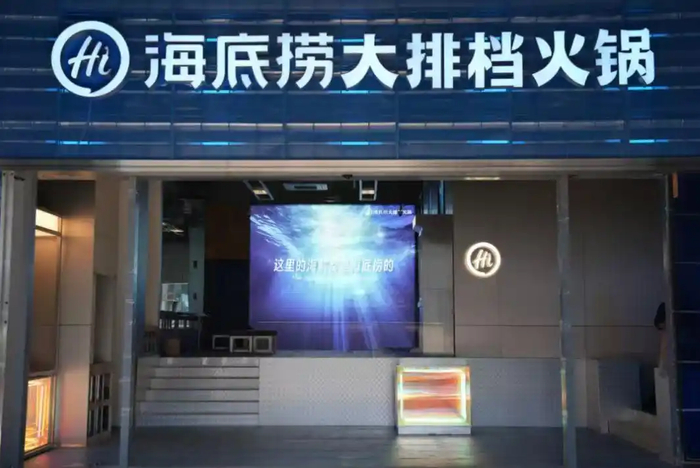
Core Viewpoint - The return of Zhang Yong as CEO of Haidilao is seen as a strategic move to address the company's challenges and revitalize its operations in a competitive market [2][3][10]. Management Changes - On January 13, 2024, Haidilao announced the resignation of several executives, including CEO Gou Yiqun, with Zhang Yong being appointed as CEO effective immediately [2]. - Zhang Yong's return marks a significant shift in leadership, as he was previously considered to have stepped back from day-to-day operations [3][9]. Market Reaction - Following the announcement of Zhang Yong's return, Haidilao's stock surged over 9%, reaching HKD 15.74 per share, the highest since May of the previous year, with a market capitalization of HKD 87.7 billion [3]. Historical Context - Zhang Yong had previously stepped down as CEO during a challenging period for Haidilao, which included a profit warning and significant losses in 2021 [5][8]. - The company had expanded rapidly in 2020, opening 544 new stores, which contributed to its financial difficulties [7][8]. Strategic Initiatives - The "Pomegranate Plan," aimed at incubating new restaurant brands, was initially led by Gou Yiqun and is expected to be a key focus for Zhang Yong [10][11]. - As of mid-2025, the "Pomegranate Plan" had successfully incubated 14 new brands, generating revenue of CNY 597 million, which accounted for 2.9% of total revenue [10]. New Business Developments - The launch of "Haidilao Dapaidang Hotpot" represents a shift in strategy, leveraging the Haidilao brand to reduce consumer decision-making difficulty and accelerate expansion [12]. - The new concept has already seen rapid growth, with nearly 10 locations opened or in preparation within a month of its debut [12]. Leadership Transition - The appointment of younger executives to the board indicates a shift towards a more dynamic management approach, focusing on various operational aspects [13]. - The challenges of balancing personalized consumer demands with scalable growth remain a critical focus for Haidilao as it seeks to establish a second growth curve [14].


招商证券:促消费政策频发&休闲需求稳中向好 关注出行链布局机会
Zhi Tong Cai Jing· 2026-01-19 06:01
Group 1: Tourism Industry - The tourism market is expected to grow by over 10% in 2025, driven by the continuous release of leisure travel demand and the rise of experiential consumption [1] - Domestic tourism revenue and visitor numbers are projected to increase by 12% and 18% year-on-year in Q1-Q3 2025, respectively [1] - Recommended stocks in the tourism industry include China Duty Free Group, Jin Jiang Hotels, ShouLai Hotels, Tongcheng Travel, and Trip.com Group [1] Group 2: Restaurant Industry - Offline consumption is gradually recovering, with domestic restaurant revenue reaching 519.9 billion and 605.7 billion yuan in October and November 2025, showing year-on-year growth of 4.99% and 4.40% [2] - The recovery of leading restaurant companies is faster than the industry average, with a focus on stocks like Green Tea Group and Haidilao [2] Group 3: Tea Beverage Industry - Since Q4 2025, same-store sales for leading tea brands like Gu Ming and Hu Shang A Yi have continued to grow at a high rate of 15-20%, aided by delivery subsidies and brand expansion into coffee and breakfast categories [3] - Despite a slight decrease in delivery subsidies, leading brands are accelerating their expansion, highlighting the advantages of top brands [3] Group 4: Online Travel Agency (OTA) Industry - The recovery of travel demand is ongoing, with OTA performance improving due to increased domestic leisure travel demand, hotel supply growth, and rising online penetration [4] - The performance of OTAs is expected to remain stable with long-term growth potential, particularly with the high growth in outbound travel [4] - Recommended stocks in the OTA sector include Trip.com Group and Tongcheng Travel [4] Group 5: Hotel Industry - In Q4 2025, hotel room supply is expected to grow by 6-8% year-on-year, with RevPAR remaining stable compared to 2024, benefiting from increased holiday traffic and low base effects [5] - Leading hotel companies are expected to have significant earnings elasticity in a cyclical environment, with recommendations for Jin Jiang Hotels and ShouLai Hotels [5]

社会服务板块2025年四季度前瞻:促消费政策频发、休闲需求稳中向好,关注出行链布局机会
CMS· 2026-01-19 05:07
Investment Rating - The report maintains a positive investment rating for the industry, highlighting a favorable outlook for the tourism and leisure sectors due to government policies aimed at boosting domestic consumption and service spending [1][35]. Core Insights - The report emphasizes the recovery of domestic tourism, with expected growth rates of 12% in revenue and 18% in visitor numbers for Q1-Q3 2025, driven by sustained leisure travel demand and the rise of experiential consumption [1][35]. - The overall tourism market is projected to grow by over 10% for the year, supported by government initiatives such as promoting spring and autumn travel and issuing cultural tourism consumption vouchers [1][35]. - Key companies recommended for investment include China Duty Free Group, Jin Jiang Hotels, Shouqi Group, Tongcheng Travel, and Ctrip Group, alongside high-growth tea beverage stocks like Gu Ming and low-valuation restaurant growth stocks like Green Tea Group [1][35]. Summary by Sections 1. Restaurant Sector - Offline consumption is gradually recovering, with Q4 restaurant revenue showing steady growth, achieving 519.9 billion and 605.7 billion yuan in October and November 2025, respectively, with year-on-year growth of 4.99% and 4.40% [7][10]. - Leading restaurant companies are recovering faster than the industry average, with significant revenue increases noted for major players [10][14]. 2. Tea Beverage Sector - The tea beverage sector has seen a surge in same-store sales growth due to delivery subsidies, with leading brands like Gu Ming and Hu Shang A Yi maintaining high growth rates of 15-20% [7][10][14]. - The number of new store openings has doubled compared to 2024, indicating aggressive expansion strategies among top brands [16]. 3. OTA (Online Travel Agency) - The recovery of outbound travel demand is evident, with strong performance in Southeast Asia routes and a notable increase in visitor numbers to Japan and South Korea [20][24]. - The report highlights the long-term profit potential of leading OTA companies like Ctrip and Tongcheng Travel, driven by the ongoing recovery in leisure travel demand and improved commission rates [24][25]. 4. Hotel Sector - The hotel industry is expected to see a stable RevPAR (Revenue per Available Room) in Q4, with a year-on-year growth of 6-8% in room supply [29][30]. - Major hotel chains like Shouqi and Jin Jiang are projected to maintain or improve their performance, benefiting from cost reductions and increased guest traffic during holiday periods [29][30][31]. 5. Investment Recommendations - The report suggests focusing on the travel sector, particularly companies involved in OTA, hotels, and scenic spots, as they are likely to benefit from favorable government policies [1][35]. - Additionally, it recommends investing in high-growth tea beverage stocks and undervalued restaurant growth stocks, indicating a diversified approach to capitalizing on the recovery in consumer spending [1][35].



千味央厨20260116
2026-01-19 02:29
Company and Industry Summary Company Overview - **Company**: Tianwei Yangchun (天为央视) - **Industry**: Food Production, specifically focusing on baked goods, frozen prepared dishes, and traditional Chinese pastries Key Points Revenue and Profit Outlook - **2026 Revenue Growth**: Expected to maintain growth with a target of single-digit percentage increase in revenue for the year [2][3] - **Profit Recovery**: Anticipated narrowing of profit decline, with a potential turnaround to positive profit by the end of 2026 [2][3] Product Performance - **Baked Goods**: - Significant growth in the baked goods segment, particularly in the fourth quarter of 2025 and into 2026, driven by major clients like Hema and Yum [2][4] - Expected growth rate may slow to double digits due to a higher base effect [5] - Plans to expand baking capacity, including adding production lines in Wuhu [5] - **Frozen Prepared Dishes**: - Products produced through self-research and ODM models, primarily targeting restaurant clients [6] - Growth rate expected to return to a more rational level, decreasing from over 200% last year to a few tens of percent [6] - **Traditional Chinese Pastries**: - Main food products have stabilized due to a solid customer base, while snack products are experiencing a decline [7] Market Dynamics - **New Retail Channels**: - Competitive landscape remains intense, but market space is expanding [8] - Collaboration with Hema has increased significantly, with sales volume growing from 20 million to several tens of millions [8][9] - New retail channels are viewed as major B-end clients, contributing significantly to overall performance [10] Business Strategy - **B-end vs C-end Business**: - B-end business constitutes approximately 90% of total revenue, with large B and small b clients each accounting for 50% [10] - C-end business primarily achieved through new retail channels, which are still classified as B-end clients [10] - **Distributor Strategy**: - New strategies focus on supporting quality large distributors while helping smaller ones grow [11] - Adjustments made to reduce overall price subsidies and concentrate resources on markets with growth potential [11] Challenges and Opportunities - **Traditional Restaurant Clients**: - Facing pressure, with some large clients like Xibei planning to close a third of their stores, while others like Green Tea perform relatively well [12] - **Snack Retail Channels**: - Limited collaboration due to space constraints in freezers and a small number of SKUs, resulting in lower revenue from this channel [13] Future Investments - **Overseas Factory Development**: - Progressing well, with plans for production to start around July 2026 after necessary modifications and equipment installations [17] - Initial costs from new projects, such as the overseas factory, may impact net profit but overall business is expected to improve [15][16]
2026的策略探讨-趋势强化与景气反转
2026-01-19 02:29
Summary of Conference Call Notes Industry and Company Overview - The discussion primarily revolves around the **AI industry** and **semiconductor sector**, with a specific focus on **Taiwan Semiconductor Manufacturing Company (TSMC)** and its financial performance, which has implications for the AI computing power supply chain and related investments [1][3][9]. Key Insights and Arguments AI and Semiconductor Trends - TSMC's financial report has significantly strengthened the investment demand for the AI computing power supply chain, indicating that the semiconductor, hardware, and AI trends will remain central themes in 2026 [1][3][9]. - TSMC has raised its AI revenue compound annual growth rate (CAGR) forecast to over **50%**, reflecting strong downstream demand signals, particularly from large cloud service providers [9]. Market Sentiment and Economic Indicators - The current market sentiment is on an upward trajectory, with indicators such as turnover rates and industry yield differentiation suggesting that the market is in a mid-stage of emotional uplift [6]. - China's export growth remains robust, with a **20% increase** in trade surplus, and a reversal in Producer Price Index (PPI) and Consumer Price Index (CPI) is observed, leading to increased foreign investment interest [7][8]. Consumer Sector Dynamics - The consumer sector is experiencing a bifurcation between the rise of new consumption patterns and the continued decline of traditional consumption [5][22]. - High-end consumption and value-for-money segments are performing well, while some bottom-tier industries are beginning to show new clues worth monitoring [4][5][22]. Semiconductor Capacity and Pricing - The semiconductor industry may face supply shortages and price increases due to lagging capacity expansion, which could affect storage, advanced processes, and equipment materials [10]. - TSMC's capital expenditure for 2026 is projected to reach between **$52 billion and $56 billion**, indicating significant benefits for upstream equipment and materials due to large-scale expansion [10][11]. Valuation Insights - Current valuations in the storage sector are around **10x P/E**, while wafer foundries are at approximately **20x P/E**, suggesting reasonable valuation levels with potential for upward adjustments if performance expectations for 2027 are met [11][19]. - The valuation of domestic companies is expected to be higher than their overseas counterparts due to rapid growth driven by domestic market dynamics [19]. Other Important Insights - The potential for price increases in storage could suppress demand for consumer electronics, but the impact is not expected to be severe enough to reverse the overall upward trend in the storage industry [14]. - Emerging sectors such as power semiconductors and data center technologies are highlighted as areas of potential growth, driven by ongoing AI demand [12][13][31]. - The need for a revised valuation framework is emphasized in light of the current market environment characterized by liquidity and risk appetite [21]. Conclusion - The conference call highlights a positive outlook for the AI and semiconductor industries, driven by strong demand signals and strategic investments, while also noting the complexities within the consumer sector and the need for careful monitoring of emerging trends and potential supply constraints.

消费行业2026年春节机会
2026-01-19 02:29
Summary of Conference Call Records Industry Overview - **Consumer Industry**: The consumer industry is expected to see opportunities during the 2026 Spring Festival, particularly in the export chain and food sectors. Key companies like Jiangxin Home, Zhongxin Co., and Gongchuang Turf are projected to maintain steady growth in 2026 [1][2]. - **Agriculture Sector**: The 2026 Central Document No. 1 will focus on food security, poverty alleviation, and agricultural technology. Grain production has exceeded 1.4 trillion jin for two consecutive years, but supply and demand remain tight, necessitating improvements in yield [1][4]. - **Alcohol Industry**: The white liquor market is facing a pessimistic outlook for the Spring Festival, with expected sales declines of nearly double digits due to the impact of alcohol bans and high inventory levels from the previous year [1][7]. Key Companies and Their Performance - **Jiangxin Home**: Transitioning from OEM to OBM, with over 1,000 brand stores established. Stable performance is expected despite short-term stock price fluctuations due to currency changes [3]. - **Zhongxin Co.**: Anticipated profits exceeding 600 million yuan in 2026, with a current PE ratio of about 13 times. The company is performing well in Thailand's pulp molding production [3]. - **Gongchuang Turf**: Expected to maintain a 20% growth rate in 2026, with double-digit revenue growth continuing into the fourth quarter [3]. - **Anjixin Foods**: Projected revenue growth of nearly 20% in December, indicating a rebound in the food supply sector [1][9]. Investment Opportunities - **Export Chain**: Companies in the light industry are expected to perform well, with a positive outlook for Jiangxin Home, Zhongxin Co., and Gongchuang Turf [2]. - **Research Services**: Companies like Haoyuan Pharmaceutical, Baiaosaitu, and Nami Technology are well-positioned to benefit from the overseas expansion of innovative drugs [2][13]. - **AI in Home Appliances**: The potential for AI applications in home appliances is significant, with companies like Ugreen launching AI NAS to integrate localized computing power [2][14]. Agricultural Focus Areas - **High-Standard Farmland Construction**: Aiming to build 1.35 billion mu of high-standard farmland by 2030, with an investment of over 150 billion yuan annually [5]. - **Biotechnology**: Continued emphasis on the commercialization of genetically modified crops, with a focus on increasing planting areas and supporting regulations [5][6]. Consumer Behavior Insights - **White Liquor Sales**: The sales rhythm for white liquor during the Spring Festival is unclear, with expectations of a significant decline in sales due to changing consumer purchasing habits [7]. - **Non-Alcoholic Gifts**: Demand is shifting towards non-alcoholic gifts, including snacks and beverages, as consumers adapt to new purchasing trends [8]. Travel and Dining Sector - **Travel Industry**: Companies like Ctrip are expected to benefit from increased travel flow during the Spring Festival, with significant growth in hotel bookings and dining reservations [10][12]. - **Dining Sector**: Haidilao is highlighted as a key investment opportunity due to its improving turnover rates and potential for rapid expansion under new leadership [10][11]. Challenges and Innovations - **Smart Home Industry**: The smart home sector faces challenges such as high costs and the need for standardization across devices, but it remains a promising area for future growth [17][19]. - **Robotic Innovations**: Companies like Roborock are innovating in the robotic cleaning space, enhancing user interaction through AI capabilities [20]. This summary encapsulates the key insights and opportunities discussed in the conference call, providing a comprehensive overview of the consumer, agriculture, and technology sectors.
创始人张勇,“重新”掌舵870亿海底捞
阿尔法工场研究院· 2026-01-19 02:02
Core Viewpoint - The article discusses the challenges faced by the hot pot industry, particularly focusing on Haidilao, and highlights the shift in consumer preferences towards tea beverage brands, which are currently favored in the capital market [3][4][18]. Group 1: Industry Trends - The restaurant industry is experiencing a shift where supply chain and standardization are becoming key answers to current challenges, as seen with companies like Mixue Ice City and Gu Ming [3]. - Tea beverage companies are receiving higher valuations compared to traditional restaurant businesses, indicating a trend that is unlikely to reverse in the short term [3][18]. - The rapid expansion of tea beverage brands is attributed to lower investment requirements and easier scalability compared to the hot pot industry [17][21]. Group 2: Haidilao's Performance - Haidilao's market valuation has not recovered despite achieving record high revenues, with a peak market value of over 450 billion HKD in 2021 [6][10]. - The company faced a net loss of 4.163 billion CNY in 2021, leading to a leadership change where founder Zhang Yong returned to the helm [12][15]. - Under the new leadership, Haidilao's revenue reached 41.453 billion CNY in 2023, with a net profit of 4.499 billion CNY, marking a historical high [15]. Group 3: Management Changes and Strategies - The return of Zhang Yong is seen as a strategic move to refocus on the core hot pot business and optimize the secondary brand strategy [17][21]. - Haidilao's attempts to diversify through the "Red Pomegranate Plan" have not yielded the expected results, with revenue and net profit showing only slight increases in 2024 [16][18]. - Frequent management changes reflect the company's anxiety about future performance and the need to adapt to changing consumer preferences [17][21]. Group 4: Consumer Behavior and Market Dynamics - Consumer preferences are shifting, leading to a decline in the hot pot industry's appeal, as evidenced by a drop in customer traffic and average daily sales [21]. - The sensitivity of consumers to pricing in the hot pot sector is higher compared to tea beverages, which affects overall sales performance [21]. - The article concludes that Haidilao's structural adjustments may not resolve current issues, and a market recovery is necessary for the company to regain investor confidence [21].
朝闻国盛:市场短期调整或已基本到位
GOLDEN SUN SECURITIES· 2026-01-19 00:03
Group 1 - The report indicates that the market's short-term adjustment may have reached its limit, with a potential new upward trend expected to begin soon, supported by healthy market dynamics and a majority of sectors showing signs of recovery [6][12][17] - The banking sector is undergoing a transformation, with policies encouraging increased equity asset allocation in bank wealth management, which is expected to drive long-term growth despite short-term challenges [17][18][21] - The geothermal energy sector in the U.S. is experiencing increased demand driven by data centers, with significant investment opportunities identified in companies like Kaishan [23][24] Group 2 - The coal industry is facing a mixed outlook, with global shipping volumes expected to decline, particularly in the EU, while some regions like South Africa and Southeast Asia show growth [26][27] - The pharmaceutical sector is witnessing advancements with the commercialization of innovative drugs like RAY1225, which is expected to enhance long-term competitiveness for companies like Zhongsheng Pharmaceutical [29] - The textile and apparel industry is projected to see a cautious recovery in orders, with recommendations for companies that demonstrate strong operational capabilities and market positioning [31][32]
张勇“出山”直面业绩双降挑战 海底捞变革破局新品牌营收占2.9%
Chang Jiang Shang Bao· 2026-01-18 23:52
Core Viewpoint - The return of Zhang Yong as CEO of Haidilao signals a strategic shift as the company faces challenges in its core hotpot business and seeks to diversify its operations [1][9]. Group 1: Leadership Changes - Zhang Yong resumes the roles of Chairman and CEO effective January 13, 2026, marking the third CEO change in four years for Haidilao [1]. - The previous CEO, Gou Yiqun, transitions to a key role in the company's digital transformation [1]. - Four experienced managers are appointed as executive directors, indicating a focus on strengthening leadership [1]. Group 2: Company Performance - In the first half of 2025, Haidilao's revenue decreased by 3.7% to 207.03 billion yuan, and net profit fell by 13.7% to 17.55 billion yuan [9]. - The "Red Pomegranate Plan" has generated new brand revenue of 5.97 billion yuan, a significant increase of 227.0%, now accounting for 2.9% of total revenue [9]. - In 2023, the company achieved a net profit of 44.95 billion yuan, with a table turnover rate of 3.8 times per day [7]. Group 3: Strategic Initiatives - Haidilao is diversifying its brand portfolio, launching new concepts such as Hi Lao Hotpot and other dining formats, including fast food and barbecue [6]. - The company has implemented various innovative services and new business models, such as night snacks and beauty services, to attract customers [6]. - Zhang Yong's return is accompanied by a renewed focus on addressing operational challenges and enhancing customer engagement through new offerings [10]. Group 4: Market Environment - The competitive landscape for hotpot restaurants is intensifying, with brands like Banou and Song Hotpot attracting customers through differentiated positioning [9]. - Consumer preferences are shifting towards value and experiential dining, which poses challenges for Haidilao's traditional service model [9]. - The company is adapting by optimizing its main business operations and exploring new market opportunities [10].