
菜鸟

Search documents
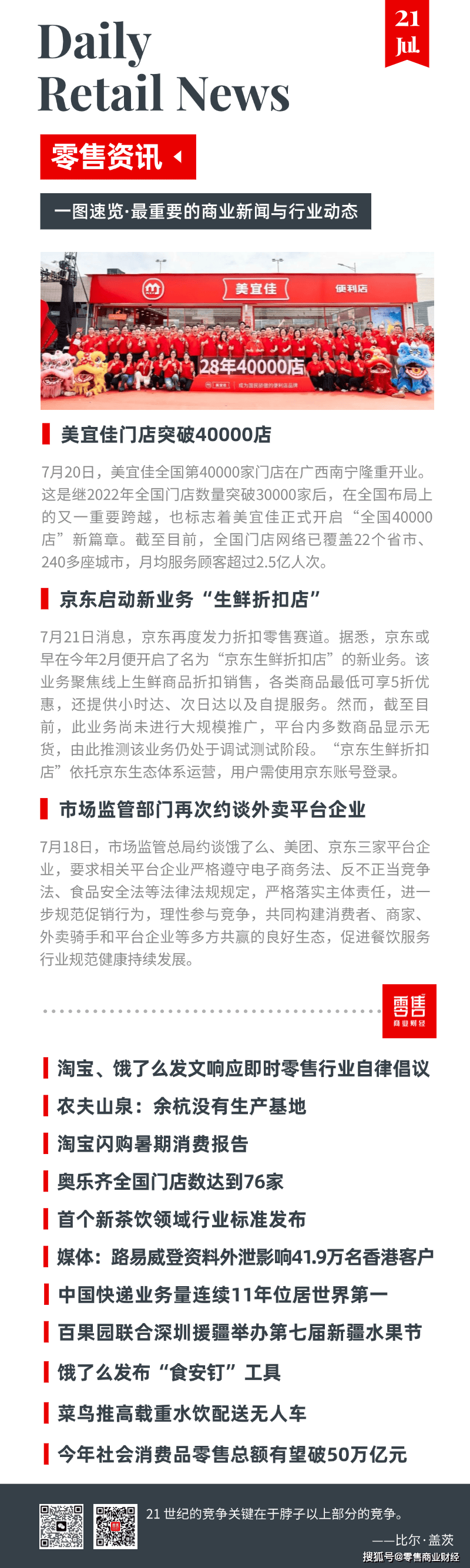
美宜佳门店突破40000店;京东启动新业务“生鲜折扣店”
Sou Hu Cai Jing· 2025-07-21 16:56
Group 1: Company Developments - Meiyijia has opened its 40,000th store in Nanning, Guangxi, marking a significant milestone in its national expansion, with coverage in 22 provinces and over 240 cities, serving more than 250 million customers monthly [6] - ALDI has expanded its presence in China, reaching a total of 76 stores nationwide, with new openings in Wuxi and Suzhou [14] - JD.com has launched a new business called "JD Fresh Discount Store," focusing on online discounts for fresh products, although it is still in the testing phase with limited product availability [8] Group 2: Market Trends and Consumer Behavior - Taobao Flash Sale reported a significant increase in night-time orders, with a more than 100% month-on-month growth in 127 cities since July, particularly in central and western regions [10] - The Chinese express delivery industry continues to lead globally, with an average of over 500 million packages collected daily, reflecting efficient resource allocation [15] - The retail sales of consumer goods in China are expected to exceed 50 trillion yuan this year, maintaining the country's position as the second-largest consumer market globally [22] Group 3: Regulatory and Industry Standards - The State Administration for Market Regulation has held discussions with major food delivery platforms, emphasizing compliance with e-commerce laws and promoting fair competition [9] - The first industry standard for fresh tea beverages has been officially released, which will take effect in January 2026, setting quality requirements for ingredients and packaging [14] - A new digital tool called "Food Safety Nail" has been launched by Ele.me to enhance food safety monitoring across the supply chain [18]





亚马逊拓展当日达、次日达;萝卜快跑与Uber合作丨出海周报
2 1 Shi Ji Jing Ji Bao Dao· 2025-07-21 03:18
Trade and Economic Data - In the first half of the year, China's goods trade import and export reached 21.79 trillion yuan, a year-on-year increase of 2.9%, with exports at 13 trillion yuan (up 7.2%) and imports at 8.79 trillion yuan (down 2.7%) [1] - China's industrial robot exports grew by 61.5% in the first half of the year, with significant increases in lithium batteries and wind turbine exports, both exceeding 20% growth [3] - China will implement zero tariffs for 53 African countries that have established diplomatic relations, leading to double-digit growth in imports from these nations in the first half of the year [4] Corporate Developments - Amazon plans to expand same-day and next-day delivery services to over 4,000 small cities and rural areas in the U.S. by the end of 2025, with a 30% increase in the number of items delivered within these timeframes compared to the previous year [5] - Loongrun has formed a strategic partnership with Uber to deploy thousands of autonomous vehicles globally, enhancing the availability of self-driving services [6] - TEMU aims to have 50% of its orders fulfilled by local merchants in the UK by the end of 2025, currently attracting 22 million users [7][8] - Cainiao's Hong Kong supply chain center has opened to global brands and merchants, providing integrated logistics services [9] Financial Performance - Cross-Border Communication expects a net profit loss of 4 to 7.5 million yuan for the first half of 2025, attributed to reduced promotional investments in its self-operated export platform [10] - Pop Mart anticipates a revenue increase of no less than 200% and a profit growth of no less than 350% for the six months ending June 30, 2025, compared to the same period last year [11] Market Expansion - Cha Bai Dao has opened its first two stores in Singapore, offering 18 beverage options priced between 2.5 to 6.9 Singapore dollars [12] - Jianlibao has established a regional headquarters in Hong Kong, planning to expand into Southeast Asian markets, including Indonesia, Malaysia, and Vietnam, while also targeting Australia, Canada, and the U.S. [13]
无人城配四家争鸣,卡位战升级了
3 6 Ke· 2025-07-17 00:55
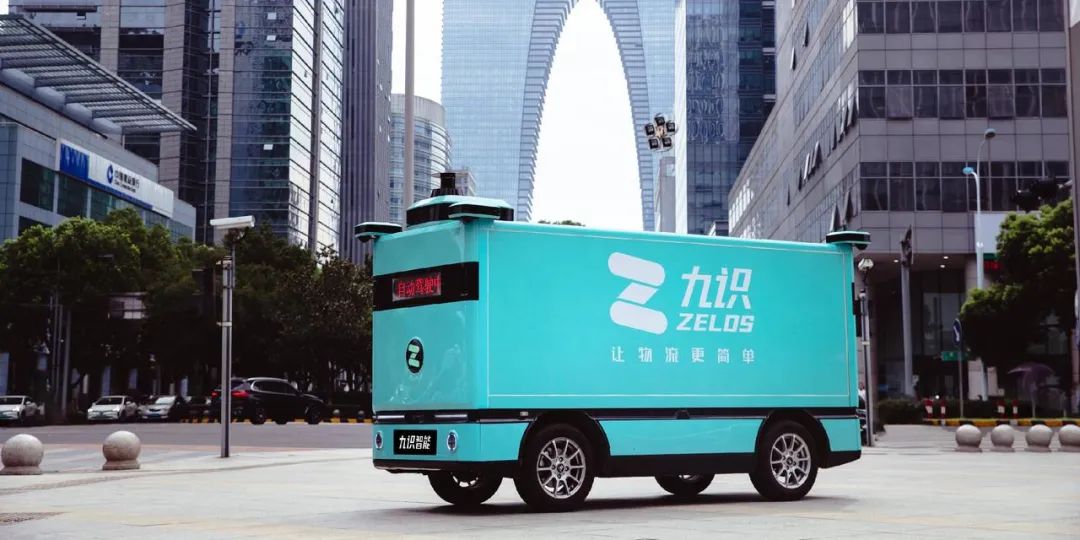
Core Insights - The commercialization path for unmanned delivery vehicles appears clearer than that for passenger transport, with companies like New Stone, Nine Intelligence, and White Rhino already operating in urban logistics [1][2] - The unmanned delivery market in China has reached a trillion-level scale, indicating significant growth potential [1][2] - Major players in the unmanned delivery sector include logistics giants like Cainiao, JD, and Meituan, as well as startups like New Stone, Nine Intelligence, and White Rhino, along with new entrants like WeRide [2][3] Market Dynamics - The unmanned delivery sector is still in its early exploratory stage, allowing new entrants to potentially overtake established players through differentiated strategies [4][5] - The competition is shifting towards a focus on technology and product capabilities, making the market increasingly competitive [5][6] - The current market landscape shows that New Stone and Nine Intelligence are leading with an expected 80% market share this year, while White Rhino and WeRide are also making significant strides [10][19] Technological Challenges - Unmanned delivery vehicles face increasing technical challenges as they transition from controlled environments to open urban roads, requiring robust environmental perception and decision-making capabilities [11][12][14] - Companies like Nine Intelligence, White Rhino, and WeRide have strong backgrounds in autonomous driving technology, which aids in quickly establishing their unmanned delivery systems [15][17] Regulatory Environment - Road rights are crucial for the commercialization of unmanned delivery vehicles, with current policies favoring cargo over passenger transport [17][18] - Leading players have successfully navigated regulatory landscapes, with New Stone and Nine Intelligence already covering over 250 cities in China [19][20] Business Models - The business model for unmanned delivery is primarily B2B, focusing on partnerships with major clients to refine products and scale operations [18][21] - Different companies adopt varied approaches: New Stone and Nine Intelligence focus on low-cost strategies to achieve scale, while White Rhino and WeRide leverage lighter asset models and strategic partnerships [21][26] Product Development - New Stone has developed a product matrix with multiple iterations, while Nine Intelligence has a streamlined product line that meets diverse loading needs [24][25] - White Rhino and WeRide focus on fewer models but emphasize high performance and adaptability to various logistics scenarios [26][29] Expansion Strategies - Companies are looking to expand both domestically and internationally, with New Stone and Nine Intelligence already entering markets in Europe and Asia [34][36] - The focus is on building dense transportation networks in cities and exploring opportunities in smaller customer segments for profitability [35][36] Future Outlook - The unmanned delivery sector is on the brink of commercialization, with significant potential for profitability emerging sooner than in the passenger transport sector [40][41] - The competitive landscape is expected to evolve as companies refine their business models and expand their operational capabilities [39][40]
“配角”菜鸟,为阿里的跨境电商“打辅助”
Sou Hu Cai Jing· 2025-07-16 11:26
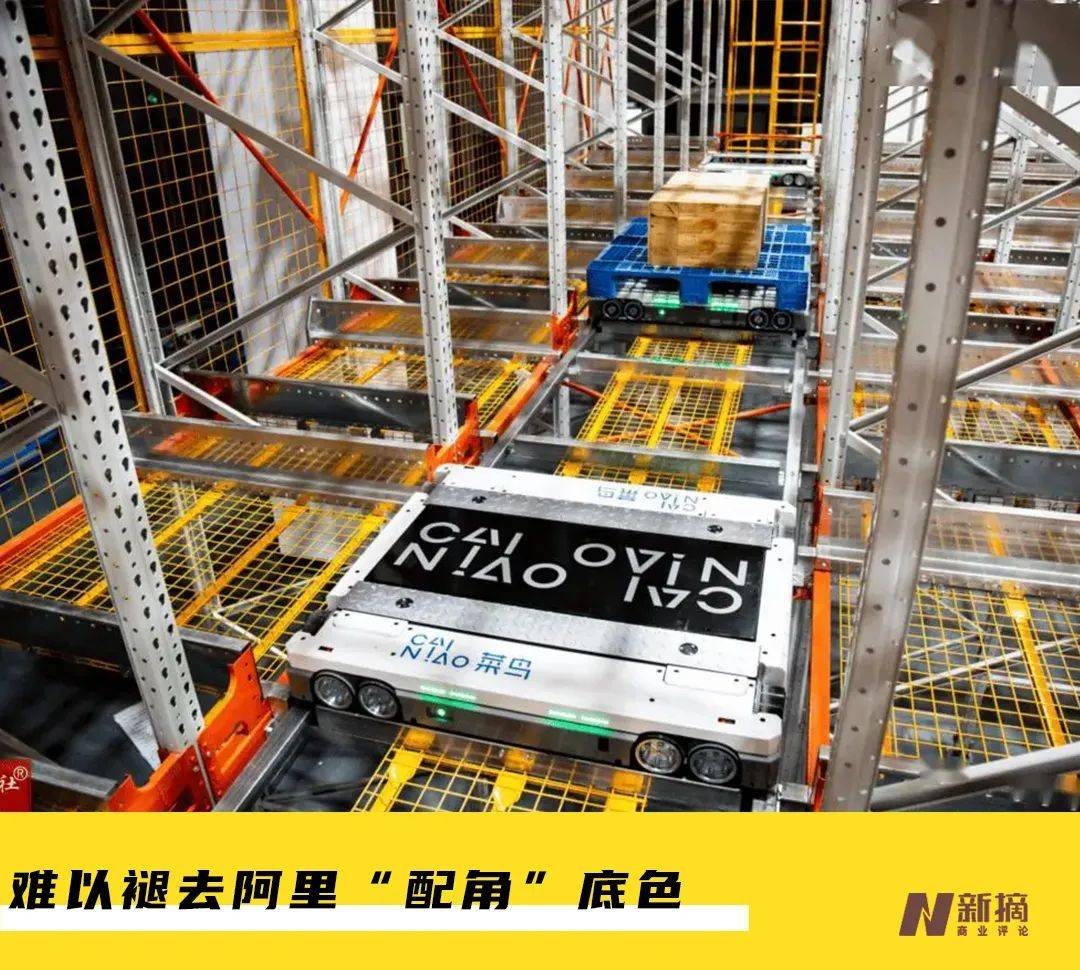
Core Viewpoint - Cainiao, as a logistics entity, is increasingly constrained by its role in supporting Alibaba's e-commerce strategy, leading to persistent losses and diminishing growth potential [2][24]. Group 1: Company Development and Strategy - Cainiao was established to address logistics challenges faced by Alibaba's e-commerce, particularly during peak shopping events like "Double Eleven" [5][7]. - Following Alibaba's acquisition of remaining shares in Cainiao, the company is expected to align closely with Alibaba's strategic needs, focusing on enhancing global logistics capabilities [4][9]. - The company has shifted from a light-asset model to a more integrated logistics technology platform, reflecting Alibaba's dominance in the e-commerce sector [7][11]. Group 2: Financial Performance - Cainiao's revenue has shown significant growth, with figures of 52.73 billion RMB in 2021, 66.87 billion RMB in 2022, and 77.80 billion RMB in 2023, representing a compound annual growth rate of 21.4% [8][22]. - Despite revenue growth, Cainiao has faced substantial losses, totaling 7.10 billion RMB from 2021 to 2023, with net losses of 2.02 billion RMB in 2021, 2.29 billion RMB in 2022, and 2.80 billion RMB in 2023 [22][24]. - The company's gross margin has remained relatively stable at around 10.5% to 10.7%, but it has struggled with high operational costs, leading to negative profit margins [21][22]. Group 3: Market Position and Challenges - The cross-border e-commerce market in China has seen significant growth, with a 10.8% increase in trade volume in 2024, yet Cainiao faces intense competition from platforms like Pinduoduo's Temu [18][20]. - As Alibaba refocuses on its core e-commerce business, Cainiao's role has shifted to that of a supporting player, limiting its ability to independently drive growth [10][24]. - The recent decision to withdraw its IPO application reflects the need for Cainiao to prioritize alignment with Alibaba's strategic goals over independent expansion [10][11].

西咸新区空港新城:综保赋能双循环 航空枢纽畅联大市场
Sou Hu Cai Jing· 2025-07-16 03:32
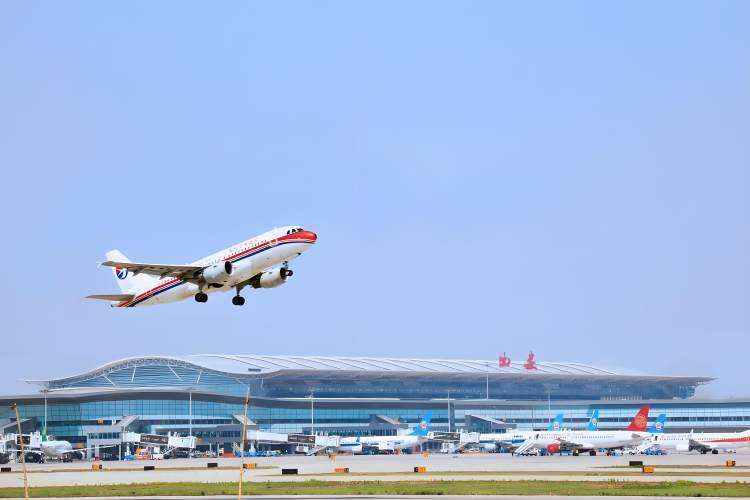
Core Viewpoint - The Xi'an Airport Comprehensive Bonded Zone is leveraging its unique location and functional advantages to connect international and domestic markets, serving as a crucial hub for global trade and facilitating the development of a unified national market [1][3]. Group 1: Innovation and Development - The Xi'an Customs has supported the Comprehensive Bonded Zone in driving innovation and breaking market segmentation, which has effectively promoted the dual circulation pattern and contributed to the construction of a unified national market [3]. - Since 2021, the zone has implemented various business innovations, including the classification of goods by status for regulatory purposes, which has reduced costs for enterprises and improved domestic trade services [5]. - The zone has also launched the first "cross-border e-commerce return center warehouse" in the province, enhancing the efficiency of goods circulation and accelerating cross-border refund processes [5]. Group 2: "Bonded+" Model - The "Bonded+" model has successfully integrated the industrial gears of both internal and external markets, promoting market-oriented allocation of resources and cross-regional industrial collaboration [6]. - Logistics companies within the zone provide specialized "Bonded+" warehousing and distribution services to leading domestic and international manufacturers, enhancing supply chain efficiency [6][8]. Group 3: Cross-Border E-Commerce - The zone supports major e-commerce platforms like JD.com and Cainiao by providing efficient customs clearance and logistics services, covering nearly 20 countries, including those involved in the Belt and Road Initiative and RCEP [11]. - This initiative has enriched domestic consumption and facilitated the global reach of Chinese products, strengthening the connection between domestic and international markets [11]. Group 4: Attraction of Enterprises - The Comprehensive Bonded Zone has attracted various enterprises, such as Xiamen Lufu Aviation and Shanghai Eastern Airlines Technology, to relocate and provide services in aviation maintenance, parts supply, and large equipment leasing [13]. - This has promoted regional industrial development and the free flow of resources, enhancing the zone's influence in the unified national market [13]. Group 5: Future Development - The Xi'an Airport Comprehensive Bonded Zone aims to continue enhancing trade facilitation, optimizing regulatory measures, and strengthening service efficiency to better connect domestic and international markets, contributing to high-quality development of the air economy [15].
塑料之外:中国“无废城市”里的可重复未来
Zhong Guo Chan Ye Jing Ji Xin Xi Wang· 2025-07-11 08:56
Core Viewpoint - The increasing prevalence of single-use plastics is reshaping urban consumption patterns while contributing to environmental pressure and resource waste [1][2] Group 1: Policy and Implementation - The "Zero Waste City" initiative in China aims to address waste management through source reduction, resource utilization, and collaborative governance, with over 100 cities involved since its pilot launch in 2018 [2][3] - The initiative emphasizes the need for a systematic approach to reduce single-use plastic pollution, particularly in high-frequency consumption scenarios like takeout and delivery [3][4] - Despite the expansion of the "Zero Waste" framework, there remains a significant gap in addressing single-use plastics, with policies focusing more on industrial and agricultural waste [3][7] Group 2: Industry Response - The express delivery industry has been proactive in adopting green packaging standards and developing reusable systems, with major companies like Cainiao and SF Express leading the way [10][13] - In contrast, the food delivery sector has lagged, primarily relying on voluntary measures without strong regulatory frameworks, resulting in limited progress in implementing reusable container systems [13][14] - The disparity in response between the express delivery and food delivery industries highlights the need for more robust policies and incentives to promote reusable solutions in the latter [9][15] Group 3: Reusable Solutions - The concept of "reusable" is gaining traction as a highly effective and underappreciated method for source reduction, potentially offering significant cost-effectiveness in plastic waste management [15][17] - Cities like Shenzhen and Shanghai are beginning to incorporate reusable practices into their policies, encouraging the use of reusable containers and offering incentives for consumers [18][24] - The global trend towards reusable systems is evident, with various countries implementing deposit return systems and unified container frameworks to facilitate recycling and reuse [19][21] Group 4: Future Outlook - The "Zero Waste City" initiative is becoming a crucial driver for sustainable urban transformation in China, with the reusable model transitioning from concept to practice [23][24] - Major cities are positioned as frontrunners in implementing reusable systems due to their advanced logistics and high delivery density, making them ideal candidates for pilot programs [24][25] - The immediate nature of food delivery services presents a unique opportunity for establishing efficient reusable container systems, potentially transforming consumer habits towards sustainability [25]
无人物流车正欲狂奔街头,黄石一纸叫停为哪般?
3 6 Ke· 2025-07-11 03:37
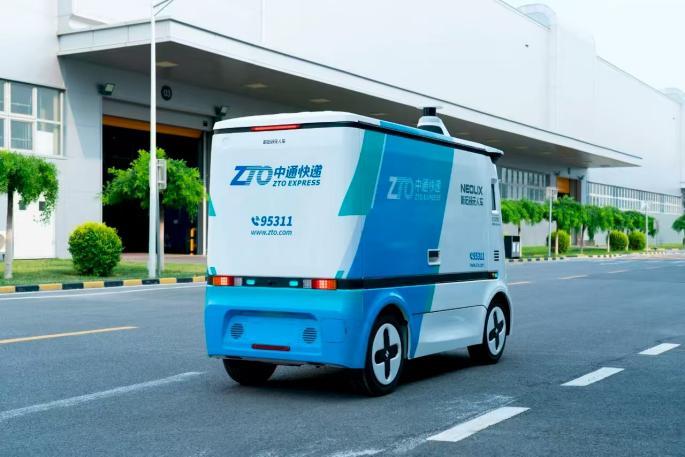
Core Viewpoint - The unmanned logistics vehicle industry is entering a rapid development phase, but large-scale commercialization faces significant challenges including industry standards, policy support, road rights, and safety issues [1][16]. Group 1: Industry Overview - Unmanned vehicles are transforming the logistics sector, particularly in the "last mile" delivery, with various companies emerging in this space [4][25]. - The market for unmanned delivery vehicles in China was approximately 6.5 billion yuan in 2023, projected to reach 17 billion yuan by 2025 [25]. Group 2: Key Players - New Stone (新石器) has become the largest supplier in the unmanned vehicle sector, with over 90% order share from major logistics companies like SF Express, JD.com, and China Post [8]. - Other notable companies include White Rhino (白犀牛) and Jiushi Intelligent (九识智能), both of which have established partnerships with major delivery firms and are expanding their fleets [10][11]. Group 3: Business Models - The three main companies have distinct business models: Jiushi Intelligent focuses on a "low-cost hardware + subscription service" approach, New Stone emphasizes "scale cost reduction," and White Rhino is deepening its presence in last-mile delivery [11][10]. Group 4: Challenges to Commercialization - Despite rapid advancements, the industry must overcome hurdles related to safety, regulatory frameworks, and public acceptance before achieving large-scale deployment [16][21]. - Recent incidents involving unmanned vehicles, such as accidents and regulatory non-compliance, highlight the need for improved safety measures and clearer legal responsibilities [17][19]. Group 5: Regulatory Environment - Different regions in China are exploring various regulations for unmanned vehicles, with some cities allowing testing under specific conditions while others impose strict operational limits [22][23]. - A unified regulatory framework is essential for the industry to thrive, balancing innovation with safety and compliance [23][27].
复盘跨境电商物流服务商大事件:TikTok Shop东南亚推新政 菜鸟布局中东六国
Sou Hu Cai Jing· 2025-07-10 14:18
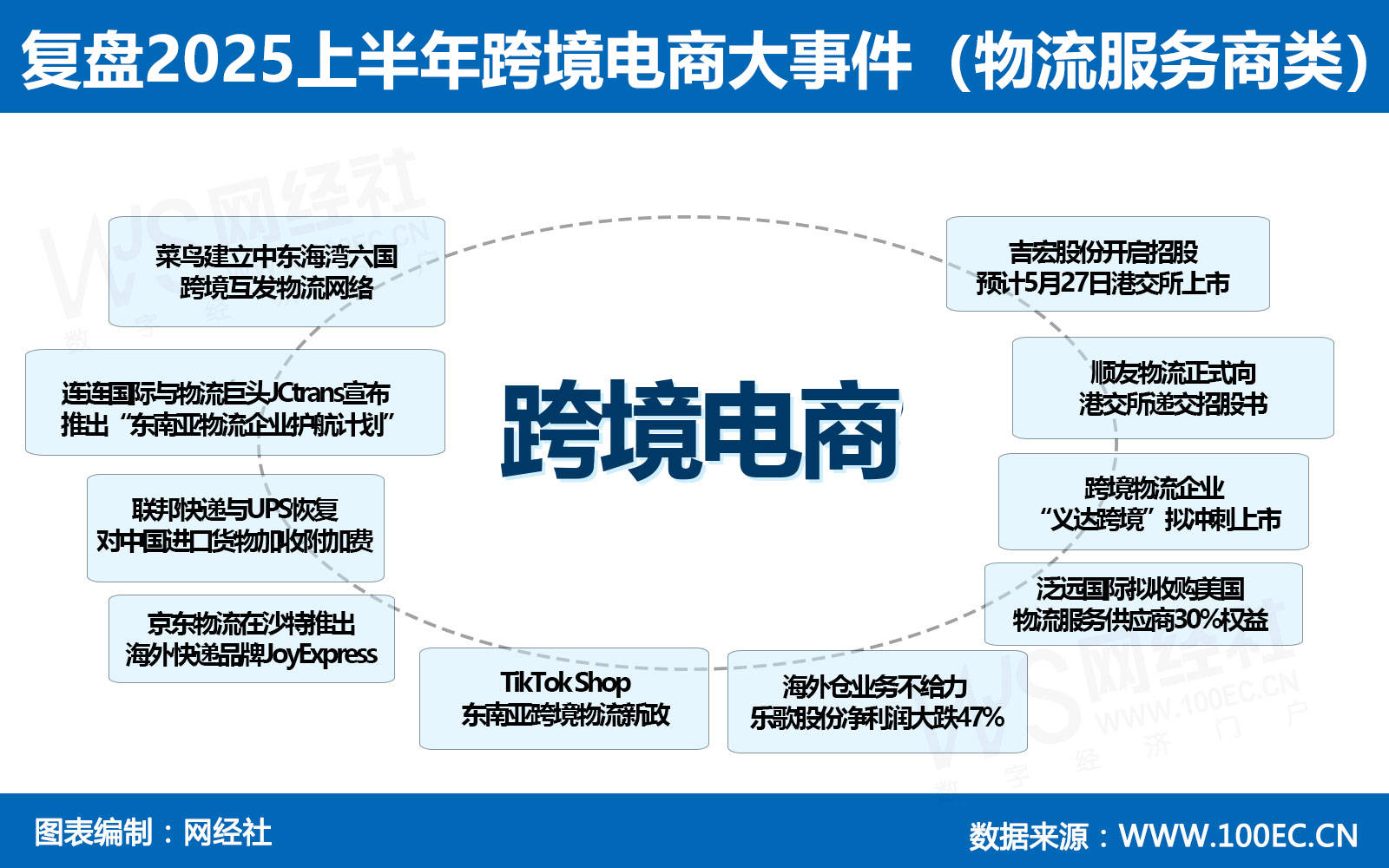
Group 1: Key Developments in Cross-Border E-Commerce Logistics - TikTok Shop in Southeast Asia has implemented a new logistics policy allowing buyers to cancel eligible cross-border direct orders before the order status changes to "shipped," addressing the long-standing issue of order cancellation difficulties [4][6] - Cainiao has established a cross-border logistics network for mutual parcel delivery among six Gulf countries in the Middle East, achieving delivery within three days, marking a significant milestone for Chinese logistics companies [6][8] - JD Logistics launched its new self-operated B2C express brand "JoyExpress" in Saudi Arabia, offering services such as same-day and next-day delivery, enhancing its logistics network in the region [8][10] Group 2: Changes in Logistics Costs and Market Dynamics - FedEx and UPS have resumed additional fees for imports from China, with UPS charging $0.29 per pound for excess fees starting April 13, indicating rising logistics costs for cross-border e-commerce [10][12] - The resumption of these fees, combined with the cancellation of the $800 tax exemption for goods, signifies the end of the low-cost logistics era for cross-border e-commerce, prompting sellers to adjust their operational strategies [12][24] Group 3: Market Expansion and IPO Activities - LianLian International and logistics giant JCtrans announced a strategic partnership to launch the "Southeast Asia Logistics Enterprise Support Program," aimed at improving operational efficiency and cash flow in the logistics sector [12][14] - JiHong Co. plans to go public on the Hong Kong Stock Exchange, with an expected fundraising of approximately HKD 617 million, to enhance its R&D and expand its market presence [15][17] - ShunYou Logistics has submitted its IPO application to the Hong Kong Stock Exchange, attracting significant market attention due to its established position in cross-border e-commerce logistics [17][18] Group 4: Company Performance and Financial Results - Lege Co. reported a 45.33% increase in revenue to CNY 5.67 billion for 2024, but its net profit dropped by 46.99% to CNY 336 million, highlighting challenges in its overseas warehouse business [22][24] - The company's logistics revenue now accounts for 42.74% of its total revenue, a significant increase from less than 6% in 2021, reflecting its transition to a comprehensive service provider [24]
菜鸟全球供应链全面升级亚太海外仓
Zheng Quan Shi Bao Wang· 2025-07-10 01:16
Core Insights - Cainiao Global Supply Chain announced a comprehensive upgrade of its overseas warehouses in the Asia-Pacific region, covering over 20 locations across countries such as Singapore, Malaysia, Thailand, Indonesia, the Philippines, Vietnam, Japan, South Korea, and Australia, achieving an outbound order fulfillment rate of 99.9% on the same day [1] Group 1 - The company has cumulatively served hundreds of leading Chinese brands in the潮玩, beauty, and 3C digital sectors, supporting both B2C e-commerce drop shipping and B2B store replenishment models [1] - Cainiao provides a "one inventory, multiple channels" supply chain solution to address merchants' issues with dispersed inventory allocation across multiple platforms, enhancing inventory health through a smart warehouse system that dynamically adjusts stock levels based on historical sales data [1] - The self-operated warehouses of Cainiao possess extensive peak handling experience and strong elasticity to respond to significant fluctuations in order volume during e-commerce promotional periods [1] Group 2 - The Asia-Pacific market presents diverse consumer scenarios and complex supply chain demands, which the company addresses by integrating dispersed logistics nodes into an agile collaborative network through digital technology [1] - Cainiao Global Supply Chain operates over 40 overseas warehouses in 18 countries and regions across Europe, North America, and the Asia-Pacific, providing end-to-end supply chain management solutions and warehousing services to assist brands in various industries, including automotive parts, home goods, appliances, and furniture, in accelerating their international expansion [1]
百亿元外卖大战,让餐饮业缓了口气
2 1 Shi Ji Jing Ji Bao Dao· 2025-07-09 00:26
Group 1: Market Competition - The competition in the food delivery market is intensifying, with JD.com reporting nearly 200 restaurant brands achieving over 1 million sales on its platform within four months [1] - JD.com has launched a "Double Hundred Plan," investing over 10 billion yuan to support more brands in reaching 1 million sales [2] - Taobao and Ele.me announced a daily order count exceeding 80 million, with Taobao's flash purchase program starting a 50 billion yuan subsidy plan [3] Group 2: Industry Challenges - The restaurant industry is facing significant challenges, with approximately 46.4% of new restaurants expected to close by 2024 [4] - The average store efficiency has declined across most categories, leading to an increase in the number of closures to 4.09 million in 2024, with a closure rate of 61.2% [4] - Major brands like KFC and Pizza Hut are experiencing a continuous decline in average transaction value [6] Group 3: Pricing Strategies - The current price war is primarily focused on low average transaction value markets, where discounts are more pronounced [8] - A national restaurant brand founder stated that to survive, businesses must prioritize cost-effectiveness, leading to lower average transaction values [7] - The aggressive pricing strategies, while intensifying competition, provide temporary relief to restaurants through subsidies [9]