光迅科技

Search documents
向上向新向优向好 武汉前三季度活力升腾
Chang Jiang Ri Bao· 2025-10-30 00:48
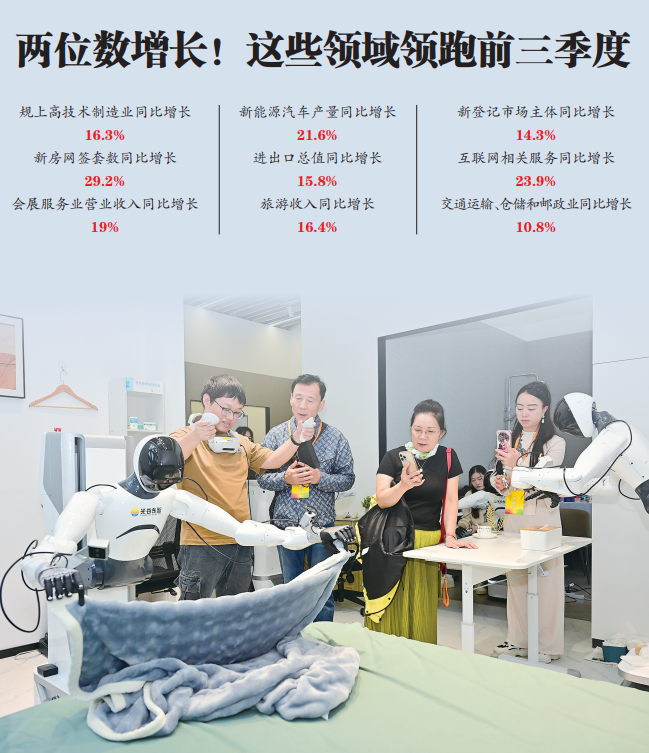
Economic Growth - Wuhan's GDP growth rates for the first quarter, first half, and first three quarters of the year are 5.4%, 5.5%, and 5.6% respectively, maintaining a leading position among sub-provincial cities [1] - The city's economic growth has been steady for five consecutive quarters, with no significant fluctuations [4] Industrial Performance - The production of industrial robots in Wuhan surged by 70.4% in the first three quarters [3][5] - High-tech manufacturing value added increased by 16.3%, contributing over 60% to industrial growth [5] - The total fixed asset investment in Wuhan reached 6,656.38 billion yuan, with a growth rate of 2%, ranking first among sub-provincial cities [5] Business Environment - The number of newly registered businesses in Wuhan increased by 14.3% in the first three quarters, with over 250,000 new enterprises, a growth of 37.23% [6][7] - The city attracted 884 investment projects, with nearly half in the industrial sector, indicating a strong investment climate [7] Consumer and Living Standards - The per capita disposable income for residents in Wuhan reached 46,107 yuan, a year-on-year increase of 4.8% [8] - The consumer price index (CPI) in Wuhan rose by 0.3%, indicating overall price stability [8] Innovation and Development - Wuhan is focusing on becoming a national hub for technological innovation, with significant investments in high-tech sectors [5][9] - The city has seen the emergence of new enterprises, with four new companies listed and nine recognized as top AI technology firms [5]

数据中心光通信行业现状及硅光、CPO技术演进展望
2025-10-28 15:31
Summary of Key Points from Conference Call Industry Overview - The conference call discusses the current state and future outlook of the data center optical communication industry, focusing on high-end optical module demand and technological advancements in silicon photonics and Co-Packaged Optics (CPO) [1][2][3]. Key Insights and Arguments - **High-End Optical Module Demand Forecast**: - 400G demand is expected to be between 5 million to 10 million units, 800G around 20 million units, and 1.6T approximately 4 million units for 2026. This forecast contrasts with overly optimistic market expectations [1]. - **Global AIDC Capital Expenditure**: - Estimated at $300 billion for 2025, with a projected growth of 30%-60% in 2026, reaching between $400 billion to $480 billion. Optical modules account for about 3% of total data center investment [1][4]. - **Domestic Market Dynamics**: - The domestic market primarily focuses on 400G modules, with limited 800G demand mainly for Southeast Asian data centers. The actual demand for high-end optical modules is constrained by the limited availability of legal GPU units and NVIDIA product supply [1][7]. - **Supply Chain Challenges**: - The supply chain faces significant challenges, including tight supply of optical chips (VIXEL, EML), monopolization in silicon photonics, limited production capacity of optical components, and reliance on imported high-end manufacturing equipment [1][8][20]. - **Silicon Photonics Technology**: - Mainly used for silicon photonic modulators, it competes with EML technology. The penetration rate for 800G silicon photonics is low, while 1.6T is higher. However, the commercialization of 3.2T single-channel 400G silicon photonics remains challenging [1][11][12]. - **CPO vs. NPO Technology**: - CPO's high-density design leads to high costs and low reliability, while NPO is seen as a more practical intermediate solution. The push for high integration CPU solutions by companies like NVIDIA and Broadcom poses challenges for smaller firms [3][19][26]. Additional Important Insights - **Production and Quality Control Challenges**: - The manufacturing of optical modules is complex, with a yield rate of 50%-80% for 800G laser modules, necessitating extensive rework and high human resource demands [13]. - **Future of 1.6T and 800G Modules**: - Both are expected to face supply-demand tensions, with 1.6T VIXEL supply nearly non-existent and EML supply also limited [9]. - **Impact of Power System Saturation**: - The saturation of the U.S. power system and slow infrastructure development may limit future data center expansion, despite available capital for GPU and optical module purchases [4]. - **Domestic Manufacturers' Opportunities**: - Domestic manufacturers can produce most components for optical modules, but DSP production still relies on foreign suppliers. The potential for domestic silicon photonics and optical components to achieve full localization within two to three years is noted [20][21]. - **Fiber Optics vs. Copper Wire**: - The feasibility of replacing copper wire with fiber optics for internal data center connections is acknowledged, given fiber's superior transmission capabilities, although reliability issues with fiber optics need to be addressed [22][23]. - **Market Dynamics and Competitive Landscape**: - The market is characterized by significant influence from major cloud providers, which can dictate technology choices and limit options for smaller companies [25]. - **Future Trends in Optical Sources**: - The current trend favors EML technology, with a focus on high-power optical sources. The market is expected to evolve with increasing demand for 100G, 200G, and 400G specifications [29][30]. This summary encapsulates the critical points discussed in the conference call, providing a comprehensive overview of the current landscape and future outlook of the optical communication industry.
历史重现,十年首次
3 6 Ke· 2025-10-28 12:27
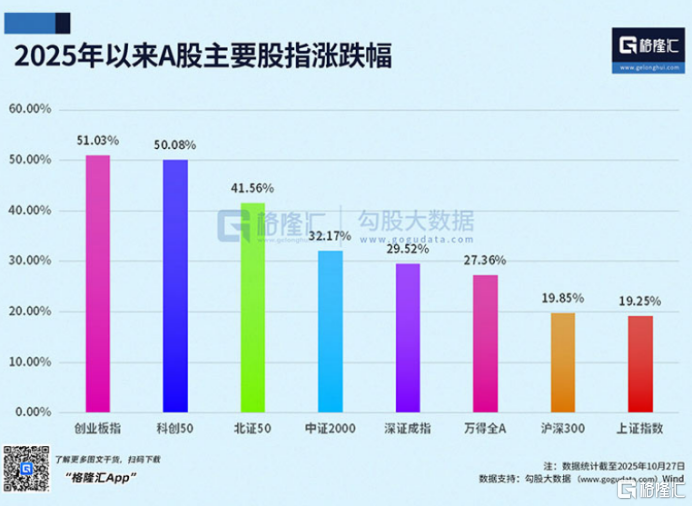
Group 1 - The A-share market has seen a significant milestone with the Shanghai Composite Index breaking the 4000-point barrier for the first time in a decade, indicating a major shift in investor sentiment towards the market [1][2][4] - The recent rally is primarily driven by the "technology bull" market, with sectors such as AI, lithium batteries, and innovative pharmaceuticals leading the charge, contrasting with traditional sectors like consumption and real estate which have underperformed [5][12] - The market's performance is characterized by a "slow bull" trend, where the structural features of the technology sector have significantly influenced investor risk appetite and market dynamics [4][12] Group 2 - Recent data shows that the technology sector remains the strongest market driver, with significant interest in areas like AI and communication technologies, as evidenced by partnerships and collaborations in the North American AI space [7][8] - The performance of technology stocks has been robust, with companies in the optical module sector reporting substantial profit growth, indicating a strong recovery and potential for further investment [8][11] - The market is expected to continue focusing on technology-driven sectors, with government policies supporting strategic emerging industries and technological breakthroughs [15][16] Group 3 - The narrative surrounding the A-share market has shifted from mere corporate earnings improvement to broader themes such as technological breakthroughs and anti-involution, which are now key variables influencing market risk preferences [12][19] - External capital is increasingly optimistic about the Chinese stock market, with forecasts suggesting a potential 30% increase in major indices by the end of 2027, driven by favorable macroeconomic conditions and valuation discrepancies [12][23] - The market is witnessing a rotation in investment focus, with technology and anti-involution themes gaining traction, suggesting a new phase in market dynamics as the index stabilizes above 4000 points [21][22][23]

历史重现!十年首次!
Ge Long Hui· 2025-10-28 10:05
Group 1 - The A-share market has seen a significant milestone with the Shanghai Composite Index breaking the 4000-point barrier for the first time in a decade, signaling a major shift in investor sentiment towards the market [1][3][5] - The rise from 2700 to 4000 points in just one year highlights a complete transformation in confidence towards the A-share market, particularly driven by the technology sector [3][5] - The current market rally is characterized by a "technology bull" trend, with sectors such as AI, lithium batteries, and innovative pharmaceuticals leading the charge, contrasting with traditional sectors like consumption and real estate [5][6] Group 2 - The technology sector has emerged as the main driver of the market, with significant gains in sub-sectors like AI, communication, and electronics, while traditional non-bank sectors have underperformed [6][8] - Recent developments in the AI sector, including major collaborations and increased demand for computing power, are expected to further boost the performance of technology stocks [9][10] - The positive cycle of capital expenditure expansion and commercialization in the AI sector is providing strong momentum for the performance of the supply chain, particularly in optical module companies [10][18] Group 3 - The market is expected to continue focusing on technology as the Shanghai Composite Index reclaims the 4000-point level, with strategic emerging industries highlighted in the recent policy announcements [18][19] - Future industries such as quantum computing, bio-manufacturing, and hydrogen energy are anticipated to attract significant investment, reflecting a shift towards new production capabilities [19][20] - The ongoing emphasis on reducing competition and improving profitability in various sectors is likely to enhance the long-term investment value of the market [22][23]

历史重现!十年首次!
格隆汇APP· 2025-10-28 09:33
Core Viewpoint - The A-share market has shown significant confidence, with the Shanghai Composite Index breaking the 4000-point mark for the first time in a decade, indicating a major shift in investor sentiment towards the market [2][4][5]. Market Performance - After briefly surpassing 4000 points, the index experienced increased volatility, closing at 3988.22 points, down 0.22% [3]. - The past year has seen the Shanghai Composite Index rise from 2700 to 4000 points, reflecting a complete transformation in market confidence [5]. Sector Analysis - The technology sector has emerged as the main driver of the market, with indices like the ChiNext and STAR Market showing even greater gains than the Shanghai Composite [6][10]. - Key sectors leading the market include AI, lithium batteries, innovative pharmaceuticals, and non-ferrous metals, with significant performance from communication, electronics, and computing sectors [9][10]. Market Dynamics - The current market rally is characterized as a "technology bull market," driven by structural changes in the economy, technological breakthroughs, and shifts in investor risk appetite [8][21]. - The recent recovery in risk appetite has been crucial for the technology sector, with positive market movements following successful US-China trade talks [14]. Future Outlook - The long-term outlook for the A-share market appears optimistic, with foreign investors expressing bullish sentiments and expectations of a 30% increase in major indices by the end of 2027 [22][23]. - The focus on future industries, including quantum technology, bio-manufacturing, and hydrogen energy, is expected to attract investment and drive market growth [26][28]. Policy and Economic Environment - Recent government policies aimed at reducing competition and improving industry profitability are anticipated to enhance the long-term investment value of sectors affected by "de-involution" [31][32]. - The market is expected to continue evolving, with a shift towards technology and innovation as key themes, supported by favorable macroeconomic conditions and industry dynamics [35].

光迅科技前三季营收增长58.65% 聚焦主业光通信领域表现亮眼
Chang Jiang Shang Bao· 2025-10-27 23:52
Core Insights - Guangxun Technology (002281.SZ) has experienced explosive growth in its performance, driven by strong market demand, optimized product structure, and increased R&D investment [1][2]. Financial Performance - For the first three quarters, the company achieved operating revenue of 8.532 billion yuan, a year-on-year increase of 58.65% [2]. - The net profit attributable to shareholders reached 719 million yuan, up 54.95% year-on-year, while the non-recurring net profit was 678 million yuan, reflecting a 49.29% increase [1][2]. - In Q3 alone, the operating revenue was 3.289 billion yuan, marking a 45.01% year-on-year growth, with a net profit of 347 million yuan, up 35.42% [2]. R&D Investment - The company invested 672 million yuan in R&D for the first three quarters, a 31.83% increase, with R&D expenses accounting for over 7.8% of operating revenue [3]. - Significant advancements have been made in high-speed optical modules, silicon photonic chips, and co-packaged optics, with some products entering mass delivery stages [3]. Market Expansion - Guangxun Technology is actively responding to the growing demand for high-speed interconnects driven by global AI infrastructure development, with its optical module products targeting data centers, AI servers, backbone networks, and metropolitan networks [3]. - The company is expanding its overseas market share and maintaining stable partnerships with several international leading clients [3]. Financial Health - As of the end of the reporting period, the total assets of the company stood at 16.366 billion yuan, a year-on-year increase of 10.68%, while equity attributable to shareholders was 9.777 billion yuan, up 7.32% [3]. Strategic Direction - The company aims to deepen its focus on optical communication and high-speed interconnect fields, actively positioning itself in emerging areas such as AI-optical integration, silicon photonic chips, and advanced packaging [3]. - Guangxun Technology plans to leverage national strategies like "East Data West Computing" and "Computing Power Network" to enhance product competitiveness and brand influence [3].

科技、金融、周期板块普涨 沪指放量上攻逼近4000点
Shang Hai Zheng Quan Bao· 2025-10-27 20:31
Group 1: Market Performance - The A-share market continued its strong performance, with the Shanghai Composite Index nearing 4000 points, closing at 3996.94, up 1.18% [1] - The Shenzhen Component Index closed at 13489.40, up 1.51%, and the ChiNext Index closed at 3234.45, up 1.98% [1] - The total trading volume in the Shanghai and Shenzhen markets reached 23,401 billion yuan, an increase of 3,659 billion yuan compared to the previous trading day [1] Group 2: AI Hardware Sector - The AI hardware sector has shown significant recovery, with several leading stocks reaching historical highs, boosting market sentiment [2] - CPO (Co-Packaged Optics) and storage chip concepts saw a surge, with stocks like Dazhi Co., China Electronics Port, and Jingwang Electronics hitting the daily limit [2] - Companies in the CPO sector reported substantial profit growth, with Shijia Photon achieving a net profit of 300 million yuan in the first three quarters, a year-on-year increase of 727.7% [2] Group 3: Financial and Cyclical Sectors - The financial and cyclical sectors also performed strongly, with major banks' stocks, including Agricultural Bank, rising by 2.38% [3] - The brokerage sector saw significant movements, with Xiangcai Securities hitting the daily limit and closing up 5.55% [3] - The A-share market's total market capitalization has surpassed 100 trillion yuan, providing a broad growth space for brokerage firms [3] Group 4: Growth of Large-cap Stocks - Since August, large-cap technology stocks have outperformed small-cap stocks, driving the Shanghai Composite Index upward [4] - The proportion of emerging growth sectors in the capital market has increased, with a notable rise in the number and market capitalization of large-cap growth companies [4] - Current macroeconomic conditions favor emerging growth sectors, with policies supporting innovation and technology [4]
光模块需求增加 头部公司业绩劲增
Zheng Quan Ri Bao· 2025-10-27 17:09
Core Insights - The optical module industry is experiencing a significant upturn, driven by increased demand for AI computing power, expansion of data centers, and rising procurement from overseas giants [3][4] Industry Performance - As of October 27, 12 listed companies in the A-share CPO sector have disclosed their Q3 2025 reports, with 9 optical module firms, including Shijia Photon Technology and Yongding Co., reporting growth in net profit [1] - Leading optical module companies have shown robust growth in Q3 2025, with Cambridge Technology reporting a net profit of approximately 259 million yuan, up 70.88%, and Huagong Technology reporting 1.321 billion yuan, up 40.92% [2] - Several companies have seen net profit growth exceeding 100%, such as Shijia Photon with a 727.74% increase to 300 million yuan and Yongding Co. with a 474.30% increase to 329 million yuan [2] Market Drivers - The growth in the optical module sector is attributed to multiple factors, including the explosion of AI computing demand, the rapid expansion of data centers, increased procurement from overseas clients, and supportive policies [3] - Recent reports indicate that overseas clients have raised their 2026 procurement plans for 1.6T optical modules significantly, reflecting the growing bandwidth needs for AI training and inference networks [3] Policy Support - The introduction of favorable policies indicates a shift in the national computing power strategy towards deeper integration with the real economy, positioning optical modules as key beneficiaries of this transition [4] Company Strategies - Leading optical module companies are focusing on technological innovation and capacity expansion to seize market opportunities [5] - Companies like Chengdu Xinyi Communication Technology have developed a full range of 1.6T products meeting IEEE standards, while Shijia Photon has begun mass shipments of its 800G/1.6T optical modules [6] Capacity Expansion - Companies are actively expanding production capabilities, with Zhongji Xuchuang announcing ongoing production ramp-up for its 1.6T products [7] - Huagong Technology has started delivering its 800G LPO optical modules in overseas markets, with expectations for increased demand in the coming year [7] - The overall demand for optical modules is expected to grow, driven by policy support and proactive breakthroughs in technology and capacity by companies [7]
2025异质异构集成年会最新议程/嘉宾公布,共探先进封装、CPO、Micro LED异质集成等热点话题
势银芯链· 2025-10-27 06:51
Core Viewpoint - The article discusses the upcoming 2025 Heterogeneous Integration Annual Conference organized by TrendBank and the Yongjiang Laboratory, focusing on the strategic opportunities in the new generation of chip development and the importance of heterogeneous integration technology in the semiconductor industry [10][12]. Event Details - The conference will take place from November 17 to 19, 2025, at the Nanyuan Wanghai Hotel in Zhenhai District, Ningbo, aiming to create a high ground for advanced electronic information industry in Ningbo and the Yangtze River Delta region [10][13]. - The event will feature a series of discussions and presentations on cutting-edge topics related to heterogeneous integration and advanced packaging technologies [12][13]. Conference Agenda - The agenda includes a closed-door meeting on heterogeneous integration, government speeches, and various technical discussions on topics such as advanced packaging trends, optical chip innovations, and the challenges of heterogeneous integration technology [3][5][6]. - Notable speakers include experts from various organizations, including Alibaba Cloud, COMSOL, and Zhejiang University, discussing topics like optical interconnect solutions and advanced semiconductor manufacturing techniques [5][6][10]. Industry Context - The conference is positioned against the backdrop of increasing demands for chip performance, power consumption, and cost efficiency driven by applications in artificial intelligence and high-performance computing [10]. - Heterogeneous integration is highlighted as a crucial direction for the semiconductor industry, especially in the context of 2.5D/3D integration and optical-electrical co-packaging [10][12]. Participation and Costs - The conference is expected to attract 300-500 participants, with registration fees set at RMB 2500 per person, offering early bird discounts and student rates [13][14].

光模块大涨,AI人工智能ETF(512930)涨超2.6%,近3月跟踪精度同类第1
Sou Hu Cai Jing· 2025-10-27 06:28
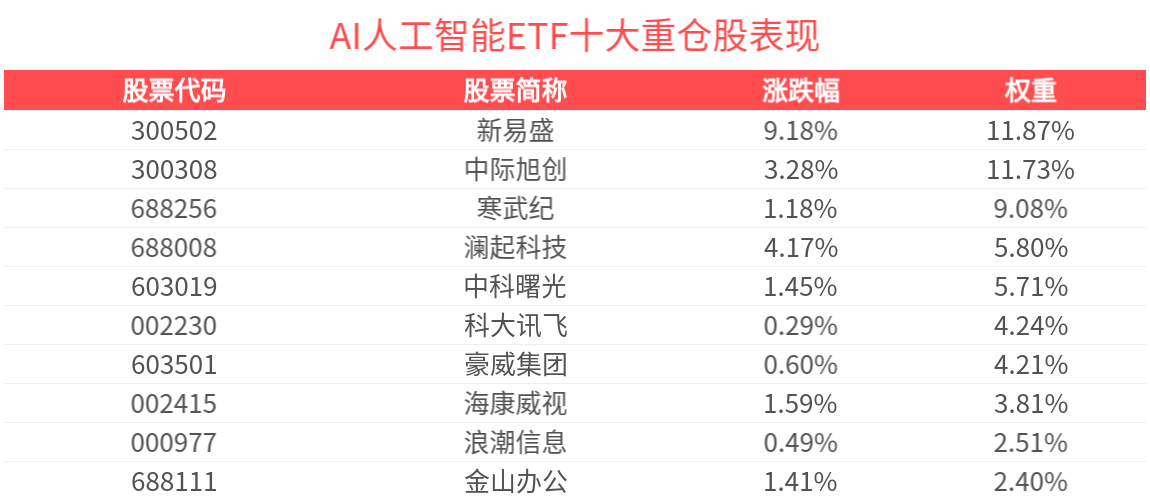
Core Insights - The China Securities Artificial Intelligence Theme Index (930713) has shown a strong increase of 2.54% as of October 27, 2025, with notable gains in constituent stocks such as Xinyi Sheng (300502) up 9.18% and Dahua Technology (002236) up 8.07% [1] - The AI Artificial Intelligence ETF (512930) has also risen by 2.60%, with a recent price of 2.25 yuan, and has accumulated a weekly increase of 10.84% as of October 24, 2025 [1] - The ETF has a low management fee rate of 0.15% and a custody fee rate of 0.05%, making it one of the most cost-effective options in its category [1] - The tracking error for the AI Artificial Intelligence ETF over the past three months is 0.009%, indicating the highest tracking precision among comparable funds [1] Index Composition - As of September 30, 2025, the top ten weighted stocks in the China Securities Artificial Intelligence Theme Index account for 61.36% of the index, with Xinyi Sheng (300502) and Zhongji Xuchuang (300308) being the top two [2] - The top ten stocks by weight include: - Xinyi Sheng (300502) - 11.87% - Zhongji Xuchuang (300308) - 11.73% - Cambricon (688256) - 9.08% - Lianqi Technology (688008) - 5.80% - Zhongke Shuguang (603019) - 5.71% - iFlytek (002230) - 4.24% - OmniVision Technologies (603501) - 4.21% - Hikvision (002415) - 3.81% - Inspur Information (000977) - 2.51% - Kingsoft Office (688111) - 2.40% [4]