
吉利

Search documents
十年间三度沉浮,小型电动车再次“复活”
Jing Ji Guan Cha Bao· 2025-09-13 09:00
Core Viewpoint - The A0 electric vehicle market in China is experiencing a significant revival, driven by a combination of declining battery costs, enhanced product capabilities, and supportive policies, marking a transformation from low-end alternatives to mainstream choices [1][2][5]. Group 1: Market Dynamics - The A0 electric vehicle segment is seeing an influx of brands such as Extreme Fox, Wuling, MG, and Chery, indicating a comprehensive market recovery by mid-2025 [1][5]. - The revival is characterized by a shift in perception, with A0 electric vehicles now offering features like over 500 km of range and advanced smart configurations, moving away from being seen as merely low-cost transportation [2][9]. Group 2: Historical Context - The A0 electric vehicle market has experienced two previous peaks, first from 2014 to 2017 due to high subsidies, and again from 2020 to 2021 driven by Wuling's electric push [3]. - However, from late 2022 to early 2023, the market faced a downturn, with A0 electric vehicle sales dropping by 58% year-on-year in January and February 2023, while higher segments saw growth [3][4]. Group 3: Cost and Policy Influences - Rising raw material costs, particularly lithium carbonate, which surged from 44,000 yuan/ton to over 460,000 yuan/ton between late 2020 and early 2022, significantly impacted the A0 segment due to its thin profit margins [3][4]. - The reduction of government subsidies by 30% in 2022 further exacerbated the challenges faced by A0 electric vehicle manufacturers [4]. Group 4: Future Trends - The A0 electric vehicle market is projected to improve post-2024, with leading brands like BYD and Geely launching new models [5]. - By mid-2025, A0 vehicles are expected to surpass B-class vehicles as the fastest-growing segment in the new energy market, with a year-on-year sales growth rate of 107.3% [7]. Group 5: Technological Advancements - New A0 electric vehicles are equipped with advanced technologies, such as AI integration and enhanced battery performance, which align with new regulatory requirements [9][10]. - The introduction of policies promoting vehicle upgrades and trade-ins is expected to further stimulate demand in the A0 segment [8]. Group 6: Market Segmentation and Opportunities - The A0 electric vehicle market is anticipated to diversify, with the emergence of various body styles like SUVs and sedans to cater to different consumer preferences [12]. - International markets, particularly in Europe, present significant growth opportunities for A0 electric vehicles, which could capture a larger share of the market as they transition to electric [12].


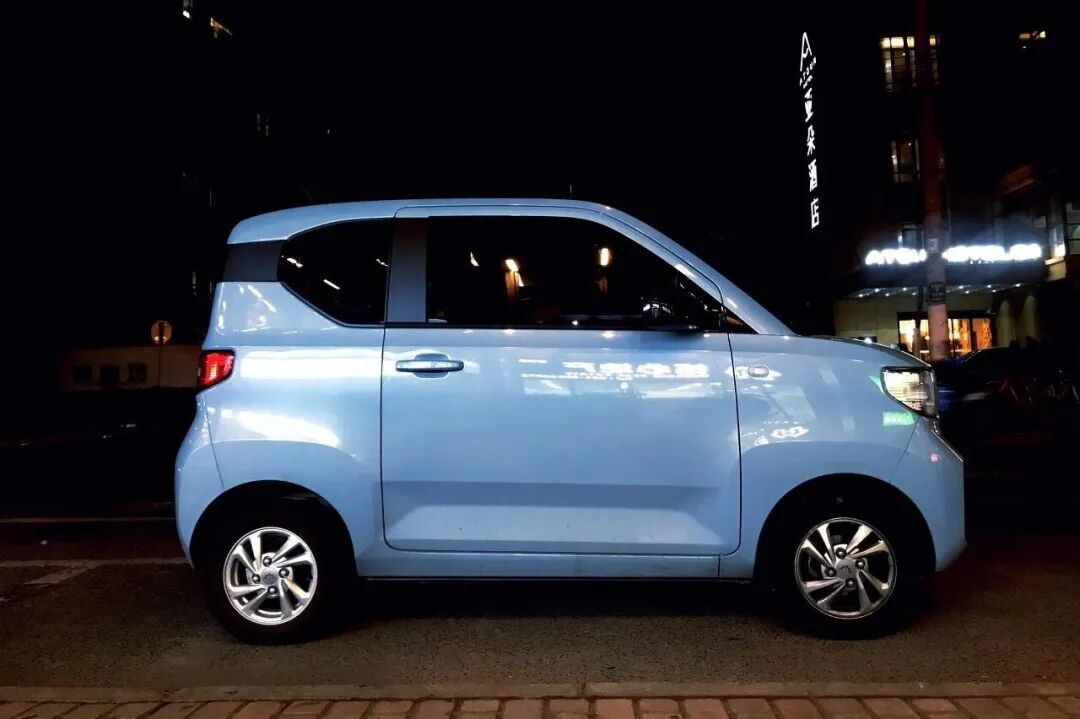
纯电A0级小车极狐T1上市
Zhong Zheng Wang· 2025-09-12 14:08
Group 1 - Beijing Electric Vehicle Co., Ltd. (BAIC New Energy) has launched the new electric vehicle model, ARC-FLOW T1, with five variants aimed at redefining the value logic in the A0 electric vehicle market [1] - The ARC-FLOW T1 features a sleek design, a spacious interior with a 15.6-inch central control screen, and an 8.8-inch LCD instrument panel, along with a wheelbase of 2770mm and a "four wheels at four corners" layout [1] - The vehicle offers two range options of 320km and 425km, and emphasizes safety with a cage structure and the use of 1500MPa high-strength steel in critical areas [1] Group 2 - The chairman of BAIC Group, Zhang Jianyong, stated that the support for ARC-FLOW is unlimited, positioning the T1 as a strategic model that will unlock new possibilities for users [1] - BAIC New Energy's chairman, Zhang Guofu, highlighted that the ARC-FLOW T1 stands out in space, range, intelligent features, and safety performance compared to competitors, making it a high-cost performance choice in the A0 electric vehicle market [2] - The T1 is expected to lead new trends in the segment, supported by its affordable pricing and lifetime free maintenance for users [2]
黑芝麻智能再度亮相IAA Mobility 多方案推动智能出行发展
Zheng Quan Ri Bao Wang· 2025-09-12 12:47
Group 1 - The 2025 IAA Mobility exhibition in Munich showcased Hezhima Intelligent's advanced chip products and solutions for integrated cockpit and high-level assisted driving [1] - Hezhima Intelligent launched the "Safe Intelligent Base" solution, centered around the Wudang C1200 family of cross-domain integration chips, aimed at providing seamless upgrades for automotive companies from entry-level to flagship models [1] - The solution is designed to significantly reduce development costs, shorten development cycles, and enhance product competitiveness for automotive manufacturers [1] Group 2 - Hezhima Intelligent has established partnerships with leading companies, including Aptiv, to commercialize the Wudang C1296 chip-based integrated cockpit solution, which is expected to reach mass production by the end of 2025 [2] - The Huashan A1000 family of chips has already been integrated into multiple models from brands such as Geely, Lynk & Co, and Dongfeng [2]

瞄准高端产品 加强技术突破 政策助力汽车芯片产业高质量发展
Zhong Guo Zheng Quan Bao· 2025-09-11 20:38
Core Insights - The automotive industry is rapidly evolving towards electrification and intelligence, with AI technology driving the transformation of vehicles into "super intelligent entities" since 2025 [1] - The automotive MCU chip market is experiencing significant growth, with industry participants promoting healthy development through open-source collaboration and ecosystem building [1] Industry Development - The Ministry of Industry and Information Technology (MIIT) emphasizes the need for improved support policies for high-end automotive chips and the importance of core technology breakthroughs to drive high-quality industry development [2] - Automotive chips are categorized into ten types, covering various application scenarios, and have stricter requirements for environmental adaptability, reliability, and safety compared to consumer and industrial chips [2] - The global MCU market is projected to grow from $30.9 billion in 2023 to $33.8 billion in 2024, reaching $37 billion by 2025, driven by demand from the automotive and industrial AIoT sectors [2] Company Performance - Semiconductor companies like Zhaoyi Innovation and Zhongwei Semiconductor reported significant revenue and profit growth, with automotive chip business being a key driver [3] - Zhaoyi Innovation's revenue for the first half of 2025 was 4.15 billion yuan, a 15% increase year-on-year, while its net profit rose by 11.3% to 575 million yuan [3] - Zhongwei Semiconductor's automotive chip revenue reached 17.35 million yuan, up 89.4% year-on-year, with several products entering the supply chains of major automotive manufacturers [3] - Guoxin Technology also reported strong performance in automotive chip revenue, achieving 49.15 million yuan, a 63.81% increase [3] Market Potential - China, as a major automotive and new energy vehicle market, has significant demand potential for automotive-grade chips, with expectations of a 10% annual growth rate from 2025 to 2030 [4] Ecosystem Collaboration - Industry experts advocate for multi-party cooperation to promote collaborative innovation in the automotive chip industry [5] - The automotive industry is leveraging intelligent transformation to create competitive advantages, with an initial ecosystem forming around autonomous compilers and debugging tools [5] - The development of a unified platform and open-source collaboration models is seen as essential for overcoming current challenges in the automotive chip sector [6]

蔚来汽车再融资10亿美元 冲刺四季度扭亏
Zheng Quan Shi Bao· 2025-09-10 22:28
Core Viewpoint - NIO Inc. is actively pursuing a public offering of up to 182 million Class A ordinary shares, raising $1 billion in equity financing to support its long-term development and technology advancements in the electric vehicle sector [1][2]. Group 1: Financing and Investment - NIO has successfully completed a $1 billion equity financing, attracting long-term investors from various regions including the US, UK, Switzerland, Norway, and Asia [1]. - The funds raised will be allocated towards core technology research and development for smart electric vehicles, expanding the battery swap network, and strengthening the company's balance sheet [1]. Group 2: Financial Performance - In Q2, NIO reported a net loss of 4.995 billion yuan, although this was a 26% reduction from the previous quarter [2]. - Adjusted net loss (NON-GAAP) was 4.127 billion yuan, a year-on-year decrease of 9% and a quarter-on-quarter decrease of 34.3% [2]. - Revenue for Q2 reached 19.01 billion yuan, marking a 57.9% increase quarter-on-quarter and a 9% increase year-on-year [2]. Group 3: Future Outlook - NIO aims to achieve breakeven in Q4, with expectations of improved fundamentals driven by the sales of the L90 and ES8 models [3]. - The company has set a delivery guidance of 87,000 to 91,000 vehicles for Q3, representing a year-on-year growth of 40.7% to 47.1% [2]. - NIO's Q4 gross margin is projected to rise to 16%-17% as higher-priced models gain a larger share of sales [3].

李想还有三根救命毫毛
36氪· 2025-09-10 13:35
Core Viewpoint - Li Auto is at a critical crossroads, facing challenges in maintaining its previous success and adapting to a rapidly changing market landscape [5][30]. Financial Performance - In Q2 2025, Li Auto reported revenue of 30.2 billion yuan, a year-on-year decline of 4.5%, and a net profit of 1.1 billion yuan, down 0.4% from the previous year, indicating a decrease in profitability [6]. - The company's cash flow situation worsened, with operating cash outflow of 3 billion yuan and free cash flow of negative 3.8 billion yuan, compared to negative 1.9 billion yuan in the same period last year [6]. - In August 2025, Li Auto delivered 28,529 vehicles, a 40% decrease from 48,122 vehicles in August 2024, highlighting a significant drop in delivery volume [7]. Market Competition - Li Auto faces intense competition in the 5-door, 6-seat SUV market from models like the L90 and Tesla's Model Y L, which directly encroach on its market share [7]. - The company is also a newcomer in the pure electric vehicle market, competing against established players like BYD, Chery, and Geely, as well as new entrants like NIO and Xpeng [7]. Strategic Responses - Li Auto plans to adjust pricing strategies by temporarily sacrificing high profit margins to gain market share, suggesting aggressive pricing for upcoming models like the L6 and i6 [9][10]. - The company aims to enhance sales through added customer benefits, such as delivery subsidies and extended warranty options, to increase user engagement and data collection for future product improvements [13]. Marketing and Branding - The founder, Li Xiang, is encouraged to take a more visible role in marketing, leveraging his personal brand to enhance customer trust and engagement [15][16]. - A new product label is needed to replace the outdated "family-oriented" branding, shifting focus to "technological luxury" to attract consumers seeking advanced features [19][22]. Long-term Strategy - Li Auto should diversify its product line beyond large family SUVs to mitigate risks associated with market saturation and competition, similar to strategies employed by competitors like Xpeng and global tech giants [25][26]. - The company is investing in advanced driving technology, with plans to allocate over 6 billion yuan for the development of its VLA model, but must also focus on building user trust through safety guarantees and service commitments [28][29]. Conclusion - Li Auto is currently facing significant challenges but has the potential to stabilize its position through strategic pricing, enhanced marketing efforts, and a renewed focus on product diversification and user trust [30].


蔚来新一轮融资
Sou Hu Cai Jing· 2025-09-10 12:37
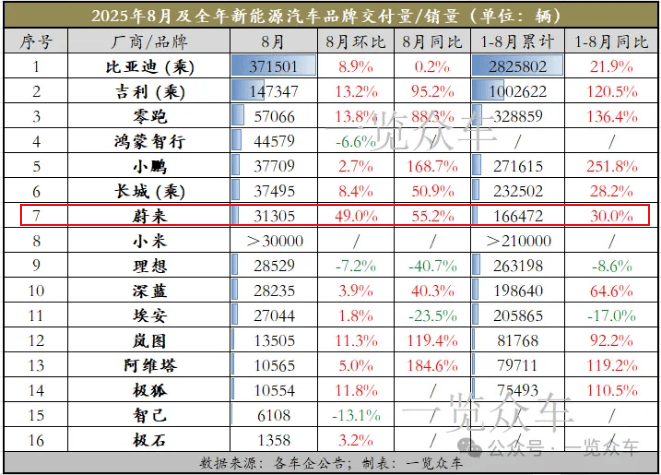
Core Viewpoint - NIO Inc. plans to issue 181.8 million Class A ordinary shares, including American Depositary Shares (ADS), to fund research and development of core technologies for smart electric vehicles, expand battery swapping and charging networks, and strengthen its balance sheet for long-term growth [2]. Financial Performance - In Q2, NIO reported revenue of 19.01 billion yuan, a year-on-year increase of 9.0% and a quarter-on-quarter increase of 57.9% [2]. - Cash reserves increased to 27.2 billion yuan, with R&D expenditure reaching 3.01 billion yuan [2]. - The overall gross margin was 10.0%, showing a significant quarter-on-quarter improvement, while the gross margin for other sales turned positive at 8.2%, marking a historical high [2]. Vehicle Deliveries - In August, NIO delivered 31,305 vehicles, a year-on-year increase of 55.2%, achieving a historical high [2]. - Breakdown of deliveries includes 10,525 vehicles from the NIO brand, 16,434 from the Ladao brand, and 4,346 from the Firefly brand [2]. Strategic Goals - NIO's CEO emphasized the necessity of achieving profitability in Q4, citing the launch of nine new products and the completion of the sales service network and battery swap station construction as critical factors [3].
三大锂电项目落地湖州!
起点锂电· 2025-09-10 10:27
Group 1 - The article highlights the rapid development of the lithium battery industry in Huzhou, Zhejiang Province, with significant investments and projects underway [5][6][9] - Three major projects in Huzhou have recently made progress, including a nearly 700 million yuan investment from Likao New Energy and Boqian Electronics, focusing on battery components and systems [5][6] - Huzhou's geographical advantages and historical background in battery production have contributed to its thriving lithium battery industry, with a strong foundation dating back to the 1970s [7][8][9] Group 2 - The article mentions that Huzhou is part of the Yangtze River Delta, a key area for the new energy industry, with surrounding cities also developing related industries [7] - Huzhou has attracted various enterprises, including sodium battery companies, and is expanding its focus to solid-state batteries and energy storage [6][9] - The overall investment in Zhejiang Province's new energy projects has accelerated, with seven lithium battery projects launched recently, totaling over 37 billion yuan [9]
齐鲁车展的“反差时刻”
Qi Lu Wan Bao· 2025-09-08 00:03
Core Insights - The 2025 Qilu Autumn Auto Show serves as an important window to observe the Chinese automotive market, showcasing significant advancements in luxury attributes, intelligence levels, and core technology configurations of domestic brands [1][5] - Domestic brands, such as Hongqi and BYD, are proving their capabilities in both luxury and performance segments, marking a shift from following foreign brands to leading in high-end markets [2][3] Group 1: Domestic Brand Highlights - Hongqi's L5 model attracted significant attention, showcasing a blend of traditional Chinese aesthetics and modern technology, emphasizing its high-end positioning as a symbol of domestic luxury [1][2] - BYD's Yangwang U9 demonstrated key breakthroughs in the supercar segment with advanced features like independent four-motor drive technology, highlighting the brand's performance capabilities [2][3] Group 2: Exhibition Scale and Brand Strategy - The exhibition layout revealed a strong presence of domestic brands, with BYD occupying over 3,000 square meters, showcasing its five sub-brands and innovative outdoor experience areas [3] - Chery and Changan also demonstrated significant exhibition areas, emphasizing their technological advancements and brand integration strategies [3] Group 3: Intelligent Features - The integration of intelligent driving features has become a standard across various price segments, with brands like Chery and Geely offering advanced driver assistance systems in their mainstream models [4] - The trend of localizing intelligent driving technologies is evident, with joint venture brands like GAC Toyota introducing advanced systems at competitive price points [4]
增程换纯电,蔚来们苦等的拐点来了?
Xin Lang Cai Jing· 2025-09-06 10:24
Group 1 - NIO's recent half-year report for 2025 shows a significant recovery with 72,056 vehicle deliveries in Q2, marking a 25.6% year-on-year increase and a 71.2% quarter-on-quarter increase, although the company has not yet achieved profitability [1] - CEO Li Bin highlighted the challenges ahead but noted the arrival of a turning point in the pure electric vehicle market, which could reshape the strategies of various automakers and the industry landscape [1] - The sales data indicates a clear shift in consumer preference towards pure electric vehicles, with cumulative sales of pure electric cars reaching 4.415 million units in the first half of 2025, a 46.24% increase year-on-year, while range-extended vehicles lagged behind with only 538,000 units sold, a 16.5% increase [2][6] Group 2 - The decline in range-extended vehicle sales is evident, with July 2025 sales dropping to 102,000 units, an 11.4% year-on-year decrease, while pure electric vehicle sales saw a 24.5% increase during the same period [2] - Companies like Li Auto are adjusting strategies in response to declining sales, launching new pure electric models and reducing vehicle prices to maintain market share, with average vehicle prices dropping from 331,000 yuan in 2022 to 260,000 yuan in Q2 2025 [3] - Leap Motor has shifted its strategy to focus on pure electric vehicles, achieving 221,664 deliveries in the first half of 2025, while other brands like AITO are also adapting by introducing new models that blur the lines between pure electric and range-extended vehicles [4] Group 3 - The competitive landscape is changing as pure electric vehicles are increasingly seen as more viable, with advancements in battery technology and charging infrastructure alleviating consumer range anxiety [6][8] - The charging infrastructure in China has expanded significantly, with 16.696 million charging points available, allowing for a ratio of approximately two charging points for every five vehicles [8] - As the advantages of range-extended vehicles diminish, manufacturers are exploring new strategies, such as larger batteries and faster charging capabilities, but this raises concerns about increased costs and weight [9][10] Group 4 - Despite the challenges faced by range-extended vehicles, there remains a market for them, as some consumers still value the flexibility of having both electric and fuel options [11] - The future of both pure electric and range-extended vehicles will depend on product quality, supply chain stability, and cost control, rather than solely on technological differentiation [11][12] - Companies must adapt to changing market demands and refine their product strategies to capture opportunities in the evolving automotive landscape [12]